2027 Best PhD Programs for Career Growth

Co-Founder and Chief Data Scientist
A PhD can open a research career, but it is rarely the quickest route to a promotion. The choice matters especially in growing fields: the U.S. Bureau of Labor Statistics (BLS) projects 29% employment growth for information security analysts from 2024 to 2034, yet that occupation does not typically require a doctorate.
This guide helps prospective doctoral students distinguish careers that benefit from PhD-level research training from those better served by experience, licensure, or a professional doctorate. You'll compare fields, costs, funding, and career requirements before deciding whether to apply.
Key Things You Should Know
- Choose a PhD when your target work requires original research, advanced methods, or preparation for certain faculty and research positions - not simply because a field is growing.
- BLS projects 29% growth for information security analysts from 2024 to 2034, but a PhD is not the occupation's typical entry requirement.
- A funded PhD with tuition remission may cost less out of pocket than an unfunded program with lower published tuition; compare stipend terms, fees, and years of support.
Top 10 Best PhD Programs for Career Growth - Top PhD Programs
Business / DBA Programs
A business PhD fits applicants who want to investigate questions in management, finance, marketing, or operations and develop a research record. Faculty fit, quantitative preparation, and access to research data matter more than a broad promise of executive advancement. A Doctor of Business Administration (DBA) is a separate, generally practice-oriented credential; compare it only if you want applied inquiry tied to professional practice. For many management jobs, an MBA and substantial experience are more direct routes than either doctorate.
Education / EdD Programs
A PhD in education can support research on learning, policy, or educational systems, including preparation for research-intensive faculty roles. Examine faculty methods, available datasets, and opportunities to publish. An EdD is a separate credential often oriented toward applying research in educational organizations; it should not be counted as a PhD. Neither degree automatically qualifies someone for a school leadership job: state credentials and professional experience may be required. Teachers seeking advancement should compare doctoral study with a master's degree and their state's certification rules.
Educational Leadership Programs
Educational leadership PhDs are most compelling for people who want to study leadership, governance, or organizational change - not merely hold a principal or superintendent title. Compare programs by research specialization, adviser availability, and connections to the settings you intend to study. Leadership EdDs may be a better fit for experienced practitioners pursuing an applied problem of practice, but they are distinct degrees. Before applying, check whether your intended role requires an administrative credential, school-system experience, or both.
Psychology Programs
A psychology PhD may prepare students for research, teaching, or clinical practice, depending on the program. For clinical careers, verify the program's accreditation and your state's licensing requirements, including supervised experience and examinations. A PsyD is a different credential often emphasizing clinical practice; neither degree alone confers a license. If you want to conduct research, prioritize adviser fit and methods training. If you want to provide therapy, compare licensure pathways - including relevant master's-level routes - before committing to doctoral study.
Nursing / DNP Programs
A nursing PhD is principally a research degree for studying care, health systems, or nursing science. Ask whether faculty can support your research question and whether funding covers the full expected study period. A Doctor of Nursing Practice (DNP) is a separate, practice-focused doctorate; compare it when advanced clinical practice or an evidence-based practice project matches your goal. Nursing roles are regulated: existing RN licensure, specialty preparation, certification, and state advanced-practice rules may matter more than the doctorate's title alone.
Public Health Programs
A public health PhD fits people aiming to produce original research in epidemiology, biostatistics, environmental health, or health policy. Compare methodological training, access to data, and faculty projects with the jobs you want. A Doctor of Public Health (DrPH) is a distinct, generally practice-oriented leadership credential. Public health employers also hire candidates with an MPH and relevant experience; a PhD's added time is easier to justify when independent research is central to your goal.
Computer Science Programs
A computer science PhD can make sense for original work in AI, systems, security, or other research areas. Examine recent faculty publications, lab resources, computing access, and where former students work. Growth in tech jobs does not mean those jobs require doctoral training: many software and technical leadership roles value engineering experience more directly. Compare the research opportunities and funding package with the earnings you would forgo while studying, particularly if an industry job already meets your goal.
Cybersecurity Programs
A cybersecurity PhD is a strong candidate for careers involving new security methods, privacy research, or security-focused academic work. Confirm whether the degree awarded is actually a PhD; similarly named practice doctorates are not interchangeable. BLS growth projections for information security analysts show demand for security work, not demand specifically for PhD holders. For operational security, incident response, or management, experience and relevant certifications may offer a more direct route. Research applicants should assess lab fit and access to appropriate data.
Social Work / Human Services Programs
A social work or human services PhD is most relevant to research on services, interventions, and policy, or to research-focused teaching. A Doctor of Social Work (DSW) is a separate credential that may emphasize advanced practice or leadership. If your aim is clinical social work, verify your state's master's-level licensing pathway, supervised-practice requirements, and whether doctoral study adds value. For research careers, look for strong methods training and faculty working with the populations you intend to study.
Public Administration / Public Policy Programs
A PhD in public administration or public policy can support research careers analyzing government programs, institutions, and outcomes. Prioritize methods training, adviser expertise, and opportunities to work with administrative data. A Doctor of Public Administration (DPA) is a distinct credential that may focus more on professional practice. Many policy analyst and public management jobs are accessible with a relevant master's degree and experience. Choose the PhD when producing original evidence - not only moving into management - is the career objective.
What Are the Best PhD Fields for Career Growth?
There is no single best PhD field for career growth. The strongest choice matches a specific research-based career, suitable faculty, and a manageable funding arrangement. Labor-market growth helps identify opportunity, but it cannot show whether employers require a doctorate. The comparison below separates promising PhD uses from careers with shorter entry routes.
| Field | Where a PhD can add value | Alternative worth comparing |
| Computer science or cybersecurity | Original research in computing or security | Industry experience for most technical and management roles |
| Public health or policy | Independent research and advanced quantitative analysis | MPH, MPP, or related master's degree for many applied roles |
| Psychology | Research-intensive work or a qualifying clinical pathway | Licensable master's pathway if therapy is the goal |
| Education or social work | Research and research-focused faculty preparation | Professional credentials and experience for practice or administration |
A doctorate has the greatest incremental value when it provides training or eligibility you cannot reasonably obtain through a shorter route. If speed to employment matters more than independent research, compare alternatives such as 6-month certificate programs that pay well - while checking whether a certificate actually meets your target employer's requirements.
Start with the institution's recognized U.S. accreditation, then check whether your intended occupation calls for specialized program accreditation. This is particularly important for clinical psychology and other regulated pathways. Accreditation alone does not establish strong research supervision, adequate funding, or eligibility for every state license.
To compare programs, use the same checks for each one. They expose weaknesses that a general reputation or ranking can hide:
- Confirm the awarded degree is a PhD and read its official catalog requirements.
- Check institutional accreditation and any programmatic accreditation relevant to your career or state license.
- Identify potential advisers, their current research, and whether they expect to accept students.
- Request written funding terms and ask about completion, placement, and adviser-change policies.
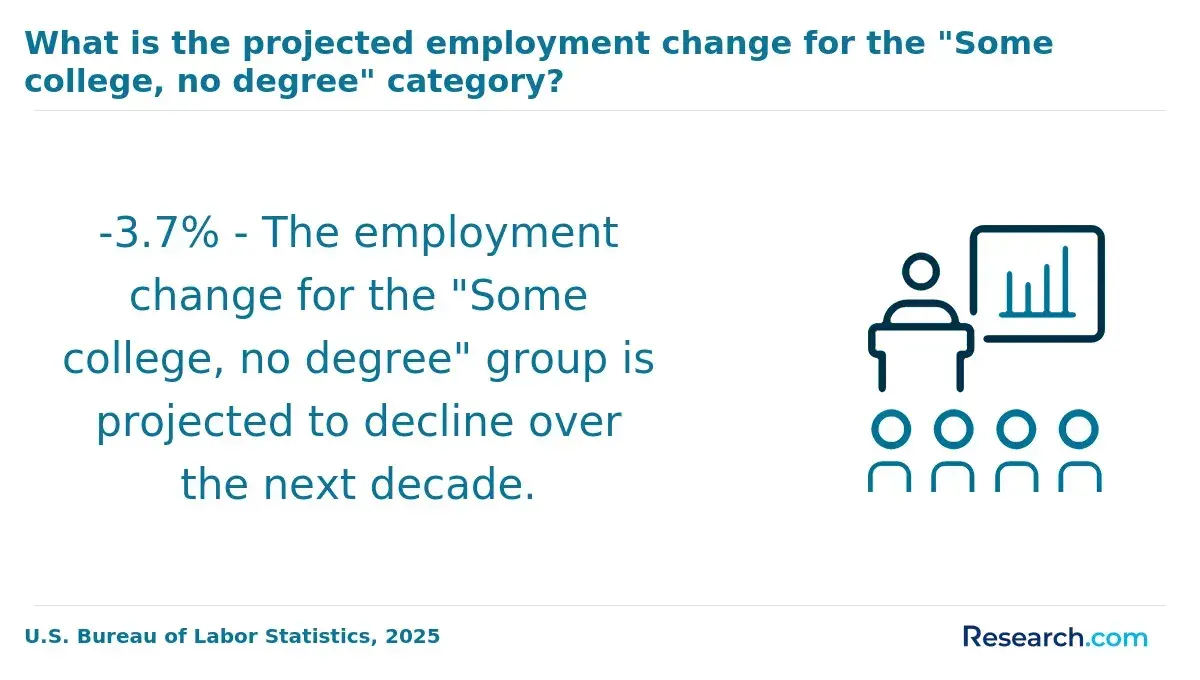
PhD admissions usually assess readiness for a particular research environment, not just eligibility for graduate school. Applicants generally need at least a bachelor's degree; some programs accept direct entry, while others require or prefer a relevant master's degree. Expect academic transcripts, recommendations, a statement of research interests, and, where relevant, writing samples, technical prerequisites, or evidence of prior research. GRE or GMAT policies vary by program.
For a research-focused application, explain a question you want to investigate, why the department can support it, and which faculty might be a fit. Check whether contacting an adviser before applying is required or encouraged. Do not assume a master's degree guarantees admission, transfer credit, or a shorter PhD.
Online coursework can reduce travel, but an online PhD may still require scheduled seminars, research meetings, campus visits, laboratory work, placements, or an in-person defense. Campus study can make access to labs and research groups easier; online or hybrid study may better suit an established professional whose research can be supported remotely. Neither format establishes part-time eligibility on its own.
Ask the department which requirements must be completed at a particular time or location, whether a prospective adviser supervises remote students, and how research resources are accessed. If military service affects where you can study, an online military college comparison can help you frame flexibility questions, but verify the specific PhD's requirements separately.
PhD cost is better measured by net financial commitment than by published tuition. Compare tuition remission, stipend, mandatory fees, health coverage, summer support, and the number and conditions of funded years. Add living expenses and earnings forgone during study. An unfunded, part-time program may allow continued employment but still produce a higher total cost than a funded, full-time option.
Completion time depends on coursework, examinations, candidacy, research, and the dissertation - not credits alone. Ask departments for their own time-to-degree and completion information, including what happens if funding expires before the dissertation is finished. Advertised one year doctoral programs should not be assumed to represent a typical research PhD; verify the awarded credential and every remaining requirement.
PhD coursework builds disciplinary knowledge and research methods. Depending on the field, students may also work in a lab, analyze data, teach, or join a faculty research project. Programs commonly require qualifying or comprehensive examinations, a dissertation proposal, original research, and a defense; the precise sequence varies. Finishing classes does not mean the degree is nearly complete.
Compare the methods you would learn with those used in your target career. In AI research, for example, technical depth and access to computing resources can be decisive. In public policy, data access and identification methods may matter more. Ask potential advisers how students develop publishable work, how often they meet, and what support exists if a project changes direction.
PhD holders may pursue research and research-focused teaching in universities, government, nonprofits, healthcare, or industry. The relevant job title depends heavily on the field. Academic hiring can be competitive, and some research careers involve postdoctoral training or expect a publication record. A PhD alone does not confer a faculty appointment, leadership position, or professional license.
Work backward from actual job descriptions: note required methods, publications, credentials, and experience, then compare them with the doctoral curriculum. If the jobs you want normally accept a bachelor's degree plus experience, examine the bachelor's degrees job outlook before committing years to doctoral study.
Occupational pay is useful context, not a forecast of what PhD graduates earn. BLS reports a 2024 median annual wage of $140,910 for computer and information research scientists, an occupation in which a master's degree is typically the entry-level education. It reports $124,910 for information security analysts, for whom a bachelor's degree is typically the entry-level education. The comparison shows why a higher-paying field is not, by itself, a reason to earn a PhD.
For a personal return-on-investment estimate, compare your realistic post-degree jobs with your current earnings and likely alternatives. Include net tuition, stipend income, lost earnings, debt, and the possibility that your preferred job requires additional training. Request field-specific placement information from each department rather than treating a national occupational median as its graduates' outcome.
How Does a PhD Affect Job Outlook and Professional Licensing?
A growing occupation can offer opportunities without specifically rewarding doctoral education. BLS's projected growth for information security analysts, for example, reflects the occupation as a whole; it does not measure demand for cybersecurity PhDs. Conversely, research-intensive roles may value doctoral work even when a broad occupational growth rate is less striking. Read job postings for the particular role and employer you want.
Licensing is a separate decision. Prospective clinical psychologists, advanced-practice nurses, educators, and clinical social workers should check the appropriate state board's education, supervised-practice, examination, and certification rules before enrolling. A degree that supports research may not satisfy a practice pathway. A frequent mistake is choosing a program for its field name, then discovering that it does not match the intended license or job.
Other Things You Should Know About
The best fit is the field that supports your intended research-based occupation and offers appropriate faculty, training, and funding. A fast-growing occupation is not necessarily a PhD-level occupation.
It can be for research-intensive work. For many management, software, security operations, and policy jobs, compare the doctorate's added cost and time with experience or a relevant master's degree.
Not all are. Ask each department which students receive tuition remission and a stipend, how long support lasts, and which fees or living costs remain your responsibility.
Possibly, but online delivery does not establish licensure eligibility. Confirm the program's accreditation and required clinical or in-person components with the relevant state licensing board.
- Types of Financial Aid: Grants, Work-Study, and Loans | studentaid.gov https://studentaid.gov/understand-aid/types
- What are the different ways to pay for college or graduate school? | Consumer Financial Protection Bureau https://www.consumerfinance.gov/ask-cfpb/what-are-the-different-ways-to-pay-for-college-or-graduate-school-en-545/
- Delayed Time-to-Degree and Post-college Earnings - PMC https://pmc.ncbi.nlm.nih.gov/articles/PMC7875953/
- Annual Earnings by Educational Attainment - COE https://nces.ed.gov/programs/coe/indicator/cba/annual-earnings
- Intentions versus outcomes in doctoral degree completion | tandfonline.com https://www.tandfonline.com/doi/full/10.1080/07294360.2024.2396347
- EdD vs. PhD in Education: Key Differences, Careers & Salary | Alverno College https://edd.alverno.edu/articles/professional-doctorate-vs-phd/
- EdD vs. PhD in Education: Choosing the Right Program | Goodwin College of Professional Studies https://drexel.edu/soe/resources/career-path/edd-vs-phd/
- Graduate Employment Outcomes | Office of Career and Professional Development | Harvard T.H. Chan School of Public Health https://hsph.harvard.edu/office/career-professional-development/graduate-employment-outcomes/
- Paying For Graduate School: 7 Funding Strategies | Northeastern University Graduate Programs https://graduate.northeastern.edu/knowledge-hub/paying-for-graduate-school/
- Are MPH Graduates Aligned with Today's Job Market? | Columbia University Mailman School of Public Health https://www.publichealth.columbia.edu/news/are-mph-graduates-aligned-todays-job-market