2027 Best Part-Time Doctoral Programs for Job Security

Co-Founder and Chief Data Scientist
A part-time doctorate can let you keep working while preparing for a more specialized role - but a degree alone cannot make a job secure. The decision matters especially in fields where demand is changing: the U.S. Bureau of Labor Statistics (BLS) reports a May 2024 median annual wage of $129,210 for nurse practitioners, an occupation that requires advanced nursing preparation and licensure.
This guide compares doctoral program families by career relevance, entry requirements, flexibility, and cost so you can identify where doctoral study may strengthen your options - and where experience, a master's degree, or certification may serve you better.
Key Things You Should Know
- For a licensed nurse seeking an advanced clinical role, a part-time DNP may offer the clearest link between doctoral study and a defined career path; the degree does not replace required certification or state licensure.
- Cybersecurity, computer science, and public health doctorates can support specialized work, but many related jobs do not require a doctorate. Compare the degree's added value with experience and less costly credentials.
- Job security depends on the occupation and employer, not the credential alone. BLS reports a May 2024 median wage of $124,910 for information security analysts; that is an occupational figure, not a salary prediction for doctoral graduates.
Top 10 Best Part-Time Doctoral Programs for Job Security - Top Programs
Business / DBA Programs
A Doctor of Business Administration (DBA) usually emphasizes applied research and organizational decision-making. It may fit an experienced manager who can use a workplace-based project while studying part time. Compare programs' published part-time pathways, employer support, and project requirements.
A DBA can deepen expertise, but management jobs generally depend heavily on experience; an MBA, industry certification, or stronger work record may be the better investment if your goal is a promotion rather than doctoral-level inquiry.
Education / EdD Programs
A Doctor of Education (EdD) commonly focuses on applied problems in teaching, learning, or educational systems. Part-time study may suit working educators who can connect research to their jobs. Check whether the program's concentration fits the position you want and whether an applied project or dissertation is required.
School employment and advancement depend on district needs and state rules; an EdD does not automatically confer an educator license, an administrative credential, or a leadership appointment.
Educational Leadership Programs
Educational leadership doctorates - often EdD programs - are most relevant to educators pursuing district, higher education, or organizational leadership. Look for coursework in finance, policy, personnel, and organizational improvement, plus a part-time schedule compatible with the academic calendar.
Before enrolling, check the requirements of your intended role: principal and superintendent positions may require state-specific credentials and prior experience. If you primarily need an initial administrator credential, a qualifying master's or certification pathway may be more direct.
Psychology Programs
Psychology doctorates serve different goals. A clinical PsyD or PhD may prepare students for licensure, subject to program accreditation, supervised training, examinations, and state requirements; a nonclinical psychology doctorate generally does not.
Part-time options can be difficult to reconcile with practica, internships, laboratory work, or research meetings. For job security, first decide whether you need clinical licensure, research training, or neither. Verify the exact program pathway with the relevant state board before committing.
Nursing / DNP Programs
A Doctor of Nursing Practice (DNP) emphasizes advanced practice, evidence-based care, or systems leadership. Part-time pathways can work for employed nurses, but clinical placements and project work still demand scheduled time.
Check whether the program admits nurses with your current degree and license and whether its specialty meets the certification and state requirements for your target role. The DNP is especially relevant when it supports a defined advanced-practice pathway; a nursing PhD is generally the better fit for original research.
Public Health Programs
A Doctor of Public Health (DrPH) usually emphasizes practice and leadership; a public health PhD generally emphasizes original research. Both can support specialized work in health systems, government, or research, but funding and hiring depend on employers and budgets.
Compare part-time availability, quantitative training, fieldwork, and the culminating project or dissertation. If your target position asks for an MPH and experience rather than a doctorate, that route may preserve income and provide a faster path.
Computer Science Programs
A computer science PhD can prepare students for advanced research in areas such as AI, systems, or human-computer interaction. Its value is strongest when the intended work requires original research - not simply software development or technical management.
Part-time study may depend on adviser availability, laboratory participation, and dissertation progress. Ask how the department supports employed researchers and whether funding requires full-time work. For many industry roles, a relevant master's degree plus substantial project experience is a practical alternative.
Cybersecurity Programs
Cybersecurity doctorates may focus on technical research, policy, or organizational risk. Match the curriculum to the work you actually want: a research-focused PhD differs from a practice-oriented doctorate. Ask whether the program officially permits part-time enrollment and how research meetings or residencies are scheduled.
Many security positions value demonstrated experience and certifications without requiring doctoral study. A doctorate makes more sense when your goal specifically calls for advanced research, specialized instruction, or evidence-based leadership.
Social Work / Human Services Programs
A Doctor of Social Work (DSW) often centers on advanced practice and leadership, while a social work PhD typically centers on research. Either may suit an established professional seeking specialized responsibilities, but neither substitutes for a state social work license.
Check the program's part-time schedule, practice or research requirements, and fit with local employers. If your goal is clinical practice, determine whether the qualifying master's degree, supervised experience, and licensure - not another degree - are the essential next steps.
Public Administration / Public Policy Programs
A Doctor of Public Administration (DPA) typically focuses on applied public-sector leadership; a public policy PhD usually places greater weight on research methods and original scholarship. Both can inform work in government or nonprofits, but hiring and advancement also depend on policy expertise, experience, and agency resources.
Compare part-time research expectations with your work schedule. If you want to enter public service or advance in an existing role, an MPA, policy master's, or targeted experience may suffice.
What are the best part-time doctoral degrees for job security?
Which fields stand out? For an already licensed professional, a part-time DNP tied to a specific advanced nursing role offers a relatively direct connection between doctoral preparation and occupational eligibility. Clinical psychology can also lead toward a defined licensed profession, but training and licensure requirements may make part-time study less feasible. Education leadership and the EdD can be valuable when they match an employer's advancement criteria.
For research-oriented goals, computer science, cybersecurity, and public health may provide useful specialization. Their doctorate-level payoff is less predictable when the target job accepts a master's degree or experience.
Likewise, a field associated with degrees for remote work is not necessarily a secure or remote doctoral career: job duties, hiring practices, and employer policies determine those outcomes. The best choice is the program that meets your intended role's requirements at a manageable total cost.
The strongest career outcome is one you can connect to a specific role - not the broad possibility of earning more. This comparison shows where doctoral study may add something distinct and what to test before applying.
| Program family | Potential doctoral value | Key career-outcome test |
| DNP | Advanced clinical or systems preparation | Does the specialty meet the requirements for your intended certification and state license? |
| Clinical psychology PsyD or PhD | Preparation toward clinical licensure | Does the exact program support your state's education and training requirements? |
| EdD or educational leadership | Applied leadership expertise | Does your target employer reward the degree, and do you need a separate credential? |
| Computer science or cybersecurity PhD | Original research preparation | Does the target role call for doctoral research rather than experience alone? |
| DBA, DrPH, DSW, or DPA | Applied specialization or leadership development | Can you identify roles where the added preparation justifies the cost and time? |
A program's reputation is not an employment outcome. Ask for career information specific to its doctoral graduates, and consider how many students were already employed in the field before enrolling.
BLS wages describe occupations, not what graduates of a particular doctorate earn. These May 2024 U.S. medians offer useful career context, but each role has its own entry requirements and includes workers with different education levels.
| Occupation | May 2024 median annual wage | How to interpret it |
| Nurse practitioners | $129,210 | Advanced nursing preparation, national certification, and state licensure apply; a DNP is not the only possible educational pathway. |
| Information security analysts | $124,910 | Many positions do not require a doctorate; technical experience matters. |
| Medical and health services managers | $117,960 | Experience is central, and a DrPH, DNP, DBA, or other doctorate is not generally an entry requirement. |
Compare any potential pay improvement with tuition, funding, time away from work, and the salary you could earn without doctoral study. A high occupational median alone is not evidence of a doctorate's return on investment.
Online or hybrid doctoral programs can be reputable if the institution holds recognized accreditation and the program meets requirements relevant to your field. Format alone does not establish quality or licensure eligibility. For clinical psychology, nursing, education, and social work, check applicable programmatic accreditation and your state board's rules for the exact program and intended occupation.
"Online" also does not necessarily mean fully remote or self-paced. A part-time student may still need scheduled seminars, campus residencies, research meetings, local clinical placements, or an in-person defense. Request a written account of every attendance requirement before applying.
Requirements vary by degree and institution. Applicants generally need at least a bachelor's degree; many practice-oriented programs require a relevant master's degree, professional experience, and sometimes a current license. Research PhD programs may place particular weight on research preparation, writing samples, faculty fit, and adviser availability. Schools may also request transcripts, recommendations, a statement of purpose, an interview, or field-specific prerequisite coursework.
Check the doctoral program's policy rather than assuming a university-wide GPA or testing rule applies. If you have not yet completed a bachelor's degree, cheap online degrees can be a starting point for comparing undergraduate options - not a shortcut into doctoral admission. If you already hold a master's degree, ask whether any graduate coursework will apply to the doctorate; prior graduate study does not automatically reduce its requirements.
Part-time completion depends on the program's required courses and enrollment rules, but the longest uncertainty may come after coursework: qualifying exams, research approval, a dissertation or applied project, clinical hours, and a defense can all affect the finish date. Ask for the program's published part-time time-to-degree information, course rotation, and maximum completion period. Clarify whether any advertised timeline assumes a particular master's degree or advanced standing.
If the job you want does not require doctoral preparation, compare that commitment with experience or quick master's degrees online. A shorter master's pathway is useful only if it supplies the qualifications your target employer or licensing board actually requires.
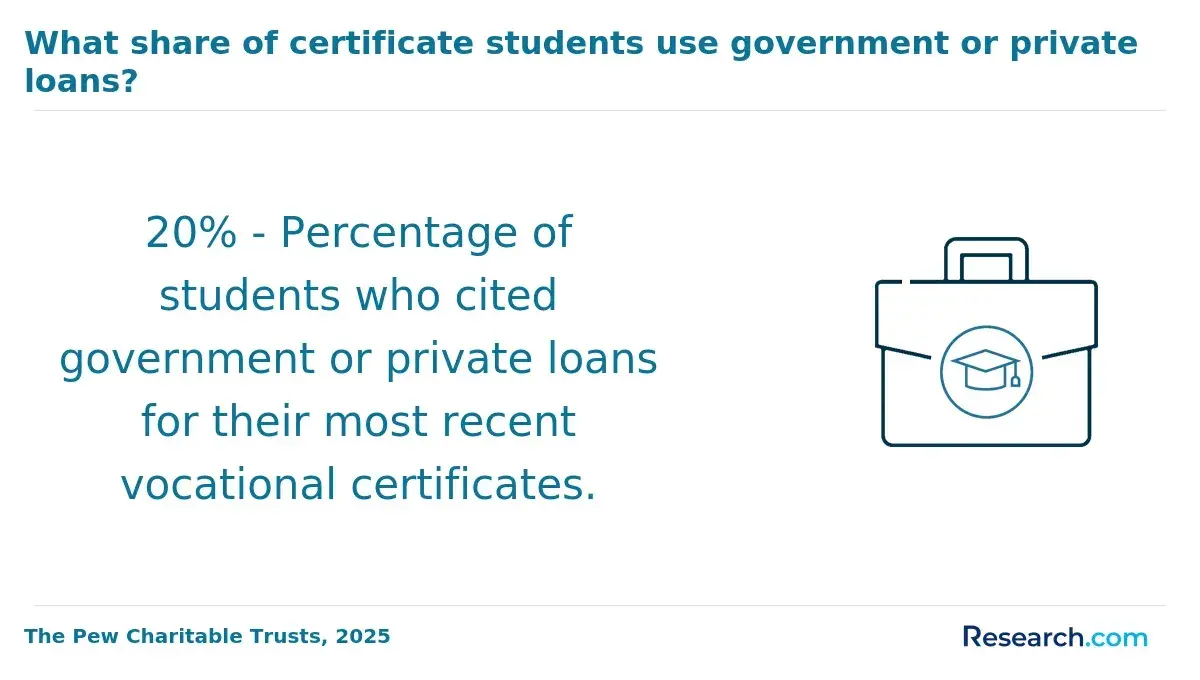
There is no reliable single price for a part-time doctorate. Calculate the full commitment from doctoral tuition, required credits, mandatory and program fees, travel or residency expenses, research or clinical costs, and the likely time to completion. Part-time study can preserve employment income, but a longer enrollment period may extend fees or delay a career transition.
Compare written funding terms as carefully as sticker tuition. Some research PhD programs offer assistantships, stipends, or tuition remission, often with eligibility or work conditions; practice-oriented doctorates may rely more heavily on student payment or employer assistance.
Federal aid eligibility also depends on the school and student. Resources about what online college gives the most financial aid can help frame aid questions, but undergraduate aid comparisons do not establish what a specific doctoral program will award.
A doctorate can support clinical practice, specialized research, teaching, public-sector analysis, or leadership - but the credential must match the career. A DNP may contribute to preparation for an advanced nursing specialty; a clinical psychology doctorate may lead toward psychologist licensure. Both paths have separate examination, supervised-practice, certification, or state licensing requirements.
A research PhD can strengthen qualifications for research roles, while academic hiring may also depend on publications, teaching experience, and, in some fields, postdoctoral work.
For cybersecurity and management, relevant experience or industry certifications may be more immediately useful than a doctorate. Identify the jobs you intend to pursue, then compare their actual requirements with each program's curriculum and graduate outcomes.
How can you choose a reputable part-time doctoral program?
Start with the role you want and work backward to its required degree, license, and experience. Then check institutional and relevant programmatic accreditation, confirm that the specific doctorate officially permits part-time enrollment, and obtain its full curriculum and attendance schedule. For a PhD, discuss adviser fit, research access, funding conditions, and dissertation expectations; for a professional doctorate, examine clinical or workplace-project support.
Before accepting an offer, request a personalized cost estimate, a written evaluation of any eligible graduate transfer credit, and available part-time completion and career-outcome data.
Warning signs include vague licensure claims, an "online" label with undisclosed visits, or salary claims based solely on occupational medians. If the doctorate does not add a necessary qualification or credible advantage over a master's degree, certification, or experience, postponing enrollment may be the sounder choice.
Other Things You Should Know About
Possibly, but "part-time" describes enrollment, not a guaranteed workload. Ask about fixed class times, research meetings, clinical placements, and employer scheduling needs before enrolling.
There is no universally safest degree. A doctorate tied to a specific eligible occupation or well-defined research goal may be more useful than one pursued for its title alone. Check local hiring requirements and licensing rules.
Enrollment pace alone does not determine credibility. Evaluate institutional accreditation, research training, faculty fit, dissertation standards, and how the program supports part-time researchers.
Not necessarily. Some programs offer advanced standing or accept eligible graduate credits, while others require the same doctoral research and residency components regardless of prior study. Get a program-level credit evaluation.
- The Federal Work-Study Program - FSA Partner Connect https://fsapartners.ed.gov/knowledge-center/fsa-handbook/2024-2025/vol6/ch2-federal-work-study-program
- THE VALUE OF EDUCATIONAL DEGREES IN TURBULENT ECONOMIC TIMES: EVIDENCE FROM THE YOUTH DEVELOPMENT STUDY - PMC https://pmc.ncbi.nlm.nih.gov/articles/PMC4792031/
- Types of Financial Aid: Grants, Work-Study, and Loans | studentaid.gov https://studentaid.gov/understand-aid/types
- Fast Facts: Tuition costs of colleges and universities (76) | ed.gov https://nces.ed.gov/fastfacts/display.asp
- Employer-offered educational assistance programs can help pay for college | Internal Revenue Service https://www.irs.gov/newsroom/employer-offered-educational-assistance-programs-can-help-pay-for-college
- Survey of Earned Doctorates (SED) 2024 - NCSES - NSF https://ncses.nsf.gov/surveys/earned-doctorates/2024
- Employment outlook for graduate-level occupations | bls.gov https://www.bls.gov/careeroutlook/2018/article/graduate-degree-outlook.htm
- Chapter 5 - Advanced Degree or Exceptional Ability https://www.uscis.gov/policy-manual/volume-6-part-f-chapter-5
- Education expansion and high-skill job opportunities for workers: Does a rising tide lift all boats? - ScienceDirect https://www.sciencedirect.com/science/article/pii/S0927537123000295
- University of San Diego Career Outcomes https://www.sandiego.edu/outcomes/careers/