2027 Best Online Speech Pathology Master's Programs for Residents of Fremont, CA

Co-Founder and Chief Data Scientist

Reviewed by Rhea Paul, PhD
SLP Education & Research Expert
Fremont residents choosing an online speech-language pathology master's program need more than a convenient class schedule: California licensure, supervised clinical training, and campus-travel rules determine whether a degree supports the career they want. This guide compares the decision factors that matter most, including CAA accreditation, California eligibility, Bay Area placement planning, cost transparency, and outcomes. It is designed for prospective speech-language pathologists who want to make a careful, licensure-focused choice before applying.
Key Things You Should Know
- Choose a program with current Council on Academic Accreditation in Audiology and Speech-Language Pathology (CAA) accreditation and obtain written confirmation that California residents may enroll; "online" does not automatically mean California licensure eligibility.
- Clinical education remains in person. Expect supervised practicum and externship experiences, and ask whether the school can arrange placements within commuting distance of Fremont rather than assuming a Bay Area site is available.
- The U.S. Bureau of Labor Statistics reports a $97,870 median annual wage for speech-language pathologists in May 2025 and projects 17% employment growth from 2025 to 2035, but a master's degree alone does not confer a California license.
Which online speech pathology master's programs are best for Fremont residents?
The best option depends on whether it is authorized to enroll California students, can support required local clinical education, and fits the student's schedule and travel budget. A program's brand or online delivery alone is not enough; Fremont applicants should prioritize written California disclosures and a realistic placement plan.
The programs below are examples of established distance-learning pathways that prospective California students may evaluate. Enrollment eligibility, required visits, cohort dates, tuition, and placement availability can change, so applicants should confirm every item directly with each institution before paying an application fee.
| Program | Delivery considerations | Potential Fremont fit | Important trade-off to verify |
| Baylor University, Online MS in Communication Sciences and Disorders | Distance coursework combined with clinical education and required immersive experiences. | May suit students seeking a structured cohort model with an established online SLP pathway. | California authorization, immersion travel, live-session timing, and the school's current ability to secure California placements. |
| Emerson College, Online MS in Speech-Language Pathology | Online academic coursework with clinical placements and in-person clinical requirements. | May fit applicants who value a dedicated online program and can plan for required travel. | Exact residency requirements, California disclosures, placement geography, and total charges beyond tuition. |
| New York University, Online MS in Communicative Sciences and Disorders | Online curriculum with fieldwork components arranged under program policies. | May appeal to students able to manage a cohort schedule and potential East Coast time-zone commitments. | California student eligibility, synchronous meeting times, travel obligations, and local clinical-site process. |
| University of Northern Colorado, distance MA in Speech-Language Pathology | Distance-learning option with clinical training requirements that remain hands on. | May be worth considering for students seeking a public-university distance pathway. | Whether the current distance cohort accepts California residents, campus attendance expectations, and placement support. |
Use this as a shortlist rather than a universal ranking. Applicants who need the broadest possible scheduling flexibility should compare several online speech pathology programs, but should never interpret easier admission as evidence of easier licensure or less demanding clinical training.
A strong choice for a Fremont resident is one that answers four questions in writing: Can I enroll from California? Is the program CAA-accredited? What travel is mandatory? How are practicum and externship sites approved and secured? If a school will not answer these clearly, another program is usually a safer choice.
Which California programs meet speech-language pathology licensure requirements?
California does not have a separate "online SLP degree" license category. For licensure as a speech-language pathologist, applicants generally need qualifying graduate education, supervised professional experience, examination requirements, and a California application approved by the Speech-Language Pathology and Audiology and Hearing Aid Dispensers Board. A CAA-accredited master's program is the most straightforward educational foundation, but students should confirm requirements with the Board because rules and individual transcript reviews can change.
California also has multiple campus-based CAA-accredited programs. These can be particularly practical for Fremont residents who prefer predictable regional clinical partnerships and do not need a primarily online curriculum.
| California option type | Examples Fremont applicants may investigate | Why it may fit | Limitation |
| Bay Area public university program | San José State University, San Francisco State University, and California State University, East Bay | Potentially shorter local commuting distance and regional professional connections. | These are not interchangeable with fully online programs; format, cohort design, prerequisites, and admissions policies vary. |
| Other California public university program | California State University campuses such as Fresno, Fullerton, Long Beach, Los Angeles, Sacramento, and San Diego State | May offer California-resident tuition structures and in-state clinical networks. | Relocation, commuting, and competitive admission may be material concerns. |
| California private university program | Programs at institutions such as University of the Pacific, University of Redlands, Chapman University, and Loma Linda University | May offer different calendars, cohort sizes, or location options. | Private tuition and mandatory fees can be materially higher; compare net price rather than institutional type alone. |
Do not treat this table as a statement that every named program is online, open for the next cycle, or suitable for every applicant. Instead, use it to identify California-based alternatives when an out-of-state online program cannot place students locally or requires more travel than expected.
Students who intend to work in California public schools should also distinguish a state professional license from the credential requirements of the employing school system. School-based roles can involve additional California Commission on Teacher Credentialing requirements, even when the clinician holds or is pursuing professional SLP licensure.
Which accredited online programs are available to Fremont students?
Accreditation is the first filter, but availability has two separate meanings. A program must hold an appropriate CAA status, and it must be authorized and willing to enroll a student who resides in California. The latter is governed by state authorization and institutional policy, so it can differ by program and admission cycle.
When comparing programs, use CAA accreditation as a baseline and ask admissions for the school's California professional-licensure disclosure. The most useful written response identifies whether the curriculum meets, is designed to meet, or has not been determined to meet California educational requirements. A vague statement that graduates may "seek licensure" is not the same as a California-specific disclosure.
CAA accreditation means the program has met the accreditor's standards; it does not mean the student has automatically completed every state licensing step. Candidacy status is also not identical to full accreditation. Applicants considering a candidate program should ask how its status affects graduates, what happens if accreditation timing changes, and whether California regulators will accept the degree for the applicant's expected graduation date.
A practical comparison starts with the program's official CAA listing, its state authorization page, and its California licensure disclosure. Save copies of those pages and of the admissions representative's response. Policies can change between inquiry and enrollment, and written records are more useful than verbal assurances.
How does online study work for speech pathology students in Fremont?
Online SLP master's programs deliver much of the academic curriculum remotely, including topics such as language disorders, dysphagia, phonetics, neurogenic communication disorders, assessment, research, and professional ethics. They are not fully remote professional-training programs: skills assessment, client interaction, practicum, and advanced clinical experiences require supervised work with real patients or clients.
Before choosing a format, distinguish these components:
- Asynchronous coursework lets students complete lectures and assignments on their own schedule, but weekly deadlines still create a steady workload.
- Synchronous classes require attendance at set times; Fremont students should check whether sessions follow Pacific Time or another time zone.
- Simulation, telepractice, and remote supervision may supplement training, but they do not eliminate required direct clinical experience.
- Campus immersions may require travel for assessments, orientation, skills labs, or faculty-led clinical activities.
- Practicum and externship placements are typically completed in person at approved schools, clinics, hospitals, rehabilitation facilities, or other settings.
For applicants without communication sciences and disorders coursework, the degree may take longer because foundational prerequisites are required before or alongside graduate study. A five-year combined bachelor's-to-master's route can be more efficient for first-year undergraduates, while career changers often need a post-baccalaureate or leveling sequence. Students exploring that earlier pathway can review best 5 year speech pathology programs as a separate option from a post-baccalaureate master's degree.
Online learning is often a good fit for self-directed students who can protect regular study time and tolerate occasional travel. It is less suitable for someone who needs a completely self-paced degree, cannot attend daytime clinical hours, or cannot travel when the program requires it. Clinical schedules are driven by sites and supervisors, not only by student preference.
What admissions requirements do these master's programs usually set?
Admissions requirements vary, but CAA-accredited SLP programs commonly seek evidence that an applicant can handle graduate science and clinical coursework. A bachelor's degree in communication sciences and disorders can simplify the path, although many programs also consider applicants from other majors who complete specified prerequisites.
Applicants should expect some combination of the following materials and should check each program's current application page rather than relying on a general checklist:
- A completed undergraduate degree and official transcripts.
- Required prerequisite courses, which may include speech and hearing science, phonetics, language development, anatomy and physiology, audiology, statistics, and social or behavioral science coursework.
- A stated minimum GPA or a holistic review process that considers academic trends and prerequisite grades.
- Letters of recommendation from academic or professional references who can address readiness for graduate study.
- A personal statement explaining career goals, relevant experience, cultural and linguistic awareness, and fit with the profession.
- A resume and, at some schools, an interview, writing sample, video response, or recorded communication exercise.
- Proof of English-language proficiency when required for applicants educated in another language or system.
Some programs no longer require the GRE, but applicants should not assume a GRE waiver applies across institutions or cycles. Likewise, a program may accept a non-CSD major while requiring several semesters of leveling coursework. The most common mistake is applying to a master's program without mapping completed courses against its prerequisite list; this can delay enrollment or create an unmanageable course load.
Students comparing admissions accessibility can use resources about online speech pathology programs, but admission should remain only one part of the decision. A program that admits an applicant but cannot support California placement and licensure goals is not a good practical fit.
How much do online speech pathology master's degrees cost?
Total cost is more important than advertised tuition. Online SLP programs may bill by credit, term, or cohort, and prices can differ for prerequisite courses, clinical fees, technology, background checks, liability coverage, travel, books, and graduation. Public universities may have different resident and nonresident rates, while private universities often charge one tuition rate but may still assess substantial program fees.
Instead of comparing a single headline figure, request a personalized cost sheet that separates the following categories:
- Tuition for every required graduate credit or term.
- Prerequisite or leveling-course tuition, if the applicant does not hold a CSD bachelor's degree.
- University, technology, clinical, simulation, and professional fees.
- Travel, lodging, meals, and local transportation for required immersions.
- Clinical compliance costs, such as immunizations, background checks, drug screening, and health insurance requirements when applicable.
- Lost work hours or child-care costs during daytime clinical placements.
Federal financial aid eligibility depends on the student, the institution, enrollment level, and the program's aid policies. Ask the financial-aid office whether prerequisite coursework is aid-eligible, whether summer enrollment changes borrowing needs, and whether institutional scholarships are available to distance students.
Cost should be weighed against time to licensure and program reliability, not only against the lowest tuition. A school with lower per-credit tuition can be more expensive in practice if it requires frequent travel or delays clinical placement. For a broader cost-comparison framework, see SLP master's online options, then verify each quoted figure directly with the university.
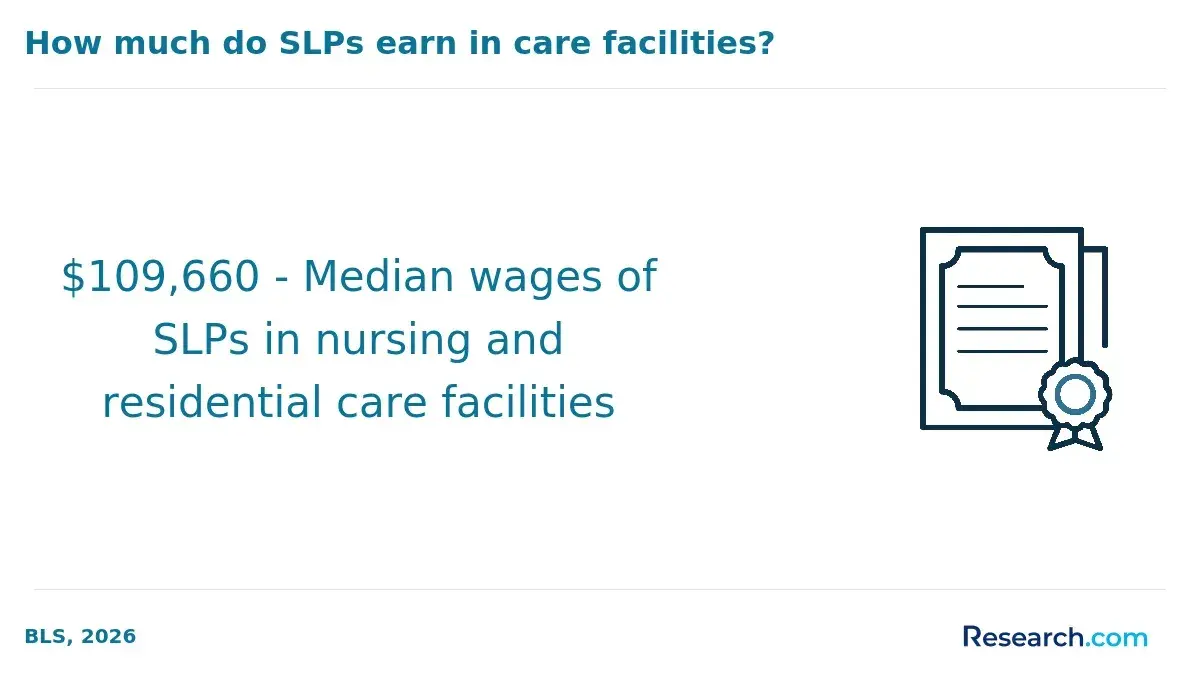
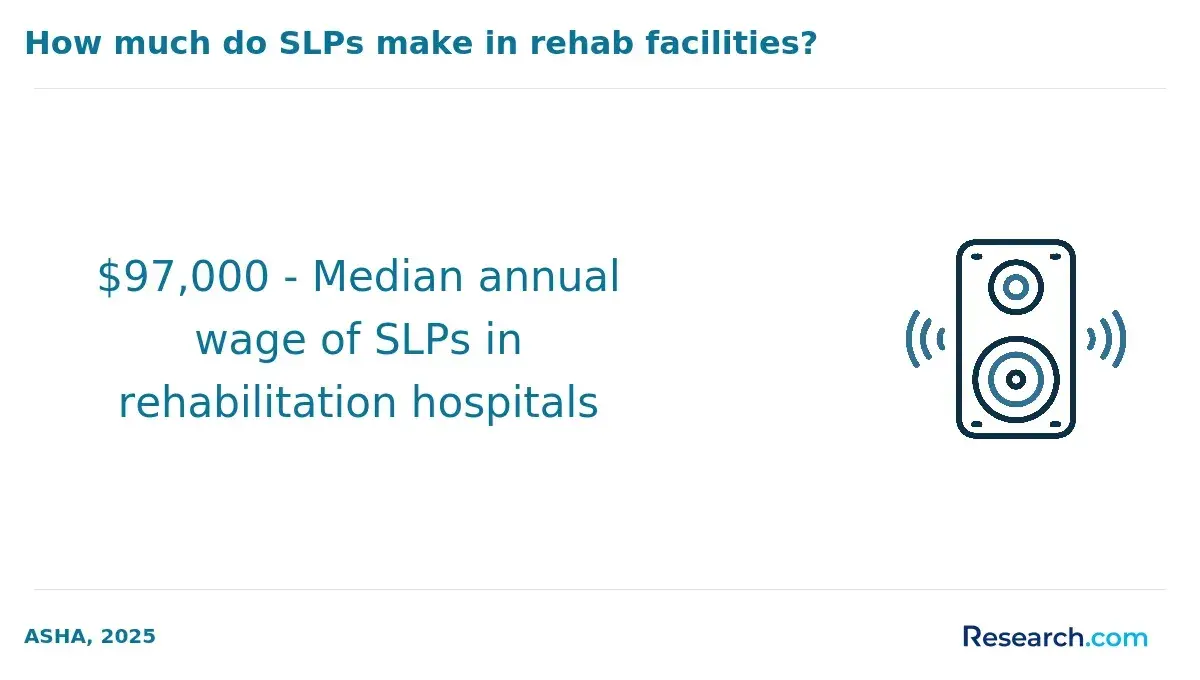
Borrowing should be conservative. The Bureau of Labor Statistics reported a national median annual wage of $97,870 for speech-language pathologists in May 2025, but pay varies by employer, setting, experience, hours, and location. That national benchmark can inform a repayment plan, but it is not a forecast of an individual graduate's income.
Which programs offer clinical placements near Fremont or the Bay Area?
No online program should be presumed to offer a Fremont, Oakland, San José, or San Francisco placement unless it specifically confirms that arrangement for the applicant's cohort. Clinical sites control capacity, supervisor availability, client needs, compliance requirements, and scheduling. A school may support California placements generally without guaranteeing a placement near a particular ZIP code.
Programs usually use one of two models. In a centralized model, the clinical education team identifies and contracts with sites, while students may provide preferences. In a shared-responsibility model, students help identify potential sites but cannot independently promise clinical hours until the program formally approves the site and supervisor. The second model can work well for a student with local professional contacts, but it shifts meaningful administrative risk to the student.
Ask each program these questions before enrolling:
- Do you currently accept California residents and arrange placements in Northern California?
- Have students recently completed placements within a reasonable commute of Fremont, without naming or disclosing protected site information?
- Who contacts sites, secures affiliation agreements, and resolves a placement that falls through?
- Can placements require commuting outside the Bay Area, temporary relocation, or unpaid daytime availability?
- How many clinical rotations are required, and which settings are required or encouraged?
- What happens if a student cannot be placed by the expected term?
A quality placement plan should include experience across relevant populations and communication disorders, not merely a convenient location. Students should also check whether a program's clinical sequence permits them to complete required supervised hours on schedule. It is wise to maintain transportation and scheduling flexibility, especially in a high-demand metropolitan area.
How do ASHA accreditation and California licensure affect program choice?
CAA accreditation and California licensure are related but separate safeguards. The Council on Academic Accreditation, part of the American Speech-Language-Hearing Association accreditation system, evaluates graduate programs against educational standards. California's licensing board decides whether an individual applicant meets the state's legal requirements to practice.
For a student seeking clinical SLP practice in California, the safest sequence is generally to complete a CAA-accredited graduate degree, satisfy required supervised clinical education, complete the required professional experience after graduation, meet examination requirements, and apply for state licensure. Applicants should verify the current requirements directly with the California licensing board because requirements may be revised and individualized reviews can depend on transcripts and supervised experience documentation.
Professional certification from ASHA, commonly called the Certificate of Clinical Competence in Speech-Language Pathology, is another credential employers may value. It is not identical to a California license, although its education, clinical fellowship, and examination framework often overlaps with the path many clinicians follow. School employment, medical employment, and telepractice can each add employer-specific or setting-specific conditions.
The critical red flag is a school that discusses national career preparation but provides no California-specific disclosure. Another is an institution that describes itself as "accredited" without clearly identifying CAA as the accreditor for the exact SLP degree and delivery pathway. Confirm the program name, degree level, campus or distance pathway, and accreditation status - not just the university name.
What outcomes should Fremont students compare before applying?
Applicants should compare outcomes that indicate whether a program can move students from admission to licensure-ready practice. Graduation and Praxis pass rates can be useful, but they should be read alongside cohort size, reporting period, placement support, and program changes. A single favorable statistic does not prove that a specific student will have the same result.
This table identifies outcome information that is most useful for a decision and how to interpret it.
| Outcome to compare | Why it matters | How to use it carefully |
| CAA accreditation status | Supports educational quality and is central to professional credential planning. | Confirm the status for the exact program and anticipated graduation period. |
| Graduation and completion information | Can reveal whether the stated sequence is realistically manageable. | Ask whether reported results include leaves, transfers, and part-time students. |
| Praxis examination results | Indicates how a graduating cohort performed on a common professional examination. | Review the reporting period and number of test takers rather than treating it as a guarantee. |
| Clinical placement process | Directly affects progression, travel, and readiness for supervised practice. | Ask for the written policy and contingency process, not just a general assurance. |
| Licensure disclosure for California | Addresses whether the curriculum is designed to meet state educational requirements. | Keep the disclosure and confirm any remaining requirements with the California board. |
| Graduate employment information | May show the settings graduates enter and career-services support available. | Ask how employment is defined, the reporting window, and whether geographic outcomes are available. |
Career demand is favorable at the national level: the BLS projects 17% growth in SLP employment from 2025 to 2035 and about 12,500 openings per year on average. This supports investigating the field, but it should not replace local job research, licensing verification, and an honest budget. Students wanting to compare setting-specific compensation can review how much do speech therapists make while remembering that salary depends heavily on role and employer.
Technology is also changing practice. Telepractice, electronic documentation, augmentative and alternative communication tools, and digital assessment systems are increasingly relevant skills. They can expand service-delivery options, but they do not replace the clinical judgment, supervised training, and state authorization required for patient-facing practice.
How should Fremont residents verify a program before enrolling?
Verify the program before committing a deposit, not after acceptance. This protects students from a mismatch involving state authorization, clinical travel, prerequisites, or costs that can be difficult to resolve once a cohort begins.
Follow this practical verification sequence:
- Confirm the exact degree is currently CAA-accredited through the accreditor's official directory, and record the program's accreditation status and review date.
- Read the university's California state-authorization and professional-licensure disclosures for the exact online pathway.
- Email admissions and request written confirmation that California residents may enroll in the intended start term.
- Ask the clinical education office how placements are obtained, whether Northern California placements are currently feasible, and what travel or relocation may be required.
- Request a full estimated cost of attendance that includes tuition, fees, travel, prerequisites, and clinical compliance expenses.
- Map completed coursework to prerequisites and ask whether any missing courses delay the graduate sequence.
- Confirm synchronous class times in Pacific Time and identify every required campus visit or immersion.
- Review the California licensing board's current education, supervised experience, and examination requirements independently.
Keep the responses in one comparison file. The most reliable program is not necessarily the cheapest or most recognizable one; it is the one that provides clear, consistent documentation and a realistic plan for California enrollment, clinical education, and post-graduation licensure.
Other Things You Should Know About Speech Language Pathology
Potentially, but the degree cannot be fully remote in practice. You need an eligible graduate program, supervised in-person clinical education, post-graduation professional experience, examination requirements, and California licensure approval. Confirm that the university accepts California residents and provides a California-specific licensure disclosure.
No. Many programs admit students with other bachelor's degrees, but they usually require communication sciences and disorders prerequisites. Completing those courses can add time and cost, so ask each school for a transcript evaluation before applying.
No. Clinical placement availability depends on approved sites, contracts, supervisors, capacity, and student scheduling. Ask for the school's placement policy and whether students in recent cohorts have been supported in Northern California, but do not rely on an informal promise of a Fremont-area site.
Some students work during portions of an online program, especially when coursework is asynchronous. However, practicum and externship schedules are often daytime and may require substantial availability. A reduced work schedule or financial plan is often more realistic during intensive clinical terms.
References
- Best Online Master's in Speech-Language Pathology for 2026 https://healthscience.pepperdine.edu/online-masters-in-speech-language-pathology/article/best-online-masters-in-speech-language-pathology-programs-guide.htm
- Online Master's in Speech Pathology Programs: 2026 Guide https://speechpathologymastersprograms.com/
- 2026 Most Affordable Online Speech Pathology Master's... https://www.onlineu.com/most-affordable-colleges/speech-pathology-masters-degrees
- Best Speech-Language Pathology Programs in America https://www.usnews.com/best-graduate-schools/top-health-schools/pathology-rankings
- Best Online MSLP Programs with No GRE Required for 2026 https://www.speechpathologydegrees.com/online/mslp-no-gre-required