2027 Best Online Dental Assistant Degree Programs at Nonprofit Universities

Co-Founder and Chief Data Scientist
Choosing an online dental assistant program is complicated because clinical training, state rules, and certification eligibility can matter more than whether classes are online. The U.S. Bureau of Labor Statistics projects 8% employment growth for dental assistants through 2033, faster than the average for all occupations.
This guide helps prospective students compare nonprofit programs, distinguish legitimate online options from impractical ones, estimate costs, and select a credential that fits their state, schedule, and career plans.
Key Things You Should Know
- Most dental assisting programs are not fully online: lectures may be online, but hands-on lab work, radiography training, externships, or clinical experiences commonly require in-person participation.
- For dental assistants, institutional accreditation alone is not enough; students should confirm whether the program is accredited by the Commission on Dental Accreditation (CODA) and meets their state's registration, radiography, or expanded-functions rules.
- Dental assistants had a median annual wage of $47,300 in May 2024, according to the U.S. Bureau of Labor Statistics; compare total program cost and local credential requirements before borrowing for a degree.
What Makes an Online Dental Assistant Degree Program at a Nonprofit University Different?
An online dental assistant degree program at a nonprofit university is offered by a public institution or a private institution that reinvests revenue into its educational mission rather than distributing profits to owners. Nonprofit status can support access to federal aid and established student services, but it does not independently prove that a program is affordable, CODA-accredited, or recognized by employers in a student's state.
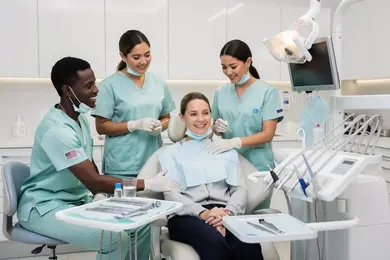
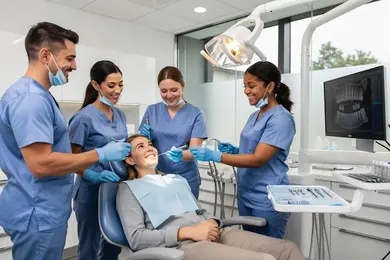
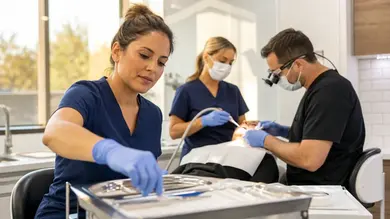
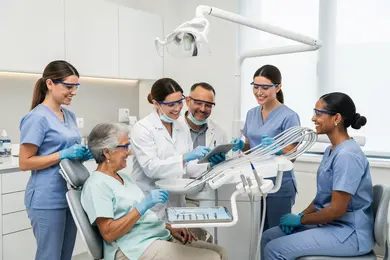
Dental assisting is a clinical support occupation. Assistants prepare treatment rooms, sterilize instruments, update records, support dentists during procedures, take dental images where authorized, and explain basic postoperative instructions. Because these skills require supervised practice, the strongest "online" options are usually hybrid: academic courses are delivered online while labs and clinical experiences occur at a campus, partner site, or approved dental practice.
Students considering adjacent health-care routes should not assume the credentials are interchangeable. A medical assistant course online may prepare learners for broader medical-office work, while dental assisting programs focus on oral anatomy, chairside procedures, infection control, dental materials, and dental radiography.
The following comparison shows the structural differences applicants are likely to encounter. It is more useful than treating "nonprofit" as a quality ranking.
| Program type | Typical provider | Online suitability | Best fit | Key limitation |
| Certificate or diploma | Public nonprofit community college or technical college | Often hybrid | Students seeking the fastest entry route | May have limited general-education transfer value |
| Associate degree | Public nonprofit college or university | Usually hybrid | Students wanting clinical preparation plus transferable credits | Clinical scheduling can extend completion time |
| Bachelor's degree with dental-related focus | Public or private nonprofit university | More online coursework may be possible | Licensed assistants pursuing management, education, or completion studies | Does not automatically qualify a newcomer for clinical assisting |
| Dental hygiene or health-sciences bachelor's completion | Nonprofit university | Often online after prior credentials | Experienced professionals seeking advancement | Admission commonly requires prior licensure or an associate degree |
A public nonprofit college may offer lower in-state tuition, while a private nonprofit may offer smaller cohorts, more frequent starts, or institutional scholarships. Neither model is automatically better. The best value is the program that meets state requirements, permits a realistic clinical placement, accepts useful transfer credits, and has a total cost the student can manage.
How Can Students Verify Accreditation for an Online Dental Assistant Degree at a Nonprofit University?
Accreditation should be verified before applying, not after enrollment. Institutional accreditation evaluates the college or university as a whole. Programmatic accreditation evaluates the dental assisting curriculum, facilities, faculty, safety standards, clinical experiences, and learning outcomes. For dental assisting, CODA is the key specialized accreditor to investigate.
A CODA-accredited dental assisting program may make graduates eligible for certain certification pathways and can satisfy education requirements in states that regulate dental assistants. However, eligibility is not identical across states. Some states require registration, radiography permits, jurisprudence exams, specific coursework, supervising-dentist documentation, or separate expanded-functions training.
Use this verification sequence before paying an application fee. It protects against a common mistake: relying on a school representative's general statement that the university is "accredited."
- Confirm that the university holds recognized institutional accreditation and is eligible to participate in federal student aid programs.
- Search CODA's current accredited-program directory for the exact campus, program name, and credential level; do not assume a related dental program is also accredited.
- Ask the program whether online students complete the same required labs and clinical competencies as campus students.
- Check the dental board or licensing authority in the state where you expect to work, especially for radiography and expanded-function requirements.
- Request written confirmation of whether the curriculum is designed to meet requirements in your state and what additional steps may be necessary.
Red flags include a school that will not identify the program's accreditation status, promises that online study alone meets all clinical requirements, or gives vague answers about out-of-state eligibility. If a program is not CODA-accredited, that does not always make it unusable, but students should obtain written confirmation from their state regulator and prospective employers before enrolling.
How Rigorous Are Online Dental Assistant Degree Programs at Nonprofit Universities?
Rigorous online dental assistant programs require the same core knowledge and competency assessment expected in classroom-based training. Typical coursework includes oral anatomy, dental terminology, infection prevention, dental materials, chairside assisting, dental pharmacology, dental radiography, ethics, records management, and practice administration. Students should expect exams, case-based assignments, skills checkoffs, and supervised clinical evaluation.
The online portion can be demanding because students must learn scientific vocabulary and safety procedures independently while meeting fixed clinical deadlines. Asynchronous lectures offer convenience, but practical training rarely operates asynchronously. A clinical site may require daytime availability, immunizations, background checks, CPR certification, drug screening, liability coverage, and transportation.
Program rigor is especially important for career changers who need a condensed path but cannot compromise on hands-on competency. Before selecting an accelerated format, compare it with accelerated programs for career changers and confirm that the pace leaves enough time for clinical requirements, not just online assignments.
This comparison clarifies the trade-off between a faster schedule and a schedule that is workable for employed students.
| Study format | Typical pace | Strength | Potential challenge |
| Traditional full-time | Usually multiple terms with sequenced clinical courses | More time to develop skills and use campus support | Harder to combine with full-time work |
| Part-time hybrid | Reduced course load with clinical courses scheduled separately | Better for working adults | Longer completion timeline |
| Accelerated cohort | Compressed terms and frequent course deadlines | Quicker academic progression | High weekly workload and limited flexibility |
| Mostly online prerequisite route | General education and selected theory courses online | Can lower commuting time before clinical training | Does not replace in-person dental competencies |
Academic rigor should be evaluated through the curriculum, clinical-hour expectations, assessment methods, and faculty access - not by the number of online courses. Ask to see a term-by-term plan and determine whether a missed clinical day can delay graduation.
How Much Does an Online Dental Assistant Degree Cost at a Nonprofit University?
The advertised tuition rate is only one part of the cost. A certificate generally costs less and takes less time than an associate degree, but a longer degree may include more general education, transfer credit, and advancement options. Public nonprofit institutions often charge lower tuition for in-state residents; private nonprofit institutions may charge one rate regardless of residence but sometimes provide institutional aid.
Students should compare a written estimate of total educational cost, including fees that are especially common in clinical programs. The categories below help applicants compare offers on an equal basis.
| Cost category | Why it matters | What to request from the school |
| Tuition and mandatory fees | May be charged per credit, term, or program | Estimated charge through completion, not one term |
| Clinical and laboratory fees | May cover equipment, supplies, or competency testing | Itemized list and refund policy |
| Books, software, and instruments | Dental kits and digital platforms can add substantial costs | Required versus optional purchase list |
| Compliance expenses | CPR, immunizations, background checks, and drug screening may be required | Current student compliance checklist |
| Travel and lost work time | Online coursework does not eliminate clinical travel | Likely lab and clinical locations and schedules |
The median annual wage for dental assistants was $47,300 in May 2024. Use that figure as broad labor-market context rather than a personal earnings forecast: pay varies by state, experience, duties, certification, and dental specialty. A lower-cost program can have stronger return on investment if it meets local requirements and enables timely completion, while a higher-priced option needs clear advantages such as better clinical access, transfer policies, or support.
Do not compare one school's per-credit tuition with another school's program price without calculating the same endpoint. Also avoid borrowing for courses that a transfer evaluation could waive.
What Financial Aid Is Available for an Online Dental Assistant Degree at a Nonprofit University?
Eligible students at qualifying nonprofit institutions may use federal financial aid for an approved certificate, diploma, or degree program. Aid can include Pell Grants for eligible undergraduates, federal Direct Loans, work-study opportunities, state grants, institutional scholarships, workforce-development funds, and employer tuition assistance. Eligibility depends on the student, program, enrollment level, satisfactory academic progress, and the institution's federal-aid participation.
File the FAFSA early and ask the financial-aid office for a program-specific award estimate. This is essential because an online or hybrid program may have a different cost of attendance than a campus program, particularly when clinical travel, equipment, and required compliance items are involved.
For students who may eventually move into office leadership, it can be useful to understand how dental assisting fits within the wider health-care administration pathway. Healthcare administration degree programs are typically a later academic step for professionals seeking broader operational or management responsibilities rather than initial chairside preparation.
Prioritize aid that does not require repayment before considering loans. The following sequence can reduce unnecessary debt.
- Submit the FAFSA and complete any verification requests promptly.
- Ask whether the dental assisting credential is eligible for federal, state, and institutional aid.
- Apply separately for school, dental foundation, local workforce, and community scholarships when available.
- Compare net price after grants and scholarships, not the published tuition figure.
- Borrow only after accounting for expected clinical costs and reviewing the federal loan repayment terms.
A common mistake is assuming that a nonprofit school automatically makes every short certificate aid-eligible. Confirm the exact credential's eligibility in writing. Students using employer assistance should also check whether reimbursement requires continued employment or a minimum grade.
How Flexible Are Online Dental Assistant Degree Programs at Nonprofit Universities?
Online dental assistant programs can be flexible in coursework but constrained in clinical education. The most flexible programs place lectures, readings, quizzes, and discussion work online while requiring students to attend scheduled labs, skills assessments, and externships. A school may call a program "online" even when key portions require campus attendance, so applicants should distinguish course delivery from program completion requirements.
Asynchronous classes let students complete weekly work at convenient times before deadlines. Synchronous classes require attendance at live online meetings. Neither format means that clinical placements are self-paced. Clinical partners generally set hours, and weekday daytime shifts are common.
Students balancing work or caregiving should obtain a sample calendar before enrolling. It should show when they must be present, how many clinical days are required, whether the school secures placements, and what happens if a placement is unavailable. Programs that leave placement entirely to students may work well for applicants already employed in dental settings but can create risk for newcomers.
Online study is a strong choice for learners who can manage independent coursework and travel for hands-on requirements. Fully on-campus study may be better for students who need immediate access to labs, face-to-face coaching, and a structured daily schedule. The best format is the one a student can attend consistently through clinical completion.
What Student Support Services Do Nonprofit Universities Provide for Online Dental Assistant Degree Students?
Support services matter because online dental assisting students must coordinate academic, technical, financial, and clinical demands. Nonprofit universities and public colleges may offer advising, tutoring, library access, disability services, mental-health counseling, career services, technical support, and financial-aid advising. Availability varies substantially by institution and may differ for certificate students versus degree-seeking students.
The most valuable support is often program-specific. Students should ask whether they receive a dedicated clinical coordinator, faculty feedback on skills, help locating an approved site, and support if a clinical placement changes unexpectedly. They should also ask how quickly online instructors respond and whether evening or weekend technical support is available.
Before committing, request a conversation with a current student or program director and ask about completion barriers. Strong support is not simply a list of services on a website; it is clear access to people who can resolve placement, scheduling, and academic problems before they delay progress.
Transfer support is equally important for associate and bachelor's students. Obtain an official transfer evaluation rather than relying on an informal estimate, and verify whether prior science, medical terminology, CPR, or dental coursework has an expiration date.
Do Online Dental Assistant Degree Programs at Nonprofit Universities Prepare Graduates for In-Demand Careers?
A well-designed hybrid dental assisting program can prepare students for entry-level work in general dentistry and, depending on training and state authorization, specialty settings such as orthodontics, pediatric dentistry, oral surgery, periodontics, or endodontics. Dental assistants combine patient communication with clinical support, infection control, documentation, scheduling, inventory, and technology skills.
The U.S. Bureau of Labor Statistics projects dental assistant employment to grow 8% through 2033. This national outlook indicates continuing demand, but it does not guarantee local openings or a specific wage. Students should review job postings in their intended area to identify whether employers prefer CODA-accredited education, national certification, radiography credentials, bilingual communication, dental software experience, or expanded-function authorization.
Career preparation should include more than a credential. Look for supervised chairside practice, digital radiography exposure, electronic dental records training, resume assistance, interviewing support, and employer connections. Automation may streamline scheduling, documentation, and imaging workflows, but it does not eliminate the need for trained personnel who can support patient care, safety, and in-person procedures.
Students interested in a longer clinical progression should recognize that nursing has different licensure and clinical requirements. RN to BSN online programs are designed for already licensed registered nurses and are not a substitute for initial dental assistant training.
Can an Online Dental Assistant Degree From a Nonprofit University Prepare Students for Graduate School?
A dental assistant certificate by itself is usually not a direct route to graduate school because graduate admission commonly requires a bachelor's degree and prerequisite coursework. An associate degree can provide a foundation, but students planning for graduate education should choose a transfer-friendly program with regionally recognized institutional accreditation, transferable general-education credits, and documented science coursework.
A bachelor's degree may support future applications to health administration, public health, education, business, or related graduate programs. It does not by itself make someone a dentist, dental hygienist, or advanced practice clinician; those paths have separate admissions, accreditation, clinical, and licensure requirements. Master's and doctoral programs are generally appropriate after a bachelor's degree, not as a normal continuation of entry-level dental assistant preparation.
For experienced dental professionals who want to move into practice operations, online MBA programs healthcare management may be relevant after completing a bachelor's degree and gaining work experience. Applicants should review each graduate program's prerequisites rather than assuming any dental credential transfers directly.
Students with long-term academic goals should favor associate or bachelor's pathways over a narrowly occupational certificate when the added time and cost are sustainable. Ask receiving universities how they evaluate credits, whether grades in prerequisite sciences meet admission standards, and whether online laboratory courses are accepted.
How Should Students Compare the Best Online Dental Assistant Degree Programs at Nonprofit Universities?
The best online dental assistant degree program is the one that matches the student's state requirements, career target, budget, and ability to complete in-person training. There is no reliable universal "best" program because state rules, clinical-site availability, residency tuition, transfer credit, and work schedules vary. A school should not be selected solely because it is nonprofit, inexpensive, highly ranked, or marketed as fully online.
Create a shortlist of programs that meet nonnegotiable requirements first. Then use the comparison factors below to identify the strongest overall fit.
| Comparison factor | What a strong answer looks like | Why it affects the decision |
| Accreditation | Recognized institutional accreditation and CODA status when needed | Supports quality review and may affect certification or state eligibility |
| State alignment | Written guidance for the state where the student plans to work | Radiography and expanded-function rules vary |
| Clinical model | Clear site, supervision, hours, and contingency plan | Clinical access is essential to timely completion |
| Total net cost | Written estimate after grants, including fees and supplies | Shows the realistic borrowing need |
| Scheduling | Published synchronous, lab, and clinical expectations | Determines whether work and caregiving can continue |
| Transfer policy | Official evaluation before enrollment | Can reduce duplicate coursework and cost |
| Career support | Credential guidance, employer connections, and job-search help | Helps connect training to local hiring requirements |
Use a consistent process to make a final choice. Compare each finalist using documents rather than marketing summaries.
- Identify the state where you want to work and list its education, radiography, registration, and certification requirements.
- Eliminate programs that cannot document appropriate accreditation, clinical training, or state alignment.
- Request a term-by-term schedule, clinical-placement policy, transfer evaluation, and complete cost estimate from each remaining school.
- Calculate the net cost after grants and scholarships, then consider likely commuting and lost-work costs during clinical terms.
- Speak with admissions, financial aid, and the program director; ask the same questions at every school and keep written responses.
- Select the program with the clearest compliance pathway and lowest manageable total cost, not simply the lowest tuition rate.
Common mistakes include confusing institutional accreditation with CODA accreditation, overlooking required in-person hours, assuming a school will find a clinical site, and treating salary figures as guaranteed outcomes. A careful comparison should leave the student able to explain exactly how the program leads from enrollment to lawful, employable practice in the intended state.
Other Things You Should Know About Dental Assistant
Usually not. Some theory courses can be online, but dental assisting commonly requires in-person labs, skills assessments, and supervised clinical or externship experiences. Review the program calendar before enrolling.
Requirements vary by state and duty. Some states allow entry-level assisting with on-the-job training, while others require education, registration, radiography credentials, or additional authorization. National certification can be preferred by some employers but does not replace state requirements.
Certificate programs may take about one year, while associate degree programs commonly take about two years of full-time study. Actual timing depends on prerequisites, course sequencing, transfer credits, and clinical availability.
It can provide exposure to dental settings, patient care, and office workflow, but it is not a substitute for the bachelor's degree, science prerequisites, dental admissions testing, and dental school education required to become a dentist.
References
- Dental Assistant - Century College https://www.century.edu/programs/dental-assistant/
- Compare Online Dental Assistant Schools with Financial Aid https://www.edumed.org/online-schools/dental-assistant-programs/financial-aid/
- Complete Guide to Online Dental Assistant Programs https://www.onlineu.com/degrees/dental-assistant
- Online Dental Assistant Certificate Program | Self-Paced Course https://www.uscareerinstitute.edu/online-dental-assistant-school
- How Much Does Dental Assistant School Cost? | Climb Credit https://climbcredit.com/resources/healthcare/how-much-does-dental-assistant-school-cost/
- Industry Insights - Legacy Education https://legacyed.com/industry-insights/
- 25 Best Dental Assistant Programs | Become With Lantern Rankings https://www.learnhowtobecome.org/best-dental-assistant-programs/
- Online Clinical Dental Assistant Training - Copiah-Lincoln Workforce Development https://workforce.colin.edu/online-training/online-skills-and-career-training/online-clinical-dental-assistant-training/
- Find a Program | Commission on Dental Accreditation https://coda.ada.org/find-a-program
- Online Clinical Dental Assistant Training | Center for Continuing and Professional Education https://sites.highlands.edu/ccpe/online-courses/featured-online-courses/online-clinical-dental-assistant-training/