2027 Does a Dental Assistant Degree Require Internships or Clinical Hours?

Co-Founder and Chief Data Scientist
Prospective dental assistant students often face uncertainty about whether their degree programs mandate internships or clinical hours, complicating planning and time management. Surveys show that over 70% of accredited dental assistant programs in the U.S. include practical clinical experience as a graduation requirement to meet industry standards. This hands-on training is essential for developing the skills employers demand, yet requirements vary significantly by state and institution.
This article will clarify the typical clinical hour requirements across programs, explain their impact on program duration and career readiness, and guide readers in choosing a path that aligns with their educational and professional goals.
Key Things to Know About Dental Assistant Degree Internships or Clinical Hours
- Most dental assistant degree programs mandate 100-200 clinical hours, crucial for hands-on experience needed to qualify for certification or licensure.
- Online programs often arrange local clinical placements, while campus-based courses integrate on-site lab and patient care sessions, balancing theory with practical skills.
- Completing clinical hours impacts program length and enhances employability; 79% of graduates report improved job readiness and higher hiring rates.
Does a Dental Assistant Degree Require Internships or Clinical Hours?
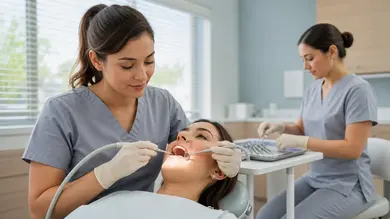
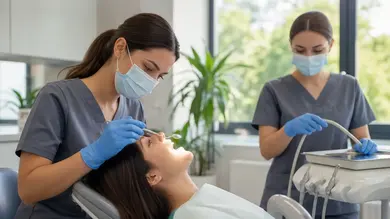
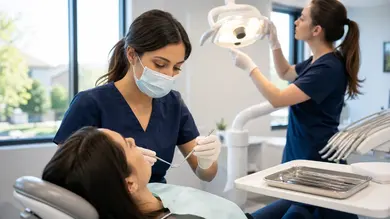
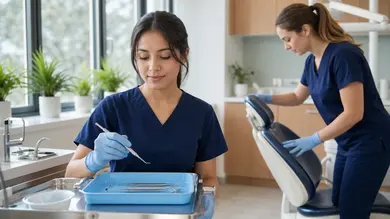
A dental assistant degree almost always requires internships or clinical hours as a fundamental part of the curriculum. These practical experiences are essential for students to develop hands-on skills beyond classroom learning.
Most accredited programs mandate a specific number of supervised clinical hours to ensure students gain real-world exposure in dental office environments. This supports students in building competencies such as patient care, instrument handling, and infection control, which are crucial for certification and employment readiness.
Typically, internships or clinical hours take place in the later stages of dental assistant programs, once students have acquired foundational knowledge in dental anatomy and procedures. These help improve manual dexterity, communication with patients, and adaptation to the fast-paced work environment.
While the exact number of hours varies by state and program, most require between 150 and 300 hours. Prospective students should keep in mind that completing these components affects program length and scheduling.
Meanwhile, prospective students interested in pursuing other healthcare fields can explore options like pharmacy school, in which dental care knowledge can be leveraged to produce appropriate medication.
Are Internships Paid or Unpaid in Dental Assistant Programs?
Internships in dental assistant programs are typically unpaid, although payment can vary depending on the program and employer. This distinction matters for students planning their finances and evaluating the time investment required during their education.
A survey found that approximately 70% of dental assistant internships remain unpaid nationwide. The key points about internship compensation include:
- Typical unpaid clinical hours: Many dental assistant programs require clinical hours or externships as part of their curriculum. These unpaid clinical hours in dental assistant programs serve as hands-on training, allowing students to apply theoretical knowledge in real dental settings under supervision.
- Paid internships are less common: Some programs partner with larger dental practices or healthcare providers to offer paid internships. However, these paid internships for dental assistant students are limited and often highly competitive due to their rarity.
- Factors influencing payment: The likelihood of paid internships depends on location, size of the dental practice, and local labor laws. Smaller practices may be less likely to offer paid opportunities compared to larger organizations.
- Academic credit and career value: Although unpaid, internships often provide academic credit necessary for program completion. These experiences enhance practical skills, build professional networks, and improve employment prospects after graduation.
- Financial aid considerations: Prospective students exploring related healthcare training might also consider financial assistance options available at medical billing and coding online schools financial aid, which can support their overall educational costs.
What Is the Difference Between Internships or Clinical Hours in Dental Assistant Degree Levels?
Choosing the right dental assistant degree level requires careful consideration of how internships and clinical hours differ. Recognizing the distinctions between program requirements helps students align their education with professional goals. Here is how internship requirements for dental assistant degree levels typically vary:
- Certificate or diploma: Clinical hours at this level are embedded within the curriculum and focus on foundational skills such as infection control and basic chairside assistance. These clinical hours are usually shorter, ranging from 100 to 300 hours, with close supervision in simulated or actual dental settings.
- Associate degree: Programs generally include more extensive clinical hours combined with internships that serve as capstone experiences. These internships last several weeks and involve independently applying skills under professional oversight, emphasizing critical thinking and exposure to diverse dental specialties.
For learners exploring related healthcare fields, options like medical billing and coding certification online can complement dental career pathways effectively, given their use of software solutions.
Accelerated dental assistant programs condense both classroom learning and clinical training into shorter timeframes, requiring students to complete internships or clinical hours promptly. These programs often schedule longer or more frequent hands-on sessions throughout the week, including evenings or weekends, to ensure adequate practical experience.
Balancing intensive coursework with necessary clinical hours demands careful time management and program flexibility. Many programs merge laboratory practice with patient care opportunities, maximizing skill development within limited hours.
Approximately 40% of dental assistant students choose accelerated pathways, reflecting a strong preference for faster qualification without compromising the quality needed for certification and licensure. This approach helps prepare graduates thoroughly despite the abbreviated schedule.
A graduate from an accelerated dental assistant program shared that the fast pace was both exciting and overwhelming. "The biggest challenge was juggling early morning lectures followed immediately by afternoon clinicals," he recalled.
He mentioned how supervisors pushed them to quickly develop confidence while handling real patients, which sometimes felt stressful but ultimately rewarding. "You don't get much downtime, but seeing progress each week kept me motivated," he added, emphasizing that the intensity sharpened his focus and practical skills more than traditional programs might have.
Internship or clinical hour requirements for dental assistant degrees generally remain consistent between online and on-campus programs. Both options require hands-on clinical experience, typically ranging from 200 to 350 hours completed under professional supervision to meet credentialing standards.
This ensures students gain essential exposure to patient care, infection control, and office procedures regardless of program format. Notably, online enrollment in dental assistant programs increased by more than 30% in recent years, highlighting the growing acceptance of integrating remote learning with practical internships.
Where these programs differ is mainly in the logistics of completing clinical hours. On-campus students usually fulfill internships through clinics or healthcare partners affiliated with their school, with placements scheduled by the institution.
Online learners enjoy greater flexibility by arranging supervised clinical experiences at approved dental offices near their homes, accommodating varied schedules and locations.
Despite these practical differences, all dental assistant students must complete the same rigorous hands-on training necessary to graduate and qualify for certification exams.
Specialization choices in dental assistant degree programs influence the internship or clinical hour requirements significantly due to the varied skills needed in different dental fields.
For example, programs focusing on surgical assisting typically demand more intensive clinical hours in oral surgery environments. On the other hand, orthodontic assisting specializations emphasize patient appliance adjustments and longer-term treatment monitoring, leading to different internship settings and durations.
Industry trends show that about 65% of students pursuing specialized tracks complete mandatory clinical hours exceeding 200, compared to around 120 hours for general assisting, highlighting the growing workforce demand for specialized skills and internship participation within the dental assistant field.
These variations impact internship scheduling and student workload, with specialized programs often requiring placements in hospitals or specialty clinics that may offer daytime or evening shifts. Such differences in clinical hour requirements and settings can affect program length and student availability.
Moreover, the targeted, hands-on experiences gained through these internships improve career preparation by equipping students with the confidence and competence to work in niche dental care areas.
For prospective students interested in graduate nursing education, exploring cheap online FNP programs may provide valuable options for advanced career paths.
Work experience can sometimes substitute for internship requirements in a dental assistant degree program, but this depends heavily on each institution's regulations. This often concerns working students who find it difficult to fit unpaid or scheduled internships into their busy lifestyles.
Programs may consider relevant prior or current professional experience if it aligns closely with dental assisting tasks, has substantial duration, can be verified by employers, and meets accreditation standards. Work experience is more frequently accepted for mid-career professionals or those who have performed specialized or clinical duties comparable to those in internships.
Conversely, entry-level students are typically required to complete formal internships to gain hands-on skills under supervision. Since policies vary widely by school and degree, students should consult with program advisors to explore whether their work history might replace internship obligations.
When asked about her experience, a graduate of a dental assistant degree shared that balancing full-time work and education was challenging, especially when the program initially required mandatory clinical hours. She was relieved to learn that her years working in a dental office could be documented and verified, allowing her to bypass some internship hours.
"It was reassuring to have my previous experience recognized," she reflected, "because it meant I could focus more on learning new skills rather than repeating what I already knew." For her, this accommodation made the degree more manageable and reinforced the importance of clear communication with program staff about such options.
Internships and clinical rotations in dental assistant programs typically require between 150 and 300 hours, which is crucial for developing practical skills and boosting employability. Industry data shows that completing at least 200 clinical hours greatly enhances job readiness by providing hands-on experience with patients and dental procedures.
Below are common timelines for these clinical experiences, reflecting various program designs and accreditation needs:
- Short-term rotations: These last about 4 to 6 weeks and are often part of accelerated or certificate programs. They offer intensive, focused clinical exposure designed for students seeking quicker completion with practical skill development.
- Semester-long rotations: Typically spanning 10 to 15 weeks, this model aligns with most academic calendars in community colleges or technical schools. Students spend this time working in supervised dental clinics, applying their classroom knowledge in real-world settings.
- Extended rotations: Found mostly in associate degree tracks, these can last a full semester or longer, enabling students to gain deeper clinical experience and sometimes pursue specialization options within dental assisting.
- Program and accreditation factors: The precise length and structure depend on state licensing requirements, certification standards from bodies like the Commission on Dental Accreditation (CODA), and the program's focus area. These elements ensure clinical hours meet professional competency and legal standards.
Job placement outcomes are a critical concern for prospective students evaluating dental assistant programs because they justify the time and financial commitment. A survey by the National Association of Dental Assistants found that graduates who completed internships or clinical hours were 40% more likely to receive job offers within six months of graduation.
The impact of dental assistant internships on job placement is significant, as reflected in several key factors:
- Employer preferences: Employers favor candidates with proven technical skills and familiarity with dental office workflows, which internships uniquely provide. This hands-on experience demonstrates a candidate's readiness to perform essential tasks efficiently.
- Professional networking: Internships offer opportunities to build relationships with dental professionals, increasing the chance of receiving job referrals and offers. Networking during clinical hours can open doors that classroom learning alone cannot.
- Skill development: Completing clinical hours allows students to apply classroom knowledge in real-world settings, boosting confidence and practical competence. This experiential learning is essential for adapting to diverse dental assisting environments.
- Conversion to full-time roles: Many dental assistant programs report that internships often transition into paid, full-time positions at the placement sites, improving employment stability post-graduation.
Students considering cost-effective educational paths in nursing may explore options like the cheapest RN to BSN programs to better gauge financial commitments while advancing their medical careers.
Employers often offer higher starting salaries to dental assistant graduates with hands-on experience, such as internships or clinical rotations. Research shows that those with practical training can earn 10% to 15% more initially than peers without such experience. Several key factors contribute to this pay premium:
- Employer Preference: Practical experience signals that a graduate is job-ready and reliable, which makes employers more confident in offering a higher wage.
- Negotiation Advantage: Graduates with documented clinical skills tend to have stronger leverage during salary discussions because they demonstrate immediate value.
- Industry Recognition: Clinical hours and externships are widely accepted as benchmarks of competency, prompting many employers to prioritize candidates who have met these standards.
- Program Variation: Differences in dental assistant programs' focus on hands-on learning affect graduate readiness and thus impact the salary offers they receive. Programs with extensive clinical components often lead to better pay.
Specialization also plays a role in compensation. Dental assistants with experience in fields like orthodontics or oral surgery frequently command higher wages due to more advanced skills. Similarly, those trained through diverse clinical settings or intensive externships may stand out in competitive job markets that value practical expertise.
What Graduates Say About Their Dental Assistant Degree Internships or Clinical Hours
- Alize: "The internship was the perfect bridge between theory and real-world dental practice. Despite being part of an online dental assistant degree program, the hands-on experience was invaluable, and the cost was quite reasonable compared to traditional programs. This practical training truly boosted my confidence and helped me secure a position within months of graduating."
- Faith: "Reflecting on my time completing the internship requirement, I found the online dental assistant program flexible, though the cost for the internship was something I had to plan carefully for. However, the skills I gained during this phase were instrumental in shaping my approach to patient care and office efficiency, making the investment worth every penny. "
- Courtney: "Completing the internship segment of my online dental assistant degree program was a professional turning point. The affordable nature of the internship, combined with the structured learning experience, equipped me with a competitive edge in the job market. This experience laid a solid foundation for my ongoing development and future opportunities in dental healthcare. "
Other Things You Should Know About Dental Assistant Degrees
Yes, each state has unique regulations that impact the clinical training or internship requirements for dental assistants. Some states mandate a minimum number of supervised clinical hours before certification, while others may have flexible guidelines. It is important for students to review their state's dental board rules to ensure compliance during their program.
Although many online dental assistant programs include theoretical coursework, they must incorporate in-person clinical components through partnerships with local dental offices or clinics. This hybrid structure ensures students gain hands-on skills essential to the profession. Fully online study without any practical experience typically does not meet certification or licensing requirements.
Yes. Many CODA-accredited dental assisting programs include a supervised externship or practicum in a dental office, often totaling about 80 to 300 clinical hours. These hours are completed under licensed dental professionals and help students meet program graduation requirements.
- What to Expect During a Dental Internship in 2026 | Complete Guide https://goelective.com/blogs/what-to-expect-during-a-dental-internship
- Is a Dental Assistant Internship Right for Me? ACI M&D School https://aci.edu/blog/dental-assistant-internship/
- Why Consider Switching To A Dental Assistant Career https://gdap.net/6-reasons-why-a-career-switch-to-dental-assisting-is-convenient/
- How Long Does It Take To Become a Dental Assistant? - American Institute of Dental Assisting https://dentalassistantco.com/blog/how-long-does-it-take-to-become-a-dental-assistant/
- Everything You Need to Know Before Starting Your Dental Internship - EA Dental Electives https://www.ea-dentalelectives.com/everything-you-need-to-know-before-starting-your-dental-internship/
- What is the Externship Program? | Cloud Dentistry Knowledge Base https://faq.clouddentistry.com/en/articles/9834725-what-is-the-externship-program
- The Different Specializations Available to Dental Assistants https://risiodental.com/the-different-specializations-available-to-dental-assistants/
- Dental Assisting Internship Program | Mills Dental Care https://www.millsdentalcare.com/dental-assisting-internship-program/
- 4 tips for new dental assistants entering the workforce | DANB https://www.danb.org/news-blog/detail/blog/4-tips-for-new-dental-assistants-entering-the-workforce
- Dental Assistant Internship (Minnesota) - Health Sciences Education - Mayo Clinic College of Medicine & Science https://college.mayo.edu/academics/health-sciences-education/dental-assistant-internship-minnesota/