2027 Best Online Degrees

Co-Founder and Chief Data Scientist
Choosing an online degree means deciding more than what to study: you need a credential that fits your career goal, budget, schedule, and any licensing rules. The stakes are real. The U.S. Bureau of Labor Statistics (BLS) projects 33% employment growth for information security analysts from 2023 to 2033, but an IT degree alone does not qualify someone for every such role. This guide compares online degree fields, explains where in-person training may still be required, and shows how to check costs and outcomes before enrolling.
Key Things You Should Know
- The best online degree depends on your intended job: computer science and IT suit different technical goals, while nursing, teaching, and social work require closer attention to licensure.
- Compare the total cost to finish, not tuition alone; accepted transfer credits, fees, required travel, and enrollment pace can change the amount you pay.
- As career context, BLS reports a 2024 median wage of $93,600 for registered nurses. That is an occupational figure, not a predicted salary for nursing graduates, and RN practice requires licensure.
Top 10 Best Online Degrees
Business Programs
Online MBA, accounting, finance, and management master's programs serve different goals. An MBA often suits professionals seeking broader business responsibilities; a specialized accounting or finance degree offers more focused preparation. Compare required work experience, foundation courses, group projects, and the total cost of the credential. If your goal is CPA licensure, verify your state's education and examination rules: an MBA or accounting master's degree does not automatically satisfy them. Neither degree guarantees a management position.
Healthcare Programs
Master's degrees in healthcare administration and public health can prepare students for operational, policy, or population-health work, but they are not interchangeable. Healthcare administration emphasizes organizational finance and operations; public health may emphasize epidemiology, research, and community programs. Check whether your target role expects clinical experience and whether the program requires a practicum or internship. A nonclinical master's degree does not grant a clinical license. Compare online coursework with any required placement before choosing a school outside your area.
Information Technology Programs
Online IT master's programs often focus on infrastructure, cybersecurity, cloud systems, or technology management. They may fit professionals who already troubleshoot systems and want to specialize or lead projects. Review technical prerequisites and hands-on labs rather than assuming a management-oriented curriculum will build entry-level skills. Employers may also value experience and role-specific certifications. If you are changing careers, compare the degree's cost with a targeted certificate and a plan to gain practical experience.
Computer Science Programs
An online computer science master's degree can deepen preparation in algorithms, software systems, data science, or artificial intelligence. It differs from many IT programs by emphasizing computing theory and software development. Applicants without a computing background may need prerequisite courses, which increase cost and time. Compare programming assignments, project work, and research or capstone requirements. For someone seeking a first software role, a bachelor's program or focused coursework plus a credible project portfolio may be a better starting point than an advanced degree.
Nursing Programs
Online nursing master's pathways can support goals such as leadership, education, or advanced practice, but eligibility depends on the pathway. Many require an active RN license and prior nursing education; advanced-practice options also include supervised clinical training. Coursework delivered online does not eliminate local placement, state authorization, certification, or licensing requirements. Ask the program which clinical sites it permits in your state and who secures placements. If you are not already a nurse, look for an appropriate prelicensure route instead.
Psychology Programs
Online psychology master's degrees may emphasize research, applied psychology, or preparation for further study. A general psychology degree is not the same as a clinical mental health counseling program, and neither automatically qualifies a graduate to practice as a psychologist. If therapy is your goal, identify the license and approved educational pathway in your state before applying. Compare supervised-practice requirements, any in-person training, and whether the curriculum supports your intended next credential.
Education Programs
Online education master's programs include curriculum and instruction, educational leadership, and teacher-preparation pathways. Some are designed for licensed teachers; others may prepare new teachers, subject to state approval and student-teaching requirements. A leadership degree may not qualify you for principal licensure without teaching experience or additional requirements. Match the program to your state's rules and your current credential. Confirm whether observations, student teaching, or school-based projects can be completed near home.
Criminal Justice Programs
An online criminal justice master's degree can support advanced study of policy, administration, or research. It may be useful to experienced public-safety professionals, but entry into policing or federal work often follows separate hiring, training, and eligibility processes. Compare the curriculum with the jobs you actually want: analytics or public administration may fit some roles better. Ask employers whether the degree affects advancement before paying for graduate study, and check whether an internship requires local attendance.
Engineering Programs
Online engineering master's degrees commonly serve engineers seeking deeper technical expertise or project leadership. Admission may require a related bachelor's degree and mathematics prerequisites; laboratory or residency requirements vary. Check the specialization and project work against your industry, not just the engineering label. If professional engineer licensure matters, investigate your state board's education and experience rules, including the role of undergraduate program accreditation. A graduate degree does not replace examinations or supervised experience.
Social Work Programs
An online Master of Social Work (MSW) is a professional pathway for social work roles, including some that lead toward clinical licensure. Look for accreditation by the Council on Social Work Education and confirm your state's licensing rules. Field education must be completed in an approved setting even when classes are online. Applicants with an eligible bachelor's degree in social work may qualify for advanced standing, but schools set their own conditions. Compare placement support and remaining requirements before relying on an advertised completion timeline.
What Are the Best Online Degrees for Career Growth?
The strongest choice for career growth is the degree that closes a specific skills or credential gap in your target occupation. A bachelor's degree may be the right entry credential; a master's is more persuasive when it supplies required preparation, a valued specialization, or access to a regulated pathway.
These comparisons show why the same field can be an excellent choice for one student and an unnecessary expense for another.
| Goal | Degree worth considering | Key trade-off |
| Enter software development | Computer science bachelor's degree | Build substantial projects; a master's is not typically required for entry. |
| Advance in cybersecurity | IT or cybersecurity degree matched to your background | Practical experience may matter more than adding a higher degree. |
| Practice nursing | State-appropriate prelicensure nursing degree | Clinical training and licensure cannot be completed solely through online classes. |
| Move toward clinical social work | Accredited MSW | Field education and post-degree licensing requirements apply. |
If your goal is research or a faculty career rather than professional advancement, compare the preparation and time commitment of PhD programs online with those of a master's degree. Online availability does not remove research or residency requirements.
How Do You Choose an Accredited Online Degree Program?
Start with institutional accreditation, then check whether the specific program has any accreditation required or preferred for your goal. Accreditation of a university does not, by itself, establish that its nursing, social work, teacher-preparation, or engineering pathway meets every professional requirement.
Use the U.S. Department of Education's accreditation database to confirm the institution and the relevant programmatic accreditor's directory when applicable. For a licensed occupation, ask your state board whether the program satisfies its educational rules for someone living in your state. This matters particularly when choosing among non profit universities in USA: nonprofit status is not a substitute for checking the particular degree.
Finally, request written confirmation of online delivery, required in-person components, transfer-credit decisions, and the complete tuition and fee schedule. Treat an unverified "fully online" or "licensure-ready" claim as a reason to pause, not to enroll.
How Much Do Online Degrees Cost and How Long Do They Take?
There is no single price or completion time for an online degree. Required coursework, part-time enrollment, accepted transfer credit, prerequisites, and experiential training all affect the finish line. An associate degree generally takes less study than a bachelor's degree; a master's builds on prior undergraduate preparation rather than replacing it.
The cost categories below help distinguish a low advertised tuition rate from a lower total cost.
| Cost factor | Why it changes the comparison |
| Tuition and mandatory fees | Rates may differ by program, residency, or enrollment status. |
| Transfer-credit evaluation | Accepted credits can reduce remaining coursework, but elective credit may not satisfy major requirements. |
| Books, equipment, and technology | Software, supplies, or a suitable computer may be required. |
| Travel and placements | Campus visits, clinicals, and unpaid fieldwork can add expense or reduce working hours. |
Ask each school for a personalized estimate of remaining credits and total charges through graduation, including courses you must take before admission. Complete the FAFSA to explore federal aid at an eligible institution, and compare grants and employer assistance before borrowing. A faster schedule is not necessarily cheaper if it requires reduced work hours.
Which Online Degrees Offer the Highest Salary Potential?
Computer science and IT can lead toward high-paying occupations, but salary potential belongs to an occupation, not to everyone who earns a related degree. Experience, location, specialty, and hiring requirements matter.
These BLS 2024 U.S. median wages provide context for two possible career destinations; they are not graduate earnings estimates or proof that either degree alone qualifies an applicant.
| Occupation | 2024 median annual wage | Degree-related consideration |
| Software developers | $133,080 | Employers commonly seek relevant computing skills and demonstrable development work. |
| Information security analysts | $124,910 | Related experience and security skills are often important alongside education. |
To judge whether an additional degree is worth its cost, compare job postings for your intended role with your current qualifications. Paying for a master's solely because a related occupation has a high median wage is a common mistake.
What Careers Can You Start With an Online Degree?
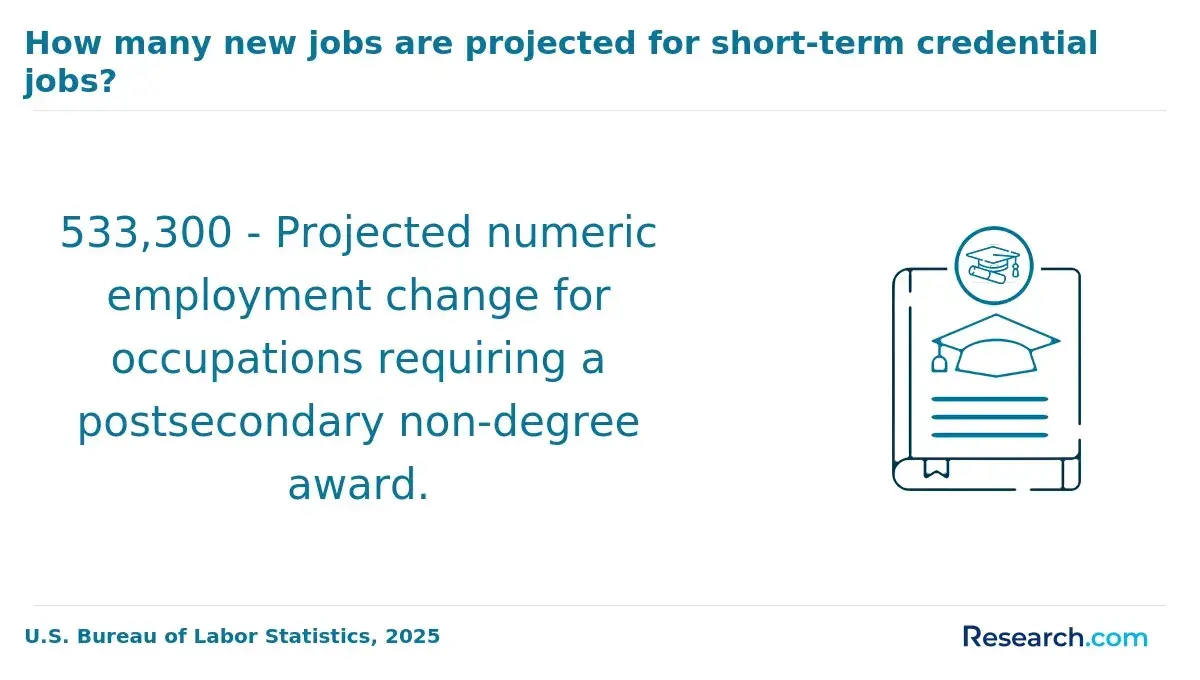
Depending on the field and the employer, an online associate or bachelor's degree can support applications for roles such as accounting assistant, IT support specialist, software developer, or human services worker. These are possibilities, not automatic placements; some roles require experience, specific coursework, or a license. A master's degree usually serves a more specialized or advanced goal and may be unnecessary for an entry-level job.
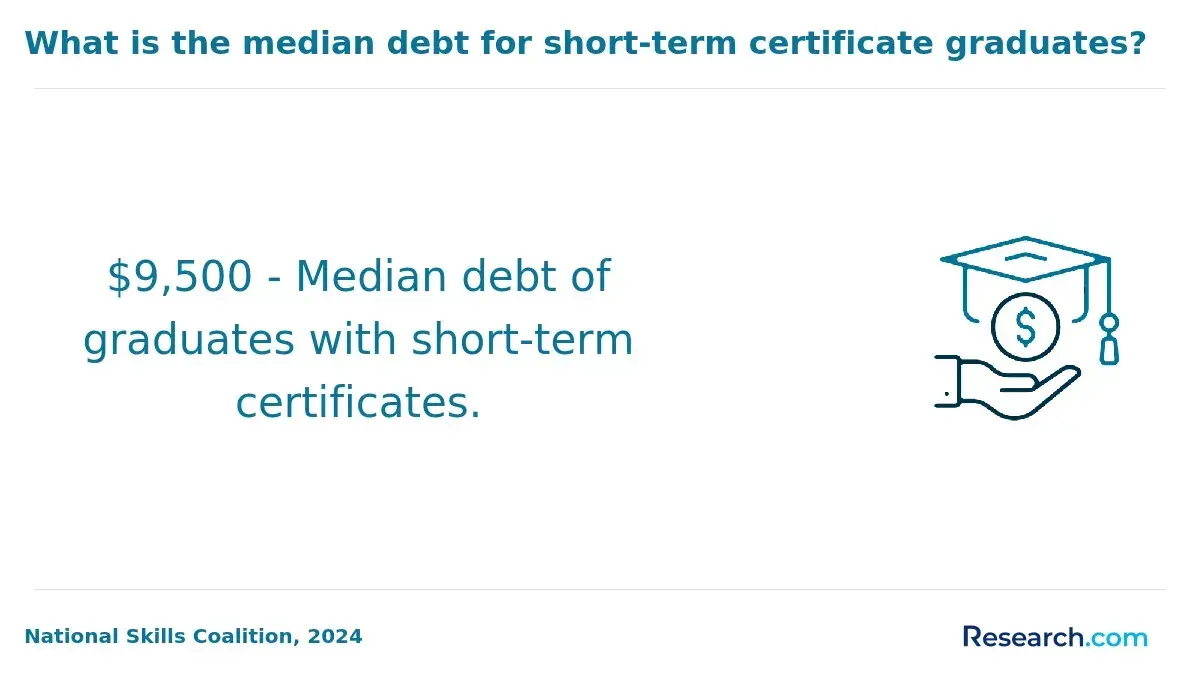
Before enrolling, compare job advertisements in your location with the curriculum. If employers chiefly request a discrete skill rather than a degree, short term certificate programs may offer a smaller initial commitment. A certificate is less suitable when the occupation requires an accredited degree or state-approved preparation.
How Do Online Degrees Compare With On-Campus Programs?
Online and on-campus degrees can cover comparable academic material, but their schedules and hands-on arrangements differ. Online study reduces routine travel; it does not necessarily mean self-paced courses, no live meetings, or no visits. Campus study may make laboratories, peer collaboration, and local placements easier to access, but commuting can constrain a working student.
If flexibility is your main reason for pursuing an online degree, inspect a sample course schedule. Ask about live sessions, weekly deadlines, exam proctoring, lab access, and who arranges clinical or internship sites. Choose the format whose actual requirements you can sustain - not the one with the most convenient label.
What Admission Requirements Apply to Online Degree Programs?
Undergraduate applicants generally need to document prior schooling; graduate applicants typically need a bachelor's degree and may face prerequisites, recommendations, a statement of purpose, or relevant work or professional credentials. Requirements vary by institution and program. For example, an online nursing or social work pathway may impose eligibility rules beyond general university admission.
Check the admissions page for your specific credential and applicant category. Ask whether standardized tests are required, what minimum grades apply to prerequisites, and whether admission is conditional when coursework is missing. If you have previous college credit, request an evaluation showing not only what transfers but which degree requirements it fulfills. Never assume that a university's general admissions policy governs a selective program.
Which Online Degrees Require Licensure or Professional Certification?
Nursing, teaching, clinical social work, counseling, and certain engineering roles are among the paths where a degree and legal permission to practice are separate matters. Requirements depend on the occupation and state. They may include an approved program, examinations, supervised experience, background checks, or continuing education.
Before applying, identify the precise job title and state license you want. Then compare the licensing board's rules with the program's published curriculum and placements, and obtain clarification from both if they differ. Professional certifications in fields such as IT or accounting can also be valuable or required for particular roles, but they are not interchangeable with a state-issued license. Do not assume that an online program's availability in your state establishes licensure eligibility there.
How Can You Evaluate Online Degree Curriculum and Student Support?
A useful curriculum connects required courses to the work you want to do. Look past concentration names: inspect course descriptions, the frequency of required classes, opportunities to practice with relevant tools, and any capstone, laboratory, or fieldwork. In fast-changing technical fields, ask how the program keeps projects and tools relevant.
Student support matters when it removes a likely barrier to completion. Ask how quickly online students can reach an academic advisor, whether tutoring covers difficult required courses, how placements are arranged, and what happens if a course is unavailable when you need it. Career coaching is a service, not evidence of a job offer. Your next step is to compare written answers from a small set of programs against your budget, schedule, and target job before committing.
Other Things You Should Know About
The best choice matches a specific career goal and your starting qualifications. Compare required credentials, total cost, practical training, and job requirements rather than relying on a single ranking.
Employers' expectations vary. An appropriately accredited institution, relevant coursework, and evidence of skills matter more than assuming delivery format alone determines a degree's value.
Some can, but others require visits, labs, clinicals, practicums, or student teaching. Confirm every in-person requirement for the specific program before applying.
They may if the school accepts them and applies them to remaining requirements. Request a program-specific evaluation; accepted elective credits do not necessarily replace major courses.
References
- Programmatic Accrediting Agencies | U.S. Department of Education http://www.ed.gov/laws-and-policy/higher-education-laws-and-policy/college-accreditation/programmatic-accrediting-agencies
- Annual Earnings by Educational Attainment - COE https://nces.ed.gov/programs/coe/indicator/cba/annual-earnings
- Fastest Growing Occupations | bls.gov https://www.bls.gov/ooh/fastest-growing.htm
- Glossary - College Scorecard - Department of Education https://collegescorecard.ed.gov/data/glossary/
- The Major Payoff: Evaluating Earnings and Employment Outcomes Across Bachelor's Degrees - CEW Georgetown https://cew.georgetown.edu/cew-reports/major-payoff/
- Meeting IL Licensing Education Requirements | WashU Continuing Medical Education https://cme.wustl.edu/learners/meeting-il-licensing-education-requirements/
- Support services for online learning key to student success and well being | UC News https://www.online.uc.edu/blog/support-services-for-online-learning-key-to-student-success-and-well-being.html
- Field Experiences & Professional Licensure | STLCC https://stlcc.edu/programs-academics/online-education/professional-licensure.aspx
- Professional Licensure Disclosures | UMSL https://www.umsl.edu/oiec/regulations/professional-licensure-disclosures.html
- Four tips on talking about your online degree with employers | UW-Madison Online https://online.wisc.edu/blog/are-online-degrees-respected-by-employers-four-tips-on-talking-about-your-degree-in-interviews-or-on-your-resume/