2027 Best Degree Programs That Pay Well

Co-Founder and Chief Data Scientist
A high-paying career is not necessarily worth an expensive degree. The question is whether a program prepares you for work you want, at a cost you can reasonably recover. For context, the U.S. Bureau of Labor Statistics (BLS) reports a May 2024 median annual wage of $161,700 for financial managers - but that occupation typically requires substantial experience, not just a master's degree. This guide compares master's program families, explains their career and licensing limits, and shows you how to weigh salary potential against time, cost, and fit.
Key Things You Should Know
- Computer science, business, specialized healthcare, and advanced nursing can connect to high-paying occupations, but the degree alone does not qualify you for every role.
- BLS projects 29% employment growth for information security analysts from 2024 to 2034; that is an occupational forecast, not a placement rate for IT graduates.
- Compare total program cost, experience requirements, and licensure eligibility before using occupational wages to judge a master's degree's value.
Top 10 Best Degree Programs That Pay Well
Business Programs
An MBA offers broad management training; a master's in finance, accounting, or business analytics offers deeper preparation for a narrower function. Choose based on the work you want to do: an experienced manager may benefit from an MBA, while a career changer may need accounting prerequisites or technical analytics skills. Financial manager pay is attractive, but these jobs generally require relevant work experience. If your goal is CPA licensure, check your state's education rules rather than assuming any accounting master's meets them.
Healthcare Programs
Master of Health Administration and healthcare management programs prepare students for operations, finance, and policy roles, not clinical practice. A Master of Public Health emphasizes population health, research methods, and program evaluation. Match the curriculum to employers you want to work for: hospitals may value operations experience, while public health agencies may emphasize epidemiology or data skills. Healthcare management roles can pay well, but a new graduate should not assume immediate eligibility for a senior management position.
Information Technology Programs
Master's programs in information technology, cybersecurity, and information systems usually combine technical study with systems management. They suit professionals moving into security architecture, IT leadership, or specialized infrastructure work. Many security jobs accept other educational paths, and employers often look for hands-on experience or certifications. Compare each program's labs, applied projects, and prerequisites; a management-heavy curriculum may be a poor substitute for technical training if you want a hands-on security role.
Computer Science Programs
A computer science master's can deepen skills in algorithms, software systems, artificial intelligence, or machine learning. Research-oriented programs may suit prospective doctoral students; applied programs may better suit software professionals building a portfolio. Check programming and mathematics prerequisites, especially if your bachelor's degree is in another field. Software development can pay well, but a master's is not the standard entry requirement for every developer job. Compare the program's added skills with what you could gain through projects and work experience.
Nursing Programs
A Master of Science in Nursing can support advanced practice, education, or leadership, depending on its track. For nurse practitioner practice, choose a track aligned with the patient population you want to serve and verify state licensure and certification eligibility. Admission commonly requires RN licensure, and clinical placements add time and scheduling constraints. An MSN in administration does not qualify its holder to practice as a nurse practitioner; the specific curriculum and supervised clinical preparation matter.
Psychology Programs
A psychology master's can support research, behavioral health administration, or certain counseling pathways, but the program title does not establish license eligibility. Independent practice as a psychologist generally requires a doctoral degree and state licensure. If your goal is therapy, compare counseling, clinical social work, and psychology programs against your state's specific rules before applying. Research-focused students should also weigh thesis opportunities and the possibility of further study against the cost of a terminal master's.
Education Programs
A master's in education may focus on curriculum, special education, instructional design, or school leadership. The strongest financial case often depends on an employer's documented pay schedule or a specific advancement requirement - not the credential alone. Aspiring principals should check required teaching experience and state administrator licensure rules. If you want to teach, confirm that the program offers the appropriate certification pathway; many education master's degrees are designed for teachers who are already licensed.
Criminal Justice Programs
A criminal justice master's may cover policy, investigations, intelligence, or organizational leadership. It can be useful for experienced professionals seeking specialized or supervisory work, but many law enforcement roles depend more directly on academy training, agency requirements, and experience. Compare a program's coursework with actual postings for your target job. If you want digital forensics or cybersecurity work, a more technical program may provide better preparation than a broad criminal justice degree.
Engineering Programs
An engineering master's can build expertise in areas such as electrical systems, mechanical design, or industrial engineering. It may be especially valuable when the target role calls for advanced modeling, research, or a defined technical specialty. Compare laboratory access, employer-supported projects, and thesis versus coursework options. A master's is not required for every engineering job, and professional engineer licensure follows separate state rules. Check whether the undergraduate preparation and program align with your intended specialty.
Social Work Programs
A Master of Social Work (MSW) can lead toward clinical practice, community work, or social service leadership. Choose a clinical track only after checking your state's licensing requirements, including supervised experience and examinations after graduation. Some programs offer advanced standing to eligible graduates of accredited bachelor's social work programs; applicants without that background usually follow a different curriculum. An MSW may be worth considering for a specific licensed role, but compare expected pay with tuition and the time spent completing field placements.
What Are the Highest-Paying Degree Programs?
Among the program families here, business, computer science, cybersecurity, healthcare administration, and advanced nursing connect to some of the highest-paying occupations. That is not a ranking of graduate earnings: occupational wages include people with different degrees and years of experience, and some roles do not require a master's.
The comparison shows where a master's may add value - and what else stands between enrollment and the job.
| Program family | Relevant occupation | Important qualification beyond the degree |
| Business | Financial manager | Substantial relevant finance or business experience |
| Computer science | Software developer | Demonstrable programming and software development skills; a master's is not universally required |
| Information technology | Information security analyst | Practical security or IT experience, depending on the employer |
| Nursing | Nurse practitioner | RN preparation, an appropriate advanced-practice program, certification, and state licensure |
If you already have relevant experience, a specialized master's may help you compete for more advanced work. If you are entering a new field, first check whether an entry-level job, certification, or prerequisite coursework is the more realistic next step.
Which Degrees Offer the Best Job Outlook?
Job outlook is strongest when a program teaches skills tied to growing occupations and you can meet their hiring requirements. BLS projects 29% growth for information security analysts from 2024 to 2034. That makes cybersecurity worth investigating, but projected national growth does not tell you how many entry-level openings exist in your area.
Healthcare demand also makes nursing and healthcare operations worth comparing. The paths differ sharply, though: advanced nursing requires clinical preparation and licensure, while healthcare administration employers may prioritize operational experience. Read local job postings alongside national projections to see which qualification gap a degree would actually close.
How Much Do High-Paying Degree Graduates Earn?
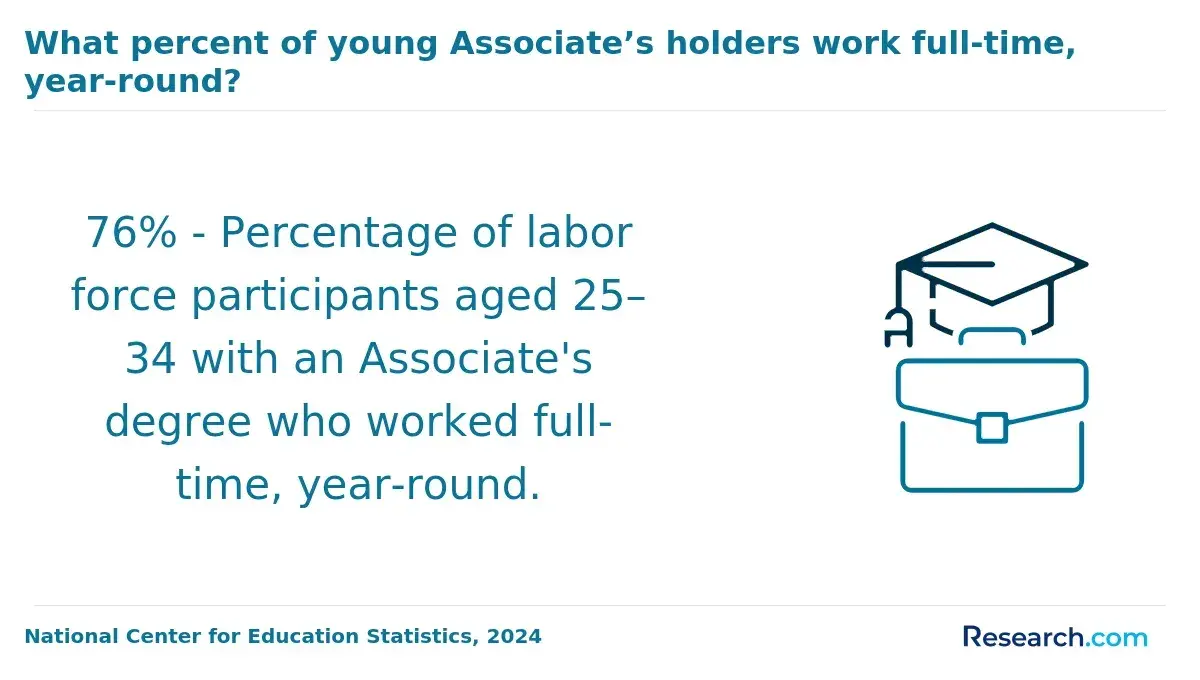
Use wages as a comparison tool, not a forecast of what you will earn after graduation. The BLS May 2024 medians below describe everyone working in each occupation, including experienced workers and people who reached the job without the master's program discussed here.
| Occupation | Median annual wage, May 2024 | How to interpret it |
| Financial managers | $161,700 | Management experience is typically important. |
| Software developers | $133,080 | A master's is one possible path, not a universal requirement. |
| Nurse practitioners | $129,210 | Advanced clinical preparation, certification, and licensure apply. |
| Registered nurses | $93,600 | This occupation does not generally require a master's. |
The nursing comparison illustrates a common mistake: subtracting two occupational medians does not measure the pay raise caused by earning an MSN. Workers' specialties, locations, hours, and experience differ. For a personal return-on-investment estimate, compare likely job offers or employer pay scales with the full cost of attendance and any earnings you would give up while studying.
What Education Requirements Lead to High-Paying Careers?
Most master's programs require a bachelor's degree, but the path to a high-paying occupation depends on the role. Software employers may hire candidates with a bachelor's degree and strong technical work; financial manager positions usually call for experience; nurse practitioner practice requires an appropriate graduate clinical program and further credentials. Research or highly specialized roles may favor more advanced study.
Do not buy a master's solely because its related occupation has a high median wage. If you need targeted skills before committing to graduate school, 4 week certificate programs online can be a starting point to investigate. Check what each certificate teaches and whether employers recognize it; a short certificate is not a substitute for professional licensure.
Are Online Degree Programs as Valuable as Campus Programs?
An online master's can be as valuable as a campus program when it has appropriate accreditation, teaches the skills employers expect, and meets any applicable licensing rules. Delivery alone is not a quality measure. Online students may still attend live classes, complete in-person labs or clinical placements, or visit campus for a residency.
If you are balancing study with caregiving, compare scheduled attendance and placement hours rather than relying on an "online" label. Guides to online courses for stay at home moms can help you frame scheduling questions, but confirm the requirements of the specific master's program. Campus study may be preferable when access to equipment, research teams, or local employer networks is central to your goal.
What Coursework Do High-Paying Degree Programs Include?
Coursework is useful evidence of career fit. Business programs may combine finance and strategy; computer science programs emphasize computation and software; nursing programs add advanced clinical study; and social work programs combine practice coursework with field education. Concentrations can matter more than a broad degree title when you are pursuing a specialized role.
Compare the required courses - not just electives you may never be able to take - with job descriptions. Also check for a thesis, capstone, internship, practicum, or clinical placement. A research thesis may suit a prospective doctoral student; an applied project may better serve someone seeking evidence of workplace skills. Placement requirements can also affect where and when you can study.
What Are the Admission Requirements for These Programs?
Graduate admission usually starts with a bachelor's degree and transcripts, but program requirements vary. Computer science and engineering applicants may need specific mathematics or programming preparation. An MBA may weigh professional experience; nursing tracks generally require an RN license and relevant clinical preparation. Some programs request recommendations, a statement of purpose, or an interview, while testing policies differ by school and program.
Ask admissions staff to identify missing prerequisites before you apply. A university's general graduate admission policy may not cover a selective clinical or technical track. If a school offers a bridge route for applicants changing fields, confirm which foundation courses add time and cost and whether admission to the bridge guarantees entry to the degree - it may not.
How Long Do High-Paying Degrees Take and What Do They Cost?
Build a total-cost estimate from tuition for all required credits, mandatory and program fees, books or equipment, travel, placement expenses, and foregone earnings. Then subtract confirmed grants or employer assistance - not aid you merely hope to receive. Federal aid eligibility depends on the institution and your circumstances. If a master's is unnecessary for your goal, investigate 1 year associate degree programs as a different pathway, but verify credit and timeline claims: associate study does not replace a graduate professional credential.
How Can You Choose an Accredited Program With the Right Credentials?
Start with the institution's recognized accreditation and then check whether the specific program holds accreditation required or preferred in your field. Examples include Commission on Collegiate Nursing Education or Accreditation Commission for Education in Nursing accreditation for applicable nursing programs, and Council on Social Work Education accreditation for eligible MSW programs. For licensure, verify the program and your intended state's requirements directly; institutional accreditation alone is not enough.
Before enrolling, request written answers to the questions that could change your decision:
- Will this exact track meet the education requirements for my intended license or certification in the state where I plan to work?
- What are the total required credits, fees, in-person obligations, and likely completion time at my planned course load?
- Which prerequisites or previously completed graduate courses, if any, will count toward this degree?
- What relevant experience do employers expect in addition to this credential?
Location matters for mobile households. Resources on military spouse friendly online colleges may help with the school search, but confirm placement availability and license portability for each state in which you may work. A red flag is any program that promises a salary or professional license without explaining the requirements between graduation and employment.
Other Things You Should Know About
There is no single winner for every student. Business, computing, and advanced nursing connect to high-paying occupations, but experience, specialization, location, and licensing affect which jobs you can obtain.
Not always. Many software and engineering positions accept a bachelor's degree, while senior management jobs commonly require experience. Start with requirements for the occupation you want.
Some programs offer online coursework, but clinicals, labs, residencies, and other in-person requirements may still apply. Verify the exact track's delivery and placement rules.
Compare the full cost and time commitment with realistic jobs you could qualify for, not just the occupation's median wage. Ask employers about credential requirements and check whether your current skills or a less costly pathway could meet your goal.
References
- Credentials - U.S. Bureau of Labor Statistics https://www.bls.gov/ors/factsheet/credentials.htm
- Annual Earnings by Educational Attainment - COE https://nces.ed.gov/programs/coe/indicator/cba/annual-earnings
- Field of Study in College and Lifetime Earnings in the United States - PMC https://pmc.ncbi.nlm.nih.gov/articles/PMC5198720/
- Your financial path to graduation | consumerfinance.gov https://www.consumerfinance.gov/paying-for-college/your-financial-path-to-graduation/
- Research Summary: Education and Lifetime Earnings | ssa.gov https://www.ssa.gov/policy/docs/research-summaries/education-earnings.html
- Navigating Postcollegiate Earnings Data: A Comparison of Key Tools | Institutional Data and Research https://idr.umn.edu/policy-and-research/briefs/navigating-postcollegiate-earnings-data
- Is Your Field Requiring a Graduate Degree Now? The Latest Credentialing Trend Report - University of Pittsburgh Online https://www.online.pitt.edu/2026/05/05/is-your-field-requiring-a-graduate-degree-now/
- The Major Payoff: Evaluating Earnings and Employment Outcomes Across Bachelor's Degrees - CEW Georgetown https://cew.georgetown.edu/cew-reports/major-payoff/
- The impact of work placements on graduate earnings | tandfonline.com https://www.tandfonline.com/doi/full/10.1080/03075079.2023.2211999
- Graduate degrees pay - but it's complicated | Brookings https://www.brookings.edu/articles/graduate-degrees-pay-but-its-complicated/