2027 Best Online Computer Science Doctorate Programs for Mid-Career Professionals

Co-Founder and Chief Data Scientist
Mid-career Computer Science professionals often face a practical question: will a doctorate create enough career leverage to justify years of research, tuition, and schedule pressure? The U. S. Bureau of Labor Statistics reported a May 2024 median annual wage of $140,910 for computer and information research scientists, showing why advanced research credentials remain relevant in AI, cybersecurity, systems, and data-intensive roles.
This guide is for working technologists, engineering leaders, educators, and researchers comparing online doctoral options. You will learn how programs differ, what they cost, how long they take, and how to choose one that fits your career goal.
Key Things to Know About Online Computer Science Doctorate Programs for Mid-Career Professionals
- The best online Computer Science doctorate for a mid-career professional is usually the one that matches a specific outcome: research leadership, university teaching, applied AI, cybersecurity, data science, architecture, or executive technical strategy.
- Doctoral timelines are rarely short: the National Science Foundation's 2024 Survey of Earned Doctorates shows computer and information sciences doctorates commonly take multiple years beyond graduate entry, so working students should plan for a long part-time commitment rather than a quick credential.
- Cost varies widely by institution and format, but the most important ROI question is not tuition alone; it is whether the program's accreditation, faculty fit, dissertation structure, employer support, and career pathway justify the total time and financial investment.
Is earning an online Computer Science doctorate worth it for mid-career professionals?
An online Computer Science doctorate can be worth it for mid-career professionals when the degree solves a real career constraint. It is most valuable when you need doctoral-level credibility for research leadership, faculty roles, advanced AI or cybersecurity work, government labs, applied R&D, or senior technical strategy positions where original research and deep specialization matter.
The degree is less likely to pay off if your goal is a near-term promotion that could be achieved through a certification, management training, or a focused graduate certificate. Doctoral study is not simply "more coursework." It requires sustained research, independent problem-solving, writing, and faculty supervision over several years.
Use the comparison below to decide whether a doctorate fits your situation or whether a smaller credential may be more efficient.
| Professional goal | Doctorate may make sense when | Alternative may be better when |
| Research leadership | You want to lead original research in AI, cybersecurity, systems, software engineering, or data-intensive computing. | You mainly need to manage teams or delivery timelines rather than produce new knowledge. |
| University teaching | You want tenure-track, full-time faculty, dissertation supervision, or research university opportunities. | You want adjunct teaching, corporate training, or curriculum design roles that may accept a master's degree. |
| Technical promotion | Your organization values doctoral credentials for principal scientist, research architect, or advanced lab roles. | Your promotion path depends more on product impact, people leadership, or cloud and security certifications. |
| Career pivot | You want to move from implementation into research-heavy AI, cyber defense, algorithms, or human-computer interaction. | You need a faster transition into a practical role such as software engineering manager, data engineer, or cloud architect. |
The strongest candidates are usually professionals who already have a technical master's degree, substantial work experience, a research question connected to their field, and enough schedule flexibility to work consistently. The weakest fit is someone pursuing the doctorate mainly for prestige without a clear research agenda or career destination.
Current labor-market trends make the decision more nuanced. AI, cybersecurity, and high-performance computing have expanded the demand for professionals who can evaluate new methods rather than only implement existing tools. Still, a doctorate should be treated as a targeted investment, not a guaranteed salary multiplier.
Which online Computer Science doctorate programs are the best for mid-career professionals?
The "best" online Computer Science doctorate depends on whether you want a research PhD, an applied professional doctorate, or a closely related computing doctorate. Fully online PhD options in pure Computer Science are limited in the U.S., so mid-career professionals often compare online Computer Science, cyber defense, information technology, data science, and engineering doctorates that allow computing-focused research.
The programs below are strong examples to investigate because they are designed with online or low-residency study in mind, serve working adults, or offer research areas that align with advanced computing careers. Always confirm current delivery format, dissertation requirements, tuition, residency rules, and faculty availability before applying.
| Program | Credential type | Best fit for mid-career professionals | Format consideration |
| Dakota State University PhD in Cyber Defense | Research doctorate | Security engineers, cyber defense leaders, digital forensics professionals, and government or defense technologists | Online-friendly structure with a specialized cybersecurity research focus |
| Capitol Technology University PhD in Computer Science | Research doctorate | Professionals seeking a dissertation-centered path in applied computing, systems, software, or emerging technology topics | Online format commonly marketed for working professionals |
| Colorado Technical University Doctor of Computer Science | Professional doctorate | Senior technologists who want applied doctoral study in areas such as big data, cybersecurity, enterprise information systems, or executive technology management | Online professional doctorate with structured coursework and applied research |
| Nova Southeastern University PhD in Computer Science | Research doctorate | Professionals seeking a traditional doctoral credential with computing research depth and access to faculty supervision | Online or blended availability should be verified by concentration and term |
| Johns Hopkins University Doctor of Engineering | Professional engineering doctorate | Experienced engineers solving a workplace-connected technical problem in computing, AI, software, or systems engineering | Designed for working engineers; online coursework availability depends on program plan |
| Mississippi State University PhD in Computer Science through distance options | Research doctorate | Professionals who want a public research university environment and can meet departmental research expectations | Distance participation may require departmental approval and careful faculty matching |
For professionals whose strongest interest is machine learning, statistics, or analytics rather than core Computer Science, an online PhD in data science may be a better fit than a general Computer Science doctorate. The right choice depends on the research problem you want to solve and the academic home of the faculty who can supervise it.
When comparing programs, do not rely on the word "online" alone. A program can be online for coursework but still require residencies, synchronous seminars, qualifying exams, lab access, or dissertation defenses. Mid-career students should ask how often they must be available during business hours and whether faculty regularly advise part-time students.
What specializations are available in Computer Science doctorate programs?
Computer Science doctorates usually revolve around a research specialization rather than a long menu of career tracks. Your specialization matters because it determines your dissertation topic, faculty mentor, publication opportunities, and the roles where the doctorate will be most credible.
Common specialization areas include the following, though availability varies by school and faculty expertise.
- Artificial intelligence and machine learning, including model development, optimization, trustworthy AI, natural language processing, computer vision, and human-centered AI.
- Cybersecurity and cyber defense, including intrusion detection, malware analysis, digital forensics, secure systems, cryptography, and critical infrastructure protection.
- Software engineering, including software quality, secure development, program analysis, DevOps research, requirements engineering, and large-scale software systems.
- Data science and database systems, including data mining, distributed data architectures, graph analytics, information retrieval, and scalable analytics.
- Computer networks and distributed systems, including cloud computing, edge computing, high-performance computing, systems reliability, and network security.
- Human-computer interaction, including usability, accessibility, learning technologies, user experience research, and interaction design for complex systems.
- Algorithms and theory, including computational complexity, optimization, formal methods, and mathematical foundations of computing.
Mid-career professionals should choose a specialization that connects to their current work, not just a popular topic. A security architect, for example, may be able to turn real incident-response challenges into a cyber defense dissertation, while a senior data engineer may be better served by database systems or data-intensive computing.
If your long-term plan is analytics leadership rather than theoretical Computer Science research, comparing doctoral study with a data scientist degree pathway can clarify whether you need a Computer Science department, a data science program, or an interdisciplinary computing doctorate.
What admission requirements should professionals prepare for Computer Science doctorate programs?
Admission requirements vary, but online Computer Science doctorate programs usually evaluate whether you can succeed in graduate-level computing research while managing independent work. Mid-career applicants often have an advantage when their professional experience supports a clear research direction.
Most programs ask for a combination of academic preparation, technical readiness, and research fit. Prepare these materials early because a strong doctoral application takes more time than a typical master's application.
- Graduate degree or strong academic background: Many programs prefer or require a master's degree in Computer Science, cybersecurity, software engineering, information systems, data science, or a related technical field.
- Transcripts and minimum GPA: Schools often set a minimum graduate GPA, but competitive review may place more weight on advanced math, algorithms, systems, programming, and research-related coursework.
- Professional resume or CV: Mid-career applicants should highlight technical leadership, publications, patents, architecture work, security clearances where appropriate, teaching, research projects, and complex systems experience.
- Statement of purpose: This should identify a research problem, explain why the program is a fit, and connect your professional background to doctoral-level inquiry.
- Writing sample or research proposal: Some programs want evidence that you can formulate a problem, synthesize literature, and write at a scholarly level.
- Letters of recommendation: Strong letters usually come from former professors, research supervisors, senior technical leaders, or managers who can speak to analytical ability and persistence.
- Prerequisite coursework: Applicants from adjacent fields may need bridge work in programming, algorithms, discrete math, computer architecture, operating systems, databases, or statistics.
- GRE scores: Some programs have dropped or made the GRE optional, but policies vary by institution and applicant profile.
A common mistake is applying before confirming faculty fit. Doctoral admission is not only about being qualified; it is also about whether the department has someone who can supervise your research. Before applying, identify faculty whose work overlaps with your topic and ask admissions whether online students can work with them.
Another mistake is over-framing work experience as a substitute for research readiness. Industry experience helps most when you translate it into research questions, such as improving model robustness, securing distributed systems, evaluating software reliability, or designing privacy-preserving data architectures.
How much does an online Computer Science doctorate program cost?
The cost of an online Computer Science doctorate depends on tuition per credit, required credits, residency fees, technology fees, dissertation continuation fees, books, travel, and how long you remain enrolled. Public universities may be less expensive for residents, but some online programs charge a single distance rate. Private nonprofit and private for-profit institutions can also vary widely, so institution type alone should not be used as an ROI shortcut.
For a broad U.S. benchmark, NCES data released in 2024 show that graduate tuition differs substantially by institutional control and residency category. For doctoral students, that means the same credential can have very different out-of-pocket costs depending on whether the program charges in-state rates, flat online rates, or premium professional doctorate tuition.
The table below summarizes the cost categories mid-career students should compare before committing.
| Cost factor | Why it matters | What to ask the school |
| Tuition per credit | This is usually the largest cost driver, especially in programs requiring 60 to 100 credits beyond prior graduate work. | Is the rate fixed for online students, and does it differ by residency? |
| Dissertation or continuation credits | Students who need extra time may pay ongoing enrollment fees while completing research. | What is the minimum continuous enrollment cost after coursework? |
| Residency or travel | Some "online" doctorates require campus visits, research intensives, or defense travel. | How many in-person sessions are required, and what expenses are not included in tuition? |
| Technology and program fees | Fees can add meaningful cost over several years, especially in online programs. | Are fees charged per course, per term, or per credit? |
| Employer tuition assistance | Employer support can reduce cash cost, but it may come with grade, tenure, or repayment rules. | Will the program provide documentation needed for reimbursement? |
| Opportunity cost | Time spent on doctoral work can reduce consulting, overtime, startup, or family capacity. | What is the realistic weekly time commitment during coursework and dissertation stages? |
Professionals trying to reduce cost should compare doctoral tuition with lower-cost pathways first. If your immediate goal is foundational computing preparation rather than original research, starting with the cheapest online computer science degree options may be more practical than entering a doctorate too early.
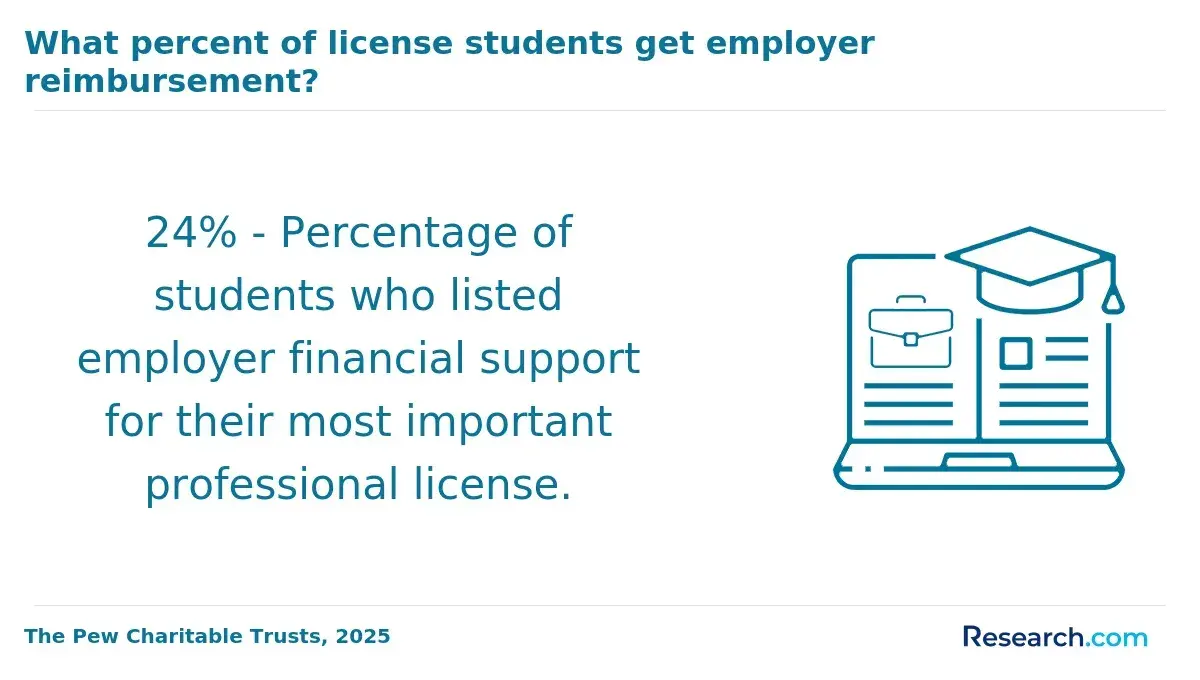
Financial aid can include federal loans for eligible programs, institutional scholarships, assistantships, military benefits, employer reimbursement, and research-related funding. The IRS educational assistance exclusion allows employers to provide up to $5,250 in tax-free education benefits under qualifying plans, but employees should verify current rules with their employer and tax advisor.
To control costs, take these steps before enrolling.
- Request a full tuition-and-fee estimate through expected completion, not just the first-year cost.
- Ask whether transfer credits from a master's degree can reduce required coursework.
- Confirm whether dissertation delays create extra tuition or continuation charges.
- Check whether employer reimbursement applies to doctoral study, online programs, and dissertation credits.
- Compare the total cost against the career role you are targeting, not against the degree title alone.
What is the typical timeline for online Computer Science doctorate programs?
Online Computer Science doctorates commonly take several years because students must complete advanced coursework, pass milestones, develop a research proposal, conduct original research, and defend a dissertation or applied doctoral project. Full-time students may finish faster, but many online doctoral students are employed and move at a part-time pace.
The National Science Foundation's 2024 Survey of Earned Doctorates is a useful benchmark because it shows that computer and information sciences doctorates are long-term research commitments, not short executive programs. Online students should treat published "minimum time to completion" as optimistic unless they can consistently devote substantial weekly time to research.
The table below shows how timelines often differ by pace. Actual timelines vary by transfer credit, dissertation topic, faculty availability, research design, and whether the student pauses enrollment.
| Study pace | Typical structure | Best fit | Main risk |
| Full-time | Coursework, exams, proposal, research, and dissertation completed with heavy weekly focus | Professionals on sabbatical, funded students, or those shifting toward academia | Reduced income or limited ability to maintain senior work responsibilities |
| Part-time | One or two courses per term followed by extended dissertation work | Working professionals with demanding roles and family responsibilities | Longer completion time and higher risk of losing momentum |
| Accelerated professional doctorate | Structured terms, applied research sequence, and cohort-based milestones | Senior practitioners who want an applied computing doctorate tied to workplace problems | Less flexibility for exploratory research or academic publication goals |
| Low-residency or hybrid | Online work combined with scheduled campus sessions, labs, intensives, or defenses | Students who want online flexibility but value face-to-face research support | Travel and schedule conflicts during required residencies |
A realistic planning model is to separate the doctorate into two phases. Coursework is structured and easier to schedule around work. Dissertation research is less predictable because progress depends on data access, methodology, faculty feedback, revisions, and committee approval.
Mid-career professionals should ask each program for median completion time among part-time students, not only the catalog minimum. If a school cannot provide a realistic range, talk with current students or alumni before enrolling.
What skills can professionals learn from online Computer Science doctorate programs?
A Computer Science doctorate builds skills that go beyond advanced programming. The central learning outcome is the ability to define an unsolved problem, evaluate existing research, design a defensible method, and contribute original knowledge or a significant applied solution.
For mid-career professionals, the most valuable skills are often a blend of research depth and leadership communication. These skills can transfer into technical strategy, architecture, research management, faculty work, and advanced product innovation.
- Research design: Turning a technical problem into a testable research question, selecting appropriate methods, and defending assumptions.
- Advanced technical specialization: Developing deeper expertise in areas such as AI, cybersecurity, distributed systems, data science, software engineering, or algorithms.
- Scholarly writing: Producing literature reviews, research papers, dissertation chapters, technical reports, and conference submissions.
- Quantitative and computational analysis: Evaluating models, systems, experiments, datasets, performance metrics, and statistical results.
- Technical communication: Explaining complex findings to executives, engineers, faculty, policymakers, or nontechnical stakeholders.
- Ethical and responsible computing judgment: Assessing privacy, security, fairness, explainability, safety, and social impact in technical systems.
- Independent project execution: Managing multi-year research work with uncertain milestones, committee feedback, and iterative revisions.
AI is changing the value of these skills. As generative AI tools automate more routine coding and analysis tasks, employers increasingly need professionals who can evaluate model behavior, design reliable systems, identify failure modes, and make defensible technical decisions. Those considering AI-focused study may also want to compare doctorate pathways with an artificial intelligence major or master's-level AI path, especially if their goal is applied implementation rather than doctoral research.
What career opportunities open up for online Computer Science doctorate degree holders?
An online Computer Science doctorate can support roles that value research capability, deep specialization, and credibility in complex technical domains. The degree is most relevant when the job requires creating, evaluating, or leading advanced computing work rather than simply managing established systems.
BLS employment projections for computer and information research scientists show strong long-term demand for professionals who develop new computing approaches. This does not mean every doctorate holder will move into that occupation, but it indicates that advanced computing research remains a meaningful part of the U.S. labor market.
The table below connects common career paths to the type of doctoral value they typically require.
| Career path | How the doctorate can help | Important limitation |
| Computer and information research scientist | Supports original research in AI, algorithms, robotics, systems, cybersecurity, or data-intensive computing | Many roles still require publication history, lab experience, or domain-specific expertise |
| Principal scientist or research engineer | Signals ability to frame research problems and guide advanced technical investigations | Industry impact, patents, prototypes, and leadership record may matter as much as the degree |
| Cybersecurity research leader | Strengthens credibility in threat research, secure systems, cryptography, forensics, or cyber defense strategy | Certifications, clearance, and operational experience may still be required |
| AI or machine learning research lead | Helps with model evaluation, method development, responsible AI, and research supervision | Employers may expect strong math, publication, open-source, or large-scale production experience |
| University faculty member | Meets common credential expectations for full-time faculty and research supervision roles | Tenure-track hiring is competitive and often depends on publications, teaching, grants, and institutional fit |
| Senior technical consultant | Can improve credibility for expert witness work, high-level architecture, audits, or specialized advisory services | Client development and market reputation remain essential |
| Technology executive or chief architect | Can strengthen strategic authority in research-heavy organizations or technical industries | Executive advancement usually also depends on business results and leadership capability |
The degree can also help professionals move into government labs, defense contractors, research nonprofits, policy organizations, and advanced product groups. However, it should not be treated as a substitute for building a portfolio of research outputs, conference presentations, technical leadership, and measurable workplace impact.
How can Computer Science doctorate students balance their time between studies and work?
Balancing a doctorate with a demanding Computer Science career requires systems, not motivation alone. Mid-career students often fail not because they lack ability, but because they underestimate the weekly consistency required for reading, coding, writing, experiments, and committee communication.
A practical time-management plan should protect research progress while reducing conflict with work and family responsibilities. The steps below are especially useful before the dissertation phase, when structure becomes looser.
- Choose a program format that matches your real weekly availability, not your ideal schedule during a quiet month.
- Block recurring research time on the calendar before each term starts, including reading, writing, coding, and advisor communication.
- Align your dissertation topic with your professional domain when ethically and legally possible, so your expertise and access create momentum.
- Clarify employer boundaries early, including data ownership, publication approval, intellectual property, confidentiality, and use of work systems.
- Use smaller milestones such as annotated bibliographies, draft methods sections, pilot experiments, and monthly advisor updates.
- Build a support structure that includes family expectations, peer writing groups, faculty check-ins, and protected recovery time.
- Reassess workload before taking on promotions, travel-heavy projects, or major personal commitments during comprehensive exams or dissertation proposal work.
Online versus hybrid format is also a time-management decision. Fully online programs reduce travel and commuting, but they may require more self-direction. Hybrid or low-residency programs can create stronger peer and faculty connections, but they add travel costs and fixed calendar obligations.
Avoid the common mistake of treating dissertation work as something you will do only when coursework ends. The strongest doctoral students begin building their literature base, research question, dataset strategy, and faculty relationships from the first year.
What should professionals evaluate when choosing an online Computer Science doctorate program?
Choosing an online Computer Science doctorate should feel more like selecting a research partnership than buying a course sequence. The program must fit your career goal, your research topic, your schedule, your budget, and your tolerance for independent work.
Use the criteria below to compare programs beyond rankings and marketing language.
- Accreditation: Confirm institutional accreditation from an agency recognized by the U.S. Department of Education or CHEA. Programmatic ABET accreditation is common for some undergraduate computing programs but is not the standard requirement for most Computer Science doctorates.
- Faculty fit: Identify faculty who actively research your area and confirm they advise online or part-time doctoral students.
- Doctorate type: Compare PhD, Doctor of Computer Science, Doctor of Engineering, and related applied doctorates based on whether you need academic research credibility or practitioner-focused advancement.
- Dissertation model: Ask whether the final requirement is a traditional dissertation, applied dissertation, portfolio, capstone-style doctoral project, or industry-based research problem.
- Online requirements: Verify synchronous meetings, residencies, exams, labs, defenses, and any campus visits before assuming the program is fully remote.
- Student support: Look for research methods support, writing support, library access, dissertation coaching, statistical consulting, technical infrastructure, and clear advisor communication norms.
- Completion outcomes: Ask about part-time completion time, withdrawal patterns, dissertation completion support, and how many online students reach candidacy.
- Career alignment: Match the degree to the roles you want after graduation, such as research scientist, faculty member, cyber defense leader, AI research lead, or principal architect.
- Total cost: Compare tuition, fees, continuation enrollment, travel, transfer credits, and employer funding rather than tuition per credit alone.
The table below highlights common red flags and how to respond before enrolling.
| Red flag | Why it matters | How to avoid the problem |
| No clear faculty match | A doctorate can stall if no one can supervise your research area. | Contact the department and ask which faculty advise online students in your topic. |
| Vague dissertation expectations | Unclear milestones make it hard to plan time, cost, and completion. | Request a handbook, milestone map, and examples of recent dissertation topics. |
| Marketing emphasizes speed over research | Doctorates require depth; unusually fast claims may not fit serious research goals. | Ask for actual completion data for working students. |
| Accreditation is unclear | Unrecognized accreditation can limit employment, transfer, and faculty opportunities. | Verify institutional accreditation independently before applying. |
| Online format has hidden residency needs | Travel can disrupt work and add cost. | Ask for a complete list of in-person requirements from admission through defense. |
| No discussion of data, IP, or publication rules | Workplace-based research can create legal or ethical conflicts. | Get employer and university policies in writing before using company data. |
Before applying, ask admissions advisors and faculty specific questions. The most useful questions include: Who can supervise my topic? How often do online doctoral students meet with advisors? What is the expected weekly workload? What happens if my dissertation chair leaves? How are qualifying exams delivered? Can I use workplace data? What support exists after coursework?
Other Things You Should Know About Computer Science
Yes, many online and low-residency doctorates are designed for employed professionals. The realistic question is whether you can protect weekly study and research time for several years, especially during exams, proposal development, and dissertation writing.
A PhD is usually better for academic research, tenure-track teaching, and theory-heavy research careers. A Doctor of Computer Science or similar professional doctorate may fit better if you want applied research tied to industry leadership, architecture, cybersecurity, or executive technical roles.
Policies vary by institution, but many universities do not list the delivery format on the diploma. Employers may still ask about the program, so focus on accreditation, faculty quality, research output, and whether the degree fits your career target.
Sometimes, but you need approval from your employer, your dissertation committee, and the university's research ethics process. Clarify data privacy, intellectual property, publication rights, and confidentiality before building a dissertation around workplace systems or datasets.
References
- Online Doctorate Degree Programs https://www.coloradotech.edu/degrees/doctorates
- Paying for a Computer Science Degree | Scholarships, Grants, Loans https://www.computerscience.org/resources/how-to-pay-for-a-degree/
- Best Online PhD Programs With Flexible Learning Options 2026 - GTR Blogs | Career Guidance Articles https://gtracademy.org/blog/online-phd-programs-with-flexible-learning/
- How to Pay for a Ph.D in 2026 - ELFI https://www.elfi.com/how-to-pay-for-a-ph-d/
- Earn an Online Computer Science Degree | OEDb.org https://www.oedb.org/rankings/online-computer-science-programs/
- Best Online PhD Programs for Working Professionals in the USA https://www.euroamerican.eu/best-online-phd-programs-usa-for-working-professionals
- Top 15 Best Online PhD Cybersecurity Programs (2025) - Programs.com https://programs.com/programs/online-phd-programs/
- Best Schools for Working Professionals | Earn Your PhD or Doctorate https://www.phds.me/online-programs/best-schools-for-working-professionals/