2027 Online Computer Science Doctorate Programs That Give Credit for Prior Graduate Work

Co-Founder and Chief Data Scientist
Students with master's-level or unfinished doctoral coursework often face a costly question: will an online computer science doctorate make them repeat credits they already earned? Some programs award transfer credit or advanced standing after reviewing transcripts, syllabi, grades, accreditation, and course age. The decision matters because doctoral tuition and time-to-completion can change substantially.
The Bureau of Labor Statistics updated its outlook for computer and information research scientists with a $145,080 median annual wage and 23% projected growth, reinforcing why doctoral planning deserves careful review.
Key Things You Should Know
- Prior graduate work may transfer into an online computer science doctorate when it is graduate-level, completed at an accredited institution, relevant to the doctoral curriculum, and usually earned with at least a B or 3.0 grade.
- Transfer limits vary widely, but many doctoral programs fall in the 6-30 credit range; some allow advanced standing for a completed master's degree, while others evaluate every course individually.
- Accepted credits can lower tuition and shorten coursework, but they rarely replace dissertation, doctoral research, qualifying exam, or institutional residency requirements.
Can Prior Graduate Credits Be Applied to an Online Computer Science Doctorate?
Yes, prior graduate credits can sometimes be applied to an online computer science doctorate, but they are not accepted automatically. Schools typically review prior coursework to decide whether it is equivalent to required doctoral courses, recent enough for a fast-changing field, and earned at a properly accredited institution.
For students comparing programs, the key terms matter. Transfer credit usually means specific courses from another graduate program replace credits in the new doctorate. Advanced standing often means the school recognizes a completed master's degree and reduces the number of required credits. Credit evaluation is the formal review process used to decide what counts, where it fits, and whether it reduces the billable credit load.
Online computer science doctorates commonly include PhD, Doctor of Computer Science, Doctor of Information Technology, and applied computing doctorates. A research PhD may be stricter about transferring credits because it is built around faculty-supervised research preparation. A professional doctorate may be more flexible if prior courses match leadership, systems, cybersecurity, data systems, software engineering, or applied computing requirements.
The best candidates for transfer credit are students who completed a computer science, software engineering, cybersecurity, information systems, data science, or closely related master's degree from an accredited U.S. institution. Students with older coursework, low grades, nontechnical graduate classes, or credits from unaccredited institutions may still be admitted, but they should expect fewer accepted credits.
What Types of Prior Graduate Work Can Count Toward an Online Computer Science Doctorate?
Prior graduate work generally means completed courses above the bachelor's level. It may include master's courses, specialist-level graduate work, graduate certificates, doctoral courses from another institution, or coursework from an unfinished doctorate. The closer the prior work is to the new program's required curriculum, the more likely it is to be useful.
The table below summarizes common categories of prior graduate work and how admissions or registrar offices often view them. Use it to estimate which credits may deserve a formal review before you apply.
| Prior graduate work | Typical transfer potential | Why it may or may not count |
| Completed computer science master's courses | High | These courses may align with algorithms, systems, architecture, databases, programming languages, or theory requirements. |
| Graduate data science, AI, or machine learning courses | Moderate to high | They may count as electives or concentration courses if they include sufficient computing depth. |
| Cybersecurity or information technology graduate courses | Moderate | They may fit applied computing doctorates better than theory-heavy computer science PhD programs. |
| MBA, education, or management graduate courses | Low to moderate | They may count only if the doctorate includes leadership, research methods, or technology management electives. |
| Unfinished doctoral coursework | Case by case | Doctoral-level work may be valuable, but schools still review course match, grade, age, and institution type. |
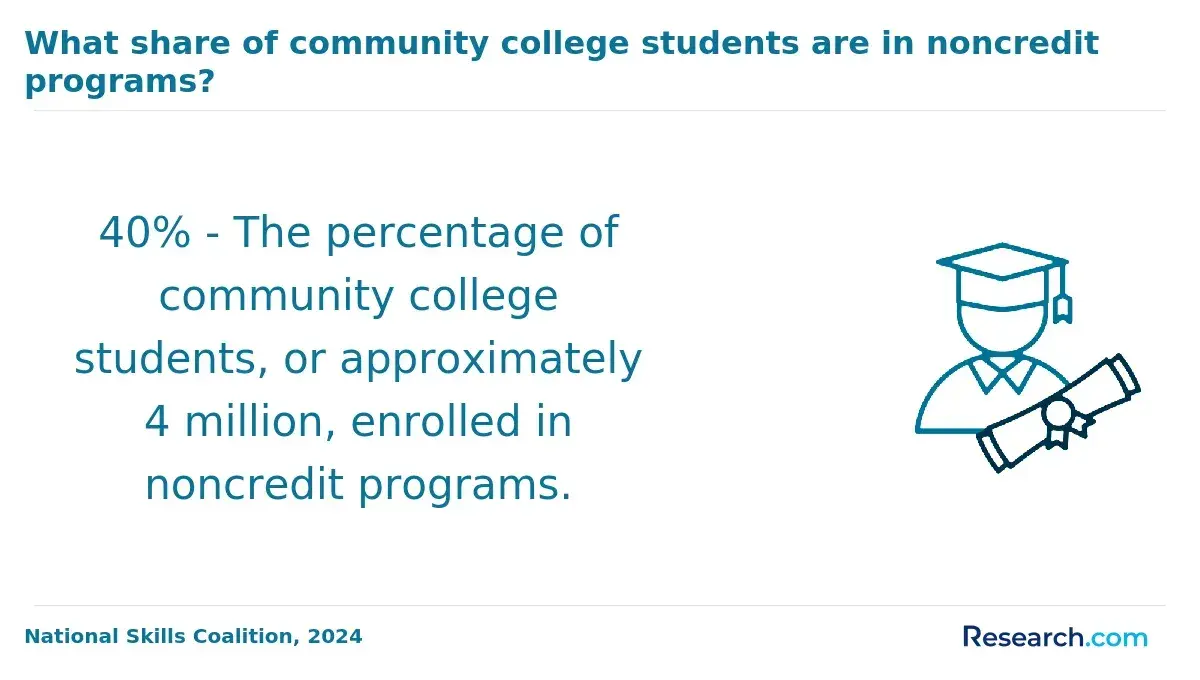
| Graduate certificates | Case by case | Certificate courses may transfer if they appear on an official graduate transcript and were not noncredit continuing education. |
Students moving from analytics, machine learning, or applied statistics into computing should compare course descriptions carefully. A prior data scientist degree may help with electives or research preparation, but it may not replace core doctoral computer science requirements such as theory, systems, or doctoral research seminars.
Students should also distinguish between content relevance and degree relevance. A course may sound related to computer science but still fail to transfer if it was taught at the undergraduate level, was graded pass/fail, lacked technical rigor, or duplicated a course the doctoral program requires students to complete in residence.
How Many Credits Can You Transfer Into an Online Computer Science Doctorate Program?
The number of credits you can transfer depends on the institution, doctoral degree type, program length, and whether the school uses block advanced standing or course-by-course review. Many online doctoral programs set a maximum transfer limit, but the advertised maximum is not a promise that every eligible student will receive that number.
The table below gives a practical way to interpret transfer limits when reviewing program catalogs. It is not a substitute for a school's written evaluation, but it can help you understand what different policies mean for cost and time.
| Transfer policy type | Common pattern | Best fit | Decision risk |
| Low transfer limit | About 6-12 graduate credits | Students who want a tightly structured research doctorate | Prior graduate work may have limited financial impact. |
| Moderate transfer limit | About 15-24 graduate credits | Students with a related master's degree and strong course match | Some required doctoral courses may still need to be repeated in a new format. |
| High transfer or advanced-standing model | About 27-30 or more graduate credits in some programs | Students with a completed, recent, closely aligned master's degree | The school may still require substantial in-residence coursework and all dissertation credits. |
| No meaningful transfer option | Program requires nearly all credits at the institution | Students seeking a cohort-based or faculty-specific research sequence | Prior coursework may help admissions but not reduce tuition. |
Transfer credit is most valuable when it replaces required coursework rather than only adding elective credits. If a program accepts 18 credits but applies them only to electives you did not need, the practical benefit may be smaller than expected.
Students should ask whether the transfer cap applies to all graduate credits, only credits beyond a completed master's degree, or only credits not used toward another degree. Some institutions do not allow "double counting" coursework that already fulfilled a previous degree, while others grant advanced standing precisely because a completed master's degree is part of the expected pathway.
What Grades, Course Matches, and Credit-Age Rules Apply to an Online Computer Science Doctorate?
Doctoral transfer rules usually focus on three questions: was the work strong enough, does it match the new curriculum, and is it still current? Computer science programs may be especially cautious about older coursework in areas affected by cloud computing, cybersecurity, machine learning, software architecture, and AI-enabled development.
The following criteria are commonly reviewed because they determine whether a prior course is academically usable in a doctoral plan of study.
- Minimum grade: Many graduate transfer policies require at least a B, 3.0, or equivalent grade; some programs require higher grades for core doctoral courses.
- Graduate level: The course usually must be listed as graduate-level on an official transcript, not taken as undergraduate, noncredit, professional development, or continuing education.
- Course equivalency: The syllabus should show comparable learning outcomes, technical depth, assignments, contact hours, and assessment methods.
- Credit age: Technical courses are often reviewed for recency, and many schools apply a 5-10 year limit unless the student can show continuing professional or academic work in the field.
- Prior use: Some schools limit credits already used toward another degree, while others allow master's-level advanced standing under a defined policy.
- Research fit: Courses in research methods, doctoral seminars, and dissertation preparation may be harder to transfer because schools want students trained in their own research process.
A strong course title is not enough. "Advanced Algorithms" may transfer only if the syllabus shows doctoral-level rigor, theoretical coverage, substantial assignments, and assessment comparable to the receiving program's course.
Students with older but professionally relevant coursework should ask whether the program allows a petition, competency review, portfolio, or faculty exception. Some programs may not award credit for the old course itself but may allow placement into a more advanced elective.
How Does the Transfer-Credit Evaluation Process Work for an Online Computer Science Doctorate?
The transfer-credit evaluation process usually begins before or shortly after admission, but the best time to ask for clarity is before paying a deposit. A verbal estimate from an admissions advisor is useful, but a written evaluation from the registrar, graduate school, or academic department is far more reliable.
Students can reduce surprises by preparing a complete transfer-credit packet. The sequence below shows the practical steps to follow when comparing online computer science doctorate programs.
- Request the program's official doctoral transfer-credit policy, including caps, grade rules, credit-age limits, and residency requirements.
- Order official transcripts from every graduate institution attended, including programs where you completed only one or two courses.
- Collect syllabi, catalog descriptions, reading lists, assignments, lab requirements, and learning outcomes for each course you want reviewed.
- Create a course-mapping document that matches each prior course to a specific requirement or elective in the doctoral curriculum.
- Ask whether the school provides a preliminary evaluation before enrollment and whether the result will be honored after matriculation.
- Request the final approved transfer-credit decision in writing, including how each accepted credit applies to the degree plan.
- Recalculate tuition, fees, financial aid load, and expected graduation timeline using only the credits the school has formally accepted.
Course-by-course evaluation is often better for students with a mix of graduate work from several institutions because each class can be considered on its own merits. Block advanced standing may be simpler for students with a completed master's degree in computer science, but it can be less transparent if the school does not show which requirements were waived.
One common mistake is sending transcripts only after enrollment. That can leave students committed to a program before they know whether the prior work will reduce cost or time. Another mistake is relying on transfer language in marketing pages instead of the graduate catalog and written academic evaluation.
How Do Accreditation and Academic Recognition Affect Computer Science Doctoral Transfer Credits?
Accreditation is one of the most important filters in doctoral transfer-credit decisions. In the U.S., regionally accredited institutions remain the most widely accepted source of graduate transfer credit, although some schools also review credits from nationally accredited or professionally accredited institutions under specific rules.
Institutional accreditation matters because it signals that the prior school met recognized academic quality standards. Programmatic accreditation is less common for computer science doctorates than for fields such as nursing or counseling, but academic recognition still matters. Faculty may look at whether the prior program had legitimate graduate faculty, research expectations, thesis or project requirements, and comparable technical rigor.
The table below explains how different academic recognition issues can affect transfer decisions. This helps students identify red flags before spending application fees or assuming credits will transfer.
| Academic factor | Why it matters | What students should verify |
| Institutional accreditation | Most schools require credits to come from an institution recognized by a U.S. accreditor or equivalent authority. | Check the institution's accreditation status for the exact dates when the courses were completed. |
| Graduate-level authorization | A school may be accredited but not authorized or recognized for the specific graduate-level work taken. | Confirm the course appears on a graduate transcript and carried graduate credit. |
| International recognition | Credits from outside the U.S. may need credential evaluation before academic review. | Ask whether the school requires a course-by-course evaluation from an approved evaluator. |
| Unaccredited or nondegree providers | Bootcamps, vendor academies, and continuing education certificates usually do not count as doctoral transfer credit. | Ask whether they can support admissions or placement even if they do not carry credit. |
Accreditation also affects financial aid, employer tuition assistance, and long-term recognition of the doctorate. Students should be cautious with schools that advertise extremely generous transfer policies but provide vague information about accreditation, faculty credentials, dissertation expectations, or graduate student outcomes.
How Do Transfer Credits Affect the Curriculum, Residency, and Dissertation Requirements of an Online Computer Science Doctorate?
Transfer credits usually affect the coursework portion of an online computer science doctorate, not the entire doctoral experience. Even when a student receives substantial advanced standing, the school may still require core research seminars, dissertation credits, comprehensive exams, proposal development, and a minimum number of credits earned directly through the institution.
Doctoral residency does not always mean living on campus. In online programs, residency may refer to minimum institutional credits, synchronous research seminars, virtual colloquia, short campus visits, cohort weekends, labs, or faculty-supervised milestones. Students should confirm whether accepted transfer credits reduce only electives or whether they also shorten required residency.
The following requirements commonly remain even after transfer credit is approved, because they shape doctoral identity, research readiness, and faculty oversight.
- Dissertation or doctoral project: Most programs require students to complete the final research project through the degree-granting institution.
- Research methods sequence: Some schools require their own quantitative, qualitative, design science, or computing research methods courses.
- Comprehensive or qualifying exam: Prior coursework may help preparation but usually does not waive the exam unless the catalog says so.
- Institutional residency credits: A program may require a minimum number of credits completed after admission regardless of transfer approval.
- Faculty-supervised milestones: Topic approval, proposal defense, IRB review when applicable, dissertation defense, and publication expectations are usually not transferable.
Students considering adjacent doctoral options should compare how each field handles research expectations. For example, an online PhD in data science may accept similar prior graduate work but organize the dissertation around analytics, statistics, or applied data systems rather than broader computer science theory.
The main trade-off is speed versus formation. Transferring credits can prevent repetition, but too much waived coursework may leave gaps in research methods, theory, or faculty integration. That matters if the student's goal is a research-intensive role, academic appointment, or highly specialized technical leadership position.
How Much Time and Tuition Can Transfer Credits Save in an Online Computer Science Doctorate?
Transfer credits can reduce both tuition and time, but savings depend on how tuition is charged and where the credits apply. A program charging per credit may show direct savings when credits are accepted. A flat-rate, subscription, cohort, or milestone-based program may reduce the course load without lowering total cost by the same amount.
The table below illustrates how to think about potential tuition effects. Replace the sample credit amounts with each school's published tuition and only use credits confirmed in writing.
| Accepted transfer credits | If tuition is $900 per credit | If tuition is $1,200 per credit | Planning note |
| 6 credits | $5,400 | $7,200 | May remove one or two courses but might not change graduation term. |
| 12 credits | $10,800 | $14,400 | Could reduce one semester or several part-time terms if courses are sequenced flexibly. |
| 18 credits | $16,200 | $21,600 | More meaningful if the credits replace required coursework, not just unused electives. |
| 30 credits | $27,000 | $36,000 | Potentially significant, but dissertation, residency, fees, and minimum enrollment rules may remain. |
Time savings are less predictable than tuition savings. A student who transfers 18 credits may still need the same number of calendar years if the dissertation sequence, annual course rotation, or cohort structure cannot be accelerated. Conversely, a flexible asynchronous program may allow accepted credits to shorten the coursework stage substantially.
Students should also consider opportunity cost. The BLS updated outlook for computer and information research scientists shows 23% projected employment growth, which points to strong demand for advanced computing expertise. For working professionals, finishing earlier may matter if the doctorate supports promotion, research leadership, consulting credibility, or transition into higher education; however, the degree should still align with the role they actually want.
Before enrolling, calculate the full cost using tuition, technology fees, dissertation continuation fees, residencies, books, travel, and the number of terms likely needed after transfer credit. The cheapest program on paper is not always the best value if it accepts fewer credits, delays dissertation progress, or lacks faculty in the student's research area.
Can Students Transfer Credits From Another Field, an International University, or an Unfinished Computer Science Doctorate?
Students can sometimes transfer credits from another field, an international university, or an unfinished doctorate, but these cases require closer review. The more unusual the source of credit, the more important it is to gather documentation early and ask for a written decision.
The scenarios below explain how schools commonly approach nonstandard prior graduate work and what students should watch for.
- Another field: Courses in statistics, engineering, information systems, education technology, business analytics, or management may count if they support the doctoral plan, but they may not replace core computer science requirements.
- International university: The receiving school may require a course-by-course credential evaluation, translated syllabi, grading-scale explanation, and proof that the institution is recognized in its country.
- Unfinished doctorate: Prior doctoral courses may transfer if they are relevant, recent, and documented, but dissertation credits are rarely portable because they are tied to faculty supervision and institutional review.
- Professional certificates: Vendor credentials from cloud, cybersecurity, AI, or networking providers may strengthen an application but usually do not count as graduate academic credit unless transcripted by an accredited graduate institution.
Related-field credits can be useful for students whose research sits at the edge of computing and another discipline. For example, someone with graduate work in AI, robotics, cognitive science, or analytics may find that an artificial intelligence major or AI-focused background supports a dissertation topic, even if the program still requires doctoral computer science foundations.
Students leaving an unfinished doctorate should ask whether the new program will accept credits from doctoral seminars, research methods, or specialization courses. They should also be ready to explain why they are transferring, especially if the prior program ended because of academic standing, funding, advisor mismatch, or a change in research goals.
How Should Students Compare Online Computer Science Doctorate Programs That Accept Prior Graduate Work?
The best program is not simply the one advertising the highest transfer-credit maximum. Students should compare transfer friendliness, total cost, dissertation support, faculty expertise, accreditation, course delivery, and career fit together. A generous transfer policy has limited value if the program lacks advisors in the student's research area or requires fees that offset tuition savings.
Use the following questions when speaking with admissions advisors, graduate coordinators, or faculty. They are designed to uncover the difference between a marketing claim and an actual degree plan.
- How many graduate credits may be transferred, and how many are typically approved for students with a related master's degree?
- Does the school use course-by-course review, block advanced standing, or both?
- Can credits used toward a completed master's degree also reduce doctoral requirements?
- What minimum grade, course age, and accreditation rules apply?
- Which requirements cannot be waived, including dissertation, research methods, residency, exams, or doctoral seminars?
- Will the school provide a written transfer-credit evaluation before enrollment or before the deposit deadline?
- How will accepted credits affect tuition, fees, financial aid load, and expected graduation date?
- Who will supervise dissertation research in the student's area of interest?
The table below compares common decision trade-offs. It can help students avoid focusing on a single feature, such as transfer maximum, while missing factors that affect completion.
| Program feature | Why it matters | Best choice when |
| High transfer limit | Can reduce repeated coursework and per-credit tuition | The accepted credits replace required courses and the degree plan is confirmed in writing. |
| Lower tuition | May reduce total debt even with fewer transferred credits | The curriculum, accreditation, and dissertation support still match the student's goals. |
| Strong faculty match | Improves the chance of sustained dissertation progress | The student has a defined research area and needs expert supervision. |
| Flexible online format | Supports working professionals and part-time study | The student needs asynchronous courses or limited residency obligations. |
| Structured cohort | Provides accountability and predictable sequencing | The student values support more than maximum acceleration. |
Students still exploring lower-cost computing pathways may also compare doctoral planning with earlier degree options, including the cheapest online computer science degree options, especially if they need prerequisites before applying to a doctorate.
A smart next step is to shortlist three to five accredited programs, send the same transcript and syllabus packet to each, and compare the written evaluations side by side. The right program should show not only how many credits transfer, but also exactly how the remaining curriculum, research milestones, timeline, and cost support the student's goal.
Other Things You Should Know About Computer Science
Yes. If transfer credits reduce the number of credits you take in a term, they may affect enrollment status, loan eligibility, employer tuition reimbursement, or scholarship rules. Ask the financial aid office to calculate aid based on your approved degree plan, not the full catalog curriculum.
Usually, the transcript will show the degree-granting institution and may list transferred credits separately. Employers and universities generally focus on accreditation, dissertation quality, research fit, and skills, but academic hiring committees may review the full transcript for rigor.
You may need to apply before a final evaluation is completed, but you should not enroll or pay a nonrefundable deposit without written transfer-credit information if cost and time savings are central to your decision.
Professional experience can strengthen an application and help with research direction, but it usually does not replace graduate credits in a doctoral program. Some schools may offer placement, portfolio review, or competency-based options, but those policies must be confirmed directly.
References
- Ph.D. Programs in Computer Science | ComputerScience.org https://www.computerscience.org/degrees/phd/
- How a Doctorate in Computer Science Leads to AI Leadership Careers https://www.euroamerican.eu/how-a-doctorate-in-computer-science-helps-move-into-ai-leadership-roles
- NCAA Initial Eligibility Requirements - NCAA.org https://www.ncaa.org/eligibility-center/initial-eligibility-requirements/
- Common Questions https://utahtransferguide.org/Common-Questions
- MS to PhD in CS: 39 US Programs With Internal Transfer https://gradpilot.com/news/ms-to-phd-cs-internal-transfer-us-programs
- What are NCAA Core Courses and Why Should You Care? - Honest Game https://honestgame.com/blog/what-are-ncaa-core-courses/
- Findings (Beyond Transfer) - Public Agenda https://publicagenda.org/resource/beyond-transfer/findings/
- Can you get a PhD in Computer Science? What to know https://vinuni.edu.vn/can-you-get-a-phd-in-computer-science/
- Can You Transfer Credits From a Completed Degree? https://www.edvisorly.com/student-guides/can-you-transfer-credits-from-a-completed-degree
- Basic requirements https://admission.universityofcalifornia.edu/admission-requirements/transfer-requirements/preparing-to-transfer/basic-requirements.html