2027 Best Online College Degrees for Students With Some College Credit

Co-Founder and Chief Data Scientist
Already earned college credits but still need a degree? Your best online option is the one that applies those credits to requirements you actually need - not simply the one with the largest transfer limit. The decision matters financially: according to the U.S. Bureau of Labor Statistics (BLS), workers with a bachelor's degree had median weekly earnings of $1,543 in 2024, compared with $930 for high school graduates.
That is an occupational-market comparison, not a promised return on tuition. This guide compares degree fields, explains transfer and cost rules, and helps you request the evaluations needed to choose a realistic completion path.
Key Things You Should Know
- Best starting points: Business, information technology, psychology, and some healthcare administration degrees often offer room for varied prior coursework; nursing, engineering, and licensure-track education have more tightly sequenced requirements.
- Credits accepted are not necessarily credits applied: Ask for a degree audit showing which courses satisfy general education, major, and elective requirements, plus the credits you must complete at the new school.
- Compare the remaining degree, not the advertised program: A typical bachelor's degree requires about 120 semester credits, but your time and cost depend on accepted credits, prerequisites, course availability, and any in-person training.
Top 10 Best Online College Degrees for Students With Some College Credit
Business Programs
An online bachelor's in business administration can suit returning students whose previous courses cover economics, accounting, mathematics, or general education. Compare concentrations against your goals: accounting may require a specific course sequence, while general management may allow more electives. A master's in business administration is a separate, later credential for professional advancement; undergraduate credits do not ordinarily count toward it. If you already hold a bachelor's, compare graduate admission requirements instead of applying to another bachelor's program. Neither degree alone guarantees a management position.
Healthcare Programs
Online bachelor's programs in healthcare administration or health information management can fit students with previous general education or health-related coursework. Ask whether science courses remain current and whether the program requires an internship. A master's in healthcare administration is generally an advancement path for bachelor's graduates, not a way to convert unfinished undergraduate credits into graduate credit. Administration and health information roles differ from licensed clinical practice; check employer expectations and any relevant professional credential before choosing a concentration.
Information Technology Programs
An online bachelor's in information technology can be a practical choice if prior courses meet computing, mathematics, or elective requirements. Compare cybersecurity, networking, and systems concentrations: technical courses may need a close match to transfer into the major. A master's in information technology may support later specialization but normally requires a completed bachelor's first. Projects, labs, and industry certifications can strengthen job applications, though certification exams and fees may be separate from the degree.
Computer Science Programs
Online computer science bachelor's degrees emphasize programming, algorithms, and mathematics. They may be less transfer-friendly than general IT degrees for students whose existing credits lack calculus or programming prerequisites; a course accepted as an elective might not replace a required sequence. A master's in computer science is a distinct graduate path, sometimes requiring undergraduate computing preparation. Choose this field if you want substantial software or computing theory, and confirm how often required courses are offered before estimating graduation time.
Nursing Programs
For an already licensed registered nurse, an online RN-to-BSN pathway may apply previous nursing education toward a bachelor's degree, subject to the school's evaluation and residency rules. Applicants without RN preparation need a different, clinically supervised entry route; an online classroom does not eliminate clinical requirements. A master's in nursing generally requires nursing credentials and may have additional practice, clinical, and licensure conditions. Verify state authorization, placement responsibilities, and appropriate nursing accreditation for the specific pathway.
Psychology Programs
An online psychology bachelor's can accommodate earlier general education and elective credits, making it worth comparing for students still deciding among people-focused careers. It does not qualify graduates to practice as psychologists. A master's in psychology, counseling, or a related field is a later step with its own prerequisites; counseling licensure typically adds supervised practice and examinations, while psychologist licensure commonly requires a doctorate. Choose the undergraduate major for its coursework and next-step options, not an assumption of immediate clinical eligibility.
Education Programs
Online bachelor's degrees in education require a distinction between teacher-licensure tracks and non-licensure studies. A transfer-friendly curriculum is not useful for prospective teachers unless its supervised student teaching and state approval match the intended license. A master's in education can serve licensed teachers seeking advancement or students pursuing a separate professional pathway; admission and licensure outcomes vary. Before enrolling, ask which earlier courses satisfy the teaching major and where required classroom placements can be completed.
Criminal Justice Programs
An online criminal justice bachelor's may offer room for transfer electives and prior coursework in sociology, government, or public administration. Compare concentrations with actual hiring requirements: police and federal roles can have separate training, examinations, experience, or eligibility rules. A master's in criminal justice is an optional graduate credential for specialized or leadership goals, not a substitute for agency qualifications. Ask whether an internship is required and whether your previous courses satisfy the major rather than only free electives.
Engineering Programs
Engineering bachelor's degrees usually have sequenced mathematics, science, laboratory, and design courses, so transferring many unrelated credits may do little to shorten the major. Verify the specific program's ABET accreditation if professional engineering licensure is a goal, and check whether online study includes campus labs or other in-person work. A master's in engineering normally follows a bachelor's and may require particular technical prerequisites. Engineering technology is a different educational path; confirm that it meets your intended employer's or state board's requirements.
Social Work Programs
An online bachelor of social work may accept earlier general education courses, but accredited social work coursework and supervised field education can limit acceleration. Confirm Council on Social Work Education accreditation and local placement arrangements. A master of social work is a separate graduate pathway; some programs offer advanced standing to eligible graduates of accredited BSW programs, subject to their admission rules. Neither an online BSW nor an MSW automatically confers a clinical license: states set separate examination and supervised-practice requirements.
What are the best online degrees for transferring college credits?
The best transfer degree is the one with the fewest unmet requirements that still serves your career goal. For students with mixed credits, business administration, information technology, psychology, and healthcare administration are useful first comparisons because programs may have general education and elective space. Students pursuing a licensed occupation should prioritize an approved pathway even if it takes longer.
This comparison shows how the type of credit you already have can change which field is a good fit. It does not imply that every school offers the same online delivery or transfer policy.
| Degree field | Potential fit for earlier coursework | Main constraint to check |
| Business administration | General education, introductory business, and electives | Accounting or concentration sequences |
| Information technology | Computing courses, mathematics, and electives | Technical course equivalency and recency |
| Psychology | Social science and general education | Research methods and required psychology courses |
| Healthcare administration | Health-related study and general education | Major prerequisites or internship |
| Nursing, education, or social work | Relevant prerequisites and general education | Licensure, accreditation, and supervised placements |
If your previous coursework is closer to an associate degree than a bachelor's, compare that credential before committing to a longer path. Some easy associate degrees may be simpler to complete academically, but "easy" does not tell you whether the courses will satisfy a later bachelor's major. Ask about a written transfer or articulation agreement.
How does transferring college credit to an online degree program work?
Transfer begins with an evaluation of official transcripts. The college decides whether earlier courses qualify for credit; the degree program then determines where that credit applies. A course can be accepted by the institution yet count only as an elective, leaving a required major course unfinished.
Use this sequence to find out what remains before you make an enrollment decision:
- Collect official transcripts from every college attended and identify the online degree and concentration you want.
- Request a course-by-course transfer evaluation and a program-specific degree audit; ask whether the school can provide them before enrollment.
- Check minimum grades, course equivalencies, subject-specific age limits, and rules for credits from differently accredited institutions.
- Confirm the maximum applicable transfer credit, the school's minimum residence credits, and where accepted courses fall: general education, major, or electives.
- Ask separately about evaluated military or professional education, examinations, portfolios, and other prior-learning assessments; experience alone is not automatic credit.
Keep the resulting audit and ask how it would change if you switched majors. Undergraduate credits also do not automatically become graduate credits; a school must expressly allow any applicable combined or advanced pathway.
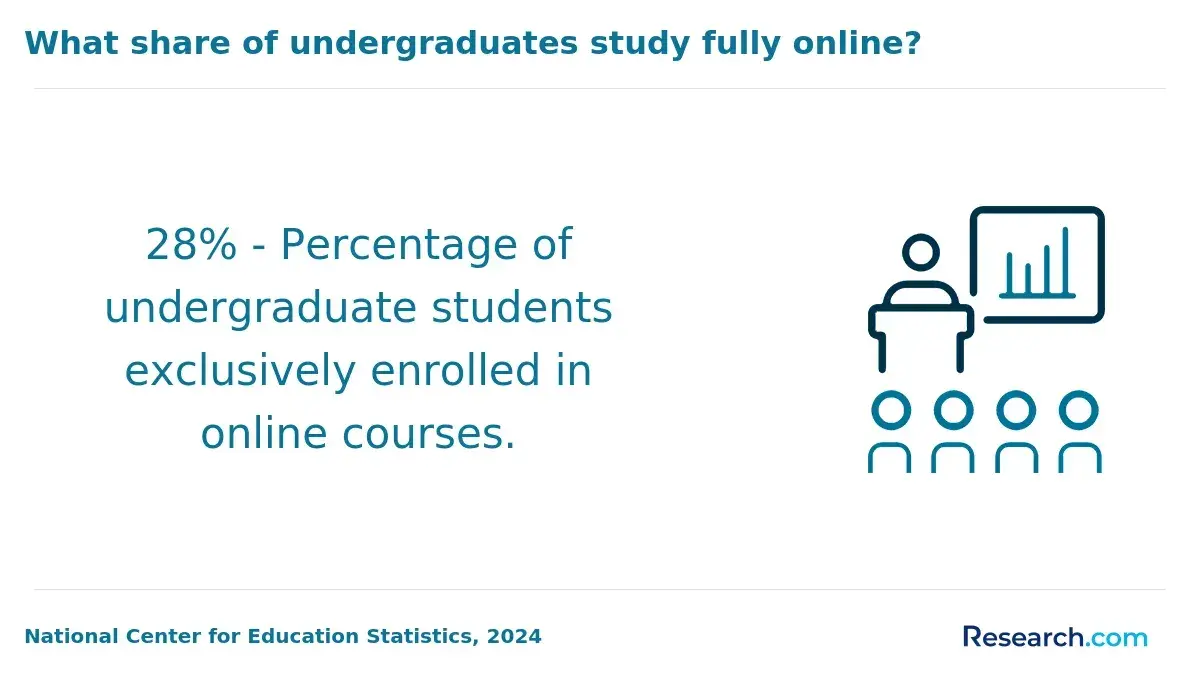
How do you choose an accredited online college that accepts transfer credits?
Start by confirming that the institution holds accreditation recognized by the U.S. Department of Education or the Council for Higher Education Accreditation. Then check any programmatic accreditation or state approval relevant to your intended profession. Institutional accreditation supports a credible starting point, but it does not guarantee that another school, employer, or licensing board will accept every course.
Compare online colleges using the same questions: Will they evaluate transcripts before a deposit? How many accepted credits meet actual degree requirements? Must you complete particular major courses at that school? Can you enroll part time, and are the courses you need offered predictably? For nursing, teaching, social work, and engineering, confirm the specific program's accreditation or approval and its in-person requirements. Treat an unexplained promise to "accept all your credits" as a red flag; request a written degree audit instead.
Which online bachelor's degrees offer the fastest path to graduation?
The fastest realistic online bachelor's is usually the one for which your completed courses satisfy the most required credits and the remaining courses can be taken without scheduling conflicts. Broad business or interdisciplinary pathways may accommodate varied credits, while computer science, engineering, and clinical or licensure tracks often have sequences or placements that cannot be skipped.
Do not confuse short classes with a short degree. Estimate your finish date from the degree audit, prerequisites, available terms, course load, and capstone or placement schedule. An advertised completion time may assume an associate degree, substantial applicable transfer credit, or full-time study. Compare fast track career programs only after checking those assumptions against your own transcript; a slower part-time plan may be more sustainable.
What are the admission requirements for online degree completion programs?
Online bachelor's completion applicants generally submit an application and transcripts from all prior colleges. Schools may set minimum earned-credit or GPA thresholds, but policies differ: some admit students to the university before deciding eligibility for a selective nursing, teaching, or other professional major. Prerequisite courses, an active RN license, or background checks may also apply to particular pathways.
Ask admissions whether testing is required for your applicant category, whether older coursework meets current prerequisites, and what happens if your prior GPA is below a published minimum. If you already hold a bachelor's and want a master's instead, request the graduate program's requirements; undergraduate transfer admission rules do not determine graduate eligibility.
How much do online degree completion programs cost?
The useful price is the cost to finish your audited degree, not tuition per credit in isolation. Request an estimate based on the credits that satisfy requirements and the courses you still need. Include mandatory and program fees, materials, technology, assessments, and any travel or lost work time for labs, clinicals, student teaching, or residencies.
Compare financial aid offers alongside that estimate. Eligibility depends on the school, program, enrollment, and your circumstances; employer tuition assistance or eligible military benefits may change your out-of-pocket cost. Prior-learning assessment can carry a fee and may not count toward every requirement. A cheaper per-credit school can cost more overall if fewer of your credits apply or required courses are difficult to schedule. Avoid borrowing against an occupational salary figure as though it were a guaranteed graduate outcome.
What do online degree programs teach, and how are courses delivered?
Coursework depends on the major, but a bachelor's completion plan commonly combines unfinished general education, major requirements, electives, and sometimes a capstone. Business students might complete accounting and operations; IT students might build systems projects; psychology students might study research methods. Prior credits reduce only the requirements the receiving program agrees they satisfy.
"Online" describes where much instruction occurs, not when you must attend. Courses may have weekly deadlines, live meetings, proctored assessments, group projects, or scheduled labs. Clinicals, internships, field placements, and student teaching may require local in-person work even when classroom instruction is online. Request a sample course schedule and placement policy before assuming that the program fits your work hours.
What careers and salaries can online degree graduates expect?
Career fit should guide degree selection, but an occupational median is not a forecast of a graduate's earnings. For context, the BLS reported a median annual wage of $132,270 for software developers in May 2023. That figure covers people working in the occupation, not everyone who completes an online computer science or IT degree; skills, experience, location, and hiring conditions matter.
Business and healthcare administration can support applications for operational roles, while IT and computer science align with technical work. Psychology and criminal justice graduates should check the entry requirements of specific employers; nursing, teaching, social work, and engineering involve additional credential or practice considerations. When weighing online programs that pay well, compare the occupation's actual entry requirements with your remaining degree cost and likely starting position - not its median wage alone.
Which certifications, licenses, and job outlooks apply to online degree fields?
Degree completion, certification, and professional licensure are separate decisions. An RN-to-BSN student generally enters with nursing licensure; future nursing roles may require further credentials. Public-school teaching and clinical social work have state-specific approval, examination, and supervised-experience rules. Engineering licensure likewise depends on state board requirements, examinations, and qualifying experience. In IT, a certification may demonstrate a particular skill, but it does not replace a degree when an employer requires one.
The BLS projected 17% employment growth for software developers from 2023 to 2033. That outlook describes an occupation, not a placement rate for computer science graduates, and it does not remove the need to demonstrate technical ability. Before choosing any field, check current requirements with the relevant state board or prospective employers. If your goal is eventual research rather than immediate professional practice, a later PhD without dissertation is a separate decision with its own admissions and completion rules; it does not change how bachelor's credits transfer.
Other Things You Should Know About
Often, but the school decides which courses transfer and whether technical or science prerequisites must be recent. Request an evaluation for your intended major.
No. An articulation agreement may help, but the receiving program must determine how each course meets its requirements.
Only if the institution offers an applicable prior-learning assessment and awards credit for documented, evaluated learning. Ask about fees, limits, and how awarded credit applies to your degree.
Obtain a program-specific degree audit, a remaining-cost estimate, and written details about online scheduling and any required in-person activities.
References
- Distance Learning Instruction Planning Guidance | ca.gov https://www.cde.ca.gov/ls/he/hn/guidanceplanning.asp
- School-Determined Requirements | 2024-2025 Federal Student Aid Handbook https://fsapartners.ed.gov/knowledge-center/fsa-handbook/2024-2025/vol1/ch1-school-determined-requirements
- Credit for Prior Learning - PA College Transfer https://collegetransfer.pa.gov/Administrators/Credit-for-Prior-Learning
- Helping Transfer Students Achieve Their Education Goals | THECB Data https://databridge.highered.texas.gov/helping-transfer-students-achieve-their-education-goals/
- Career and College Promise | NC DPI https://www.dpi.nc.gov/students-families/enhanced-opportunities/advanced-learning-and-gifted-education/career-and-college-promise
- COE - Postsecondary Outcomes for Nontraditional and Traditional Undergraduate Students https://nces.ed.gov/programs/coe/indicator/ctu
- Undergraduate Admissions - UNC Catalog https://catalog.unc.edu/admissions/undergraduate/
- 4.1.21 Instructional Modalities and Distance Education | Illinois State https://policy.illinoisstate.edu/academic/4-1-21
- Online Degree Completion: Finish Your Path at West Virginia University Without Starting Over | WVU Online https://online.wvu.edu/news-and-stories/online-degree-completion-finish-your-path-at-west-virginia-university-without-starting-over/
- Admission, Advising and Registration | fl.edu https://catalog.tsc.fl.edu/content.php