
2027 Best College Majors for Students With Low GPA

Co-Founder and Chief Data Scientist
A low GPA can narrow your college options, but it does not determine which subject you can study or career you can pursue. The right choice depends on two separate questions: Can you enter the college, and can you enter your intended major? That distinction matters in growing fields: the U.S. Bureau of Labor Statistics (BLS) projects registered nurse employment to grow 5% from 2024 to 2034, yet nursing programs often have selective admissions. This guide compares majors by accessibility, coursework, career fit, and requirements so you can find a realistic starting point and plan your next move.
Key Things You Should Know
- Business, information technology, psychology, and criminal justice may offer more flexible entry routes than selective nursing or engineering programs, but admission rules vary by school.
- A low GPA need not end a nursing goal: an eligible associate-degree or prerequisite pathway may provide a starting point. BLS reports a $93,600 median annual wage for registered nurses in May 2024; a degree alone does not confer licensure.
- Check admission to the specific major, not just the college. Compare prerequisite grades, accreditation, total cost, and any clinical or licensing requirements before enrolling.
Top 10 Best College Majors for Students With Low GPA
Business Programs
Business administration, management, and marketing are broad undergraduate choices if you want transferable workplace skills without committing immediately to one occupation. Coursework commonly includes accounting, economics, communication, and operations; expect quantitative work even if the major seems less math-intensive than engineering. Some colleges admit students directly to business, while others require grades in introductory courses before declaring the major. An associate degree can provide an entry point, but confirm that its courses will satisfy the intended bachelor's degree. An MBA is a later, separate option with its own GPA and experience requirements.
Healthcare Programs
Healthcare administration and health information management can suit students interested in healthcare without pursuing bedside clinical practice. They generally emphasize records, policy, operations, or data rather than the science sequence required for nursing. Still, check whether a health information program prepares students for a particular certification and whether an internship is required. A broad healthcare major does not qualify you for a licensed clinical role. Graduate healthcare administration programs typically require a bachelor's degree and may assess undergraduate GPA separately from professional experience.
Information Technology Programs
Information technology (IT) majors often focus on networks, databases, systems administration, and cybersecurity fundamentals. They may appeal to students who prefer applied troubleshooting to computer science's heavier theoretical emphasis. Entry to the college and admission to an IT concentration can differ, so review both policies. Look for labs, projects, and opportunities to build a portfolio; a degree title alone will not demonstrate technical ability. Certifications can complement, but do not replace, the experience or specialized knowledge some IT jobs require. Graduate IT programs usually expect prior college-level preparation.
Computer Science Programs
Computer science is worth considering if you enjoy programming and can commit to mathematics and sustained problem-solving. Typical subjects include algorithms, data structures, software development, and discrete mathematics. A college may admit you with a low GPA but restrict entry to computer science until you meet course-grade or GPA thresholds. Ask about those thresholds and whether introductory courses have available seats. An IT major or software-development certificate may be a better first step if you want applied skills sooner; a computer science master's program is not a substitute for missing undergraduate foundations.
Nursing Programs
Nursing can be a strong goal, but it is rarely a safe choice based on general college admission alone. Associate degree in nursing (ADN) and bachelor of science in nursing (BSN) programs may rank applicants using prerequisite science grades, entrance exams, or other criteria. Both can provide routes toward registered nurse licensure when the program meets applicable requirements; graduates must also satisfy state board rules and pass the NCLEX-RN. If your GPA is low, ask whether retaking prerequisites improves your application. Master's nursing pathways have additional credential and, often, licensure requirements.
Psychology Programs
Psychology is a flexible undergraduate major covering behavior, research methods, and statistics. It can fit students exploring human services, business, or graduate study, but it is not a direct license to practice psychology or therapy. Entry-level roles may be available with a bachelor's degree; licensed clinical roles generally require further education and supervised practice. If graduate school is your goal, use undergraduate coursework to strengthen your record and gain relevant experience. Master's program GPA rules vary, and some psychology careers require a doctorate rather than a master's degree.
Education Programs
Education majors can prepare students for teaching, but admission to a teacher-preparation track may require more than admission to the college. Review minimum course grades, background checks, field placements, and student-teaching schedules before choosing an online program. State licensure rules determine whether a particular route qualifies you to teach. If your current GPA falls short of the preparation program's standard, ask about prerequisite retakes or a later application. A master's in education may support advancement or an alternative route, but it does not automatically provide an initial teaching license.
Criminal Justice Programs
Criminal justice examines policing, courts, corrections, and policy. It may suit students who want to explore public-service careers while building writing and analytical skills. The major does not guarantee entry to law enforcement: agencies set their own hiring, fitness, training, and background standards. Compare internship access and elective choices with your intended role; an IT or accounting major may be more relevant to some investigative specialties. Graduate criminal justice study is generally aimed at specialization or advancement, not a workaround for undergraduate admission rules.
Engineering Programs
Engineering can be rewarding if you are ready for calculus, laboratory science, and sequenced design courses. It is less low-GPA-friendly when a college imposes separate major-entry standards or prerequisites, so verify those requirements before committing. Starting with transferable math and science courses can help demonstrate readiness, but obtain a written transfer evaluation where possible. Check whether the specific engineering program has ABET accreditation if your career plans may involve professional engineering licensure. A master's in engineering usually assumes substantial prior technical preparation.
Social Work Programs
A bachelor of social work (BSW) offers a more defined human-services pathway than some general social science majors. Programs may require a separate application, minimum grades, a background check, and supervised field education. Check Council on Social Work Education accreditation when comparing BSW programs, particularly if you may later seek advanced standing in a master of social work (MSW) program. Advanced standing is not automatic; the graduate program sets eligibility rules. Social work licensure varies by state and role, and clinical practice generally requires an MSW plus additional supervised experience.
What college majors are best for students with a low GPA?
The best major is one you can enter, complete, afford, and connect to a realistic goal. There is no universally "easy" major: your strengths matter, and a college's general admission offer may not grant admission to a selective program. If your main concern is academic workload, guidance on what's the easiest bachelor's degree to get can help you frame questions, but do not choose on perceived difficulty alone.
This comparison highlights where a lower-GPA applicant may find an accessible starting point and where a second admissions decision is especially important. These are field-level patterns, not promises about any individual college.
| Major or field | Why consider it | Check before applying |
| Business or IT | Broad or applied coursework and multiple possible career directions | Separate major admission, quantitative requirements, and project experience |
| Psychology or criminal justice | Room to explore interests while strengthening writing and research skills | Whether the desired job requires further education or agency training |
| Healthcare administration | Healthcare focus without preparation for bedside licensure | Internships, technical coursework, and employer expectations |
| Nursing, education, social work, or engineering | More defined professional goals | Prerequisite grades, selective entry, placements, accreditation, and licensure |
If you already know your intended occupation, work backward from its entry requirements. Otherwise, favor a major whose introductory courses let you test your interest and rebuild your academic record without closing off a sensible alternative.
Can you get into college with a low GPA?
Yes. Admission options may include community colleges, colleges with broader undergraduate admission criteria, transfer pathways, or conditional admission where a school offers it. "Low GPA" has no universal cutoff: schools may calculate GPAs differently and may distinguish first-year, transfer, and graduate applicants. Do not assume that test-optional admission removes GPA review or that college admission opens every major.
Start by requesting your transcript and identifying whether your strongest recent coursework reflects your current ability. Ask an admissions adviser how the school evaluates your application, then ask the intended department about its separate requirements. If you begin elsewhere, confirm which courses can satisfy degree requirements - not merely transfer as electives.
Which online colleges accept students with low GPAs?
No reliable college-wide list can promise admission across all online majors. Online community college programs may offer an accessible undergraduate starting point for applicants who meet the institution's admission rules. Universities may also have different routes for first-year and transfer applicants. For example, the University of Maryland Global Campus publishes undergraduate admission pathways for applicants with a high school diploma or equivalent; that is not a promise of admission to every program.
Compare the published policy for your specific online degree and applicant category. Ask whether the major has a separate GPA or prerequisite requirement, whether courses have live meetings, and whether labs, placements, or exams must be completed in person. An online format changes where you study; it does not erase academic or licensing standards.
Which certificate programs can lead to careers without a bachelor's degree?
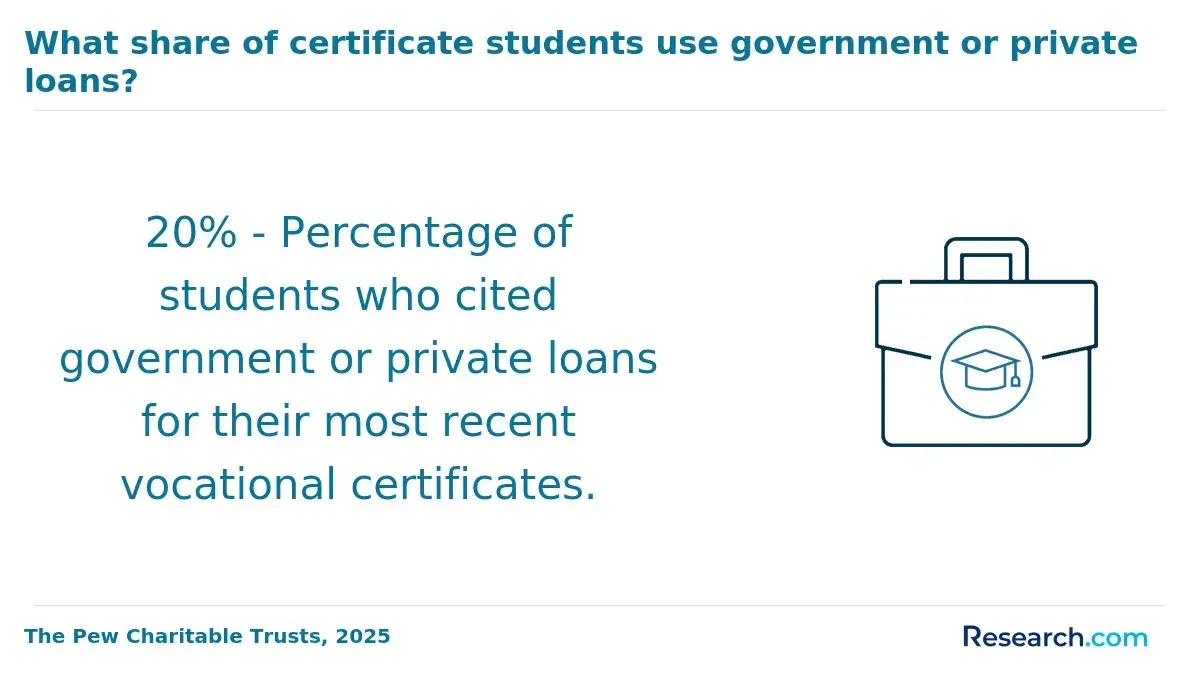
Depending on the role and employer, certificates in IT support, medical coding, bookkeeping, or skilled trades may help you enter work without first completing a bachelor's degree. Distinguish a college certificate from an industry certification or occupational license: each has different requirements and value. Some roles require hands-on training, an apprenticeship, or an exam in addition to coursework.
If you may pursue a degree later, ask whether the certificate's credits apply to a related online associate's degree. Get the answer from the receiving college before enrolling; "stackable" does not mean every credit will count toward your chosen major.
How do you choose an accredited program with a low GPA?
First confirm the college's institutional accreditation through the accreditor or U.S. Department of Education recognition information. Then check whether your intended profession calls for particular programmatic accreditation or state approval. Nursing, teacher preparation, social work, and some engineering pathways deserve especially close review because program status can affect licensure, advanced study, or professional opportunities.
Accreditation does not establish that a program is affordable or that you qualify for admission. A common mistake is applying to an accessible college without checking the major's separate standards. Before paying an enrollment deposit, request the program's current admission criteria, required placements, total charges, and - in a licensed field - written information about eligibility in the state where you plan to work.
What do students study in low-GPA-friendly college majors?
Business students typically study accounting and management; IT students work with systems and networks; psychology students encounter research methods and statistics. Criminal justice commonly combines law, policy, and analysis. None is free of challenging coursework. Compare required classes with subjects in which you can realistically succeed, and examine whether a major requires an internship, lab, or sequence of courses offered only at certain times.
If your interest is a graduate field, focus first on qualifying for and completing an undergraduate degree. A 1 year masters degree online may look appealing later, but a short advertised timeline can depend on prior preparation and enrollment intensity. Graduate admission policies are separate from undergraduate policies, and a master's degree is not the normal entry point for someone without a bachelor's degree.
How long do these programs take and how much do they cost?
A full-time associate degree commonly takes about two years, while a bachelor's degree commonly takes about four; prerequisite work, part-time enrollment, course sequencing, and accepted transfer credit can change either timeline. Certificates range from short training programs to longer sequences. Do not assume that an accelerated course schedule shortens the entire degree, particularly when clinical or student-teaching placements are required.
Compare total expected cost to completion, not just tuition per credit: include mandatory fees, books, equipment, transportation, and any placement-related costs. Residency-based pricing and the number of credits remaining can materially change the comparison. For context, the maximum federal Pell Grant for the 2025-26 award year was $7,395; an individual award depends on eligibility and enrollment. Submit the FAFSA to learn what aid you may receive, and ask each school for a degree audit showing how previous credits apply.
What careers, salaries, and job outlooks do these majors offer?
Career fit depends more on the occupation's requirements than on a major's name. Business can lead toward operations or sales roles; IT toward support or systems work; psychology and criminal justice toward varied entry-level positions that may require additional training. Nursing provides a more defined occupation, but only after meeting licensure requirements. If earnings are an important consideration, compare fun majors in college that pay well against your interests and the qualifications employers actually seek.
BLS reports a May 2024 median annual wage of $93,600 for registered nurses as an occupation. That is not the expected salary of every nursing graduate, and pay varies by location, experience, and job. BLS also projects 5% employment growth for registered nurses from 2024 to 2034. Use occupational data to identify possibilities, then weigh local hiring conditions, required credentials, and the cost of reaching the role.
Do these careers require licenses or professional certifications?
Some do. Registered nurses need state licensure and must pass the NCLEX-RN. Public-school teachers generally need state certification or licensure. Social work requirements depend on the state and position; clinical social work generally requires graduate education, supervised experience, and a license. Professional engineering licensure is relevant to certain engineering duties and follows requirements beyond the degree.
Other fields may value certifications without legally requiring them. An IT certification, for example, can demonstrate a specific skill but does not guarantee employment. Before enrolling in a licensure-oriented program - especially one delivered online - check the relevant state board's requirements and ask the program whether its curriculum and placements meet them where you intend to work.
Other Things You Should Know About
Not necessarily. Some colleges offer admission routes for applicants with modest grades, but policies differ by institution and applicant type. Selective majors may impose higher standards.
It may. Ask how the program evaluates repeated courses, recent grades, and prerequisite GPAs before deciding which classes to retake.
Not automatically. Transfer admission rules vary, and schools may review both records depending on how many transferable college credits you have completed.
Choose a field you can handle and use. Review its required courses, admission rules, costs, and career pathways rather than relying on an "easy" label.
References
- Measuring Student Success In IPEDS: Graduation Rates (GR), Graduation Rates 200% (GR200), And Outcome Measures (OM) https://nces.ed.gov/ipeds/use-the-data/measuring-student-success-in-ipeds
- Education pays, 2023: Career Outlook | bls.gov https://www.bls.gov/careeroutlook/2024/data-on-display/education-pays.htm
- Students & Recent Graduates | U.S. Office of Personnel Management https://www.opm.gov/policy-data-oversight/hiring-information/students-recent-graduates/
- Thinking Through Transfer: Examining How Community College Students Make Transfer Decisions - PMC https://pmc.ncbi.nlm.nih.gov/articles/PMC10857860/
- The Effects of Financial Aid Policy | Bridget Terry Long, Ph.D. https://btl.scholars.harvard.edu/effects-financial-aid-policy
- What Early-Career Earnings and Unemployment Rates Tell Us About the Returns on Bachelor's Degree Majors - CEW Georgetown https://cew.georgetown.edu/resource/cew-blog-major-payoff/
- Transfer Requirements | Undergraduate Admission https://admission.ucla.edu/apply/transfer/transfer-requirements
- Cal Poly Pomona Transfer Requirements and Eligibility https://www.cpp.edu/admissions/transfer/requirements.shtml
- Transfer Students | Office of Undergraduate Admissions | UCI https://www.admissions.uci.edu/apply/transfer-students/index.php
- How to Get Accepted Into College With a Low GPA | usnews.com https://www.usnews.com/education/best-colleges/articles/how-to-get-accepted-into-college-with-a-low-gpa


