2027 Best Certificate Programs for Working Adults

Co-Founder and Chief Data Scientist
Choosing a certificate program is difficult when you need training that fits around work, has credible career value, and does not create unnecessary debt. Postsecondary certificates can be a fast route into skilled roles, but they vary sharply in licensing requirements, transferability, and employer recognition. The U.S. Bureau of Labor Statistics projects healthcare support occupations to grow 15% from 2023 to 2033, illustrating why targeted training can matter. This guide helps working adults compare flexible certificate paths, evaluate providers, estimate costs, and choose a program aligned with a realistic next career step.
Key Things You Should Know
- Choose a credit-bearing college certificate when you may later pursue an associate or bachelor's degree; choose a noncredit career program or industry certification when speed and job-specific validation matter more than transferable credit.
- Healthcare, skilled trades, IT, and business operations remain practical choices, but regulated roles such as nursing, medical assisting, and electrical work may require state-approved education, supervised practice, and a separate exam.
- For schedule-sensitive learners, compare asynchronous online coursework with required labs, clinicals, internships, or testing; BLS projects healthcare support occupations to grow 15% from 2023 to 2033, but growth does not guarantee local openings.
Top 10 Best Certificate Programs for Working Adults
Popular Trade School Programs
Trade certificates are career-training credentials focused on hands-on work, usually offered by community colleges, technical schools, unions, and private career schools. Common options include welding, HVAC/R, electrical technology, plumbing, automotive service, industrial maintenance, and commercial driver training. Most require campus labs or employer-based practice, even when theory is online. Short programs can support entry-level work, while apprenticeships often provide the route to journey-level status. Confirm whether the program prepares you for a required license, EPA Section 608 exam, CDL, or local apprenticeship pathway before enrolling.
Healthcare Programs
Healthcare certificates can prepare adults for roles such as medical assistant, pharmacy technician, dental assistant, phlebotomist, medical billing specialist, practical nursing candidate, or nursing assistant. Programs commonly combine online lectures with in-person labs and clinical placements. A school certificate is not the same as national certification or state licensure: employers and state boards may require an approved program, background check, immunizations, examination, or supervised clinical hours. Choose this route if you can meet placement schedules; consider health information or billing programs if direct patient-care hours are impractical.
Criminal Justice / Law Programs
Criminal justice, legal studies, paralegal, court reporting, and legal administrative assistant certificates serve adults seeking foundational knowledge of courts, procedure, documentation, ethics, and legal research. A paralegal certificate may be useful for people who already hold a degree or have office experience, but it does not authorize independent legal practice. Police, corrections, and public-safety jobs frequently have agency-specific academy, fitness, background, and residency requirements beyond classroom study. Prefer programs with practical writing, research databases, internship access, and clear disclosure of what the credential does and does not qualify graduates to do.
Arts & Design Programs
Arts and design certificates commonly cover graphic design, UX/UI fundamentals, digital marketing design, web production, photography, animation, and video editing. They suit working adults who need a portfolio more than a broad degree curriculum. The strongest programs teach current software workflows, accessibility, client communication, and portfolio presentation, not only theory. Online study works well for much of this field, but feedback and project critique are essential. A certificate can demonstrate skills, yet hiring often depends on work samples and experience; build a portfolio that targets the role and industry you want.
What are the most in-demand certificate fields for working adults right now?
The most in-demand certificate fields for working adults are usually those tied to regulated service delivery, technical maintenance, digital operations, and employer-recognized skills. Demand should guide exploration, not replace local job research: a growing occupation may still have limited openings in a particular metro area or require credentials beyond a certificate.
This comparison distinguishes fields where a short program may open an entry point from fields where further licensing, experience, or a degree is commonly needed.
| Field | Common certificate focus | Working-adult fit | Important limitation |
| Healthcare support | Medical assisting, phlebotomy, billing, pharmacy technology | Reliable demand and defined entry routes | Clinicals, exams, and state rules may apply |
| Information technology | IT support, cybersecurity foundations, cloud or data tools | Online-friendly and often stackable | Projects and industry certifications can matter more than course completion |
| Skilled trades | HVAC/R, welding, electrical, industrial maintenance | Direct route to practical skills | Labs, tools, apprenticeships, and licensing may be required |
| Business operations | Bookkeeping, project coordination, payroll, supply chain | Often compatible with evening or online study | May be strongest when paired with prior office experience |
BLS projections released in 2024 identify healthcare support as one of the faster-growing occupational groups, with 15% projected growth from 2023 to 2033. For adults changing fields, that makes healthcare support worth investigating, provided they can complete the in-person requirements and understand the role's physical and scheduling demands.
How do online certificate programs compare to campus-based options for busy professionals?
Online certificate programs are often the best format for adults whose biggest constraint is time. Asynchronous courses let students complete readings, discussion posts, and assignments outside standard business hours. Campus-based programs can be better when equipment access, live demonstrations, clinical placement coordination, or immediate instructor feedback is central to learning.
The right format depends on what must be learned in person.
| Factor | Mostly online program | Campus or hybrid program |
| Schedule | Often flexible, especially asynchronous courses | Fixed labs, meetings, or clinical shifts are common |
| Best for | IT, business, billing, design, and theory-heavy study | Trades, patient care, laboratory work, and equipment training |
| Networking | May require deliberate virtual outreach | Often easier through labs, cohorts, and local employers |
| Key risk | Assuming online means no required visits or proctored exams | Underestimating commute and attendance demands |
For rapid options, review 4 week certificate programs online, but verify whether a short course provides an educational certificate, prepares you for an external certification exam, or simply offers continuing education. Four weeks may be enough for a focused skill, but rarely for a licensed clinical or trade occupation.
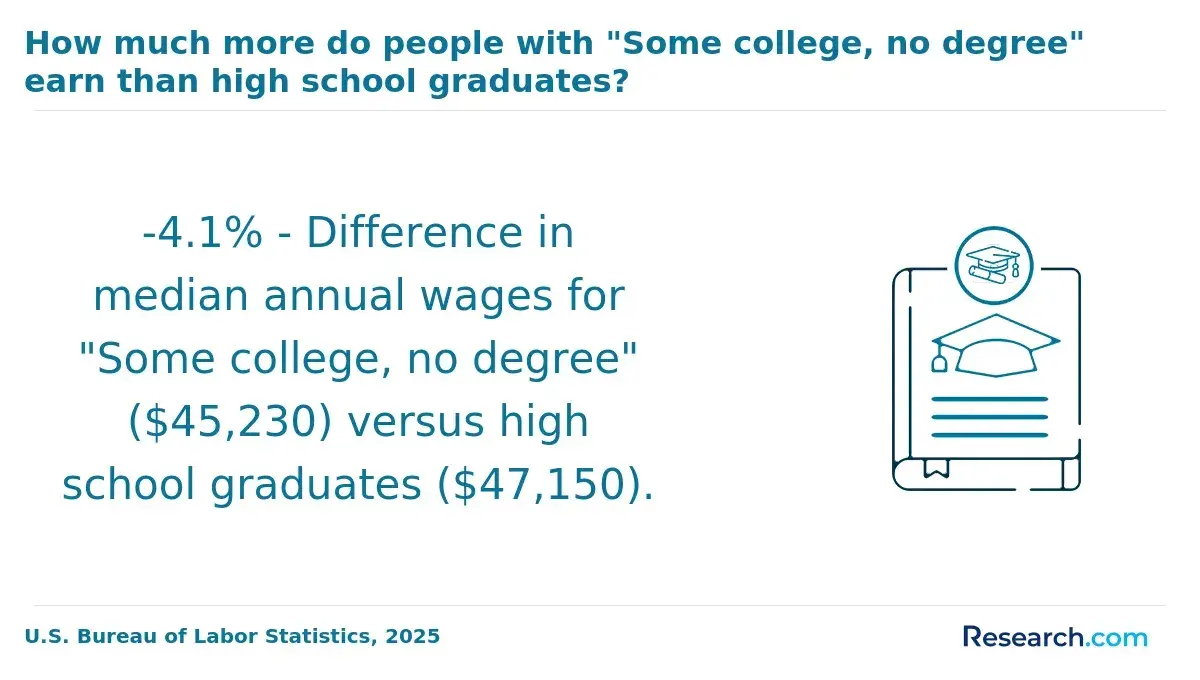
How can adults evaluate whether a certificate program and school are properly accredited?
Accreditation is a quality-review process for institutions or programs; it is not a blanket promise that every credential leads to licensure or employment. For credit-bearing college certificates, start by confirming that the institution is accredited by an agency recognized by the U.S. Department of Education or the Council for Higher Education Accreditation. Then check whether the specific program needs specialized approval.
Programmatic approval is especially important in regulated fields. For example, nursing, practical nursing, medical assisting, and many allied-health pathways may need approval from a state board or profession-specific accreditor. Trade training may instead need state authorization, apprenticeship registration, or employer recognition. Noncredit providers may not hold institutional accreditation, so evaluate their curriculum, instructor expertise, assessment methods, refund policy, and whether employers recognize the training.
Before paying a deposit, use this verification sequence.
- Identify the exact job, license, or certification exam you want after completion.
- Check the relevant state board, certifying body, or employer job postings for education requirements.
- Confirm in writing that the specific program, location, and delivery format meet those requirements.
- Ask whether the credential is credit-bearing, transferable, and eligible for any financial aid or employer reimbursement.
What admission requirements do certificate programs typically have for working adult students?
Admission requirements depend on the provider and credential level. Many entry-level college certificates require a high school diploma, GED, or equivalent and an application; placement testing may determine whether developmental coursework is needed. Graduate certificates normally require a bachelor's degree, while noncredit professional certificates may require only registration and payment. Competitive healthcare programs can add prerequisite courses, minimum grades, health screenings, drug tests, and background checks.
Adults returning to school should not assume they need standardized tests or a traditional admissions profile. Some institutions offer simplified entry processes; comparing best online colleges with no application fee can reduce the cost of exploring eligible programs.
Ask an admissions advisor whether prior college credit, military training, industry credentials, or documented work experience can satisfy prerequisites. Get transfer and prior-learning decisions in writing, because policies vary by school and department.
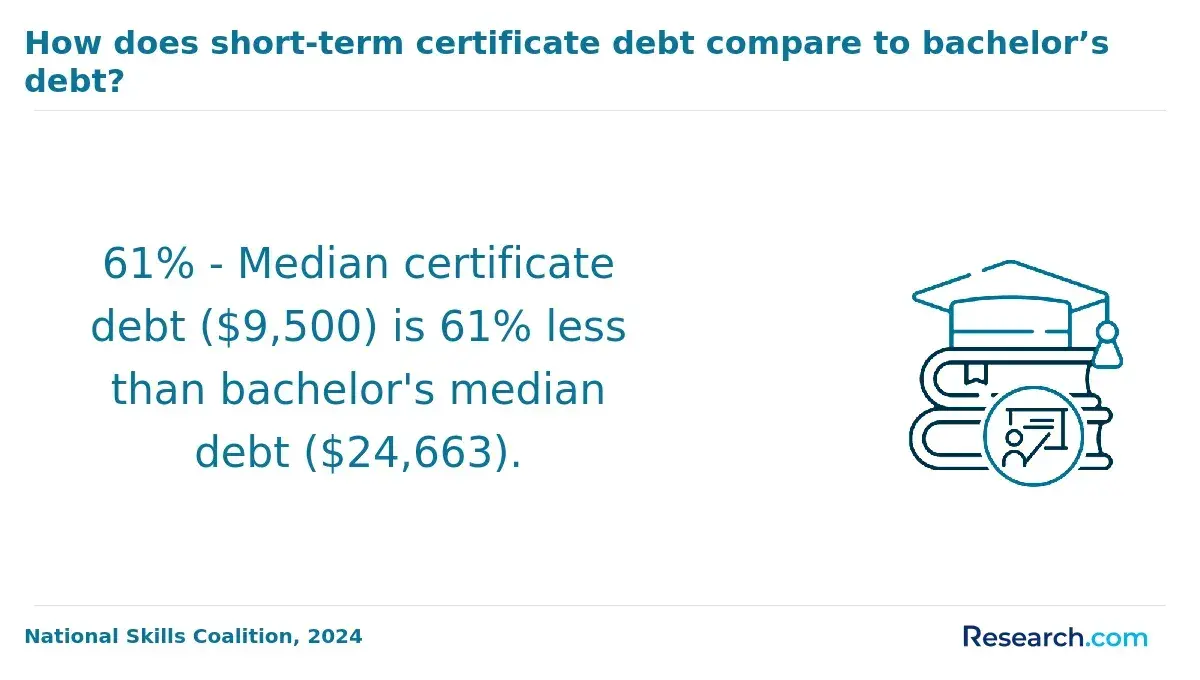
How long do certificate programs usually take, and what tuition and fees should adults expect?
Most certificate programs take from a few weeks to about one year, although advanced, clinical, and credit-bearing certificates can take longer when studied part time. Tuition is only one cost. Adults should calculate mandatory fees, books, software, tools, uniforms, background checks, exam fees, transportation, and unpaid clinical or lab time before comparing programs.
The table shows how program design, rather than marketing labels such as "fast," usually determines the time and cost trade-off.
| Program type | Typical timeline | Major cost factors | Funding considerations |
| Noncredit career certificate | Weeks to months | Course fee, materials, exam voucher | Employer aid or payment plans may be available; federal aid often is not |
| Credit-bearing undergraduate certificate | One or more terms | Per-credit tuition, fees, books | May qualify for aid if the school and program meet eligibility rules |
| Clinical or technical certificate | Several months to more than a year | Labs, equipment, compliance checks, travel | Consider lost work hours during required placements |
| Graduate certificate | About two to six terms part time | Graduate per-credit tuition and software | Employer tuition assistance can be important |
If a certificate will not meet your long-term goal, compare its total cost with affordable online degree programs. A longer degree can be the better value when the target occupation routinely requires one, while a certificate is often more efficient for a focused upskill or career entry point.
What coursework and skills do top certificate programs teach to improve career advancement?
Top certificate programs teach a focused, demonstrable skill set rather than a broad general education curriculum. For working adults, the most valuable coursework connects directly to tasks they can show employers: troubleshooting equipment, documenting patient information, analyzing spreadsheets, managing projects, using design tools, interpreting regulations, or communicating with clients.
Look for programs that combine technical instruction with durable workplace skills. Strong curricula commonly include applied projects, scenario-based assessment, professional writing, digital collaboration, ethical decision-making, and basic data literacy. In technology-related programs, ask how the curriculum addresses AI tools, automation, data security, and responsible use; employers increasingly expect workers to understand both productivity benefits and accuracy risks.
A useful test is whether you will leave with evidence of competence. This may be a portfolio, capstone, clinical log, lab assessment, industry exam preparation, or evaluated work product. Programs that offer only passive video viewing and a completion badge may be less persuasive to employers than programs with assessed practice.
What careers and job roles can working adults pursue with popular certificate programs?
A certificate can support a transition into an entry-level role, advancement within a current field, or preparation for a separate exam. It does not replace every employer requirement. The following examples show realistic connections between common programs and job targets.
| Certificate area | Possible job roles | What may be needed beyond the certificate |
| Medical assisting | Medical assistant, clinical support staff | Clinical placement, employer preference for certification, state-specific rules |
| HVAC/R | HVAC helper, maintenance technician trainee | EPA credential for refrigerant work, apprenticeship, local licensing |
| IT support | Help desk technician, desktop support specialist | Hands-on troubleshooting, portfolio, vendor certification |
| Paralegal studies | Legal assistant, paralegal support role | Employer-required degree or experience; no independent legal practice |
| Graphic design | Junior designer, production artist, content designer | Strong portfolio and software proficiency |
| Bookkeeping | Bookkeeping clerk, accounts payable support | Accounting software experience and employer-specific training |
Military-connected adults should also check whether a program accepts education benefits, recognizes prior learning, and offers support for deployments or transfers. online military colleges may be worth comparing when flexibility and credit evaluation are important.
What salary ranges and earning potential are common for jobs requiring postsecondary certificates?
Salary varies more by occupation, location, employer, experience, shift, and licensure than by the name of a certificate alone. Use occupational wage data as a labor-market reference, not as a promise of what a certificate graduate will earn. The BLS reported a May 2024 median annual wage of $43,680 for medical assistants and $59,810 for HVAC mechanics and installers.
The contrast below helps illustrate why program cost should be considered alongside the work conditions and additional credentials required for the target role.
| Occupation | May 2024 U.S. median annual wage | Certificate-related context |
| Medical assistants | $43,680 | Postsecondary education is common; certification may be preferred by employers |
| HVAC mechanics and installers | $59,810 | Training may be followed by apprenticeship, EPA requirements, or licensing |
| Paralegals and legal assistants | $61,010 | Employers may seek a degree, certificate, or related experience depending on the role |
| Graphic designers | $61,300 | A portfolio is typically central; many positions prefer a bachelor's degree |
Compare local postings with these national medians before borrowing. Entry-level pay can be below the median, and occupations with higher pay may demand longer training, irregular shifts, tools, licensing, or substantial experience.
How can working adults choose a reputable certificate program aligned with their career goals?
A reputable certificate program fits a specific outcome: a new entry-level job, a required license pathway, preparation for an industry certification, or a targeted promotion. Begin with the job posting or licensing rule, then work backward to the shortest credential that genuinely meets it. Avoid choosing based only on a provider's advertising, a low monthly payment, or a vague claim that a credential is "recognized."
Use these questions to compare finalists before you enroll.
- What exact credential will I receive, and is it a college certificate, noncredit certificate, completion badge, or preparation for a separate certification exam?
- Does this program meet the education requirements for my target employer, licensing board, or certification organization?
- Which classes, labs, clinicals, internships, live sessions, and exams have fixed times?
- What is the complete cost, including materials, tools, testing, travel, and fees?
- Can credits transfer or stack into an associate or bachelor's degree, and what is the written policy?
- What career services, placement support, employer partnerships, or outcome disclosures can the school document?
Common red flags include pressure to enroll immediately, unclear total pricing, vague accreditation claims, promises of guaranteed employment, and online programs that do not explain required in-person training. A good program will give direct, verifiable answers and enough time to compare alternatives.
Other Things You Should Know About
They can be worthwhile when they teach skills required for a defined job, promotion, license pathway, or industry exam. They are less useful when the target occupation normally requires a degree, extensive experience, or a regulated credential the program does not provide.
A certificate is usually awarded by a school or training provider after completing a course of study. A certification is awarded by a professional organization after meeting its standards, which may include an exam, work experience, continuing education, or renewal.
Many business, IT, design, and administrative certificates can be completed online. Trade and healthcare programs often require in-person labs, clinical experiences, skills assessments, or proctored testing, even if lectures are online.
Some credit-bearing certificate programs at eligible institutions may qualify, but eligibility depends on the school, program length, and federal rules. Noncredit programs often do not qualify, so ask the financial-aid office and explore employer tuition assistance before enrolling.
References
- Flexible Education Options: Paving the Way for Working Adults https://iesuccess.org/flexible-education-options-paving-the-way-for-working-adults/
- 9 Best Online Certificate Programs that Lead to Higher Pay https://blackstone.edu/9-best-online-programs-for-higher-pay/
- Best Online Degrees for Working Adults in 2026 https://www.straighterline.com/blog/degreecompletion-best-online-degrees-for-working-adults-in-2026
- The Value of Certificates vs. Degrees: What's Right for You? https://www.calmu.edu/the-value-of-certificates-vs.-degrees-whats-right-for-you
- New Report Examines How U.S. Workers and Employers View Alternative Credentials https://www.higheredtoday.org/2022/05/23/new-report-examines-how-u-s-workers-and-employers-view-alternative-credentials/
- 7 in-demand certifications in 2025 | edX https://www.edx.org/resources/in-demand-professional-certifications
- Professional Business Certifications to Boost Your Career in 2025 https://www.business.com/articles/best-business-certifications/
- The Top 5 Certificate Programs for Jobs With Growth Potential | CourseStorm https://www.coursestorm.com/blog/top-certificate-programs-for-jobs
- 7 High Paying Certificate Programs for 2026 | Mindmesh Academy https://www.mindmeshacademy.com/blog/articles/high-paying-certificate-programs
- The Most Flexible Online Teaching Programs for Busy Adults https://moreland.edu/resources/blog-insights/flexible-online-teaching-programs-busy-adults