2027 Online Online Learning / E-Learning Doctorate Programs with Strong Student Support: Advising, Writing Help, and Career Services

Co-Founder and Chief Data Scientist
Choosing an online learning/e-learning doctorate is not just a question of curriculum; it is a question of support. NCES reported in 2024 that 53% of U. S. postsecondary students took at least one distance education course in fall 2022, making online access a mainstream expectation. This guide is for prospective EdD, PhD, and applied doctoral students who need to compare advising, writing help, dissertation mentoring, and career services before enrolling. You will learn what strong support looks like and how to spot programs that may leave online doctoral students on their own.
Key Things You Should Know
- Strong online learning/e-learning doctorate programs usually combine proactive academic advising, faculty dissertation mentoring, doctoral writing support, research help, and career coaching; weak programs may offer only general student services that are not designed for doctoral students.
- Cost and delay risk matter: federal graduate Direct Unsubsidized Loans carried an 8.08% interest rate and Grad PLUS Loans carried a 9.08% rate for 2024-25, so poor advising or slow dissertation support can make extra terms expensive.
- Before applying, verify whether fully online students receive dedicated advisors, virtual appointments, stated response-time expectations, evening or weekend support, dissertation committee access, writing-center help, and career services beyond a basic job board.
What Student Support Services Should Strong Online Online Learning / E-Learning Doctorate Programs Provide?
Strong student support in an online learning/e-learning doctorate means the program has structured systems that help students move from admission to coursework, candidacy, dissertation or capstone completion, and career planning. It should not depend entirely on a student repeatedly asking for help or knowing which office to contact.
For doctoral students, support quality matters because the hardest parts of the degree often happen outside the online classroom: narrowing a research topic, meeting milestones, handling feedback, accessing data, writing at a scholarly level, and translating the doctorate into a career move.
College Board's 2024-25 data showed published tuition and fees averaged $11,610 for in-state students at public four-year institutions and $43,350 at private nonprofit four-year institutions. Doctoral tuition varies widely, but the broader cost environment shows why avoidable delays can become a serious financial issue.
The table below summarizes the major support categories to compare. Use it to distinguish programs that merely advertise support from programs that make support accessible to fully online doctoral students.
| Support area | What strong programs provide | What to verify before enrolling |
| Academic advising | Dedicated or specialized doctoral advisors who track milestones, registration, candidacy, and degree progress | Ask whether the advisor works specifically with online doctoral students and how often check-ins occur |
| Dissertation or capstone support | Faculty chair access, committee guidance, milestone calendars, proposal support, and defense preparation | Ask when students are assigned a chair and what happens if a chair becomes unavailable |
| Writing support | Doctoral-level writing consultations, APA or discipline-specific help, literature review support, and revision coaching | Confirm whether services review dissertation chapters or only course papers |
| Research and library support | Remote librarian appointments, database access, citation tools, methodology support, and statistics resources | Ask whether online students receive live help with database searches and research design questions |
| Career services | Doctoral career coaching, CV or resume review, interview preparation, networking, and leadership career planning | Check whether services address faculty, corporate learning, instructional design, consulting, or education leadership paths |
| Technology and accessibility | Reliable LMS support, assistive technology access, accommodation coordination, and remote proctoring guidance | Verify service hours, response times, and whether support is available outside business hours |
A common mistake is assuming that "online student services" means doctoral-level support. A program may have a writing center, library, and career office, but those offices may be oriented toward undergraduate or master's students. Ask for examples of how they support dissertation-stage doctoral students specifically.
How Does Academic Advising Work in Online Online Learning / E-Learning Doctorate Programs?
Academic advising in an online learning/e-learning doctorate should do more than approve course registration. At the doctoral level, good advising helps students sequence coursework, understand residency or virtual intensive requirements, prepare for comprehensive exams, stay on dissertation timelines, and avoid administrative surprises.
There are usually two layers of advising: administrative or academic advisors who help with policies and progress, and faculty mentors who guide scholarly development. In some programs, one person handles both roles early in the program; in others, a professional advisor supports registration while faculty members advise on research direction.
When comparing advising models, look for concrete access rules rather than broad promises. The following features indicate that advising is designed for online doctoral students rather than added as an afterthought:
- Assigned advisor: The program names a specific advisor or advising team responsible for your progress instead of sending students to a general help desk.
- Milestone tracking: Advisors monitor required courses, transfer credits, comprehensive exams, proposal approval, institutional review board steps, and dissertation deadlines.
- Regular check-ins: Students receive scheduled advising touchpoints each term, not just optional appointments when they are already confused or behind.
- Online-friendly availability: Advising appointments are offered by video, phone, and email, with some availability outside standard work hours for working adults.
- Clear escalation path: The program explains whom to contact if an advisor is unresponsive, a faculty chair changes, or a student needs policy clarification.
Fast-paced programs require especially strong advising because there is less time to recover from a missed requirement. If you are considering accelerated options such as 1 year EdD programs online, ask how advising is structured week by week and whether dissertation or capstone planning begins early rather than after coursework ends.
Red flags include vague statements like "students may contact advising as needed," no published advising hours, no named doctoral support staff, or advisors who cannot explain dissertation milestones. A low-touch advising model may work for highly independent students, but it can be risky for applicants who are returning to school after a long break or balancing full-time work and family obligations.
What Dissertation Mentoring and Committee Support Should Online Online Learning / E-Learning Doctoral Students Expect?
Dissertation mentoring is one of the biggest differences between a manageable online doctorate and a frustrating one. In online learning/e-learning programs, students may complete a traditional dissertation, applied dissertation, doctoral capstone, design-based research project, or improvement-focused project. Regardless of format, students need consistent faculty guidance and transparent review processes.
A strong program explains how students move from broad interest to approved topic, proposal, data collection, final manuscript, and defense. The dissertation chair or capstone mentor should provide scholarly direction, while the committee should add methodological, theoretical, or practice-based expertise. The student should not be left to guess what "doctoral quality" means.
Before enrolling, ask how the program structures dissertation mentoring across the full doctoral journey. These questions can reveal whether support is proactive or mostly informal:
- Chair assignment: When is the dissertation chair assigned, and can students request a faculty member whose research aligns with online learning, instructional design, learning analytics, adult learning, or educational technology?
- Committee formation: How many committee members are required, what roles do they play, and how are disagreements between committee members resolved?
- Feedback timelines: Does the program publish expected turnaround times for proposal drafts, chapter reviews, or capstone milestones?
- Research alignment: Are faculty actively engaged in e-learning, digital pedagogy, workforce learning, K-12 technology integration, higher education online learning, or related areas?
- Defense preparation: Are online students offered mock defenses, presentation coaching, virtual defense technology support, and examples of successful dissertation defenses?
One common mistake is choosing a program because the coursework looks relevant while ignoring faculty research fit. If no faculty member has expertise close to your planned topic, you may struggle to receive meaningful guidance even if the program is accredited and well organized.
Another red flag is a program that cannot explain what happens when students get stuck after coursework. Dissertation-stage students need more than encouragement; they need a defined process for topic refinement, research design feedback, ethics approval, and revision cycles.
What Writing and Dissertation Help Is Available in Online Online Learning / E-Learning Doctorate Programs?
Doctoral writing support should help students produce scholarly, evidence-based, well-structured work. This is different from basic proofreading. Online learning/e-learning doctoral students often need help with literature reviews, synthesis, argument structure, research alignment, APA style, data presentation, and revising after committee feedback.
Writing support is especially important for students who have strong professional experience but limited recent academic writing experience. It can also help students avoid delays caused by unclear research questions, weak source integration, or manuscripts that do not meet institutional standards.
Look for writing support that is available before the dissertation stage and continues through final defense. Useful services may include the following:
- Doctoral writing consultations: One-on-one appointments with staff trained to support literature reviews, research proposals, and dissertation chapters rather than only short course papers.
- Dissertation boot camps: Structured writing sessions that help students set goals, make progress, and receive targeted feedback during high-pressure stages.
- Style and citation support: Guidance on APA, source management, paraphrasing, quotation use, and avoiding accidental plagiarism.
- Scholarly argument coaching: Help with synthesis, conceptual frameworks, research gaps, and connecting evidence to claims.
- Revision planning: Support for interpreting committee feedback and turning broad comments into a manageable revision checklist.
Not all writing centers are equally helpful for doctoral students. Some provide short consultations focused on grammar, while others provide ongoing dissertation support. Ask whether consultants can review long-form doctoral work, whether appointments are capped, and whether support is available asynchronously for students in different time zones or with demanding work schedules.
A major red flag is a program that treats writing help as remedial. In a strong doctoral culture, writing support is normal, professional, and developmental. Even advanced students benefit from feedback on clarity, structure, and scholarly voice.
Do Online Online Learning / E-Learning Doctorate Programs Provide Research, Statistics, and Library Support?
Online doctoral students need remote access to the same research infrastructure that campus-based students use. This includes academic databases, interlibrary loan, citation tools, research librarians, methodology guidance, and sometimes statistics or qualitative analysis support.
Research support matters because online learning/e-learning dissertations often involve applied settings, learner data, digital tools, program evaluation, instructional interventions, or survey research. Students may need help locating peer-reviewed studies, designing feasible methods, navigating institutional review board requirements, and using analysis software.
When comparing programs, focus on whether support is live, doctoral-level, and available at the point of need. The following services are particularly useful for online doctoral students:
- Research librarian appointments: Video or phone consultations for database strategy, systematic search methods, source evaluation, and citation tracking.
- Methodology support: Faculty or research office guidance on qualitative, quantitative, mixed-methods, design-based, or improvement science approaches.
- Statistics help: Access to tutoring, workshops, or consultants who can explain analysis choices without doing the student's work.
- IRB guidance: Clear instructions for ethics review, participant recruitment, consent forms, data privacy, and research involving students or employees.
- Software access: Remote availability of tools for survey design, reference management, transcription, qualitative coding, statistical analysis, and accessibility testing when relevant.
Ask whether online students can access the same journals and databases as campus students. Also ask whether the library supports alumni access after graduation, especially if you plan to publish, consult, or continue research-based work after finishing the doctorate.
A common mistake is assuming that a strong faculty mentor can replace library and research support. Faculty guidance is essential, but librarians and research specialists often provide practical help with database searching, citation management, research compliance, and methodological resources that faculty may not have time to teach individually.
What Career Services Should Online Online Learning / E-Learning Doctorate Programs Offer Doctoral Students?
Career services for online doctoral students should be more advanced than resume templates and job postings. Many online learning/e-learning doctoral students are mid-career professionals seeking leadership roles in higher education, K-12 systems, corporate learning, instructional design, learning technology, workforce development, consulting, or research-driven practice.
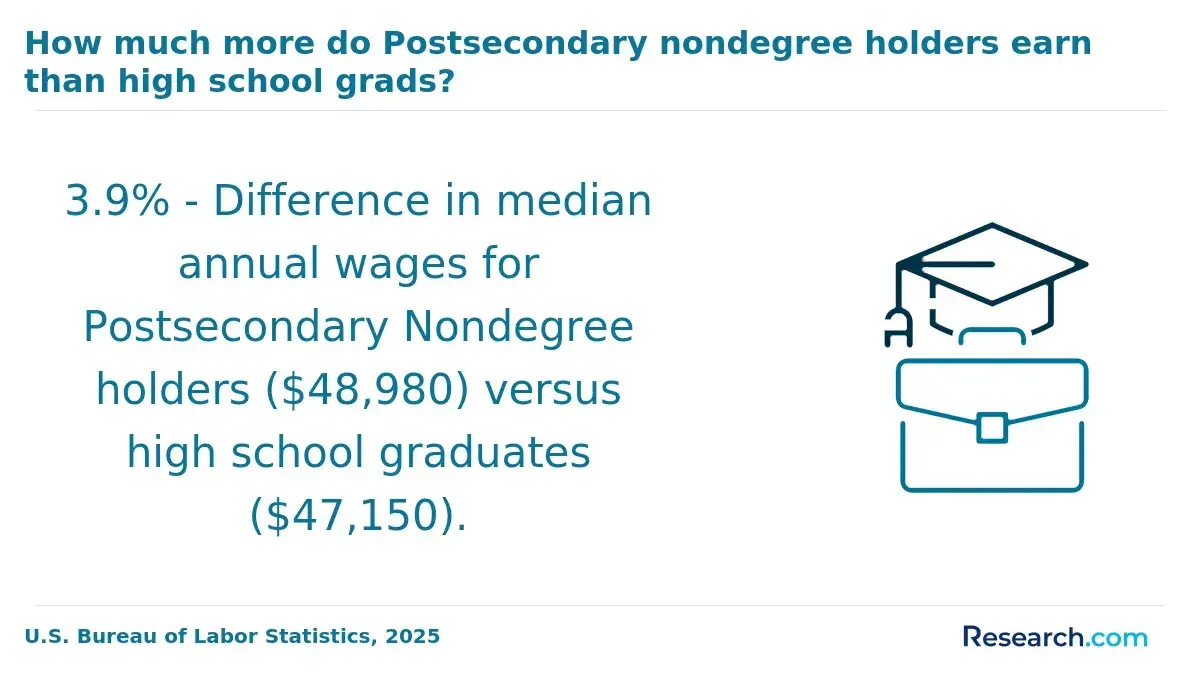
BLS reported a May 2024 median annual wage of $74,720 for instructional coordinators, a role often connected to curriculum, training, and learning improvement work. This figure is not a guarantee for doctorate graduates, but it gives applicants a labor-market reference point when evaluating whether a doctoral program's career support aligns with their goals.
Strong career services should help students clarify the outcomes they want before they invest years of time and significant tuition. Relevant doctoral career support may include the following:
- Career goal mapping: Coaching that helps students connect doctoral coursework, research topics, and projects to leadership, faculty, consulting, or learning design roles.
- CV and resume strategy: Support for both academic CVs and industry resumes, since online learning/e-learning doctorates can lead to different professional paths.
- Portfolio development: Guidance on presenting instructional design projects, research products, publications, presentations, program evaluations, and technology implementation work.
- Interview preparation: Practice for academic interviews, leadership interviews, consulting pitches, and presentations to hiring committees or executive teams.
- Networking access: Virtual employer events, alumni connections, professional association guidance, and introductions to faculty research or practice networks.
Some students may not need a doctorate yet. If your immediate goal is to move into course design, learning experience design, or educational technology roles, comparing the best online instructional design master's programs may be a more cost-effective step before pursuing doctoral study.
Red flags include career offices that serve mostly traditional undergraduates, limited knowledge of doctoral career paths, no help with academic CVs, or no support for professionals who are not seeking entry-level jobs. Ask to see examples of doctoral career workshops, alumni panels, or career resources tailored to online education and learning technology fields.
How Accessible Are Faculty and Support Staff in Online Online Learning / E-Learning Doctorate Programs?
Faculty and staff accessibility is one of the most practical indicators of support quality. In an online doctorate, students cannot rely on hallway conversations, campus office drop-ins, or informal in-person networks. Programs must replace those informal supports with predictable virtual access.
Accessibility does not mean faculty are available instantly at all hours. It means expectations are clear, communication channels are reliable, and students know how to get help before small problems become degree-delaying problems.
Ask each program how communication works in practice. Strong programs often define the following expectations:
- Response-time standards: Faculty and advisors provide an expected reply window for email, LMS messages, draft feedback, and advising requests.
- Virtual office hours: Faculty offer regular video or phone appointments, with alternatives for students who cannot attend during business hours.
- Multiple contact routes: Students can reach support through email, phone, video, LMS messaging, and ticketing systems for technical or administrative issues.
- Program-level escalation: Students know whom to contact if a course instructor, advisor, or dissertation chair is unavailable or unresponsive.
- Orientation to support systems: New students receive clear instructions on how to use advising, library, writing, technology, and wellness resources.
A good test is to contact admissions with detailed questions about faculty access and support staff availability. If the response is vague before enrollment, support may not become clearer afterward.
Ask whether current online doctoral students can describe how quickly faculty respond, how dissertation feedback is handled, and whether staff can solve problems without sending students across multiple offices.
Students who work full time should pay special attention to evening and weekend access. A program with excellent weekday support may still be a poor fit if you can only write, meet, or troubleshoot technology problems outside normal business hours.
How Do Online Online Learning / E-Learning Doctorate Programs Build Peer, Cohort, and Mentoring Support?
Peer support can make online doctoral study less isolating and more productive. Online learning/e-learning doctoral students often bring professional experience from schools, universities, nonprofits, government agencies, and corporate training environments. A strong program turns that experience into a learning network.
Cohort models, mentoring groups, research teams, and virtual residencies can help students test ideas, receive feedback, and stay motivated. However, not every "cohort" is equally meaningful. Some programs simply enroll students at the same time, while others intentionally structure peer collaboration throughout the degree.
Look for peer and mentoring supports that are connected to academic progress rather than optional social activity only. Useful features include the following:
- Cohort-based sequencing: Students move through key courses together, making it easier to form study groups and maintain momentum.
- Research interest groups: Students connect with peers studying instructional design, online teaching, learning analytics, accessibility, educational leadership, or workforce learning.
- Doctoral writing groups: Structured peer groups support accountability, feedback, and steady progress on major writing milestones.
- Alumni mentoring: Graduates share realistic advice about dissertation completion, job changes, publishing, consulting, or leadership transitions.
- Virtual residencies or intensives: Programs use synchronous sessions for proposal development, research design, networking, and faculty interaction.
Peer support is helpful, but it should not replace faculty mentoring or formal advising. Be cautious if a program relies heavily on peer communities while offering limited access to faculty or professional staff. Students need both community and expert guidance.
Ask whether online doctoral students have access to student organizations, research events, conference funding, or online communities that remain active beyond individual courses. A program that intentionally connects students across cohorts may provide better long-term professional value than one where interaction ends when each course closes.
What Technology, Accessibility, and Student Wellness Support Do Online Online Learning / E-Learning Doctorate Programs Provide?
Technology support is not a minor convenience in an online doctorate; it is part of the academic infrastructure. Students rely on the learning management system, video conferencing, digital library tools, proctoring platforms, collaboration software, and sometimes specialized research or design tools. When systems fail, students can miss meetings, deadlines, or important feedback.
Accessibility and wellness support are equally important. Doctoral study can be stressful, and online students may be balancing work, caregiving, finances, health needs, and geographic distance from campus. Strong programs make accommodations, mental health resources, and emergency support visible before problems escalate.
When evaluating technology, accessibility, and wellness support, ask about services that directly affect online doctoral students:
- Technical help desk: Confirm hours, response times, weekend coverage, and support for video meetings, LMS issues, login problems, and online proctoring.
- Accessibility services: Ask how students request accommodations for courses, residencies, exams, dissertation defenses, and digital course materials.
- Accessible course design: Look for captioned videos, screen-reader-compatible materials, flexible document formats, and clear navigation in online courses.
- Wellness and counseling: Verify whether online students can access telehealth counseling, crisis support, wellness workshops, or referrals in their state.
- Military and working-adult support: Students with deployments, shift work, or family responsibilities should ask about leave policies, reentry support, and deadline flexibility.
Accreditation and professional alignment can also affect support expectations in fields adjacent to education. For example, students comparing specialized education pathways may need to understand field-specific standards, such as those discussed in guides to school psychology programs online accredited by NASP.
Online learning/e-learning doctorates may not require that same accreditation, but the comparison highlights why students should verify the standards that apply to their intended role.
A common red flag is a program that provides technology requirements but says little about actual support. A laptop specification does not help if the help desk is closed during your only study hours or if online students cannot access counseling, accommodations, or library systems remotely.
How Can You Compare Online Online Learning / E-Learning Doctorate Programs Based on Student Support Quality?
The best way to compare online learning/e-learning doctorate programs is to evaluate support as a core program feature, not an extra benefit. A lower-cost program may be the right choice if it has clear advising, responsive faculty, and strong dissertation systems. A higher-cost program may be worth considering if it provides high-touch support that reduces confusion and helps students stay on track.
Cost should be evaluated alongside support because doctoral delays can add tuition, fees, and loan interest. Students focused on affordability can start by comparing cheapest online EdD programs, but they should also ask whether low tuition comes with adequate advising, dissertation mentoring, writing support, and career services.
The table below can help you organize what you learn from admissions staff, program websites, current students, and faculty conversations. Use it as a comparison framework rather than a rigid ranking system.
| Comparison factor | Stronger support signal | Potential red flag |
| Advising model | Dedicated doctoral advisor with scheduled check-ins and milestone tracking | General advising office with no doctoral specialization |
| Faculty access | Published office hours, response expectations, and escalation process | No clear response timeline or reliance on informal communication |
| Dissertation support | Early topic development, chair matching, committee process, and review timelines | Dissertation process begins late or is explained only after coursework |
| Writing help | Doctoral writing consultations, dissertation review support, and boot camps | Writing center focuses mainly on grammar or undergraduate papers |
| Research support | Remote librarian appointments, methodology resources, statistics help, and IRB guidance | Database access only, with little live research assistance |
| Career services | Doctoral-level coaching for academic, leadership, consulting, and industry paths | Job board access without career strategy support |
| Online access | Services available by video, phone, email, and asynchronous formats | Support limited to campus hours or in-person appointments |
After narrowing your list, take practical steps before applying. These actions can help you verify the support experience rather than relying only on marketing language:
- Request a sample degree plan that shows when advising, research preparation, comprehensive exams, proposal work, and dissertation milestones occur.
- Ask admissions to connect you with a current online doctoral student or recent graduate who can discuss advising, writing support, and faculty access.
- Schedule a conversation with a faculty member in your area of interest and ask how they mentor online dissertation or capstone students.
- Ask the writing center whether it reviews dissertation chapters, literature reviews, and research proposals for fully online students.
- Contact career services and ask what they offer doctoral students pursuing education leadership, instructional design, faculty, consulting, or learning technology roles.
- Confirm help desk, library, advising, and counseling availability during the hours you are most likely to study.
- Compare tuition and fees with support intensity, expected timeline, transfer credit policy, and the financial impact of possible extra terms.
The right program is not necessarily the one with the longest list of services. It is the one where support is accessible, doctoral-level, responsive, and aligned with your goals. If a school cannot clearly explain how online students receive advising, dissertation mentoring, writing help, research support, and career coaching, keep asking questions before committing.
Other Things You Should Know About Online Learning / E-Learning
It can be either. An EdD is often practice-focused and may suit education leaders, instructional design directors, or learning technology administrators. A PhD is usually more research-focused and may better fit students interested in scholarship, faculty roles, or advanced research. Program names vary, so compare curriculum, dissertation expectations, and faculty expertise rather than relying only on the degree label.
Some are fully online, while others require short residencies, intensives, dissertation defenses, or orientation sessions. Ask whether any campus or synchronous attendance is mandatory, how often it occurs, and whether travel costs are included in published tuition estimates.
Programs commonly ask for a master's degree, transcripts, a resume, recommendation letters, a statement of purpose, and sometimes writing samples or interviews. Some prefer applicants with professional experience in education, training, instructional design, technology, or leadership. Requirements vary by institution.
Institutional accreditation is essential because it affects federal financial aid eligibility, transferability, employer recognition, and overall credibility. Program-specific accreditation may matter in some professional fields, but many online learning/e-learning doctorates are evaluated mainly through institutional accreditation, faculty expertise, curriculum quality, and student support.
References
- Five Best Practices for Career Advisors in Higher Education https://www.icadlearn.com/post/five-best-practices-for-career-advisors-in-higher-education
- Exploring PhD Completion Rates: How Many Finish on Time? https://wallyboston.com/phd-completion-rates/
- Working Smarter: Leveraging Digital Tools for Student Advising https://www.scholarlyteacher.com/post/working-smarter-leveraging-digital-tools-for-student-advising
- Navigating Your Options: Top Online Doctorate in Higher Education Programs https://getcosmiq.app/blog/navigating-your-options-top-online-doctorate-in-higher-education-programs
- Best Colleges for Student Support for Mental Health & Academics https://www.collegexpress.com/lists/list/the-best-colleges-and-universities-for-access-to-student-support-services/3124/
- Best AI Career Advising Tools for Understaffed Teams (2026) https://prentus.com/blog/best-ai-career-advising-tools-for-understaffed-teams
- How Career Pathways Software Helps Students Navigate Their Academic Journey https://moderncampus.com/blog/how-career-pathways-software-helps-students-navigate-their-academic-journey.html
- Best Online Ph.D. and Doctoral Programs | OEDb https://www.oedb.org/rankings/online-phd-programs/
- College Graduation Rates and How ACE Compares | ACE Blog https://ace.edu/blog/college-graduation-rates-and-how-ace-compares/
- How Can Institutions Best Support Their Online Learners? https://www.higheredtoday.org/2025/04/21/how-can-institutions-best-support-their-online-learners/