2027 Best Bachelor's Degrees for Military Spouses

Co-Founder and Chief Data Scientist
Military spouses often need a degree that can survive PCS moves, deployments, childcare changes, and shifting state rules. The stakes are real: BLS 2024 data shows workers with a bachelor's degree had median weekly earnings of $1,543 and a 2.5% unemployment rate, making degree choice a major career and financial decision.
This guide is for military spouses comparing flexible bachelor's majors, online programs, funding options, and portable careers. You'll learn which degrees fit remote work, licensure-based fields, and family schedules so you can choose a path with fewer surprises.
Key Things You Should Know
- Bachelor's degrees with the strongest portability for military spouses usually lead to remote-friendly, multi-state, or federally recognized careers, such as business, IT, cybersecurity, computer science, accounting, and some healthcare administration roles.
- College Board 2024-25 data lists average published tuition and fees at $11,610 for in-state public four-year colleges, $30,780 for out-of-state public colleges, and $43,350 for private nonprofit colleges, so transfer credit and military discounts can materially change total cost.
- Licensure-heavy majors such as nursing, education, psychology, and some engineering paths can be valuable, but military spouses should confirm state authorization, clinical or student-teaching placement rules, and license portability before enrolling.
Top 10 Best Bachelor's Degrees for Military Spouses
Business Degrees
A bachelor's in business is one of the most flexible choices for military spouses because it applies across industries and locations. Common concentrations include accounting, marketing, human resources, project management, and business analytics. It fits spouses who want remote, hybrid, corporate, nonprofit, government contractor, or entrepreneurial work.
BLS May 2024 data lists the median annual wage for management analysts at $101,190, but outcomes depend on experience, industry, and specialization. Choose programs with applied projects, Excel or analytics training, internship support, and transfer-friendly policies.
Healthcare Degrees
Healthcare degrees can be portable when they focus on administration, health information management, public health, or healthcare analytics rather than location-bound clinical training. These programs suit military spouses who want stable demand without always needing a new state clinical license.
BLS projections for medical and health services managers show 29% job growth from 2023 to 2033, far faster than average. Before enrolling, check whether internships can be completed locally or remotely and whether the curriculum includes compliance, revenue cycle, electronic health records, and healthcare finance.
Information Technology Degrees
Information technology bachelor's degrees prepare students to support networks, cloud systems, databases, help desks, and enterprise software. They are practical for military spouses because many IT roles exist in remote, contractor, education, healthcare, and government-adjacent settings.
Look for programs that include hands-on labs, cloud platforms, networking, scripting, and preparation for vendor certifications. This degree is a strong fit for problem-solvers who want technical work without committing to the heavier math and theory often found in computer science programs.
Computer Science Degrees
A computer science bachelor's degree is best for military spouses who want software development, data engineering, AI-related, or systems roles. It is more theory-heavy than IT and usually includes algorithms, programming, databases, software engineering, and discrete math.
BLS projects 17% growth for software developers from 2023 to 2033, reflecting continued demand for software across industries. Choose this path if you can build a portfolio and handle rigorous technical coursework. Consider IT or business analytics if you prefer less coding-intensive work.
Cybersecurity Degrees
Cybersecurity is highly portable because employers need security analysts in finance, healthcare, defense contracting, retail, and cloud services. A bachelor's program typically covers network defense, risk management, digital forensics, incident response, scripting, and security governance.
BLS projects 33% growth for information security analysts from 2023 to 2033, making it one of the strongest outlooks among bachelor's-level fields. Military spouses should look for programs aligned with certifications such as Security+, CySA+, or CISSP preparation, while remembering that clearance requirements vary by employer.
Psychology Degrees
A psychology bachelor's degree can support careers in human services, case management, HR, behavioral health administration, research assistance, and graduate study. It is not enough by itself for licensed psychologist or therapist roles, which usually require graduate education and state licensure.
This major fits military spouses interested in people-focused work, military family support, organizational behavior, or future counseling pathways. Before choosing it, compare entry-level salaries with the cost of school and decide whether you are willing to pursue a master's degree later.
Nursing Degrees
A bachelor's in nursing can lead to strong demand, but it is less flexible than many online-friendly majors because clinical placements and state licensure matter. BLS May 2024 data lists the median annual wage for registered nurses at $93,600, though pay varies by region, setting, shift, and specialty.
Military spouses should prioritize accredited BSN programs with clear clinical placement support and ask how the school handles relocation. The Nurse Licensure Compact can help in participating states, but it does not remove every licensing requirement.
Education Degrees
Education degrees are meaningful for spouses who want teaching, curriculum design, tutoring, educational technology, or school administration pathways. The main challenge is state teacher licensure, which can change after a PCS move.
A traditional licensure-track program should be approved in the state where you plan to teach and transparent about student teaching. If frequent moves are likely, consider specializations that transfer more easily into remote work, such as instructional design, early childhood program administration, educational technology, or training and development.
Criminal Justice Degrees
A criminal justice bachelor's degree can fit military spouses interested in federal agencies, corrections, victim advocacy, emergency management, homeland security, compliance, or private-sector investigations. Portability depends heavily on the role: local law enforcement hiring standards vary, while federal, contractor, and compliance roles may be easier to relocate.
Choose a program that includes research methods, ethics, cybercrime, emergency planning, and policy analysis rather than only policing courses. This degree works best when paired with internships, language skills, military community experience, or a focused career target.
Engineering Degrees
Engineering degrees can produce strong long-term opportunities, but they are among the least forgiving if a student needs maximum schedule flexibility. Labs, math sequences, and ABET accreditation matter, especially for civil, mechanical, electrical, and aerospace engineering.
BLS May 2024 data lists the median annual wage for civil engineers at $99,590, but licensure and local job markets affect advancement. Military spouses should consider engineering technology, systems engineering, industrial engineering, or online completion programs if they need a more flexible technical path.
What factors make certain bachelor's degrees especially flexible and portable for military spouses?
The best bachelor's degrees for military spouses share three traits: they can be completed through flexible formats, they lead to jobs available in many locations, and they do not create unnecessary licensing barriers after every move. A degree is "portable" when the skills remain useful across states, employers, and work settings.
This comparison shows how different flexibility factors affect real degree choices. Use it to separate majors that sound interesting from majors that fit military life:
| Flexibility factor | Why it matters for military spouses | Degrees that often fit | Potential caution |
| Remote-work potential | Allows career continuity during PCS moves or deployments | Business, IT, computer science, cybersecurity | Entry-level remote jobs can be competitive without a portfolio or internship |
| Multi-industry demand | Reduces dependence on one local employer or regional economy | Accounting, HR, data analytics, healthcare administration | Some roles still require local networking and experience |
| Low licensure friction | Limits delays after moving across state lines | Business, IT, cybersecurity, criminal justice support roles | Employer credentials may still be required |
| Clear advancement ladder | Helps part-time or stop-and-start students plan long-term growth | Nursing, education, engineering, computer science | Licensure, labs, or clinical placements may reduce flexibility |
Common mistakes include choosing a major based only on interest, assuming "online" means fully flexible, or overlooking required practicums. A better approach is to compare the degree, the job market, and the realities of your family's likely move schedule together.
How do online bachelor's programs compare to on-base and campus options for military spouses?
Online bachelor's programs are often the most practical option for military spouses because they reduce location dependence. However, online does not always mean self-paced, inexpensive, or licensure-ready, so the format needs careful review.
This table compares the main delivery options military spouses usually consider. The right choice depends on your schedule, expected relocations, field requirements, and access to local support:
| Format | Best for | Main advantage | Main risk |
| Fully online asynchronous | Spouses balancing childcare, work, deployments, or time zones | Maximum schedule flexibility | Requires strong self-management and may offer limited live support |
| Online synchronous | Students who want structure and live interaction | Predictable class meetings and faculty access | Class times may conflict with family or PCS demands |
| Hybrid or campus-based | Majors with labs, clinicals, studios, or student teaching | More hands-on access and local networking | Relocation can interrupt sequencing or residency requirements |
| On-base or military-affiliated site | Students near a participating installation | Military-aware advising and convenient location | Offerings may be limited by base and term |
For adults returning to school after a gap, accelerated bachelors degree programs for adults may shorten time to completion, especially when they accept transfer credit or prior learning. The trade-off is intensity: accelerated courses can be difficult during a move, deployment, or newborn stage.
How can military spouses use MyCAA, GI Bill, and other benefits to pay for a bachelor's degree?
Military spouses may combine several funding sources, but each has eligibility rules. The biggest mistake is assuming every military education benefit can be used for any bachelor's program at any school.
Use this sequence before enrolling so you know what will actually reduce your out-of-pocket cost:
- Complete the FAFSA to check eligibility for federal grants, loans, and work-study, even if you expect to use military-related benefits.
- Ask the school for the full cost of attendance, including tuition, fees, books, technology, residency requirements, and clinical or testing expenses.
- Confirm whether the service member has transferred Post-9/11 GI Bill benefits before separation, because transfer rules are time-sensitive and not automatic.
- Check whether MyCAA applies to your situation; it generally supports eligible spouses pursuing licenses, certifications, certificates, and associate-level pathways rather than a full bachelor's degree.
- Ask about military spouse scholarships, tuition discounts, payment plans, employer reimbursement, and credit for prior learning.
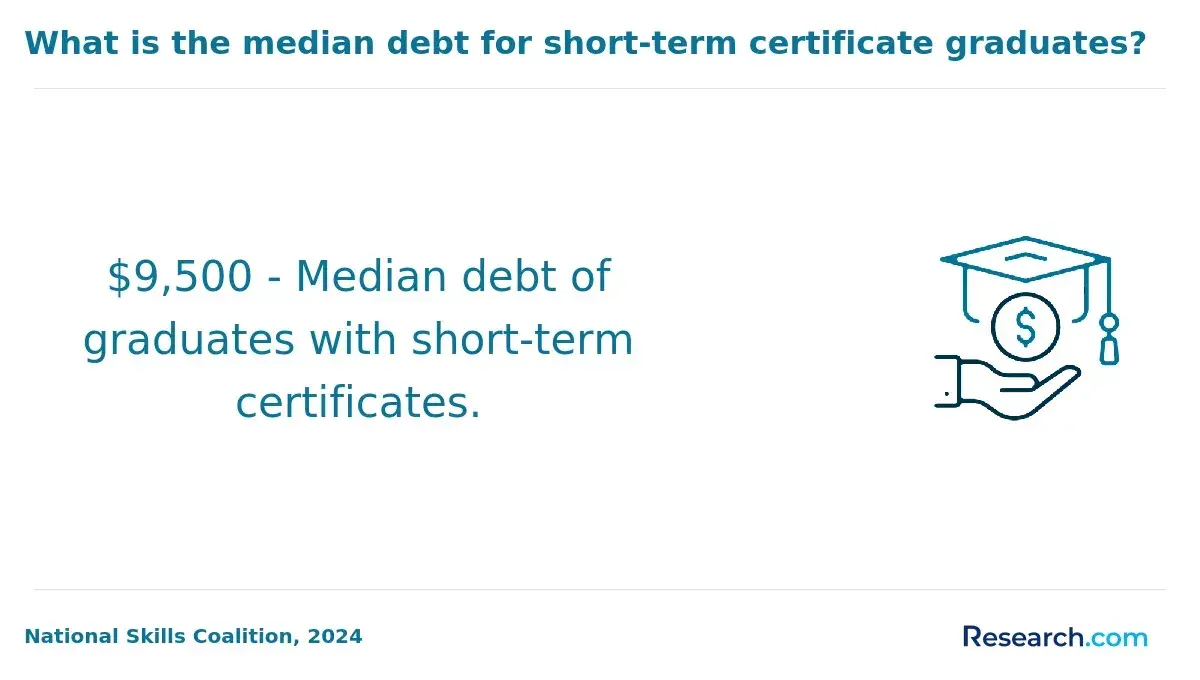
Spouses who want a lower-cost stepping stone before a bachelor's program can also compare FAFSA-approved online certificate programs, especially when a certificate builds employable skills or transfers into a later degree.
College Board 2024-25 tuition data makes benefit planning important: the average published tuition and fees for private nonprofit four-year colleges reached $43,350. That figure does not mean every student pays that amount, but it shows why net price, transfer credit, and benefit eligibility matter more than sticker price.
Which bachelor's degrees offer the best remote and portable career paths for military spouses?
The most portable bachelor's degrees for military spouses usually connect to work that can be done online, across industries, or for employers with national hiring footprints. Business, IT, computer science, cybersecurity, healthcare administration, and accounting tend to offer the broadest location flexibility.
This table summarizes common remote-friendly pathways. Salary figures are national medians from BLS May 2024 data where available, so use them as context rather than a personal earnings prediction:
| Degree area | Portable career examples | Why it can work for military spouses | Relevant 2024 salary context |
| Business or management | Management analyst, project coordinator, operations specialist | Skills apply across employers and industries | Management analysts had a median annual wage of $101,190 |
| Accounting | Staff accountant, payroll analyst, tax associate, audit support | Every sector needs financial records and compliance | Accountants and auditors had a median annual wage of $81,680 |
| Computer science | Software developer, QA analyst, data engineer assistant | Portfolio-based hiring can support remote work | Software developers had a median annual wage of $133,080 |
| Cybersecurity | Security analyst, SOC analyst, risk analyst | Cloud security and compliance needs are national | Information security analysts had a median annual wage of $124,910 |
| Healthcare administration | Clinic operations coordinator, health data analyst, compliance specialist | Healthcare systems exist in nearly every region | Medical and health services managers had a median annual wage of $117,960 |
Remote work is not automatic. Students should build proof of skill through internships, capstones, GitHub projects, analytics dashboards, professional certifications, writing samples, or supervised field experience.
What accreditation and institutional quality checks should military spouses look for in bachelor's programs?
Accreditation is one of the most important quality checks for military spouses because it affects transfer credit, federal financial aid eligibility, employer recognition, graduate school admission, and licensure pathways. At minimum, choose an institution accredited by an accreditor recognized by the U.S. Department of Education or the Council for Higher Education Accreditation.
Programmatic accreditation matters in fields where employers, licensing boards, or graduate schools expect it. The need varies by major, so verify it before you enroll rather than after you move:
| Degree area | Accreditation or approval to check | Why it matters |
| Nursing | CCNE or ACEN, plus state board approval | Can affect RN licensure eligibility and graduate nursing admission |
| Engineering | ABET for many engineering programs | Often important for professional engineering licensure and employer screening |
| Business | AACSB, ACBSP, or IACBE can be helpful but is not always required | May signal curriculum quality, especially for competitive business roles |
| Education | State-approved teacher preparation and, where relevant, CAEP | Determines whether the program leads to initial teacher licensure |
| Cybersecurity | NSA Center of Academic Excellence designation can be useful | May strengthen alignment with security workforce expectations |
Red flags include unclear accreditation language, pressure to enroll immediately, vague licensure disclosures, unusually low transfer acceptance, or promises about jobs and salaries. Ask admissions staff to put accreditation, state authorization, and licensure answers in writing.
How do admissions, transfer credit, and prior learning policies impact military spouses earning a degree?
Admissions and transfer policies can make the difference between a manageable bachelor's degree and an expensive restart. Military spouses often bring prior college credits, military-connected training, professional certifications, or work experience, but schools vary widely in how they evaluate them.
Before applying, ask schools to review the items that most affect completion time and cost:
- How many transfer credits can apply directly to the major, not just to electives?
- Does the school award credit for CLEP, DSST, AP, IB, JST, ACE-recommended training, professional certifications, or portfolio-based prior learning?
- What is the residency requirement, and how many credits must be completed at the institution?
- Will credits expire for technical, nursing, education, or science courses?
- Can the student pause enrollment during a PCS move without losing catalog rights, scholarships, or academic standing?
Students with substantial prior credit may benefit from fast track programs, but speed should not outweigh fit. A short program is only useful if it is accredited, affordable, realistic, and aligned with the career you actually want.
What are the typical curriculum and skills in the most popular degrees for military spouses?
The most popular bachelor's degrees for military spouses differ in content, but many build transferable skills: communication, data use, problem-solving, leadership, digital tools, compliance, and project execution. These skills matter because spouses may need to explain career gaps, change employers, or pivot after moving.
This table shows typical curriculum themes and the practical skills they build. Use it to decide whether the coursework matches the kind of work you want to do day to day:
| Degree | Typical curriculum | Skills built | Best fit |
| Business | Accounting, marketing, management, finance, analytics | Budgeting, planning, reporting, leadership | Students wanting broad career flexibility |
| Healthcare administration | Healthcare law, operations, finance, quality improvement | Compliance, workflow analysis, health data use | Students interested in healthcare without bedside care |
| IT | Networking, databases, cloud systems, systems administration | Troubleshooting, technical support, infrastructure management | Hands-on technology problem-solvers |
| Computer science | Programming, algorithms, data structures, software engineering | Coding, abstraction, testing, software design | Students aiming for software or data roles |
| Cybersecurity | Network defense, risk, forensics, security policy | Threat analysis, incident response, governance | Students drawn to protection, investigation, and risk work |
| Education | Learning theory, assessment, classroom methods, student teaching | Instruction, curriculum planning, communication | Students pursuing teaching or training roles |
When comparing curricula, look beyond course titles. Strong programs include projects, practicums, simulations, labs, portfolios, or field experiences that help you show employers what you can do.
What salaries, job outlook, and advancement opportunities can military spouses expect with these degrees?
Salaries and job outlook vary by field, location, experience, credentials, and whether the role is remote or local. For military spouses, the best ROI often comes from a degree that combines reasonable cost, transfer credit, employable skills, and resilience across moves.
This snapshot uses national BLS 2023-33 projections and May 2024 wage data to show broad labor-market context. It should help you compare fields, not predict an individual outcome:
| Career path | Common bachelor's degree | Projected job growth, 2023-33 | Median annual wage, May 2024 | Advancement notes |
| Information security analyst | Cybersecurity, IT, computer science | 33% | $124,910 | Certifications and experience can support progression to security engineer or manager |
| Medical and health services manager | Healthcare administration, business | 29% | $117,960 | Experience in operations, compliance, or health data is often important |
| Software developer | Computer science | 17% | $133,080 | Portfolios, internships, and coding interviews strongly influence entry |
| Management analyst | Business, analytics, management | 11% | $101,190 | Industry knowledge and project results can matter as much as the major |
| Registered nurse | Nursing | 6% | $93,600 | Licensure, specialty certifications, and clinical setting affect mobility and pay |
A common mistake is choosing only the highest median salary. A better decision weighs total cost, completion probability, licensing burden, local versus remote job access, and the kind of schedule your family can sustain.
How can military spouses choose the right bachelor's major based on goals, moves, and family needs?
The right bachelor's major for a military spouse is not always the "best" major on a national ranking. It is the major that fits your target career, expected moves, available study time, financial plan, and tolerance for licensure or clinical requirements.
Use this decision process to narrow your choices before speaking with admissions counselors:
- Start with the job you want, then work backward to the degree, license, certifications, and experience that employers request.
- Map your likely constraints, including PCS timing, deployment support, childcare, work hours, internet access, and whether you can attend labs or clinicals.
- Compare total net cost after grants, scholarships, GI Bill transfer, employer aid, military discounts, and accepted transfer credits.
- Check whether the program can continue smoothly if you move to another state, especially for nursing, education, counseling-related, and engineering pathways.
- Ask for career outcome support, including internships, portfolio development, remote job preparation, and employer partnerships.
If you need a lower-friction academic path, researching the easiest online bachelor degree can help you understand which majors tend to have fewer lab, clinical, or advanced math requirements. Still, do not choose a degree only because it seems easy; choose it because it supports a realistic career plan.
A good final test is simple: if you moved twice before graduation, could you still finish the program, afford it, and use it for work? If the answer is unclear, ask more questions before enrolling.
Other Things You Should Know About
Business, IT, cybersecurity, computer science, accounting, and healthcare administration are often strong choices because they can lead to jobs across many states and industries. The best option depends on your skills, schedule, and whether you want remote, hybrid, or licensed work.
Not necessarily. Nursing, education, counseling-related pathways, and engineering can be worthwhile, but you should verify state rules, program approval, clinical or student-teaching requirements, and license portability before enrolling.
MyCAA is generally designed for eligible spouses pursuing licenses, certifications, certificates, and associate-level programs tied to portable careers. It usually does not fund an entire bachelor's degree, but it may support a stackable credential that helps you start or advance.
Yes, when the school is properly accredited and the program builds relevant skills. Employers typically care more about accreditation, experience, portfolio quality, certifications, and job readiness than whether coursework was completed online or on campus.
References
- 8 Best Careers for Military Spouses | Outlier https://articles.outlier.org/careers-for-military-spouses
- Top Scholarships for Military Spouses and Children https://www.aafmaa.com/resource-center/top-scholarships-for-military-spouses-and-children
- Military Spouse, Mom, and Student: My Story https://asymca.org/blog/military-spouse-mom-and-student-my-story/
- Military Spouse Fellowship Pathways https://www.hiringourheroes.org/career-services/fellowships/internships/msfp/
- Supporting Our Military Kids: Bridging Education Gaps During School Transitions — Military Spouse Advocacy Network https://www.militaryspouseadvocacynetwork.org/blog-military-spouse-support/2025/4/2/supporting-our-military-kids-bridging-education-gaps-during-school-transitions
- Must Know Scholarship Programs for Military Spouses https://www.militaryfamily.org/must-know-scholarship-programs-for-military-spouses/
- How Military Spouses Can Build a Successful Career https://www.umgc.edu/blog/how-military-spouses-build-successful-career
- 10+ Best College Scholarships for Military Children and Spouses in 2026 https://www.fastweb.com/college-scholarships/articles/college-scholarships-for-military-children-spouses
- Five Job Opportunities for Military Spouses and How to Spot them https://medcertify.com/five-job-opportunities-for-military-spouses-and-how-to-spot-them/
- Military spouses need support in their educational journeys - EdNC https://www.ednc.org/perspective-missing-from-the-conversation-supporting-military-spouses-in-the-college-transfer-process/