
2027 Admission Requirements for Communication Disorders Master's Programs: GPA, Prerequisites & Eligibility Criteria

Co-Founder and Chief Data Scientist

Reviewed by Rhea Paul, PhD
SLP Education & Research Expert
Applying to a communication disorders master's program is not just about wanting to become a speech-language pathologist or work in a related clinical field. Applicants must show that they are academically ready for graduate-level science, language, research, and clinical training. That usually means meeting GPA expectations, completing prerequisite coursework, submitting strong application materials, and understanding whether the program has additional requirements such as standardized tests, interviews, or clinical placement readiness.
The process can feel unclear because programs do not all use the same standards. Acceptance rates averaging below 40% make admission competitive, and many programs expect a cumulative GPA of 3.0 or higher along with foundational coursework in areas such as linguistics, psychology, and anatomy. Applicants from non-communication sciences backgrounds may still qualify, but they often need to plan carefully to fill prerequisite gaps before or during admission.
This guide explains the major admission requirements for communication disorders master's programs, including GPA expectations, acceptable undergraduate majors, prerequisite courses, GRE or GMAT policies, work experience, required documents, conditional admission, online program requirements, deadlines, and ways to strengthen your application.
Key Things to Know About Admission Requirements for Communication Disorders Master's Programs
- Most programs require a minimum GPA of 3.0, with competitive applicants often exceeding 3.5 to demonstrate academic readiness for graduate study in communication disorders.
- Common prerequisite courses include anatomy, physiology of speech and hearing, linguistics, and developmental psychology, ensuring foundational knowledge before admission.
- Eligible applicants typically hold a bachelor's degree from an accredited institution and must meet background checks, letters of recommendation, and sometimes GRE scores, depending on the program.
What Is the Minimum GPA Required for Admission to a Communication Disorders Master's Program?
Most communication disorders master's programs use a minimum GPA of around a 3.0 on a 4.0 scale as an initial admissions benchmark. However, a 3.0 should be viewed as the floor, not the target. Data shows that the average GPA of admitted students in communication disorders master's programs often ranges between 3.2 and 3.5, which means applicants who only meet the minimum may need stronger recommendations, relevant experience, excellent prerequisite grades, or a compelling statement of purpose to remain competitive.
Admissions committees usually look beyond the overall GPA. They may pay close attention to grades in communication sciences, linguistics, anatomy, physiology, statistics, psychology, and other prerequisite courses because those subjects are tied directly to graduate-level clinical and academic work.
- Program competitiveness: Highly selective programs may expect stronger academic records and can sometimes set minimum GPA requirements at 3.5 or higher. This is especially common when applicant demand is high and cohort sizes are small.
- Institutional policies: Each university sets its own admissions standards. Some use a firm cutoff, while others review applications holistically if the applicant shows clear evidence of readiness.
- Cohort size: Programs with limited enrollment spots may rely more heavily on GPA to narrow the applicant pool before reviewing experience, essays, and recommendations in depth.
- Academic rigor: Communication disorders graduate programs combine advanced coursework, clinical decision-making, research literacy, and supervised practice. A strong GPA signals that the applicant can handle that workload.
- Applicant pool trends: GPA expectations can shift depending on the strength of the current applicant pool. In a strong cycle, meeting the published minimum may not be enough to stand out.
If your GPA is below the minimum, check whether the program allows conditional admission, prerequisite post-baccalaureate coursework, or a GPA explanation statement. If your cumulative GPA is modest but your recent grades or prerequisite grades are strong, make that improvement clear in your application. Students comparing graduate pathways in related helping professions may also find information about an MSW degree useful when weighing alternate career routes.
What Undergraduate Degree Do You Need for a Communication Disorders Master's Program?
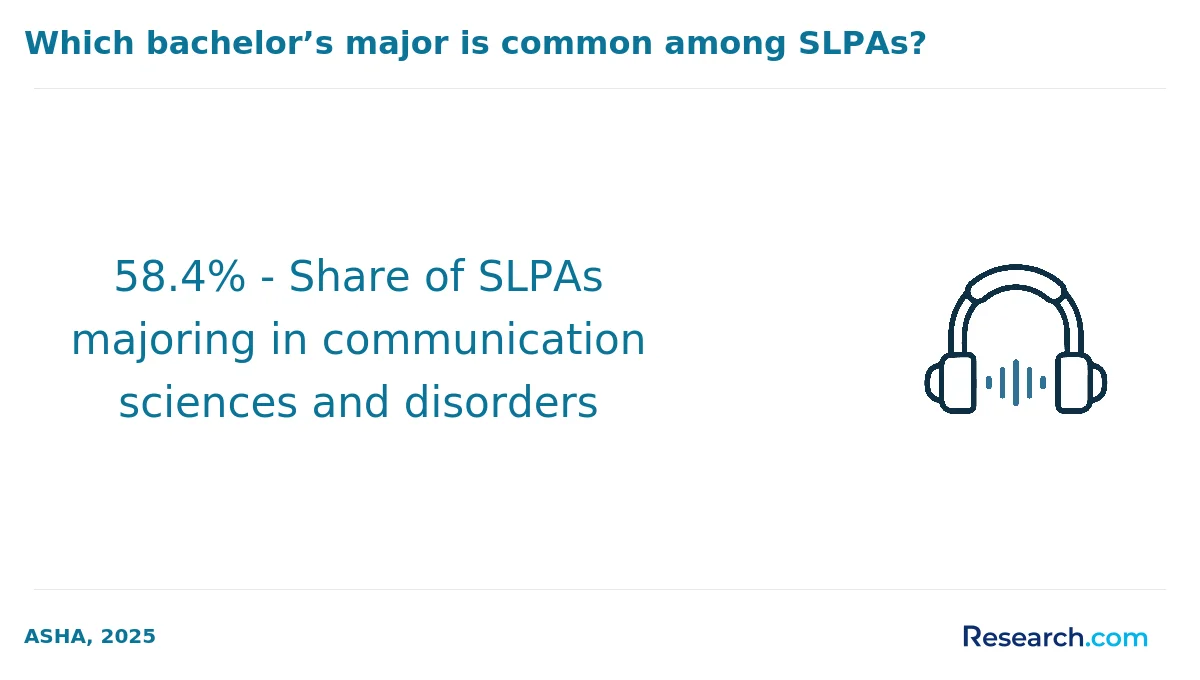
The most direct undergraduate major for a communication disorders master's program is speech-language pathology, communication sciences and disorders, or a closely related field. Still, many programs admit students from other academic backgrounds. Approximately 40% of students admitted hold undergraduate degrees outside traditional speech-language pathology areas, which reflects the interdisciplinary nature of the field.
The key issue is not always the title of your bachelor's degree. It is whether you have completed the required prerequisite courses and can demonstrate preparation for graduate study in speech, language, hearing, development, and evidence-based clinical practice.
- Speech-Language Pathology or Communication Sciences and Disorders: These majors usually offer the clearest preparation because they cover speech and language development, phonetics, anatomy, audiology, and disorders that align closely with graduate admissions expectations.
- Psychology: Psychology majors often bring useful preparation in cognition, behavior, development, learning, and research methods. Applicants may still need additional courses in speech and hearing sciences.
- Linguistics: Linguistics provides strong preparation in phonetics, syntax, semantics, and language structure. This background can be valuable, especially when paired with coursework in anatomy, physiology, and communication disorders.
- Education: Education, special education, and learning disabilities backgrounds can be relevant for applicants interested in working with children, schools, literacy, or developmental communication needs.
- Biology or Health Sciences: These majors can help with anatomy, physiology, neuroscience, and health-related foundations, but applicants often need additional coursework in language development, phonetics, and communication disorders.
Applicants without a communication sciences background should look closely at each program's prerequisite policy. Some programs require all prerequisites before applying, while others allow students to complete leveling courses before beginning the core graduate curriculum. Students comparing cost-conscious options for undergraduate preparation may want to review cheap online colleges that accept FAFSA while checking whether credits will satisfy their target graduate programs.
Before applying, create a prerequisite checklist for each school. Note which courses are required, whether online courses are accepted, whether labs are needed, whether minimum grades apply, and whether courses must be completed by the application deadline or before enrollment.
What Prerequisite Courses Are Required for Communication Disorders Master's Programs?
Prerequisite courses give applicants the academic foundation needed for graduate work in communication disorders. Nearly 85% of these programs mandate completion of specific coursework before admission, so applicants should not assume that a strong GPA alone is enough. Missing prerequisites can delay admission, require conditional acceptance, or force students to complete leveling courses before entering the full graduate sequence.
Common prerequisite areas include the following:
- Biological Sciences: Courses in anatomy, physiology, and related body systems help students understand the physical mechanisms involved in speech, swallowing, hearing, respiration, and neurological function.
- Communication Fundamentals: Introductory coursework in speech and language processes helps students understand typical development, communication patterns, and the terminology used in graduate-level courses.
- Psychology or Behavioral Sciences: These courses provide context for cognition, learning, development, behavior, and emotional factors that can affect communication and treatment planning.
- Quantitative and Research Methods: Statistics and research methods prepare students to read clinical research, evaluate evidence, interpret data, and participate in evidence-based practice.
- Linguistics or Language Structure: Courses in phonetics, syntax, morphology, semantics, and language analysis help students connect language structure to assessment and intervention.
Applicants should pay attention to course names and content, not just subject areas. For example, one program may accept a general statistics course, while another may prefer a behavioral science statistics course. Some programs may also require a minimum grade in each prerequisite course.
A graduate student currently enrolled in a communication disorders master's program described the prerequisite stage as demanding but valuable. He said that subjects such as statistics initially felt disconnected from clinical practice, but the connection became clearer once he began applying research concepts to assessment and treatment decisions. Completing those courses early, he explained, made the transition into graduate coursework and clinical training more manageable.
If you are comparing programs, document each school's policy on prerequisite timing. Some require prerequisites before application review, some require them before matriculation, and others build leveling coursework into the program. Applicants who are still researching flexible and cost-focused graduate pathways may also compare masters in speech pathology options while confirming accreditation and clinical placement requirements.
Do Communication Disorders Master's Programs Require the GRE or GMAT?
GRE and GMAT requirements vary by communication disorders master's program. Many programs have moved toward test-optional or test-waiver policies, and recent data show that over half of U.S. graduate programs have adopted test-optional or test-waiver options as of the early 2020s. Even so, applicants should verify each program's current policy because standardized test rules can differ by university, department, and application cycle.
The GRE is more commonly associated with graduate admissions in this field than the GMAT, which is typically used for business-related programs. However, applicants should rely on the program's official admissions page rather than assumptions.
- Test-optional policies: Applicants may choose whether to submit scores. If you do not submit scores, the program will likely place greater weight on GPA, prerequisite performance, recommendations, experience, and essays.
- GPA-based waivers: Some programs waive testing for applicants with a strong GPA, typically above 3.5. Confirm whether the waiver is automatic or requires a separate request.
- Professional experience: Relevant work, internship, clinical observation, or healthcare experience may strengthen an application, especially when test scores are not required.
- Testing requirement: Some programs still require GRE or GMAT scores, particularly when they use standardized testing as one part of academic readiness review or applicant comparison.
- Holistic review: In holistic admissions, test scores, if submitted, are reviewed alongside coursework, letters, personal statements, interviews, and other evidence of preparation.
If a program is test-optional, submit scores only if they strengthen your application. Strong scores may help offset a lower GPA or uneven academic record, but weak scores can distract from otherwise solid materials. Applicants comparing admissions practices across graduate fields can also review how requirements differ in areas such as online business schools.
Do Communication Disorders Master's Programs Require Work Experience for Admission?
Most communication disorders master's programs do not require full-time professional work experience for admission, especially for applicants coming directly from undergraduate study. However, relevant experience can make an application more convincing. Studies show that nearly 40% of graduate programs in health and clinical sciences prefer or require relevant work experience, and communication disorders programs may value evidence that applicants understand the field and its clinical expectations.
Experience does not always have to be paid employment. Observation hours, volunteer work, school-based support roles, research assistance, caregiving experience, tutoring, advocacy work, and healthcare exposure can all help applicants explain why they are pursuing the field.
- Recent graduate programs: These programs usually focus on GPA, prerequisite completion, faculty recommendations, and academic readiness. Work experience may help but is often not required.
- Professional or executive tracks: Programs designed for working professionals or career changers may expect prior experience to show maturity, commitment, and readiness for applied learning.
- Career changers: Applicants from unrelated fields should use volunteer work, observation, shadowing, or relevant coursework to show that the decision to enter communication disorders is informed and intentional.
- Optional experience: Some programs list experience as preferred rather than required. In those cases, experience can help distinguish applicants with similar GPAs and prerequisite records.
- Established work history: Applicants with relevant work backgrounds should connect their experience directly to communication, service delivery, teamwork, ethical judgment, and client-centered care.
A graduate of a Communication Disorders master's program said she worried about not having formal field experience when she applied. She focused instead on volunteer work and coursework that showed sustained interest. In interviews, she explained how those experiences helped her build communication skills, patience, and awareness of client needs. Her advice to applicants is practical: if you do not have paid experience, be ready to explain what you have done to understand the profession.
What Documents Are Required to Apply for a Communication Disorders Master's Program?
Communication disorders master's applications typically require documents that show academic preparation, professional potential, communication ability, and fit with the program. Studies indicate that about 85% of graduate programs use these materials to evaluate candidates beyond just grades. Because missing or weak materials can delay review, applicants should prepare early and track requirements separately for each school.
- Official Transcripts: Transcripts confirm your degree history, GPA, and prerequisite coursework. Request them early, especially if you attended multiple institutions or completed transfer, summer, or post-baccalaureate courses.
- Statement of Purpose: This essay should explain why you are pursuing communication disorders, what experiences shaped that decision, how your goals align with the program, and what qualities you bring to graduate training. Avoid vague claims; use specific examples.
- Letters of Recommendation: Programs often prefer letters from faculty, clinical supervisors, research mentors, or employers who can speak to your academic ability, professionalism, communication skills, dependability, and readiness for graduate-level work.
- Resume or Curriculum Vitae (CV): Include education, relevant coursework, research, volunteer work, observation hours, internships, employment, certifications, presentations, and service experiences related to communication, health, education, or human development.
- Standardized Test Scores (if required): Some programs may still ask for GRE or similar scores. If scores are optional, decide whether they add clear value to your application.
Applicants should also check whether the program requires supplemental essays, a video response, an interview, proof of prerequisite enrollment, a background check, immunization records, or documentation related to clinical placement. Requirements may differ even among programs at the same university system.
What Is Conditional Admission in Communication Disorders Graduate Programs?
Conditional admission allows an applicant who does not fully meet regular admission requirements to begin a communication disorders graduate program while completing specific conditions. Around 20-30% of these programs offer such provisional entry. This option can be useful for applicants who show promise but are missing prerequisites, fall slightly short of a GPA expectation, or need to demonstrate readiness through early graduate coursework.
Conditional admission is not the same as full admission. Students must meet clearly defined requirements by a stated deadline, and failure to do so may stop degree progress.
- Eligibility Criteria: Applicants usually need to show enough academic preparation to begin the program, even if they are missing certain prerequisite courses or do not fully meet a GPA benchmark.
- Common Conditions: Conditions may include completing specific prerequisite classes, earning minimum grades, maintaining a required graduate GPA, meeting with advisors, or completing additional academic support steps.
- Timelines: Requirements are usually designed to be completed within the first one to two semesters of enrollment.
- Academic Expectations: Once conditions are met, students are generally held to the same standards as fully admitted students.
- Outcomes: Successful completion leads to full program admission or continued enrollment, while failure may result in dismissal or a pause in degree progress.
Before accepting conditional admission, ask direct questions: Which courses or grades are required? What is the deadline? Will conditional status affect financial aid, clinical placement, or time to graduation? Are the conditions realistic alongside graduate coursework? A conditional offer can be a strong opportunity, but only if the expectations are clear and achievable.
Are Admission Requirements Different for Online Communication Disorders Master's Programs?
Online communication disorders master's programs generally use the same core academic admission standards as campus-based programs, including GPA expectations, prerequisite coursework, transcripts, recommendations, and statements of purpose. The main differences usually involve technology readiness, clinical placement logistics, and the student's ability to succeed in a remote learning environment.
Because communication disorders is a clinically oriented field, online delivery does not remove the need for supervised practice. Applicants should pay close attention to how the program arranges clinical experiences, whether students must identify local sites, and whether the program is authorized to operate in the student's state.
- Technology Readiness: Online students may need reliable high-speed internet, a suitable computer, webcam access, and comfort using learning platforms, video meetings, and digital clinical tools.
- Remote Clinical Commitment: Programs may require students to live near approved clinical sites, travel for placements, or participate in scheduled on-campus intensives. Clinical requirements can affect cost, schedule, and feasibility.
- Time Management Skills: Online formats require discipline. Applicants should be prepared to balance lectures, assignments, group work, clinical preparation, and practicum expectations without the structure of a daily campus schedule.
- Orientation and Proficiency Assessments: Some programs require technology orientation, online readiness modules, or digital skills checks before coursework begins.
Applicants should also confirm accreditation status, state authorization, licensure alignment, and clinical placement support before enrolling. Online programs can be convenient, but they are not automatically easier or less time-intensive. Students comparing graduate education costs in other fields may also review resources on how much does a doctorate in education cost for broader context on online graduate investment.
When Are the Application Deadlines for Communication Disorders Master's Programs?
Application deadlines for communication disorders master's programs vary by institution, start term, program format, and admissions model. Many traditional campus programs follow annual fall admission timelines, while some online or hybrid programs may offer multiple start dates. Applicants should confirm deadlines directly with each program and avoid relying on general graduate school timelines.
Because communication disorders programs can be competitive, waiting until the final deadline can be risky. Recommendation letters, transcripts, prerequisite verification, and test scores, if required, often take longer than expected.
- Priority Deadlines: Priority deadlines may provide earlier review, stronger consideration for limited seats, and better access to funding opportunities. Meeting this deadline can also help applicants receive decisions sooner.
- Final Deadlines: Final deadlines are the last date applications are accepted for a given term. Submitting by this date does not guarantee review if supporting materials arrive late.
- Rolling Admissions: Programs with rolling admissions review applications as they arrive until seats are filled. Applying early is still important because available spots may become limited.
- Supplementary Materials: Transcripts, recommendations, test scores, prerequisite documentation, and supplemental essays may have separate deadlines. An application may not be considered complete until all items are received.
- Term-Based Cutoffs: Programs may admit students for fall, spring, or summer terms, each with unique deadlines and prerequisite completion expectations.
A practical approach is to work backward from the earliest priority deadline. Give recommenders adequate time, request transcripts early, and finish your statement of purpose before the application portal becomes crowded near the deadline. Also check whether the program uses a centralized application system or a university-specific portal.
Students comparing application pacing across different graduate or accelerated pathways may find it useful to review timelines for programs such as the fastest online construction management degree, while keeping in mind that clinical programs often have additional documentation requirements.
What Factors Increase Your Chances of Getting Into a Communication Disorders Master's Program?
The strongest communication disorders master's applications show academic readiness, informed motivation, relevant exposure to the field, and a clear fit with the program. Admissions committees are not only asking whether you want the degree; they are assessing whether you are prepared for demanding coursework, clinical training, ethical practice, and professional growth.
- Academic Performance Trends: A strong or improving academic record can help. If your early grades were weaker, highlight later improvement, strong prerequisite grades, and any post-baccalaureate coursework that demonstrates readiness.
- Relevant Experience: Observation, volunteering, research, tutoring, healthcare work, school-based support, or community service can show that you understand the populations and settings connected to communication disorders.
- Application Materials Quality: A focused statement of purpose can make a major difference. Explain your goals, preparation, and program fit with specific examples rather than broad claims about helping people.
- Program Alignment: Research each program's clinical strengths, faculty interests, placement model, and mission. Tailor your application so the committee can see why that program makes sense for your goals.
- Strong Recommendations: Choose recommenders who know your work well and can provide detailed evidence of your academic ability, professionalism, communication skills, reliability, and potential for graduate success.
Common mistakes include applying only to highly selective programs, ignoring prerequisite gaps, submitting generic essays, choosing recommenders based on title rather than relationship, and underestimating the time needed to gather documents. A balanced school list, early planning, and precise application materials can improve your odds without relying on one part of the application to carry everything.
What Graduates Say About Admission Requirements for Communication Disorders Master's Programs
- Claire: "Preparing for admission into a communication disorders master's program was both challenging and rewarding. The costs for prep courses and application fees added up, but they were a worthwhile investment toward a clear career path. Graduating has truly empowered me to make a meaningful impact as a speech-language pathologist, which makes every expense and effort worthwhile."
- Gary: "Reflecting on my journey, I realize how crucial thorough preparation was for entering the communication disorders master's program. While the financial burden of preparation was a concern, balancing that with part-time work helped me manage it effectively. This degree has opened many doors professionally, enhancing both my confidence and expertise in serving diverse populations."
- Stuart: "My experience preparing for a communication disorders master's degree was pragmatic and focused. Although the preparation costs were significant, they were a small price compared to the career advancement I've achieved since graduating. This program fundamentally transformed my professional outlook and increased my ability to contribute in clinical settings with greater competence."
Other Things You Should Know About Communication Disorders Degrees
Yes, many Communication Disorders master's programs accept international students. Applicants typically must provide proof of English proficiency through tests like the TOEFL or IELTS. Additionally, some programs may require credential evaluations to compare international academic records to U.S. standards.
Interviews are commonly used to assess candidates' communication skills, motivation, and fit for the program. These interviews can be conducted in person or virtually. They often include questions about clinical experiences and career goals in communication disorders.
For 2027, most Communication Disorders master's programs typically require applicants to have a minimum GPA of 3.0. However, competitive programs may expect higher GPAs. It's crucial for applicants to verify with individual programs, as specific GPA expectations can vary.
References
- U.S. Bureau of Labor Statistics - Speech-Language Pathologists https://www.bls.gov/ooh/healthcare/speech-language-pathologists.htm
- ASHA EdFind - Accredited Speech-Language Pathology Programs https://find.asha.org/ed/
- Audiology and Speech-Language Pathology Interstate Compact https://aslpcompact.com/compact-map/
- California State University-East Bay - Online Master of Science in Speech-Language Pathology https://ce.csueastbay.edu/programs/speech-language-pathology/
- Emerson College - Master of Science (M.S.) in Communication Disorders (Speech@Emerson, online) https://speech.emerson.edu/
- Nova Southeastern University - SLP Program - Master of Science in Speech-Language Pathology https://osteopathic.nova.edu/degrees/masters/speech-language-pathology/index.html
- University of Wisconsin-Eau Claire - Master of Science in Speech-Language Pathology (Online) https://www.uwec.edu/speech-language-and-hearing-sciences-department/graduate-program/speech-language-pathology-online
- University of Nebraska at Kearney - Speech-Language Pathology, Master of Science in Education (Online Track) https://www.unk.edu/online/degrees-programs/speech-language-pathology-online.php


