2027 What Can You Do with a Communication Disorders Master's Degree? Careers, Salaries & Growth

Co-Founder and Chief Data Scientist

Reviewed by Rhea Paul, PhD
SLP Education & Research Expert
A master's degree in communication disorders is usually the key academic step for people who want to become speech-language pathologists or pursue related clinical, educational, research, or leadership roles. The decision is significant: programs can be competitive, clinical requirements are demanding, and total cost varies widely by institution and format.
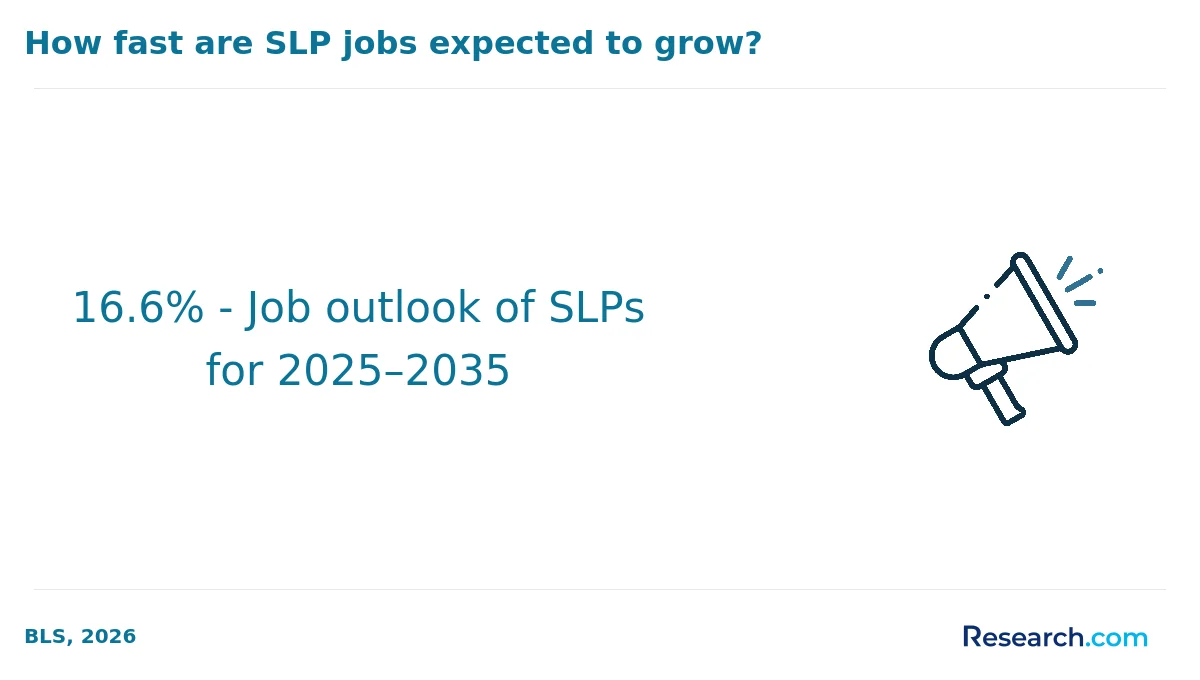
The career case is strong for many students. Employment for speech-language pathologists, a primary role for graduates, is projected to grow 17% from 2025 to 2035, much faster than average. Still, job growth alone does not make every program a good fit. Prospective students need to compare accreditation, admissions requirements, clinical placement support, certification pathways, tuition, financial aid, and likely salary outcomes before enrolling.
This guide explains what to expect from a communication disorders master's program, including admission standards, GPA expectations, cost and financing options, program length, career paths, salaries, certifications, hiring industries, job outlook, and the skills graduates develop. It is designed for students weighing graduate school, career changers completing prerequisites, and working professionals deciding whether the degree is worth the investment.
Key Things to Know About What You Can Do with a Communication Disorders Master's Degree
- Admission to communication disorders master's programs typically requires a bachelor's degree and prerequisite coursework with program formats varying between on-campus and online to fit diverse schedules.
- Graduates can expect median salaries around $77,000 annually, with positions spanning healthcare, education, and research sectors, reflecting diverse career outcomes.
- Long-term growth in communication disorders roles is projected at 17% through 2035, with certifications enhancing job prospects and programs differing in cost and reputation for careful comparison.
What Are the Admission Requirements for a Communication Disorders Master's Program?
Admission to a communication disorders master's program usually depends on academic preparation, prerequisite coursework, professional readiness, and the strength of the overall application. Because employment for speech-language pathologists is projected to grow 17% from 2025 to 2035, many programs attract applicants who are both academically strong and highly motivated to enter clinical practice.
Requirements vary by school, but most admissions committees look for evidence that applicants can handle graduate-level science, research, and clinical training. Students who do not have an undergraduate major in communication disorders can still qualify in many cases, but they may need to complete leveling or prerequisite courses before full admission.
- Relevant undergraduate degree: Most programs prefer a bachelor's degree in communication disorders or a closely related field such as linguistics, psychology, education, or a similar discipline. Applicants from unrelated majors may be required to complete prerequisite coursework in areas such as anatomy, physiology, phonetics, speech and language development, or hearing science.
- Minimum GPA: Many programs expect at least about a 3.0 on a 4.0 scale. More selective programs may admit students with stronger academic records, especially in major-related courses.
- Standardized testing: GRE policies differ by institution. Some programs no longer require the GRE, while others list it as optional, recommended, or required. Applicants should not assume testing is waived; they should confirm the current policy for each program.
- Letters of recommendation: Applicants typically submit two or three recommendations from faculty members, supervisors, clinicians, or other professionals who can speak to academic ability, maturity, communication skills, and readiness for client-facing work.
- Personal statement: A strong statement explains why the applicant wants to study communication disorders, what populations or settings interest them, and how their background has prepared them for graduate clinical training.
- Clinical, volunteer, or observation experience: Some programs value documented exposure to speech-language pathology, audiology, special education, rehabilitation, or healthcare settings. This experience can help applicants show that they understand the demands of the profession.
- Field-specific prerequisites: Programs may require statistics, research methods, biological science, physical science, social science, or other foundational coursework. Requirements can differ substantially, so applicants should review each program's checklist before applying.
Applicants should build a program-by-program spreadsheet that tracks prerequisites, GPA standards, testing rules, recommendation requirements, deadlines, clinical placement expectations, and accreditation status. Students comparing long-term academic options may also review the best degrees for the future to understand how communication disorders fits into broader workforce trends.
What Is the Minimum GPA Requirement for a Communication Disorders Master's Program?
The minimum GPA requirement for a communication disorders master's program usually ranges between 2.75 and 3.0 on a 4.0 scale. That number is only the starting point. Meeting the minimum does not guarantee admission, especially at programs with limited clinical placement capacity or a large applicant pool.
Admissions committees often review GPA in context. A student with a modest cumulative GPA but strong grades in prerequisite courses, recent academic improvement, relevant experience, and persuasive recommendations may still be competitive. Conversely, a high GPA does not offset weak preparation for clinical work or an unfocused application.
- Typical GPA range: Most programs list a minimum between 2.75 and 3.0. Competitive applicants may exceed the stated minimum, particularly in communication disorders, science, statistics, and research courses.
- Program selectivity: Highly ranked, private, or clinically intensive programs may use higher GPA expectations when screening applicants. Public universities may be more flexible, but this varies by school and cohort size.
- Holistic review: Many programs consider GPA alongside recommendations, personal statements, prerequisite completion, GRE scores where applicable, work experience, and evidence of professionalism.
- Applicants below the minimum: Some schools allow conditional admission, prerequisite completion, post-baccalaureate coursework, or graduate-level nondegree coursework to demonstrate readiness. Others apply minimum GPA rules strictly.
- Recent academic performance: Programs may pay close attention to the last several terms of undergraduate study or to grades earned after returning to school, especially for career changers.
If your GPA is below the published threshold, contact admissions before applying. Ask whether the program considers grade trends, prerequisite GPA, post-baccalaureate courses, or professional experience. Applicants who need a flexible route into graduate education may also compare online degree programs, especially when completing prerequisites while working.
How Much Does a Communication Disorders Master's Degree Cost and How Can You Finance It?
The cost of a communication disorders master's degree depends on tuition, residency status, program format, fees, clinical placement requirements, living expenses, and whether the student can keep working while enrolled. Public universities typically charge $10,000 to $25,000 annually for in-state students, while private schools may exceed $35,000. Students should calculate the total cost of attendance, not tuition alone.
Because clinical training can limit work hours, the financial plan should include both direct costs and opportunity costs. A lower-tuition program is not always cheaper if it requires relocation, unpaid travel to placements, or a schedule that prevents part-time employment.
- Tuition and required fees: Compare tuition by credit, semester, and year. Ask about clinical fees, technology fees, background checks, liability insurance, health documentation, and exam preparation costs.
- Living and commuting costs: Housing, transportation, parking, childcare, and placement travel can change the real price of attendance. This is especially important for students assigned to off-campus clinical sites.
- Assistantships and fellowships: Graduate assistantships, teaching assistantships, research assistantships, and fellowships may include tuition support, stipends, or both. These awards can be competitive, so students should ask whether funding is guaranteed, renewable, or limited to certain semesters.
- Scholarships and grants: Departmental awards, university scholarships, professional association scholarships, and need-based grants can reduce borrowing. Applicants should track separate deadlines because aid applications may close before admission decisions are released.
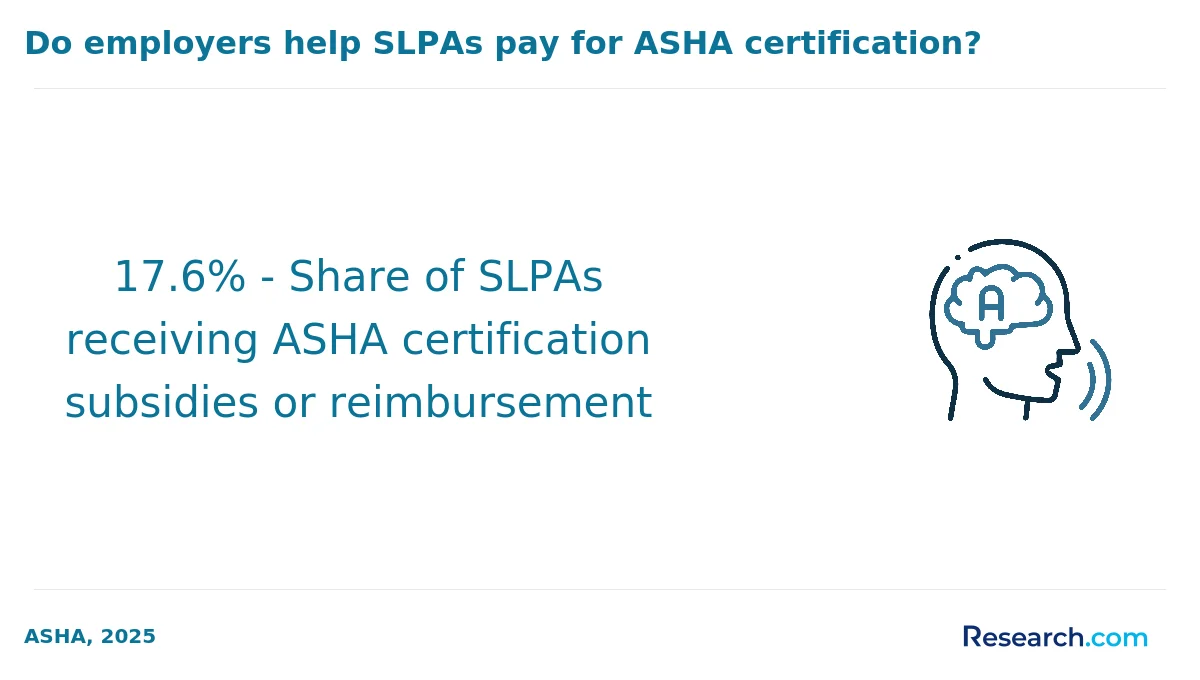
- Employer support: Some students use employer tuition reimbursement, especially if they work in education, healthcare, rehabilitation, or related human services roles.
- Federal student loans: Federal loans are common for graduate students, but borrowing should be tied to a realistic repayment plan based on expected earnings and employment setting.
- Online and hybrid formats: Online programs may help students remain employed or avoid relocation, but they still require clinical experiences. Students comparing flexible options can review online speech pathology masters programs as part of a broader affordability search.
When evaluating return on investment, compare total educational cost with likely earnings. Entry-level speech-language pathologists earn median salaries near $80,000, with job growth above average at 16% through 2030. Those figures can support the case for graduate study, but the best financial outcome usually comes from controlling debt, choosing an accredited program, and entering a setting with stable demand.
I spoke with a graduate who completed a master's in communication disorders while balancing part-time work and family responsibilities. They described the first year as financially uncertain because assistantships were not guaranteed. “I applied for every fellowship and assistantship I could find,” they recalled, “because those opportunities made a huge difference in managing debt.” Their experience points to a practical lesson: apply early for funding, ask direct questions about placement costs, and avoid assuming that aid will appear after enrollment.
How Long Does It Take to Earn a Communication Disorders Master's Degree?
Most full-time students complete a communication disorders master's degree in 1.5 to 2 years. Part-time and online students usually take 3 to 4 years, depending on course load, clinical scheduling, and whether prerequisite or leveling courses are required before graduate coursework begins.
Time to completion is not just an academic issue. It affects cost, income, family planning, relocation, licensure timing, and when graduates can begin supervised clinical work. Students should ask each program for a sample plan of study and a realistic clinical placement timeline before enrolling.
- Full-time enrollment: A 1.5 to 2 year timeline is common for students who can commit to a structured course sequence, clinical practica, and any capstone or thesis requirement.
- Part-time and online programs: Flexible formats often extend completion to 3 to 4 years. They can be a strong fit for working adults, but students must verify how and where clinical experiences are arranged. Those researching adjacent online affordability options may also encounter cheapest counseling degree online resources while comparing helping-profession graduate programs.
- Accelerated and combined degree options: Some universities offer accelerated tracks or combined bachelor's/master's pathways that allow certain credits to count toward both degrees. These options can shorten the timeline for students who plan early.
- Transfer credits: Students with relevant graduate-level coursework may be able to transfer credits, but policies are usually restrictive. Programs may limit the number of credits accepted or require recent coursework.
- Thesis and non-thesis tracks: A thesis can be valuable for students considering research or doctoral study, but it may add time. Non-thesis tracks often emphasize coursework, exams, and clinical preparation.
- Clinical practicum and internship scheduling: Required clinical experiences can determine the actual graduation date. Placement availability, supervision requirements, school-year calendars, and healthcare site schedules can all affect timing.
- Prerequisite or leveling coursework: Career changers may need additional courses before entering the graduate sequence. This can add time even if the master's program itself is designed for 1.5 to 2 years.
The fastest program is not always the best choice. Students should prioritize accredited training, reliable clinical placement support, and a schedule they can complete without compromising academic or clinical performance.
What Career Paths Are Available with a Communication Disorders Master's Degree?
A communication disorders master's degree most commonly prepares graduates for clinical roles in speech-language pathology, but the training can also support careers in education, rehabilitation, public health, advocacy, research, assistive technology, and administration. The right path depends on licensure goals, preferred population, work setting, and interest in direct client care versus program-level work.
- Speech-language pathology: Many graduates work as speech-language pathologists, assessing and treating speech, language, voice, fluency, swallowing, and related communication disorders in schools, hospitals, clinics, rehabilitation centers, and private practice.
- Audiology-related pathways: Some communication disorders programs introduce students to hearing science and audiology. Independent audiology practice has its own credentialing expectations, so students should confirm whether their program aligns with their intended role.
- Schools and special education: Graduates may support students with communication needs in public schools, private schools, early intervention programs, and special education settings. School-based work may involve individualized education programs, collaboration with teachers, and family communication.
- Hospitals and rehabilitation: Clinical roles in medical settings may involve stroke recovery, traumatic brain injury, swallowing disorders, voice disorders, or communication support after illness or injury.
- Private practice: Some professionals work for or eventually open private clinics. This path can offer autonomy, but it also requires business, billing, compliance, and client management skills.
- Nonprofit and community programs: Graduates may work in advocacy, disability services, family support programs, or community health initiatives that improve access to communication services.
- Government and policy: Public health agencies, rehabilitation departments, and education systems may employ communication disorders professionals in program management, compliance, access initiatives, or policy support.
- Assistive technology and telepractice: Professionals with strong technology skills may work with communication devices, digital therapy tools, telehealth platforms, or product teams serving people with communication needs.
- Research and academia: Some graduates support research projects, clinical trials, university labs, or teaching. Faculty roles often require additional doctoral study.
- Leadership and administration: Experienced professionals may move into supervision, clinical coordination, program management, or administrative leadership, especially after developing strong clinical and operational expertise.
A graduate I spoke with said the degree helped them transition into a clinical role because the curriculum paired theory with supervised practice. “Knowing exactly what to expect during practicum placements made it far less intimidating,” they said. Their main advice was to choose a program with clear placement expectations, responsive faculty, and support systems that help students move from classroom learning to client care.
What Is the Average Salary for Communication Disorders Master's Degree Holders?
Salary for communication disorders master's degree holders depends heavily on role, setting, location, experience, credentials, and specialization. The U.S. Bureau of Labor Statistics reports that speech-language pathologists earn a median annual wage near $97,870, but individual salaries can fall below or above that figure based on employer type and clinical focus.
Students should be careful when comparing salary data. A school-based role may offer a different work calendar, benefits package, pension structure, and caseload than a hospital or private clinic role. Base salary is important, but total compensation and working conditions matter as well.
- Experience level: Entry-level practitioners generally earn between $55,000 and $65,000 annually. Mid-career professionals can expect salaries from $75,000 to $90,000, while senior specialists and leaders may surpass $100,000 depending on expertise, setting, and responsibilities.
- Geographic location: Large metropolitan areas and states with higher living costs, such as California, New York, and Massachusetts, often pay more. Rural or lower-cost regions may offer salaries closer to or below the national median wage.
- Employer type: Public schools and government agencies may offer stable benefits and predictable schedules but somewhat lower base pay. Private healthcare providers, clinics, and rehabilitation centers may offer higher wages, productivity incentives, or bonuses.
- Industry sector: Hospitals, outpatient care facilities, and specialized medical centers often pay more than some educational or community service settings, especially for clinicians with specialized expertise.
- Master's degree salary premium: A master's degree usually enhances earnings by 15% to 25% over bachelor's degree holders because it supports advanced clinical skills and access to certification and licensure pathways.
- Additional compensation: Health insurance, retirement contributions, paid time off, continuing education support, bonuses, and, in some private-sector roles, performance-related incentives can significantly affect total compensation.
To estimate likely earnings, compare salary data by state, employer type, and role rather than relying on a single national figure. Also consider debt level. A strong salary may still feel limited if the program required heavy borrowing.
What Professional Certifications Complement a Communication Disorders Master's Degree?
Professional certification and state licensure are central to many communication disorders careers. A master's degree provides the academic foundation, but graduates often need additional supervised experience, exams, and continuing education before they can practice independently or qualify for preferred positions.
- Certificate of Clinical Competence in Speech-Language Pathology (CCC-SLP): Issued by the American Speech-Language-Hearing Association (ASHA), the CCC-SLP is one of the most recognized credentials in the field. Candidates must hold a master's degree, complete a supervised clinical fellowship, and pass the Praxis exam in speech-language pathology. Renewal is required every three years through continuing education. Many healthcare, school, and private practice employers prefer or require this credential.
- Board Certified Specialist (BCS): Also granted by ASHA, BCS certification is intended for professionals who want to demonstrate advanced competence in specialized areas such as fluency or swallowing disorders. Eligibility requires the CCC-SLP and additional clinical and education benchmarks. This credential can support advancement into specialized clinical, supervisory, or consultative roles.
- Certificate of Clinical Competence in Audiology (CCC-A): For audiologists, the CCC-A parallels the CCC-SLP in importance and structure. It is often valued by employers and may be relevant for graduates whose career goals include hearing-related clinical work. International graduates should confirm timelines carefully because certification requirements and documentation can vary.
- State licensure requirements: Many U.S. states require licensure for clinical practice in communication disorders. Licensure may depend on education, supervised practice, exams, background checks, and state-specific rules. Some states connect requirements to CCC credentials, while others have separate processes.
- School-based credentials: Professionals who work in public schools may need state education agency approval, teaching credentials, school service personnel certification, or related documentation in addition to clinical licensure.
The most important planning step is to work backward from the state and setting where you want to practice. Confirm whether the program's curriculum, clinical hours, and supervision structure align with certification and licensure requirements before enrolling. Students comparing cost across helping-profession graduate programs may also use resources on how much does masters in psychology cost as a general benchmark for tuition and aid planning.
What Are the Top Industries Hiring Communication Disorders Master's Degree Graduates?
The strongest hiring markets for communication disorders master's graduates are healthcare, education, rehabilitation, telepractice, research, and public service. Employment settings differ in pay, schedule, credential requirements, client population, documentation burden, and advancement opportunities, so students should choose clinical placements that match their preferred industry.
- Healthcare sector: Hospitals, outpatient clinics, rehabilitation centers, skilled nursing facilities, and specialty practices hire speech-language pathologists, audiologists, and rehabilitation professionals. These employers often require state licensure and may prefer the Certificate of Clinical Competence (CCC) from ASHA.
- Education industry: Public and private K-12 schools, colleges, early intervention programs, and special education departments employ professionals who support students with speech, language, fluency, and communication needs. School roles may require additional education credentials depending on the state.
- Telepractice: Remote service delivery has expanded as technology and access needs have changed. Employers may seek professionals who understand telehealth platforms, privacy rules, digital assessment methods, and remote family engagement.
- Research and public health organizations: Universities, health agencies, nonprofits, and policy organizations hire graduates for program coordination, prevention initiatives, research support, advocacy, and communication access projects.
- Private practice and specialty clinics: These employers may focus on pediatric speech, autism-related services, voice therapy, feeding and swallowing, accent modification, fluency, or adult neurogenic communication disorders.
- Assistive technology and communication technology companies: Graduates with interest in devices, software, augmentative and alternative communication, or accessibility may find roles in training, product support, clinical consulting, or user education.
Students can improve employment prospects by choosing practica in more than one setting, networking through associations such as ASHA, developing comfort with documentation and interdisciplinary teamwork, and building skills with specialized populations or technology. According to the U.S. Bureau of Labor Statistics, employment for speech-language pathologists is projected to grow 17% from 2025 to 2035, underscoring strong demand across multiple service settings.
What Are the Highest-Paying Jobs for Communication Disorders Master's Degree Holders?
The highest-paying jobs for communication disorders master's degree holders usually involve clinical specialization, supervision, healthcare leadership, consulting, or advanced academic work. In many cases, higher pay comes with greater responsibility, larger caseload oversight, administrative duties, or additional credentials.
- Speech-Language Pathologist Supervisor: These professionals typically earn median salaries exceeding $90,000 by leading teams in educational, healthcare, or rehabilitation settings. The role usually requires strong clinical judgment, leadership ability, licensure as an SLP, certifications from the American Speech-Language-Hearing Association, and often a minimum of five years' experience.
- Clinical Director in Speech Therapy: Clinical directors oversee programs, supervise staff, manage service quality, coordinate training, and support compliance. Salaries can reach $100,000 or more, particularly in hospitals and private therapy centers. A master's degree is central, while a doctorate or specialized certifications may strengthen advancement prospects.
- University Lecturer or Researcher: Salaries in this category range from $70,000 to $110,000, frequently at research-focused universities. These roles often require a doctoral degree and may involve teaching, research, grant writing, student supervision, and publication expectations.
- Specialized Pediatric Speech Pathologist: Pediatric specialists who focus on areas such as autism or feeding disorders earn between $80,000 and $95,000. Income can increase with advanced training, specialty certifications, strong referral networks, and experience in pediatric hospitals or private practices.
- Health Care Consultant in Communication Disorders: Consultants who advise healthcare organizations on service quality, workflow, reimbursement, access, or program design often earn above $90,000. This path combines clinical expertise with business, policy, and systems-level thinking.
Students seeking higher-paying roles should plan beyond the first job. The most direct strategy is to build strong clinical competence, obtain required licensure and certification, document outcomes, pursue specialty experience, and develop leadership or business skills over time.
What Is the Job Outlook and Employment Growth for Communication Disorders Professionals?
The job outlook for communication disorders professionals is strong, especially for speech-language pathologists and related clinical roles. Employment in communication disorders careers is projected to grow by approximately 17% from 2025 to 2035, significantly faster than the 5% average for all occupations.
- Above-average employment growth: The projected 17% growth from 2025 to 2035 indicates sustained demand for professionals who can assess and treat communication, speech, language, swallowing, and hearing-related needs.
- Aging population: Older adults may need services related to stroke, neurological conditions, hearing loss, swallowing disorders, or other communication-related changes, increasing demand in medical and rehabilitation settings.
- Early identification in children: Greater awareness of developmental, speech, language, and learning-related concerns supports demand in early intervention, schools, pediatric clinics, and family-centered services.
- Telepractice and digital tools: Technology expands access to services, especially for rural or underserved populations. Professionals who can deliver ethical and effective remote care may have broader employment options.
- Policy and insurance factors: Expanded educational supports, disability services, and insurance coverage can increase access to care and support job growth, although reimbursement and public funding rules vary by setting.
- Low automation risk: Assessment, treatment planning, client motivation, family education, and interdisciplinary collaboration rely heavily on professional judgment and human interaction. Technology may change delivery methods, but it is unlikely to replace the core clinical relationship.
Students should still research local markets. Demand can vary by state, rural versus metropolitan region, employer type, and specialty. Some graduates may also explore adjacent technical or interdisciplinary fields for additional flexibility; for example, information about cyber security masters programs can help readers compare very different graduate-level career paths.
What Skills and Competencies Does a Communication Disorders Master's Program Develop?
A communication disorders master's program develops the clinical, analytical, interpersonal, and professional skills needed to assess communication needs, design evidence-based interventions, collaborate with families and teams, and meet ethical standards. The strongest graduates are not only technically prepared; they can communicate clearly, adapt to complex cases, and make sound decisions under supervision and in independent practice.
- Assessment and diagnosis: Students learn to use diagnostic tools, collect case histories, interpret assessment results, and identify speech, language, swallowing, fluency, voice, or hearing-related concerns.
- Treatment planning: Programs train students to create measurable goals, choose intervention strategies, monitor progress, and adjust treatment based on client response.
- Evidence-based practice: Graduate coursework emphasizes research design, data interpretation, clinical literature, and the ability to connect evidence with client values and clinical judgment.
- Clinical documentation: Students develop skill in writing reports, treatment notes, progress summaries, and documentation required by schools, healthcare organizations, insurers, and supervisors.
- Interpersonal communication: Graduates must explain findings to clients, families, teachers, physicians, and other professionals in language that is accurate and understandable.
- Empathy and cultural responsiveness: Effective practice requires respect for linguistic, cultural, developmental, and family differences. Students learn to adapt services to the person, not just the diagnosis.
- Professional judgment: Clinical placements help students make decisions about prioritization, referral, safety, ethics, confidentiality, and scope of practice.
- Collaboration and leadership: Many roles require teamwork with educators, occupational therapists, physicians, psychologists, social workers, caregivers, and administrators.
- Technology competence: Students may gain experience with telepractice tools, digital documentation, augmentative and alternative communication systems, and assessment technologies.
These competencies support more than one career path. Graduates can apply them in healthcare, schools, private practice, research, public programs, and community service settings, provided they meet the credentialing requirements for their chosen role.
What Graduates Say About Their Communication Disorders Master's Degree
-
: "Applying for admission to the online communication disorders master's program was initially daunting, but I found comfort in the transparent guidelines provided by official academic catalogs. Navigating through different accredited institutions helped me weigh options carefully, ensuring I chose a program with strong faculty and flexible schedules. Overall, relying on trusted federal education resources made me confident in managing the degree requirements smoothly.
Iker"
-
: "Reflecting on my journey, I appreciate how rigorously I researched accredited schools that offered communication disorders master's degrees online. Using accrediting agencies as a reference point saved me from costly mistakes and ensured quality education. The admission process itself, though competitive, felt fair because I had thoroughly aligned my application with the program's prerequisites and expectations.
Hayden"
-
: "My professional approach to pursuing an online communication disorders master's degree involved careful review of federal education sites and academic catalogs to understand all program requirements precisely. I was meticulous in comparing institutions' accreditation statuses to find a reputable program that fit my career goals. Applying for admission became less stressful once I had a clear map of what each step entailed and the standards I needed to meet.
Sally"
Other Things You Should Know About Communication Disorders Degrees
In 2027, a Communication Disorders master's degree can broaden career opportunities in healthcare, education, and private practice. It equips professionals with advanced skills in diagnostics, therapeutic techniques, and research, thus enhancing their ability to work with diverse populations and increase their employability and job satisfaction.
Both online and on-campus programs have pros and cons depending on your circumstances. On-campus programs often provide more hands-on clinical training and in-person networking, which is vital for practical skills in communication disorders. Online programs offer flexibility for working students or those living far from training centers, but they must include sufficient practicum components to meet certification requirements.
A communication disorders master's degree is generally worth the investment for individuals committed to helping others with speech and language challenges. It opens doors to stable, rewarding careers with growing demand due to aging populations and increased awareness of communication disorders. While there are upfront costs and time commitments, graduates typically experience solid job placement rates and career advancement opportunities.
References
- U.S. Bureau of Labor Statistics - Speech-Language Pathologists https://www.bls.gov/ooh/healthcare/speech-language-pathologists.htm
- ASHA EdFind - Accredited Speech-Language Pathology Programs https://find.asha.org/ed/
- Audiology and Speech-Language Pathology Interstate Compact https://aslpcompact.com/compact-map/
- Ithaca College - Online Master of Science in Speech-Language Pathology https://slponline.ithaca.edu/programs/masters-speech-language-pathology-online
- Pennsylvania Western University - Master of Science in Speech-Language Pathology https://online.pennwest.edu/programs/speech-language-pathology-grad/index.php
- California State University-Northridge - Master of Science in Communicative Disorders (Online) https://tsengcollege.csun.edu/programs/CDS
- University of Scranton - Master of Science (M.S.) in Speech-Language Pathology https://www.scranton.edu/academics/pcps/health-and-human-performance/programs/speech-language-pathology/index.shtml
- Emerson College - Master of Science (M.S.) in Communication Disorders (Speech@Emerson, online) https://speech.emerson.edu/