77 Years of Hands-On Skilled Trades Training: How Tulsa Welding School's Multi-Campus Model Serves the Petrochemical, Energy, and Construction Workforce
Audited and Verified:
Our Editorial and Data Verification Process
Research.com uses government datasets, official education statistics and primary institutional information to support its career and degree guides. Our review process checks factual accuracy, occupational definitions, source dates and the requirements associated with the credentials discussed.
How This Article Was Fact-Checked
Our editorial team verifies salary estimates, employment projections, education requirements and program information against original data providers and official organizations. Salary figures are checked against the relevant occupational definitions and reporting periods. Information about licensure, accreditation and required in-person training is reviewed separately.
Fact-checked and verified on:

Co-Founder and Chief Data Scientist
Founded in Tulsa, Oklahoma in 1949, Tulsa Welding School (TWS) was established to address the need for skilled workers in a city closely tied to the oil and energy industries. The school began with a focus on welding and has since expanded its portfolio of skilled trades programs to serve students across multiple U.S. markets. Over its 77-year history, TWS has remained focused on preparing students for careers in the skilled trades through hands-on technical education.
Today, TWS operates campuses in Tulsa, Jacksonville, Houston, Dallas Metro, Atlanta Metro, and Phoenix. Its core training areas include professional welding, electrical technologies, and refrigeration technologies. Together, these programs prepare students for occupations that support construction, energy, manufacturing, commercial facilities, and other infrastructure-dependent industries.
The school's multi-campus model also places its programs in different regional labor markets. Tulsa connects TWS to its historical roots in the energy sector, Houston sits within the Gulf Coast's major petrochemical and refining economy, while Jacksonville and Atlanta extend its presence across the Southeast.
Key Findings
- Founded in Tulsa in 1949, Tulsa Welding School has grown from a welding-focused institution into a multi-campus technical training provider with 77 years of experience.
- TWS operates six campuses in Tulsa, Jacksonville, Houston, Dallas Metro, Atlanta Metro, and Phoenix, offering training in professional welding, electrical technologies, and HVAC/refrigeration.
- TWS combines hands-on technical instruction, professional development, and Career Services support to prepare students for occupations in construction, energy, manufacturing, and infrastructure.
- From a Tulsa Welding School to a Multi-Campus Institution Institutional Growth
- Why Welding, Electrical, and HVAC/R Matter to the Workforce Workforce Demand
- Professional Welding: Building on TWS's Original Trade Welding Careers
- Electrical Technologies for a Changing Infrastructure Electrical Training
- HVAC and Refrigeration Support Buildings and Businesses HVAC/R Careers
- How the Multi-Campus Model Connects Training With Regional Markets Regional Training
- Hands-On Training Is Central to the TWS Model Hands-On Learning
- Technical Credentials Extend Beyond the Traditional Degree Path Technical Credentials
- WeCare Values Connect Technical Skills With Workplace Behavior Workplace Values
- Career Services Helps Connect Training to Employment Career Support
- A Workforce Pipeline Built Around Three Trades Workforce Pipeline
- What 77 Years of Specialization Says About TWS's Model Institutional Legacy
From a Tulsa Welding School to a Multi-Campus Institution
TWS opened in January 1949 after two pipeline welders identified a need for workers with practical welding skills. The school's origins were closely tied to Tulsa's position as an important center of the U.S. oil industry.
That history remains relevant to the institution's identity. Rather than beginning as a general academic institution and later adding technical programs, TWS was established specifically to train people for skilled trade occupations.
Its growth has gradually extended that original mission into additional regions.
| TWS Location | Workforce Context |
| Tulsa, Oklahoma | Original campus with strong historical ties to Oklahoma's oil and energy economy |
| Houston, Texas | Major Gulf Coast energy, refining, and petrochemical market |
| Jacksonville, Florida | Southeastern market for construction, facilities, and skilled trades |
| Dallas Metro, Texas | Large and growing construction and commercial market |
| Atlanta Metro, Georgia | Expands TWS's presence in the Southeast |
| Phoenix, Arizona | Serves a major Southwestern construction and commercial market |
TWS's Atlanta expansion is particularly notable because it demonstrates how the institution continues to expand while maintaining its focus on skilled trades training.
Why Welding, Electrical, and HVAC/R Matter to the Workforce
The TWS Trade School Training & Degree Programs focus on three core trade areas that support distinct yet interconnected parts of the economy. Its welding, electrical, and HVAC/refrigeration programs cover technical skills used across construction, manufacturing, energy, commercial facilities, and infrastructure.
Welding provides skills used in construction, fabrication, manufacturing, pipelines, and other applications involving metal structures and components.
Electrical work supports residential and commercial construction, power systems, manufacturing facilities, renewable energy installations, and other infrastructure.
HVAC and refrigeration help maintain heating, cooling, ventilation, and refrigeration systems across homes, businesses, commercial facilities, and other environments.
These occupations also show continued labor-market demand. According to the U.S. Bureau of Labor Statistics, employment for electricians is projected to grow 9.2% from 2025 to 2035. HVAC and refrigeration mechanics and installers are projected to grow 10.9%, while welders, cutters, solderers, and brazers are projected to have about 40,300 openings each year during the same period.
Skilled trades demand comes from both industry growth and the need to replace workers who retire or leave their occupations
Professional Welding: Building on TWS's Original Trade
Welding remains the most direct connection between TWS's history and its present-day programs.
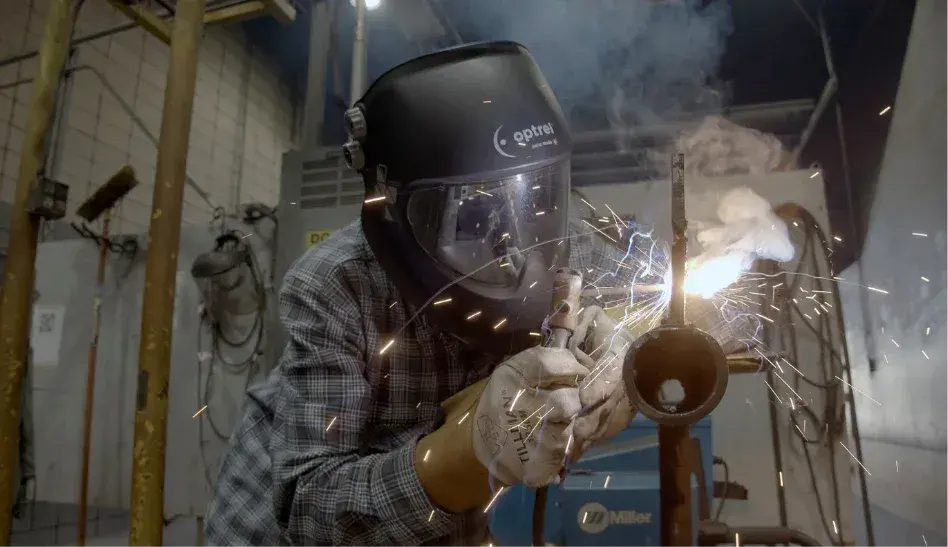
The school's Professional Welder program can be completed in as few as seven months and combines classroom instruction with extensive practical training. Students work with several major welding processes and applications, including:
- Structural welding
- MIG welding
- TIG welding
- Flux-cored arc welding
- Shielded metal arc welding
- Pipe welding
- Plasma cutting
- Carbon arc gouging
The Professional Welder program is offered at TWS campuses in Tulsa, Jacksonville, Houston, and Dallas Metro, giving students in several regional markets access to specialized welding training.
The curriculum is designed around skills that can transfer across several industries. TWS identifies construction, manufacturing, shipbuilding, aerospace, heavy equipment fabrication, oil and gas pipelines, and renewable energy infrastructure among potential areas of employment for welding graduates.
That versatility is important because welding is not confined to a single industry. A worker may apply similar technical foundations in a fabrication shop, construction environment, manufacturing facility, or energy-related setting.
Welding and the Replacement Workforce
The U.S. Bureau of Labor Statistics reports that the United States had approximately 437,700 welding, cutting, soldering, and brazing jobs in 2025. The agency projects approximately 448,100 jobs by 2035.
Although the occupation's projected growth rate is relatively modest, the BLS expects about 40,300 openings annually. Replacement needs account for much of that demand.
For specialized training institutions such as TWS, this creates a clear connection to the workforce. Training new welders can help fill positions created by industry growth and experienced workers leaving the field
Electrical Technologies for a Changing Infrastructure
Electrical work represents another major component of TWS's training model.
The Electrical Technologies program provides seven months of training covering both fundamental electrical concepts and practical applications. Students study areas such as:
- Electrical fundamentals
- Residential wiring
- Commercial wiring
- Motors and lighting
- Electrical distribution
- Solar fundamentals
- National Electrical Code applications
TWS also offers Electrical Lineworker Training, a specialized program that can be completed in 3.5 months. The program adds another pathway for students interested in electrical infrastructure and linework.
The Electrical Technologies program is available at TWS campuses in Tulsa, Jacksonville, and Houston, while Electrical Lineworker Training provides more specialized preparation for work involving electrical power systems and infrastructure.
Together, these programs extend TWS's electrical training beyond building systems to include specialized skills used in the broader electrical infrastructure.
A Growing Need for Electrical Workers
The national outlook reinforces the importance of electrical skills.
BLS projects employment of electricians to increase from approximately 821,000 jobs in 2025 to 896,900 by 2035. The agency also projects about 72,700 openings annually over the decade.
Several factors contribute to that demand. Construction requires electricians for new buildings and infrastructure, while existing electrical systems require installation, maintenance, upgrades, and replacement. The expansion of alternative power systems also creates additional applications for electrical expertise.
This gives electrical training a connection to both traditional construction and emerging infrastructure needs.
HVAC and Refrigeration Support Buildings and Businesses
The third core area is refrigeration technology, encompassing heating, ventilation, air conditioning, and refrigeration.
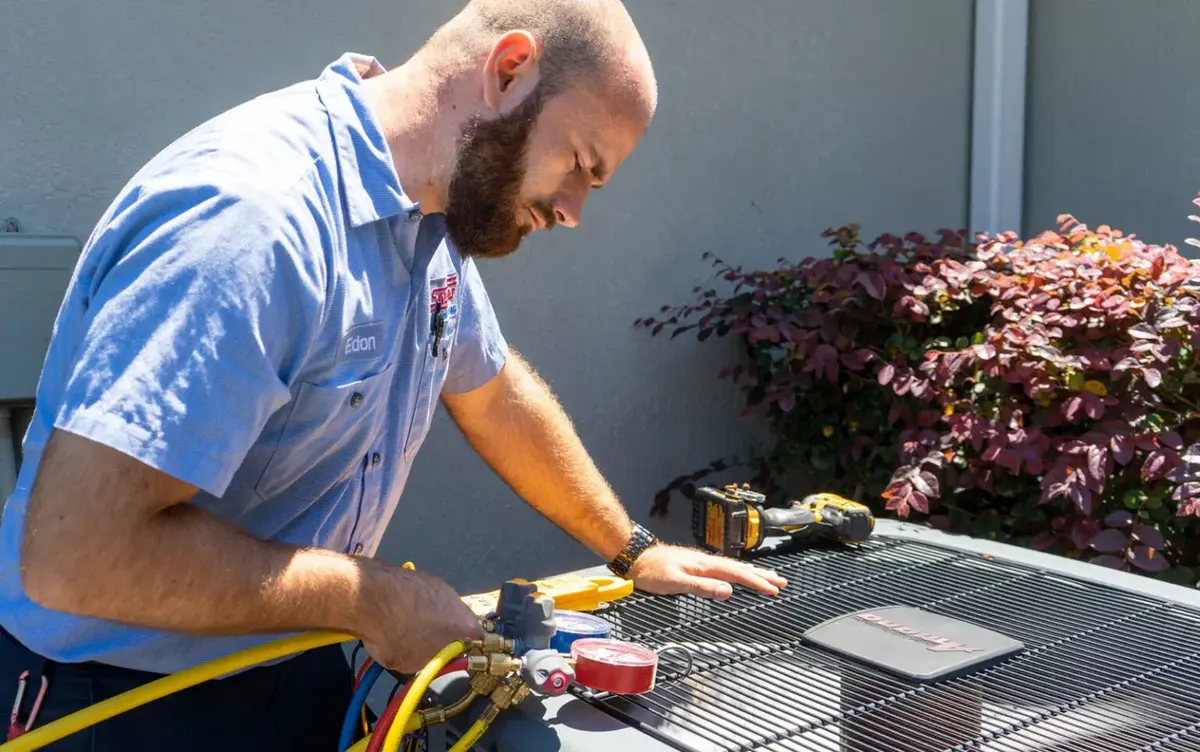
TWS's Refrigeration Technologies program can be completed in seven months. Training combines technical instruction with hands-on experience involving HVAC/R equipment and systems.
Students can prepare for roles such as:
- HVAC/R service technician
- Refrigeration technician
- Commercial refrigeration technician
- Installation technician
The program is offered at TWS campuses in Tulsa, Jacksonville, Houston, Dallas Metro, Atlanta Metro, and Phoenix.
Unlike trades that are concentrated in a particular industry, HVAC/R skills are needed across many types of facilities. Homes, offices, restaurants, retail locations, warehouses, healthcare facilities, and other commercial spaces all depend on functioning climate-control or refrigeration systems.
HVAC/R Demand Extends Across the Economy
BLS projects 11% employment growth for heating, air conditioning, and refrigeration mechanics and installers from 2025 to 2035. The occupation is expected to generate approximately 40,600 openings each year.
Energy efficiency is one factor shaping this workforce. As building owners replace older equipment and install more efficient systems, technicians need the skills to install, troubleshoot, and service increasingly sophisticated equipment.
HVAC/R training is relevant to both new construction and existing buildings that require system installation, maintenance, and upgrades.
How the Multi-Campus Model Connects Training With Regional Markets
A multi-campus structure enables TWS to deliver similar technical training across different parts of the country.
Each campus operates within its own regional workforce environment, reflecting the needs of its local economy.
Tulsa: The Institution's Energy-Sector Roots
Tulsa remains important to TWS because it is where the institution began. Oklahoma's historical relationship with oil and natural gas helped shape the school's original focus on welding.
The campus, therefore, represents more than the oldest TWS location. It connects the institution's current training model with the workforce environment that helped establish it.
Houston: Training Near the Gulf Coast Energy Economy
Houston adds another important dimension. The city and the surrounding Gulf Coast region are major centers for energy, refining, and petrochemical activity.
The U.S. Energy Information Administration reported that the Texas Gulf Coast had more than 5.3 million barrels per day of operable refinery capacity in 2025.
For skilled trades education, proximity to such an economy matters. Welding and electrical skills, for example, can be relevant across construction, fabrication, energy infrastructure, and facility operations.
Jacksonville and Atlanta: Extending Into the Southeast
Jacksonville gives TWS a presence in Florida and the broader Southeast, while the Atlanta Metro campus extends that network into Georgia.
The newer Atlanta campus illustrates the institution's ongoing geographic expansion. Rather than concentrating all training in its original Oklahoma market, TWS has expanded into regions with their own construction, commercial, and infrastructure workforce requirements.
Hands-On Training Is Central to the TWS Model
Skilled trades education has a practical requirement that distinguishes it from many academic fields. Students must learn how to apply technical concepts using actual tools, equipment, systems, and workplace procedures.
TWS therefore emphasizes hands-on instruction across its core programs.
| Program | Examples of Practical Training |
| Professional Welding | Welding processes, structural applications, pipe welding, cutting, and fabrication techniques |
| Electrical Technologies | Wiring, circuits, motors, lighting, distribution systems, and code applications |
| Refrigeration Technologies | HVAC/R systems, equipment, installation, troubleshooting, and refrigeration applications |
This approach allows students to move beyond learning terminology or theoretical concepts. They practice the technical tasks associated with their chosen occupation.
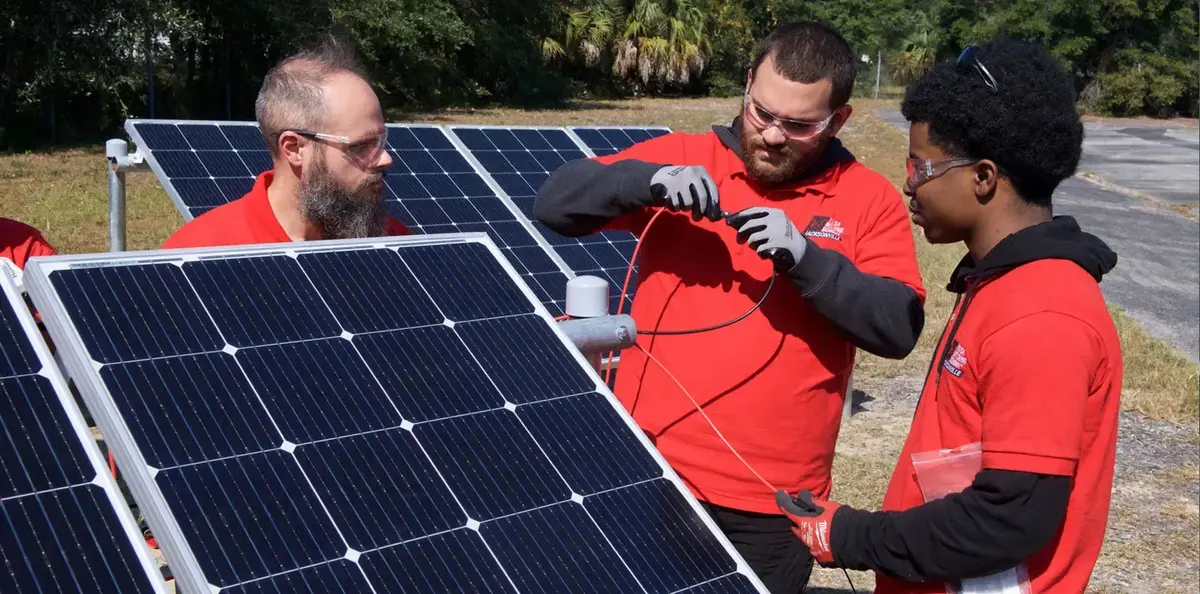
Some programs also incorporate online learning components where appropriate. For example, the Electrical Technologies program allows students to complete certain theory components online while using campus time for practical training.
That hybrid approach can provide flexibility while preserving the hands-on component that trade education requires.
Technical Credentials Extend Beyond the Traditional Degree Path
Skilled-trades education also sits within a broader U.S. workforce increasingly defined by credentials beyond traditional college degrees. The National Center for Education Statistics reports that 45% of the labor force holds a postsecondary degree, while the share rises to 58% when postsecondary certificates, occupational certifications, and occupational licenses are included.
The finding provides context for the role of technical and occupational education. Postsecondary credentials don’t always take the form of a bachelor's or graduate degree. Certificates, licenses, and other occupational credentials can also form part of an individual's preparation for the labor market.
For a specialized institution such as TWS, this broader credential landscape helps explain the place of hands-on trade education alongside traditional higher education pathways.
WeCare Values Connect Technical Skills With Workplace Behavior
Technical competence is only one part of succeeding in a skilled trade. Workers also need to communicate with coworkers, follow workplace expectations, demonstrate reliability, and contribute to a professional environment.
TWS incorporates these expectations into its WeCare Values framework.
The framework focuses on four areas:
- Create an incredible work environment
- Be a force for good
- Be genuine people
- Challenge and have fun
These values form part of the institution's broader culture. For students entering construction, fabrication, electrical, or HVAC/R environments, interpersonal and professional skills can complement their technical preparation.
The approach also reflects the team-oriented nature of many skilled trades. Workers frequently operate alongside other tradespeople, supervisors, contractors, and customers. Technical knowledge must therefore be combined with communication and professional conduct.
Career Services Helps Connect Training to Employment
TWS's workforce pipeline extends beyond technical training through its dedicated Career Services Department, which helps students transition from training to employment.
Career Services provides assistance with several parts of the job search process:
- Resume preparation
- Interview preparation
- Employment searches
- Employer weld-test preparation
- On-campus employer recruitment
- Connections with local and national employers
- Post-graduation career resources
This creates a more structured transition between technical education and the labor market.
For welding students, employer testing can be particularly relevant because some employers require candidates to demonstrate their welding ability before being hired. Having access to preparation and recruitment opportunities can help graduates navigate that process.
The department also continues to provide career resources to eligible alumni, extending employment support beyond graduation.
A Workforce Pipeline Built Around Three Trades
TWS's model can be viewed as a series of connected stages:
- Specialized training: Students select welding, electrical, or HVAC/R training based on their career interests.
- Hands-on skill development: Students practice technical skills using tools, equipment, and systems relevant to their chosen trade.
- Workplace preparation: The WeCare Values framework and career preparation address professional expectations alongside technical skills.
- Employer connections: Career Services connects students and graduates with local and national employment opportunities.
- Continued career support: Eligible graduates can continue using career resources after completing their programs.
This structure aligns with the practical nature of skilled trades. Students develop specific technical competencies they can apply directly in the workplace. Students interested in starting that pathway can also review TWS's admissions information for details about the enrollment process and program entry requirements.
What 77 Years of Specialization Says About TWS's Model
TWS's institutional history demonstrates how a specialized workforce-training model can evolve without abandoning its original purpose.
The school began in 1949 in Tulsa with a focus on welding. More than seven decades later, welding remains central, but students can also train for careers in electrical and HVAC/R. Its campus network has expanded into multiple states and major workforce markets.
The model can be summarized through three characteristics:
| Characteristic | TWS Approach |
| Specialization | Focuses on core skilled trades rather than a broad academic program portfolio |
| Hands-on education | Emphasizes practical training alongside technical instruction |
| Workforce connection | Uses multiple campuses and Career Services to connect training with regional and national employers |
The geographic strategy is equally significant. Tulsa reflects the institution's origins in an energy-centered city. Houston places TWS within one of the country's most important energy and petrochemical regions. Jacksonville and Atlanta expand access across the Southeast, while its other campuses extend the model into additional markets.
After 77 years, TWS remains closely tied to the workforce needs that shaped its founding. Its emphasis on welding, electrical technologies, and HVAC/refrigeration gives the institution a focused role in preparing workers for occupations that support construction, energy, manufacturing, buildings, and infrastructure.
The result is a specialized, multi-state workforce pipeline built around a simple principle that has remained consistent since 1949: skilled workers need practical skills, and employers need people who can put those skills to work.
References:
- Bureau of Labor Statistics. (2026). Electricians. U.S. Department of Labor. Retrieved November 12, 2026, from https://www.bls.gov/ooh/construction-and-extraction/electricians.htm
- Bureau of Labor Statistics. (2026). Heating, air conditioning, and refrigeration mechanics and installers. U.S. Department of Labor. Retrieved November 12, 2026, from https://www.bls.gov/ooh/installation-maintenance-and-repair/heating-air-conditioning-and-refrigeration-mechanics-and-installers.htm
- Occupational Safety and Health Administration. (n.d.). Welding, cutting, and brazing: Hazards and solutions. U.S. Department of Labor. Retrieved November 12, 2026, from https://www.osha.gov/welding-cutting-brazing/hazards-solutions
- Tulsa Welding School. (n.d.). The history of TWS. Retrieved November 12, 2026, from https://www.tws.edu/about-tws/history-of-the-school/
- Tulsa Welding School. (n.d.). Employment assistance for graduates. Retrieved November 12, 2026, from https://www.tws.edu/student-resources/career-services/
- U.S. Energy Information Administration. (2026). Refinery operable capacity. Retrieved November 12, 2026, from https://www.eia.gov/dnav/pet/PET_PNP_UNC_A_%28NA%29_YRL_MBBLPD_A.htm
Frequently Asked Questions (FAQs)
The right program depends on the type of work you want to pursue. Professional welding may suit students interested in fabrication, pipelines, structural steel, shipbuilding, and manufacturing. Electrical Technologies focuses on residential, commercial, and industrial electrical systems, while TWS's separate Electrical Lineworker program prepares students for work involving power lines and electrical infrastructure. Refrigeration Technologies is relevant to students interested in heating, cooling, and refrigeration equipment. Comparing the daily responsibilities and work environments of these occupations can help prospective students identify a suitable training path.
Some skilled trade occupations require credentials beyond completing a training program. Requirements vary by occupation, state, and type of work. For example, most states require electricians to be licensed. Certain welding positions involve performance qualification tests, which may follow employer-specific procedures. HVAC/R technicians who perform covered work involving regulated refrigerants must obtain EPA Section 608 certification. Prospective students should research the requirements for their intended occupation and the state where they plan to work.
Yes. These technical skills are used across different work environments, although specific job requirements vary. Welding skills may be applied in construction, manufacturing, shipbuilding, and energy infrastructure. Electrical training can relate to residential, commercial, and industrial systems, while electrical linework focuses on power transmission and distribution. HVAC/R technicians work in homes, schools, hospitals, restaurants, and other buildings that use heating, cooling, and refrigeration systems. These applications can give skilled trades workers opportunities to pursue different types of work as they gain experience and additional qualifications.
Skilled trades training offers an educational pathway for people who want to develop occupation-specific technical skills. Some TWS programs take less time than a traditional four-year degree. For example, the Electrical Lineworker program takes about 3.5 months, while Professional Welder, Electrical Technologies, and Refrigeration Technologies each take approximately seven months. Other TWS programs take longer, and evening schedules may extend completion times. The best educational pathway depends on an individual's career goals, preferred learning environment, and the qualifications required for the occupation they want to pursue.