2027 How to Transfer Into Online Degree Completion Programs

Co-Founder and Chief Data Scientist
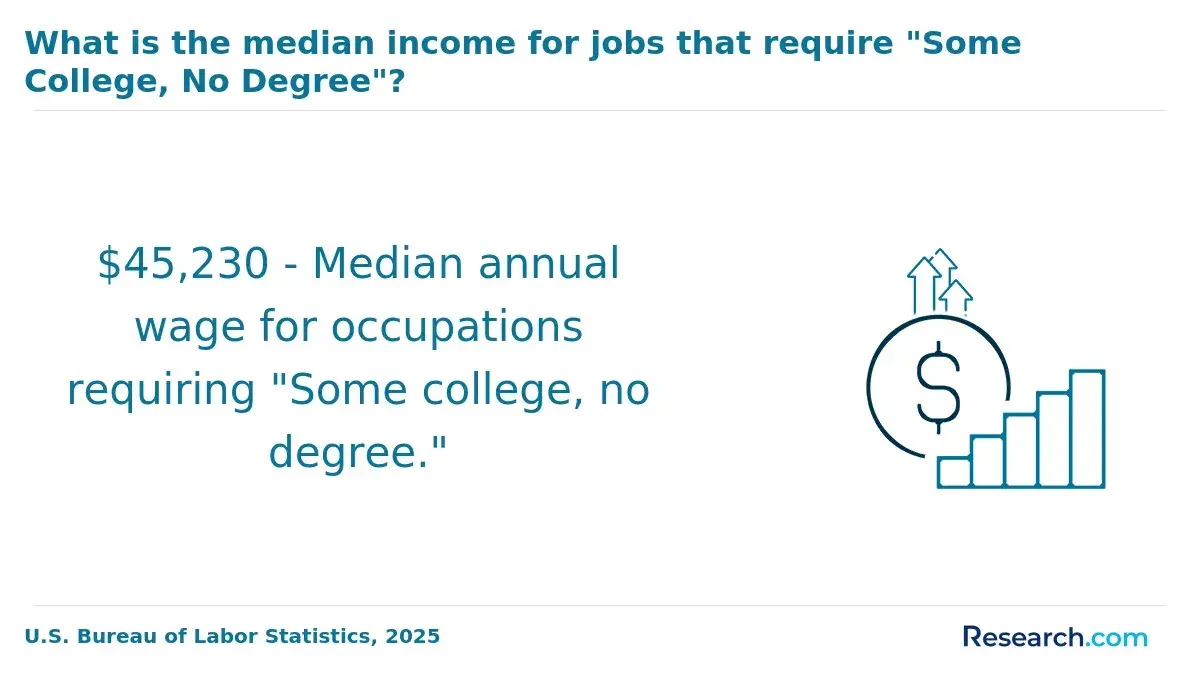
Transferring into an online degree completion program can turn unfinished credits into a bachelor's degree without starting over. That matters because 2024 annual averages from the U.S. Bureau of Labor Statistics show median weekly earnings of $1,543 for bachelor's degree holders versus $1,043 for people with some college but no degree.
This guide is for adults, community college graduates, military learners, and stop-out students who want a practical route back to school. You'll learn how transfer credits, admissions, costs, timelines, online formats, accreditation, and career outcomes work so you can choose a program with fewer surprises.
Key Things You Should Know
- Most online degree completion programs are built for students who already have college credit, often from an associate degree, military training, prior universities, CLEP exams, or workforce-aligned credit recommendations.
- College Board's 2024 pricing data shows large cost differences by institution type, with average published tuition and fees of $11,610 for in-state public four-year colleges and $43,350 for private nonprofit four-year colleges in 2024-25.
- Transfer students should verify institutional accreditation, maximum transfer-credit limits, minimum grade rules, residency requirements, major prerequisites, and whether the degree supports their target career or licensure path.
How do online degree completion programs work for students with previous college credits?
An online degree completion program is usually a bachelor's pathway designed for students who have already earned college credits but have not finished the degree. Instead of repeating general education or lower-division coursework, you apply accepted transfer credits toward the new school's degree requirements, then complete the remaining courses online.
These programs are especially common in business, healthcare administration, criminal justice, psychology, information technology, education-related fields, and liberal studies. The key idea is simple: the school evaluates what you have already completed, decides which credits fit the new degree plan, and tells you what is still required.
Most transfer-credit reviews separate your credits into a few categories so the school can build a clear completion plan. Understanding these categories helps you predict how much time and tuition you may still need.
| Credit type | How it may apply | What to check before enrolling |
| General education credits | Often satisfy writing, math, science, humanities, and social science requirements | Whether the school requires specific general education categories |
| Major-related credits | May count toward prerequisites, core courses, or electives in your chosen major | Whether credits are considered equivalent to required upper-division courses |
| Elective credits | Can reduce total credits needed even if they do not match the major exactly | Whether the degree has enough elective space to accept them |
| Alternative credits | May include military training, CLEP, DSST, AP, IB, industry certifications, or ACE-recommended learning | Whether the college has a published policy for nontraditional credit |
The most important document is the transfer evaluation or degree audit. Do not rely only on a verbal estimate from admissions. Ask for a written breakdown showing accepted credits, remaining requirements, upper-division requirements, and expected graduation timeline.
What transfer credit requirements and GPA do online completion programs typically expect?
Requirements vary by school, but many online bachelor's completion programs expect applicants to have completed some college-level coursework, earned credits from a regionally accredited or otherwise recognized institution, and met a minimum cumulative GPA. A common minimum is around 2.0, though competitive majors, nursing pathways, teacher preparation routes, and business programs may expect higher grades or specific prerequisites.
Transfer credit is not only about the number of credits you have. Schools also review the source, age, level, grade, and relevance of each course. A course may transfer as elective credit but still not satisfy a major requirement.
Pay close attention to these policy details before you apply because they directly affect completion time and cost.
- Minimum grade rules: Many schools accept only courses completed with a C or higher, while some may accept a D for electives but not for major courses.
- Maximum transfer limits: A bachelor's program may allow a large block of transfer credit, but it will still require a certain number of credits to be completed through the new institution.
- Residency requirements: "Residency" usually means credits earned at the institution, not physical campus attendance.
- Course age limits: Technical, business, healthcare, and science courses may expire or lose direct equivalency if the field has changed significantly.
- Accreditation of prior schools: Credits from accredited institutions transfer more predictably than credits from unaccredited providers.
A practical target is to apply with all transcripts ready, including transcripts from schools where you earned only a few credits. Missing transcripts can delay admission, financial aid review, and the official degree plan.
How can I compare online degree completion programs and choose a reputable, accredited school?
Start with accreditation, then compare transfer friendliness, total cost, student support, and career fit. Accreditation matters because it can affect federal financial aid eligibility, graduate school admission, employer recognition, and licensure pathways. Look for institutional accreditation from an agency recognized by the U.S. Department of Education or the Council for Higher Education Accreditation, and check whether your field requires specialized accreditation.
Program choice should also match your long-term direction. If you are still deciding which bachelor's path has durable value, reviewing the best degrees for the future can help you compare majors by labor-market relevance before committing transfer credits to a specific pathway.
The table below summarizes the comparison factors that matter most for transfer students. Use it to separate schools that are convenient from schools that are truly a good fit.
| Factor | Why it matters | Red flag |
| Institutional accreditation | Supports financial aid access, credit recognition, and employer confidence | The school avoids naming its accreditor clearly |
| Transfer evaluation process | Determines how many credits apply and what you still need | You receive only a rough estimate before enrollment |
| Total program cost | Tuition, fees, books, technology costs, and repeated courses affect ROI | The school advertises only per-credit tuition without fees |
| Student support | Online learners often need advising, tutoring, career services, and technical help outside standard hours | Support is available only during limited weekday campus hours |
| Career alignment | The degree should connect to realistic job roles, promotions, licensure, or graduate study | The program makes broad career promises without outcome details |
Before enrolling, ask admissions and academic advising for a written answer to these questions. The answers will show whether the program is organized around transfer-student success or simply marketed as flexible.
- How many of my credits will count toward the degree, and how many will count toward the major?
- Which courses must I repeat, if any, and why?
- How many upper-division credits must be completed at your institution?
- Are online students taught by the same faculty or academic department as campus students?
- What is the total estimated cost to graduate after my transfer credits are applied?
What admission steps, documents, and timelines are involved in transferring into an online completion program?
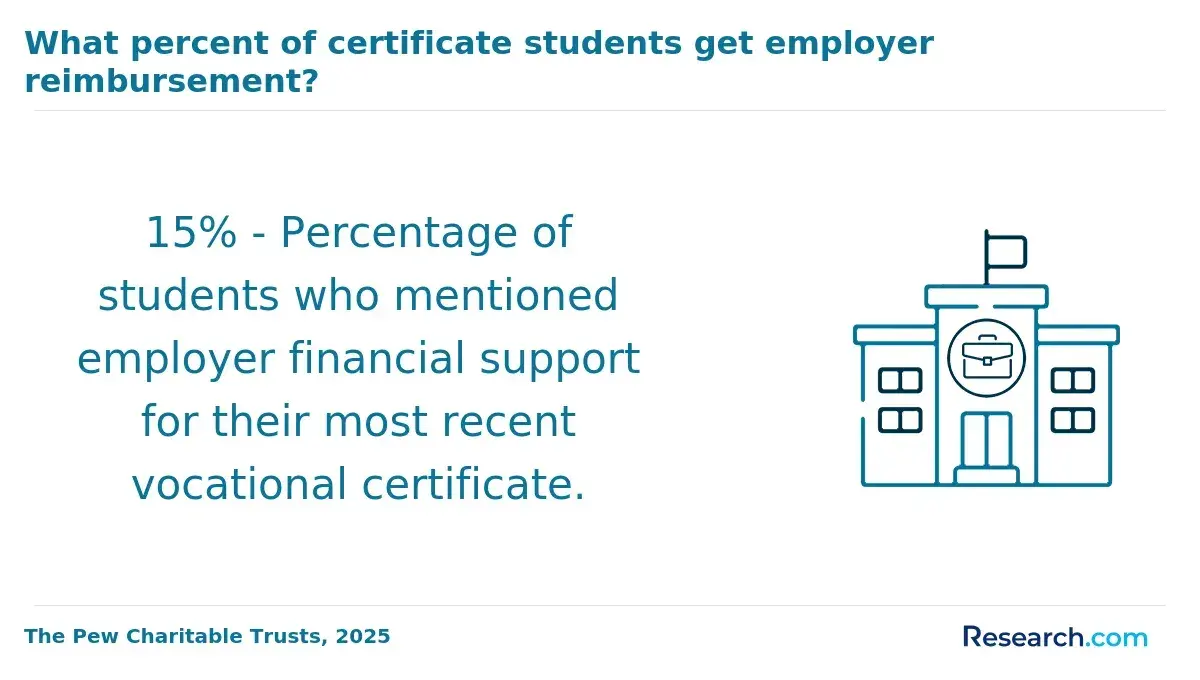
The transfer process is usually straightforward, but it can take several weeks because schools must collect transcripts, evaluate credits, confirm aid eligibility, and assign an academic plan. Start earlier than you think, especially if you attended multiple colleges or need employer tuition assistance approval.
Most applicants follow a sequence like the one below. Completing these steps in order reduces delays and helps you avoid enrolling before you know the real number of remaining credits.
- Choose a short list of accredited online completion programs that match your intended major and career goal.
- Request official transcripts from every college you attended, including community colleges and schools where you did not complete a degree.
- Collect nontraditional-credit documentation, such as military transcripts, CLEP scores, AP scores, industry certification records, or prior-learning portfolios if accepted.
- Submit the transfer application and any required personal statement, resume, or prerequisite form.
- Complete the FAFSA and ask whether institutional scholarships, transfer scholarships, employer benefits, or military education benefits can be used.
- Review the official transfer-credit evaluation before registering for courses.
- Meet with an advisor to map remaining requirements by term, including any capstone, internship, clinical, or field experience.
Some applicants also need to address academic probation history, prior financial balances, disciplinary records, or criminal-background questions for field placements. Students comparing supportive online options after a conviction may find it useful to review resources on online colleges that accept felons, but program admission and placement eligibility still vary by school, state, employer, and profession.
A reasonable planning window is one to three months before the term starts. Programs with rolling admission may move faster, while selective majors, nursing tracks, teacher-preparation routes, and programs requiring field placements can take longer.
How do online degree completion programs differ from traditional campus-based options in format and flexibility?
Online degree completion programs usually prioritize flexibility for working adults, parents, military learners, and students who cannot relocate. The academic degree may be similar to a campus degree, but the delivery format, pacing, advising model, and student experience can differ significantly.
The comparison below highlights the trade-offs. Online learning is not automatically easier; it simply shifts more responsibility to planning, time management, and communication.
| Feature | Online completion program | Campus-based program |
| Course delivery | Often asynchronous, synchronous, or a blend of both | Usually scheduled in-person class meetings |
| Schedule flexibility | Better for students balancing work, caregiving, or distance | Better for students who prefer fixed schedules and in-person structure |
| Student interaction | Discussion boards, video meetings, group projects, messaging, and virtual office hours | Face-to-face classes, campus activities, and in-person networking |
| Hands-on requirements | May require local fieldwork, clinicals, labs, internships, or proctored exams depending on major | Hands-on components are usually arranged near or on campus |
| Best fit | Self-directed learners who need location flexibility | Learners who want campus resources, social connection, and in-person accountability |
Choose online if you can protect weekly study time, communicate proactively, and learn through digital platforms. Choose campus or hybrid study if your major requires extensive labs, you learn better in person, or you need a stronger local network.
What majors, concentrations, and typical coursework are offered in online degree completion pathways?
Online completion degrees tend to be strongest in majors that can be taught effectively through reading, projects, case studies, simulations, data work, writing, and virtual collaboration. Some lab-heavy, clinical, or licensure-heavy majors may be offered online only in hybrid formats.
The table below shows common online completion pathways and the kinds of courses you might take. Use it to connect your previous credits with a realistic major plan rather than choosing only by program title.
| Major or pathway | Common coursework | Good fit for students interested in |
| Business administration | Management, marketing, accounting, finance, operations, business analytics | Supervisory roles, operations, entrepreneurship, corporate advancement |
| Healthcare administration | Healthcare systems, policy, finance, ethics, quality improvement, health informatics | Nonclinical healthcare leadership and administrative roles |
| Information technology | Networking, cybersecurity foundations, databases, systems analysis, cloud concepts | Technical support, systems roles, cybersecurity entry points, IT management |
| Psychology | Research methods, statistics, developmental psychology, abnormal psychology, social psychology | Human services, case management, graduate study, people-focused roles |
| Criminal justice | Criminology, courts, corrections, policing, ethics, public policy | Law enforcement support, corrections, public safety, compliance |
| Liberal studies or interdisciplinary studies | Writing, leadership, ethics, social science, customized electives, capstone projects | Maximizing broad transfer credits and finishing efficiently |
Technology is also changing coursework. More programs now include data literacy, AI-aware decision-making, cybersecurity awareness, project management, and digital communication because employers increasingly expect graduates to work with automated systems and remote teams.
How many credits, semesters, and years does it usually take to finish an online completion degree?
A bachelor's degree in the U.S. commonly requires about 120 semester credits. Your remaining timeline depends on how many credits transfer, how many apply to the major, whether you study full time or part time, and whether the program uses traditional semesters, shorter terms, or competency-based pacing.
As a general planning framework, students with an associate degree often have a shorter route than students with scattered credits. However, a completed associate degree does not automatically mean you have only 60 credits left; some credits may not match the bachelor's major or upper-division requirements.
Use the scenarios below as planning examples, not promises. Your official degree audit is the only reliable source for your personal timeline.
| Transfer-credit situation | Likely remaining credits | Typical completion pattern |
| Associate degree closely aligned with bachelor's major | Often around half of the degree remains | About two years full time or longer part time |
| Associate degree in a different field | General education may transfer well, but major courses may remain | Two to three years depending on prerequisites |
| Some college credit but no credential | Highly variable | Timeline depends on usable credits and course sequencing |
| Military, exam, or workplace-based credit | May reduce electives or general requirements if accepted | Can shorten the path, but rarely replaces all upper-division major work |
Course sequencing can be just as important as credit count. If a required course is offered only once or twice a year, missing it can delay graduation even if you have enough total credits.
What tuition, fees, and financial aid options should transfer students expect in online completion programs?
Cost depends on institution type, residency rules, per-credit tuition, transfer-credit acceptance, fees, textbooks, technology requirements, and how many courses you must retake. College Board's 2024 Trends in College Pricing and Student Aid provides useful national benchmarks for published tuition and fees in 2024-25:
- Public four-year in-state average published tuition and fees: $11,610 per year
- Public four-year out-of-state average published tuition and fees: $30,780 per year
- Private nonprofit four-year average published tuition and fees: $43,350 per year
Those figures are not online-program quotes, but they show why transfer efficiency matters. If one school accepts significantly more applicable credits, a higher per-credit rate may still cost less overall than a cheaper school that requires you to repeat courses.
Common funding options include federal grants, federal loans, state aid, institutional transfer scholarships, employer tuition assistance, military education benefits, payment plans, and credit for prior learning where available. The maximum Federal Pell Grant for 2024-25 is $7,395, but eligibility depends on FAFSA results, enrollment intensity, cost of attendance, and other factors.
If you plan to continue into graduate education after finishing your bachelor's degree, comparing the most affordable masters degrees online can help you think beyond the first credential and avoid stacking unnecessary debt.
Before enrolling, ask for a total-cost estimate after transfer credits are applied. Include tuition, mandatory fees, books, software, exam proctoring, graduation fees, travel for any required campus visits, and the cost of any prerequisite courses.
What careers, job roles, and advancement opportunities can an online completion degree support?
An online completion degree can support entry into new roles, internal promotion, career switching, or eligibility for graduate study. The best outcome usually comes when the major matches your experience and target role. For example, a working medical office coordinator may get more immediate value from healthcare administration than from a broad major with no healthcare focus.
Some students use the bachelor's degree as a stepping stone to graduate programs in business, public administration, counseling, education, healthcare, analytics, or technology. If that is your goal, it is worth comparing the most in demand master's degrees before selecting electives, because prerequisites and undergraduate major choice can affect your next step.
The table below connects common completion majors with potential roles. These are examples of aligned pathways, not guaranteed placements.
| Degree area | Potential job roles | How the degree may help |
| Business administration | Operations coordinator, account manager, project coordinator, supervisor | Builds management, finance, communication, and decision-making skills |
| Healthcare administration | Clinic supervisor, patient services manager, healthcare operations coordinator | Supports nonclinical leadership in healthcare settings |
| Information technology | Systems analyst assistant, IT support lead, junior cybersecurity analyst, database support role | Pairs technical coursework with problem-solving and systems thinking |
| Psychology or human services | Case manager, behavioral health technician supervisor, HR assistant, community services coordinator | Develops understanding of behavior, research, communication, and service systems |
| Criminal justice | Corrections supervisor, probation support role, public safety analyst, compliance assistant | Connects law, policy, ethics, and justice-system operations |
| Interdisciplinary studies | Administrative manager, training coordinator, nonprofit program assistant, generalist roles | Can be efficient for students with broad credits and broad career goals |
For advancement, employers often care about both the degree and evidence of applied skills. Build a portfolio of projects, certifications, internships, leadership examples, or measurable workplace achievements while you study.
How do salaries, job outlook, and licensing or certification requirements align with these degrees?
Salary and job outlook depend on occupation, location, experience, industry, and whether the role requires certification or licensure. A degree completion program can help you meet educational requirements, but it does not guarantee a specific job or salary. BLS May 2024 wage estimates and 2023-33 outlook data are useful benchmarks because they show broad labor-market conditions rather than individual outcomes.
The table below compares several roles that may align with common online completion pathways. Use these figures to evaluate direction, not to predict your exact earnings.
| Occupation | Related degree pathway | Median annual wage | Projected job growth |
| Management analysts | Business administration, management, analytics | $101,190 | 11% |
| Accountants and auditors | Accounting or business with accounting coursework | $81,680 | 6% |
| Human resources specialists | Business, psychology, human resources | $72,910 | 6% |
| Software developers | Information technology, computer science, software-related pathway | $133,080 | 17% |
| Medical and health services managers | Healthcare administration or health services management | $117,960 | 29% |
If compensation is a major factor in your decision, reviewing the best degrees to make money can help you compare earnings potential across fields before selecting a major or concentration.
Licensure is a separate issue. Nursing, teaching, social work, counseling, accounting, and some healthcare roles may require state approval, supervised experience, exams, or specialized accreditation. Before enrolling, contact the program and the relevant state licensing board to confirm whether the online pathway meets requirements in the state where you plan to work.
Certifications can also strengthen employability in nonlicensed fields. Examples include project management, HR, cybersecurity, cloud computing, bookkeeping, medical coding, and analytics credentials. The right certification depends on the job description you are targeting, not simply on what the school promotes.
Other Things You Should Know About
Yes. Most schools can evaluate credits from multiple colleges, but you must submit official transcripts from each institution. Even a small number of missing credits can change your degree plan.
Usually, diplomas do not state the delivery format, but policies vary by school. Ask the registrar whether the transcript or diploma distinguishes online, campus, or extension-program study.
It can be worth it if the school is accredited, accepts enough applicable transfer credits, fits your schedule, and supports a realistic career goal. It may not be worth it if too many credits are lost or the program does not align with your target role.
Many students do, but course load matters. A part-time plan is often more realistic for full-time workers, while full-time enrollment may require reducing work hours or choosing a less demanding term schedule.
References
- Navigating Financial Aid as a Transfer Student | Coalition for College https://www.coalitionforcollegeaccess.org/mycoalition-counselor-all/navigating-fa-as-a-transfer-student
- What Happens After You Apply for an Online Degree? A Complete Step-by-Step Admission Guide (2026) https://www.asha.education/blogs/what-happens-after-you-apply-for-an-online-degree-
- Online Degree Pathways https://www.learndirect.com/category/online-degree-faculty
- The Best Online Degrees for Working Adults [Complete Guide] https://beal.edu/best-online-degrees-for-working-adults/
- How To Choose Between Online Vs. Traditional Education Programs | PLNU https://www.pointloma.edu/resources/accelerated-undergraduate/how-choose-between-online-vs-traditional-education-programs
- How Do I Find the Best Online College for Me? https://www.sophia.org/blog/higher-education/how-to-find-best-online-college/
- The Role of Online Learning in Career Advancement https://www.onrec.com/news/news-archive/the-role-of-online-learning-in-career-advancement
- Admission documents https://sof.edu.pl/en/admission-documents
- Online Bachelor’s Degree Completion Application https://www.hamline.edu/admission-aid/admission/apply/online-bachelors
- 2025 List of Accredited Online Degree Programs https://www.onlineu.com/degrees