2027 CLEP Spanish Practice Test: Test Prep Guide, Dates, Scores, and Tips

Co-Founder and Chief Data Scientist
The CLEP Spanish exam can turn language ability into college credit, but only if your score matches your school's policy. College Board lists the CLEP exam fee at $95, while the College Board's 2024 pricing report shows average 2024-25 in-state public four-year tuition and fees at $11,610, so passing can be a meaningful cost-control move.
This guide is for high school students, college students, adult learners, and military-connected learners who want to use practice tests wisely, understand scores, compare college policies, and decide whether CLEP Spanish fits their degree or career plan.
Key Things You Should Know
- The CLEP Spanish Language exam is computer-based, lasts about 90 minutes, and produces a scaled score from 20 to 80; many colleges use 50 as the minimum passing score, but some require higher scores for more credit.
- CLEP exams are generally available year-round through approved test centers or remote proctoring, so your real "test date" depends on seat availability, proctoring rules, and your college's credit deadline.
- The main value of a CLEP Spanish practice test is diagnostic: it shows whether you are losing points in listening, reading, grammar-in-context, or vocabulary before you pay the $95 exam fee and any local test-center charge.
What is the CLEP Spanish exam and how does the practice test help you prepare?
The CLEP Spanish Language exam is a College Board credit-by-exam option for students who already know Spanish through coursework, heritage-language experience, immersion, travel, work, or self-study. Instead of taking one or more introductory Spanish courses, you take one standardized exam and ask your college to award credit if your score meets its policy.
A CLEP Spanish practice test helps because it turns a broad goal, "I know Spanish," into a measurable readiness check. The real exam tests comprehension and language use in context, not memorized textbook definitions alone. A good practice test shows how well you can understand spoken Spanish, interpret written passages, recognize appropriate grammar, and choose vocabulary that fits the situation.
Students usually benefit from a practice test in three situations: they are not sure whether to register, they need a target score for a specific college, or they took Spanish years ago and need to rebuild speed. The practice-test result should not be treated as a perfect prediction, but it can help you decide whether to test soon or study for several more weeks.
The table below summarizes how the practice-test experience connects to the real exam. Use it to check whether your prep material is testing the same skills the exam is likely to measure.
| Exam feature | What it means for preparation | How a practice test helps |
| Computer-based format | You need to answer efficiently on screen, not just understand Spanish slowly on paper. | It builds pacing and comfort with digital questions. |
| Listening comprehension | You must understand meaning from spoken Spanish without pausing or replaying excessively. | It identifies whether audio speed, accent, or vocabulary is the problem. |
| Reading comprehension | You must understand passages, announcements, and contextual clues. | It shows whether you can infer meaning from context instead of translating word by word. |
| Grammar and vocabulary in context | You need accurate usage, not isolated rule memorization. | It reveals weak areas such as verb tense, pronouns, agreement, and idioms. |
How does CLEP Spanish scoring work and what score do you need for credit?
CLEP Spanish scores are reported on a scaled range from 20 to 80. The score is not the percentage of questions you answered correctly; it is converted so that different exam forms can be compared fairly. This matters because you should not assume that a 50 means "50% correct."
Many colleges use 50 as the minimum score for CLEP credit because that has historically aligned with the American Council on Education's lower-level credit recommendation. However, credit policies vary widely. Some institutions award one semester of credit at 50, more credits at a higher score, or no credit if the exam duplicates a course already taken.
The most important step is to check your own college's CLEP equivalency chart before registering. A score that is excellent for one school may produce fewer credits at another, especially if the school separates first-semester Spanish, second-semester Spanish, and intermediate Spanish into different score bands.
The table below shows common scoring outcomes. It is a decision guide, not a universal policy, because each college controls its own transfer and exam-credit rules.
| Score situation | Possible college outcome | What you should do before testing |
| Below the college minimum | No credit, though the score may still help with placement at some schools. | Ask whether the school uses CLEP for placement, credit, or both. |
| Around 50 | Often considered for introductory Spanish credit. | Confirm whether 50 is enough for your catalog year and degree program. |
| Above the first credit threshold | May qualify for additional credits at schools with tiered policies. | Check whether higher scores can replace more than one course. |
| High score but wrong degree fit | Credit may post as elective credit instead of satisfying a requirement. | Ask an advisor how the credit applies to your major, general education, or language requirement. |
A common mistake is preparing for a generic "passing score" without knowing your school's exact requirement. If your target college requires a higher score for intermediate credit, your study plan should aim above the minimum rather than simply trying to clear 50.
When can you take the CLEP Spanish exam and how do you register and schedule?
CLEP Spanish is not tied to one national test date. Most students schedule the exam when they are ready through a CLEP test center or, when eligible, remote proctoring. Availability depends on the testing location, appointment openings, proctoring requirements, and any deadlines your college sets for posting credit.
Registration usually involves two separate steps: buying the CLEP exam through College Board and scheduling the appointment with the test center or remote proctor. Some test centers also charge a separate administration fee, so the total cost may be higher than the exam fee alone.
Use this sequence to avoid registration problems and missed credit deadlines:
- Find your college's CLEP Spanish policy and confirm the minimum score, credit hours, course equivalency, and deadline for submitting scores.
- Create or sign in to your College Board CLEP account and select the Spanish Language exam.
- Choose where your score should be sent, especially if you want the college to receive the official score automatically.
- Pay the CLEP exam fee and save your registration ticket.
- Schedule with a local CLEP test center or remote proctor, then review ID rules, technology requirements, and arrival instructions.
- After testing, verify that your official score was received and posted correctly to your student record.
Timing is especially important if you need the credit for graduation, financial aid progress, study abroad eligibility, or placement into a higher-level course. Do not schedule so late that a delayed score posting could miss your institution's deadline.
What topics and skills are covered on the CLEP Spanish exam practice test?
A strong CLEP Spanish practice test should reflect the exam's major skill areas: listening, reading, vocabulary, and grammar in context. It should not be limited to flashcards or verb charts, because the exam asks you to use Spanish in realistic communication situations.
The skills below are the ones to check carefully when reviewing practice-test results. They show where many students lose points even when they have taken Spanish before.
- Listening for main ideas: identifying the purpose, speaker attitude, or general meaning of short and longer audio selections.
- Listening for details: recognizing dates, locations, relationships, reasons, and actions mentioned in spoken Spanish.
- Reading comprehension: understanding passages, signs, emails, short articles, and contextual clues without translating every word.
- Grammar in context: choosing correct verb forms, pronouns, prepositions, adjective agreement, commands, and sentence structures.
- Vocabulary and idiomatic usage: selecting words and expressions that fit the level of formality, topic, and situation.
- Cultural context: recognizing common communication patterns and references that affect meaning, while not relying on stereotypes.
The best practice-test review separates "I did not know the Spanish" from "I knew it but ran out of time." Those are different problems. Knowledge gaps require targeted study; pacing problems require repeated timed practice and faster recognition.
One red flag is a practice resource that overemphasizes isolated translation. Translation can help with study, but the exam rewards comprehension and contextual accuracy more than word-for-word conversion.
How can you use CLEP Spanish practice tests and study plans to improve your score?
Practice tests work best when they are used as a cycle: diagnose, study, retest, and adjust. Taking five practice exams without reviewing mistakes is usually less effective than taking two and analyzing every missed question carefully.
Start by taking one timed diagnostic test before you review. This gives you a realistic baseline and prevents you from spending time on topics you already know. Then build a study plan around your lowest-scoring skill area.
A practical CLEP Spanish study cycle looks like this:
- Take a timed diagnostic practice test under quiet, exam-like conditions.
- Sort every missed question by skill area, such as listening detail, reading inference, verb tense, pronouns, or vocabulary.
- Choose two or three high-impact weaknesses instead of trying to fix everything at once.
- Study those topics using audio, readings, grammar exercises, and short daily review sessions.
- Retake a different practice set after several days to check whether the weakness is improving.
- Use the final week for timed mixed practice, not brand-new topics that may increase anxiety.
For many students, the listening section needs the most deliberate preparation. Passive exposure, such as playing Spanish audio in the background, is helpful but not enough. Active listening-pausing, summarizing, predicting, and replaying difficult segments-usually produces better diagnostic value.
Common mistakes include studying only vocabulary lists, ignoring audio until the final week, and using untimed practice for too long. A better approach is to combine short daily input with scheduled full-length practice so that accuracy and speed improve together.
How does earning CLEP Spanish credit affect your college degree requirements and timeline?
CLEP Spanish credit can shorten a degree plan when it replaces required language courses, fulfills a general education requirement, or adds elective credits that count toward graduation. The financial impact depends on the college's tuition model, how many credits are awarded, and whether the credit actually applies to your degree audit.
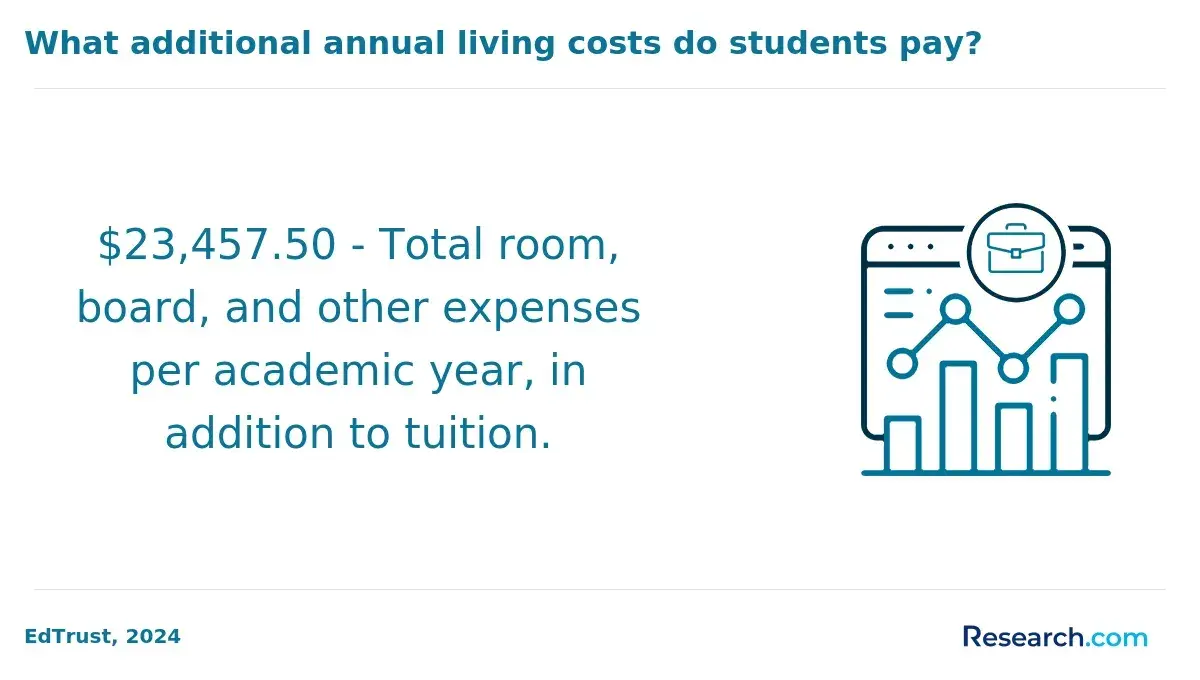
The cost trade-off can be significant. The College Board's 2024 Trends in College Pricing report lists average 2024-25 tuition and fees at $11,610 for in-state students at public four-year institutions. A CLEP exam fee is much smaller than a full semester of tuition, but the savings only matter if the credit reduces the courses you would otherwise need to pay for.
Before relying on CLEP Spanish to accelerate graduation, ask your advisor these questions:
- Will the CLEP Spanish score satisfy my specific language requirement, or only post as elective credit?
- How many credits can I receive at my target score level?
- Will CLEP credit affect my full-time status, scholarship rules, athletic eligibility, or financial aid progress?
- Can CLEP credit duplicate Spanish courses I already completed or plan to take?
- Is there a deadline for earning exam credit before graduation or transfer evaluation?
CLEP can be especially useful for students trying to reduce the total cost of an undergraduate degree, alongside transfer credit, community college coursework, and affordable online bachelor's degree programs. The key is not just earning credit, but earning credit that fits your program map.
Students should also consider the academic trade-off. If your major requires advanced Spanish, skipping the introductory sequence may save time, but you may still need conversation, writing, or literature courses to build higher-level proficiency.
Which accredited U.S. colleges accept CLEP Spanish credits, and how do policies differ?
Many accredited U.S. colleges accept CLEP Spanish, but policies differ by institution, degree program, and catalog year. A college may accept CLEP generally but limit Spanish credit, cap total exam credits, require a minimum score above 50, or apply the credit only to electives.
The table below gives examples of how policy differences can affect the same exam score. Always verify the current catalog and registrar policy at the institution where you will use the credit.
| Policy factor | How colleges may differ | Why it matters |
| Minimum score | Some schools follow a 50 threshold, while others use higher score bands for additional credit. | Your practice-test target should match the credit level you need. |
| Credit hours awarded | One school may award a single course; another may award multiple lower-division courses. | The same score can have different timeline and cost effects. |
| Course equivalency | Credit may post as SPAN 101, SPAN 101-102, intermediate Spanish, or elective language credit. | Only certain equivalencies may satisfy your requirement. |
| Credit caps | Schools may limit the total number of CLEP or prior-learning credits. | Other exam or transfer credits could reduce the value of CLEP Spanish. |
| Program restrictions | Some majors or colleges within a university may have stricter rules. | A university-wide CLEP policy may not be enough for your major. |
Accreditation matters because it affects transferability, financial aid eligibility, and employer recognition. CLEP credit should be used at an institution that is properly accredited and transparent about how exam credit appears on the transcript.
Military-connected students should pay special attention to exam funding, transfer rules, and deployment-friendly scheduling. If you are comparing institutions, a military online college may provide clearer support for CLEP, Joint Services Transcript evaluation, and flexible academic planning.
The safest approach is to request written confirmation from the registrar or transfer-credit office before testing. Advisor conversations are helpful, but the registrar's policy is usually what determines how credit posts.
Can CLEP Spanish credits be earned through online programs, and how do they compare with campus options?
CLEP Spanish credit can be used in many online degree programs if the institution accepts CLEP and the credit fits the student's degree plan. The testing itself may be completed through approved test centers or remote proctoring when available, but the credit decision belongs to the college.
Online programs and campus programs often evaluate CLEP in similar ways because the registrar applies one institutional policy. The difference is usually in advising access, scheduling flexibility, proctoring logistics, and how quickly the student can apply the credit to a degree plan.
The table below compares online and campus considerations. Use it to decide which format better matches your timeline and support needs.
| Factor | Online program consideration | Campus program consideration |
| Scheduling | May pair well with remote advising and asynchronous coursework. | May offer convenient on-campus testing centers. |
| Advising | Students may need to be proactive about email documentation and degree audits. | Students may have easier access to in-person advising or language departments. |
| Credit posting | Often handled centrally by the registrar, but processing time can affect accelerated terms. | May align with semester deadlines and campus enrollment cycles. |
| Language development | May require extra effort to practice speaking and listening outside class. | May provide clubs, conversation tables, and in-person tutoring. |
Students pursuing accelerated credentials should be especially careful. CLEP Spanish may help satisfy general education or elective requirements, but it will not replace every course in a compressed program. If your goal is a faster credential, compare CLEP-friendly degree maps with options such as 1-year associate degree programs online and ask how prior learning is evaluated.
Online can be the better fit if you need flexibility, already have strong Spanish skills, and can manage self-study. Campus may be better if you need structured speaking practice, tutoring, or direct support from a language department.
How can CLEP Spanish credit support language-related career paths, salaries, and job outlook?
CLEP Spanish credit is not a professional certification, but it can support degree progress for students interested in bilingual roles, education, healthcare support, public service, business, social services, tourism, translation, or interpretation. Employers usually care about usable proficiency, not just transcript credit, so CLEP should be one piece of a broader skill plan.
For career planning, the strongest value comes from combining Spanish ability with another marketable skill: teaching, healthcare administration, customer success, legal support, accounting, human resources, marketing, or public-sector service. Bilingual ability can make a candidate more useful in roles that serve Spanish-speaking communities, but job requirements vary by employer and region.
The U.S. Bureau of Labor Statistics reported a May 2024 median annual wage of $59,440 for interpreters and translators. That figure should be read as an occupational context, not a CLEP outcome; many interpreter and translator roles require high proficiency, specialized vocabulary, ethics training, certification, or experience beyond introductory college credit.
The table below connects Spanish credit to possible career directions. It shows where CLEP may help academically and where additional preparation is usually needed.
| Career direction | How Spanish can help | Additional preparation often needed |
| Healthcare support or administration | Improves communication with patients and families in some settings. | Medical terminology, privacy rules, role-specific training, and employer language assessment. |
| Education | Supports work with bilingual students, families, or language programs. | State licensure, teaching degree requirements, field experience, and possibly bilingual endorsements. |
| Business and customer success | Helps serve Spanish-speaking clients and markets. | Sales, CRM, writing, industry knowledge, and professional communication skills. |
| Translation and interpretation | Provides a foundation for language study and transcript evidence. | Advanced proficiency, specialized training, certification options, and practical experience. |
| Public service and nonprofit work | Supports outreach, intake, case support, and community engagement. | Cultural competence, documentation skills, compliance training, and agency-specific requirements. |
Spanish-related roles may also appeal to students who prefer focused, analytical, or lower-interruption work. For example, translation, data-supported customer operations, and certain writing-heavy roles can overlap with lists of good-paying jobs for introverts, though each workplace is different.
A common mistake is assuming that CLEP credit proves workplace fluency. If your career goal requires Spanish, build a portfolio of evidence: coursework, oral proficiency ratings, internships, volunteer interpreting experience, writing samples, or employer language assessments.
What criteria should you use to choose trustworthy CLEP Spanish prep resources and courses?
Trustworthy CLEP Spanish prep resources should be aligned with the actual exam, transparent about what they cover, and honest about limitations. Be cautious with any course that promises a guaranteed score, claims to have the exact live exam questions, or focuses only on shortcuts.
Use the criteria below when choosing a book, app, tutor, course, or practice-test platform. The right resource should help you identify weaknesses and improve them, not just give you a score.
- Exam alignment: It should include listening, reading, vocabulary, and grammar-in-context practice rather than only flashcards.
- Answer explanations: It should explain why the correct answer works and why the distractors are wrong.
- Timed practice: It should let you practice pacing under realistic conditions.
- Audio quality: Listening materials should be clear, varied, and close enough to exam-style Spanish to build readiness.
- Diagnostic reporting: It should break results into skill categories so you can study efficiently.
- Current policies: It should remind you to verify credit rules with your own college instead of assuming a universal passing score.
- Ethical claims: It should avoid score guarantees, leaked-test claims, or unrealistic timelines.
Prep should match your goal. A student trying to earn three elective credits may need a different intensity level than a student trying to bypass several semesters of language study. Likewise, CLEP preparation is undergraduate exam prep; it is not a substitute for professional certification, graduate admissions planning, or advanced academic decisions, such as comparing affordable online PhD programs.
The best final decision rule is simple: choose the resource that gives you the clearest feedback loop. If a practice test tells you exactly what to fix and gives you credible material to fix it, it is more valuable than a larger question bank with weak explanations.
Other Things You Should Know About
It depends on your starting level. Students with recent coursework or regular Spanish use may need a few weeks of targeted review, while students returning after several years may need a longer plan focused on listening, grammar, and timed reading.
It can still be challenging. Heritage speakers may understand spoken Spanish well but lose points on formal grammar, spelling-related recognition, academic vocabulary, or reading passages. A diagnostic practice test is the best way to find gaps.
Yes, but the College Board requires a waiting period before retaking the same CLEP exam. Check the current retake rule before scheduling, and use the waiting period to study the specific skills that caused the lower score.
The CLEP Spanish Language exam focuses on listening and reading-based multiple-choice tasks. Colleges that need to place you into advanced Spanish may still require a separate placement, speaking, or writing assessment.
References
- What is the CLEP Spanish Exam/Certification? https://www.examedge.com/college-placement/clep/spanish/clep-spanish-practice-tests-additional-test-info.cfm
- How learning a second language helps you get hired, promoted, and paid more https://preply.com/en/blog/b2b-how-learning-a-second-language-helps-with-jobs/
- I am a college student and need a few credits to get my degree. Can I earn those credits with CLEP exams? https://helpdesk.modernstates.org/support/solutions/articles/151000193393-i-am-a-college-student-and-need-a-few-credits-to-get-my-degree-can-i-earn-those-credits-with-clep-ex
- About the Spanish Language CLEP* Exam | InstantCert https://www.instantcert.com/clep/about-the-spanish-language-clep-exam/
- What Is CLEP? Cost, Benefits, Alternatives & Is It Worth It? (2026 Guide) https://www.straighterline.com/blog/what-is-clep-explanation-and-alternatives
- Career in Foreign languages https://institutospanien.org/blog/career-in-foreign-languages/
- CLEP Policy & Exam Scores https://lowercolumbia.edu/testing-center/clep/policy-scores/
- 5 Foreign Languages Especially Valued by Employers https://e-kariera.vistula.edu.pl/5-foreign-languages-especially-valued-by-employers
- Spanish Proficiency Exam: Complete Guide to DELE, SIELE & CLEP (2026) - Learn languages with italki https://www.italki.com/en/blog/spanish-proficiency-exam
- Sophia’s Guide to CLEP https://www.sophia.org/blog/higher-education/sophias-guide-to-clep/