2027 AP Exam Dates: Test Prep Guide, Dates, Scores, and Tips

Co-Founder and Chief Data Scientist
AP exam planning is a timing decision as much as a study decision: the 2026 regular testing window runs from May 4 to May 15, and some exams require digital tasks before test day. College Board reported that more than 5 million AP Exams were taken in 2024, showing how widely AP scores influence course placement, college credit, and admissions context.
This guide is for students, parents, counselors, and independent learners who need clear dates, score rules, cost details, and a practical preparation plan.
Key Things You Should Know
- 2026 AP Exams are scheduled for May 4-8 and May 11-15, with late testing generally handled during a separate May window for approved conflicts.
- AP scores use a 1-5 scale; many colleges consider 3, 4, or 5 for credit or placement, but each institution and department sets its own policy.
- The College Board's 2025-26 fee schedule lists the standard AP Exam fee at $99 per exam for schools in the U.S., U.S. territories, Canada, and DoDEA schools, before school-level charges or fee reductions.
When are the AP exam dates and schedule?
The regular 2026 AP exam schedule runs across two school weeks in May. Most morning exams begin at 8:00 a.m. local time, most afternoon exams begin at 12:00 p.m. local time, and some exams with unusual administration needs may use a different start time set by the school.
The table below summarizes the regular testing schedule so students can identify exam conflicts, plan review time, and avoid stacking heavy study sessions immediately before back-to-back tests.
| Date | Morning exams | Afternoon exams |
| Monday, May 4, 2026 | AP Biology; AP Latin | AP European History; AP Microeconomics |
| Tuesday, May 5, 2026 | AP Chemistry; AP Human Geography | AP United States Government and Politics |
| Wednesday, May 6, 2026 | AP English Literature and Composition | AP Comparative Government and Politics; AP Computer Science A |
| Thursday, May 7, 2026 | AP African American Studies; AP Statistics | AP Japanese Language and Culture; AP World History: Modern |
| Friday, May 8, 2026 | AP Italian Language and Culture; AP United States History | AP Chinese Language and Culture; AP Macroeconomics |
| Monday, May 11, 2026 | AP Calculus AB; AP Calculus BC | AP Music Theory; AP Seminar |
| Tuesday, May 12, 2026 | AP French Language and Culture; AP Precalculus | AP Environmental Science; AP Physics 2: Algebra-Based |
| Wednesday, May 13, 2026 | AP English Language and Composition; AP German Language and Culture | AP Physics C: Mechanics |
| Thursday, May 14, 2026 | AP Art History; AP Spanish Language and Culture | AP Computer Science Principles; AP Physics C: Electricity and Magnetism |
| Friday, May 15, 2026 | AP Physics 1: Algebra-Based; AP Spanish Literature and Culture | AP Psychology |
Late testing is not an open make-up option for convenience. It is usually reserved for approved conflicts such as two exams at the same time, school closures, illness, religious observance, or other circumstances handled by the AP coordinator.
Students taking AP Art and Design, AP Computer Science Principles, AP Seminar, or AP Research should also track portfolio or performance-task deadlines in AP Classroom. These are not optional add-ons; missing a required task can affect the final AP score even if the written exam is completed.
How do AP exam scores work?
AP scores are reported on a 1-5 scale, where 5 means "extremely well qualified" and 3 means "qualified" in the College Board's score interpretation. Colleges decide independently whether a score earns credit, placement, both, or neither.
The score scale is simple on the surface, but it represents a converted composite score from multiple-choice sections, free-response questions, and, for some courses, performance tasks or portfolios. The table below explains what each score generally signals and how students should use it when reviewing college policies.
| AP score | College Board interpretation | How students should read it |
| 5 | Extremely well qualified | Often the strongest score for credit or advanced placement, but policies still vary by college and major. |
| 4 | Well qualified | Commonly considered for credit at many colleges, especially for introductory courses. |
| 3 | Qualified | May earn credit at some institutions, though selective colleges and STEM departments may require 4 or 5. |
| 2 | Possibly qualified | Usually less likely to earn credit, but it may still show course exposure in a broader academic record. |
| 1 | No recommendation | Rarely useful for credit and may signal that the student should revisit prerequisite material. |
Scores are typically released in July through the student's College Board account. If you plan to use AP credit to build a faster degree path, compare each college's AP credit policy with your intended major rather than assuming every 4 or 5 will shorten your timeline.
How should you prepare for AP exams?
Good AP preparation starts with the exam description, not with random practice questions. Each AP course has a Course and Exam Description that explains the units, skills, question types, and scoring expectations, which helps students avoid spending too much time on topics that have limited exam weight.
A practical preparation plan should combine content review, timed practice, and score analysis. Use the sequence below to create a study routine that is realistic enough to follow while still giving you time to improve weak areas.
- Download or review the official course framework for each AP subject and mark the units that carry the most exam weight.
- Take a diagnostic practice set early so your plan is based on evidence rather than confidence or anxiety.
- Build a weekly schedule that separates content review, multiple-choice drills, free-response practice, and error review.
- Practice in the correct exam format, especially if your AP subject uses a digital or hybrid digital administration.
- Complete at least one timed full-length practice exam before April so you can adjust pacing before the final review period.
- Review mistakes by category, such as content gap, misread prompt, weak evidence, calculation error, or time-management issue.
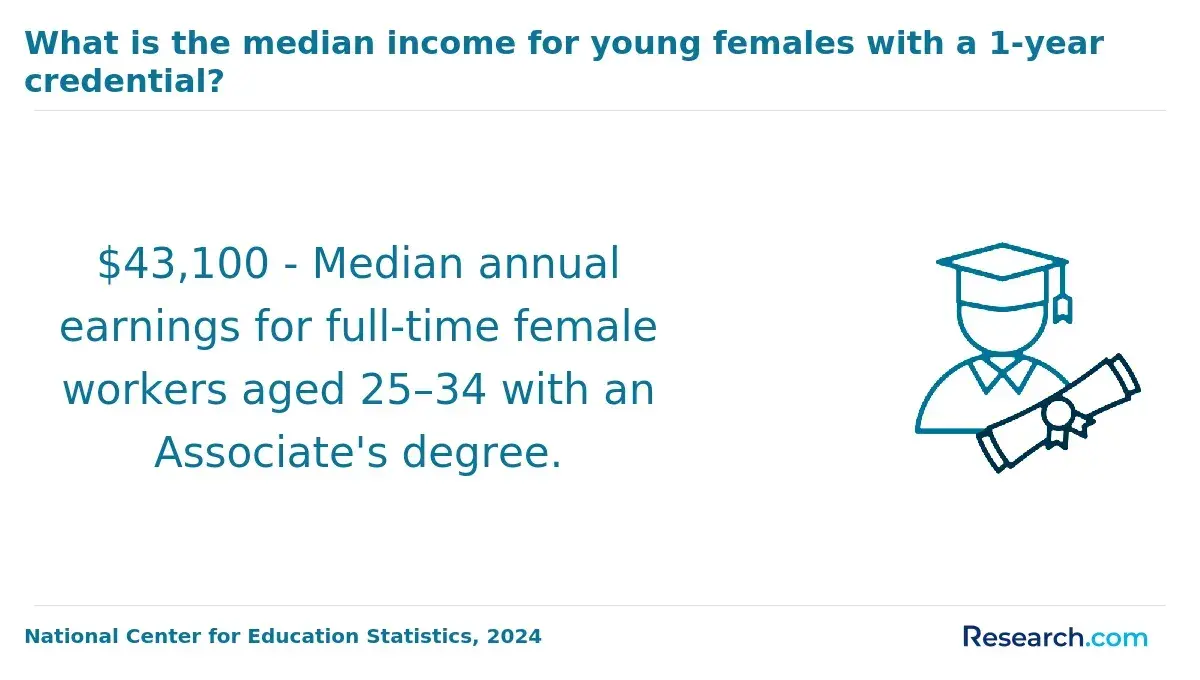
Students taking several AP courses should be especially careful with time. If AP credit is part of a broader plan to finish college faster, compare it with options such as accelerated programs, because AP credit can help with general education requirements but may not replace major-specific sequences.
What AP subjects are offered?
The AP program includes courses across English, history, social science, math, computer science, sciences, world languages, arts, and interdisciplinary research. The best AP subjects for you are not always the ones with the highest pass rates; they are the ones that match your strengths, college goals, and likely major requirements.
The table below groups common AP subjects by academic area so students can plan a balanced course load rather than choosing AP classes only because friends are taking them.
| Academic area | Examples of AP subjects | Best fit for students interested in |
| English | AP English Language and Composition; AP English Literature and Composition | Writing, humanities, communications, law, journalism, and college-level reading skills. |
| Math and computer science | AP Calculus AB; AP Calculus BC; AP Precalculus; AP Statistics; AP Computer Science A; AP Computer Science Principles | Engineering, data, business analytics, economics, technology, and quantitative majors. |
| Sciences | AP Biology; AP Chemistry; AP Environmental Science; AP Physics 1; AP Physics 2; AP Physics C | Health sciences, engineering, environmental studies, research, and laboratory-based majors. |
| History and social sciences | AP U.S. History; AP World History: Modern; AP European History; AP U.S. Government and Politics; AP Psychology; AP Economics | Public policy, education, social science, business, law, and civic leadership. |
| World languages and cultures | AP Spanish Language and Culture; AP French Language and Culture; AP Chinese Language and Culture; AP Japanese Language and Culture; AP Latin | Language placement, international studies, translation, diplomacy, and cultural studies. |
| Arts and research | AP Art History; AP Music Theory; AP Art and Design; AP Seminar; AP Research | Creative portfolios, academic research, design, music, and interdisciplinary college programs. |
One current trend is the rising value of analytical and technical fluency across many majors, even outside traditional STEM fields. Students who prefer independent, focused work may want to explore AP Computer Science, AP Statistics, AP Psychology, or AP Economics alongside long-term options such as high-paying careers for introverts.
How do AP classes and exams differ?
An AP class is the high school course; an AP exam is the standardized assessment that may lead to a score colleges can evaluate for credit or placement. You can do well in an AP class but still need targeted exam practice, because classroom grades and AP scores measure related but different things.
The distinction matters because students sometimes overload their schedules assuming that taking more AP classes automatically improves college outcomes. The better strategy is to choose AP courses that show appropriate rigor, support your future major, and leave enough time to earn strong grades and prepare for the exams.
The table below compares AP classes and AP exams so students can see what each one actually contributes to academic planning.
| Category | AP class | AP exam |
| Primary purpose | Provides college-level high school coursework. | Measures performance against national AP standards. |
| Reported where | Appears on the high school transcript if the school offers the course. | Reported through College Board score reporting. |
| Impact on GPA | May be weighted by the high school, depending on local policy. | Does not directly change the high school GPA. |
| College credit potential | Usually does not earn credit by itself. | May earn credit or placement depending on college policy. |
| Who controls the result | Teacher, school grading policy, assignments, and exams. | College Board scoring process and exam rubrics. |
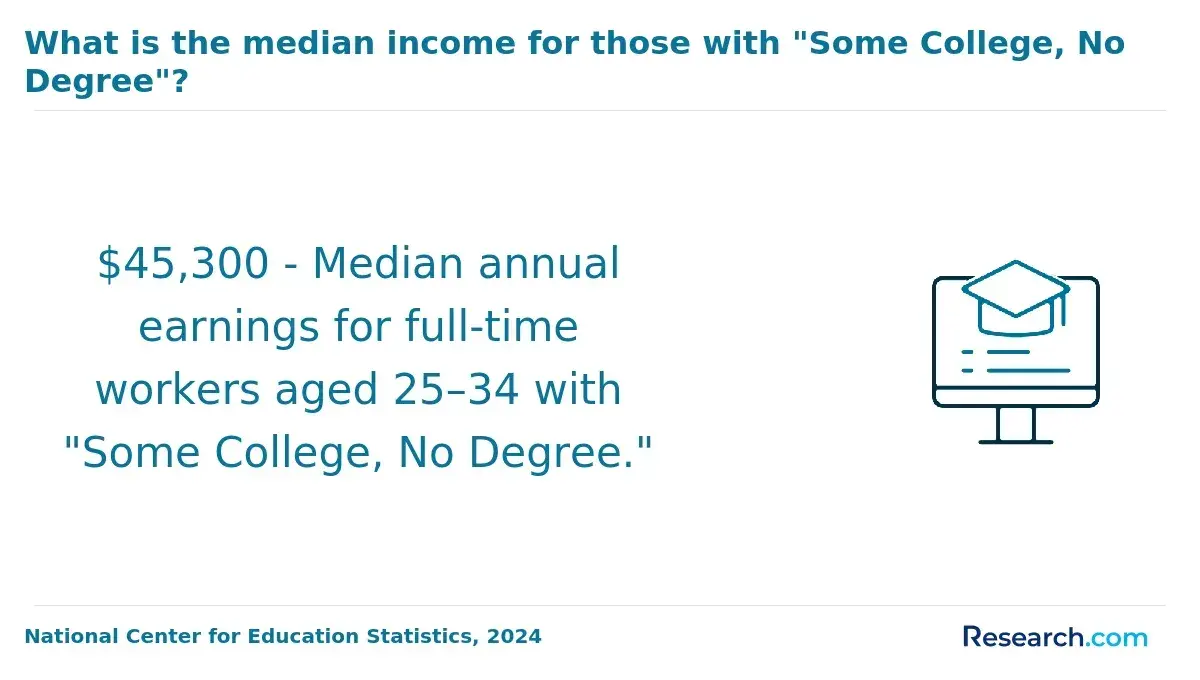
Think of AP as one part of a longer education strategy. It can support undergraduate placement, but it is not a substitute for later credentials such as certificates, professional licensure, or master's degrees online when a career path requires advanced training.
What are AP exam registration requirements?
Most students register for AP exams through their school's AP coordinator after joining the correct AP Classroom section with a join code. Registration deadlines, payment deadlines, and cancellation procedures can vary by school, so students should not rely only on the national exam calendar.
Before assuming you are registered, confirm each item below. These steps are especially important for homeschooled students, online students, and students taking an AP exam without taking the corresponding AP class at their school.
- Confirm that you are enrolled in the correct AP Classroom section for each exam, including the right course level such as Calculus AB versus Calculus BC.
- Ask your AP coordinator for the school's payment deadline, late-order deadline, cancellation policy, and any local administrative fees.
- If you need accommodations, work with the school's SSD coordinator early because accommodation approval is handled before exam week.
- If you are homeschooled or your school does not offer AP Exams, contact nearby schools or AP Services early in the school year to locate a school willing to test outside students.
- Check whether your exam is paper, digital, or hybrid digital, then complete any device readiness checks required by the school.
A common mistake is assuming that joining an AP class automatically means the exam has been ordered. The safer approach is to ask for written confirmation of every exam order before the final school deadline.
How much do AP exams cost?
AP exam costs are set nationally but collected locally, so your final bill may include school-specific administrative charges or state subsidies. The College Board's 2025-26 fee schedule lists these base amounts for standard AP testing.
- $99 per exam at schools in the U.S., U.S. territories, Canada, and DoDEA schools
- $129 per exam at schools outside the U.S., U.S. territories, Canada, and DoDEA schools
- $147 per AP Seminar or AP Research exam
- $40 late order fee, when applicable
- $40 unused or canceled exam fee, when applicable
Fee reductions may be available for eligible students, and some states, districts, or schools provide additional support. Because policies vary, families should ask the AP coordinator what the out-of-pocket cost will be before the school's payment deadline.
When comparing AP costs with later college expenses, remember that AP exams are relatively small costs but only valuable if the score applies to your degree plan. Families planning for undergraduate and graduate study can also compare long-term affordability using resources such as what is the cheapest online master's degree program, especially if minimizing total education cost is a priority.
How are AP exams scored and weighted?
AP exams are scored through a combination of machine-scored multiple-choice questions and human-scored free-response questions, with rubrics designed to measure specific skills. The raw points are converted into a composite score, and that composite is translated into the final 1-5 AP score.
Weighting differs by subject, so students should study the exam format for each course instead of using the same strategy for every AP. The table below shows how different components can shape preparation priorities.
| Exam component | How it is scored | Why it matters for preparation |
| Multiple-choice questions | Usually scored by computer based on correct answers. | Requires content accuracy, pacing, and careful elimination strategies. |
| Free-response questions | Scored by trained readers using subject-specific rubrics. | Rewards clear reasoning, evidence, process, and alignment with the prompt. |
| Performance tasks | Used in selected AP courses and scored according to course rubrics. | Requires long-term planning because the work may be due before exam day. |
| Portfolios | Used in AP Art and Design and evaluated through submitted work. | Requires sustained development, revision, and on-time digital submission. |
The most important scoring insight is that AP exams do not reward perfection; they reward enough demonstrated mastery to meet a score threshold. That means a student aiming for a 4 should still practice high-value free-response formats rather than spending all review time chasing obscure details.
How do AP scores affect college credit?
AP scores can affect college credit, course placement, tuition planning, and time to degree, but there is no universal AP credit rule. One college may give credit for a 3 in AP Psychology, while another may require a 5 or offer only placement into a higher-level course.
Students should evaluate AP credit by major, not only by college. A biology major and a business major at the same university may receive different practical value from the same AP Chemistry, AP Statistics, or AP Calculus score.
Use this checklist before counting AP credit as part of your college plan.
- Search the college's AP credit policy for the exact exam name and score requirement.
- Check whether the score earns credit hours, course equivalency, placement, or elective credit only.
- Confirm whether your intended major accepts the credit toward prerequisites or only toward general education.
- Ask whether using AP credit could affect scholarship requirements, course sequencing, or professional school prerequisites.
- Compare the value of skipping a course with the risk of entering a higher-level class underprepared.
AP credit can be especially helpful for students trying to reduce time in college or combine credits with accelerated bachelor's degrees. Still, the best decision is not always to skip the class; in math, science, and language sequences, retaking a foundational course may be wise if your major depends on deep mastery.
What AP study tips improve exam performance?
The best AP study strategies are specific, measurable, and tied to the exam format. Passive rereading may feel productive, but performance usually improves more when students practice retrieval, write timed responses, and analyze mistakes.
Use the tips below to improve exam performance without turning review season into last-minute cramming.
- Start with released or official-style questions so your practice matches the language and difficulty of the real exam.
- Turn every missed question into an error log that identifies the reason for the mistake, not just the correct answer.
- Practice free-response questions under time limits, then score them against the rubric before reading sample responses.
- Use short, frequent review sessions for memorization-heavy subjects such as biology, psychology, history, and languages.
- For math, science, and economics exams, write out the steps of your reasoning because partial credit often depends on process.
- Use AI tools carefully for explanation and quiz generation, but do not rely on them as your only source because they can produce incorrect answers or oversimplified rubrics.
- Simulate exam-day conditions at least once, including calculator rules, digital tools, scratch work, breaks, and pacing.
Common mistakes include studying only favorite units, ignoring free-response rubrics, starting timed practice too late, and failing to check technology requirements for digital exams. The better approach is to identify the score you need for your target colleges, then build a review around the sections most likely to move you from your current practice score to that goal.
Other Things You Should Know About
Yes, but you need a school willing to administer the exam. Homeschooled students, online students, and students from schools without AP testing should start looking early because schools are not required to test outside students.
Bring an approved photo ID if your school requires it, several sharpened No. 2 pencils for paper exams, approved pens, an approved calculator if allowed, and any school-required admission materials. Do not bring prohibited devices or notes into the testing room.
Yes. Score cancellation permanently removes the score from your record, while withholding prevents a score from being sent to a specific college. These options have deadlines and forms, so students should review the rules before acting.
Yes. AP exams are offered once per year, so a retake usually means testing the following May again. Colleges generally see only the scores you choose to send, but students should confirm score-reporting rules for each institution.
References
- AP Courses https://www.fusionacademy.com/academic-programs/ap-courses/
- 5 Last-Minute Study Tips for Acing Your AP Exam https://www.engeniuslearning.com/blog/
- AP 2027 Exam Registration https://testing.fulbright.or.kr/registration/
- What AP® Test Scores Are Accepted By Colleges https://collegeprep.uworld.com/blog/what-ap-test-scores-are-accepted-by-colleges/
- AP Exam Schedule 2026: Complete Dates, Times & Study Guide https://empowerly.com/applications/ap-exam-schedule/
- How Much Do AP Exams Cost in 2026? https://www.savemyexams.com/learning-hub/exam-guides/cost-of-ap-exams/
- All About Your AP Scores https://www.princetonreview.com/college-advice/ap-scores
- Understanding Your AP Scores: What to Know | Albert.io https://www.albert.io/blog/understanding-your-ap-scores/
- AP Exam Fee Collection Provider https://www.totalregistration.net/AP-Exam-Registration-Service/AP_Exam_Fee_Collection_Provider.php