Your SaaS SEO Strategy Guide for 2027

Co-Founder and Chief Data Scientist
The revenue that the software-as-a-service (SaaS) model generates has increased by a multiple of seven between 2015 and 2024.

From revenue of $31.4 billion per year in 2015, SaaS has grown to drive $232.3 billion in 2024. Obviously, you want a slice of that ever-growing pie as a SaaS company owner. However, the sheer amount of money available to be made in the sector also means you’re facing a higher level of competition than ever before.
Your competitors are vying for the same customers you want to attract, and they’re using the online domain to reach those customers. For that reason, you need search engine optimization (SEO). Specifically, you need an SEO strategy that’s tailored to SaaS and helps you reach the right people.
Featured SEO Software Products

$31.20/month
14 days
Keyword Tracking, Site Audit, Backlink Analysis
Editor's Take
SE Ranking is a comprehensive SEO and online marketing platform catering to businesses of all sizes. It offers tools for keyword tracking, competitor analysis, website audits, and backlink monitoring. The platform provides actionable insights to improve search engine rankings and drive organic traffic. With its intuitive dashboard, businesses can track progress and generate detailed reports. SE Ranking also includes local SEO features, making it ideal for companies targeting regional markets. Its robust functionality and affordability make it a popular choice for marketers and agencies.
Expert Score
In evaluating SaaS software, a comprehensive and structured methodology ensures a fair and accurate comparison across key metrics. This approach focuses on the most critical aspects that affect user experience, functionality, and business value. The following metrics—general features, cost, customer service, integrations, and mobile support—are evaluated to provide a holistic view of each software solution’s strengths and weaknesses. These metrics are selected based on their direct impact on software usability, scalability, and long-term effectiveness for businesses.
1. General Features - scoring weight 40%
This metric evaluates the core functionalities and tools the software offers. It involves assessing the comprehensiveness of the features, their relevance to the target users, and the ease of use. This is important because robust and well-designed features determine the software’s overall utility and efficiency in solving user problems.
2. Cost - scoring weight 15%
Cost analysis focuses on pricing models, value for money, and scalability. It’s crucial to evaluate whether the software’s features justify its price, considering different plans for small and large organizations. This is vital for businesses to ensure they invest in cost-effective solutions that fit their budget.
3. Customer Service - scoring weight 15%
This evaluates the responsiveness, quality, and availability of customer support, including channels like chat, email, or phone. Good customer service is essential for troubleshooting and ensuring smooth software usage, which reduces downtime and frustration for users.
4. Integrations - scoring weight 15%
This examines how well the software integrates with third-party tools (e.g., CRM, payment systems, collaboration apps). Seamless integrations are key for creating a unified workflow and enhancing productivity by connecting multiple systems, which is crucial for operational efficiency.
5. Mobile Support - scoring weight 15%
Mobile support assesses the software’s functionality and performance on mobile devices, including apps and mobile web versions. With increasing remote work and on-the-go usage, strong mobile support is critical to ensure users can access and utilize the software effectively, regardless of location.
What Exactly Is SaaS SEO?
Anybody with a digital marketing degree – and many without – could tell you about the basics of SEO. You combine several techniques, such as content writing, link building, and website optimization, to ensure your website ranks higher for your chosen keywords than any other website.
The same applies to SaaS SEO, with your strategy requiring more thorough planning.
Why?
With a SaaS company, you thrive on ensuring clients stick around for the long haul and continue to pay their subscription fees to your service. In other words, you don’t have a “one-and-done” product. You’re not running an e-commerce store that succeeds whenever it makes a one-off sale.
While your SEO strategy needs to be tailored to selling, it should also focus on nurturing potential clients through your marketing funnel and, crucially, maintaining their trust and confidence in your business once they’re subscribed to your software.
How SEO Differs for SaaS Companies
What makes SaaS SEO slightly different is that your focus is split. Yes, you want to drive traffic to your website because more traffic typically leads to more sales. However, there are a few other focus points in SaaS SEO, meaning a higher degree of online marketing management is required to make a SaaS SEO strategy successful.
These other points of focus include:
Creating for All Stages of the Sales Funnel
Your SaaS SEO content can’t solely sell, sell, sell. The SaaS marketing and sales funnels are more complex than they are for many businesses, as your customers need to sign up for a subscription. You need to develop optimized content for all stages of your sales funnel so your SEO strategy is as good at nurturing potential clients as it is at acquiring and maintaining them.
Building Trust with Customers
Without trust, you can’t sell. Most business owners – including those in the SaaS field – understand this basic concept, but they fail when they try to estimate how much trust their customers have in them.
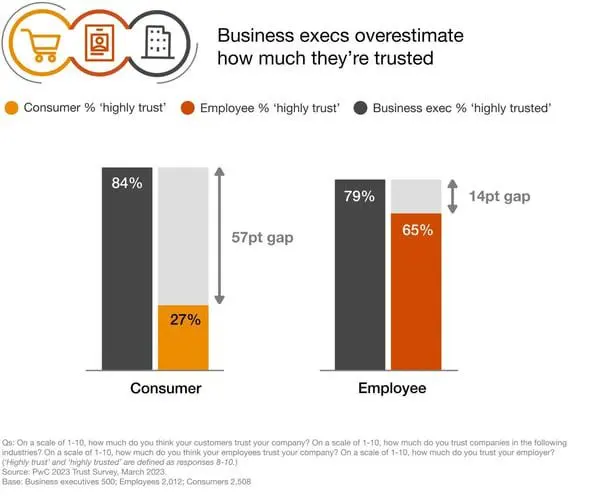
According to HubSpot, 84% of business executives believe their customers “highly trust” their companies. Flip that over to the consumer side and you’ll see this assumption is wildly inaccurate, as only 27% of consumers say that they “highly trust” the companies with which they do business.
That overestimation of trust leads to a disparity that SaaS SEO can solve. Through SEO, a SaaS brand can build credibility and trust with its audience, not only through the content it produces but also via the backlinks to that content. In other words – quality content leads to getting links from websites that consumers trust. Those links build trust, making a potential customer more likely to buy.
Although earning those links is not as easy as it sounds, it takes more than just publishing good content and hoping someone notices and links to you. Someone has to find the right sites, pitch the right person, and manage the outreach process. SaaS teams often don't have enough time or resources to handle this at scale, so many companies turn to a reliable SaaS link building agency with the right connections and experience. By giving a hand with link building, the team can focus on product development, marketing strategy, and other work that directly moves the business forward.
Using SEO to Position Yourself as an Authority
Closely linked to trust is the concept of positioning yourself as an authority within your niche.
Let’s look at a simple example from outside the SaaS world. Assume you’re competing with another individual for a marketing role at a company. You’re going into the application process with no real marketing qualifications or experience. Your competitor has both – a degree in marketing and experience working in the industry.
Who is going to get the position?
It will always be the person with the degree and experience because they have proven authority in the industry. They can position themselves as a go-to voice because they can prove their credentials, whereas you’re just hoping to get hired with nothing authoritative to back you up.
Transplant that line of thinking back into the concept of SaaS SEO, and you will see things working in the same way. A potential client will always go for the company with the most online authority – more reviews, more knowledge, and higher search engine rankings. Thus, focusing on authority through SEO is critical to the SaaS SEO approach.
Why SEO Is Important for SaaS
The information you’ve already learned about SaaS SEO indicates some of the reasons why it’s so important. The right strategy builds trust and authority – both vital to attracting and maintaining your customers – while the focus on creating content for all stages of your funnel is key to overcoming the more complex marketing obstacles a SaaS company may face.
But there are more reasons why SEO is so critical for a SaaS business:
Lowering Customer Acquisition Costs (CACs)
Your CAC is the amount of money, on average, that your SaaS business has to spend to acquire a customer. As you can see from this chart developed by First Page Sage, those costs can be massive in the SaaS world:
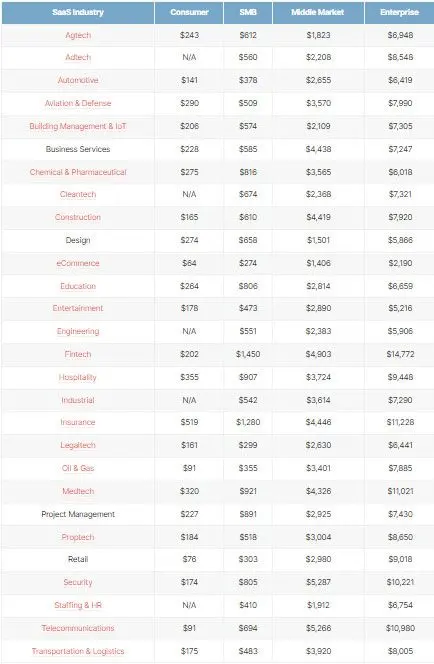
At the consumer level, your business could easily spend $200 or more to attract a single client. Move up to the enterprise level, where your software serves massive companies, and CAC costs balloon into the four and five-figure regions.
SaaS SEO doesn’t eliminate CAC entirely. However, its focus on driving organic traffic – as opposed to the costly paid traffic drawn by ad campaigns – sees your CAC start high and then lower over time as you achieve better rankings in search engines.
Creating More Touchpoints When Nurturing Clients
This article touched on the concept of “nurturing” clients when discussing how SaaS SEO strategies are designed to provide content for people at all stages of your marketing and sales funnels. What does that concept actually mean?
The idea behind nurturing is to consistently reach out to your customer and prospect bases to provide valuable information, often before those people even realize they need the information. In online marketing, there are many places you can nurture – your social media profiles, emails, and paid ads all fall under this category. Each is a touchpoint – a place a consumer visits to obtain information – that helps build your authority and lead the consumer toward trusting you.
SaaS SEO builds your website into one of those touchpoints.
For instance, your blog is a source of information. Each post you create tackles a specific topic, with the intention being to rank for keywords related to those topics. When your prospect searches for the relevant keyword, your blog appears in their results and serves as a touchpoint along with every other online platform onto which you post content.
In essence, your SEO does a lot of the hard work of selling for you – especially in terms of explaining your product and the problems it solves – so you can focus on achieving the conversion when a prospect gets in touch.
SEO KPIs for SaaS Companies to Consider
Proper business management revolves around setting targets you aim to achieve, often called key performance indicators (KPIs). It’s no different with SaaS SEO, as the success of your campaign depends on your ability to both set appropriate benchmarks and reach those targets via your campaign.
The challenge is that there are many KPIs on which you could focus within SaaS SEO. So, consider the following four as the most critical KPIs because they’ll have the most pronounced impact on your strategy’s success.
Revenue
As with any business strategy, the bottom line is the ultimate KPI for SaaS SEO. You’re engaging in a long-term strategy into which you’ll consistently invest time and money. You need to find a way to properly attribute sales generated using SEO to get an accurate picture of the revenue received in return for your efforts.
Website Speed
Though this may seem like a strange metric to track, website speed has a defined impact on your SEO strategy and its success.
Why?
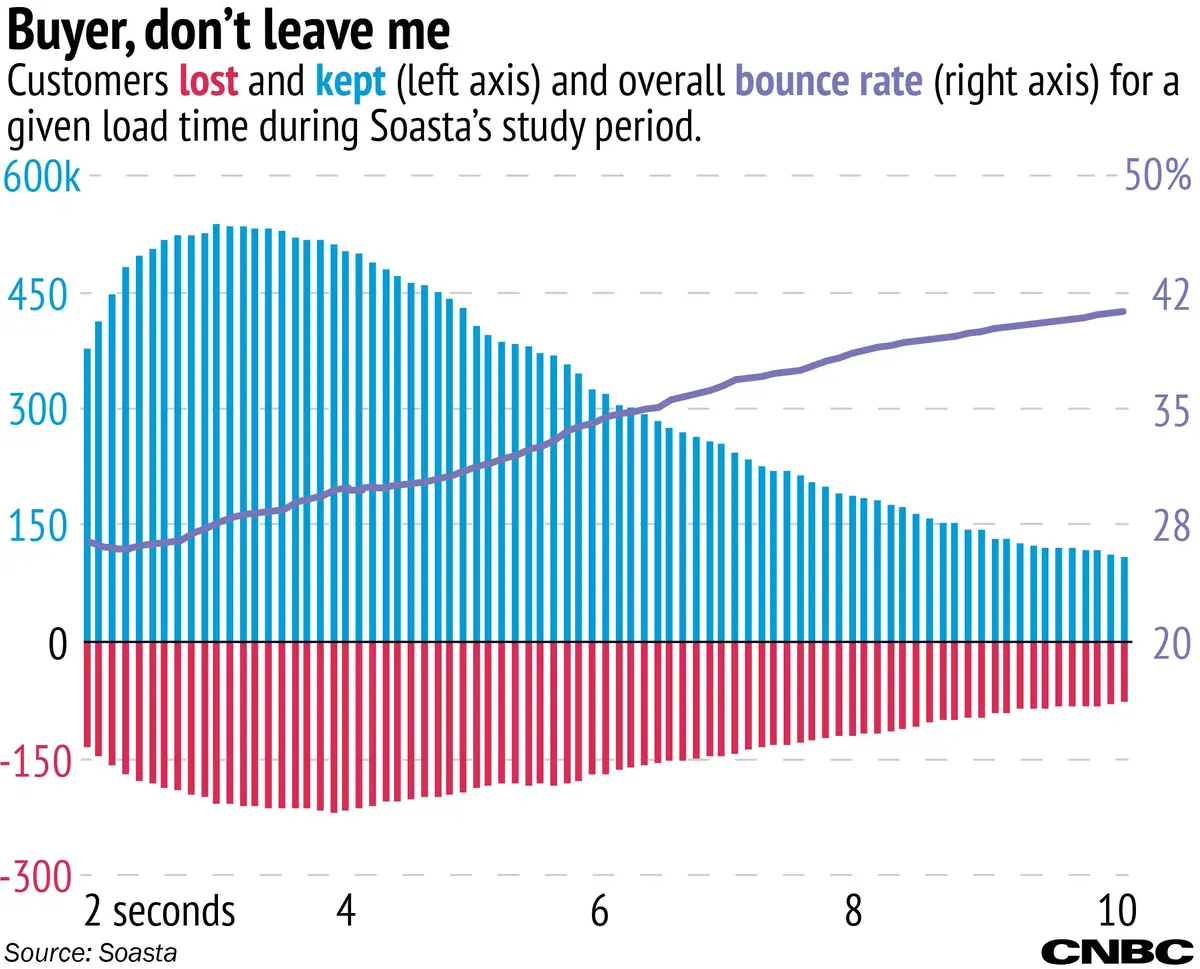
Potential customers won’t stick around for more than a few seconds and wait for your website to load. In fact, 35% of them bounce – meaning they leave your website – if they’re forced to wait for six seconds. SaaS SEO comes into play here because it’s key in optimizing your design and images so your site loads as quickly as possible. By tracking loading speeds as a KPI, you ensure none of your pages become bouncing points that lose clients.
Keyword Rankings
For all of the bells and whistles you’ll attach to a SaaS SEO campaign, your success ultimately relies on your ability to achieve high rankings on Google. After all, 28.5% of searchers click the first result they see – a number that drops to just 2.5% for the tenth result.
So, you need to track keywords.
That can be challenging, especially as your business scales and you get to the point where you’re targeting dozens or even hundreds of keywords. Thankfully, there are plenty of SEO tools available to help you keep track without manually putting in the effort to search every phrase you target.
Backlinks
As search engines use backlinks to measure the quality and authority of a web page, building links is a crucial part of SEO. If credible websites that your potential customers visit are linking to you, that suggests to the customer that there’s a good reason why you’re being used as a reference point:
You’re trustworthy.
So, tracking backlinks – including how many you have and where they come from – becomes a key KPI for your SaaS SEO campaign. Again, tools can help in this department, such as Ahrefs’ backlink checker. As a side note, these tools can also help you find unnatural links that could harm your search rankings.
How to Elevate Your 2024 SaaS SEO Strategy
With all of the above in mind, you arrive at the final point of this guide:
Elevating your SEO strategy to account for the multiple points of focus required in the SaaS environment. In doing so, you ensure your business reaps the benefits such a strategy can create. The following are useful tips to aid in that SEO elevation:
Establish Topical Authority
Think of topical authority as the measure a consumer has on your company’s expertise – and the depth of its knowledge – within its niche. As established earlier, the inability to demonstrate topical expertise results in a lack of authority – a potential death knell for a SaaS SEO strategy.
So, how do you establish topical authority?
Content, content, content. Your website’s blog is key to this technique, with Ahrefs recommending that you build pillar pieces – large articles that dig into the details of every aspect of a product – for every service your SaaS offering provides. From those pillar pieces, you can create smaller articles that hone in further on specific subjects within each of those pillars, with the result being a comprehensive blog that answers any questions a potential client may have.
Prioritize High-Quality Backlinks
Not all backlinks are good for your SaaS website. Some can even get you penalized by search engines – such as we see with Google’s Penguin algorithm – which is a response to some online marketers believing that volume, no matter where that volume comes from, is the key to a good backlinking strategy.
It isn’t.
Good backlinks are either earned naturally, often through the authority of your content leading to other sites wanting to link to it or are carefully chosen based on your industry and target audience. In the case of the latter, industry organizations – particularly those that offer certification – represent high-quality backlinks. Those websites have actual authority with their readers, with that authority transferring to you because you’re referenced on those sites.
Focus on a quality over quantity approach to backlinking. It is safer from a search engine rankings perspective and will earn you more valuable customers in the long run.
Leverage Great PR to Earn Backlinks
You can obtain backlinks through PR just as effectively as you can through a defined backlinking strategy. The approach is different, though. Digital PR is about using media coverage to gain attention, while link building involves using specific tactics to get high-authority websites to link to you. However, the result is the same:
You receive backlinks from authoritative websites, which results in more traffic and more confidence in your SaaS product.
Start by determining what media outlets your audience uses to get their advice. These could be news or industry publications – often seen as the “traditional” settings – but could expand into podcasts, social media groups, and webinars. Once you find out where your audience looks for information, you will know where to submit your content. Deliver copy that’s just as powerful and authoritative as that you place on your own website and you have the beginnings of a good PR strategy.
Perseverance is key here. The more valuable content you put out, the higher the chance multiple media outlets pick it up and link back to you via that content.
Monitor Competitor Keyword Rankings
You already know why it’s so important to track keywords for which you are optimizing your content. It’s one of the KPIs mentioned above and it’s the way you’ll determine the success of your SaaS SEO from a search engine ranking perspective.
But don’t underestimate the importance of tracking competitors, too.
Specifically, you’re looking for competitors that appear to be rising in the SERPs for keywords you’re targeting. Their rise indicates they’re likely engaged in a strong SaaS SEO strategy of their own – one you may need to counter. By tracking their rankings, you essentially engage in competitor research. Whenever you spot a high flyer or a fast riser, that’s your cue to check out their website to see what content they’re posting with which you need to compete.
Stay Up-to-date on SEO Trends
The final strategy is simple:
Stay on top of what’s happening in the SEO world. It’s a fast-moving sector that will evolve beyond you if you’re not in touch with the trends.
Search Engine Land makes that clear with its chart of Google algorithm updates for 2023:
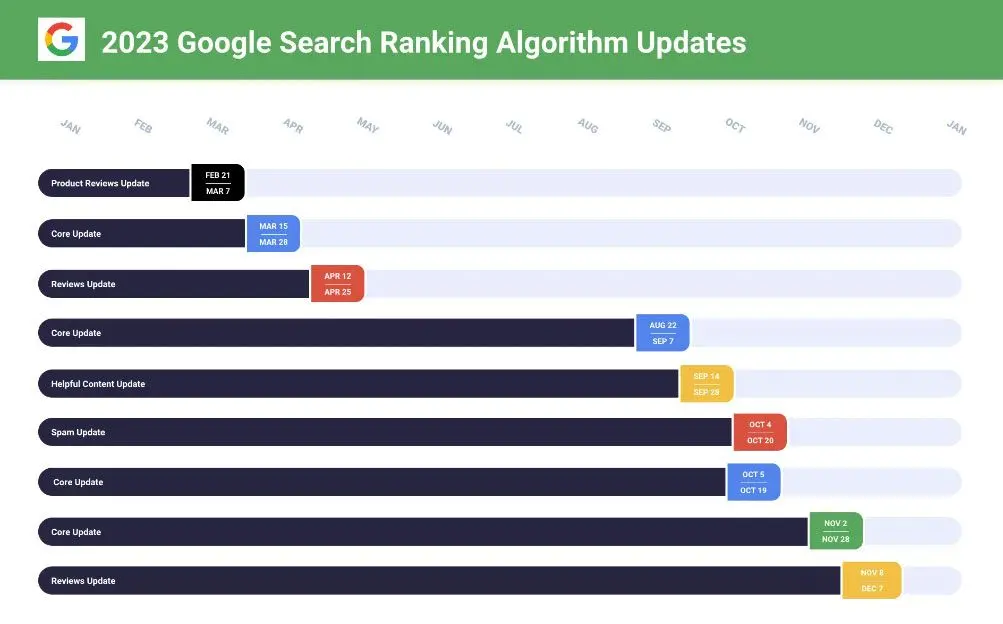
That’s nine major changes that impacted SEO strategies in one year, including four to Google’s core algorithm. They’re also the tip of the iceberg. Google makes dozens of other minor changes and tweaks annually, all of which you need to track so you can adjust your SaaS SEO Strategy.
Make it part of your daily routine to check out sites like Search Engine Land, Ahrefs, and Search Engine Journal for news on what’s happening in search. Doing so may keep you ahead of competitors who rely on SEO tactics that are no longer relevant.
SaaS SEO Requires Diligence
That’s the key takeaway from this article – diligently keeping up with SEO trends while tweaking your strategy accordingly is the key to succeeding with SEO for a SaaS company. You may have also discovered that some of the strategies you’re currently using, especially in the link-building domain, may not be as relevant or powerful as they once were.
Focus on creating content, making the copy you write the foundation of your entire SaaS SEO strategy for 2024. It’s through that content that you’ll build authority and credibility with your audience, which results in the trust required to sell subscriptions.
As long as your content writing is on point, the rest of your SEO strategy falls into place. You’ll receive strong backlinks, both from posting that content on your website and creating content as part of your PR strategy. Plus, you’ll have a constant flow of material to ensure strong rankings in search engines.
What types of content should SaaS companies create for SEO success?
Creating diverse types of content is key for SaaS companies aiming to build authority, attract leads, and nurture clients through the entire sales funnel. Different content formats target varied stages of the customer journey and appeal to a broader audience. Here’s a breakdown of effective content types SaaS companies can leverage to elevate their SEO strategy:
- Educational Blog Posts. Regular blog posts covering industry-related topics help position your company as a knowledge hub. Target informational keywords to attract users in the awareness phase. Topics can range from tutorials on using your software to broader industry trends and “how-to” guides that educate your audience on relevant solutions.
- Case Studies and Success Stories. Showcase real-world examples of clients who’ve benefited from your software. Case studies serve as powerful proof points that build credibility and trust, particularly in the consideration phase. They help potential customers envision how your SaaS solution could address similar challenges they face.
- White Papers and eBooks. Offer in-depth, data-driven resources that delve into industry insights, research findings, or advanced strategies. White papers and eBooks help attract qualified leads, especially decision-makers in the B2B space, by demonstrating thought leadership and offering valuable insights that prospects can’t find elsewhere.
- Product Comparison Guides. Create content that compares your SaaS product with competitors or alternative solutions. Highlighting your unique advantages through unbiased, informative content supports the decision-making phase by addressing common questions prospects have when evaluating multiple options.
- Webinars and Video Tutorials. Hosting webinars and creating video tutorials are engaging ways to educate users on your product’s capabilities, features, and best practices. These formats are highly effective for capturing leads, as webinars require sign-ups, and video content is easy to share, enhancing visibility and brand awareness.
- User-Generated Content and Reviews. Encourage satisfied customers to share their experiences. User-generated content, such as customer reviews or testimonials, boosts trust and provides social proof, an influential factor in SaaS decision-making.
Optimizing Mobile Experience for SaaS SEO Success
In today's digital landscape, mobile optimization is no longer optional – it’s essential. Google’s mobile-first indexing means that your website's mobile version is prioritized for ranking over its desktop counterpart. This is especially important for SaaS businesses, where a smooth, fast, and engaging user experience is crucial for keeping potential customers engaged throughout their journey.
For SaaS companies, offering a mobile-optimized experience can significantly improve SEO rankings and user satisfaction. Ensuring your website loads quickly, is easy to navigate, and works seamlessly on mobile devices is key. This can be achieved through responsive design, optimizing images, and reducing unnecessary scripts or pop-ups that might slow down the site.
Additionally, UX elements like intuitive navigation, clear CTAs (calls-to-action), and seamless sign-up or onboarding processes on mobile can drive higher conversions. When customers experience ease of use on their mobile devices, they are more likely to trust your product and continue their journey from awareness to subscription. For further insights on how to improve the digital experience for your SaaS business, consider exploring best marketing software tools, which can assist in optimizing both your SEO and mobile marketing efforts.
What Are the Key Technical SEO Strategies for SaaS Websites?
Establish a solid technical foundation by optimizing site architecture and ensuring efficient crawlability. Implement structured data and schema markup to assist search engines in understanding your content and generating rich results. Secure your platform with HTTPS and streamline navigation to reduce load times and prevent user drop-off. Regularly audit for broken links, duplicate issues, and crawl errors to maintain a healthy indexation status. In addition, integrate robust tracking and analytics tools—such as a visitor management solution—to refine user interactions and enhance overall engagement, thereby solidifying your SEO performance over time.
Key Insights
- Importance of SEO for SaaS Companies: SEO is crucial for SaaS companies to attract and retain customers. It helps build trust and authority, which are essential for long-term customer relationships in the subscription-based SaaS model.
- Focus on All Stages of the Sales Funnel: SaaS SEO strategies must cater to all stages of the sales funnel, from awareness to retention, to effectively nurture potential clients and maintain their loyalty.
- Building Trust and Authority: Trust is vital for SaaS success. SEO helps build trust through high-quality content and authoritative backlinks, positioning the company as a reliable expert in its niche.
- Lowering Customer Acquisition Costs: Effective SEO strategies can significantly reduce customer acquisition costs (CAC) by driving organic traffic and reducing reliance on paid advertising.
- Key Performance Indicators (KPIs): Essential KPIs for SaaS SEO include revenue, website speed, keyword rankings, and backlinks. These metrics help track the success and effectiveness of the SEO strategy.
- Topical Authority and Quality Backlinks: Establishing topical authority through comprehensive content and prioritizing high-quality backlinks are critical components of a successful SaaS SEO strategy.
- Monitoring Competitor Keywords and Staying Updated: Keeping an eye on competitor keyword rankings and staying updated on SEO trends are essential for maintaining a competitive edge in the SaaS market.
Other Things You Should Know About SaaS SEO Strategies
SaaS SEO refers to the application of search engine optimization strategies tailored specifically for Software-as-a-Service (SaaS) companies. These strategies focus on driving traffic, building trust, and nurturing clients throughout the sales funnel to ensure long-term subscription retention.
SEO is important for SaaS companies because it helps attract organic traffic, build trust and authority, reduce customer acquisition costs, and provide valuable content to potential and existing customers at all stages of the sales funnel.
While traditional SEO focuses mainly on driving traffic and sales, SaaS SEO also emphasizes nurturing potential clients, maintaining long-term customer relationships, and building authority and trust within the industry.
Key challenges in SaaS SEO include creating content for all stages of the sales funnel, building trust and authority, reducing customer acquisition costs, and continuously monitoring and adapting to SEO trends and competitor strategies.
SaaS companies can build trust through SEO by creating high-quality, informative content, earning authoritative backlinks from reputable websites, and consistently providing valuable information that addresses the needs and concerns of their target audience.
Essential KPIs for SaaS SEO include revenue generated from organic traffic, website speed, keyword rankings, and the number and quality of backlinks. These metrics help measure the effectiveness of the SEO strategy.
Content is important for SaaS SEO because it helps establish topical authority, provides valuable information to potential and existing customers, and serves as the foundation for building trust and credibility with the audience.
SaaS companies can reduce customer acquisition costs through SEO by driving organic traffic, which is more cost-effective than paid advertising. Over time, as search engine rankings improve, the reliance on paid traffic decreases, leading to lower CAC.
Backlinks play a crucial role in SaaS SEO by signaling to search engines that the website is a credible and authoritative source of information. High-quality backlinks from reputable sites can significantly improve search engine rankings and drive more organic traffic.
SaaS companies can stay updated on SEO trends by regularly following industry news from reputable sources like Search Engine Land, Ahrefs, and Search Engine Journal. Staying informed about algorithm updates and emerging SEO strategies helps maintain a competitive edge.