# 1 position
Fayetteville Technical Community College - Welding Technology/Welder.
certificate or diploma

Audited and Verified:
Our Editorial and Data Verification Process
Research.com uses government datasets, official education statistics and primary institutional information to support its career and degree guides. Our review process checks factual accuracy, occupational definitions, source dates and the requirements associated with the credentials discussed.
How This Article Was Fact-Checked
Our editorial team verifies salary estimates, employment projections, education requirements and program information against original data providers and official organizations. Salary figures are checked against the relevant occupational definitions and reporting periods. Information about licensure, accreditation and required in-person training is reviewed separately.
Fact-checked and verified on:

Co-Founder and Chief Data Scientist

Reviewed by Karolina Broda
Fact-Checker and Data Verification
The cheapest welding program is not necessarily the least expensive route to a job: shop time, equipment, travel, and lost wages all matter. This guide is for people comparing welding training in Fayetteville, North Carolina, for 2027. The Research.com team of data scientists created a Most Affordable Welder Trade Schools in Fayetteville for 2027 ranking to help students make an informed choice about programs worth considering. With a national median wage of $53,750 for welders in May 2025, the stakes are meaningful (U.S. Bureau of Labor Statistics). You'll learn how to compare costs, credentials, practical training, and career fit.
Expect safety instruction followed by repeated practice preparing joints, setting equipment, welding, inspecting results, and correcting defects. A useful comparison is not just which credential appears on the brochure, but how much supervised booth time students receive on the processes and materials used in their intended jobs. Ask Fayetteville Technical Community College and Miller-Motte College-Fayetteville which welding options, if any, are currently offered at the relevant campus; offerings and schedules can change.
These pathways differ in both cost structure and the experience a student can show an employer. The table identifies the main trade-off before you request current catalogs and employer-test outcomes.
| Pathway | What it typically provides | Best fit |
| Short certificate | Focused shop training and a school credential; process coverage varies | Someone testing the trade or targeting a defined entry-level skill |
| Diploma | Broader sequence of practical and related technical courses | Someone wanting more guided practice before applying |
| Associate degree | Welding training plus additional academic coursework | Someone who values a broader credential and can justify the added time and cost |
| Registered apprenticeship or employer training | Worksite practice, often with related instruction; pay and credentials depend on the arrangement | Someone who can secure a position and prefers learning while working |
A registered apprenticeship has a documented training structure and sponsor; ordinary employer training need not. Neither is automatically faster or easier to enter than a school program (U.S. Department of Labor, Apprenticeship.gov).
Potential work settings in and around Cumberland County include fabrication shops, construction and mechanical contractors, equipment repair operations, and manufacturing employers. The job description matters more than the setting: a shop making repeatable parts may value production speed and consistency, while field fabrication can demand fit-up, changing positions, and work at customer sites (U.S. Bureau of Labor Statistics, Occupational Outlook Handbook).
If you prefer focused bench or shop work, some welding roles may appeal to readers exploring top introvert jobs. Do not mistake that for solitary work: welders must coordinate with supervisors, inspectors, and other trades. Ask local employers which processes appear in entry-level job tests before choosing a narrow training program.
A reliable Fayetteville-specific wage should come from a current, occupation-matched local release, not a school's advertised graduate earnings or a national figure relabeled as local. The U.S. Bureau of Labor Statistics reports a May 2025 national median annual wage of $53,750 for welders, cutters, solderers, and brazers. Half of workers in that occupational group earned less; it is not a prediction of first-year pay.
When assessing a Fayetteville offer, compare its hourly rate, expected hours, benefits, and travel requirements. Ask whether higher-paid work requires overtime, field travel, additional qualifications, or experience. For a realistic return-on-investment estimate, compare your current earnings with a plausible entry-level offer - not the occupational median - and account for training time, aid, debt, and the possibility of not completing the program.
A focused certificate can take less time than a diploma or associate degree, while a registered apprenticeship combines instruction with a longer period of paid work experience. The actual calendar depends on course sequencing, full- or part-time attendance, available shop sections, and whether required courses run every term. There is no single North Carolina clock-hour requirement that makes every welding credential equivalent (North Carolina Community College System; U.S. Department of Labor, Apprenticeship.gov).
Ask for both the published completion time and scheduled supervised shop hours. An accelerated program is attractive if it provides enough practice for your target employer's test; otherwise, its shorter calendar may shift the cost of additional practice onto you. Readers comparing short degrees that make good money should assess welding as a skills-and-employer-test pathway, not assume a short credential produces an immediate wage increase.
Online coursework can cover blueprint concepts, measurements, safety theory, and some welding symbols. It cannot replace supervised practice striking an arc, controlling a weld pool, fitting joints, or demonstrating safe equipment use. A hybrid option is worthwhile only if its in-person shop schedule is accessible and provides practice on the processes you intend to use at work.
For a Fayetteville student comparing cheapest online associate programs, the key distinction is physical access: a low online price does not solve the need for welding booths, supplies, supervision, and possible employer testing. Confirm where labs occur, whether travel is required, and whether the quoted price includes consumables before enrolling.
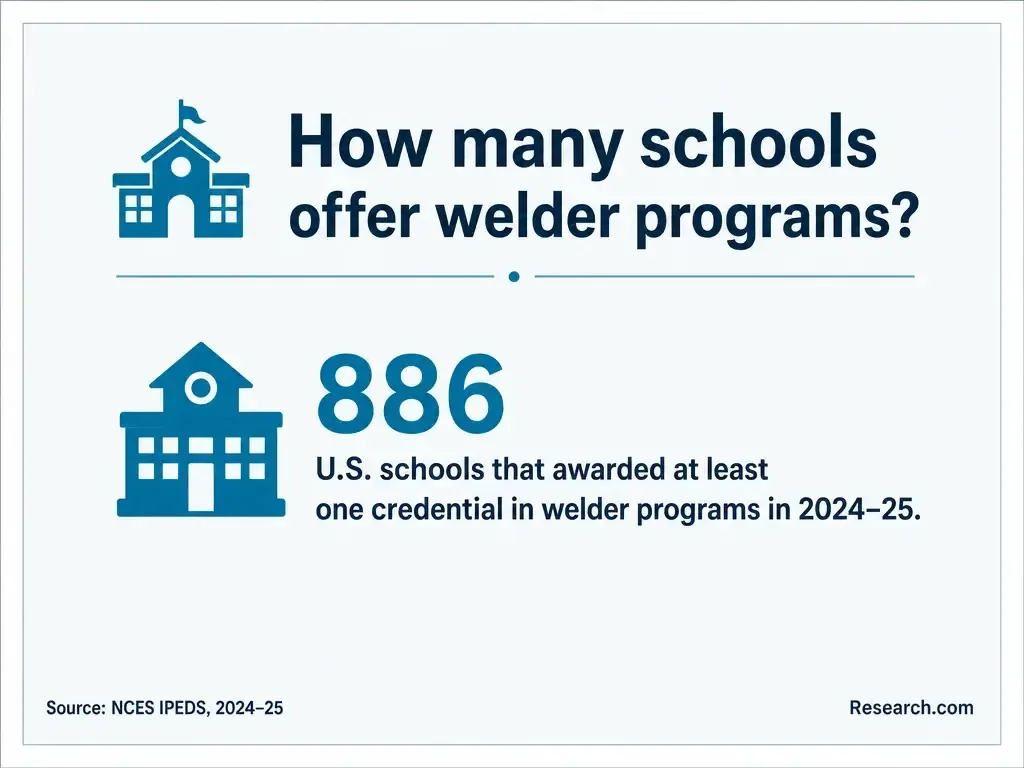
There is no defensible single Fayetteville average for all welding pathways: a public-college certificate, a private career-school offering, and a paid apprenticeship have different billing and wage structures. An affordability ranking also covers only eligible programs reporting completions to IPEDS, not every way to learn the trade. For 2027 planning, obtain a current, itemized quote from each provider rather than treating an earlier tuition figure as your total cost.
Your comparison should include tuition, mandatory fees, textbooks, tools, helmet and other PPE, consumables, any separately charged tests, and transportation to shop or worksite sessions. Add earnings you would forgo while training; subtract grants, scholarships, eligible aid, or wages paid during training. Federal aid depends on both student and program eligibility, so verify the specific credential rather than assuming every short welding course qualifies (Federal Student Aid, U.S. Department of Education).
The school may award a certificate, diploma, or associate degree, depending on the program. That educational credential documents completion; it is different from an employer's welding performance qualification, an industry certification, or completion of a registered apprenticeship. Ask exactly which credential appears on your record and whether the curriculum includes a documented skills test (American Welding Society; U.S. Department of Labor, Apprenticeship.gov).
A short certificate may be sufficient to seek an entry-level test if its shop training matches the job. A broader credential may suit someone seeking more processes or later advancement, but its extra coursework is worth paying for only if it serves that goal. Readers reviewing certificate careers that pay well should distinguish a school certificate from any separate welding qualification an employer requires.
Requirements vary by credential and provider. Ask about the application, age and prior-education rules, placement or prerequisite courses, required safety equipment, and whether a particular shop section has a waitlist. A registered apprenticeship additionally requires acceptance by its sponsor; an employer-training route requires an employer willing to hire and train you (U.S. Department of Labor, Apprenticeship.gov).
Do not confuse admission with job readiness. Before paying a deposit, confirm that the program's shop schedule works with your job and transportation, and ask whether physical demands and required safety practices are explained before training begins. If you already weld, ask whether a documented skills assessment or prior-learning credit can reduce repeated coursework; availability depends on the provider.
Core training commonly covers shop safety, measurement, drawings and welding symbols, joint preparation, equipment setup, welding processes, and visual inspection. Common processes include shielded metal arc welding, gas metal arc welding, and gas tungsten arc welding, but coverage varies. Confirm which processes, positions, and materials students actually practice; a course title alone cannot establish competence in pipe work, structural work, or production welding (U.S. Bureau of Labor Statistics, Occupational Outlook Handbook; American Welding Society).
Employers also assess whether applicants can follow procedures, maintain equipment, identify defects, and work safely around heat, fumes, and other hazards. Request a lab syllabus or skills checklist and ask how instructors assess finished welds. That evidence is more useful than a claim that a program teaches "all welding."
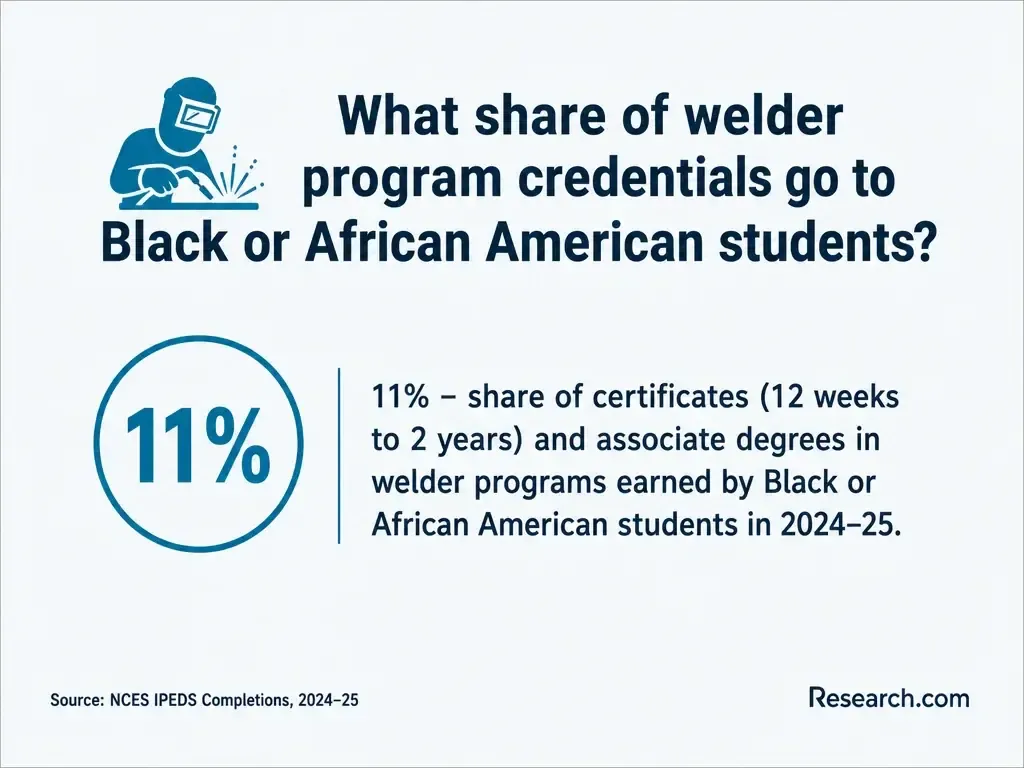
North Carolina does not generally require a state occupational license simply to work as a welder. That does not mean every welding job is open to anyone who completes a class: an employer or contract may require a demonstrated qualification for a specified process, material, position, or welding code. American Welding Society certification is a distinct credential, not a substitute for every job-specific test (American Welding Society; North Carolina occupational licensing authorities).
For work tied to a separately regulated trade or a particular construction contract, ask the employer what rules apply to that role. Before enrolling, have the school identify any certification preparation or test fees it includes - and what it does not. Institutional accreditation, state school authorization, apprenticeship registration, industry certification, and occupational licensure are different forms of recognition; none should be inferred from another.
Start with the job you want, then compare providers against its actual skills test and your available time. A cost ranking is a useful shortlist, not a quality verdict: the most affordable score does not include shop quality, accreditation, support, or employer recognition. Verify institutional accreditation and applicable school authorization separately, then ask whether employers recognize the training and what graduates can demonstrate.
Use these questions when speaking with admissions staff or apprenticeship sponsors. They expose costs and training gaps that a headline price can hide.
Avoid choosing solely on tuition, a promised wage, or an online label. Even search results for unrelated paths such as easiest doctorate programs cannot answer the welding-specific question: will this option provide affordable, accessible shop practice that matches the work you want?
An entry-level applicant might pursue production welding, fabrication, or repair work after demonstrating the required process and safety skills. With experience and further job-specific qualifications, possible directions include more demanding structural or pipe work, inspection-related duties, supervision, or independent contracting. These are progression possibilities, not automatic outcomes of a school credential (U.S. Bureau of Labor Statistics, Occupational Outlook Handbook; American Welding Society).
Choose the training sequence that matches the next step, not the most advanced-sounding title. Someone seeking a first shop job may benefit more from frequent booth practice and employer contacts than from paying for coursework unrelated to that job. Someone already employed may get better value from a targeted process course or employer-sponsored test preparation.
The U.S. Bureau of Labor Statistics projects 2.4% national employment growth from 2025 to 2035 for welders, cutters, solderers, and brazers. That is an occupational projection for the United States, not a forecast of Fayetteville openings or a guarantee that a new graduate will find work locally. Replacement hiring and the skills requested by individual employers can matter more to a job seeker than the national growth rate.
Before committing to training, compare current Cumberland County-area postings for required processes, experience, shifts, and travel. If suitable openings are sparse or mostly require field experience, ask providers about employer partnerships and consider whether commuting or a paid training position would make your first job search more practical.
Education is a significant investment, so the Research.com team designed this ranking to make local cost comparisons more credible and useful. Programs are compared with others in the same occupation and location; only programs with completions reported to IPEDS qualify. For the most affordable ranking, the score uses tuition, cost of attendance, median student debt, and federal loan default rate. Indicator weights are distributed through an entropy-based method. Accreditation and other quality indicators do not contribute to this affordability score.
The team used the following data sources in developing its rankings. Some cover occupations other than welding; their inclusion as sources does not mean a healthcare accreditor approves a welding program.
The ranking can narrow a student's cost comparison, but it cannot establish that a program currently has open seats, sufficient shop practice, or the right preparation for a particular employer's welding test. IPEDS does not comprehensively cover apprenticeships, employer training, or every career-school offering. Readers should verify current program details directly; more information about the ranking approach appears on Research.com's methodology page.
# 1 position
# 2 position
Welding Technology/Welder
Delivery mode: On Campus (May Include Online Courses)
61.57
/ 100
Final score
Accreditation
Institutional accreditation from Accrediting Commission of Career Schools and Colleges.
Miller-Motte College-Fayetteville earned a Research.com Affordability Score of 61.57/100.
It can be if the program supplies enough relevant shop practice at a total cost you can recover through realistic job opportunities. Compare it with paid training before borrowing, and use an entry-level wage estimate rather than the national occupational median.
Yes. An employer may train a new hire, and a registered apprenticeship can combine paid work with instruction. Entry requirements, openings, and the skills you must demonstrate vary by sponsor or employer (U.S. Department of Labor, Apprenticeship.gov).
Online lessons can teach theory, but they cannot provide supervised welding practice or an in-person performance test. Check the location and cost of required labs before choosing a hybrid program.
Not necessarily. A school certificate shows program completion; an industry certification or employer qualification involves separate requirements or testing. Ask the provider which, if any, is included (American Welding Society).
That depends on the current credential, residency-based charges where applicable, supplies, aid, and your travel costs. Request comparable, itemized quotes and confirm that each provider currently offers the welding training you want.