# 1 position
Most Affordable Welding Schools & Training in Salisbury for 2027
Audited and Verified:
Our Editorial and Data Verification Process
Research.com uses government datasets, official education statistics and primary institutional information to support its career and degree guides. Our review process checks factual accuracy, occupational definitions, source dates and the requirements associated with the credentials discussed.
How This Article Was Fact-Checked
Our editorial team verifies salary estimates, employment projections, education requirements and program information against original data providers and official organizations. Salary figures are checked against the relevant occupational definitions and reporting periods. Information about licensure, accreditation and required in-person training is reviewed separately.
Fact-checked and verified on:

Co-Founder and Chief Data Scientist

Reviewed by Karolina Broda
Fact-Checker and Data Verification
Choosing affordable welding training in Salisbury, Maryland, means looking beyond tuition: shop access, safety gear, travel, and time away from work all affect the bill. The Research.com team of data scientists created its Most Affordable Welder Trade Schools in Salisbury for 2027 ranking to help students identify programs worth considering. The U.S. Bureau of Labor Statistics (BLS) reports a May 2025 national median wage of $53,750 for welders, cutters, solderers, and brazers. This guide helps career changers and first-time students compare costs, credentials, practical training, and routes into work.
Key findings about welder degrees in Salisbury
- Compare total job-ready cost, not tuition alone: welding gear, consumables, testing, and travel can change which Salisbury option is cheapest.
- Wor-Wic Community College is a local provider to investigate, but an employer-sponsored route or paid apprenticeship may fit better if earning while learning matters most; verify current openings and eligibility directly.
- The BLS May 2025 national median is $53,750 for welders, cutters, solderers, and brazers - not a Salisbury starting wage or a promised return on training.
Table of Contents
- Most Affordable Welding Schools & Training in Salisbury for 2027
- What can I expect from a welder trade school program in Salisbury?
- Where can I work with a welder trade school training in Salisbury?
What can I expect from a welder trade school program in Salisbury?
Expect supervised shop practice, not just instruction about welding. A useful entry-level program teaches safe setup, material preparation, measuring, joint fit-up, weld inspection, and repeated practice on the processes local employers request. Ask to observe the shop and find out how much time each student actually spends welding rather than waiting for equipment.
In Salisbury, compare a college-based offering at Wor-Wic Community College with any accessible employer training or registered apprenticeship. A shorter certificate can suit someone seeking a first shop job; a broader program may make sense if it includes more processes, fabrication, and work-based experience. A paid route can reduce lost earnings, but entry may depend on available positions and an employer's selection process.
Where can I work with a welder trade school training in Salisbury?
Potential settings include fabrication and repair shops, construction contractors, agricultural-equipment repair, and industrial maintenance across the Eastern Shore. The work differs: a production shop may emphasize repeatable welds, while field repair can require fitting awkward joints and traveling to a site. The BLS Occupational Outlook Handbook describes welding work across manufacturing, construction, and repair; it does not establish how many openings each Salisbury employer has.
Before choosing a process-focused program, read nearby job postings and ask employers which materials, welding processes, shift schedules, and weld tests they use. A longer commute or willingness to travel for projects may expand options, but transportation costs belong in your training and job-search budget.
The BLS reports a $53,750 national median annual wage in May 2025 for welders, cutters, solderers, and brazers. A median describes workers across experience levels and locations; it is neither a Salisbury wage estimate nor likely starting pay. Without a comparable, current Salisbury-specific figure established here, use local job postings and written employer offers to assess what training could earn you.
Compare those offers with your present pay, likely hours, benefits, commute, and any paid training. An advanced weld test or specialty may improve access to particular jobs, but the credential itself does not guarantee higher wages. The BLS occupational category also combines several related roles, so check that a quoted wage matches the work you intend to do.
Length depends on the credential, schedule, and amount of shop practice. A focused training course can reach an entry-level skill target sooner than a broader certificate or associate degree; an apprenticeship combines paid work with related instruction over a longer period. Do not compare options by calendar length alone. Request the published total contact hours, supervised welding hours, attendance schedule, and completion requirements for the exact offering you would enter.
An accelerated schedule is valuable if you can attend every lab and afford the time away from work. If scheduling is the main obstacle, compare part-time shop access before considering fast track college courses: speed matters less than sufficient practice to pass an employer's weld test.
Online instruction can cover blueprint reading, welding theory, calculations, and some safety concepts. It cannot replace supervised practice controlling a weld pool, fitting joints, handling equipment, or demonstrating a sound weld. A hybrid option is credible only if it identifies where, when, and with whose equipment students complete in-person labs and assessments.
A top school for trade skills online may be useful for comparing remote coursework, but online convenience is not proof of welding competence or employer acceptance. For an Eastern Shore student, the practical question is whether the required shop or worksite is reachable on the days offered - not merely whether lectures are online.
There is no verified Salisbury-wide average here that would fairly combine college courses, private training, and paid employer routes. Instead, obtain an itemized quote for the specific program and start date. The comparison below separates charges that can make an apparently inexpensive option costly.
| Cost component | What to confirm |
| Instruction | Tuition, mandatory fees, and any resident-rate eligibility |
| Shop participation | Tools, personal protective equipment, materials, consumables, and required texts |
| Career entry | Optional certification tests, retests, and transportation to shops or worksites |
| Time and funding | Lost earnings, grants or eligible aid, and wages during employer training |
Ask Wor-Wic Community College whether the exact offering qualifies for federal aid, state aid, or workforce funding; eligibility depends on the program and student, not simply the provider's name (Federal Student Aid; Maryland Higher Education Commission). If you are comparing quick college courses that pay well, keep welding's protective gear, lab time, and testing costs in the comparison.
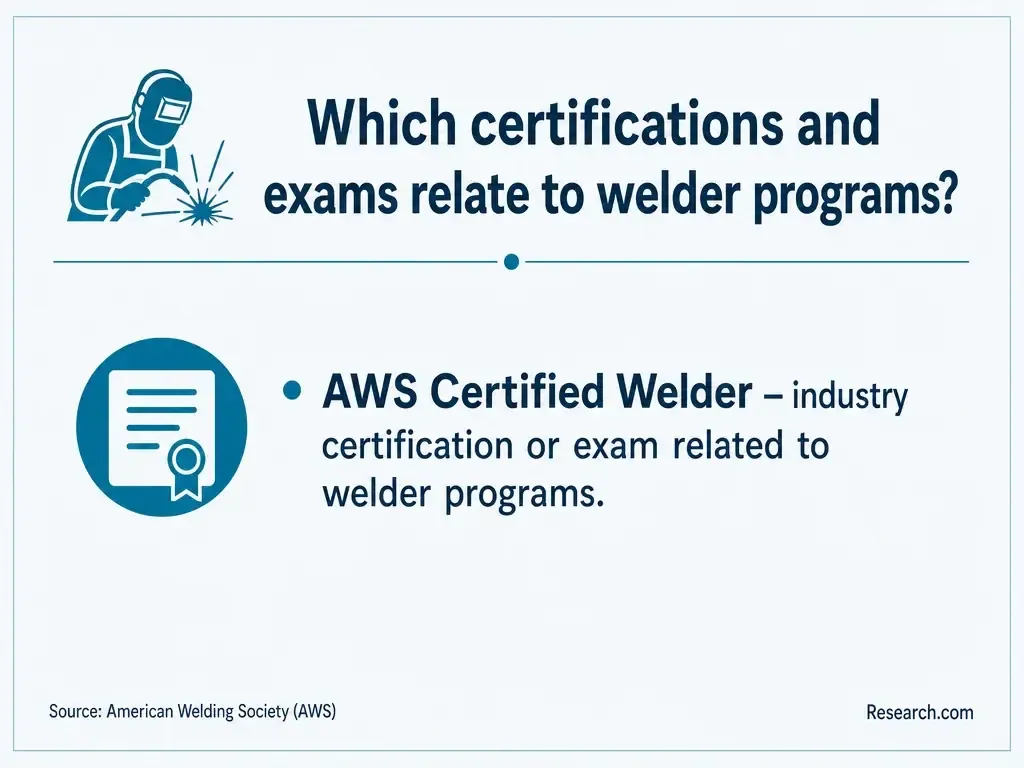
The credential depends on the offering: it may be a course-completion document, a certificate, an associate degree, or a registered apprenticeship completion credential. These are not interchangeable with an employer's practical weld-test result or an American Welding Society (AWS) certification. Request the exact credential name in writing and ask whether instruction prepares you for a specified test, including its process, position, and material.
An accelerated associate degree program may appeal if its additional coursework serves your fabrication or advancement goals. If your immediate goal is one entry-level welding job, compare the added cost and time against a shorter credential with adequate shop practice. Ask whether prior learning or employer training can count toward the program; never assume credit is automatic.
Requirements vary by offering. Ask about minimum age, educational prerequisites, placement or basic-math expectations, enrollment dates, and whether you must purchase protective equipment before the first lab. Also confirm any physical or safety requirements for shop participation. An employer-sponsored position or apprenticeship can have a separate hiring and selection process; admission to a course does not secure a job (U.S. Department of Labor, Apprenticeship.gov).
If you are changing careers, ask whether a short introductory course lets you test your interest before committing to a larger credential. Someone searching for what is the easiest bachelor's degree to get online should not mistake that route for welding preparation: this occupation requires substantial in-person practice.
Foundational training should connect safety with hands-on skills: reading a drawing, measuring and preparing metal, selecting settings, making welds, and checking the finished work. Programs may teach shielded metal arc, gas metal arc, or gas tungsten arc welding, but coverage and practice time vary. Confirm which processes and welding positions are assessed, rather than relying on a brochure that merely names them (BLS Occupational Outlook Handbook; AWS).
Shop safety includes controlling fumes and fire risks and using suitable protective equipment; OSHA sets workplace welding and cutting requirements. Ask how the instructor corrects defective welds and whether students practice on materials resembling those used in their intended jobs. That feedback is more useful for career entry than an online-only demonstration.
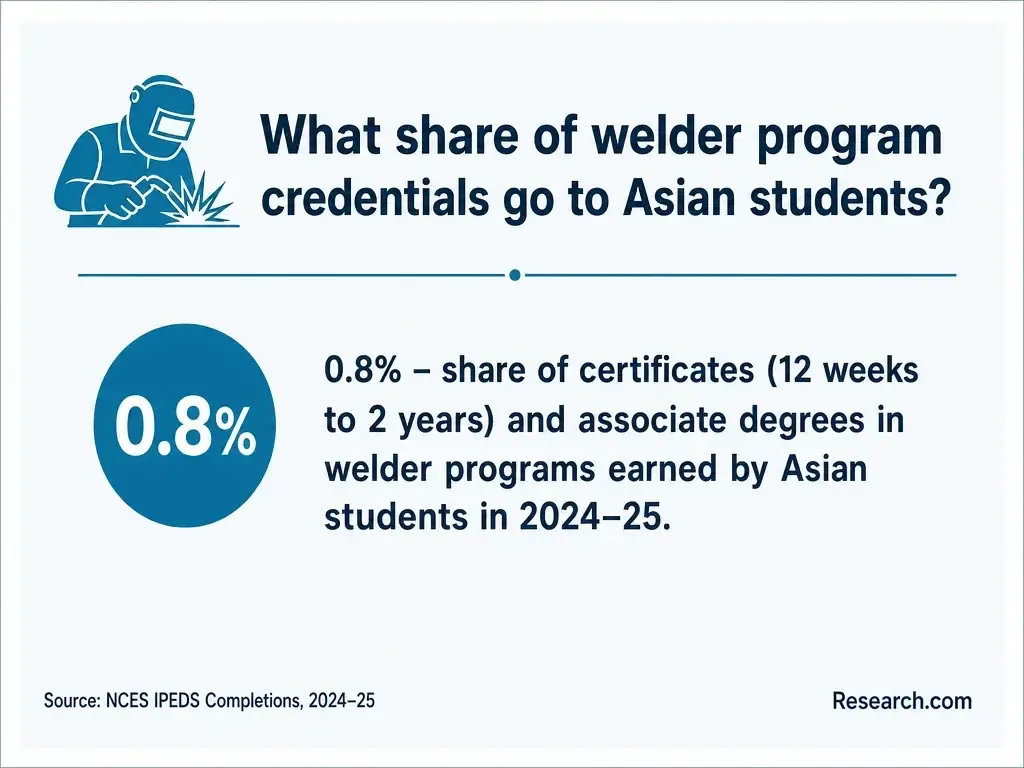
Maryland does not generally require an individual occupational license simply to work as a welder. That does not mean any course completion qualifies you for every job: an employer, contract, or applicable welding code may require a practical qualification test for a particular process and position. Confirm the requirements for your target role with the employer and the relevant code or certifying organization (Maryland Department of Labor; AWS).
AWS certification is distinct from a school credential, institutional accreditation, and state authorization. Likewise, a registered apprenticeship is a structured training arrangement, not a welding license (AWS; U.S. Department of Labor, Apprenticeship.gov). Before paying for an optional exam, check whether nearby employers request that specific qualification or administer their own test.
Start with the job you want, then compare programs against its actual skill requirements. An affordability ranking is a useful shortlist, not proof that the lowest-scoring cost option offers enough shop time or the right process. These checks help prevent the most expensive enrollment mistakes:
- Ask nearby employers which processes, positions, and practical tests they use for entry-level hiring.
- Get each provider's written credential, schedule, total contact hours, supervised shop hours, and equipment-access policy.
- Request the full cost through job readiness, including gear, materials, testing, transport, and lost work time; subtract only aid or paid-training income you are eligible to receive.
- Verify institutional accreditation or school authorization where relevant, then separately confirm any claimed apprenticeship registration or certification-test preparation with the responsible body.
- Compare completion support and your realistic probability of finishing; calculate whether the expected earnings change justifies your cost, debt, and time commitment.
A red flag is a promise of certification, employment, or a particular salary without naming the assessment, hiring arrangement, or evidence. ROI also depends on your current earnings, aid, completion likelihood, post-training pay, and how long you expect to work in the trade - not provider type alone.
An entry-level welder may move into fabrication, repair, field work, or a production setting as experience grows. With additional practice and employer-recognized qualifications, some workers pursue specialized processes, inspection-related work, or supervision. These later roles have different skill and experience expectations; an introductory certificate should not be marketed as direct entry to all of them (BLS Occupational Outlook Handbook; AWS).
For a first step, prioritize training aligned with an available job and a chance to build a portfolio of tested work. If an employer will train and pay you, compare that route with paying for a program first. If you need structured instruction before seeking work, a shop-based program may be the better starting point.
The BLS projects 2.4% national employment growth from 2025 to 2035 for welders, cutters, solderers, and brazers. That forecast is for the United States, not Salisbury, and cannot tell you whether a particular local shop is hiring. It supports preparing for a range of employers rather than assuming rapid growth will make entry automatic.
For a local decision, monitor Eastern Shore vacancies and ask prospective employers whether they hire trainees, require prior shop experience, or test applicants. Production equipment and processes can change, so training that develops measurement, setup, troubleshooting, and safe hands-on technique may be more adaptable than practice on one narrowly specified task (BLS Occupational Outlook Handbook).
Most Affordable Welding Schools & Training in Salisbury for 2027
Education is a consequential investment, so the Research.com team uses multiple sources and occupation-specific comparisons to make its rankings more credible and useful. Programs are compared with others in the same occupation and geography; only programs reporting completions to IPEDS can appear. That coverage rule means an omitted apprenticeship, employer program, or other training provider is not necessarily unavailable or poor quality.
The most affordable ranking scores tuition, cost of attendance, median student debt, and federal loan default rate. An entropy-based method assigns more weight to measures that vary more across included programs. Accreditation, instruction quality, shop access, and employment outcomes are not part of this affordability score; readers should assess them separately. The team consulted these data sources in developing its rankings:
- IPEDS database
- National Center for Education Statistics
- College Scorecard database
- Peterson's database
- Commission on Accreditation of Allied Health Education Programs (CAAHEP)
- Accrediting Bureau of Health Education Schools (ABHES)
- Commission on Dental Accreditation (CODA)
- Dental Assisting National Board (DANB)
- National Center for Construction Education and Research (NCCER)
- Apprenticeship.gov Partner Finder
Some sources in that list cover other trades and do not establish welding-program quality. Use the ranking to narrow your cost comparison, then confirm each welding option's current price, hands-on instruction, and employer relevance. More detail is available in Research.com's methodology.
# 2 position
Wor-Wic Community College - Welding Technology/Welder.
certificate or diplomaFrequently asked questions about welder programs in Salisbury
Compare an itemized local program quote with available paid employer training or apprenticeships. The lowest tuition is not necessarily the lowest total cost once gear, travel, and foregone wages are included.
Ask Wor-Wic for its current welding offerings, credential names, shop hours, schedule, and full price. Confirm that the exact offering teaches the processes required by your intended employers.
Online coursework can teach theory, but entry-level welding requires in-person equipment practice and practical assessment. Verify the lab location and requirements before enrolling in a hybrid option.
No single certification applies to every welding job. Employers or projects may require a particular practical qualification, so check the test requirements for the roles you want (AWS).
It may be if its shop practice helps you qualify for a job you want at a manageable total cost. Compare it with paid training, your current earnings, likely completion, and actual local job requirements before borrowing.
- U.S. Bureau of Labor Statistics - Welders, Cutters, Solderers, and Brazers
Used to verify salary, employment outlook, and typical education requirements.
https://www.bls.gov/ooh/production/welders-cutters-solderers-and-brazers.htm - NCCER - Accredited Training
Used to verify programmatic accreditation or industry recognition of programs.
https://www.nccer.org/ - AWS - Certified Welder
Professional certification reference for graduates of this occupation.
https://www.aws.org/certification-and-education/professional-certification/certified-welder/ - Wor-Wic Community College - official website
Official school website (programs, tuition, admissions).
https://www.worwic.edu/