Most Affordable Trade School & Training Programs - Leading Certification Courses in Jacksonville for 2026

Co-Founder and Chief Data Scientist
The right Jacksonville trade school should match your career goal, budget, schedule, and required credential-not just advertise a fast path to work. Programs can differ widely in cost, length, hands-on training, employer connections, financial aid access, and preparation for certifications or apprenticeships.
This guide reviews trade school options in Jacksonville for students who want practical, job-focused training in fields such as welding, HVAC/R, electrical work, automotive and diesel technology, plumbing, machining, healthcare, construction, and technology. It is designed for recent high school graduates, working adults, career changers, military-affiliated students, and anyone comparing trade school with a traditional degree.
Use this ranking guide to understand expected costs, program timelines, admissions requirements, common courses, salary ranges, financial aid options, and local career paths. The goal is to help you choose a program that is affordable, properly aligned with your intended occupation, and realistic for your life outside school.
Key benefits of finishing trade school programs trade school in Jacksonville
Finishing a trade school program in Jacksonville can be a practical route into skilled work because many programs are shorter, more career-specific, and more hands-on than traditional academic pathways. The strongest benefit is not simply earning a credential; it is completing training that connects to an occupation with local demand, certification requirements, or apprenticeship opportunities.
- Strong earning potential: Trade school graduates in Jacksonville earn $62,218 per year on average. Some specialized fields report higher or more variable pay, including mobile heavy equipment mechanics at around $62,670 and full-stack developers earning up to $131,000 annually.
- Multiple career directions: Jacksonville students can prepare for industrial machinery mechanics, construction inspection, media and communication work, automotive service, welding, HVAC/R, electrical roles, and technology jobs such as entry-level tech analyst positions.
- Faster workforce entry: Many trade programs focus on a specific set of job skills, which can help students move from training to employment more quickly than a four-year degree path.
- Hands-on learning: Labs, shops, clinical settings, simulations, and apprenticeships help students practice the tasks they will be expected to perform on the job.
- Flexible study options: Online and hybrid trade school programs may help working adults, parents, and students with transportation limitations complete academic coursework while still meeting in-person requirements for labs or clinical training.
The main trade-off is specialization. A focused program can be efficient, but students should make sure the credential leads to the exact job, license, certification, or apprenticeship they want before enrolling.
- Most Affordable Trade School & Training Programs - Leading Certification Courses in Jacksonville for 2026
- What can I expect from trade school programs trade schools in Jacksonville?
- Where can I work after finishing trade school programs trade schools in Jacksonville?
What can I expect from trade school programs trade schools in Jacksonville?
Students in Jacksonville trade school programs can expect career-focused training built around practical skills, industry tools, safety procedures, and preparation for entry-level employment. Unlike broad academic programs, trade school coursework usually centers on a specific occupation or family of occupations.
The average cost of a trade school program in Jacksonville typically falls between $20,000 and $24,000. Students considering schools such as Jacksonville Technical Institute (J-Tech), Fortis College, Tulsa Welding School, and other local providers should compare not only tuition, but also fees, tools, books, uniforms, testing charges, and certification costs.
Most programs combine classroom instruction with applied practice. A welding or HVAC program, for example, should include substantial lab time because employers expect graduates to be comfortable with equipment, safety procedures, troubleshooting, and jobsite expectations. The value of the program depends heavily on how much supervised practice students receive before graduation.
Before enrolling, ask each school for clear answers to these questions:
- What credential will I earn: certificate, diploma, associate degree, industry certification preparation, or apprenticeship credit?
- Is the program accredited or approved by the relevant agency, employer group, or licensing body?
- How many hours are spent in labs, shops, clinicals, externships, or apprenticeships?
- What costs are not included in tuition?
- What job placement support is available, and how is placement measured?
- Will the credits transfer if I later pursue a higher credential?
Flexible payment options and financial aid can make costs easier to manage, but students should avoid choosing a program based only on monthly payment size. Total cost, completion time, credential value, and employment outcomes matter more for long-term return on investment.
Where can I work after finishing trade school programs trade schools in Jacksonville?
After finishing a trade school program in Jacksonville, graduates may work in construction, manufacturing, logistics, healthcare, automotive service, public utilities, technical services, residential repair, commercial maintenance, and information technology. The best fit depends on the trade, credential, employer requirements, and whether the graduate needs additional licensing, certification, or apprenticeship hours.
Common employment settings include:
- Construction and building services: HVAC technician, electrical apprentice, plumber, welder, pipefitter, construction inspector, or maintenance technician.
- Manufacturing and industrial operations: Machinist, industrial machinery mechanic, production technician, welding technician, or electro-mechanical technician.
- Automotive and diesel service: Automotive technician, diesel technician, service assistant, diagnostic technician, or fleet maintenance worker.
- Healthcare and clinical support: Entry-level allied health roles, depending on the program and required certifications.
- Technology and business operations: Entry-level tech analyst, support technician, full-stack development role, or related technical position.
Jacksonville’s job market includes hundreds of positions for skilled workers. Some students gain experience through internships or employer-connected training with large organizations such as Amazon or Bank of America, which can make the transition from school to full-time work more direct.
Graduates should verify whether their target job requires a license, background check, drug screening, physical ability test, driver’s license, EPA certification, OSHA training, or apprenticeship registration. Completing a trade school program is often an important first step, but some careers require additional supervised work experience before full professional status.
Trade school earnings in Jacksonville vary by occupation, credential, experience, overtime, employer, and whether the job is union, nonunion, apprentice-based, or salaried. A useful way to evaluate pay is to compare likely starting wages, long-term earning potential, and the total cost of training.
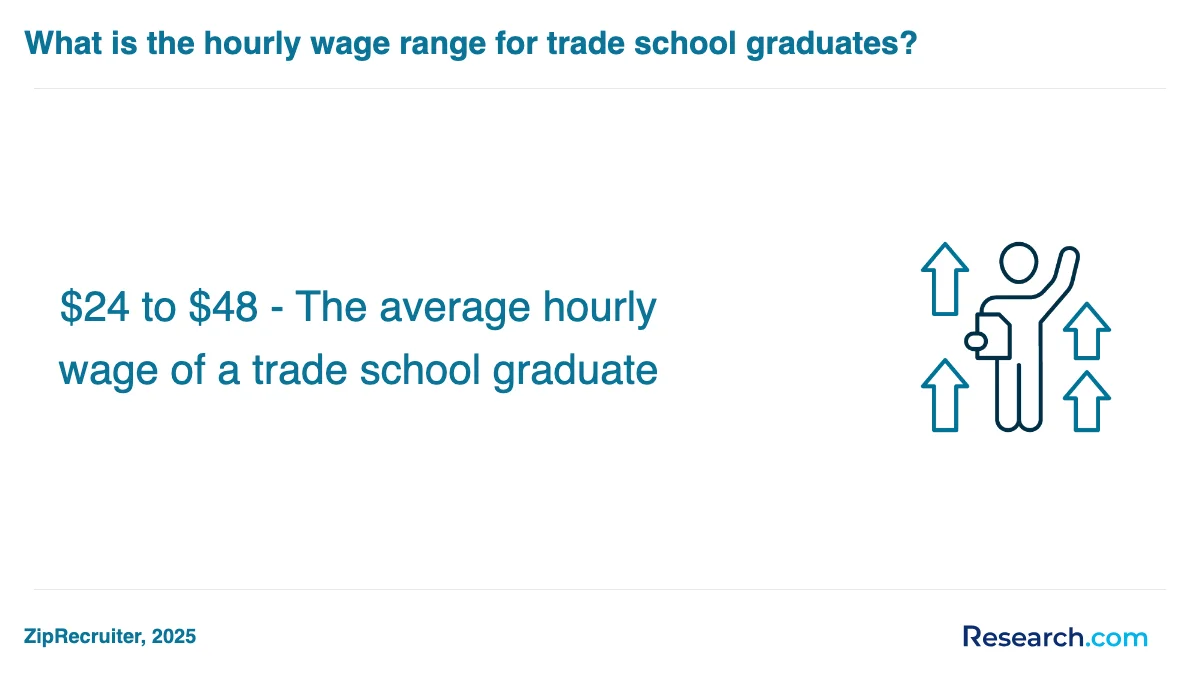
Graduates of trade schools in Jacksonville commonly earn around $62,218 per year, or roughly $29.91 per hour. This compares with the Florida average of about $50,180 annually. However, not every graduate earns the average immediately after finishing school; entry-level pay may be lower until workers gain experience, certifications, or journeyman-level status.
- Apprenticeships: Graduates entering apprenticeship programs report an average annual salary of about $73,657, which is higher than the national average for similar apprenticeships.
- Welding: Welding roles in Jacksonville can offer hourly wages between $30 and $37, depending on skill level, employer, jobsite demands, and specialization.
- Production and manufacturing: Wages typically range from $21 to $36 per hour, reflecting differences in responsibility, shift, equipment, and experience.
- Technology: Trade school graduates who move into full-stack developer roles can see salaries from $46,000 to $131,000 per year, with an average of about $85,019.
When comparing programs, ask about actual graduate outcomes for your chosen field, not general schoolwide salary claims. The most useful salary information is occupation-specific, local, recent, and based on graduates who completed the same program you are considering.
- Applicants typically need a high school diploma or GED equivalent, though some programs may accept a letter of intent from current high school seniors.
- The application process may include an interview, enrollment forms, application or registration fees, and meetings with financial aid officers.
- Trade school programs usually cost between $5,000 and $20,000 and take 6 to 24 months to complete.
- Starting salaries for graduates range from $40,000 to $55,000 annually, while experienced professionals may earn $60,000 to $75,000 or more.
- Many Jacksonville trade programs offer job placement assistance, employer networking, externships, internships, or apprenticeship opportunities.
- Program quality varies, so students should compare accreditation, certification preparation, hands-on training hours, total cost, and graduate employment outcomes before committing.
Trade school completion time in Jacksonville can range from eight weeks to four years, depending on the occupation, credential level, schedule, and whether the program includes apprenticeship training. Shorter programs may help students enter the workforce quickly, while longer programs may provide deeper preparation or paid on-the-job learning.
- Short-term certificates: Some certificate options at Florida State College at Jacksonville (FSCJ) can be completed in about eight weeks, depending on the field and schedule.
- Welding: Full-time programs at Tulsa Welding School's Jacksonville campus often take around seven months.
- Welding Specialist with Pipefitting: These programs typically run about 9.5 months and add more specialized preparation.
- Commercial diving: CDA Technical Institute offers an accelerated commercial diving program that lasts five months.
- Electrical apprenticeship: Programs such as those offered by the Electrical Training Alliance of Jacksonville may combine classroom learning with paid on-the-job training over four years.
The fastest option is not always the best option. A shorter program may be ideal for a student who needs quick entry-level employment, but a longer apprenticeship can provide structured experience, wage progression, and a clearer route into licensed or higher-responsibility work.
Students should also ask about start dates, attendance requirements, make-up policies, evening or weekend options, and whether part-time enrollment extends the completion timeline.
The main difference between online and on-campus trade school programs is how instruction is delivered and how students complete hands-on requirements. Online programs offer flexibility for lecture-based content, while on-campus programs provide immediate access to tools, equipment, labs, instructors, and supervised practice.
Online trade school programs in Jacksonville are best suited for students who are self-directed and need to balance school with work, family, military responsibilities, or transportation limits. Many online trade programs are actually hybrid programs: students complete theory, assignments, safety modules, or exam preparation online, then attend in-person labs, clinicals, practicums, or skills assessments.
On-campus programs are often stronger for trades that require repeated physical practice, such as welding, HVAC/R, automotive technology, electrical work, plumbing, machining, and healthcare skills. Students who want real-time feedback, peer interaction, structured schedules, and direct access to equipment may benefit from in-person learning.
- Choose online or hybrid if: you need schedule flexibility, can manage deadlines independently, and the program has credible local hands-on components.
- Choose on-campus if: your trade is equipment-heavy, you learn best by demonstration, or you need regular instructor feedback.
- Be cautious if: a program claims to prepare you for a hands-on trade entirely online without explaining how labs, clinicals, or practical assessments are completed.
Both formats can be effective when the curriculum, faculty, accreditation, and hands-on training requirements match the occupation. The right choice depends on your learning style and the practical demands of the trade.
The average cost of trade school in Jacksonville depends on the school type, credential, program length, equipment needs, and financial aid eligibility. Local trade schools often have a net price ranging from $20,645 to $27,062 per year after financial aid, which may include tuition, fees, and living expenses.
Public institutions typically range between $9,500 and $23,000 annually, while private schools can range from $18,500 up to $37,500 per year. Because many programs take less than two years, students should calculate the total program cost rather than relying only on annual tuition figures.
Students comparing schools such as Jones Technical Institute (J-Tech), Concorde Career Institute, and other Jacksonville providers should review the full cost of attendance. Tuition may not include every required expense. Common added costs can include tools, uniforms, textbooks, testing fees, background checks, drug screenings, certification exams, licensing fees, transportation, and parking.
Cost ranges can appear inconsistent because schools report expenses differently. Some figures reflect tuition only, while others include fees, books, supplies, and estimated living expenses. For Jacksonville trade schools, the overall cost range of $10,000 to $27,000 reflects diverse individual circumstances and program types.
To judge affordability, compare cost against expected completion time and likely wages in the specific trade. Students exploring accessible career paths can also review easy trades to learn that pay well to identify options with strong training-to-earnings potential.
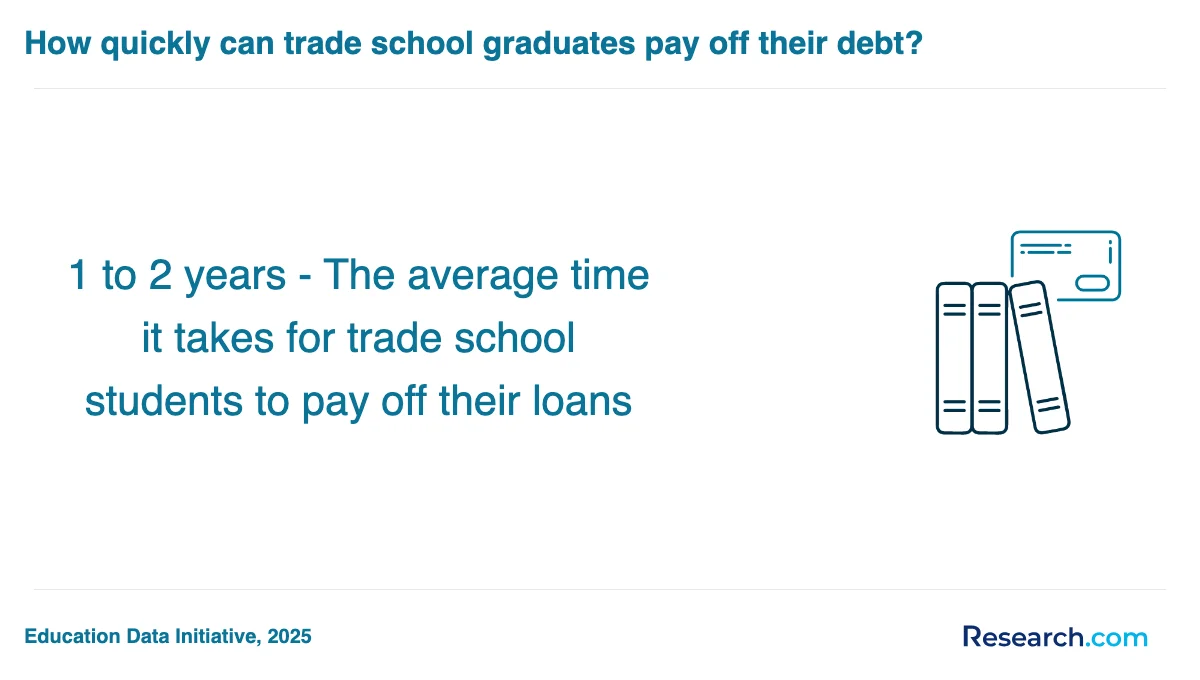
Financial aid for Jacksonville trade school students may include federal aid, state aid, workforce grants, scholarships, veterans benefits, employer support, work-study options, and payment plans. Availability depends on the school, program length, accreditation status, student eligibility, and whether the program qualifies for specific funding sources.
The first step for most students is completing the Free Application for Federal Student Aid (FAFSA). Eligible students may qualify for federal grants, loans, or work-study. The Pell Grant can offer up to $7,395 for the 2025-26 academic year, and students at schools such as Paul Mitchell The School Jacksonville have used grant aid to reduce out-of-pocket costs.
- Federal aid: FAFSA-based grants, loans, and work-study may be available at eligible institutions and programs.
- Florida aid: Florida residents may qualify for state programs, including the Family Empowerment Scholarship for students with disabilities or special needs.
- Workforce funding: Workforce Innovation and Opportunity Act (WIOA) grants may support training for high-demand fields.
- School scholarships: Some schools offer merit-based, need-based, program-specific, or institutional scholarships.
- Military benefits: Veterans, active-duty service members, spouses, and dependents may use benefits such as the GI Bill or MyCAA when eligible.
- Loans and payment plans: Federal and private loans may help cover gaps, but students should compare total repayment costs before borrowing.
Before signing an enrollment agreement, ask the financial aid office which aid is guaranteed, which is estimated, and which must be repaid. Also confirm whether aid covers tools, exams, and other non-tuition expenses.
The main prerequisite for most trade school programs in Jacksonville is a high school diploma or GED. Schools commonly ask applicants to provide official transcripts, a GED certificate, identification, and completed enrollment forms. Current high school seniors may have additional options if a program accepts a letter of intent.
Additional requirements vary by school and occupation. Students may need to meet age, academic, physical, safety, or background standards depending on the trade.
- Being at least 18 years old, especially for apprenticeship programs such as those at the Jacksonville Plumbers and Pipefitters Joint Apprenticeship and Training Trust.
- Providing government-issued ID to verify age and identity.
- Submitting proof of prior coursework, placement scores, professional references, or work experience for selective or limited-access programs.
- Completing an interview, campus visit, orientation, or meeting with admissions and financial aid staff.
- Meeting health, safety, physical ability, driving, background check, or drug screening requirements for certain fields.
Specialized programs may have different standards. For example, students at the Arc Jacksonville Career Campus may find that motivation, independence, and job readiness are especially important, and some programs may waive the high school diploma requirement if the student has an active Individualized Education Program (IEP).
The safest approach is to contact the admissions office before applying and ask for a written list of requirements for the exact program, start date, and schedule you want.

Typical trade school courses in Jacksonville are designed around job tasks rather than broad electives. Students usually study safety, tools, measurements, technical procedures, troubleshooting, documentation, and employer expectations in their chosen trade.
Common course areas include:
- Welding: Structural welding, pipe welding, flux core welding, blueprint reading, welding safety, fabrication, and welding inspection concepts.
- HVAC/R: Heating and cooling systems, refrigeration, installation, repair, diagnostics, electrical controls, airflow, and certification preparation such as EPA Section 608.
- Automotive and diesel technology: Vehicle diagnostics, engines, brakes, electrical systems, drivetrains, maintenance procedures, and industry certification preparation.
- Electrical training: Electrical theory, wiring methods, codes, safety practices, system maintenance, and apprenticeship-based paid learning in some programs.
- Commercial truck driving: Vehicle inspection, safety, road skills, regulations, and preparation for licensure requirements.
- Marine, RV, and industrial maintenance: Equipment repair, mechanical systems, preventive maintenance, diagnostics, and workplace safety.
Strong programs should give students repeated opportunities to practice under supervision. Labs, apprenticeships, externships, and simulated work environments are important because employers often evaluate graduates on practical competence, reliability, and safety habits as much as classroom knowledge.
Jacksonville trade schools offer specializations tied to the region’s construction, manufacturing, transportation, service, healthcare, maritime, and technical workforce needs. The best specialization is the one that matches your preferred work environment, physical demands, certification requirements, and long-term earnings goals.
- Welding: Programs such as Florida State College at Jacksonville's Welding Technology Career Certificate may cover structural welding and flux core welding skills used in shipbuilding, construction, aerospace, and manufacturing settings.
- HVAC/R: Tulsa Welding School's Jacksonville campus offers refrigeration and climate control system training through a 7-month, career-ready curriculum.
- Electrical work: Students may study electrical system maintenance, industrial machinery, residential and commercial wiring concepts, and lineworker safety depending on the program.
- Automotive and diesel technology: These tracks prepare students for diagnostics, maintenance, repair, and service roles with vehicles and heavy equipment.
- Industrial and electro-mechanical technology: Students may prepare for maintenance roles in manufacturing, logistics, and automated systems.
- Inclusive career training: Programs such as The Arc Jacksonville's Career Campus support students with developmental differences through job coaching and real-world training.
Students who need flexible scheduling can compare local hands-on options with online or hybrid coursework. A useful starting point is this guide to online classes trade schools, especially for programs where theory can be completed remotely while practical skills are assessed in person.
To choose the best trade school program in Jacksonville, begin with the job you want and work backward. A good program should prepare you for the credential, certification, apprenticeship, license, or entry-level role required in that occupation. A poor fit can cost time and money even if the school is well known.
Use these criteria when comparing programs:
- Career alignment: Confirm the program leads to your target job, not just a related field.
- Accreditation and approval: Schools such as FSCJ and J-Tech can be evaluated by whether their credentials are recognized by employers, licensing bodies, or certification organizations.
- Hands-on training: Ask how many hours are spent in labs, shops, clinicals, externships, or apprenticeships.
- Program length: Some technical certificates can be completed in under a year, which may be valuable if you need fast workforce entry.
- Total cost: Compare tuition, fees, tools, books, uniforms, tests, and transportation, not just advertised tuition.
- Financial aid: Review grants, scholarships, payment plans, loans, and workforce funding before signing an enrollment agreement.
- Student support: Look for tutoring, career services, resume help, interview preparation, employer connections, and job placement assistance.
- Outcomes: Ask how outcomes are calculated. FSCJ grads often mention the 95% job placement rate, but students should still request program-specific placement data.
Students interested in narrow or specialized credentials can also compare related online options, such as affordable flooring installers certification online, when these programs complement local training or fit a specific career goal.
Trade school graduates in Jacksonville can pursue career paths in skilled trades, technical services, infrastructure, manufacturing, transportation, and building maintenance. Many of these roles require practical ability, reliability, safety awareness, and continued learning after graduation.
Common career paths include:
- Welding and pipefitting: Graduates from local campuses such as Tulsa Welding School may pursue roles as professional welders, pipefitters, fabrication workers, or related industrial tradespeople.
- HVAC/R: Graduates may work in residential and commercial heating, cooling, refrigeration, installation, repair, and maintenance.
- Electrical work: Electrical graduates may start as entry-level electricians, electrical helpers, or industrial maintenance workers, depending on training and apprenticeship requirements.
- Electro-mechanical technology: These graduates may support manufacturing, logistics, automated systems, and equipment maintenance.
- Automotive and diesel service: Graduates may work in repair shops, dealerships, fleet operations, transportation companies, or heavy equipment maintenance.
- Inclusive workforce programs: Partnerships with organizations such as The Arc Jacksonville can help students with intellectual and developmental challenges gain certifications, work experience, and job coaching.
Jacksonville’s construction, manufacturing, shipbuilding, logistics, and infrastructure activity creates opportunities for workers with hands-on training. Still, students should confirm whether their chosen path requires additional apprenticeship hours, licensing exams, background checks, or employer-sponsored training.
Students who want a flexible route into electrical training can review cheap online trade schools programs for electricians, while also checking whether online coursework satisfies local apprenticeship or licensing expectations.
The job market for trade school graduates in Jacksonville is supported by demand in HVAC, electrical work, plumbing, machining, construction, manufacturing, healthcare, logistics, and technical services. Trade school job opportunities in Jacksonville FL include over 290 positions seeking graduates with skills in HVAC, electrical work, plumbing, and machinist roles.
Employers often value graduates who can demonstrate practical ability, safety awareness, punctuality, teamwork, and readiness to learn on the job. Internship placements and employer connections with organizations such as JEA and Amazon can help students gain experience and improve job search outcomes.
The skilled trades employment outlook Jacksonville is strongest for students who choose programs aligned with local hiring needs. Welding, pipefitting, electro-mechanical technology, and HVAC/R training can connect to construction, manufacturing, facilities maintenance, and infrastructure work. Because many programs can be completed quickly, often in under a year, students may be able to begin earning sooner than they would in longer academic pathways.
Job seekers should compare more than the number of openings. Consider wages, benefits, physical demands, schedule, travel requirements, advancement potential, union or apprenticeship options, and long-term credential requirements. For students prioritizing speed and return on investment, 6 month certificate programs that pay well online can help identify efficient training options connected to stable career paths.
Most Affordable Trade School & Training Programs - Leading Certification Courses in Jacksonville for 2026
# 1 position
Florida State College at Jacksonville - Computer and Information Systems Security/Auditing/Information Assurance.
associateFlorida State College at Jacksonville offers a hybrid program in Computer and Information Systems Security/Auditing/Information Assurance. The curriculum covers security needs assessment, safeguard recommendations, and management of security systems. Instruction includes computer architecture, programming, networking, cryptography, risk assessment, and investigation techniques. The program’s annual in-state tuition is $2,878. Graduates earn a median salary of $47,420 one year after completion. It is accredited by the Southern Association of Colleges and Schools Commission on Colleges.
# 2 position
Florida State College at Jacksonville - Business Administration and Management, General.
associateFlorida State College at Jacksonville offers a fully online Business Administration and Management, General program designed to prepare students to plan, organize, and control organizational functions. The curriculum includes management theory, human resources, accounting, purchasing, marketing, and business decision-making. The program is accredited by the Southern Association of Colleges and Schools Commission on Colleges. Annual in-state tuition is $2,878, and median earnings one year after completion are $41,507.
# 3 position
Florida State College at Jacksonville - Office Management and Supervision.
associateFlorida State College at Jacksonville offers a fully online Office Management and Supervision program designed to prepare students to manage business office operations and personnel. The curriculum covers employee supervision, labor relations, budgeting, scheduling, office systems, records management, facility design, and public relations. The annual in-state tuition is $2,878. The program is accredited by the Southern Association of Colleges and Schools Commission on Colleges. Median earnings one year after completion are $41,507.
# 4 position
Florida State College at Jacksonville - Legal Assistant/Paralegal.
associateFlorida State College at Jacksonville offers a Legal Assistant/Paralegal program designed to prepare students for roles supporting attorneys with research, drafting, investigatory, record-keeping, and administrative tasks. The hybrid program includes instruction in legal research, document drafting, courthouse procedures, and legal specializations. Annual in-state tuition is $2,878. The program is accredited by the Southern Association of Colleges and Schools Commission on Colleges.
# 5 position
Florida State College at Jacksonville - Criminal Justice/Law Enforcement Administration.
associateFlorida State College at Jacksonville offers a fully online Criminal Justice/Law Enforcement Administration program designed to prepare students for managing public law enforcement agencies. The curriculum covers law enforcement history, operational leadership, labor relations, incident response, budgeting, and legal responsibilities. The program’s annual in-state tuition is $2,878. It is accredited by the Southern Association of Colleges and Schools Commission on Colleges.
# 6 position
Florida State College at Jacksonville - Interior Design.
associateFlorida State College at Jacksonville offers a fully online Interior Design program that prepares students to plan, design, equip, and furnish residential and commercial spaces. The curriculum covers computer applications, drafting, lighting, acoustics, furniture, textiles, and building codes. The program is accredited by the Southern Association of Colleges and Schools Commission on Colleges. Annual in-state tuition is $2,878 for this distance-only course.
# 7 position
Florida State College at Jacksonville - Physical Therapy Assistant.
associateFlorida State College at Jacksonville offers a Physical Therapy Assistant program with a hybrid format, combining in-person and distance-education options. The program trains students to implement physical therapy care plans, conduct treatment interventions, and document patient progress under supervision. Coursework includes anatomy, physiology, biomechanics, neuroscience, and professional ethics. Annual in-state tuition is $2,878. Graduates earn a median salary of $37,407 one year after completion. The program is accredited by the Southern Association of Colleges and Schools Commission on Colleges.
# 8 position
Florida State College at Jacksonville - Accounting Technology/Technician and Bookkeeping.
associateFlorida State College at Jacksonville offers a fully online Accounting Technology/Technician and Bookkeeping program designed to prepare students for technical administrative roles supporting accountants and financial personnel. The curriculum covers posting transactions, record-keeping systems, accounting software, and fundamental accounting principles. The annual in-state tuition is $2,878. The program is accredited by the Southern Association of Colleges and Schools Commission on Colleges.
# 9 position
Florida State College at Jacksonville - Computer and Information Sciences, General.
associateFlorida State College at Jacksonville offers a fully online program in Computer and Information Sciences, General, with annual in-state tuition of $2,878. The program focuses on computing, computer science, and information science and systems, without specialization in specific subfields. Graduates have median earnings of $31,075 one year after completion. The program is accredited by the Southern Association of Colleges and Schools Commission on Colleges.
# 10 position
Florida State College at Jacksonville - Information Technology.
associateFlorida State College at Jacksonville offers a fully online Information Technology program focusing on designing technological information systems. The curriculum covers computer hardware and software, algorithms, databases, telecommunications, application testing, and human interface design. The annual in-state tuition costs $2,878. Graduates earn a median salary of $31,075 one year after completing the program. The program is accredited by the Southern Association of Colleges and Schools Commission on Colleges.
Frequently Asked Questions about trade school programs
After completing a trade school program in Jacksonville, preparing for the job market involves several key steps. Graduates should start by updating their resumes to highlight relevant certifications and hands-on skills acquired during training. Jacksonville's demand for skilled trades such as HVAC, electrical, and plumbing is strong, with Florida Department of Economic Opportunity projecting a 7% growth in these fields through 2028.
Networking is crucial; attending local job fairs and connecting with Jacksonville-based apprenticeship programs can increase employment chances. Many trade schools in Jacksonville also offer career services that assist with interview preparation and job placement. Staying informed about industry certifications recognized nationally can improve competitiveness in the job market.
Employers in Jacksonville highly value trade school graduates who possess strong technical skills relevant to their field. According to the National Center for Education Statistics, skills in areas like HVAC, electrical work, and automotive technology are in high demand locally. Additionally, proficiency with modern tools and industry-specific software boosts employability.
Soft skills are equally important. Employers often highlight communication, problem-solving, and teamwork as critical for successful job performance. The Jacksonville Chamber of Commerce reports that over 70% of local employers seek candidates with reliable work ethics and adaptability to changing work environments.
Hands-on experience from apprenticeships or internships also distinguishes graduates. Practical training that mirrors real job scenarios helps candidates meet employers' expectations for immediate productivity and safety compliance in skilled trades.
Finding internships in Jacksonville that align with your trade school program involves several practical steps. Start by contacting your school's career services office, as many trade schools maintain partnerships with local businesses offering internships. According to the Jacksonville Chamber of Commerce, industries like construction, healthcare, and manufacturing are prominent and often seek interns from relevant trade programs.
Additionally, explore online job portals such as Indeed and the Florida CareerSource website, filtering for internships in Jacksonville specific to your trade. Networking through local trade unions and industry associations can also reveal opportunities not widely advertised. The local workforce development board reports a 12% increase in internship openings in technical fields over the past two years, highlighting growing prospects for hands-on experience in the area.
In Jacksonville, a trade school diploma can significantly enhance career mobility and advancement. According to the U.S. Bureau of Labor Statistics, occupations requiring postsecondary vocational education often see faster job growth compared to those needing only a high school diploma. Local employers in industries such as healthcare, construction, and automotive value trade credentials, often offering higher starting wages and opportunities for promotion. A certificate or diploma from a Jacksonville trade school typically provides practical skills directly applicable on the job, allowing graduates to transition quickly into the workforce or advance within their current careers. Data from the Florida Department of Education shows that trade school graduates in Jacksonville experience a median wage increase of about 15-20% within two years after completing their programs.
Jacksonville offers several part-time job opportunities that align well with trade school education, enabling students to gain practical experience while studying. For those enrolled in automotive or mechanical programs, part-time work at local repair shops or dealerships is common. The Jacksonville Regional Chamber reports that automotive service jobs here earn an average hourly wage of $15 to $20, allowing students to offset tuition costs.
Students in health-related trade programs can find part-time roles as medical assistants or pharmacy technicians in clinics and pharmacies across Jacksonville, with pay typically ranging from $13 to $18 per hour according to the U.S. Bureau of Labor Statistics.
Construction and electrical trade students often secure part-time positions with local contractors or supply companies. These roles provide both income and valuable hands-on experience, which is critical for skill development in these fields.
Such part-time work not only supplements income but also strengthens resumes, enhancing job prospects upon graduation.
- Jacksonville.gov - Workforce Training Programs https://www.jacksonville.gov/departments/office-of-economic-development/business-development/business-resources/workforce-training-programs
- Career Campus - Arc Jax https://arcjacksonville.org/careercampus/
- Client Challenge https://www.duvalschools.org/page/career-and-technical-education-explore-choices
- Trade School Near Jacksonville, Florida | Fortis https://www.fortis.edu/campuses/florida/orange-park.html
- Concorde Career Institute Jacksonville Florida | Concorde Career Institute https://www.concorde.edu/campus/jacksonville-florida
- Trade Schools, What Are The Benefits - InterCoast Colleges https://intercoast.edu/articles/benefits-of-trade-schools/
- Trade Schools In Florida | Become With Lantern https://www.learnhowtobecome.org/trade-schools-in-florida/
- ATC Apprenticeship Programs in South Florida https://www.atlantictechnicalcollege.edu/apprenticeship/