# 1 position
North Dakota State College of Science - Plumbing Technology/Plumber.
certificate or diploma

Audited and Verified:
Our Editorial and Data Verification Process
Research.com uses government datasets, official education statistics and primary institutional information to support its career and degree guides. Our review process checks factual accuracy, occupational definitions, source dates and the requirements associated with the credentials discussed.
How This Article Was Fact-Checked
Our editorial team verifies salary estimates, employment projections, education requirements and program information against original data providers and official organizations. Salary figures are checked against the relevant occupational definitions and reporting periods. Information about licensure, accreditation and required in-person training is reviewed separately.
Fact-checked and verified on:

Co-Founder and Chief Data Scientist

Reviewed by Karolina Broda
Fact-Checker and Data Verification
Choosing an affordable plumbing program means looking beyond tuition: you need training that leads toward supervised work and North Dakota licensure. The U.S. Bureau of Labor Statistics (BLS) reports a $63,800 national median annual wage for plumbers, pipefitters, and steamfitters in May 2025, but that is not a starting-pay estimate. This guide explains costs, credentials, apprenticeships, and licensing so you can judge your options. It will also feature the Most Affordable Plumber Trade Schools in North Dakota for 2027 ranking, created by the Research.com team of data scientists to help students make an informed choice about programs worth considering.
Expect instruction in pipe systems, tools, plans, safety, and plumbing codes, paired with shop practice where the program offers it. A school program may help you qualify for an apprenticeship or perform entry-level work under supervision; it is not a substitute for the work experience and examination required for independent licensed practice. The North Dakota State Plumbing Board regulates the state's apprenticeship and licensing pathway.
The main options differ in how quickly you begin paid work and how much practical experience is built in. This comparison helps you decide which structure fits your finances and access to local employers.
| Pathway | Training and credential | Best fit and limitation |
| Trade-school certificate or diploma | Classroom and, where offered, shop training; school-awarded credential | Useful for structured preparation; confirm lab time and an apprenticeship connection before paying. |
| College-based plumbing training | Coursework that may carry academic credit; credential depends on the program | Useful if you want credit-bearing instruction; credits alone do not meet licensing experience requirements. |
| Registered or employer-sponsored apprenticeship | Supervised paid work plus related instruction; completion credential depends on the sponsor | Useful if you can secure a position and want to earn while learning; openings and schedules depend on sponsors. |
A similarly named credential can represent very different amounts of shop and worksite practice. Ask for the course outline and the specific experience you will still need after completion.
Plumbing trainees may work for residential service contractors, commercial construction firms, or maintenance employers, generally under the supervision required for their role. Work can involve water supply, drainage, fixtures, repairs, and renovation. Pipefitting and steamfitting are related occupations, but their work and employer expectations are not identical to plumbing; check that a program teaches the trade you intend to enter (BLS Occupational Outlook Handbook).
Location affects access to supervisors and worksites. A student in a rural area should ask whether an apprenticeship sponsor has nearby projects or whether travel to job sites and related instruction will add substantial cost. In larger employment centers, compare both service and construction employers rather than assuming one school's placement contacts cover every type of plumbing work.
A verified North Dakota wage figure is not supplied here, so the most defensible benchmark is national: the BLS reports a May 2025 median annual wage of $63,800 for plumbers, pipefitters, and steamfitters combined. That occupational median includes experienced workers and related trades. It is not a North Dakota figure, an apprentice wage, or a likely first-year offer.
For a realistic comparison, request current apprentice wage steps and benefit details from local sponsors, then compare them with a school's full cost and the earnings you would forgo while studying. Readers weighing plumbing against other occupations can use high paying trade school jobs as a starting point, but should compare entry requirements as carefully as headline wages.
A school program's length depends on its credential, course load, and schedule; ask for its published clock or credit hours rather than assuming every certificate takes the same time. The occupational pathway is longer than the classroom portion. Apprenticeships commonly take several years of related instruction and supervised work; the BLS describes plumbing apprenticeships as typically lasting four or five years.
Before enrolling, ask the North Dakota State Plumbing Board and your prospective apprenticeship sponsor which coursework and documented work hours will count toward your intended license. A fast certificate may get you to an employer sooner, but it should not be marketed as a shortcut past required experience.
Online study can be practical for code concepts, safety, calculations, and reading plans. It cannot by itself demonstrate that you can measure, join, install, test, and troubleshoot piping safely. Campus shops and supervised worksites provide opportunities to practice those physical tasks and receive feedback. A hybrid program is only a strong option if its in-person requirements and worksite arrangements are accessible to you.
Ask where and when practical assessments occur, who supervises them, and whether the schedule works with a paid apprenticeship. Do not treat an entirely online course as proof of North Dakota licensing eligibility; confirm acceptable instruction and experience with the State Plumbing Board. Older career changers considering top programs for seniors online should apply the same hands-on test to any plumbing option.
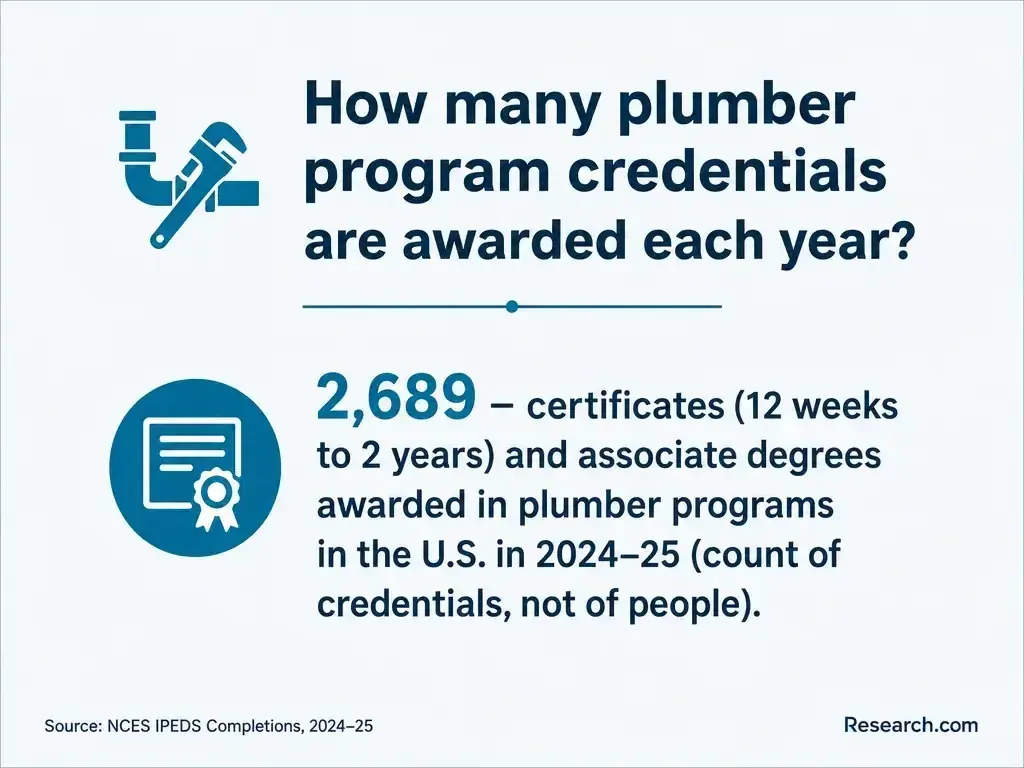
There is no single defensible statewide average for all plumbing pathways: school tuition, apprenticeship instruction, and employer-paid training are priced differently, and college datasets do not capture every sponsor. For 2027 enrollment, obtain a current, written estimate from each provider rather than treating a prior-year advertised tuition as your total cost.
Use the same cost categories for every option so a low-tuition program does not appear cheaper merely because it excludes job-entry expenses.
Ask the provider about federal aid eligibility rather than assuming every short course qualifies (Federal Student Aid). Also check current eligibility with North Dakota Career Builders and Job Service North Dakota for relevant assistance. Comparisons with cheapest associate degrees online should not obscure plumbing's required hands-on and supervised-work costs.
Depending on the provider, you may earn a completion certificate, diploma, or credit-bearing credential. A registered apprenticeship has its own completion documentation. These records describe training; they are not a North Dakota journeyman or master plumber license, and a school-issued certificate is not the same as apprenticeship registration (North Dakota State Plumbing Board; U.S. Department of Labor).
Confirm the exact credential name, who issues it, and whether employers or apprenticeship sponsors recognize its coursework. If you may continue training later, ask whether credits or documented prior learning receive advanced standing - and get the receiving program's answer in writing before relying on it. Industry credentials, where offered, are separate from state occupational licensure.
School admission rules vary by provider; apprenticeship entry is a separate employer or sponsor decision. Request the current requirements for education, math preparation, identification, physical work, scheduling, and any screening. Do not assume acceptance into a classroom program also secures a paid position or an apprenticeship registration.
Ask an apprenticeship coordinator when applications open, whether an employer must hire you first, and how related instruction fits the work schedule. Career changers comparing accelerated online associates business degree options with plumbing should account for this additional, work-based entry step - not just admission to classes.
Relevant training covers measuring and layout, pipe and fixture installation, joining methods, drainage and venting, water systems, tool use, and interpreting plans and applicable codes. Safety and diagnosing faults matter as much as installing new work. The BLS Occupational Outlook Handbook describes plumbers as installing and repairing piping systems, which is why supervised practice should complement technical instruction.
Review the actual shop syllabus: How many sessions involve installing and testing systems, rather than watching demonstrations? How is work assessed? Also ask whether code instruction reflects North Dakota requirements and who updates it when rules change. A program emphasizing only theory may be useful preparation, but it should not be mistaken for worksite competence.
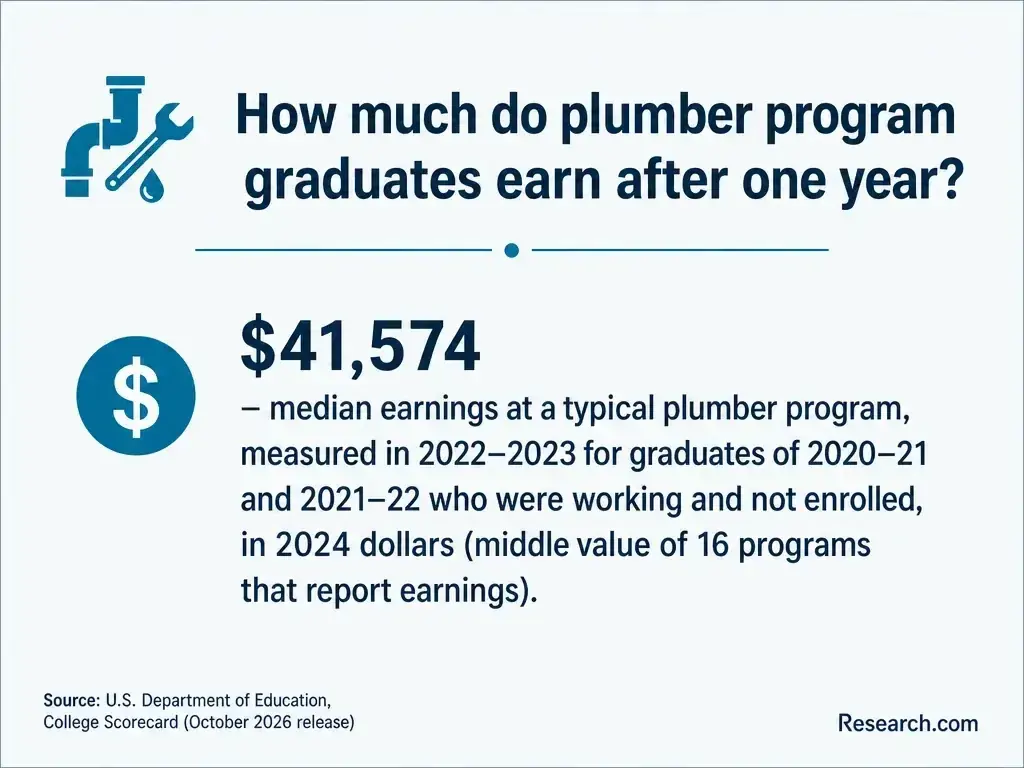
Licensing matters for the level of plumbing work you intend to perform. North Dakota's State Plumbing Board oversees apprentice registration and plumber licensing. A trainee can enter through supervised work, but completing a school program does not itself authorize independent practice. Progression toward journeyman and master status involves Board requirements for documented experience and examinations; verify the current requirements for your intended license directly with the Board before choosing training.
Keep separate records of school coursework, apprenticeship registration, supervised hours, and exam results. Institutional accreditation addresses the school, while apprenticeship registration and occupational licensure address different requirements. Neither an optional industry certificate nor an accredited school credential substitutes for a state license.
Start with your intended job: residential service, commercial plumbing, or a related pipe trade. Then compare programs on total cost, practical training, employer connections, and the route to Board requirements. The lowest-price option is not necessarily the least expensive path to licensed work if it adds travel, delays a paid apprenticeship, or provides little usable practice.
Before paying a deposit, get clear answers to these questions and verify licensing claims independently:
Ask providers such as North Dakota State College of Science or Turtle Mountain Community College about current plumbing-related offerings rather than assuming a particular course is available for 2027. Resources on top accredited non-profit schools can help explain institutional accreditation, but that status alone does not establish plumbing-license eligibility. A warning sign is any promise of independent practice based solely on graduation.
A practical progression is trainee or registered apprentice, then licensed journeyman after meeting Board requirements, with master-level or supervisory work as a possible later goal. Some workers focus on service and repair; others pursue construction installations or related pipe trades. Each step depends on the applicable experience, examination, and employer requirements - not simply time since completing school (North Dakota State Plumbing Board; BLS Occupational Outlook Handbook).
If your goal is hands-on installation and repair, paid supervised training may offer a clearer return than paying for coursework without an employer connection. If you are also comparing non-trade options such as an accelerated online associates business degree, assess them against the kind of work you actually want; a lower sticker price or shorter schedule does not make either path a better fit by itself.
The latest national BLS projection supplied for plumbers, pipefitters, and steamfitters is 6.8% employment growth from 2025 to 2035. That describes a combined U.S. occupation, not a forecast of North Dakota plumbing vacancies or a guarantee of work after training.
Use the projection as background, then test demand where you plan to live: ask local apprenticeship sponsors about openings, project locations, and whether work is primarily service or construction. This is especially important if commuting between a rural home, classes, and changing worksites would affect whether an otherwise affordable pathway is sustainable.
Investing in training is an important decision, so Research.com compares programs with other programs in the same occupation and location rather than with unrelated schools nationwide. The Most Affordable ranking includes only programs reporting completions to IPEDS. It scores tuition, cost of attendance, median student debt, and federal loan default rate; an entropy-based method assigns more weight to cost and debt measures that differ more across programs. Accreditation and other quality indicators are not part of this affordability score. Readers should therefore use the ranking as a cost comparison, then independently check hands-on training and licensing fit.
The Research.com team uses the following sources to check program, institutional, cost, and occupational information. Some sources cover other trades and may not be directly applicable to plumbing; their inclusion does not mean a plumbing program holds an unrelated health or dental accreditation.
IPEDS does not capture every union, employer-sponsored, or other apprenticeship option. An unranked provider is not necessarily unapproved or inferior. See Research.com's methodology for more on how rankings are created.
# 1 position
# 2 position

Do not assume it is the only route. Supervised apprenticeship is central to the trade; school can provide preparation or related instruction. Confirm your proposed route with the North Dakota State Plumbing Board and an apprenticeship sponsor.
An online course may teach theory, but it does not replace required hands-on competence, supervised experience, examinations, or Board licensing requirements.
It may reduce out-of-pocket cost and let you earn while training, but compare instruction charges, tools, travel, wages, and the time needed to secure a position before deciding.
No. The ranking includes programs with completions reported to IPEDS. Compare union, employer, and other registered apprenticeship opportunities separately.
Get current written pricing, the credential and practical-training schedule, and an explanation of how the program connects to supervised work. Check licensing implications with the State Plumbing Board rather than relying on a promotional claim.