# 1 position


Audited and Verified:
Our Editorial and Data Verification Process
Research.com uses government datasets, official education statistics and primary institutional information to support its career and degree guides. Our review process checks factual accuracy, occupational definitions, source dates and the requirements associated with the credentials discussed.
How This Article Was Fact-Checked
Our editorial team verifies salary estimates, employment projections, education requirements and program information against original data providers and official organizations. Salary figures are checked against the relevant occupational definitions and reporting periods. Information about licensure, accreditation and required in-person training is reviewed separately.
Fact-checked and verified on:

Co-Founder and Chief Data Scientist

Reviewed by Karolina Broda
Fact-Checker and Data Verification
Choosing affordable plumbing training means comparing more than tuition: you need a path to hands-on work without taking on unnecessary debt. The U.S. Bureau of Labor Statistics reports a $63,800 national median annual wage for plumbers, pipefitters, and steamfitters in May 2025, though beginners may earn less. This guide explains Mississippi training routes, costs, credentials, and work requirements. It will also feature a Most Affordable Plumber Trade Schools in Mississippi for 2027 ranking, created by the Research.com team of data scientists to help students make informed choices about programs worth considering.
Expect a combination of classroom instruction and supervised practice: reading plans, measuring and joining pipe, installing fixtures, testing systems, and working safely under applicable codes. A school program can prepare you to seek an entry-level job, but proficiency develops through repeated work on real installations and repairs. Ask how much of the schedule involves a shop, lab, or worksite rather than demonstrations alone.
The routes below lead to different credentials and different amounts of paid experience. Compare them against the kind of plumbing work you want to enter.
| Pathway | What it generally provides | Best fit |
| Community college or career-school certificate or diploma | Structured coursework and practical training; the awarded credential is a school certificate or diploma | Someone who wants foundational skills before seeking supervised employment |
| Registered apprenticeship | Paid, supervised work plus related instruction; a recognized completion credential after meeting sponsor requirements | Someone ready to earn while training and commit to a longer work-based route |
| Employer-sponsored entry | Training on the job; recognition and instruction vary by employer | Someone with a suitable helper position who can confirm the training and advancement plan |
A shorter school program may get you into a helper role sooner, while an apprenticeship integrates wages and extensive jobsite practice from the start. Neither label guarantees that a particular employer will credit prior training. Ask sponsors whether school coursework can reduce required related instruction or provide advanced standing; obtain the answer in writing before enrolling.
Possible workplaces include residential service companies, construction contractors, commercial facilities, hospitals, schools, and industrial sites. These settings call for different skills: service work emphasizes diagnosis and customer communication, while new construction emphasizes plans, layout, and coordinated installation. Pipefitting and steamfitting may involve different systems and training; do not assume a plumbing certificate covers every pipe-trades job.
Location affects both opportunity and cost. Someone outside a population center should ask where the program places trainees and where required worksite training occurs. A low tuition bill can be less attractive if repeated travel to a shop or employer makes attendance difficult. Before committing, compare local helper openings and apprenticeship sponsors with the program's actual placement network.
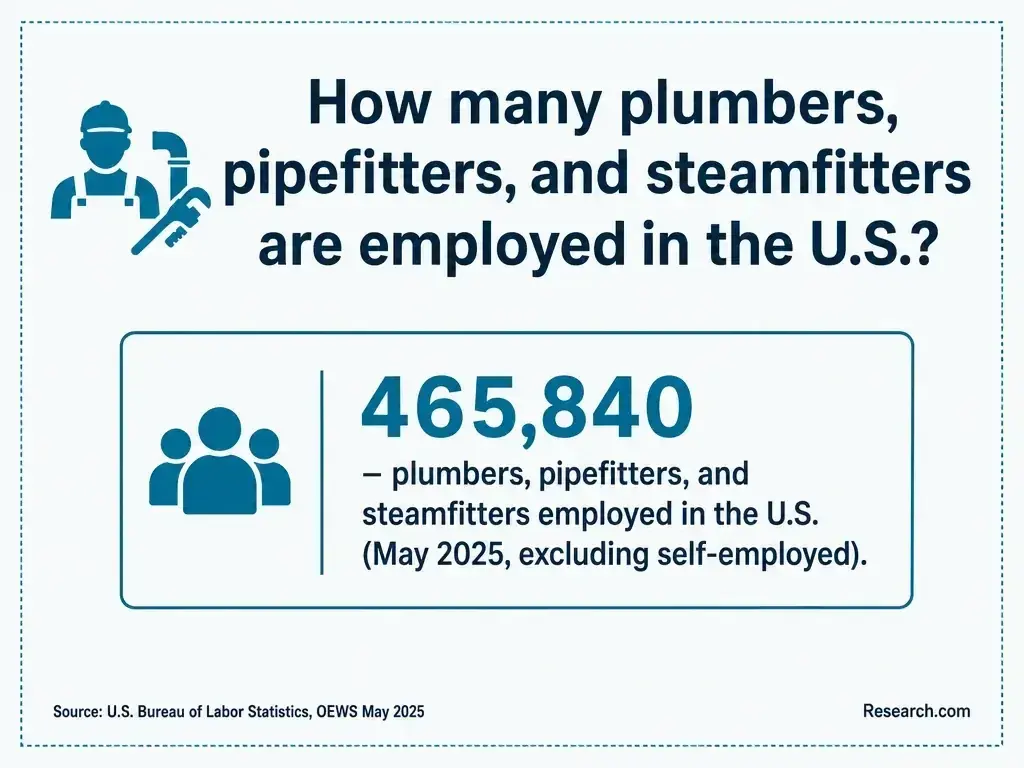
A Mississippi-specific wage should come from a clearly dated state or metropolitan occupational wage release; the national figure is not a substitute. The U.S. Bureau of Labor Statistics reports a $63,800 national median annual wage for plumbers, pipefitters, and steamfitters in May 2025. That combined-occupation median includes experienced workers and should not be used as an expected offer for a new plumbing trainee.
For a useful local comparison, look up Mississippi wages for that same occupational group through the state labor-market agency or BLS, then ask prospective employers about actual helper or apprentice pay, wage progression, and paid hours. Service, construction, and industrial positions can differ in scheduling and work as well as compensation. A realistic training budget should use an entry-level offer you can substantiate, not the national median.
There is no single statewide completion time for plumbing school. Certificates and diplomas follow each provider's published course sequence, while registered apprenticeships combine related instruction with supervised employment over a longer period. The hours that matter are the hours your specific school or apprenticeship sponsor requires; do not assume a short certificate substitutes for a sponsor's work-experience requirement.
Ask for the calendar in terms of start dates, weekly lab time, total contact hours, and the date you could realistically begin paid work. Working adults comparing the quickest online degree programs for working adults should not apply that shortcut to plumbing: even accelerated plumbing coursework cannot replace hands-on practice. Part-time study may preserve current earnings but extend the time before you can seek a plumbing job.
Online delivery can work for terminology, calculations, plan reading, and code concepts. It cannot by itself demonstrate that you can cut and join pipe, install a fixture, find a leak, or work safely at a jobsite. Compare programs marketed as best online trade schools by identifying exactly where their plumbing labs and supervised practice take place - not by the amount of coursework available remotely.
For a rural student, hybrid lessons may reduce classroom trips, but required shop sessions, assessments, and employer work still create travel costs. Request the in-person schedule and equipment list before enrolling. An entirely online course may be useful preparation, but it should not be treated as equivalent to a hands-on program or assumed to satisfy a contractor, employer, or apprenticeship sponsor's requirements.
There is no defensible single average that covers Mississippi college programs, private career training, paid apprenticeships, and employer instruction on comparable terms. Published tuition may also omit costs needed to become job-ready. Compare written, program-specific estimates instead; for a public college, confirm whether the quoted rate applies to your residency status.
Request an itemized budget for tuition, mandatory fees, books or digital materials, tools, consumables, and required safety equipment. Add travel to labs and worksites, any applicable examination or application charges, and earnings you would forgo while attending. Subtract only aid or employer support for which you are actually eligible. Federal Student Aid notes that federal aid eligibility depends on both the student and the eligible institution and program; a registered apprenticeship may instead pay wages while you train.
The cheapest sticker price is not necessarily the least costly route. A nearby program with reliable labs and a workable schedule may cost less overall than one that requires long drives or delays paid employment.
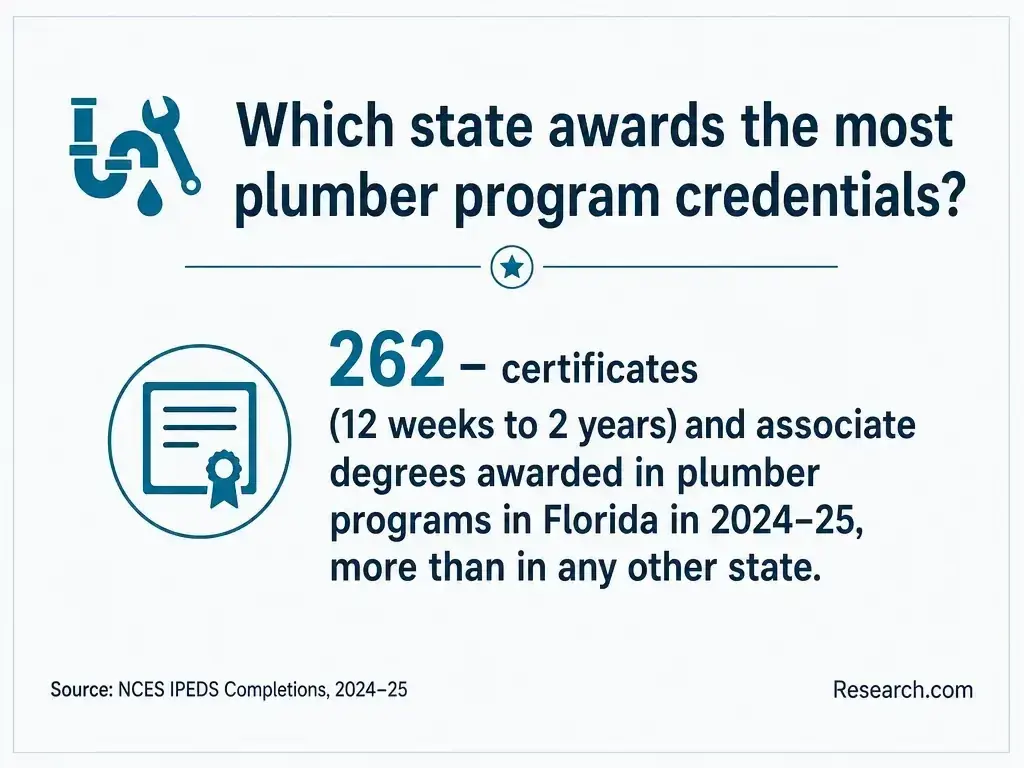
Check the exact award on the program page: it may be a certificate, diploma, or, where offered, an associate degree. These are educational credentials, not interchangeable proof of jobsite experience or permission to operate a plumbing contracting business. A registered apprenticeship has its own completion credential and documented work-based training. Industry credentials, such as those associated with NCCER training, should also be identified separately from school awards and government licenses (NCCER).
Choose by occupational goal rather than by how impressive a credential sounds. If you want a fast route to supervised entry-level work, ask whether local employers hire from the short program. If you want to run a contracting business eventually, check the Mississippi State Board of Contractors' requirements independently. Searches for a phd without a dissertation do not answer the relevant plumbing question: whether the training documents practical skills and supports the next step toward your intended work.
School entry rules vary. Ask the provider whether it requires a high school credential, placement assessment, minimum age, or proof that you can meet shop safety expectations. An apprenticeship sponsor may separately assess applicants and require that they can report reliably to jobsites; admission to a school does not guarantee an apprenticeship position.
Application cost is a small part of this decision. Even if you are also reviewing accredited online colleges offering free enrollment applications, confirm the plumbing provider's own admission rules, hands-on schedule, and total charges. Ask whether prior construction experience or completed coursework earns credit, and whether an apprenticeship sponsor - not just the school - will recognize it.
A useful curriculum should move from safety and trade math to interpreting drawings, selecting materials, assembling supply and drainage systems, installing fixtures, and testing and troubleshooting work. Students also need practice following applicable plumbing codes and communicating with customers and other trades. The U.S. Bureau of Labor Statistics describes reading plans, installing and repairing piping, and testing systems among the occupation's core duties.
Look past the course titles. Ask to see the equipment students use, the tasks they must perform to pass practical assessments, and who supervises that work. If your goal is service plumbing, a program dominated by new-installation demonstrations may leave you needing more diagnostic practice; if your goal is construction, verify that you will read plans and perform layout.
Do not confuse training with authorization to contract. The Mississippi State Board of Contractors regulates covered contracting work and lists plumbing classifications. Whether a state contractor license is required depends on the work and applicable project rules; local authorities can also impose requirements relevant to performing plumbing work. Check the board and the city or county where you plan to work before accepting an independent job (Mississippi State Board of Contractors).
A school certificate, an optional industry credential, apprenticeship registration, and a contractor license serve different purposes. None automatically grants the others. Before enrolling, describe your intended first job and long-term goal to the provider, then ask which requirements the program actually helps you meet. If you plan to work as an employee under a contractor, ask that employer what supervision and credentials it requires; if you plan to bid work independently, confirm licensing, examination, and experience rules directly with the board.
Start with the job you want, then compare pathways on total cost, practical training, and access to paid work. An affordable-program ranking is a starting point, not a finding that every listed program offers the same lab time or leads to the same employment opportunity. Hinds Community College, for example, should be assessed through its current program description, published charges, schedule, and available hands-on facilities - not on institutional name alone.
Use these checks when speaking with a school or apprenticeship sponsor; they reveal costs and gaps that a tuition comparison can miss.
A common mistake is choosing the fastest advertised option without checking the work it lets you do. Searching for the easiest online degree to get is not a useful test for plumbing training: physical competence, an affordable route into supervised work, and employer recognition matter more. For return on investment, compare the full cost and debt with likely entry pay, time until paid work, your chance of finishing, and the earnings you would otherwise have made; do not treat a later-career median wage as an immediate payoff.
A practical first step is a supervised plumbing helper or apprentice role. With experience, workers may take on more complex installation, service diagnosis, estimating, or crew leadership. Some eventually pursue independent contracting, subject to applicable Mississippi and local rules. These are progression possibilities, not automatic outcomes of completing a certificate.
Choose initial training that matches the branch you want to explore. Residential service rewards troubleshooting and customer interaction; commercial installation places more emphasis on plans and coordination; industrial piping can require different methods and employer-specific preparation. Ask whether the program's employers and worksites match that goal, and expect additional supervised experience before moving into advanced responsibilities.
The U.S. Bureau of Labor Statistics projects 6.8% national employment growth from 2025 to 2035 for plumbers, pipefitters, and steamfitters. This is a combined-occupation U.S. projection, not a Mississippi forecast or a guarantee of local vacancies. Use it as background, then check Mississippi's state occupational projections and current openings for the locations where you could realistically commute.
Demand for installation and repair does not mean every training route offers equal access to a first job. Ask providers and apprenticeship sponsors which employers take beginners, how often cohorts start, and whether hiring is concentrated near their training sites. That local evidence is more actionable than a national growth rate when deciding whether to enroll now or seek paid entry-level work first.
Education is a consequential investment, so the Research.com team built this ranking to help readers compare plumbing programs against other reported options in Mississippi - not against unrelated trades or distant markets. The team checks multiple education and industry sources to support credible, consistent comparisons. Only programs with completions reported to IPEDS are eligible; an apprenticeship or employer program absent from the ranking may still be a strong option.
The most affordable ranking scores costs and debt only: tuition, cost of attendance, median student debt, and federal loan default rate. Indicator weights are assigned using an entropy-based method, which gives more weight to measures that vary more across eligible programs. Accreditation, student support, completion, and earnings do not enter this affordability score. Readers should therefore use the ranking to shortlist programs, then verify practical training and career fit separately. Details of the approach appear in Research.com's methodology.
The team used the following databases and organizations in developing and checking its trade-school rankings. Some cover occupations other than plumbing; their inclusion does not imply that their approvals apply to a plumbing program.
# 1 position
# 2 position
It can be if its hands-on training, total cost, and employer connections suit your intended first job. Compare it with paid apprenticeships and employer training before committing.
Yes. A registered apprenticeship combines paid supervised work with related instruction. Check sponsor entry rules, openings, work locations, and whether prior coursework receives credit (Apprenticeship.gov).
Online lessons can cover theory, but installing, testing, and repairing systems requires in-person practice. Verify where and how any advertised online program assesses those skills.
No. A school credential does not itself grant a contractor license. Confirm Mississippi State Board of Contractors requirements and applicable local rules for the work you plan to perform.
Request the full cost of attendance, including fees, tools, safety gear, materials, and travel. Ask what aid applies and whether training delays or includes paid work.