
Best Physical Therapist Assistant Training Programs & Trade Schools - Top PTA Schools in Buffalo for 2026

Co-Founder and Chief Data Scientist
If you’re considering a career as a physical therapist assistant in Buffalo, choosing the right trade school is a crucial first step. This article presents a carefully crafted physical therapist assistant trade school programs ranking created by the Research.com team of data scientists to help you make an informed decision.
By exploring these top programs, you’ll discover valuable options that align with your goals and budget. Earning a diploma or certification in this field opens doors to a rewarding career focused on helping others and achieving personal growth.
Take the time to learn about the best schools and find the path that’s right for you.
Key benefits of finishing physical therapist assistant trade school in Buffalo
- Graduates from physical therapist assistant trade schools in Buffalo can expect an average salary around $63,000 per year, with hourly wages typically near $30, offering a rewarding and stable income early in their careers.
- Career paths for graduates are diverse, including roles in hospitals, outpatient clinics, and skilled nursing facilities, as seen with successful alumni from popular Buffalo trade schools who find fulfilling work in various healthcare settings.
- Completing a physical therapist assistant program online provides flexibility and convenience, allowing students to balance studies with personal commitments, similar to graduates from well-known Buffalo online PTA programs who appreciate this adaptable learning style.
- Best Physical Therapist Assistant Training Programs & Trade Schools - Top PTA Schools in Buffalo for 2026
- What can I expect from physical therapist assistant trade schools in Buffalo?
- Where can I work after finishing physical therapist assistant trade schools in Buffalo?
What can I expect from physical therapist assistant trade schools in Buffalo?
Students entering physical therapist assistant trade school programs in Buffalo can expect a rigorous blend of classroom learning, hands-on labs, and immersive clinical experiences. Graduates from Niagara County Community College and Genesee Community College often describe balancing detailed coursework in functional anatomy, kinesiology, and therapeutic exercise with practical skills like patient positioning and gait training using assistive devices.
Clinical rotations are a highlight, starting as early as the second semester at NCCC, where students spend weeks in diverse Western New York healthcare settings. This real-world exposure helps build confidence and adaptability, working with different patient populations, from pediatric to geriatric care.
Many students feel a strong sense of accomplishment mastering physical therapy modalities such as hydrotherapy and electrotherapy. The structured programs, typically spanning 20 months to two years, demand dedication but offer rewarding outcomes-GCC reports over 90% of its graduates pass the licensing exam, with full employment within a year, reflecting the solid preparation Buffalo schools provide.
Where can I work after finishing physical therapist assistant trade schools in Buffalo?
Graduates of physical therapist assistant trade school programs in Buffalo often find rewarding employment across a variety of healthcare settings. Many begin their careers in hospitals, outpatient clinics, or rehabilitation centers, where they assist licensed physical therapists with patient care and mobility exercises. Skilled nursing facilities and home healthcare agencies also frequently hire PTAs, offering opportunities to work closely with patients in both clinical and home environments.
Buffalo trade school graduates report feeling confident stepping into roles within orthopaedics, post-rehabilitation, and long-term care settings, often supported by employers willing to provide additional on-the-job training. Some even branch out into chiropractic offices or fitness clinics, engaging in soft tissue therapy and personalized patient interaction.
Local job postings reveal strong demand, with over 100 active PTA positions in Buffalo. Graduates from well-regarded trade schools appreciate the flexibility to choose full-time or part-time schedules and the chance to grow professionally while earning competitive wages starting between $27 and $32 per hour, rising to $52 for experienced practitioners.
After completing a physical therapist assistant trade school program in Buffalo, graduates typically earn an average annual salary of about $62,995. Many find entry-level roles offering hourly wages near $30 per hour, which aligns well with the city's health care market. For example, graduates from popular Buffalo trade schools often share how they quickly move into stable positions at local clinics or rehabilitation centers, feeling confident in their ability to support patient recovery while earning a solid income.
Starting salaries usually range from $25 to $30 per hour, with some employers offering up to $35 per hour for more experienced PTAs. New graduates sometimes begin closer to $25 per hour, but as they gain hands-on experience or specialized skills, many advance to roles paying over $40 per hour. One recent graduate described their first job at a nursing facility paying $26 per hour and noted steady raises as they took on more responsibility.
Buffalo's PTA job market supports steady income growth, making trade school programs a practical investment for those seeking rewarding, well-paying careers in physical therapy assistance.
- PTA programs in Buffalo usually last two years and lead to an Associate in Applied Science (A.A.S.) degree.
- Admission requires a high school diploma or equivalent, with coursework in biology and chemistry or physics, and often a minimum GPA around 2.8.
- Programs include classroom learning and clinical placements in healthcare settings to build practical skills required for licensure.
- Tuition ranges from $5,000 to $10,000 per year for in-state students, excluding fees and living expenses.
- Graduates must pass a national exam and meet New York State requirements to become licensed PTAs.
- Starting salaries range from $48,000 to $55,000 annually, with experienced PTAs earning up to $65,000 or more.
Completing a physical therapist assistant trade school program in Buffalo typically takes about two years. Graduates from well-known Buffalo trade schools often share how this timeframe allowed them to balance hands-on clinical experience with classroom learning effectively. For example, many students describe beginning their clinical rotations by the second semester, which quickly builds confidence and practical skills in real-world settings like outpatient clinics and rehabilitation centers.
Students frequently mention that the structured schedule of Buffalo's trade schools helped maintain motivation and focus, making the two-year period feel manageable and rewarding. The programs are designed to be intensive but supportive, enabling students to see steady progress toward their career goals.
Many graduates highlight that finishing within two years gave them the ability to enter the workforce quickly, bringing enthusiasm and readiness to their first physical therapy assistant roles. This timeframe is ideal for those eager to start making a positive impact on patients' recovery journeys without extended delays.
The primary difference between online and on-campus physical therapist assistant (PTA) programs in Buffalo centers on how coursework and hands-on training are delivered. Graduates from Niagara County Community College (NCCC) and Genesee Community College (GCC) often recall the value of in-person instruction, where they gained confidence through direct practice in labs. These sessions involved patient transfers, gait training, and using therapeutic tools under close faculty supervision, creating a real-world clinical atmosphere that online formats cannot fully replicate.
While some theoretical courses might be offered online elsewhere, CAPTE accreditation mandates substantial in-person clinical education. Buffalo students appreciate this requirement because it ensures they develop essential manual skills and patient interaction abilities before entering healthcare settings. Those who experienced the on-campus programs often highlight the supportive environment and immediate feedback from instructors, which helped them feel prepared and motivated.
In short, students aiming for PTA licensure in Buffalo understand that even hybrid or online options require dedicated on-site attendance to meet state and professional standards.
The average cost of physical therapist assistant programs in Buffalo varies notably depending on residency and the institution chosen. For example, graduates from Genesee Community College pay tuition fees of $5,250 annually for New York State residents, while out-of-state students face slightly higher fees of $5,850 per year. These tuition fees are complemented by mandatory annual charges of $650 for full-time students. Many graduates recount that managing these costs feels achievable with proper planning, especially when considering the overall value of hands-on training and career preparation.
Tuition fees for physical therapist assistant schools in Buffalo can differ, as seen with Villa Maria College, which does not publicly disclose specific tuition rates, prompting prospective students to contact the school for the most up-to-date information. Many students appreciate this direct approach, as it allows for personalized guidance and a clearer understanding of financial commitments. Graduates often highlight the importance of investigating all associated costs beyond tuition, such as textbooks and clinical internship expenses.
For instance, textbooks throughout the two-year program at Genesee Community College are estimated to total around $1,350. Clinical internships also add expenses like health and malpractice insurance. Despite these costs, former students frequently express satisfaction with their investment, noting the comprehensive education prepares them well for entry into the healthcare workforce.
Prospective students in Buffalo aiming to navigate the financial aspect of their education are encouraged to explore scholarships, grants, and other financial aid options available through their institutions or external sources. Learning more about how to become a pt and planning accordingly can greatly ease this journey while advancing toward a rewarding healthcare career.
Students enrolled in physical therapist assistant programs in Buffalo commonly access financial aid through the Federal Student Aid program, which includes Pell Grants, FSEOG awards, and federal loans. Graduates from Bryant & Stratton College recall how Pell Grants significantly eased their tuition burden, allowing them to focus more on hands-on learning rather than worrying about finances. Completing the FAFSA is essential to unlock these benefits, especially since Pell Grants do not require repayment, offering peace of mind to those with limited income.
New York State residents benefit further from the Tuition Assistance Program (TAP), which can provide up to $5,665 annually for full-time students at approved institutions like Niagara County Community College. This grant, awarded based on income, helped many local students afford their education without accumulating debt.
Additionally, institutional scholarships from Buffalo-area schools and private scholarships targeting healthcare fields provide valuable support. Graduates often emphasize how proactive engagement with financial aid offices revealed opportunities that made clinical internship costs and exam fees more manageable, enhancing their overall educational experience.
To enroll in a physical therapist assistant trade school program in Buffalo, applicants typically need to meet specific prerequisites designed to ensure readiness for the demanding coursework and clinical practice. Most trade schools require a high school diploma or GED as a basic educational foundation. Graduates from Buffalo's well-regarded programs often emphasize the importance of strong science and math skills, especially in biology and anatomy, which are crucial for understanding physical therapy concepts.
Applicants usually must submit:
- Official high school transcripts or equivalent certification
- Proof of CPR certification, often completed before or early in the program
- Clear background checks and immunization records to prepare for clinical placements
- Completion of prerequisite courses such as English and basic sciences, depending on the school's curriculum
Students from popular Buffalo trade schools share that having prior volunteer or work experience in healthcare settings can enhance acceptance chances and build confidence. These experiences help prospective students visualize their future roles and foster enthusiasm for patient care. The structured prerequisites ensure that candidates are equipped to thrive in both classroom learning and hands-on clinical environments.

Physical therapist assistant trade school programs in Buffalo typically include a variety of courses designed to build both theoretical knowledge and practical skills essential for success in the field. Graduates from popular programs like those at Niagara County Community College and Genesee Community College often reflect on how these courses prepared them for real-world challenges.
Core courses cover:
- Anatomy and physiology, providing a deep understanding of the human body's structure and function.
- Kinesiology, which focuses on human movement and helps students grasp how to assist patients effectively.
- Medical terminology, essential for clear communication within healthcare settings.
- Physical Therapy Interventions, where students learn hands-on techniques such as patient positioning, safe transfer methods, and the use of assistive devices.
Lab sessions enhance skills like palpation, goniometry, massage, and gait training, enabling students to confidently handle patient care scenarios. For instance, a GCC graduate recalls practicing joint angle measurements repeatedly until feeling fully competent before clinical rotations.
Additionally, courses in professional ethics, patient communication, and healthcare law prepare students to interact empathetically and responsibly with patients and colleagues, ensuring a well-rounded, positive learning experience throughout their training.
Physical therapist assistant trade school programs in Buffalo commonly offer specializations that prepare students for dynamic roles within healthcare and rehabilitation. Popular areas of focus include Sports Therapy and Exercise Science, which emphasizes injury assessment, treatment, and prevention-offered by institutions like Erie County Technical School. Graduates often describe how hands-on training in strength and conditioning boosted their confidence in real-world clinical settings.
The Sports and Exercise Health Care specialization, available at Canisius University, provides an interdisciplinary curriculum covering emergency care, therapeutic rehabilitation, and extensive clinical hours. Students appreciate how this approach equips them with versatile skills applicable in athletic training and physical therapy careers.
Other students at Bryant & Stratton College and Villa Maria College highlight the thorough Physical Therapy Assistant Programs that blend classroom theory with practical clinical experience, preparing them for the National Physical Therapist Assistant Examination.
Typical specializations include:
- Physical Therapy Assistant Training
- Personal Training and Fitness
- Rehabilitation Aide Roles
To select the best physical therapist assistant programs in Buffalo, prioritize accreditation by the Commission on Accreditation in Physical Therapy Education (CAPTE). Graduates from accredited programs, such as those at Niagara County Community College or Bryant & Stratton College, benefit from comprehensive curricula blending classroom theory, laboratory practice, and full-time clinical internships. Graduates often describe their clinical experiences in diverse settings-hospitals, nursing homes, or rehabilitation centers-as crucial to building confidence and real-world skills.
Comparing PTA school costs and outcomes in Buffalo is essential. For example, Genesee Community College boasts over 90% NPTE pass rates and nearly all job-seeking graduates secure employment within a year, reassuring prospective students about return on investment and career readiness. Flexibility in scheduling, including part-time options, helps accommodate busy lifestyles, while admissions criteria and support services ensure alignment with your academic background. Many students find attending informational sessions invaluable for gaining insights into program demands and culture. For those exploring options outside traditional degrees, exploring certificates that make money can also supplement career growth.

Physical therapist assistant trade school graduates in Buffalo find a variety of rewarding career paths within the healthcare system. Positions span diverse environments such as hospitals, skilled nursing facilities, outpatient clinics, rehabilitation centers, and home healthcare agencies. Graduates often share experiences of hands-on learning at popular Buffalo trade schools that prepare them to confidently support licensed physical therapists by delivering therapeutic exercises and patient education tailored to individual treatment plans.
Many enjoy the flexibility offered by physical therapist assistant jobs in Buffalo NY, which include full-time, part-time, and per diem roles. Some specialize in pediatric therapy, working with children facing developmental challenges, while others find fulfillment assisting geriatric patients in long-term care or engaging in sports medicine and post-acute rehabilitation settings.
Opportunities for advancement motivate many graduates to pursue certifications or further education to become licensed physical therapists. For students curious about additional healthcare fields, exploring what is the easiest medical degree to get can also provide valuable insights.
The physical therapist assistant job market Buffalo NY graduates face is robust and welcoming, reflecting steady demand across local healthcare settings. Graduates from Buffalo's popular trade schools often share positive experiences about quickly securing positions in hospitals, outpatient clinics, and rehabilitation centers. Many find that employers such as Elderwood, Sigma Health Rehab, and Kaleida Health actively seek skilled PTAs, offering diverse work environments and flexible schedules. This dynamic job market allows new PTAs to choose from full-time, part-time, or per diem roles, supporting varied lifestyle needs.
Salary prospects align well with the physical therapist assistant salary outlook Buffalo professionals expect, with average hourly wages near $30.95 and annual salaries around $63,000. Entry-level PTAs, often fresh from local trade schools, can anticipate starting wages close to $25 per hour, increasing with experience and specialization. Job openings frequently appear on platforms noted for healthcare jobs in the medical field list, signaling strong employer demand.
- Steady, active hiring in Buffalo healthcare institutions
- Diverse employer options including hospitals and nursing homes
- Flexible job arrangements suited for new graduates
- Competitive wages aligned with regional trends
Best Physical Therapist Assistant Training Programs & Trade Schools - Top PTA Schools in Buffalo for 2026
# 1 position
Bryant & Stratton College-Buffalo - Physical Therapy Assistant.
associateThe Physical Therapy Assistant program at Bryant & Stratton College-Buffalo offers a hybrid learning format. It prepares students to assist physical therapists by implementing treatment plans, training patients, and documenting progress. The curriculum covers anatomy, physiology, biomechanics, and professional ethics. Annual in-state tuition is $19,126. Graduates have median earnings of $32,115 one year after completion. The program is accredited by the Middle States Commission on Higher Education.
# 2 position
Villa Maria College - Physical Therapy Assistant.
associateVilla Maria College offers a Physical Therapy Assistant program with a hybrid format, including some distance-education options. The program prepares students to assist physical therapists by implementing treatment plans, training patients, and conducting interventions. Coursework covers anatomy, physiology, biomechanics, clinical documentation, and professional ethics. Annual in-state tuition is $28,670. Graduates have median earnings of $31,909 one year after completion. The program is accredited by the Middle States Commission on Higher Education.
Frequently Asked Questions about physical therapist assistant
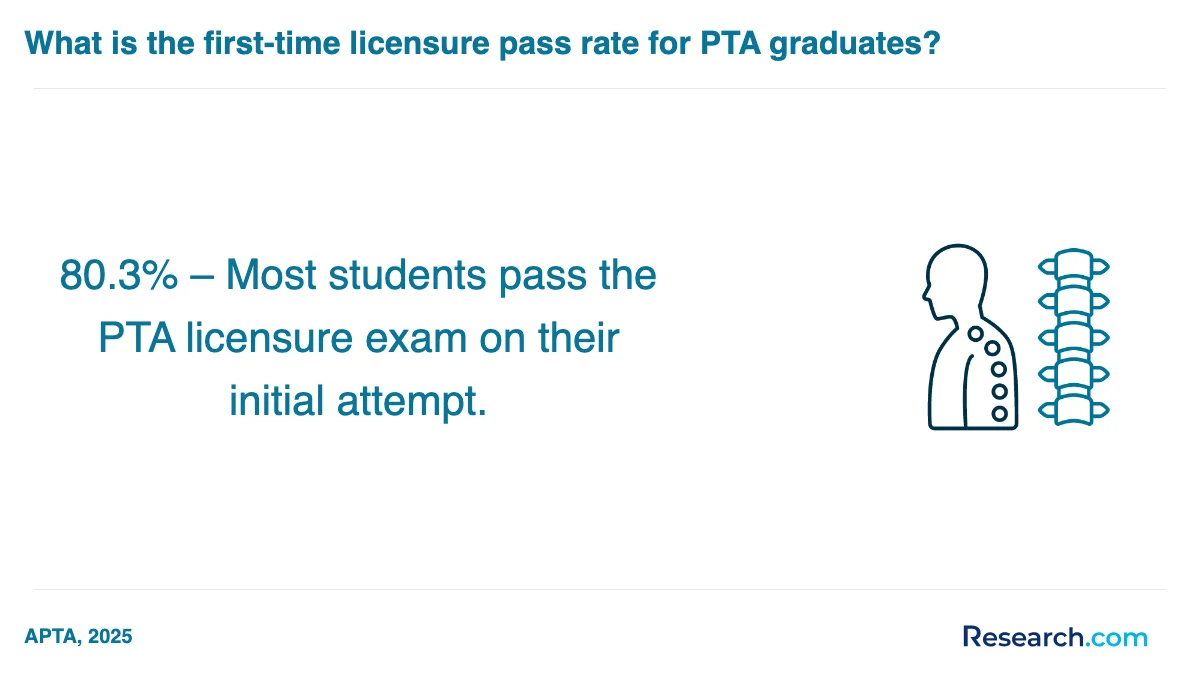
After completing a physical therapist assistant (PTA) trade school in Buffalo, preparing for the job market involves several key steps. First, graduates must pass the National Physical Therapy Exam (NPTE) for PTAs, which is required for licensure in New York State. According to the Federation of State Boards of Physical Therapy, the pass rate for first-time test takers is approximately 85%, highlighting the importance of thorough exam preparation.
Networking with local clinics and hospitals in Buffalo can improve employment prospects. The Buffalo Niagara Medical Campus and regional rehabilitation centers often seek qualified PTAs. Additionally, gaining experience through clinical rotations during training helps build practical skills and professional connections.
Finally, staying informed about job openings on platforms like the New York State Department of Labor's website can give graduates a competitive edge in Buffalo's growing healthcare sector.
Employers in Buffalo seek physical therapist assistant graduates who demonstrate strong clinical skills and patient care abilities. Proficiency in therapeutic exercises, modalities, and patient mobility support is essential. According to the U.S. Bureau of Labor Statistics, effective communication and teamwork are highly valued, as assistants often work closely with physical therapists and patients.
Local healthcare providers emphasize adaptability and critical thinking due to Buffalo's diverse patient population and varying healthcare settings. Additionally, knowledge of electronic health records (EHR) and adherence to safety protocols are increasingly important. These skills ensure graduates can provide high-quality care and meet employer expectations in Buffalo's competitive job market.
Finding internships in Buffalo relevant to physical therapist assistant (PTA) programs involves a strategic approach. Start by contacting local trade schools and community colleges offering PTA programs, as they often have established partnerships with healthcare facilities.
Hospitals, rehabilitation centers, and outpatient clinics in Buffalo frequently provide internship opportunities. The Buffalo Niagara Medical Campus is a key hub, hosting multiple healthcare providers that may offer clinical placements.
Students should also explore resources from the American Physical Therapy Association (APTA), which maintains a database of clinical education sites. Buffalo has approximately 20 registered clinical sites suitable for PTA students, according to APTA's latest directory.
Networking with faculty and attending local healthcare job fairs can further enhance internship prospects. Early application and clear communication about program requirements are essential to secure quality placements.
Obtaining a physical therapist assistant (PTA) diploma from a trade school in Buffalo significantly enhances career mobility and advancement opportunities. Graduates gain practical skills and state-required credentials, enabling them to enter a growing healthcare field with strong local demand. According to the U.S. Bureau of Labor Statistics, employment for PTAs nationwide is projected to grow 21% from 2022 to 2032, faster than average, with Buffalo reflecting similar trends due to its aging population and healthcare expansion.
In Buffalo, holding a trade school diploma allows PTAs to qualify for licensure exams, which are essential for legal practice and career progression. Licensed PTAs often access higher-paying roles, leadership positions, or specialized clinical settings. Additionally, many local employers prefer graduates from accredited trade programs, enhancing job placement rates.
Trade school diplomas also open pathways for continued education, such as bridge programs to physical therapy degrees, supporting long-term advancement. Data from the New York State Department of Labor underscores that PTA graduates in Buffalo experience above-average wage growth within five years of employment, demonstrating the diploma's positive impact on social mobility and financial stability.
Part-time job opportunities in Buffalo that complement physical therapist assistant (PTA) trade school education often include roles in healthcare support and rehabilitation settings. Positions such as physical therapy aides, home health aides, or rehabilitation technicians provide valuable hands-on experience while allowing students to apply classroom knowledge in real-world environments.
According to the U.S. Bureau of Labor Statistics and local employment data, Buffalo's healthcare sector is growing steadily, with demand for PTA-related support roles expected to increase by about 10% over the next decade. These jobs can improve practical skills and strengthen resumes before graduation.
Working in nursing homes or outpatient clinics is common for PTA students, offering flexible hours that fit around class schedules. Additionally, some students find opportunities assisting in sports therapy facilities or community wellness centers, further broadening their exposure to patient care.
Yes, there are physical therapist assistant degree programs available near Buffalo, NY that provide quality education and training. Institutions near Buffalo, NY offer both associate degree programs and certificate programs, which can be found by researching local community colleges and technical schools. To find the best programs near me, consider using resources like Research.com to compare institutions based on factors such as program accreditation, graduation rates, and student support services.
- Becoming a Physical Therapist Assistant | APTA https://www.apta.org/your-career/careers-in-physical-therapy/becoming-a-pta
- Physical Therapist Assistant Salary by State 2025 https://nurse.org/education/physical-therapist-assistant-salary/
- Physical Therapist Assistants and Aides : Occupational Outlook Handbook: : U.S. Bureau of Labor Statistics https://www.bls.gov/ooh/healthcare/physical-therapist-assistants-and-aides.htm
- How Much Do Physical Therapy Assistants Make? - CBD College https://www.cbd.edu/blog/physical-therapist-assistant/how-much-do-physical-therapy-assistants-make/
- PT vs. PTA vs. Aide: A Guide to Physical Therapy Careers https://www.georgefox.edu/physical-therapy/resources/pt-pta-aide.html
- Physical Therapist Assistant FAQ | Pre-health professions | Academics | College of Health | Oregon State University https://health.oregonstate.edu/academics/pre-health/physical-therapist-assistant
- How to Prepare for PTA School | Requirements and Challenges https://www.provocollege.edu/blog/how-to-prepare-for-pta-school/
- Physical Therapist Assistant (PTA), AAS - LaGuardia Community College https://www.laguardia.edu/majors/physical-therapist-assistant/
- Physical Therapy Assistant Schools & Colleges https://www.trade-schools.net/health-care/physical-therapist-assistant
- Physical Therapist Assistant | SLCC https://www.slcc.edu/ptassistant/index.aspx





