
Most Affordable Medical Assistant Schools & Training - Budget-Friendly Medical Assistant Trade Programs in Utah for 2026

Co-Founder and Chief Data Scientist
Choosing the right medical assistant trade school in Utah can feel overwhelming, but this article is here to help. We've gathered a ranking of top medical assistant programs, carefully developed by the Research.com team of data scientists. This guide makes it easier to compare schools and find the best fit for your goals.
Whether you're starting a new career or seeking certification, earning a medical assistant diploma opens doors to rewarding job opportunities. Reading this article will give you clear insights and confidence to take the next step toward a fulfilling healthcare career.
Key benefits of finishing medical assistant trade school in Utah
- Medical assistant trade school graduates in Utah can expect an average salary around $40,000 per year or $18-$20 per hour, with certified professionals earning even more, making it a rewarding career choice.
- Graduates from popular Utah trade schools often find diverse career paths, including roles in clinics, hospitals, and specialized medical offices, offering great opportunities for growth and stability.
- Completing a medical assistant trade school online provides flexibility and convenience, allowing students to balance work and study, as many online graduates report faster completion times compared to traditional degree programs.
- Most Affordable Medical Assistant Schools & Training - Budget-Friendly Medical Assistant Trade Programs in Utah for 2026
- What can I expect from medical assistant trade schools in Utah?
- Where can I work after finishing medical assistant trade schools in Utah?
What can I expect from medical assistant trade schools in Utah?
Expect a blend of classroom learning, hands-on labs, and clinical externships in Utah's medical assistant trade schools. Graduates from programs like the University of Utah's highlight how 265 hours of curriculum combined with 24 hours of skill labs and 180 hours of real-world clinical experience build confidence for patient care tasks. You'll learn core subjects such as medical terminology, anatomy, pharmacology, and office administration, gaining practical skills like taking vital signs, phlebotomy, and assisting with minor procedures.
Many students appreciate the hybrid format, balancing online coursework with in-person training that fits around their schedules. Externships at local clinics provide supervised, on-the-job experience, often paid, which helps transition smoothly into employment.
Certification eligibility is a key motivator, with programs preparing you for nationally recognized exams like the CCMA or RMA. Flexible class times and options for free tuition at some schools make these programs accessible, even if you're balancing work or family.
Where can I work after finishing medical assistant trade schools in Utah?
After finishing a medical assistant trade school program in Utah, graduates find a variety of job opportunities across the state, from bustling Salt Lake City to quieter rural areas. Many start their careers in hospitals like University of Utah Health or outpatient clinics where they handle both clinical and administrative tasks. Others join private doctors' offices, urgent care centers, or community health clinics, gaining hands-on experience quickly.
Graduates often share that working as a Certified Medical Assistant or Medical Support Assistant in specialty practices such as OB/GYN or pediatric clinics offers rewarding, patient-focused roles. Some also appreciate positions that combine receptionist duties with medical assisting, which improves communication skills and broadens career options.
Popular trade schools in Utah equip students with practical skills that employers value, leading to steady hourly wages around $16.25 to $20.75. Graduates frequently mention the excitement of landing roles in diverse settings-from allergy clinics to telehealth support-making the career both flexible and fulfilling.
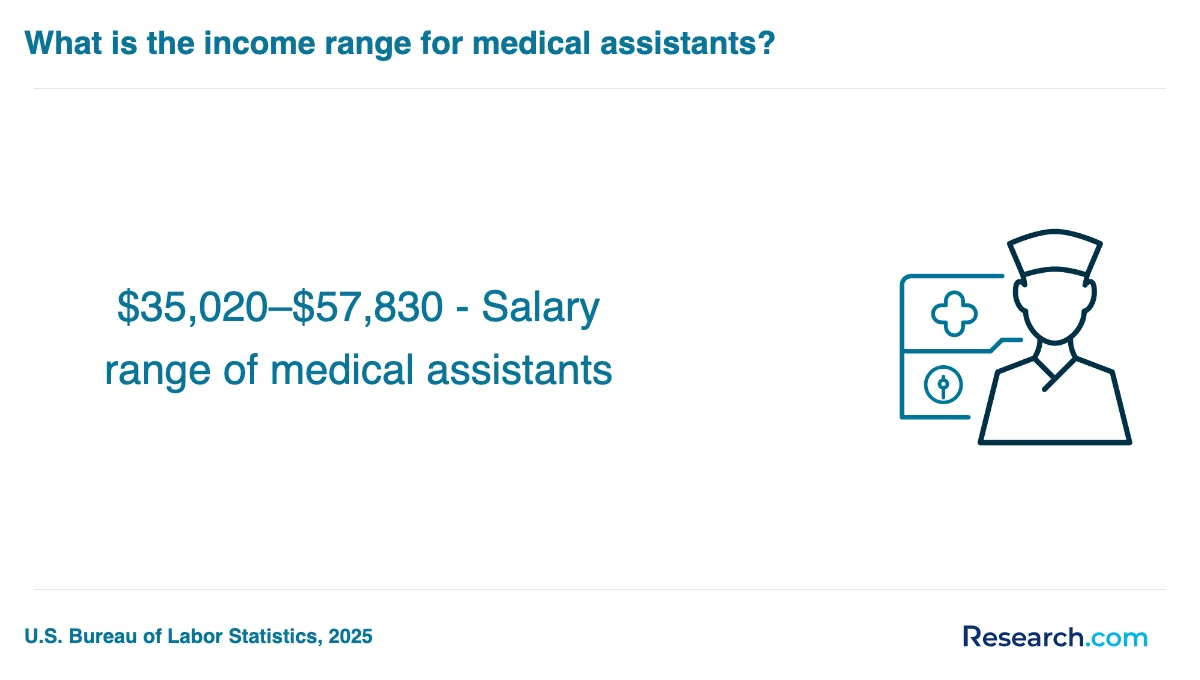
Graduates from medical assistant trade schools in Utah typically start with annual salaries ranging from $37,000 to $41,000. For example, those completing programs at well-known Utah trade schools often find themselves earning close to the state median of $40,270 per year. Many report feeling satisfied when they see their first paychecks, especially knowing this aligns well with the national average.
Hourly wages usually fall between $15.53 and $19.90, with an average around $18.11. Certified medical assistants, who have taken extra steps to earn credentials, often command slightly higher hourly rates, up to about $18.92, and some even earn as much as $24.95 per hour in larger Utah cities like Salt Lake City.
One graduate shared that after finishing their program, they secured a role in a busy clinic in Bountiful, earning closer to $20 per hour, which made the demanding coursework feel worthwhile. These realistic figures help future students plan their finances confidently while pursuing a stable healthcare career in Utah.
- Applicants must have a high school diploma or GED and be at least 18 years old, with some schools requiring a minimum GPA of 2.5 and completion of courses like Medical Anatomy and Physiology.
- Training formats include full-time, part-time, hybrid, and evening classes, with program lengths ranging from 8-9 months for full-time to 15 months for part-time students.
- Programs combine classroom learning with hands-on labs and externships, requiring 160 to 180 hours of clinical experience for graduation and certification eligibility.
- Tuition costs around $3,200 for full certificate programs, making them relatively affordable compared to other healthcare training options.
- Graduates can take national certification exams such as RMA or CMA, enhancing job prospects in a strong Utah job market.
- Entry-level medical assistants in Utah earn between $33,000 and $39,000 annually, with potential for salary growth through experience and additional credentials.
Completing a medical assistant trade school program in Utah typically takes between 9 to 12 months, depending on the school and whether you attend full-time or part-time. Many graduates from well-known Utah trade schools find that dedicating about a year to their studies fits well with their busy schedules and allows them to gain hands-on experience quickly.
For example, students at some popular Utah trade schools share how their intensive programs balanced classroom learning with practical clinical hours, helping them feel confident stepping into their first job. One graduate described the process as "challenging but rewarding," appreciating how the program's structure allowed them to finish fast enough to start earning while still mastering essential skills.
Choosing a program with flexible pacing options can also help if you need to work or manage family responsibilities. The focused timeline of around a year means you won't be tied down for long, making it easier to plan your career transition effectively in Utah's healthcare field.
The main difference between online and on-campus medical assistant programs in Utah lies in how students access coursework and complete hands-on training. Online programs, like those at the University of Utah and Herzing University, offer flexibility by delivering lectures entirely online. Graduates often appreciate being able to study from home and set their own pace, fitting classes around work or family. For example, a student might start the University of Utah's self-paced program anytime and finish within six months to a year.
However, practical skills can't be learned solely online. Online students still attend scheduled in-person labs or externships, such as monthly Salt Lake City labs or local clinical placements at Herzing. This hybrid model balances convenience with essential real-world experience.
On-campus programs like Ogden-Weber Technical College require regular in-person attendance, with set class times and on-site labs. Graduates often mention the benefit of immediate interaction with instructors and peers, which creates a focused, structured learning environment. This suits those who thrive with consistent schedules and face-to-face support.
The average tuition for medical assistant programs in Utah varies widely depending on the trade school chosen, the program length, and format. For example, graduates from Mountainland Technical College report tuition and fees of around $3,790. When adding books and supplies at $249 plus estimated living expenses near $7,928, the total investment comes to roughly $12,967. This figure reflects a hybrid learning schedule that requires on-campus attendance most weekdays, which can increase housing and transportation costs.
On the other hand, students completing the cost of medical assistant diploma in Utah at Dixie Technical College experience significantly lower expenses. Their tuition and fees total only $564, combined with about $358 for books and supplies and estimated living expenses around $1,316, leading to an overall cost near $2,238. Graduates emphasize the affordability and flexibility of such programs, which helps reduce the financial pressure often felt by students balancing work or family commitments.
Many students appreciate that beyond tuition, factoring in additional expenses like certification exam fees or background checks is crucial to budgeting effectively. Some schools may list optional fees - for example, an industry exam fee around $165 - which graduates consider reasonable given the value it adds to their credentials.
Prospective medical assistants in Utah are encouraged to explore available financial aid options that can substantially lower these expenses. For guidance on funding your education, review resources on online medical assistant programs with financial aid options, which highlight scholarships, grants, and loans tailored for these training programs.
Medical assistant students in Utah commonly access federal financial aid by submitting the FAFSA, unlocking opportunities like the Federal Pell Grant. Graduates from Bridgerland Technical College often share how the Pell Grant significantly eased their tuition burden-BTECH's full certificate program costs around $3,247, much of which can be covered by this aid. This makes the journey less stressful and more affordable.
State-based aid also plays a key role. For instance, Davis Technical College offers free tuition for high school students entering medical assistant programs, though they still cover materials and fees. Many recent graduates recall this option as a tremendous help, reducing their out-of-pocket expenses and making training accessible right after high school.
Private scholarships and grants add another layer of support. Schools like Eagle Gate College have financial aid advisors who guide students through available scholarships and grants tailored to healthcare careers. These options bring hope to many students who might otherwise struggle financially.
It's worth noting that not all programs qualify for federal aid. For example, University of Utah's Clinical Medical Assistant Program requires students to explore employer tuition assistance or private loans, a path some graduates navigate by leveraging workplace benefits.
To enroll in a medical assistant trade school program in Utah, you'll generally need a high school diploma or GED. This baseline requirement ensures you're prepared for the coursework and practical skills ahead. Many trade schools in Utah, such as those in Salt Lake City and Provo, emphasize this standard as non-negotiable.
Beyond that, some programs ask for:
- Proof of immunizations and a negative TB test, to keep clinical environments safe
- Basic background checks, especially since you'll be working closely with patients
- Sometimes a valid driver's license, since clinical rotations may require travel to different healthcare sites
Graduates often recall that meeting these prerequisites felt straightforward and gave them confidence entering the program. One common story involves a student who appreciated how clear the requirements were at their Utah trade school, helping them plan ahead without surprises.
Additionally, good communication skills and basic computer literacy are highly recommended. These make hands-on tasks and electronic health record training smoother, which every Utah medical assistant program includes.

Medical assistant trade school programs in Utah typically include a well-rounded set of courses that prepare you for both clinical and administrative roles. Graduates from schools like the University of Utah, Davis Technical College, and Bridgerland Technical College often share how the curriculum feels practical and directly applicable to their daily work.
Core clinical courses usually cover:
- Medical terminology, anatomy, and physiology to build your foundational knowledge
- Hands-on skills like taking vital signs, phlebotomy, injections, and EKGs
- Patient care techniques that teach professional communication and procedure education
- Assisting with minor surgical procedures, which many students find builds confidence quickly
On the administrative side, expect courses in:
- Medical office management and documentation
- Health information systems, billing, and insurance processing
- Scheduling and managing patient flow in outpatient settings
Many graduates highlight the value of the externship or clinical practicum, where theory meets real-world practice in Utah healthcare facilities. Programs often blend online lectures with in-person labs and clinical rotations, offering flexibility for those balancing work or family. This structure helps students feel prepared and eager to start their medical assistant careers within 6 to 12 months.
Medical assistant trade school programs in Utah typically include a broad range of specializations to prepare students for the demands of modern healthcare environments. These training programs focus on both administrative skills like medical office management, billing and coding, and patient scheduling, as well as clinical expertise including phlebotomy, EKG, medication administration, and minor surgical assistance. Graduates from popular schools such as Southwest Technical College and the University of Utah report gaining hands-on experience that makes them confident in real healthcare settings.
Key Utah medical assistant training specializations include:
- Medical Office Management
- Medical Billing and Coding
- Phlebotomy and Blood Collection
- Electrocardiography (EKG)
- Clinical Laboratory Procedures
- Medication Administration
- Assisting with Minor Surgical Procedures
Some programs also offer certification-focused tracks like EKG Technician and Phlebotomy Technician, which graduates find valuable for boosting employability. Students appreciate how these options enable them to tailor their training to specific career goals, making the coursework practical and engaging.
For those considering advancement, exploring ma to lpn programs online in Utah can be a strategic next step after completing medical assistant training.
Choosing the best medical assistant programs in Utah means focusing on accreditation and real-world training. Graduates from popular Utah colleges often share how their programs included robust clinical externships of 160 hours or more, which gave them confidence and hands-on experience in busy healthcare environments. These programs typically cover both administrative and clinical skills, from medical anatomy to medication administration, preparing students well for certification exams required in Utah for medication aide certification.
When deciding how to compare Utah medical assistant schools, look closely at admission requirements like GPA thresholds and prerequisite coursework. Many successful students appreciated programs offering hybrid classes, which allowed them to balance work and study. Some trade schools also have credit transfer agreements with local colleges, opening pathways for associate degrees and further advancement.
One key insight from graduates is the importance of preparing for background checks and drug screenings early, as these are mandatory for externships. Additionally, understanding career prospects helps maintain motivation; for those curious about earning potential, the highest salary for medical assistant information can be encouraging and practical.
Medical assistant trade school graduates in Utah find strong medical assistant job opportunities in Utah across diverse healthcare settings. Graduates often secure roles in hospitals, urgent care centers, and physician's offices, handling both clinical tasks and administrative duties. For example, graduates from well-known Utah trade schools share how working in bustling urgent care clinics sharpened their skills and boosted their confidence while providing meaningful patient support. Specialty clinics focused on pediatrics or cardiology also offer paths for those with specific interests and additional training.
Many graduates explore healthcare career paths for Utah medical assistant graduates beyond traditional roles, including positions in retirement communities and long-term care facilities, where they assist elderly patients with daily medical needs. Emergency rooms and outpatient centers attract those who prefer high-energy environments. Some pursue certifications like CCMA or CMA to improve job prospects and salaries.
Advancement opportunities include becoming medical office managers or billing specialists. Some students even enroll in ma to rn programs online to transition into nursing.
The job market for medical assistant trade school graduates in Utah is thriving, with employment expected to grow by over 40% from 2022 to 2032, far outpacing the national average. Graduates from popular trade schools in Salt Lake City and Provo consistently report finding steady work due to high demand in both hospitals and private practices. Many secure positions immediately after certification, often earning starting wages around $18 per hour, with opportunities to earn up to $20 or more in urban centers.
Successful graduates often highlight these key advantages:
- Strong regional demand in cities like Salt Lake City, Provo, and Orem
- Certification requirements met through trade school programs, enhancing job prospects
- Access to growing healthcare networks such as University of Utah Health
Certification is crucial, as 81% of employers now require it. Trade schools prepare students for credentials like CMA and RMA, which unlock better salaries and more job openings. Those considering medical assistant trade schools benefit from understanding both the local salary landscape and the rising demand.
For deeper insight into medical assistant job outlook in Utah and pathways for advancement, exploring medical assistant career advancement can provide valuable guidance tailored to your goals.
Most Affordable Medical Assistant Schools & Training - Budget-Friendly Medical Assistant Trade Programs in Utah for 2026
# 1 position
Salt Lake Community College - Clinical/Medical Laboratory Assistant.
certificate or diplomaSalt Lake Community College offers a Hybrid Clinical/Medical Laboratory Assistant program that trains students to perform waived testing procedures and phlebotomy under professional supervision. The curriculum covers clinical procedures, laboratory tests, mathematics, computer technology, equipment operation, sterilization, safety, and communication skills. The program's annual in-state tuition is $4,257. It is accredited by the Northwest Commission on Colleges and Universities.
# 2 position
Utah Tech University - Clinical/Medical Laboratory Assistant.
associateUtah Tech University offers a Clinical/Medical Laboratory Assistant program with a hybrid format, combining in-person and distance education. The curriculum trains students to perform waived testing procedures, phlebotomy, and support laboratory teams under supervision. Instruction includes clinical procedures, laboratory tests, equipment operation, safety, and communication skills. Annual in-state tuition is $6,074. Graduates have median earnings of $39,812 one year after completion. The program is accredited by the Northwest Commission on Colleges and Universities.
# 3 position
Utah Tech University - Clinical/Medical Laboratory Assistant.
certificate or diplomaUtah Tech University offers a Clinical/Medical Laboratory Assistant program with a hybrid format, combining in-person and distance education. The program trains students to perform waived testing procedures, phlebotomy, and support laboratory teams under supervision. Coursework includes clinical procedures, laboratory tests, mathematics, computer technology, and safety. The annual in-state tuition is $6,074. Graduates have median earnings of $39,812 one year after completion. The program is accredited by the Northwest Commission on Colleges and Universities.
Frequently Asked Questions about medical assistant
After completing a medical assistant trade school in Utah, preparing for the job market involves several key steps. First, obtaining certification, such as the Certified Medical Assistant (CMA) credential from the American Association of Medical Assistants, can significantly improve employment prospects. Utah employers often prefer or require certification for hiring.
Next, graduates should build a professional resume highlighting their clinical skills and externship experiences gained during training. Networking through local healthcare facilities and job fairs can open doors to opportunities.
According to the Utah Department of Workforce Services, demand for medical assistants in Utah is projected to grow by 20% through 2030, making early job searching advantageous.
Additionally, staying informed about continuing education and maintaining certifications helps ensure long-term career growth in Utah's healthcare sector.
Employers in Utah highly value medical assistant graduates who possess strong clinical and administrative skills. According to the Utah Department of Workforce Services, proficiency in patient care techniques, such as taking vital signs and administering injections, is essential. Equally important are administrative abilities like managing patient records and scheduling appointments efficiently.
Communication skills rank among the top employer priorities, as medical assistants must interact clearly with patients and healthcare teams. Local healthcare providers also emphasize adaptability and a strong understanding of medical software systems used in Utah clinics.
In 2023, Utah's healthcare sector reported a 15% growth in medical assistant jobs, underscoring the demand for versatile graduates prepared to handle both clinical and office tasks.
Finding internships in Utah relevant to medical assistant trade school programs involves a few focused steps. Start by contacting your school's career services office, as many trade schools maintain partnerships with local clinics and hospitals. Utah's healthcare industry is growing, with over 20,000 healthcare jobs projected to be added by 2028 according to the Utah Department of Workforce Services, increasing internship opportunities.
Additionally, explore online platforms like Utah's official workforce site and healthcare employer websites for openings. Networking through professional organizations such as the Utah Medical Assistants Association can also help connect students with internships.
Remember to check for internships that meet the clinical hour requirements mandated by most accredited programs, ensuring your experience counts toward certification.
Obtaining a medical assistant trade school diploma in Utah significantly enhances career mobility by qualifying graduates for entry-level healthcare positions statewide. According to the Utah Department of Workforce Services, medical assistants in Utah earn a median annual wage of about $38,000, with opportunities for advancement into specialized roles or supervisory positions as experience and certifications grow.
The diploma provides practical skills recognized by employers, fostering quicker job placement compared to non-certified applicants. Additionally, accredited programs align with Utah's healthcare industry standards, increasing eligibility for certifications like the Certified Medical Assistant (CMA), which can further boost career prospects.
In a state experiencing healthcare growth, this diploma serves as a foundation for upward mobility within clinics, hospitals, and outpatient centers.
Students enrolled in medical assistant trade schools in Utah often seek part-time jobs that provide relevant experience while supporting their studies. Common opportunities include working as medical receptionists, patient care assistants, or phlebotomy aides. These roles offer practical skills in scheduling, patient interaction, and basic clinical tasks, complementing classroom learning.
According to the Utah Department of Workforce Services, healthcare support jobs, including medical assistants, are projected to grow by 23% between 2020 and 2030, indicating strong demand. Part-time positions in clinics, hospitals, and urgent care centers allow students to build professional networks and improve employability after graduation.
Additionally, some students find work in pharmacies or health insurance offices, gaining administrative experience that aligns with medical assisting duties. These roles often offer flexible schedules, making them ideal for balancing work and study commitments.
Yes, there are affordable Medical Assistant degree programs near Utah as well as various options that may be available near me depending on your specific location. Numerous community colleges and technical schools in Utah offer programs that are cost-effective and provide comprehensive training for becoming a medical assistant. Research.com can be a helpful resource to compare institutions and find the best fit for your educational and financial needs.
- Most Affordable Medical Assistant Schools & Training - Budget-Friendly Medical Assistant Trade Programs in Idaho for 2026
- Most Affordable Medical Assistant Schools & Training - Budget-Friendly Medical Assistant Trade Programs in New Mexico for 2026
- Most Affordable Medical Assistant Schools & Training - Budget-Friendly Medical Assistant Trade Programs in California for 2026
- Most Affordable Medical Assistant Schools & Training - Budget-Friendly Medical Assistant Trade Programs in Montana for 2026
- Most Affordable Medical Assistant Schools & Training - Budget-Friendly Medical Assistant Trade Programs in Oregon for 2026
- Most Affordable Medical Assistant Schools & Training - Budget-Friendly Medical Assistant Trade Programs in Washington for 2026
- Most Affordable Medical Assistant Schools & Training - Budget-Friendly Medical Assistant Trade Programs in Texas for 2026
- Most Affordable Medical Assistant Schools & Training - Budget-Friendly Medical Assistant Trade Programs in Arkansas for 2026
- Most Affordable Medical Assistant Schools & Training - Budget-Friendly Medical Assistant Trade Programs in Louisiana for 2026
- Most Affordable Medical Assistant Schools & Training - Budget-Friendly Medical Assistant Trade Programs in Illinois for 2026
- Online Medical Assistant Certificate Program | Self-Paced Course https://www.uscareerinstitute.edu/online-medical-assistant-school
- Medical Assistant Technical Diploma | Northcentral Technical College https://www.ntc.edu/academics-training/programs/all/technical-diploma/medical-assistant
- Accelerated Clinical Medical Assistant Program | CALRegional https://calregional.com/program-category/medical-assistant-program/
- Medical Assistant Certificate Program https://pmi.edu/on-campus-programs/certificate/medical-assistant/
- Medical Assistant Training Program | CE https://www.ce.msstate.edu/medical-assistant-training-program
- Medical Assisting Certificate Program | Kaiser Permanente School of Allied Health Sciences https://kpsahs.edu/medical-assisting-certificate-program
- Medical Assistant Schools | Flexible and Comprehensive Training https://www.trade-schools.net/health-care/medical-assistant
- Medical Assistant | Gateway Technical College https://www.gtc.edu/programs/technical-diplomas/medical-assistant
- Medical Assistant Externship: What It Is & How To Find One https://www.stepful.com/post/medical-assistant-externship
- Medical Assistant Externships: How to Find One & Why They Matter | Advanced eClinical Training https://advclinical.org/medical-assistant-externship/


