Most Affordable Cybersecurity Associate Degree Programs in Portland for 2027
Audited and Verified:
Our Editorial and Data Verification Process
Research.com uses government datasets, official education statistics and primary institutional information to support its career and degree guides. Our review process checks factual accuracy, occupational definitions, source dates and the requirements associated with the credentials discussed.
How This Article Was Fact-Checked
Our editorial team verifies salary estimates, employment projections, education requirements and program information against original data providers and official organizations. Salary figures are checked against the relevant occupational definitions and reporting periods. Information about licensure, accreditation and required in-person training is reviewed separately.
Fact-checked and verified on:

Co-Founder and Chief Data Scientist

Reviewed by Karolina Broda
Fact-Checker and Data Verification
Which Portland cybersecurity associate degree is affordable and useful for the job you want? The decision matters: the U.S. Bureau of Labor Statistics projects 21% national growth for information security analysts from 2025 to 2035, but that experienced occupation is not a typical first job for every graduate. This guide compares costs, coursework, practical experience, and career routes. It also features the Research.com team of data scientists' Most Affordable Cybersecurity Associate Degree Programs in Portland for 2027 ranking to help you identify programs worth considering.
Key findings about associate cybersecurity degrees in Portland
- The most affordable ranked option is not automatically the best fit: the affordability score covers costs and debt, not cybersecurity labs, transfer agreements, or employer connections.
- The U.S. Bureau of Labor Statistics projects 21% growth for information security analysts in 2025-2035, but associate degree graduates may first need IT support or network experience.
- Compare the full degree bill - not tuition alone - and verify whether the award is career-focused or designed for transfer before committing to a Portland program.
Table of Contents
- Most Affordable Cybersecurity Associate Degree Programs in Portland for 2027
- What can I expect from an associate cybersecurity degree in Portland?
- Where can I work with an associate cybersecurity degree in Portland?
What can I expect from an associate cybersecurity degree in Portland?
Expect a combination of general education, computing fundamentals, and applied security work. For a student seeking a first technical job, networking, operating systems, scripting, and troubleshooting are as important as learning security terminology: employers need people who can identify what has failed and explain how to fix it.
The degree award changes what "good value" means. This comparison helps separate a direct-to-work curriculum from one built primarily to transfer.
| Associate degree pathway | Typical emphasis | Best fit | Check before enrolling |
| Associate of Applied Science (AAS) or similar career-focused award | Technical courses, labs, and job-ready IT skills | Students seeking technical work soon after graduation | Whether the courses transfer toward your intended next degree |
| Associate of Arts (AA) or Associate of Science (AS) transfer pathway | General education and foundational computing | Students who expect to continue their education | Whether required security courses and prerequisites are included |
Portland Community College is a relevant local institution to investigate because commuting distance, available lab sections, and resident tuition eligibility can affect the actual price. If considering Warner Pacific University, confirm the specific associate award and current cybersecurity curriculum directly rather than assuming that every institution with computing instruction offers the same degree. An affordable online bachelors degree is a separate investment; students planning to continue should ask where each associate course will count before choosing the lower-priced option.
Where can I work with an associate cybersecurity degree in Portland?
Portland-area graduates can look for IT and security-adjacent positions with healthcare organizations, financial institutions, government agencies, technology firms, and companies that operate large internal networks. The useful distinction is between an organization's security needs and its entry-level openings: not every employer with a security team hires inexperienced analysts.
Search for support, network operations, access administration, and junior security duties, not just "cybersecurity analyst." Ask a program whether its labs resemble the systems local employers use and whether it helps students obtain internships or supervised projects. If a job requires travel to multiple sites or on-site incident response, a fully remote class schedule will not remove those work requirements.
The U.S. Bureau of Labor Statistics reports a $129,180 U.S. median annual wage for information security analysts in May 2025. That figure covers workers across experience levels and education backgrounds nationwide; it is neither a Portland starting wage nor an associate degree graduate earnings estimate. Use it to understand a possible longer-term occupation, not to calculate your first-year return.
For a realistic earnings comparison, request program-level graduate outcomes if available and inspect current local postings for the jobs you could qualify for now. Separate entry-level IT support or network roles from analyst positions requiring prior experience. Comparisons with lucrative masters degrees address a different career stage and should not inflate an associate degree earnings forecast.
Plan around approximately two academic years of full-time study, but use the published course sequence - not the advertised duration - to estimate your own finish date. Required credits, placement, prerequisites, and how often advanced security courses run can make a part-time schedule substantially longer.
Ask for a term-by-term plan showing general education, required IT courses, security labs, and any internship. Transfer or prior-learning credit may shorten the plan only after the college evaluates it. Pages about a best 6 month associate degree online should not be taken as evidence that a Portland cybersecurity degree's full lab and credit requirements can be completed in that time.
Online delivery may make lectures, discussions, and some virtual machine exercises easier to fit around work. Campus or hybrid study may provide scheduled equipment access, face-to-face troubleshooting, and local contacts. Neither format is inherently more rigorous or more affordable.
Before choosing an online option, ask which networking and security labs use remote environments, whether any sessions require attendance, and how practical work is assessed. An internship may depend on an employer's location and schedule even when classes are online. Also compare technology and proctoring charges against travel and parking costs; the cheaper format depends on the student's circumstances.
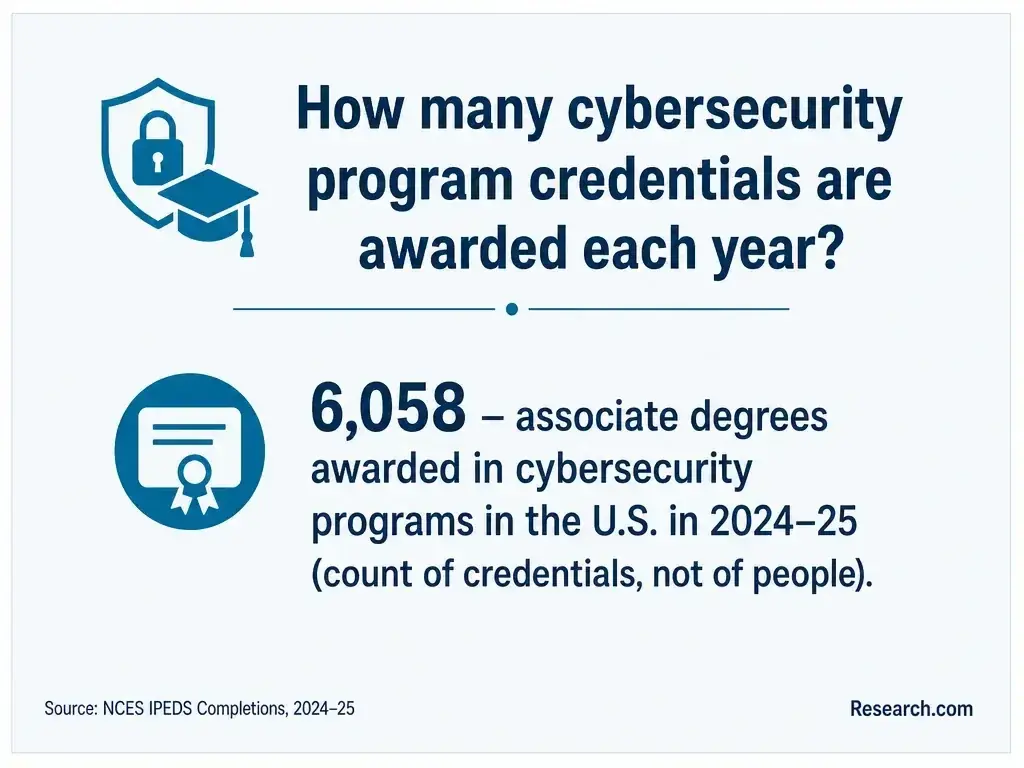
There is no single reliable Portland-wide average to apply to every student: tuition status, credit load, delivery format, and living arrangements change the bill. The relevant comparison is each school's total cost to finish your degree, minus aid you are likely to receive - not the lowest advertised per-credit rate.
Build a school-by-school estimate with these cost categories, then request written figures for items the published tuition schedule leaves out.
- Tuition and mandatory fees for every required credit, including any nonresident rate.
- Books, software, a suitable computer, internet access, and any certification exam you choose to take.
- Transportation, parking, and living expenses during the expected enrollment period.
- Potential lost earnings if the course schedule reduces your working hours.
Cybersecurity programs generally do not require the protective equipment common in clinical or industrial degrees, but do not assume their technology costs are negligible. Compare the full estimate with expected aid and your realistic completion schedule before borrowing.
Eligible students at participating institutions may receive federal grants, loans, or work-study after filing the FAFSA; eligibility and award amounts depend on individual circumstances, according to Federal Student Aid. Oregon students should also check the Oregon Opportunity Grant and, if they meet its specific recent-graduate and residency rules, Oregon Promise through the Oregon Student Aid program. Neither program should be treated as automatic funding.
Ask each college's aid office for a degree-length estimate, including terms when part-time enrollment could change eligibility. Then check institutional scholarships, employer tuition assistance, and applicable workforce funding. Borrow only after comparing the net cost with the entry-level jobs you intend to pursue.
Admission rules vary by institution and degree. Check the current application requirements, placement process, prerequisite math or writing courses, and whether advanced IT classes require earlier networking or programming work. Being admitted to a college does not necessarily mean you can enter every required course immediately.
Applicants changing careers should ask how existing college credit or documented learning is evaluated. Cybersecurity employment itself generally is not governed by an Oregon occupational license, but an employer may impose its own background-screening or access requirements for sensitive systems. Institutional accreditation, employer screening, and voluntary professional certification serve different purposes.
A useful curriculum builds from computer hardware and operating systems to networking, system administration, scripting, security principles, and incident response. General education should strengthen writing and communication: documenting a vulnerability clearly can matter as much as finding it.
Look beyond course titles. Ask to see lab descriptions showing whether students configure systems, analyze logs, manage access, and explain findings in a report. Find out whether a capstone or internship is required, optional, or unavailable, and whether its hours fit your work schedule. Certification preparation can be helpful, but a course titled after an exam does not mean the exam fee is included or that graduation awards the certification.
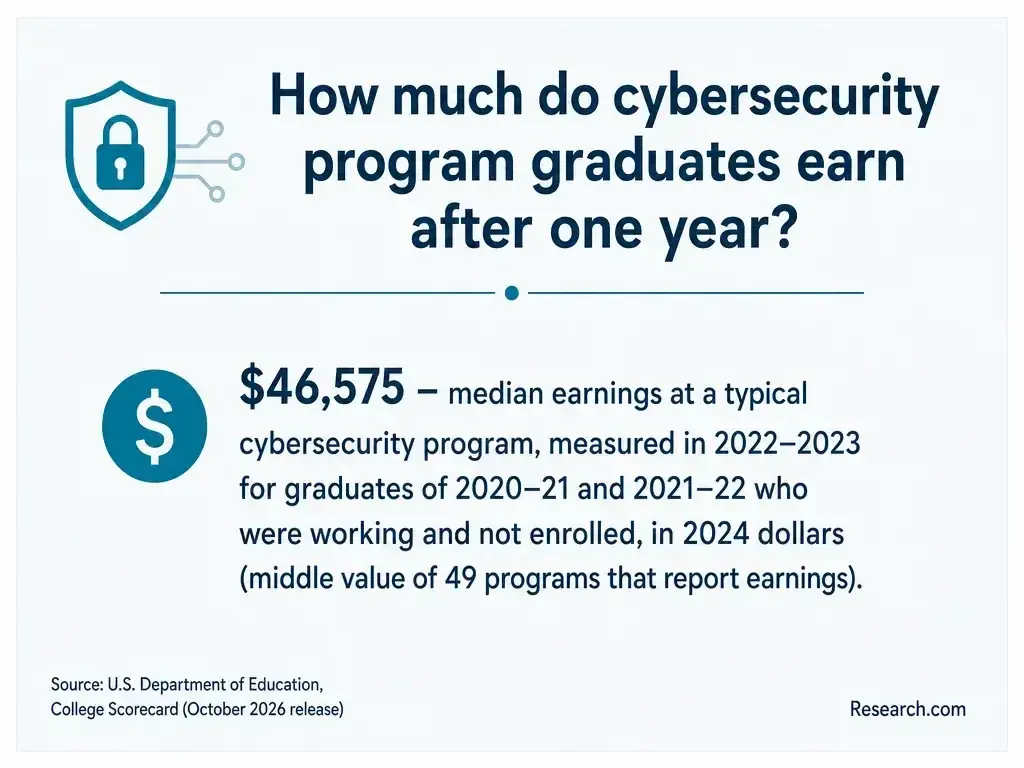
At the associate level, specialization often means a small cluster of electives or a project rather than a separate degree. Network defense suits students who enjoy infrastructure and troubleshooting; system administration and cloud-focused coursework can support access-control work; digital forensics or incident-response classes suit students interested in investigating and documenting events. Confirm which courses actually run during your planned enrollment period.
Choose foundational networking and systems competence over a narrow label if you have little IT experience. Advanced academic routes, including shortest doctoral programs, address a different objective and should not determine which associate-level technical labs you need now.
Start with your intended first role and decide whether the degree must also support transfer. Then compare eligible programs using evidence the school can provide, not ranking position alone. This sequence exposes the most expensive mistakes before you enroll.
- Confirm the exact degree awarded, required credits, course rotation, and a schedule you can complete.
- Verify institutional accreditation through the recognized accreditor or U.S. Department of Education; separately confirm any claimed transfer agreement with the receiving institution.
- Review lab work, project assessment, internship access, and any stated certification preparation; ask what costs extra.
- Request a full-cost estimate and available completion, debt, and employment information, noting what each measure actually covers.
- Compare the resulting cost and time commitment with your current earnings, likely entry role, and alternative job-search route.
A common red flag is a low tuition quote paired with unclear fees or a promise that the associate degree alone leads directly to a high-paying analyst job. Another is an unverified claim that a career-focused degree will transfer in full. Ask for written degree and transfer details before making either assumption.
IT support, help desk, junior systems administration, and network support can provide a first step toward security work. With relevant experience, graduates may compete for security operations, access management, or incident-response duties. Progress depends on demonstrated skills and employer requirements; the degree alone does not confer a job title or professional certification.
Students already working in IT may get more immediate value from security-focused labs and an employer-supported project than a newcomer who needs basic troubleshooting experience first. For planning purposes, resources on the easiest masters degree concern a different educational stage; judge this associate degree by the roles and advancement opportunities it can realistically support.
National demand provides context, not a Portland hiring guarantee. The U.S. Bureau of Labor Statistics projects 21% growth for information security analysts nationally from 2025 to 2035. That projection describes an occupation, not the number of local openings available to new associate degree graduates.
For a Portland decision, read recent job postings across both security and foundational IT roles. Note repeated requirements for experience, on-site work, networking skills, and security tools. If analyst postings consistently ask for prior IT work, favor a program with strong systems labs and local work-based connections over one that emphasizes an advanced-sounding title without a plausible first-job route.
Most Affordable Cybersecurity Associate Degree Programs in Portland for 2027
Education is a significant investment, so Research.com created this ranking to make Portland-area cost comparisons more transparent. The team checks reported information for consistency and evaluates programs against options in the same location. Only programs with completions reported to IPEDS are eligible; an omitted program is not necessarily unavailable or unsuitable.
Most affordable rankings use tuition, cost of attendance, median student debt, and federal loan default rates. An entropy-based method assigns more weight to indicators that vary more across eligible programs. Accreditation, student support, and other quality measures do not enter this affordability score. The ranking is therefore a starting point for comparing costs, not a verdict on curriculum or career fit.
The ranking process draws on the following databases and reference sources. Some cover other occupations and do not establish cybersecurity program quality; readers should distinguish the sources used for cost analysis from broader verification resources.
- IPEDS database: reported completions, tuition, and institutional information.
- National Center for Education Statistics: federal education data and definitions.
- College Scorecard database: available cost, debt, and outcome measures.
- Peterson's database: supplementary institution and program information.
- Commission on Accreditation of Allied Health Education Programs: occupation-specific reference for allied health, not cybersecurity accreditation.
- Accrediting Bureau of Health Education Schools: occupation-specific reference for health education, not cybersecurity accreditation.
- Commission on Dental Accreditation: dental-program reference, not cybersecurity accreditation.
- Dental Assisting National Board: dental-certification reference, not a cybersecurity requirement.
- National Center for Construction Education and Research: construction-industry reference, not a cybersecurity requirement.
- Apprenticeship.gov Partner Finder: reference for work-based pathways outside the degree ranking.
Use the ranking to narrow your cost search, then confirm current charges and degree requirements with each institution. Research.com explains its broader approach on its methodology page.


Frequently asked questions about cybersecurity programs in Portland
Which Portland associate degree is the cheapest?
The answer depends on your tuition status, aid, required fees, and time to completion. Use the affordability ranking to shortlist programs, then compare written, degree-length cost estimates.
Can an associate degree lead directly to a cybersecurity analyst job?
It can support an application, but many analyst roles require prior IT or security experience. Compare local entry-level postings with the program's labs and work-based opportunities.
Is an AAS or an AA/AS better for cybersecurity?
An AAS generally fits a near-term technical employment goal; a transfer-oriented AA or AS may fit continued study. Verify the actual curriculum and transfer agreement rather than relying on the degree letters alone.
Do I need a license to work in cybersecurity in Oregon?
Oregon does not generally require an occupational license for cybersecurity work. Employers may require specific experience, screening, or voluntary certifications for particular positions.
Can I complete the degree entirely online?
That depends on the program. Confirm how labs are delivered and whether any internship, exam, or other required activity must take place in person.
- U.S. Bureau of Labor Statistics - Information Security Analysts
Used to verify salary, employment outlook, and typical education requirements.
https://www.bls.gov/ooh/computer-and-information-technology/information-security-analysts.htm - NCES College Navigator (IPEDS)
Used to verify programs offered and institutional accreditation.
https://nces.ed.gov/collegenavigator/ - CompTIA Security+
Professional certification reference for graduates of this occupation.
https://www.comptia.org/certifications/security - Portland Community College - official website
Official school website (programs, tuition, admissions).
https://www.pcc.edu/ - Warner Pacific University - official website
Official school website (programs, tuition, admissions).
https://www.warnerpacific.edu/