Most Affordable Cybersecurity Associate Degree Programs in Montana for 2027
Audited and Verified:
Our Editorial and Data Verification Process
Research.com uses government datasets, official education statistics and primary institutional information to support its career and degree guides. Our review process checks factual accuracy, occupational definitions, source dates and the requirements associated with the credentials discussed.
How This Article Was Fact-Checked
Our editorial team verifies salary estimates, employment projections, education requirements and program information against original data providers and official organizations. Salary figures are checked against the relevant occupational definitions and reporting periods. Information about licensure, accreditation and required in-person training is reviewed separately.
Fact-checked and verified on:

Co-Founder and Chief Data Scientist

Reviewed by Karolina Broda
Fact-Checker and Data Verification
An affordable cybersecurity associate degree is only a good deal if its courses, hands-on work, and total cost fit your goal. The U.S. Bureau of Labor Statistics projects 21% national growth for information security analysts from 2025 to 2035, but that role is not necessarily an entry-level destination. This guide helps Montana students and career changers compare degree types, expenses, and realistic first jobs. It also accompanies the Most Affordable Cybersecurity Associate Degree Programs in Montana for 2027 ranking, created by the Research.com team of data scientists to help students choose programs worth considering.
Key findings about associate cybersecurity degrees in Montana
- Choose the award before the price: A career-focused Associate of Applied Science (AAS) and a transfer-oriented Associate of Science (AS) can lead to different course plans even when both emphasize security.
- Plan for an entry role, not an analyst salary: Information security analysts had a $129,180 U.S. median annual wage in May 2025, but the U.S. Bureau of Labor Statistics says employers typically expect related experience.
- Compare the full bill: The affordability ranking uses tuition, cost of attendance, debt, and loan default measures; confirm your own 2027 charges, aid, equipment, and travel before deciding.
Table of Contents
- Most Affordable Cybersecurity Associate Degree Programs in Montana for 2027
- What can I expect from an associate cybersecurity degree in Montana?
- Where can I work with an associate cybersecurity degree in Montana?
What can I expect from an associate cybersecurity degree in Montana?
Expect a combination of networking, operating systems, security fundamentals, and general education - not two years of security-only classes. A career-focused AAS usually emphasizes technical practice and preparation for IT support or network operations. An AS or Associate of Arts (AA) may leave more room for transferable general education and mathematics. Degree labels do not establish transferability: the receiving institution decides how individual courses apply.
The comparison below identifies the central trade-off. Ask for the current course map, not just the award name, because similarly titled programs can provide very different lab experience.
| Associate degree | Typical emphasis | Best fit when |
| AAS | Applied networking, systems, and security labs | You want practical preparation for an initial IT role |
| AS | Technical foundations alongside transferable math and general education | You want to keep future study options open |
| AA | Broader general education, with technology courses where available | You have a confirmed course-by-course transfer plan |
A worthwhile program should let you configure systems, investigate logs, document findings, and practice responsibly in an authorized lab. Ask whether an internship is required, optional, or unavailable. For Montana students living far from a campus, the location and schedule of any required lab or placement can change the true cost substantially.
Where can I work with an associate cybersecurity degree in Montana?
Potential workplaces include hospitals, banks and credit unions, state and local government, schools, utilities, and IT service providers. These organizations need secure networks, accounts, and devices, but they may advertise an initial opening as help desk technician, network technician, or IT support specialist rather than "cybersecurity analyst." The U.S. Bureau of Labor Statistics describes related IT experience as a common route into information security analyst work.
Search employers within a realistic commuting radius before enrolling. In a smaller Montana labor market, a security-only job search may be limiting; a degree that also prepares you for general IT operations can provide more initial options. Remote jobs widen the search but can attract applicants nationally and may still have location or schedule restrictions.
There is no reliable single wage for "cybersecurity associate graduates." The U.S. Bureau of Labor Statistics reports a $129,180 national median annual wage for information security analysts in May 2025. That is a midpoint for workers already in the occupation - not a Montana starting-pay estimate or a return promised by an associate degree. BLS also projects 21% national employment growth for this occupation over 2025-2035; growth does not indicate how many local openings will accept applicants without related experience.
For a useful personal estimate, compare current Montana job postings for the first role you could qualify for with your present pay, then check Montana Department of Labor & Industry occupation-level wages for that role. Job title, experience, employer, and work location matter more than the degree name. Lists of top paying majors are not substitutes for an entry-level offer estimate.
Plan on roughly two academic years of full-time study, subject to the school's published credit and course requirements. Part-time enrollment extends the calendar time; prior accepted credit can shorten it. A course offered only once a year, a required prerequisite, or limited lab availability can delay completion even when the total credit count looks manageable.
If you need to get an associate's degree online fast, compare actual cybersecurity course rotations and transfer-credit evaluations - not advertised minimum completion times. An accelerated schedule may reduce time away from full-time work, but a heavier course load can be difficult to combine with technical labs and employment.
Online delivery can make lectures, discussion, coding exercises, and some virtual-machine labs accessible from a rural home. Campus delivery may offer scheduled access to networking equipment, instructors, and classmates. Neither format is automatically more rigorous: ask what equipment you will use, how instructors assess practical work, and whether internships or particular labs require attendance at a site.
For a working student, an online option makes sense if broadband, a suitable computer, and remote lab access are dependable. Campus or hybrid study may be better if you need hands-on support or an employer connection nearby. Obtain the school's written breakdown of remote and in-person requirements before assuming that "online" eliminates travel.
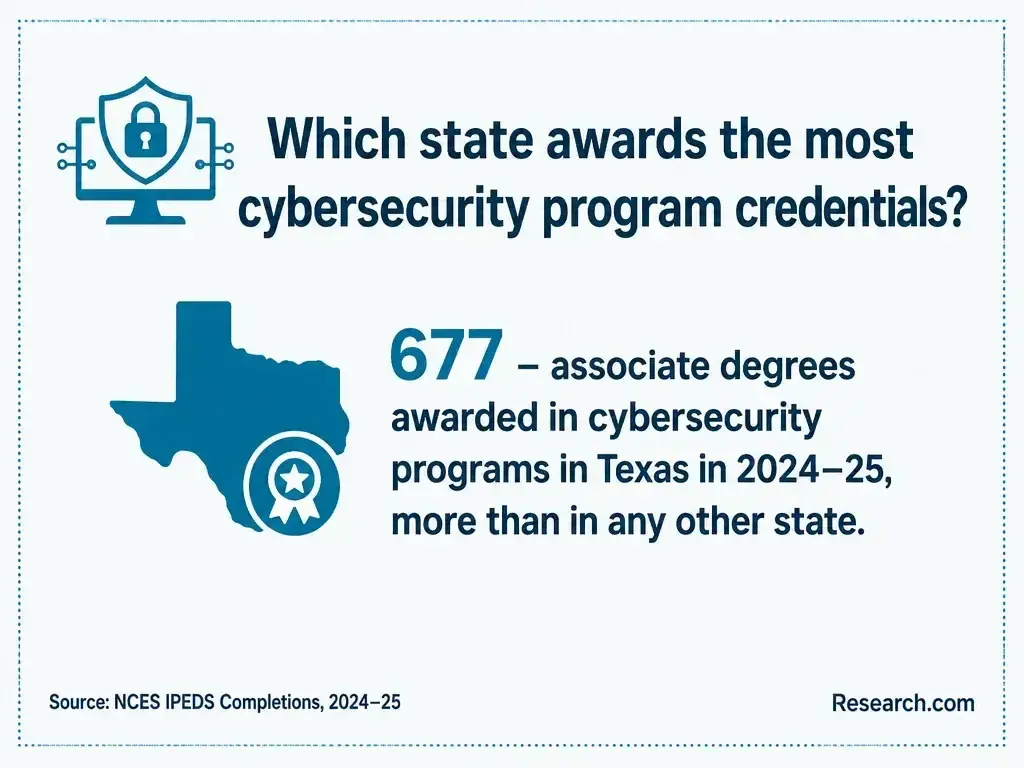
A defensible statewide average for the exact cybersecurity associate programs under consideration is not available here. Published tuition alone would be a poor substitute: your bill depends on residency classification, credit load, required fees, delivery format, and aid. Request a personalized, full-program estimate for the academic year in which you expect to enroll rather than treating a current per-credit figure as a 2027 price.
The following cost categories show why two programs with similar tuition can have different out-of-pocket costs. Ask each school to separate charges it bills from expenses you must arrange yourself.
| Cost category | What to verify | Why it changes the comparison |
| Tuition and mandatory fees | Residency rate, credit load, technology and lab fees | Published base tuition may omit required charges |
| Learning equipment | Computer specifications, software, books, and any exam fees | Remote labs can shift equipment costs to students |
| Attendance and time | Travel, housing, internet, and reduced work hours | A longer commute or schedule can outweigh a tuition difference |
For return on investment, compare each program's expected time to completion, probability of finishing, grants, likely borrowing, and foregone earnings with realistic first-job pay. Evaluate earnings over a meaningful time horizon rather than assuming the information security analyst median applies immediately; longer-term comparisons should account for the timing of costs and earnings.
At an eligible institution and for an eligible degree program, federal options may include Pell Grants, loans, and work-study; eligibility depends on the student's circumstances and federal rules (Federal Student Aid). Institutional scholarships, employer tuition assistance, and Montana workforce-development funding may also reduce costs, but eligibility and available funding vary. Ask the financial aid office about the specific associate degree - not just the institution - before counting on an award.
Compare aid offers by net price and expected debt. Grants and scholarships reduce cost if you meet their renewal conditions; loans postpone payment rather than lower the price. If you are employed, ask whether tuition assistance covers cybersecurity courses and whether a service commitment or minimum-grade rule applies.
Requirements vary by institution. Expect to provide prior academic records and meet the school's admission and placement rules; some technical courses may require math, computing, or networking prerequisites. Ask whether placement results affect the first semester's schedule and whether preparatory courses count toward the degree.
If you have prior college coursework, request an official credit evaluation before committing. Confirm which credits satisfy degree requirements, not merely which appear as electives. Some employers screen for background eligibility for sensitive systems, but that is an employer requirement, not a universal admission rule or a Montana occupational license.
A useful course plan builds from computer hardware, operating systems, networking, and scripting toward access control, system hardening, incident response, and security policy. General education develops the writing and communication needed to explain technical risks. The school's catalog - not the degree title - determines which subjects and labs are actually required.
Look for assessed practice: configuring a network, reviewing logs, documenting a simulated incident, and explaining remediation to a nontechnical audience. Ask to see a sample lab assignment and whether students can complete a supervised project or internship. Those details help distinguish a practical program from one that mostly surveys security terminology.
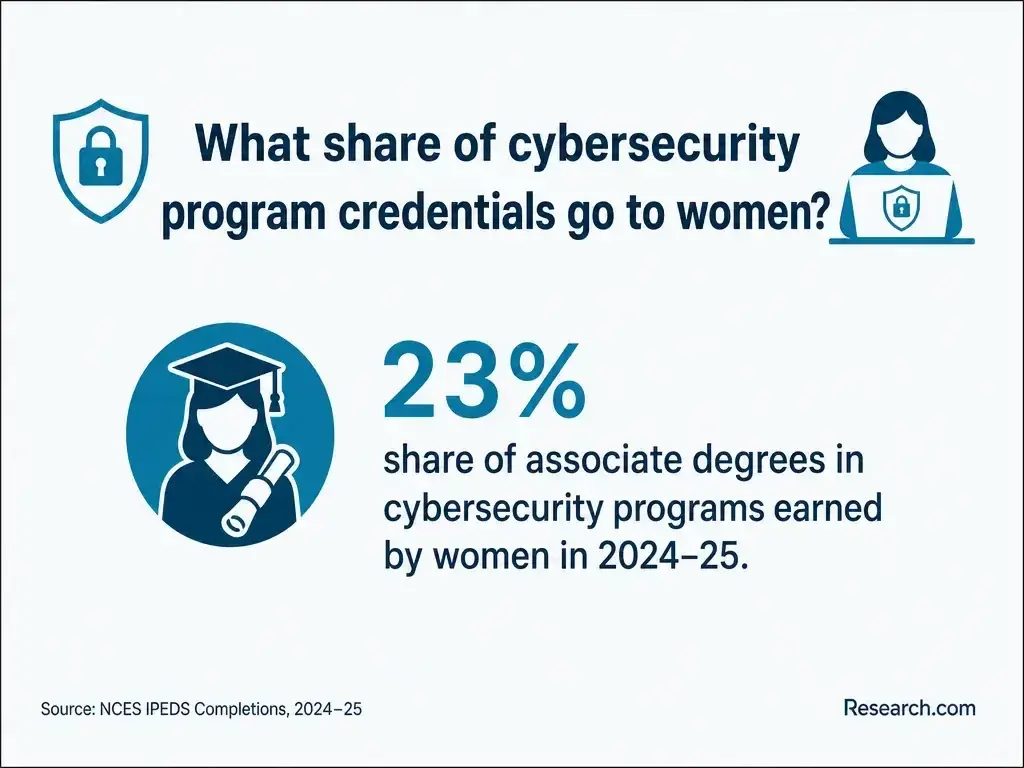
At the associate level, "specialization" may mean a small cluster of electives rather than a separately awarded degree. Possible emphases include network defense, systems administration, digital forensics, and cloud security, but availability must be checked in each Montana catalog. Choose foundational networking and operating-systems competence before a narrow topic if your first-job target is general IT support.
Do not confuse an associate degree with online dual degree programs: a second award can add requirements and cost, and it is not necessary simply to explore two technical interests. Ask whether relevant electives fit inside the published credit total or extend your completion date.
Start with your intended first job and the maximum total cost you can sustain. Then compare current catalogs and written estimates. If considering Miles Community College, Highlands College of Montana Tech, or The University of Montana, verify the exact associate award and cybersecurity course availability directly; a school's IT offerings do not establish that it awards the specific degree you want.
Use these checks before paying an enrollment deposit. They address mistakes that an affordability ranking cannot resolve on its own.
- Confirm the exact degree, required credits, course rotation, lab access, and any in-person or internship requirements in the current catalog.
- Verify institutional accreditation through the U.S. Department of Education's recognized-accreditor information; ask separately about transfer agreements and how the receiving school applies each course.
- Request a full-program estimate covering fees, equipment, travel, living costs, aid, and likely borrowing under your residency classification.
- Compare the curriculum with actual entry-level Montana postings; ask what career support is available and whether reported outcomes describe this program or the whole institution.
Cybersecurity IT work does not generally require a Montana occupational license. Professional certifications are separate from institutional accreditation and may be useful for particular employers; a degree does not automatically confer one. Broad searches can also surface unrelated options such as shortest doctorate programs; keep your comparison limited to associate degrees that meet your immediate goal.
A realistic progression often begins with user support, device administration, or network operations, followed by security-focused responsibilities as experience grows. An associate degree can supply both foundational knowledge and evidence of practical work, but job titles and entry requirements differ by employer. Security analyst positions may require related experience (U.S. Bureau of Labor Statistics).
If you already work in IT, an associate program with substantial security labs may help you document new skills while remaining employed. If you have no IT experience and need income quickly, compare the degree's cost and schedule against the time it will take to compete for an initial support role. Easy certifications to get online that pay well should not be read as a promise of cybersecurity employment: check which certifications local postings actually request and whether their exams test skills you can demonstrate.
National demand is strong for information security analysts: the U.S. Bureau of Labor Statistics projects 21% employment growth from 2025 to 2035. That projection covers an occupation, not Montana associate-degree graduates, and cannot tell you whether an employer will hire someone directly from a program. The practical question is how many accessible openings match your current experience and the degree's technical content.
Review postings in the Montana locations where you could work and separate first-step support or networking jobs from analyst jobs requiring experience. Track required tools, work arrangements, and whether positions are on-site. For rural students, a program's employer relationships and access to practical projects may matter more than a small tuition difference if nearby security-specific openings are scarce.
Most Affordable Cybersecurity Associate Degree Programs in Montana for 2027
Investing in an education is a consequential decision, so Research.com evaluates affordable programs against other programs in the same occupation and location rather than treating every school as a direct competitor. Only programs with completions reported to the Integrated Postsecondary Education Data System (IPEDS) are eligible. The most-affordable ranking scores tuition, cost of attendance, median student debt, and federal loan default rate; an entropy-based method gives more weight to measures that distinguish programs more clearly. Accreditation and other quality indicators are not part of this affordability score.
To check coverage and improve the ranking's credibility and accuracy, the Research.com team uses the following data sources. Some are cross-disciplinary reference sources; their inclusion does not mean an allied-health or construction organization accredits cybersecurity programs.
- IPEDS database - reported completions and institutional data.
- National Center for Education Statistics - federal education data and definitions.
- College Scorecard database - available cost, debt, and outcome measures.
- Peterson's database - supplementary institutional information.
- Commission on Accreditation of Allied Health Education Programs (CAAHEP) - cross-disciplinary accreditation reference.
- Accrediting Bureau of Health Education Schools (ABHES) - cross-disciplinary accreditation reference.
- Commission on Dental Accreditation (CODA) - cross-disciplinary accreditation reference.
- Dental Assisting National Board (DANB) - cross-disciplinary occupational reference.
- National Center for Construction Education and Research (NCCER) - cross-disciplinary industry reference.
- Apprenticeship.gov Partner Finder - work-based pathway reference.
The ranking helps narrow a price-sensitive search, not establish that the lowest-ranked-cost option has the right curriculum, delivery format, or outcomes for you. Programs without reported IPEDS completions may be absent; absence is not a quality judgment. See Research.com's methodology for more on how rankings are created.


# 3 position
The University of Montana
associateComputer and Information Systems Security/Auditing/Information Assurance
Delivery mode: On Campus (May Include Online Courses)
64.24
/ 100
Final score
- School graduation rate
- 48%
- Students receiving Pell Grants
- 33%
- In-state tuition & fees (per year)
- $9,188
- Out-of-state tuition & fees (per year)
- $34,312
- School website
- umt.edu
Accreditation
Institutional accreditation from Northwest Commission on Colleges and Universities.
The University of Montana earned a Research.com Affordability Score of 64.24/100, with 9% federal loan default rate among the verified supporting factors.
Frequently asked questions about cybersecurity programs in Montana
What is the most affordable cybersecurity associate degree in Montana?
The answer depends on your residency rate, aid, fees, equipment, and travel - not tuition alone. Use the accompanying affordability ranking to shortlist programs, then request a full-program estimate from each school.
Is an AAS or AS better for cybersecurity?
An AAS may fit a near-term technical job goal; an AS may fit a plan that requires more transferable coursework. Compare the actual labs and obtain written confirmation of how credits will transfer before choosing.
Can I get a cybersecurity job with only an associate degree?
Yes, some IT support and network operations roles may be accessible, depending on your skills and the employer. Do not assume an information security analyst role will be your first job; employers commonly seek related experience (U.S. Bureau of Labor Statistics).
Can I complete the degree entirely online?
Possibly, but delivery varies by program. Confirm whether labs, exams, or internships require travel and whether your computer and internet connection meet remote-lab requirements.
Do I need a Montana cybersecurity license?
Cybersecurity IT work does not generally have a Montana occupational licensing requirement. Employers may still specify experience, background eligibility, or professional certifications; verify requirements for the roles you want.
- U.S. Bureau of Labor Statistics - Information Security Analysts
Used to verify salary, employment outlook, and typical education requirements.
https://www.bls.gov/ooh/computer-and-information-technology/information-security-analysts.htm - NCES College Navigator (IPEDS)
Used to verify programs offered and institutional accreditation.
https://nces.ed.gov/collegenavigator/ - CompTIA Security+
Professional certification reference for graduates of this occupation.
https://www.comptia.org/certifications/security - Miles Community College - official website
Official school website (programs, tuition, admissions).
https://www.milescc.edu/ - Highlands College of Montana Tech - official website
Official school website (programs, tuition, admissions).
https://www.mtech.edu/ - The University of Montana - official website
Official school website (programs, tuition, admissions).
https://www.umt.edu/