
Best Court Reporter Training Programs & Trade Schools - Top Court Reporting Schools in West for 2026

Co-Founder and Chief Data Scientist
Choosing the right court reporter trade school is an important step toward a rewarding career in the legal field. This article highlights the best court reporter trade schools in the West for 2026, based on a comprehensive ranking developed by the Research.com team of data scientists.
By exploring this guide, you’ll gain valuable insights to help you find programs that fit your goals and budget. Earning a diploma or certification in court reporting can open doors to stable jobs and professional growth. Take this opportunity to make an informed decision about your future.
Key benefits of finishing court reporter trade school in West
- Graduates of court reporter trade schools in the West can expect strong salaries, with hourly wages ranging from $32.45 to $60.38 depending on the state, often leading to annual incomes between $80,000 and $125,000.
- Career paths include roles such as official court reporter, freelance captioner, and CART provider, as demonstrated by alumni from well-known West Coast trade schools who enjoy diverse and rewarding opportunities.
- Completing a court reporter program online offers flexibility and convenience, allowing students like those from top West online schools to balance work and study while gaining certification faster than traditional degrees.
- Best Court Reporter Training Programs & Trade Schools - Top Court Reporting Schools in West for 2026
- What can I expect from court reporter trade schools in West?
- Where can I work after finishing court reporter trade schools in West?
What can I expect from court reporter trade schools in West?
When you enroll in a court reporter trade school program in the West, expect a hands-on experience that blends classroom learning with practical skill-building. Graduates from schools like West Valley College often share how they quickly gained confidence using stenographic machines and real-time captioning tools, which made the jump to actual courtrooms or captioning jobs feel much smoother.
You'll dive into key subjects like legal terminology, courtroom procedures, and ethics-basics that help you navigate fast-paced legal settings professionally. Many students appreciate the flexible pace, especially at programs offering online options like Western Nevada College, which lets you balance studying with work or family life.
Certificates usually take around 300 to 500 hours, and many grads mention the rewarding feeling of mastering verbatim transcription skills and industry tech. Plus, knowing your training aligns with state boards and national groups like the Court Reporters Board of California boosts your confidence for certification exams and job hunting.
Where can I work after finishing court reporter trade schools in West?
After finishing a court reporter trade school program in the West, many graduates find themselves working in some pretty exciting places. For instance, official court reporters often land jobs in state and federal courts, like the U.S. District Courts in Texas, where salaries can range from around $94,000 to over $108,000 a year. Imagine sitting in a courtroom in San Antonio or Austin, capturing every word of a high-stakes trial - that's the kind of real-world impact graduates talk about with pride.
Others enjoy roles in specialized courts, such as the Texas Business Court, or with government agencies and private law firms. Some even take on freelance or remote work, transcribing depositions or providing closed captioning for live broadcasts, which adds a lot of flexibility to their careers. Graduates from popular trade schools in the West often share how rewarding it feels to have such varied opportunities, whether working on-site or from home, all while building a stable and respected career.
Graduates from court reporter trade schools in the West often find themselves pleasantly surprised by their starting salaries. Many report beginning around $60,000 a year, especially in states like California where demand is high. One graduate shared how, after finishing a program at a popular West Coast trade school, they quickly landed a job in a busy urban court and started earning close to $65,000 annually.
Others in states like Nevada and Oregon mention starting salaries between $50,000 and $60,000, which can feel like a solid paycheck for a recent grad. Many appreciate that overtime and freelance assignments can boost their income, making the job flexible and financially rewarding.
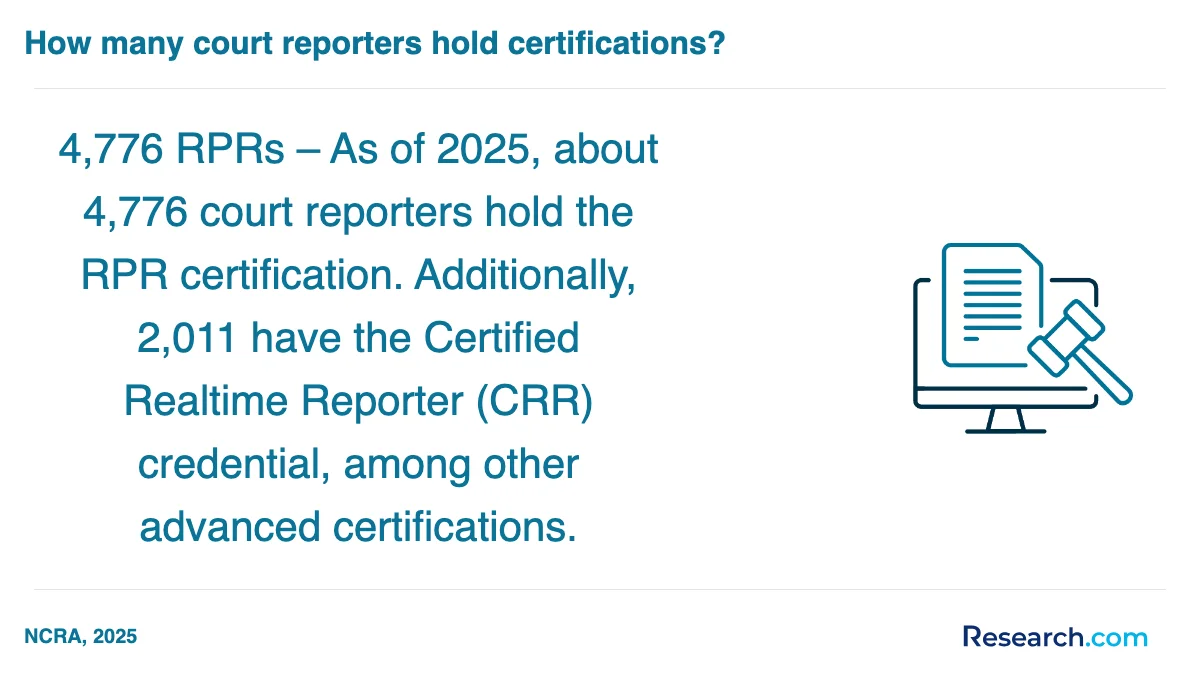
With certifications like the Registered Professional Reporter (RPR), graduates often see their earnings rise noticeably. Plus, working in public courts can bring extra benefits and union support, adding more security to their paycheck.
For students at well-known trade schools in the West, the combination of hands-on training and strong local demand makes entering the field both exciting and financially promising.
- Programs in the West require between 272 and 490 hours of instruction and are available as certificates, diplomas, or associate degrees.
- Many programs are NCRA-approved and prepare students for the Registered Professional Reporter (RPR) exam, which is required or recognized in several Western states.
- Tuition costs range from free at some California schools to $5,000-$15,000 at others, with additional expenses for equipment and certification fees.
- The median annual salary for court reporters in the West ranges from $60,000 to $100,000, with entry-level jobs starting around $50,000.
- Most Western states require licensing through state or national certification exams for court reporters.
In West, completing a court reporter trade school program typically takes about 1 to 2 years, depending on whether you attend full-time or part-time. Many graduates from well-known trade schools in the area share how diving into the program full-time helped them finish quicker and start working sooner, which is a huge motivator when you're eager to begin your career.
Some students choose part-time schedules to balance work or family commitments, stretching the program closer to two years. They often mention feeling proud of managing their time well while still absorbing all the essential skills needed for court reporting.
Trade schools in West focus on hands-on training, so you get to practice real court sessions and transcription early on. Graduates often recall the excitement of their first mock trial exercise, which made the learning process feel tangible and rewarding. This approach really helps students feel ready for the fast-paced environment they'll face on the job.
Choosing between online and on-campus court reporter programs in the West really boils down to how you like to learn and what fits your lifestyle. Graduates from West Valley College often share how the online option gave them the freedom to study from home or even while juggling work and family, thanks to live Zoom classes or self-paced lessons. Imagine attending court reporting sessions without the hassle of commuting or changing your daily routine.
On the other hand, those who attended classes in person enjoyed hands-on experience with specialized equipment and the energy of face-to-face interaction. Being on campus means quick access to instructors and peers, making it easier to ask questions and build a network. Some students found hybrid options perfect, blending the best of both worlds by choosing when to show up in person or log in online.
Both paths prepare you well for certifications like the California CSR exam, so it's all about what motivates and works best for you.
When considering the average cost court reporter trade school program West 2026, it's helpful to look at real examples from popular trade schools. For instance, graduates from programs like WESTEC at Taft College in California recall paying around $4,848 for the entire curriculum. Many find this cost manageable, especially given the thorough hands-on training and support they receive, which boosts their confidence heading into the job market.
In Washington State, although exact tuition fees are less frequently detailed, the tuition fees court reporter programs Western United States 2026 generally hover near $4,400. Students there appreciate the balance of cost and quality, feeling assured that their investment leads to solid career prospects in court reporting.
Besides tuition, students often mention the need to budget for additional expenses such as equipment and books. New court reporting students should expect to spend between $300 and $1,600 on a stenographic machine or pay around $55 per month if renting. Books and supplies can add $500 or more per course, which is a worthwhile expense for mastering the skills needed in this field.
Many graduates emphasize that understanding total program costs, including tuition and extra fees, is key to feeling prepared and optimistic about their futures. For anyone wondering what careers can you get with a legal studies degree, court reporting offers a practical and rewarding pathway, combining manageable educational investment with strong job potential in the West.
If you're looking into court reporter trade schools in the West, you'll be glad to know there are several financial aid options that can really ease your journey. For example, West Valley College in California offers a tuition-free court reporting and captioning program, so students there don't have to worry about traditional tuition costs. Graduates often say this made their education feel like a real opportunity without the usual financial stress.
For those attending private or out-of-state schools that do charge tuition, federal financial aid is often available. This includes Pell Grants, federal student loans, and work-study programs, but it depends on the school's accreditation and Title IV participation. Most students find filling out the FAFSA each year straightforward and a key step to unlocking these funds.
Many students also tap into scholarships from the National Court Reporters Association, which offers awards covering tuition and even equipment like student writers and software. Plus, some schools, including West Valley, provide laptop loans and emergency funds, helping with other costs like technology or transportation. These resources have helped many students stay focused on their studies with less worry.
Jumping into a court reporter trade school program in the West usually means meeting a few straightforward prerequisites that set you up for success. Most schools expect you to have a high school diploma or GED-nothing too fancy, just the basics to prove you're ready for focused study.
Many graduates from popular West Coast trade schools mention how helpful it was that these programs often encourage strong typing skills or a background in English. It's not a strict requirement everywhere, but having those skills definitely gives you a leg up and makes the learning curve less steep.
Here are some common prerequisites you'll encounter:
- High school diploma or GED
- Basic computer skills, especially typing
- Proficiency in English grammar and punctuation
- Sometimes, a short entrance assessment or interview
One graduate shared that being comfortable with tech tools before starting made the fast-paced classes feel more manageable, especially at well-known West trade schools where hands-on practice is key. So if you're thinking about enrolling, brushing up on typing and grammar could really boost your confidence and enjoyment as you dive into court reporting!

At court reporter trade schools in the West, students dive right into courses that build both skill and confidence. Graduates often share how mastering stenographic machine shorthand was a game changer, learning everything from machine keys to phonetic writing. Popular programs use textbooks like Mark Kislingbury's "Magnum Steno: Beginning Theory," helping students get comfortable with brief forms, finger spelling, and number entry.
Here's what a typical course lineup looks like:
- Court Reporting Theory & Related Subjects: Focused on English proficiency and recognizing tricky homophones to ensure accurate transcription.
- Speed Building: Intensive practice to hit speeds up to 225 words per minute with at least 96% accuracy, often through timed dictation drills.
- Legal Terminology & Court Procedures: Getting familiar with courtroom language and processes to feel ready for real cases.
- Computer-Aided Transcription Technology: Training on digital tools that are standard in modern courtrooms.
- Practicum or Internship: Hands-on experience with 40-50 hours of supervised court reporting to build real-world confidence.
Many graduates say the balanced mix of theory and practical work made them feel prepared and excited to start their careers. Whether practicing speed drills late at night or shadowing court proceedings, students at top Western trade schools find the courses both challenging and rewarding.
When diving into court reporter trade school programs in the West, you'll find a mix of exciting specializations that really shape your career path. Many graduates from popular schools in California share that choosing a specialization helps them hone skills suited to real-world court environments. Common options include official court reporting, which is perfect if you love capturing every word in state or federal courts, and deposition reporting, great for those who prefer the detailed, behind-the-scenes side of legal cases.
Students passionate about accessibility often gravitate toward real-time captioning programs in western US schools. This specialization supports live events and classrooms with instant captions, making a real difference for deaf or hard-of-hearing communities. Educational captioning is another rewarding path, helping schools comply with ADA while empowering students daily.
At West Valley College, for example, graduates cherish hands-on training in areas like:
- digital court reporting using the latest tech
- proofreading transcripts to guarantee precision
- scoping, which polishes transcripts for final court use
If you're exploring options beyond court reporting, you might find yourself interested in transcription methods like voice writing or machine transcription, adding extra flexibility to your career. And for those considering broader legal studies alongside these skills, checking out associates in paralegal studies can complement your expertise beautifully.
Picking the best court reporter trade school program in the West means focusing on a few must-haves. Graduates from popular schools near California and Utah rave about programs that are accredited and approved by industry pros like the National Court Reporters Association. Being close to courts and legal hubs makes a huge difference-students often find internships and networking easier when their school is in the heart of the action, like in Provo or Southern California.
Look for programs that prepare you really well for certification exams, such as the Registered Professional Reporter credential, since that's a game changer for landing jobs. Many top court reporting programs in Western US also offer hands-on training so you're ready from day one.
Financial aid options matter too; graduates from schools with flexible tuition and scholarships, such as some Arizona institutes, feel more confident managing costs. If affordability is key, check out this cheapest legal studies online degree for extra options as you plan your career.

Graduates of court reporter trade schools in the West often find themselves with exciting career options that fit various lifestyles and ambitions. Many step into official court reporter roles in federal or state courthouses, where they create precise transcripts of trials and hearings-jobs that can pay anywhere from $97,000 to over $115,000 annually. These positions offer the chance to work closely with judges and attorneys, combining accuracy with a dynamic work environment.
Others embrace the freedom of freelance court reporter jobs in Western United States, traveling to cover depositions or arbitrations for law firms or corporations. This path offers flexibility and the thrill of choosing assignments, though income may vary based on client demand and workload.
Some graduates dive into real-time captioning careers in West, including Communication Access Realtime Translation (CART) or broadcast captioning, helping deaf and hard-of-hearing communities by providing instant transcription during events and lectures. These opportunities are growing fast as accessibility needs expand.
Students from popular trade schools in the region share how their training not only prepares them for diverse roles but also equips them for national certification, boosting their confidence and career prospects. If you're wondering what to do with criminology degree or how to leverage court reporting skills, these paths highlight just how versatile this field can be.
The court reporter job outlook in Western states is looking really promising for graduates from trade schools. Many who studied at popular regional programs share how they quickly landed roles in district courts or secured freelance gigs shortly after finishing. With the demand in states like California and Texas, court reporters aren't just waiting around-positions open regularly, whether in official courtrooms or remote setups.
Here's what recent grads often highlight about their early careers:
- Competitive salaries starting near or above $70,000, with potential to top $100,000 in federal courts
- Opportunities to work remotely, especially in Northern California, adding flexibility and transcript bonus income
- Growing options beyond traditional courts, such as broadcast captioning and freelance transcription
Many find strong support through benefits like health insurance and retirement plans, making this more than just a paycheck. Plus, some grads explore related roles with confidence, sometimes even pairing court reporting with continuing education like a paralegal certification program to boost career options. The court reporter employment opportunities in the West offer a practical, rewarding path with a real sense of accomplishment.
Best Court Reporter Training Programs & Trade Schools - Top Court Reporting Schools in West for 2026
# 1 position
Charles A Jones Career and Education Center - Court Reporting and Captioning/Court Reporter.
certificate or diplomaThe Court Reporting and Captioning/Court Reporter program at Charles A Jones Career and Education Center is a hybrid program offering some distance-education options. It trains students to record and transcribe legal proceedings using print or electronic methods. Instruction covers legal terminology, transcription, shorthand, verbatim recording, equipment operation, regulations, and professional ethics. The program is accredited by the Council on Occupational Education.
# 2 position
West Valley College - Court Reporting and Captioning/Court Reporter.
associateWest Valley College offers a fully online Court Reporting and Captioning/Court Reporter program designed to train individuals in recording and transcribing legal proceedings using print or electronic methods. The curriculum covers legal terminology, transcription, shorthand, verbatim recording, equipment operation, regulations, and professional ethics. The program’s annual in-state tuition is $1,490. It is accredited by the Western Association of Schools and Colleges Accrediting Commission for Community and Junior Colleges.
# 3 position
West Valley College - Court Reporting and Captioning/Court Reporter.
certificate or diplomaWest Valley College offers a fully online Court Reporting and Captioning/Court Reporter program designed to prepare students for recording and transcribing legal proceedings. The curriculum covers legal terminology, shorthand, verbatim recording, equipment operation, and professional ethics. The program’s annual in-state tuition is $1,490. It is accredited by the Western Association of Schools and Colleges Accrediting Commission for Community and Junior Colleges.
# 4 position
Cerritos College - Court Reporting and Captioning/Court Reporter.
associateCerritos College offers a fully online Court Reporting and Captioning/Court Reporter program designed to prepare students to record and transcribe legal proceedings through print or electronic methods. The curriculum covers legal terminology, shorthand, verbatim recording, equipment operation, and professional standards. Annual in-state tuition is $1,364. Graduates earn a median salary of $39,625 one year after completion. The program is accredited by the Western Association of Schools and Colleges Accrediting Commission for Community and Junior Colleges.
# 5 position
Green River College - Court Reporting and Captioning/Court Reporter.
associateGreen River College offers a hybrid Court Reporting and Captioning/Court Reporter program designed to prepare students to record and transcribe legal proceedings using print or electronic methods. The curriculum covers legal terminology, transcription, shorthand, verbatim recording, equipment operation, regulations, and professional ethics. Annual in-state tuition is $4,580. The program is accredited by the Northwest Commission on Colleges and Universities.
# 6 position
Humphreys University-Stockton and Modesto Campuses - Court Reporting and Captioning/Court Reporter.
associateHumphreys University-Stockton and Modesto Campuses offers a program in Court Reporting and Captioning/Court Reporter that prepares students to accurately record and transcribe legal proceedings using print or electronic methods. The curriculum includes legal terminology, transcription, shorthand, verbatim recording, equipment operation, and professional standards. Annual in-state tuition is $14,760. The program is accredited by the Western Association of Schools and Colleges Senior Colleges and University Commission.
# 7 position
College of Marin - Court Reporting and Captioning/Court Reporter.
associateThe Court Reporting and Captioning/Court Reporter program at College of Marin is a hybrid course that prepares students to record and transcribe legal proceedings using print or electronic methods. The curriculum covers legal terminology, transcription, shorthand, equipment operation, regulations, and professional ethics. Annual in-state tuition is $1,558. The program is accredited by the Western Association of Schools and Colleges Accrediting Commission for Community and Junior Colleges.
# 8 position
Cerritos College - Court Reporting and Captioning/Court Reporter.
certificate or diplomaCerritos College offers a fully online Court Reporting and Captioning/Court Reporter program that trains students to record and transcribe legal proceedings using print or electronic methods. The curriculum includes legal terminology, shorthand, equipment operation, and professional ethics. The program's annual in-state tuition is $1,364. Graduates have median earnings of approximately $39,625 one year after completion. It is accredited by the Western Association of Schools and Colleges Accrediting Commission for Community and Junior Colleges.
# 9 position
Taft College - Court Reporting and Captioning/Court Reporter.
certificate or diplomaTaft College offers a hybrid Court Reporting and Captioning/Court Reporter program designed to prepare students to accurately record and transcribe legal proceedings using print or electronic methods. The curriculum covers legal terminology, transcription, shorthand, equipment operation, and professional ethics. Annual in-state tuition is $1,108. The program is accredited by the Western Association of Schools and Colleges Accrediting Commission for Community and Junior Colleges.
# 10 position
Cypress College - Court Reporting and Captioning/Court Reporter.
certificate or diplomaThe Court Reporting and Captioning/Court Reporter program at Cypress College is a hybrid course designed to prepare students to record and transcribe legal proceedings using print or electronic methods. The curriculum covers legal terminology, shorthand, verbatim recording, equipment operation, regulations, and professional ethics. The annual in-state tuition is $1,150. This program is accredited by the Western Association of Schools and Colleges Accrediting Commission for Community and Junior Colleges.
Frequently Asked Questions about court reporter
After completing a court reporter trade school in West, graduates should focus on obtaining certification to improve job prospects. The National Court Reporters Association (NCRA) offers the Registered Professional Reporter (RPR) credential, widely recognized by employers. Preparing for the RPR exam through practice tests and review courses is essential.
Networking is also important; attending local legal and court reporting events can connect graduates with potential employers. According to the U.S. Bureau of Labor Statistics, court reporter employment in the Western states is projected to grow by 7% from 2022 to 2032, indicating increasing opportunities.
Additionally, developing strong transcription and realtime reporting skills enhances employability in diverse settings such as courts, depositions, and broadcast captioning.
Employers in West seeking court reporter trade school graduates prioritize several key skills essential for success in the profession. Accurate and fast transcription ability is critical, with many positions requiring speeds of at least 225 words per minute, according to the National Court Reporters Association (NCRA). Attention to detail ensures transcripts are error-free and legally sound.
Technical proficiency with stenotype machines and realtime reporting software is also highly valued. Graduates familiar with digital recording tools and software can adapt more quickly to courtroom technology.
Strong listening skills and the ability to maintain focus during lengthy proceedings are important. Communication skills, including professionalism and confidentiality, are equally emphasized, reflecting the sensitive nature of court reporting work in West.
Finding internships relevant to court reporter trade school programs in West involves several strategic steps. Start by contacting local courthouses, law firms, and government agencies, as many offer internship opportunities for aspiring court reporters. Networking through your trade school's career services is also essential; schools often maintain partnerships with organizations that provide practical experience.
The National Court Reporters Association (NCRA) reports that internships significantly improve job placement rates, with about 65% of interns in court reporting securing employment within six months. Additionally, online job boards specific to West's legal sector can list internship openings. Early application and demonstrating proficiency in stenography or transcription software increase your chances of selection.
Obtaining a court reporter trade school diploma in West significantly enhances career mobility and advancement opportunities within the state's legal and administrative sectors. Graduates gain specialized skills in transcription, stenography, and legal terminology, which are highly valued by courts, law firms, and government agencies.
According to the U.S. Bureau of Labor Statistics (2023), court reporters in West experience a projected job growth of 7% over the next decade, faster than the national average. This growth increases demand for qualified professionals holding accredited diplomas.
Many employers in West prioritize candidates with formal court reporting credentials, linking diploma completion to higher starting salaries and faster promotions. Additionally, trade school programs often include certification preparation, a key factor in advancing to senior court reporter positions or freelance opportunities.
Overall, a trade school diploma serves as a gateway to stable employment and upward career paths in West's legal system.
Students enrolled in court reporter trade schools in West can benefit from various part-time jobs that enhance their skills and experience. One common opportunity is working as a transcriptionist, where students practice typing and listening skills essential for court reporting. Many local law firms and transcription service companies offer part-time roles suitable for students.
Another potential job is assisting in legal offices as clerks or assistants, providing exposure to legal terminology and courtroom procedures. According to the U.S. Bureau of Labor Statistics, such experience improves employability for court reporters in West, where demand is projected to grow by 7% through 2030.
Additionally, freelance captioning for live events or online media platforms allows students to sharpen real-time reporting skills while earning income. These roles often offer flexible hours, fitting well with academic schedules.
If you're looking for the best court reporter degree programs near me in the West, there are several reputable universities and community colleges that offer such programs. These institutions provide specialized training and education in court reporting, utilizing advanced technology and industry-standard equipment to prepare students effectively. Research.com can be a helpful resource to find detailed rankings and reviews of court reporter programs near West regions, catering to those exploring educational opportunities close to their location.
- NCRA-Approved Court Reporting Programs | NCRA https://www.ncra.org/home/start-your-career/schools-and-program-information/ncra-approved-court-reporting-programs
- How To Become a Court Reporter in 6 Steps (Plus Salary) | Mindgroom.com https://www.mindgroom.com/blog/how-to-become-a-court-reporter-in-6-steps/
- Supreme Court Internship Program https://www.supremecourt.gov/jobs/internship/internshipprogram.aspx
- MCRA : Mississippi Court Reporters Association https://mscra.com/students/intern-with-licensed-reporters/
- Court Reporting Program | Five Towns College https://www.ftc.edu/cr/
- How to Become a Court Reporter: A Complete Guide https://tallo.com/careers/discovery/how-to-become-a-court-reporter/
- Judicial Reporting | Anoka Technical College https://www.anokatech.edu/programs/judicial-reporting/
- Court Reporting Education | Find Top Schools & Programs in the U.S https://www.stenograph.com/court-reporting-school
- Court Reporting - Downey Adult School https://www.das.edu/court-reporting/
- TJB | JBCC | Court Reporters Certification | Court Reporting Schools https://www.txcourts.gov/jbcc/court-reporters-certification/court-reporting-schools/


