
Best Court Reporter Training Programs & Trade Schools - Top Court Reporting Schools for 2026

Co-Founder and Chief Data Scientist
Choosing the right court reporter trade school is an important step toward a rewarding career. This article introduces the best court reporter trade school programs for 2026, carefully ranked by the Research.com team of data scientists. Their analysis helps you identify programs that stand out in quality and outcomes.
By exploring this guide, you’ll gain valuable insights to make an informed decision. Earning a diploma or certification in court reporting opens doors to stable jobs and professional growth. Whether you’re starting fresh or considering a career change, this article supports your journey with trusted information.
Key benefits of finishing court reporter trade school in the USA
- Graduates of court reporter trade schools in the USA can expect competitive salaries, with averages ranging from about $63,800 to $80,550 annually and top earners making up to $113,000 per year.
- Career paths include working as official court reporters, freelance reporters, or captioners, as shown by many successful graduates from popular trade schools like the Court Reporting Institute of St. Louis.
- Completing a court reporter trade school online offers flexibility and convenience, helping students balance work and study, as experienced by graduates of schools like the Brown College Online Court Reporting Program.
- Best Court Reporter Training Programs & Trade Schools - Top Court Reporting Schools for 2026
- What can I expect from court reporter trade schools in the USA?
- Where can I work after finishing court reporter trade schools in the USA?
What can I expect from court reporter trade schools in the USA?
Enrolling in a court reporter trade school program in the USA means diving into an exciting world where you master machine shorthand at lightning speed-imagine capturing courtroom dialogue at up to 225 words per minute with razor-sharp accuracy. Graduates often recall the thrill of their first live transcription during supervised externships, where they felt the pulse of real legal proceedings and the responsibility of recording every word perfectly.
Expect to explore a dynamic curriculum blending legal terminology, stenographic theory, and cutting-edge digital transcription technologies. Many students appreciate how programs at well-known trade schools balance intense technical training with lessons on courtroom ethics and professional conduct, preparing them to step confidently into any deposition or trial setting.
Whether studying online or in-person, the journey typically spans 24 to 36 months for associate degrees or less for certificates, offering flexibility for busy lives. Graduates often share how ready they felt for certification exams like the Registered Professional Reporter (RPR), knowing they had hands-on experience and expert guidance throughout.
Job demand and competitive salaries keep motivation high, making every late-night practice session worth it for those eager to launch their court reporting careers.
Where can I work after finishing court reporter trade schools in the USA?
After completing a court reporter trade school program in the USA, graduates discover a world of exciting career paths waiting for them. Many find themselves immersed in the bustling halls of federal, state, or local courts, capturing every word of trials and hearings with precision. Imagine working for the U.S. District Courts, where official court reporters earn federal benefits and enjoy extra income from transcripts, with remote roles averaging $36,000 in 2024.
Others embrace the freedom of freelance work, partnering with agencies or private law firms to cover depositions and arbitrations. Graduates from popular trade schools often share how this flexibility lets them design their own schedules, balancing work and life creatively.
Some take their skills beyond the courtroom, diving into live captioning for television or educational events, making a real difference for the deaf and hard-of-hearing community. Government agencies, corporations, and transcription firms also seek these skilled professionals, offering diverse opportunities that match many lifestyles.
With state licensure and certification, graduates from accredited trade schools step confidently into these dynamic roles, fueled by passion and adaptability.
After finishing a court reporter trade school program in the USA, many graduates find themselves pleasantly surprised by the earning potential waiting ahead. Those stepping into entry-level roles often start with salaries between $36,000 and $49,500 annually, a solid foundation for fresh professionals eager to launch their careers.
As experience grows, so does the paycheck. Mid-career court reporters can see their earnings climb well beyond $80,000, with top performers hitting $113,000 to $124,000 a year. Imagine starting out reporting local hearings right after graduating from a popular trade school and, within a few years, landing a federal position where salaries soar past $128,000!
Geography plays a role too. Graduates working in states like California often enjoy higher hourly wages, reflecting the vibrant demand and cost of living. Many who've trained at well-known US trade schools share stories of unexpected financial freedom as they step into specialized roles like real-time or CART reporting, where advanced certifications unlock even greater income opportunities.
- Most court reporter programs require a high school diploma or equivalent, with some requiring typing and English entrance exams.
- Programs are offered at community colleges, technical schools, and specialized institutions, often resulting in associate degrees, diplomas, or certificates.
- Students must reach speeds of 180-225 words per minute with 95-97% accuracy and complete a supervised internship of at least 40 hours.
- Tuition typically ranges from $5,000 to $15,000, with additional costs for textbooks, steno machines, and certification fees.
- Starting salaries average $50,000 to $60,000 per year, with experienced court reporters earning $80,000 or more.
Completing a court reporter trade school program in the USA typically takes about 1 to 2 years, depending on the intensity of the course and the school's curriculum. Many graduates from well-known trade schools find themselves immersed in fast-paced, hands-on training that mirrors real courtroom environments. Imagine sitting in a classroom, fingers flying over stenotype machines, capturing every word with precision-this practical approach accelerates learning and keeps motivation high.
Some students choose accelerated programs that allow them to finish in as little as 12 months, perfect for those eager to jump into the field quickly. Others take a more paced route, around 18 to 24 months, balancing studies with part-time jobs or family commitments. Graduates often share how the immersive experience at their trade schools made the time fly by, fostering excitement and confidence as they prepared to enter a rewarding career.
Whether diving into intensive daily sessions or spreading coursework over a longer period, trade schools across the USA focus on equipping you with real-world skills in a timeframe that fits your lifestyle and ambitions.
Online court reporter trade school programs in the USA offer a thrilling blend of freedom and technology. Imagine logging into Alfred State College's platform from your cozy home, juggling work and family while mastering real-time shorthand and computer-aided transcription at your own pace. Graduates often share how this flexibility empowers them to learn without uprooting their lives or battling long commutes.
On the flip side, attending an on-campus program like Lakeshore College immerses you in face-to-face interaction, structured schedules, and instant feedback from instructors and peers. Many students thrive in this energetic environment where hands-on practice and collaboration spark confidence and sharpen skills rapidly.
Both paths demand hitting high standards-transcribing up to 225 words per minute with precision-and require some in-person experience for certification. The choice boils down to your lifestyle: craving flexibility or craving a traditional classroom buzz. Either way, accredited programs ensure you're stepping into a respected profession ready for success.
When diving into court reporter trade school programs in the USA, many graduates recall the balancing act between excitement and managing the average tuition fees for court reporting programs in the United States. Typical tuition for trade schools falls between $3,600 and $7,500, giving students a focused, hands-on experience without the long-term financial commitment of a traditional degree. For example, someone attending a popular trade school might invest around $5,000 for a 36-week intensive course, emerging feeling confident and career-ready.
It's not just tuition - total expenses for court reporter training in the U.S. include equipment and living costs, which can bring surprises along the way. Students often share stories of renting stenotype machines for about $150 per term or purchasing their own for up to $2,100, alongside budgeting $500 to $1,550 yearly for books and supplies. Rooms and board can vary widely, from $2,000 to nearly $10,000 per term, depending on location and lifestyle.
One seeker recounted choosing to study online through a renowned program, appreciating the budget flexibility while maintaining rigorous training. For those exploring multiple paths, linking to paralegal certificate programs online offers insight into complementary legal career options. Navigating these costs with curiosity helps future court reporters plan wisely, making the adventure into court reporting achievable and rewarding.
Financial aid for court reporter trade school students in the USA opens doors to exciting opportunities, often easing the path to a rewarding career. Many graduates from well-known trade schools share how scholarships, like those from the National Court Reporters Association (NCRA), transformed their experience by covering tuition or essential tools such as specialized reporting software. Imagine receiving up to $5,000 that helps you focus fully on mastering your skills without worrying about costs.
Trade schools themselves often step in with unique scholarships. For instance, at places like the Court Reporting Academy, students might win the Digital Court Reporter Scholarship Program, covering full or partial training expenses and granting free access to industry-standard software-an invaluable boost during the intense learning process.
Federal aid, including Pell Grants and loans, tends to favor accredited, degree-granting programs, making it crucial to choose schools recognized by the U.S. Department of Education. Meanwhile, some states enhance support through vocational rehabilitation or travel reimbursements, turning financial challenges into manageable steps toward success.
Diving into court reporter trade school programs in the USA usually starts with a few straightforward prerequisites that set the stage for your exciting journey. Most popular trade schools require applicants to have a high school diploma or GED, a basic but crucial step. Imagine the relief of a recent graduate who, after finishing high school, eagerly applied to their local court reporting program and felt instantly welcomed.
Beyond academic basics, schools often look for:
- Strong English language skills - because capturing every word matters immensely.
- Good hearing and concentration abilities - essential for those fast-paced courtroom moments.
- Familiarity with computers and typing skills, as many schools encourage starting with shorthand or stenography software early on.
Graduates from well-known trade schools share how these prerequisites gave them confidence, knowing they were prepared for the challenging yet rewarding coursework ahead. For example, students often describe their first weeks mastering stenotype machines as thrilling and empowering, a direct result of meeting these foundational requirements.

Diving into court reporter trade school programs in the USA means embracing a fascinating mix of courses that sharpen your skills for the fast-paced world of legal reporting. Imagine mastering Machine Shorthand Theory, where graduates from popular schools push themselves to capture spoken words at incredible speeds-up to 225 words per minute with near-perfect accuracy. This intense practice feels like unlocking a secret language!
Alongside this, Legal Terminology and Procedures ground you in the U.S. court system, making courtroom chatter less mysterious and more like second nature.
Students also polish their English Grammar and Transcription, ensuring every transcript is clear and flawless-vital when every word counts in legal settings.
Technology fans enjoy Realtime Reporting and Technology, learning to operate digital recorders and live transcription software that keep courts running smoothly.
Ethics and professionalism are never overlooked, with courses inspired by the NCRA's Code helping students confidently navigate their crucial role.
- Machine Shorthand Theory: Achieving high-speed accuracy feels like an exhilarating challenge.
- Legal Terminology and Procedures: Understanding courtroom language demystifies daily tasks.
- English Grammar and Transcription: Perfecting transcripts sharpens attention to detail.
- Realtime Reporting and Technology: Hands-on tech training prepares students for modern courtrooms.
- Ethics and Professionalism: Developing integrity and confidence in the profession.
- Medical and Technical Terminology: Tackling specialized vocabulary encountered in real cases.
Graduates from schools like Five Towns College and Generations College often share how their internships-completing dozens of supervised hours and producing detailed transcripts-transform textbook knowledge into real-world confidence, readying them for certification exams and rewarding careers.
Many court reporter trade school programs in the USA offer exciting specializations that open doors beyond the typical courtroom. Graduates often share how mastering stenographic court reporting at popular trade schools gives them the confidence to capture rapid speech, sometimes up to 225 words per minute, in high-stakes legal settings. But the adventure doesn't end there-digital court reporting is gaining momentum, teaching students cutting-edge audio recording skills recognized across jurisdictions.
Specializing in communication access realtime translation (CART) or broadcast captioning programs USA can place you right at the forefront of accessibility, helping the deaf or hard of hearing engage fully in schools, workplaces, or live TV broadcasts. Many students find joy in knowing their realtime transcription directly impacts someone's daily life, whether in a classroom or during a live broadcast.
Further, flexible programs often include medical and technical transcription or supporting roles like scopist work, polishing transcripts for accuracy. For those balancing work and study, numerous schools also provide online options that rival the traditional experience-if you're curious, check out some of the quickest online paralegal programs for a taste of flexible learning paths.
- Stenographic Court Reporting: mastering shorthand with speed and precision
- Digital Court Reporting: using state-of-the-art audio tools for transcription
- CART and Broadcast Captioning: delivering realtime text for accessibility and media
- Medical & Technical Transcription, Scopist Work: supporting transcription accuracy
This variety shows that court reporter specializations in the United States are as diverse as the stories those transcripts tell.
legal studies masters online, broadening your legal knowledge alongside court reporting. Prioritizing these factors will help you spot the best court reporting programs in the USA tailored for your success.

Graduates of court reporter trade school programs in the USA often discover exciting career opportunities for court reporters in the USA that stretch far beyond the traditional courtroom. Official court reporter roles within state or federal courts offer stability and certification-backed prestige, frequently providing full-time employment with solid salaries. For those craving flexibility, many graduates thrive as freelance court reporters, working remotely or on-site for law firms, crafting precise transcripts of depositions and arbitrations.
Popular trade schools report alumni glowing about careers as captioners and CART providers, where they bring inclusivity to live events and educational settings through real-time transcription, often from the comfort of home. Others find rewarding paths in transcription, editing, and proofing, supporting the legal or media sectors behind the scenes.
Exploring court reporter jobs and salary outlook USA reveals that with dedication, top earners can surpass $100,000 annually-real figures shared by recent graduates from leading trade schools. For those curious about expanding their credentials, many are pursuing an accelerated online master's in legal studies to widen their career horizons.
Graduates from court reporter trade school programs in the USA face a thrilling job market full of opportunity, driven by a serious shortage of qualified stenographers nationwide. Many who have completed their training at well-known trade schools share stories of swift job offers, eager employers, and the excitement of stepping into a career critical to the justice system.
Here's why the employment outlook for court reporters in USA is so promising:
- Only about 23,000 stenographers remain active across the country, down 21% over the last decade.
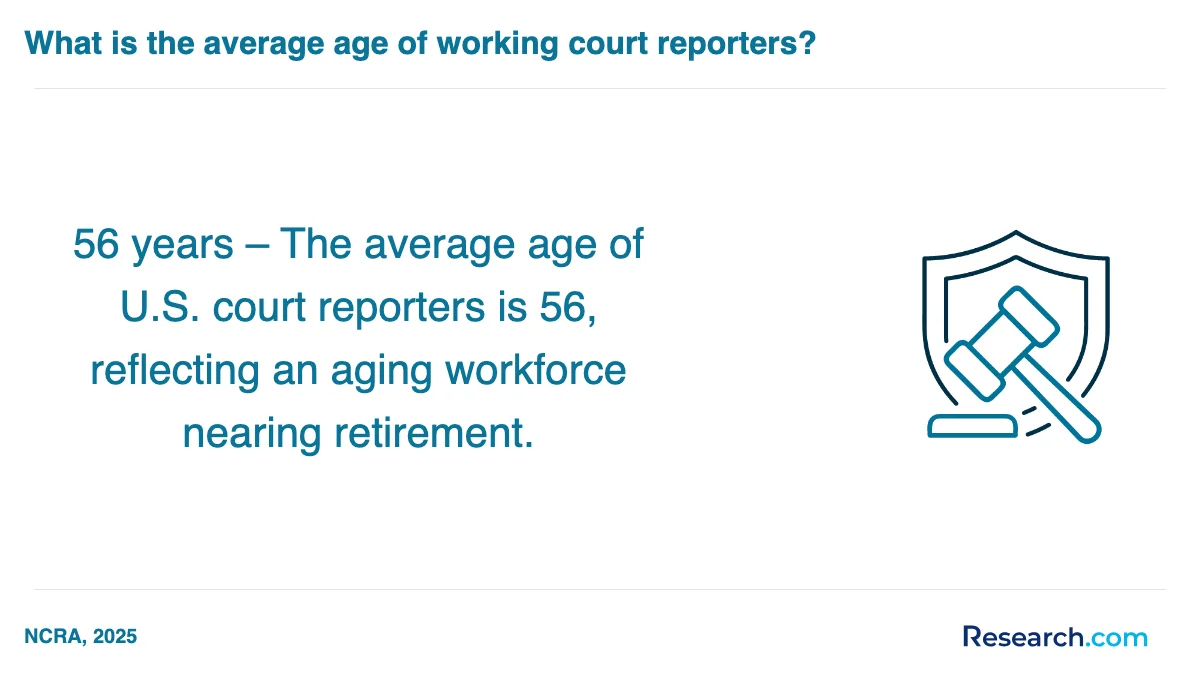
- California alone needs over 400 full-time court reporters to meet demand, with many current reporters nearing retirement.
- Increasing litigation and arbitration create more demand for accurate transcripts than ever before.
Imagine finishing your program and quickly becoming a vital player in courtrooms or depositions, often enjoying flexible remote assignments. The job market for court reporter trade school graduates is fueled by rising demand, making it an adventurous path with real job security.
For those curious why a master of legal studies is worth it, exploring advanced legal education can further open doors beyond transcription, enhancing career options in the legal field. This is part of the broader landscape court reporters navigate as they build rewarding careers.
Best Court Reporter Training Programs & Trade Schools - Top Court Reporting Schools for 2026
# 1 position
Cerritos College - Court Reporting and Captioning/Court Reporter.
associateCerritos College offers a fully online Court Reporting and Captioning/Court Reporter program designed to prepare students to record and transcribe legal proceedings through print or electronic methods. The curriculum covers legal terminology, shorthand, verbatim recording, equipment operation, and professional standards. Annual in-state tuition is $1,364. Graduates earn a median salary of $39,625 one year after completion. The program is accredited by the Western Association of Schools and Colleges Accrediting Commission for Community and Junior Colleges.
# 2 position
Cerritos College - Court Reporting and Captioning/Court Reporter.
certificate or diplomaCerritos College offers a fully online Court Reporting and Captioning/Court Reporter program that trains students to record and transcribe legal proceedings using print or electronic methods. The curriculum includes legal terminology, shorthand, equipment operation, and professional ethics. The program's annual in-state tuition is $1,364. Graduates have median earnings of approximately $39,625 one year after completion. It is accredited by the Western Association of Schools and Colleges Accrediting Commission for Community and Junior Colleges.
# 3 position
Des Moines Area Community College - Court Reporting and Captioning/Court Reporter.
associateDes Moines Area Community College offers a hybrid Court Reporting and Captioning/Court Reporter program that prepares students to accurately record and transcribe legal proceedings using print or electronic methods. The curriculum covers legal terminology, transcription, shorthand, equipment operation, regulations, and professional ethics. Annual in-state tuition is $5,550. Graduates earn a median salary of $49,137 one year after completion. The program is accredited by the Higher Learning Commission.
# 4 position
Key College - Court Reporting and Captioning/Court Reporter.
associateKey College offers a program in Court Reporting and Captioning/Court Reporter that trains students to record and transcribe legal proceedings using print or electronic methods. The curriculum covers legal terminology, transcription, shorthand, equipment operation, and professional ethics. The annual in-state tuition is $9,285. This program prepares individuals for roles involving accurate documentation of examinations, testimony, judicial orders, and legal opinions in formal settings.
# 5 position
Key College - Court Reporting and Captioning/Court Reporter.
certificate or diplomaKey College offers an on-campus Court Reporting and Captioning/Court Reporter program that trains students to accurately record and transcribe legal proceedings using print or electronic methods. The curriculum covers legal terminology, transcription, shorthand, equipment operation, and professional standards. Annual in-state tuition is $9,285. This program prepares individuals for careers involving judicial orders, testimony, and formal legal documentation, emphasizing technical skills and ethical practices.
# 6 position
Fox Valley Technical College - Court Reporting and Captioning/Court Reporter.
certificate or diplomaFox Valley Technical College offers a hybrid Court Reporting and Captioning/Court Reporter program that prepares students to record and transcribe legal proceedings using print or electronic methods. The curriculum covers legal terminology, transcription, shorthand, verbatim recording, equipment use, regulations, and professional ethics. Annual in-state tuition is $4,916. The program is accredited by the Higher Learning Commission.
# 7 position
Sheridan Technical College - Court Reporting and Captioning/Court Reporter.
certificate or diplomaSheridan Technical College offers a fully online Court Reporting and Captioning/Court Reporter program designed to prepare students to accurately record and transcribe legal proceedings using print or electronic methods. The curriculum covers legal terminology, transcription, shorthand, verbatim recording, equipment operation, regulations, and professional ethics. This program is accredited by the Council on Occupational Education.
# 8 position
Atlantic Technical College - Court Reporting and Captioning/Court Reporter.
certificate or diplomaAtlantic Technical College offers a fully online Court Reporting and Captioning/Court Reporter program. It trains students to accurately record and transcribe legal proceedings using print or electronic methods. Coursework includes legal terminology, shorthand, verbatim recording, equipment operation, regulations, and professional ethics. The program is accredited by the Council on Occupational Education.
# 9 position
Cuyahoga Community College District - Court Reporting and Captioning/Court Reporter.
associateThe Court Reporting and Captioning/Court Reporter program at Cuyahoga Community College District offers a hybrid format with some distance education options. It prepares students to accurately record and transcribe legal proceedings using print or electronic methods. The curriculum covers legal terminology, shorthand, equipment operation, and professional ethics. Annual in-state tuition is $3,736. Graduates earn a median income of $27,968 one year after completion. The program is accredited by the Higher Learning Commission.
# 10 position
Anoka Technical College - Court Reporting and Captioning/Court Reporter.
associateAnoka Technical College offers a hybrid Court Reporting and Captioning/Court Reporter program preparing students to record and transcribe legal proceedings using print or electronic methods. The curriculum covers legal terminology, transcription, shorthand, verbatim recording, equipment operation, regulations, and professional ethics. The program is accredited by the Higher Learning Commission. Annual in-state tuition is $6,267, and median earnings one year after completion are approximately $35,244.
Frequently Asked Questions about court reporter
After completing a court reporter trade school in the USA, graduates should focus on certification to enhance job prospects. The National Court Reporters Association (NCRA) offers the Registered Professional Reporter (RPR) credential, which is widely recognized by employers. Passing this exam can boost employability and earning potential.
Networking is also crucial. Joining professional organizations like NCRA provides access to job listings, mentorship, and industry events. Additionally, gaining experience through internships or freelance work can help build a strong portfolio.
Understanding state-specific licensing requirements is important, as some states mandate additional certifications for official court reporters.
Employers in the USA seek several key skills when hiring court reporter trade school graduates. First, strong shorthand or stenography skills remain essential, as nearly all official transcripts depend on accurate, real-time typing. The National Court Reporters Association highlights that speeds of 225 words per minute are standard for entry-level positions.
Attention to detail is critical because transcripts must be error-free and legally precise. Court reporters also need excellent listening and concentration abilities to capture spoken words in fast-paced environments.
Technical proficiency with court reporting software and digital recording equipment is increasingly important due to advances in technology. Communication skills are valued for interacting professionally with legal professionals and clients.
Finally, knowledge of legal terminology and courtroom procedures enhances a graduate's employability in this specialized field.
Finding internships relevant to court reporter trade school programs in the USA involves targeted research and networking. Many schools offer career services that connect students with local court reporting agencies, law firms, or government offices where internships are available. According to the National Court Reporters Association (NCRA), internships often provide hands-on experience with stenography and transcription in real legal settings.
Students should also explore state and local court websites, as some courts offer formal internship programs. Additionally, professional organizations like NCRA provide job boards and internship listings specifically for court reporting students. Early application and strong communication with potential supervisors increase chances of securing valuable internships.
A diploma from a court reporter trade school in the USA significantly enhances career mobility and advancement opportunities. Graduates gain specialized skills in stenography, transcription, and legal terminology, which are crucial for entry-level positions. According to the Bureau of Labor Statistics, employment of court reporters is projected to grow 6% from 2022 to 2032, reflecting steady demand.
Trade school diplomas often fulfill state certification requirements, a key step for career progression. Certified court reporters generally earn higher salaries and have access to more job opportunities, including freelance and official court roles.
Moreover, many employers prefer candidates with formal training, improving prospects for promotions and specialized assignments in legal and governmental sectors.
Students enrolled in court reporter trade schools in the USA can benefit from part-time jobs that develop relevant skills and provide practical experience. Common opportunities include transcription work, freelance captioning, and assisting established court reporters. These roles help improve typing speed and familiarity with legal terminology.
The U.S. Bureau of Labor Statistics highlights that court reporters often start with freelance or part-time transcription jobs, earning around $20 to $30 per hour. Internships or clerical positions in legal offices also offer exposure to courtroom procedures and documentation standards.
Such part-time roles complement formal education by enhancing technical skills and industry knowledge, which are crucial for certification exams and future employment.
- NCRF Student Intern Scholarship | NCRA https://www.ncra.org/home/the-profession/scholarships-and-grants/Student-Intern-Scholarship
- 4 Easy Steps to Become a Court Reporter + Complete Guide https://legalcareerpath.com/court-reporter-training/
- MCRA : Mississippi Court Reporters Association https://mscra.com/students/intern-with-licensed-reporters/
- Court Reporting Program | Five Towns College https://www.ftc.edu/cr/
- Questions to Ask Prospective Schools - National Verbatim Reporters Association https://nvra.org/page/QuestionstoAskProspectiveSchools
- Court Reporting Certificate Program | College of Court Reporting https://ccr.edu/program/court-reporting-certificate/
- 6 Steps to Become a Court Reporter | Magna Legal Services https://magnals.com/6-steps-to-become-a-court-reporter/
- How to Become a Court Reporter - Planet Depos https://planetdepos.com/how-become-court-reporter
- How To Become a Court Reporter (School, Duties & Salary) https://www.allcriminaljusticeschools.com/specialties/court-reporter/
- How to Become a Court Reporter | Stenographer | Court Reporter EducationHow to Become a Court Reporter | Stenographer | Court Reporter Education https://www.courtreporteredu.org/


