2026 Sustainability Degree Underemployment Report: Which Graduates Are Most Likely to Work Below Their Education Level

Co-Founder and Chief Data Scientist
Many Sustainability graduates enter a growing field but still risk landing in jobs that do not require a degree. A 2024 Strada Institute and Burning Glass Institute analysis found that 52% of bachelor's graduates were underemployed one year after graduation, making the first job a major career-risk point. This guide is for Sustainability students, recent graduates, and career changers who want degree-level work in ESG, climate, environmental compliance, energy, or corporate sustainability. You will learn who is most at risk, which skills reduce overqualification, and how to build a job-search strategy that avoids low-credential roles.
Key Things to Know About Underemployment in Sustainability Industry
- Sustainability underemployment risk is highest for generalist graduates who lack internship experience, carbon accounting, ESG reporting, GIS, data analysis, environmental compliance, or project portfolio evidence.
- No national dataset cleanly reports a standalone Sustainability underemployment rate, so the best benchmark is the 2024 finding that 52% of bachelor's graduates are underemployed one year after graduation.
- The earnings trade-off can be large: BLS May 2024 data places environmental scientists and specialists at a median annual wage of about $80,060, while common fallback retail roles sit near the low-$30,000 range.
- Key Things to Know About Underemployment in Sustainability Industry
- How likely is it for Sustainability graduates to become underemployed?
- Is the college curricula for Sustainability keeping up with employer expectations?
- How does underemployment for Sustainability graduates compare with other majors?
- Does taking on low-credential roles affect the career growth of Sustainability professionals?
- What is the salary gap between underemployed Sustainability graduates and those in degree-level jobs?
- What barriers force Sustainability graduates into low-credential roles?
- How can Sustainability graduates position their resumes for degree-level positions?
- Are there certifications that Sustainability graduates can secure to qualify for degree-level roles?
- What steps can Sustainability students take to improve their chances of securing degree-level roles?
- Top Trending Sustainability Rankings
How likely is it for Sustainability graduates to become underemployed?
Sustainability graduates face a real but uneven underemployment risk. The risk is not because the field lacks relevance; it is because many entry-level sustainability jobs are hybrid roles that require a mix of environmental knowledge, business reporting, data tools, stakeholder communication, and regulatory awareness. A graduate who only has broad coursework may look less job-ready than one who can calculate emissions, build dashboards, interpret compliance rules, or document measurable project outcomes.
The strongest national benchmark comes from the 2024 Strada Institute and Burning Glass Institute report showing that 52% of bachelor's graduates were underemployed one year after graduation. For Sustainability majors, that figure should be treated as a warning benchmark rather than a precise program-specific rate, because federal labor data does not consistently separate Sustainability degrees from environmental science, business, public policy, natural resources, and interdisciplinary studies.
The table below summarizes which Sustainability graduates are most exposed to low-credential work and which are better positioned for degree-level roles.
| Graduate profile | Underemployment risk | Why it happens | Better-fit degree-level targets |
| General Sustainability major with no internship | High | Employers may see interest but not proof of job-ready skills | Sustainability coordinator, environmental program assistant, ESG analyst trainee |
| Environmental science-focused graduate with field or lab experience | Moderate | Better technical fit, but may need compliance or data skills | Environmental scientist, environmental compliance specialist, conservation analyst |
| Business sustainability graduate with reporting and analytics projects | Lower | Can connect sustainability goals to risk, cost, reporting, and operations | ESG analyst, supply chain sustainability analyst, corporate sustainability associate |
| Policy-oriented graduate without quantitative skills | Moderate to high | Policy knowledge helps, but many roles ask for data, regulation, or grant-management evidence | Climate policy assistant, resilience program analyst, nonprofit program associate |
| Graduate with GHG accounting, GIS, LCA, or energy modeling portfolio | Lower | Specialized evidence reduces the employer's training burden | Carbon analyst, energy analyst, sustainability data analyst, climate risk analyst |
In practical terms, the Sustainability graduates most likely to work below their education level are those who treat the degree as the credential by itself. The graduates most likely to move directly into degree-level work usually combine the degree with internships, measurable projects, technical tools, and a clear target role.
Is the college curricula for Sustainability keeping up with employer expectations?
Many Sustainability programs have improved, but curricula do not always keep pace with employer expectations. The core mismatch is that colleges often teach sustainability as an interdisciplinary concept, while employers hire for specific work outputs: emissions inventories, compliance documentation, supplier assessments, ESG reports, energy-use analysis, stakeholder presentations, or grant deliverables.
The current hiring market also rewards skills-based evidence. As AI tools automate simpler research summaries, reporting drafts, and spreadsheet cleanup, employers increasingly value graduates who can validate data, explain assumptions, work with standards, and turn sustainability information into decisions. That shift makes a project portfolio more powerful than a transcript alone.
The table below shows common curriculum strengths and gaps. Use it to audit whether a Sustainability program is preparing students for degree-level work or mainly giving broad exposure.
| Curriculum area | Often covered in Sustainability programs | Employer expectation | Underemployment risk if missing |
| Environmental systems | Climate science, ecology, resource use | Ability to connect science to operational or regulatory decisions | Moderate |
| Carbon and GHG accounting | Sometimes elective-based | Scopes 1, 2, and 3 emissions familiarity and calculation logic | High |
| ESG and sustainability reporting | Often introduced conceptually | Working knowledge of disclosures, metrics, assurance, and stakeholder reporting | High |
| Data tools | Varies widely | Excel, dashboards, GIS, statistics, SQL or Python for some analyst roles | High |
| Environmental law and compliance | Often offered as policy coursework | Practical documentation, permitting awareness, audits, and regulatory tracking | Moderate to high |
| Professional experience | Internship may be optional | Evidence of applied projects, client work, fieldwork, or operational exposure | High |
A strong curriculum does not have to cover every specialization, but it should help students leave with at least one marketable lane. For example, a student targeting corporate ESG should prioritize reporting, data, accounting, and finance exposure, while a student targeting environmental compliance should prioritize regulation, field methods, documentation, and audit support.
How does underemployment for Sustainability graduates compare with other majors?
Sustainability is harder to compare with traditional majors because it is often interdisciplinary and may appear under environmental studies, business, public policy, urban planning, natural resources, or engineering. That makes the official underemployment picture less precise than for majors such as accounting, nursing, computer science, or education.
The clearest comparison is by labor-market structure. Majors with regulated or highly technical entry points tend to have clearer first-job pathways. Sustainability graduates can reach strong roles, but the pathway is less standardized, which raises underemployment risk for students who do not specialize early.
The table below compares Sustainability with other broad major groups using underemployment risk logic rather than unsupported major-specific percentages.
| Major or pathway | Typical first-job structure | Relative underemployment risk | What Sustainability students can learn from it |
| Nursing, accounting, engineering | Clear credential-to-role pipeline | Lower | Choose a defined target role before senior year |
| Computer science and data analytics | Portfolio and technical screening matter heavily | Varies by technical readiness | Build project evidence, not just coursework |
| Business and human resources | Broad degrees require functional specialization | Moderate | Link sustainability to operations, people, finance, or risk |
| Environmental studies and public policy | Mission-driven but competitive entry-level market | Moderate to high | Add compliance, GIS, grant, or analytics skills |
| General liberal arts | Flexible but less occupation-specific | Higher without experience | Translate broad skills into measurable employer outcomes |
Students comparing Sustainability with business or organizational careers may also consider adjacent graduate routes later, such as a masters human resources, if their goal is to work on workforce sustainability, employee engagement, labor practices, or ESG human-capital reporting. That makes sense when the career target is specific; it is less useful as a vague attempt to escape underemployment.
Do Sustainability graduates typically stay long in low-credential roles?
Some Sustainability graduates use low-credential jobs briefly while continuing to apply, upskill, or relocate. The danger is staying too long without a transition plan. The 2024 Strada and Burning Glass analysis found that graduates who start underemployed are much more likely to remain underemployed years later, which means the first job can shape how employers interpret a resume.
Not every low-credential role is equally risky. A temporary administrative role inside an energy company, city sustainability office, environmental nonprofit, or consulting firm may provide industry exposure. A job with no link to sustainability, data, compliance, operations, or public programs usually creates a weaker bridge.
Use the following decision rules before accepting a role that does not require a bachelor's degree.
- Ask whether the job places you near sustainability, environmental, energy, compliance, procurement, facilities, planning, or ESG teams.
- Confirm whether you can gain transferable evidence, such as reporting support, data cleanup, audit preparation, supplier research, outreach metrics, or grant documentation.
- Set a transition deadline, such as applying for degree-level roles after completing a certification, portfolio project, or six months of relevant experience.
- Keep applying to degree-level jobs while employed instead of waiting until the fallback role feels stable.
- Track accomplishments in measurable terms so the role does not appear unrelated on your resume.
A low-credential job makes more sense when it gives industry access, income stability, and time to build missing skills. It becomes a trap when it consumes the graduate's schedule without adding relevant experience or a path to a degree-level role.
Does taking on low-credential roles affect the career growth of Sustainability professionals?
Low-credential work can slow career growth for Sustainability professionals because early roles often determine skill accumulation, references, and the types of jobs recruiters consider later. A graduate who spends the first two years in unrelated retail or general service work may need to rebuild credibility through certifications, volunteer projects, contract work, or graduate coursework.
The effect is not permanent, but the opportunity cost can be significant. Degree-level sustainability roles expose workers to reporting systems, emissions data, compliance processes, budget discussions, vendors, and cross-functional teams. Low-credential roles usually offer less access to those signals, making it harder to compete for analyst, coordinator, or specialist openings.
There are cases where a pivot is reasonable. For example, a graduate interested in climate-related community counseling or family systems should not choose an LMFT program online simply because the sustainability job search is frustrating; it only makes sense if the intended occupation is licensed mental health practice and the student understands state licensure requirements.
The most important rule is to separate temporary income work from career-direction decisions. If a role is below degree level, the graduate should identify the missing qualification, build it deliberately, and move before the fallback job becomes the main story on the resume.
What is the salary gap between underemployed Sustainability graduates and those in degree-level jobs?
The salary gap between underemployed Sustainability graduates and those in degree-level jobs depends on the fallback role, location, employer, and specialization. Still, the gap can be large because many degree-level sustainability-adjacent jobs sit in professional, scientific, business, or government categories, while common fallback jobs sit in retail, clerical, hospitality, or general service categories.
BLS May 2024 wage data places environmental scientists and specialists at a median annual wage of about $80,060. By contrast, retail salesperson roles are near the low-$30,000 range. That difference is not a guaranteed graduate outcome, but it illustrates why accepting unrelated low-credential work can create a serious earnings trade-off.
The table below compares selected degree-level sustainability-adjacent roles with common low-credential fallback roles. The figures are occupational medians, not promises for new graduates.
| Role type | Example role | Typical degree use | Median annual wage context | Career implication |
| Degree-level | Environmental scientist or specialist | High | About $80,060 in BLS May 2024 data | Builds technical and regulatory experience |
| Degree-level | Urban or regional planning assistant | Moderate to high | Professional planning roles generally require specialized education or experience | Useful for climate resilience, land use, and transportation sustainability |
| Degree-level | ESG or sustainability analyst | High | Often benchmarked against business operations, analyst, or compliance wage families | Builds reporting, data, and stakeholder skills |
| Low-credential | Retail salesperson | Low | Near the low-$30,000 range in BLS May 2024 data | May not strengthen sustainability credentials |
| Low-credential | General office clerk | Low to moderate | Typically below professional analyst wage levels | Can help only if connected to relevant teams or data tasks |
| Low-credential | Food service or hospitality worker | Low | Usually far below degree-level professional roles | Best treated as temporary income unless tied to sustainable operations work |
Student loans increase the pressure. For federal undergraduate Direct Loans first disbursed in the 2024-2025 award year, the fixed interest rate is 6.53%, so graduates in low-credential roles may have less room to manage repayment, relocation, certification costs, and unpaid networking time. That does not mean a graduate should reject every fallback job, but it does mean the job should come with a clear exit strategy.
What barriers force Sustainability graduates into low-credential roles?
Sustainability underemployment usually comes from a combination of market and preparation barriers. The field is expanding, but entry-level hiring is competitive because employers often want sustainability knowledge plus a functional skill such as data analysis, compliance, finance, engineering support, procurement, communications, or project management.
The barriers below are the most common reasons graduates end up in low-credential roles. They are also the areas students can address before graduation.
- Generalist coursework without specialization: A broad degree can be valuable, but employers need to understand what job the graduate is ready to perform.
- No internship or applied project: Sustainability employers often prefer evidence that the graduate has worked with real data, stakeholders, facilities, suppliers, or environmental documents.
- Weak quantitative skills: ESG, energy, carbon, and climate-risk roles increasingly require comfort with spreadsheets, dashboards, calculations, and data quality checks.
- Limited knowledge of standards and regulations: Graduates may know sustainability concepts but struggle to discuss reporting frameworks, compliance workflows, or audit documentation.
- Geographic mismatch: Hiring volume varies by region, with stronger opportunities near government agencies, consulting hubs, corporate headquarters, utilities, infrastructure employers, and large universities.
- Unclear resume positioning: Many graduates describe values and coursework instead of employer-relevant outputs such as emissions analysis, waste audits, supplier scorecards, or grant reporting.
- Waiting until after graduation: Students who delay internships, networking, and portfolio building often compete against graduates who already look job-ready.
Common mistakes include applying only to jobs with "sustainability" in the title, ignoring operations or compliance roles that use the degree, and assuming passion for climate issues will substitute for technical evidence. A better approach is to search by function: carbon, ESG, energy, waste, facilities, procurement, compliance, resilience, environmental health and safety, and climate risk.
How can Sustainability graduates position their resumes for degree-level positions?
A Sustainability resume should make the graduate look useful on day one. That means leading with role-specific evidence instead of a generic statement about caring for the environment. Recruiters and applicant tracking systems often scan for tools, standards, deliverables, and measurable outcomes, so the resume should mirror the language of target job descriptions.
Use this sequence to reposition a resume for degree-level Sustainability roles.
- Pick one target lane, such as ESG reporting, environmental compliance, carbon accounting, energy analysis, climate policy, corporate sustainability, or sustainable supply chain.
- Collect 10 to 15 job descriptions in that lane and highlight repeated skills, tools, standards, and deliverables.
- Rewrite the summary to name the target function and the strongest evidence, not a broad career goal.
- Move applied projects, internships, fieldwork, lab work, GIS maps, dashboards, carbon calculations, or reporting samples above unrelated work experience when appropriate.
- Convert coursework into outputs, such as "completed campus waste audit" or "built emissions inventory model," instead of listing only class titles.
- Use metrics where honest, including facility size, dataset size, number of stakeholders, report length, budget exposure, or project timeline.
- Create a small portfolio with cleaned project samples, methods notes, charts, maps, and a short explanation of business or environmental impact.
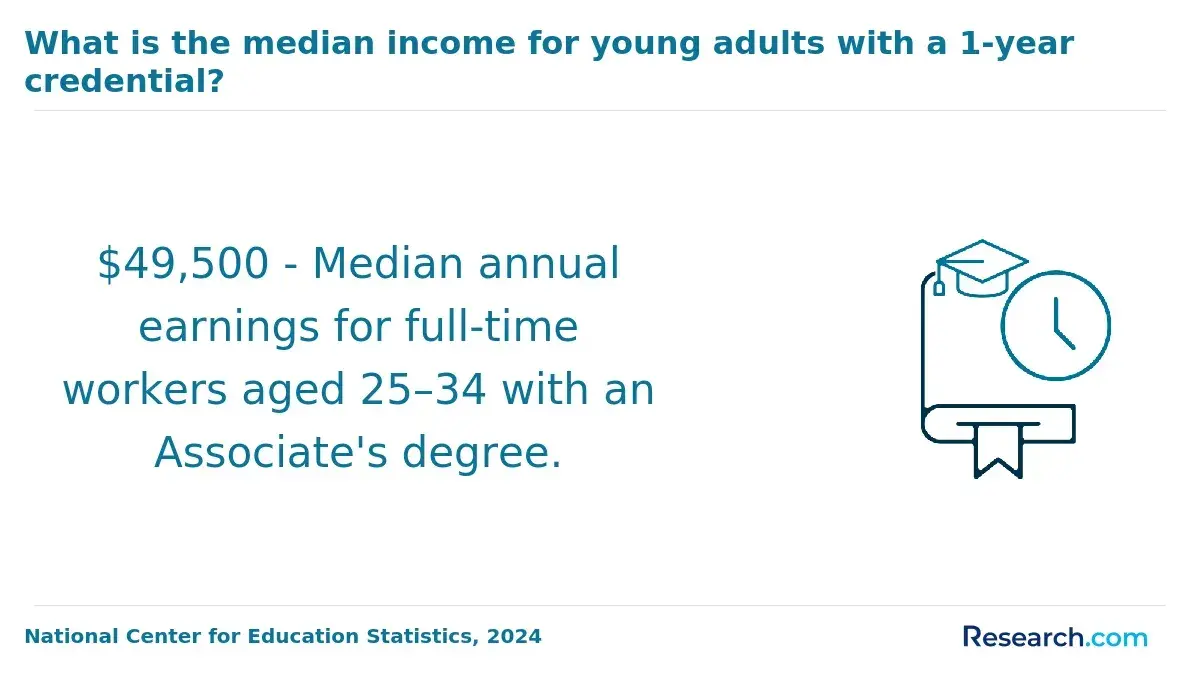
For older adults or returning students entering sustainability from another field, short credentials can help refresh technical skills, but they should be chosen around a target role. Broad lists of one year degrees for seniors may be useful for comparing flexible study formats, but Sustainability candidates should still prioritize programs that produce portfolio-ready work.
The resume red flag to avoid is a document that reads like an academic biography. Employers need to see evidence that the graduate can support reporting cycles, compliance deadlines, stakeholder requests, or measurable sustainability projects.
Are there certifications that Sustainability graduates can secure to qualify for degree-level roles?
Certifications can help Sustainability graduates qualify for degree-level roles when they fill a specific skills gap. They are usually faster and cheaper than a graduate degree, but they work best when paired with projects or experience. A certification alone rarely fixes an unfocused job search.
The table below summarizes credentials that commonly align with degree-level Sustainability work in the U.S. market. Requirements, costs, and employer preferences vary, so students should verify the current rules before enrolling.
| Credential | Best fit | How it helps reduce underemployment risk | Best timing |
| LEED Green Associate | Green buildings, facilities, real estate, campus sustainability | Signals familiarity with sustainable building concepts and terminology | Sophomore year through early career |
| GHG accounting or carbon accounting certificate | Carbon analyst, ESG analyst, climate reporting | Builds practical emissions measurement language and calculation confidence | Junior year through early career |
| GIS certificate or coursework | Environmental planning, conservation, resilience, utilities | Shows ability to map and analyze location-based environmental data | During degree or immediately after |
| ENV SP | Infrastructure sustainability, public works, consulting | Connects sustainability to infrastructure planning and project evaluation | Junior year through early career |
| Associate-level project management credential or training | Program coordination, nonprofit projects, corporate initiatives | Shows ability to manage timelines, stakeholders, and deliverables | After completing project experience |
| OSHA or environmental health and safety training | Compliance, EHS, industrial sustainability | Supports entry into regulated workplace environments | When targeting EHS or compliance roles |
A master's degree may make sense for specialized policy, planning, engineering, research, or leadership paths, but it is not always the fastest solution to underemployment. Doctoral study is even more specialized; resources on shortest doctoral programs may help long-term academic or executive learners compare formats, but a doctorate is usually not the first step for an entry-level Sustainability graduate trying to secure a degree-level job.
The best certification choice is the one that matches the job postings a graduate is already targeting. If postings repeatedly mention GHG inventories, choose carbon accounting. If they mention mapping, choose GIS. If they mention buildings, choose LEED. If they mention audits or regulated facilities, choose compliance-oriented training.
What steps can Sustainability students take to improve their chances of securing degree-level roles?
Sustainability students can reduce underemployment risk by building a career strategy before the senior-year job search. The goal is to graduate with a degree, a target function, proof of applied work, and a network that understands the student's specific value.
The following steps create a practical path toward degree-level employment.
- Choose a target lane early: Decide whether you are aiming for ESG reporting, carbon accounting, energy, compliance, climate policy, planning, sustainable supply chain, conservation, or environmental consulting.
- Audit your coursework against job descriptions: If target postings ask for Excel modeling, GIS, permitting, emissions inventories, or dashboards, make sure your electives and projects cover those areas.
- Complete at least one relevant internship or co-op: Prioritize roles with measurable deliverables over unpaid experiences that provide only general exposure.
- Build a portfolio: Include a carbon inventory sample, waste audit, GIS map, ESG metric dashboard, supplier assessment, policy memo, or energy-use analysis, depending on your target lane.
- Network by function, not just mission: Contact alumni who work in compliance, facilities, consulting, utilities, procurement, planning, or reporting, even if their title does not include "sustainability."
- Apply beyond obvious sustainability titles: Search for environmental analyst, EHS coordinator, energy analyst, resilience assistant, compliance specialist, procurement analyst, and ESG reporting associate.
- Evaluate job offers for advancement evidence: Ask whether the role provides exposure to data, reporting systems, audits, regulatory documents, vendors, or cross-functional sustainability projects.
- Set an upskilling deadline: If you do not receive interviews after a focused application cycle, add the most frequently requested skill rather than sending more generic applications.
The smartest strategy is not to hold out indefinitely for a perfect sustainability title. It is to accept roles that build relevant evidence and reject roles that offer income but no bridge to degree-level work. Students who treat every semester as career preparation, not just degree progress, are better positioned to avoid long-term overqualification.
Other Things You Should Know About Sustainability
Yes, but the graduate should show business-facing skills such as reporting, data analysis, stakeholder communication, risk awareness, and basic finance or operations knowledge. ESG employers usually want evidence that the candidate can turn sustainability information into decisions.
Not always. Graduate school can help for specialized planning, policy, research, engineering, or leadership paths, but many underemployed graduates first need targeted experience, technical skills, certifications, and a stronger portfolio.
They can be useful if they produce strong evidence, contacts, and role-specific experience. They are less valuable if the work is mostly clerical, disconnected from the target career, or financially unsustainable for the student.
Common hiring areas include environmental consulting, government agencies, utilities, higher education, real estate, construction, manufacturing, corporate ESG teams, infrastructure firms, nonprofits, and supply chain organizations.
Top Trending Sustainability Rankings
References
- Transitioning to Green Jobs as a Pathway to Sustainable ... https://asjp.cerist.dz/en/downArticle/277/21/1/298693
- The Labor Market for Recent College Graduates https://www.newyorkfed.org/research/college-labor-market
- The Future of Green Jobs: Non-Traditional Roles in Sustainability and Social Impact - Green Career Centre https://www.greencareer.ca/whats-new/the-future-of-green-jobs-non-traditional-roles-in-sustainability-and-social-impact/
- Sustainability based careers and graduate prospects https://uwlpress.uwl.ac.uk/newvistas/article/id/193/
- Most college graduates face underemployment upon bachelor’s degree attainment https://fordhaminstitute.org/national/commentary/most-college-graduates-face-underemployment-upon-bachelors-degree-attainment
- Emerging Green Careers: Job Options, Salaries, & Resources https://www.learnhowtobecome.org/career-resource-center/green-careers/