Choosing a Texas speech pathology program means weighing licensure eligibility, clinical training, debt, and local career access - not simply finding a nearby master's degree. This guide supports aspiring speech-language pathologists, career changers, and working professionals. It will feature the 2027 Most Valuable Speech Pathology Degree Programs Ranking in Texas, created by the Research.com team of data scientist to help students make an informed choice about which speech pathology degree programs are worth considering. Use it to compare fit, cost drivers, timelines, and career trade-offs before applying.
Key findings about speech pathology degrees in Texas
Texas speech-language pathologist licensure generally requires a qualifying graduate degree, supervised professional experience, and examination; a bachelor's degree alone is not the standard independent-practice credential.
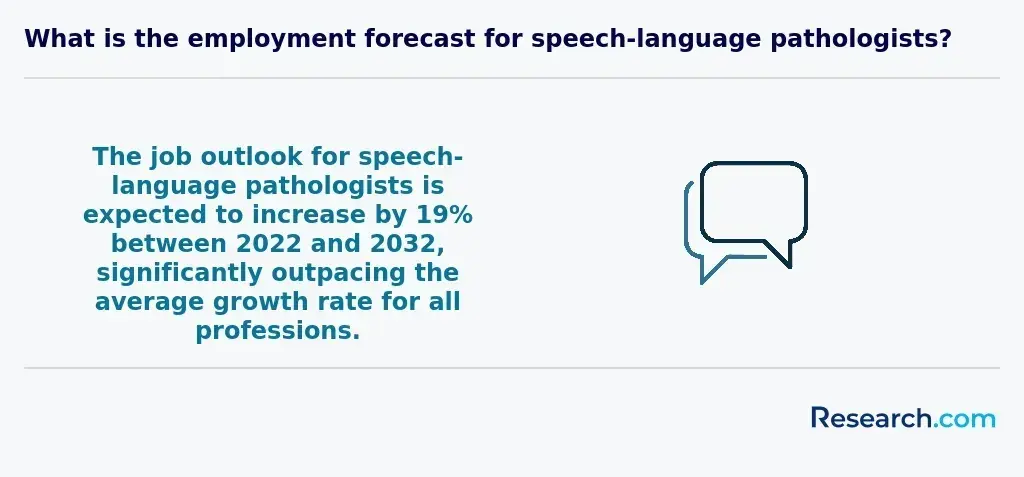
The national median annual wage for speech-language pathologists was $97,870 in May 2025, and BLS projects 17% employment growth from 2025 to 2035 - evidence of strong demand, but not a personal salary guarantee.
Program value depends on the full path: CAA accreditation, clinical placement quality, resident tuition eligibility, aid, time out of work, and completion probability matter more than published tuition alone.
What can I expect from a speech pathology degree in Texas?
For most students, "speech pathology degree" means a master's in speech-language pathology (MS-SLP), the degree typically needed to pursue clinical practice as a speech-language pathologist. Texas also has bachelor's programs in communication sciences and disorders, which provide foundational preparation but do not by themselves qualify graduates for independent SLP licensure.
A graduate program combines advanced coursework with supervised clinical education. Students learn to assess and treat speech, language, voice, fluency, swallowing, cognitive-communication, and social communication disorders across the lifespan. They also practice documentation, evidence-based decision-making, family counseling, cultural responsiveness, and interprofessional care.
Clinical education is central to the experience. Placements may include university clinics, public schools, hospitals, rehabilitation facilities, early-intervention settings, and skilled nursing facilities. Location matters: a program in a large metro area may offer varied specialty placements, while programs serving border or rural communities may provide experience with bilingual and underserved populations. Ask how placements are assigned, whether travel is required, and whether students pay for background checks, transportation, or medical compliance.
This path fits students who want direct, regulated clinical work and are prepared for a demanding graduate schedule. It may be a poor fit for someone seeking a quick credential, fully self-paced training, or a career focused exclusively on research or education policy; related fields such as audiology, special education, counseling, or public health may align better with those goals.
Where can I work with a speech pathology degree in Texas?
Texas SLPs work across education and health care, and the best employment setting depends on the population and schedule you want. School positions often follow an academic calendar and focus heavily on language, literacy-related communication, and educational access. Medical positions may involve swallowing disorders, stroke recovery, brain injury, voice, and complex care.
The settings below show how work environments can shape a program choice and clinical-placement priorities.
Setting
Typical focus
Decision implication
Public schools and education service centers
Child language, speech sound disorders, augmentative communication
Seek pediatric and school-based practicum exposure.
Hospitals and rehabilitation facilities
Swallowing, neurological rehabilitation, acute and post-acute care
Prioritize medical placements and dysphagia coursework.
Ask about caseload variety and business-practice exposure.
Early-intervention and home-health services
Birth-to-three development and caregiver coaching
Consider travel tolerance and family-centered training.
Skilled nursing and long-term care
Cognitive-communication and swallowing support
Confirm adult medical clinical experience.
Texas' large geography makes commuting and placement territory practical concerns. Students who plan to remain in a particular region should ask whether the program has established clinical relationships there; a placement network can be more useful than a program's city alone.
The newest national Occupational Outlook Handbook figure from the U.S. Bureau of Labor Statistics reports a median annual wage of $97,870, or $47.05 per hour, for speech-language pathologists in May 2025. This is a national occupation-wide median, not a Texas starting-pay estimate and not a promise for any graduate.
Pay can vary materially by setting, years of experience, specialization, productivity expectations, benefits, and metro area. Medical employers may offer different compensation structures than school districts, while school roles can include calendars and retirement benefits that do not show up in base salary comparisons. Evaluate offers using annual workload, paid time off, health coverage, supervision expectations, and travel reimbursement.
The degree can be a sound investment when it leads to licensure, timely completion, manageable borrowing, and a job setting that fits your interests. A realistic return-on-investment review should include baseline earnings, post-degree earnings, total borrowing, grants, opportunity cost during full-time study, probability of completing the program, repayment period, and the time value of money. Explore role options through highest-paying speech pathology jobs and careers before assuming one practice setting will fit everyone.
Texas programs can share the same broad licensure goal while differing in population focus, clinical network, delivery expectations, and academic emphasis. The most useful comparison is not "which school is best overall," but which program's structure best supports your intended practice setting, language background, budget, and ability to complete required clinical experiences.
The University of Texas at El Paso: Its border-region setting creates a particularly relevant context for students interested in bilingual service delivery and communities where Spanish-English communication needs are central. Applicants should confirm current clinical placement options and whether the program's regional focus matches where they intend to practice.
Texas A&M University-Kingsville: The Communication Sciences and Disorders offering is a practical option for students seeking a South Texas pathway and regional access. Its strongest decision value is geographic: students should compare clinical travel requirements and available graduate-level preparation with other nearby options.
The University of Texas Rio Grande Valley: UTRGV's communication disorders program is situated in the Rio Grande Valley, where bilingual and bicultural clinical preparation can be especially meaningful. It may suit applicants who want their training and future professional network tied to this region rather than a major Texas metro.
University of North Texas: UNT offers a communication disorders pathway in the Dallas-Fort Worth labor market, giving students access to a large and varied regional service environment. This can be valuable for applicants who want to compare pediatric, school, medical, and private-practice clinical settings within one metropolitan area.
Texas Woman's University: TWU's MS in Speech-Language Pathology provides a clearly identified graduate professional pathway rather than only undergraduate preparation. That distinction matters for applicants who need to verify a direct route toward the graduate education component of licensure.
Texas State University: Texas State's Communication Disorders program gives Central Texas applicants an option between the Austin and San Antonio employment regions. Students should examine placement locations closely because this corridor can offer varied settings but may also require travel.
The University of Texas at Austin: UT Austin's Speech, Language, and Hearing Sciences unit connects speech-language pathology education with a broader academic field that includes hearing and language science. It can fit students who value a research-intensive environment alongside clinical preparation, subject to current graduate admissions requirements.
The University of Texas at Dallas: UT Dallas is located in the Dallas-Fort Worth area, a meaningful advantage for applicants whose personal obligations or future employment plans center on North Texas. Prospective students should verify the exact degree pathway and current clinical education arrangements rather than relying on institution-wide information.
University of Houston: UH's Communication Disorders program is positioned in the Houston region, where students may encounter a broad range of medical and school-based service environments. It is especially worth investigating for applicants seeking clinical training near a major health-care market.
Abilene Christian University: ACU specifically identifies a Master of Science in Speech-Language Pathology, making its graduate credential pathway straightforward to locate. As a private university option, it deserves a full net-price comparison with public programs rather than an assumption that sticker price determines affordability.
Program pages can change, particularly around cohort size, prerequisites, and placement policies. Before treating any feature as a deciding factor, request the current student handbook and verify accreditation status, completion sequence, and total required clinical commitments directly with the department.
A bachelor's degree in communication sciences and disorders usually takes about four years of full-time study. A clinical master's program commonly takes about two academic years of full-time enrollment, although actual completion can be longer when prerequisite courses, part-time enrollment, summer clinical work, or placement sequencing are involved.
Students entering graduate school from another major should allow additional time for leveling coursework. Programs may require foundational classes in areas such as phonetics, language development, anatomy and physiology of speech and hearing, audiology, speech science, and statistics before or during admission. The shortest advertised route is not always the lowest-risk route if it compresses clinical scheduling or leaves little room for employment.
After graduation, becoming fully established in practice includes more than the degree. Texas requirements can include supervised professional experience and an examination as determined by the state licensing authority. Confirm the current sequence with the Texas Department of Licensing and Regulation before enrolling, especially if you expect to move to another state after graduation.
Online or hybrid SLP programs can deliver academic instruction remotely, but they are not typically fully remote in the practical sense. Clinical skills training, assessments, simulations, and supervised patient contact still require scheduled, hands-on participation. On-campus programs may make it easier to access university clinics and faculty in person, while distance formats can reduce relocation pressure for students with work or caregiving responsibilities.
The comparison below highlights the trade-off that matters most: flexibility does not remove clinical and licensure obligations.
Factor
Online or hybrid format
On-campus format
Didactic coursework
Often scheduled online, sometimes synchronous
Usually face-to-face at set times
Clinical training
May require local approved placements and travel
Often coordinated through campus-area networks
Best fit
Students needing location flexibility and strong self-management
Students wanting consistent in-person access and local cohort structure
Main risk to check
Whether placements, residency requirements, and licensure preparation work where you live
Whether relocation, commuting, and daytime scheduling are manageable
Choose an online route only after getting written answers about clinical placement responsibility, required campus visits, state authorization, technology expectations, and eligibility for Texas licensure. Students comparing flexible formats can review online masters speech language pathology options, but should still verify each program's current accreditation and clinical policies.
There is no single reliable statewide average cost for a Texas speech pathology degree because published tuition changes by institution, residency classification, credit load, graduate versus undergraduate status, fees, and clinical requirements. Public universities generally differentiate in-state and out-of-state tuition, while private nonprofit institutions may use a single tuition schedule but offer institutional aid.
Your cost comparison should use each school's current graduate tuition table and a program-specific estimate of required credits. Include fees, books, testing, immunizations, background checks, professional liability coverage, travel to practicum sites, housing, and income lost if you reduce work hours. A lower per-credit price can be outweighed by an extra term of enrollment or repeated long-distance travel.
Compare net cost rather than sticker price. Ask financial aid offices for a written estimate based on your residency, expected enrollment pattern, scholarships, and clinical semesters. Texas residents should also confirm residency classification early; losing in-state eligibility can materially alter the cost of a public graduate program.
Graduate SLP students may combine federal aid, institutional scholarships, assistantships, external awards, and employment benefits. Availability varies by school, citizenship or eligible noncitizen status, enrollment intensity, satisfactory academic progress, and whether the program participates in the relevant aid program.
Start with the FAFSA and then compare aid offers using grant and scholarship amounts separately from loans. The following funding sources are commonly relevant:
Federal Direct Unsubsidized Loans: Eligible graduate students may borrow within annual and aggregate federal limits; interest accrues, so borrow only what the completion plan requires.
Graduate PLUS Loans: Eligible graduate or professional students enrolled at least half time in participating programs may apply after completing FAFSA requirements and passing the required credit review or obtaining an endorser or documented extenuating circumstances. These loans can cover remaining cost of attendance after other aid, but they should be evaluated carefully because borrowing can be substantial.
University scholarships and assistantships: Departments may offer awards, research support, teaching roles, or clinic-related positions, but SLP cohort schedules can limit the hours students can realistically work.
Texas and external scholarships: Professional associations, community foundations, employers, and disability-service organizations may offer awards; deadlines often precede graduate admission decisions.
Before accepting loans, calculate expected borrowing across every semester, including clinical terms. Do not assume an assistantship will be available or compatible with your practicum schedule. If admission selectivity is a concern, investigate application strategy separately through easiest SLP masters to get into, while keeping accreditation and net cost as nonnegotiable filters.
View the chart data as a table
SLP annual wage spread - Texas (May 2025) (Source: U.S. Bureau of Labor Statistics (OEWS May 2025))
Category
Value
10th percentile
$66,370
25th percentile
$79,230
Median
$99,910
75th percentile
$118,490
90th percentile
$132,990
Admissions requirements differ by institution, but accredited graduate SLP programs commonly expect a bachelor's degree from an accredited institution, prerequisite coursework in communication sciences and disorders or approved equivalents, transcripts, recommendations, a personal statement, and evidence that the applicant can succeed in intensive clinical education. Some programs use interviews, writing samples, observation documentation, or standardized-test policies that can change by cycle.
Students without a communication disorders major are often eligible, but they may need a post-baccalaureate leveling sequence. The key question is whether the prerequisites will be completed before the graduate cohort starts and whether the program accepts courses from your prior institution.
Before applying, verify these items with each department:
Whether all required foundational courses must be completed before admission or may be taken conditionally.
Minimum GPA rules and whether science or prerequisite GPA is reviewed separately.
Required observation, volunteer, or health-care experience and how it must be documented.
Background-check, immunization, drug-screen, and clinical participation standards that can affect placement eligibility.
Whether international coursework, transfer work, or online prerequisites need separate evaluation.
A common mistake is applying based on a broad "related major" label without matching individual prerequisites. Build a course-by-course checklist from every target program, because one missing statistics, phonetics, or anatomy course can delay enrollment by a full cycle.
Texas MS-SLP curricula normally build advanced clinical competence rather than repeat introductory undergraduate content. Course titles vary, but programs generally cover communication disorders across ages and settings, diagnostic processes, intervention planning, professional ethics, and supervised clinical practice.
The curriculum categories below help applicants identify whether a program supports their intended setting.
Course area
What students learn
Why it matters
Speech and language disorders
Assessment and intervention for articulation, language, fluency, and motor speech needs
Essential for pediatric and adult communication care.
Swallowing and medical SLP
Dysphagia, neurological conditions, documentation, and medical collaboration
Important for hospital, rehabilitation, and long-term-care goals.
Voice and resonance
Voice assessment, intervention, and referral considerations
Supports specialty interest and broad clinical competence.
Research methods and evidence-based practice
Interpreting research and applying evidence to clinical decisions
Helps clinicians adapt care rather than rely on routine alone.
Clinical practicum
Supervised assessment, treatment, records, and professional communication
Required experience that cannot be replaced by coursework alone.
Ask for the current degree plan and identify where pediatric, adult, bilingual, school, and medical experiences occur. Course coverage is valuable, but placement access determines how much opportunity you have to apply that knowledge with real clients.
Most entry-level master's programs prepare generalist speech-language pathologists because graduates must be able to serve varied populations. "Specialization" often comes through elective choices, clinic assignments, faculty research, and externship settings rather than a formal concentration printed on the diploma.
Common areas students may pursue include pediatric language and literacy, bilingual speech-language pathology, augmentative and alternative communication, autism and social communication, fluency, voice, dysphagia, neurogenic communication disorders, and early intervention. In Texas, bilingual preparation can be particularly relevant in communities serving Spanish-speaking families, but students should distinguish coursework exposure from demonstrated clinical proficiency.
Choose a specialty emphasis only after confirming that the program offers repeated supervised experience, not merely one elective. Medical-focused students should ask about adult and dysphagia placements; school-focused students should ask about educational evaluations, individualized education program participation, and supervision in school settings. If your goal is speed rather than a particular clinical niche, compare the sequencing and admissions requirements of an accelerated speech-language pathology program with the time demands of its required clinical work.
Start with licensure eligibility and work backward. A ranking can help identify candidates, but the right program is the one you can complete, afford, and use to meet Texas practice requirements while gaining experience relevant to your target population.
Use this sequence to compare your finalists:
Confirm that the graduate program is accredited by the Council on Academic Accreditation in Audiology and Speech-Language Pathology or otherwise clearly meets the educational requirements you need for Texas licensure.
Request the current total-credit plan, expected completion sequence, and a complete estimate of tuition, fees, and clinical expenses.
Ask how clinical placements are arranged, how far students travel, what settings are represented, and what happens if a site cannot accept a student.
Compare support for your profile, including leveling students, bilingual learners, disability accommodations, part-time feasibility, and advising access.
Evaluate net borrowing against a conservative employment and repayment plan rather than comparing salary headlines alone.
Review completion, Praxis, and employment outcomes only when the school provides the reporting year, denominator, and definitions.
Red flags include vague answers about accreditation, a promise that online study eliminates in-person clinical obligations, unclear placement responsibility, and cost estimates that omit required fees. Another frequent mistake is selecting the least expensive tuition rate without estimating travel, delayed completion, or lost income. Students willing to relocate may also compare nearby alternatives such as affordable speech pathology graduate programs in arizona, but must verify that the program supports their intended state licensure path.
The primary clinical path is licensed speech-language pathologist, but a graduate degree can support varied populations and employers. Career direction should shape elective, practicum, and fellowship decisions well before graduation.
Common paths include school-based SLP, early-intervention clinician, hospital SLP, inpatient or outpatient rehabilitation clinician, skilled nursing facility clinician, private-practice therapist, voice specialist, dysphagia-focused medical SLP, and university clinic or research-support roles. Some professionals move into clinical leadership, supervision, program management, or health-care administration after gaining experience.
A master's degree does not automatically qualify a graduate for every role. Employers may require Texas licensure, background clearance, specific pediatric or medical experience, and setting-specific credentials. Students targeting public schools should also review district hiring practices and any education-agency credential expectations; those targeting medical work should prioritize relevant clinical experience rather than assuming all practicum sites provide the same preparation.
View the chart data as a table
Projected employment growth, 2025-2035 (United States) (Source: U.S. Bureau of Labor Statistics (OOH projections))
Category
Value
Speech-language pathologists
17%
All occupations
3%
The national outlook is favorable: the U.S. Bureau of Labor Statistics projects 17% growth in speech-language pathologist employment from 2025 to 2035, with about 12,500 openings per year on average over the decade. BLS projections are national and describe the occupation overall, so they should not be read as a guarantee of openings in a particular Texas city or specialty.
For Texas applicants, this outlook supports careful program selection rather than rushed enrollment. Demand can differ between large metros, school districts, rural communities, and medical employers. Students with geographic constraints should search local postings before choosing a specialty emphasis, then ask programs whether recent placements include the settings they want.
Population aging, stroke and neurological rehabilitation needs, pediatric language services, and school-based caseload needs all contribute to the broad relevance of SLP services. At the same time, employers increasingly expect graduates to document well, collaborate across disciplines, use telepractice appropriately, and work effectively with diverse families. Telepractice can expand access, but it does not remove licensure, privacy, supervision, or employer-specific requirements.
2027 Most Valuable Speech Pathology Degree Programs Ranking in Texas
Research.com recognizes that investing in graduate education is a consequential financial and career decision. The ranking is designed to help readers compare programs with more than reputation in mind, using standardized data and a methodology intended to make institutional differences easier to evaluate.
Research.com rankings assess academic and research strength, cost, graduate outcomes, student profile, and institutional quality, then rank programs by the dimension identified in the ranking title. On-campus rankings use data-driven, entropy-based weights set for the individual ranking. Online programs use a distance-learning adaptation that excludes campus-related indicators and emphasizes program structure and student support, with fixed weights for graduation rate (30%), research (25%), institutional profile (15%), and students, cost, and course factors (10% each).
The ranking draws on the following sources:
IPEDS database, for institution and program reporting data.
Readers can use the ranking as a starting point to identify programs worth deeper review, compare value signals, and build a shorter application list. It should not replace confirmation of current tuition, cohort availability, accreditation, clinical placement policies, and Texas licensure eligibility. Review Research.com's methodology for additional detail on how rankings are developed.
Speech-Language Pathology, M.S. (Master of Science in Speech-Language Pathology)
92.26
/ 100
Final score
Program length
5 semesters typical (6 semesters maximum)
Required credits
51 semester hours
Acceptance rate
46% (57 of 123 applications)
GPA range
2.71 - 4.00
Offers with funding
~5% (3 of 57 offers)
Application deadline
Fall admission: February 1
Class size
28
Degrees granted
31
Application process
CSDCAS
Prerequisites
Undergraduate prerequisites required: Yes; prerequisite courses offered; available online
Additional requirements
Comprehensive exam; Capstone
Accreditation
Council on Academic Accreditation in Audiology and Speech-Language Pathology (CAA) of ASHA
Status AccreditedID a266094f-ced3-468f-8663-6410cbc3c899Valid 2021-2029
Last known review scheduled for February 2028
Verify accreditation
The University of Texas at El Paso earned a Research.com Value Score of 92.26/100, supported by $20,600 total tuition + mandatory fees and 86% Praxis pass rate. Its Speech-Language Pathology, M.S. (Master of Science in Speech-Language Pathology) is listed by ASHA EdFind as CAA-accredited through 2029, with the most recently listed accreditation review scheduled for 2028.
Admissions data from
ASHA EdFind
(updated 10/31/2025)
Council on Academic Accreditation in Audiology and Speech-Language Pathology (CAA) of ASHA
Status Accredited on ProbationID c2072401-23fc-43e6-9371-e61f291f6b2aValid 2021-2029
Last known review scheduled for 2028
Verify accreditation
Texas A&M University-Kingsville earned a Research.com Value Score of 82.24/100, supported by $24,628 total tuition + mandatory fees and 2-year completion pathway. Its Master of Science in Communication Sciences and Disorders is listed by ASHA EdFind as CAA-accredited through 2029, with the most recently listed accreditation review scheduled for 2028.
Admissions data from
ASHA EdFind
(updated 10/29/2024)
Council on Academic Accreditation in Audiology and Speech-Language Pathology (CAA) of ASHA
Status AccreditedID 0e8aa7ca-6ad5-4ade-bc0b-23c7b365bbbcValid 2023-2031
Last known review scheduled for August 2030
Verify accreditation
The University of Texas Rio Grande Valley earned a Research.com Value Score of 71.33/100, supported by $27,467 total tuition + mandatory fees and 92% Praxis pass rate. Its Master of Science in Communication Sciences and Disorders is listed by ASHA EdFind as CAA-accredited through 2031, with the most recently listed accreditation review scheduled for 2030.
Admissions data from
ASHA EdFind
(updated 09/01/2026)
Council on Academic Accreditation in Audiology and Speech-Language Pathology (CAA) of ASHA
Status Accredited - With MonitoringID c462a93b-ef84-4295-a146-5b6f581ecd22Valid 2021-2029
Last known review scheduled for 2028
Verify accreditation
University of North Texas earned a Research.com Value Score of 69.07/100, supported by $32,235 total tuition + mandatory fees and 100% Praxis pass rate. Its Master of Science (M.S.) in Speech-Language Pathology is listed by ASHA EdFind as CAA-accredited through 2029, with the most recently listed accreditation review scheduled for 2028.
Admissions data from
ASHA EdFind
(updated 10/25/2025)
Fall admission: On-Campus - January 6th Spring admission: On-Campus - January 6th Summer admission: January 6th
Class size
125
Degrees granted
120
Application process
CSDCAS University online application
Prerequisites
Undergraduate prerequisites required: Yes; prerequisite courses offered; available online
Additional requirements
Comprehensive exam
Accreditation
Council on Academic Accreditation in Audiology and Speech-Language Pathology (CAA) of ASHA
Status AccreditedID 0ba86720-af14-44b5-af90-2287c078c11aValid 2020-2028
Last known review scheduled for August 2027
Verify accreditation
Texas Woman's University earned a Research.com Value Score of 67.45/100, supported by $31,670 total tuition + mandatory fees and 90% Praxis pass rate. Its Master of Science in Speech-Language Pathology is listed by ASHA EdFind as CAA-accredited through 2028, with the most recently listed accreditation review scheduled for 2027.
Admissions data from
ASHA EdFind
(updated 10/30/2025)
Council on Academic Accreditation in Audiology and Speech-Language Pathology (CAA) of ASHA
Status AccreditedID 0d71d7ae-68fa-4b4c-8093-749b0ae0108bValid 2023-2031
Last known review scheduled for 2030
Verify accreditation
Texas State University earned a Research.com Value Score of 64.47/100, supported by $32,030 total tuition + mandatory fees and 93% Praxis pass rate. Its Master of Arts in Communication Disorders is listed by ASHA EdFind as CAA-accredited through 2031, with the most recently listed accreditation review scheduled for 2030.
Admissions data from
ASHA EdFind
(updated 10/14/2024)
Master of Science in Speech, Language, and Hearing Sciences (MSSLHS) - Speech-Language Pathology
61.37
/ 100
Final score
Program length
Five semesters (Year 1: Fall-Spring-Summer; Year 2: Fall-Spring)
Acceptance rate
21% (65 of 303 applications)
GPA range
3.67 - 4.00
Offers with funding
~2% (1 of 65 offers)
Application deadline
Fall admission: December 15
Class size
32
Degrees granted
24
Application process
University online application
Prerequisites
Undergraduate prerequisites required: Yes
Additional requirements
Comprehensive exam
Accreditation
Council on Academic Accreditation in Audiology and Speech-Language Pathology (CAA) of ASHA
Status AccreditedID 3b859309-5e63-466d-8ee2-09fb428889f3Valid 2025-2033
Last known review scheduled for August 2032
Verify accreditation
The University of Texas at Austin earned a Research.com Value Score of 61.37/100, supported by $37,563 total tuition + mandatory fees and 98% Praxis pass rate. Its Master of Science in Speech, Language, and Hearing Sciences (MSSLHS) - Speech-Language Pathology is listed by ASHA EdFind as CAA-accredited through 2033, with the most recently listed accreditation review scheduled for 2032.
Admissions data from
ASHA EdFind
(updated 10/30/2025)
Council on Academic Accreditation in Audiology and Speech-Language Pathology (CAA) of ASHA
Status AccreditedID c7df0e76-86ca-4838-a1c2-6f6dfcf5ca01Valid 2023-2031
Last known review scheduled for August 2030
Verify accreditation
The University of Texas at Dallas earned a Research.com Value Score of 57.63/100, supported by $42,900 total tuition + mandatory fees and 95% Praxis pass rate. Its Master of Science in Speech-Language Pathology is listed by ASHA EdFind as CAA-accredited through 2031, with the most recently listed accreditation review scheduled for 2030.
Admissions data from
ASHA EdFind
(updated 10/30/2025)
Council on Academic Accreditation in Audiology and Speech-Language Pathology (CAA) of ASHA
Status AccreditedID f6c95c4f-ba12-496b-812a-ca9d5d7fef4dValid 2026-2034
Last known review scheduled for February 2033
Verify accreditation
University of Houston earned a Research.com Value Score of 54.51/100, supported by $55,380 total tuition + mandatory fees and 99% Praxis pass rate. Its Master of Arts in Speech-Language Pathology is listed by ASHA EdFind as CAA-accredited through 2034, with the most recently listed accreditation review scheduled for 2033.
Admissions data from
ASHA EdFind
(updated 10/29/2025)
Master of Science in Speech-Language Pathology (On-Campus)
51.10
/ 100
Final score
Program length
2 years (22 months, 5 semesters); 3-year option available at Dallas campus
Required credits
52
Acceptance rate
70% (162 of 233 applications)
GPA range
2.87 - 4.00
Offers with funding
~82% (133 of 162 offers)
Application deadline
Rolling Admission
Class size
63
Degrees granted
38
Application process
CSDCAS
Prerequisites
Undergraduate prerequisites required: Yes; prerequisite courses offered; available online
Additional requirements
Comprehensive exam
Accreditation
Council on Academic Accreditation in Audiology and Speech-Language Pathology (CAA) of ASHA
Status AccreditedID 49daeac3-2d90-46b3-a305-cd9164b8817aValid 2023-2031
Last known review scheduled for August 2030
Verify accreditation
Abilene Christian University earned a Research.com Value Score of 51.1/100, supported by $57,460 total tuition + mandatory fees and 100% Praxis pass rate. Its Master of Science in Speech-Language Pathology (On-Campus) is listed by ASHA EdFind as CAA-accredited through 2031, with the most recently listed accreditation review scheduled for 2030.
Admissions data from
ASHA EdFind
(updated 10/08/2025)
Master of Science in Speech-Language Pathology (On-Campus)
46.82
/ 100
Final score
Program length
16 months
Required credits
45
Acceptance rate
56% (366 of 651 applications)
GPA range
3.15 - 4.08
Offers with funding
~13% (48 of 366 offers)
Application deadline
Fall admission: January 15 Spring admission: September 15 Summer admission: January 15
Class size
199
Degrees granted
229
Application process
University online application
Prerequisites
Undergraduate prerequisites required: Yes; prerequisite courses offered; available online
Additional requirements
Comprehensive exam
Accreditation
Council on Academic Accreditation in Audiology and Speech-Language Pathology (CAA) of ASHA
Status AccreditedID 1d005868-3da2-4696-8ffd-c3e20b8501e2Valid 2020-2028
Last known review scheduled for August 2027
Verify accreditation
Baylor University earned a Research.com Value Score of 46.82/100, supported by $79,875 total tuition + mandatory fees and 95% Praxis pass rate. Its Master of Science in Speech-Language Pathology (On-Campus) is listed by ASHA EdFind as CAA-accredited through 2028, with the most recently listed accreditation review scheduled for 2027.
Admissions data from
ASHA EdFind
(updated 08/21/2025)
Council on Academic Accreditation in Audiology and Speech-Language Pathology (CAA) of ASHA
Status AccreditedID 3e9f2768-ac87-4e29-9a4f-cd0b98d8db02Valid 2023-2031
Last known review scheduled for August 2030
Verify accreditation
Texas Christian University earned a Research.com Value Score of 43.31/100, supported by $99,545 total tuition + mandatory fees and 100% Praxis pass rate. Its Master of Science in Speech-Language Pathology is listed by ASHA EdFind as CAA-accredited through 2031, with the most recently listed accreditation review scheduled for 2030.
Admissions data from
ASHA EdFind
(updated 09/15/2025)
Frequently asked questions about speech pathology degree in Texas
Do I need a master's degree to become a speech-language pathologist in Texas?
Generally, yes. A bachelor's degree can prepare you for graduate admission or related support roles, but clinical SLP licensure typically requires graduate education plus other state requirements. Confirm the current rules with the Texas licensing authority.
How do I know whether an SLP program is accredited?
Check the program's current status with the Council on Academic Accreditation in Audiology and Speech-Language Pathology. Do not rely only on a school webpage or general university accreditation.
Can I enter an SLP master's program with a different bachelor's degree?
Often yes, but you may need leveling coursework in communication sciences and disorders. Each program decides which prerequisites it accepts and when they must be completed.
Are online speech pathology degrees fully online?
Usually no. Academic courses may be online, but clinical training requires supervised practical experiences and may include campus visits, local placements, or both.
Is a public university always cheaper than a private university?
Not necessarily. In-state public tuition can be lower, but private nonprofit schools may provide scholarships. Compare total net cost, required terms, travel, and borrowing - not tuition alone.
How should I compare a Texas program with an out-of-state option?
Compare accreditation, total net cost, clinical placement support, state authorization for online learning, and whether the program meets Texas licensure requirements. For another localized comparison, see the Low Cost Speech Pathology Degree Programs Ranking in Hattiesburg, MS.
See What Experts Have To Say About Studying Speech Pathology
ASHA EdFind - Accredited Speech-Language Pathology Programs Used to verify CAA accreditation or candidacy status for graduate SLP programs. https://find.asha.org/ed/
The University of Texas at El Paso - Speech-Language Pathology, M.S. (Master of Science in Speech-Language Pathology) Official program page (curriculum, tuition, and admissions). https://www.utep.edu/chs/slp/