Choosing an online speech pathology program is a high-stakes decision because speed, accreditation, clinical placement support, cost, and licensure alignment all affect how quickly you can move from enrollment to professional practice. The 2026 Fastest Online speech pathology Degree Programs Ranking in the USA is designed for students who want a shorter or more flexible path without overlooking the requirements that matter most in speech-language pathology.
This guide explains what to expect from online speech pathology degrees, how long programs usually take, what they may cost, where graduates work, and how licensure and certification requirements shape your program choice. It also highlights practical questions to ask before applying so you can compare programs based on completion time, supervised clinical experience, affordability, and career fit.
Key benefits of getting a Online speech pathology degree in America
Strong earning potential: Graduates with a speech pathology degree can pursue roles such as Speech Therapist, with an average annual salary of $96,790, and Speech-Language Pathology Assistant, with earnings around $47,010 per year.
Multiple career settings: Career options may include Speech Therapist, Clinical Research Coordinator, or Community Outreach Coordinator, giving graduates opportunities to work in healthcare, education, research, and community-based services.
Flexible study format: Online speech pathology degrees can help students balance coursework with work, family, or location constraints while still building the same core communication sciences and clinical skills expected in the field.
Access without relocation: Students in online programs, including graduates from schools like the University of Florida, may be able to complete didactic coursework remotely while pursuing required clinical experiences in approved local settings.
What can I expect from Online speech pathology degree in America?
An online speech pathology degree in America typically combines remote academic coursework with supervised clinical experiences. Students should expect a rigorous curriculum focused on communication disorders, assessment, intervention, anatomy, language development, research, ethics, and professional practice.
Cost is a major planning factor. On average, these programs run between $30,000 and $70,000 for the entire degree. Students from universities such as the University of Wisconsin or the University of Pittsburgh often note that the online format can reduce relocation pressure, but the total investment still requires careful budgeting.
Most programs span around two to three years. Some accelerated options may help students finish faster, while part-time formats can extend the timeline for students balancing employment, caregiving, or other responsibilities. Regardless of pace, students should expect clinical requirements that must be completed under approved supervision.
The best fit is usually the program that balances completion time, accreditation, clinical placement support, cost, faculty access, and licensure alignment in the state where you intend to practice.
Where can I work with Online speech pathology degree in America?
Graduates of online speech pathology programs can work in many of the same settings as graduates of campus-based programs, provided they meet licensure and certification requirements. The degree format matters less to employers than accreditation, supervised clinical preparation, state licensure, and demonstrated clinical competence.
Hospitals and rehabilitation centers: Graduates from programs such as those at the University of Texas or Boston University may work with patients recovering communication or swallowing abilities after illness, injury, stroke, or surgery.
K-12 schools: Schools often make up about 30% of where speech pathologists work nationwide. In this setting, professionals support children with speech, language, fluency, voice, and learning-related communication needs.
Private clinics: Clinics may serve children, adults, or specialized populations and can offer more focused caseloads or flexible scheduling.
Home health agencies: Home-based services allow clinicians to work with clients in everyday environments, often supporting functional communication goals.
Telepractice: Telepractice continues to expand access to care, especially for clients in remote areas. Graduates from programs like Arizona State University may find this model appealing because it blends technology and clinical service delivery.
Research, public health, and government roles: Some graduates pursue research, program coordination, policy, or outreach roles, though certain paths may require additional credentials or advanced training.
How much can I make with Online speech pathology degree in America?
Pay depends on role, license status, location, work setting, specialization, and experience. Graduates from programs such as the University of Washington or University of Florida often begin in speech-language pathology roles that align with national salary trends, but earnings can vary widely by employer and state.
According to the U.S. Bureau of Labor Statistics, speech-language pathologists make around $82,000 a year on average. Entry-level salaries usually fall between $60,000 and $70,000. With experience, salaries can climb past $90,000, especially in higher-paying locations or specialized clinical areas.
Hospitals and private clinics may pay more than some school-based positions, and roles in states such as California or New York can sometimes exceed $95,000 annually. Related roles also vary: Speech-Language Pathology Assistants can expect about $47,000 yearly, while Community Outreach Coordinators often earn close to $97,000.
When comparing programs, look beyond tuition and ask how well graduates are prepared for licensure, Praxis® success, clinical employment, and specialization. Salary potential is strongest when the degree leads efficiently to the credentials required for independent practice.
The Research.com team developed the “2026 Fastest Online Speech Pathology Degree Programs Ranking” to help prospective students compare online programs with a focus on speed, credibility, and practical decision-making. Because completion time is only valuable when the degree supports career and licensure goals, the ranking process considers program information in the context of institutional data and trusted education sources.
We used the following data sources to support the evaluation of speech pathology programs:
Readers can use this ranking to identify fast online speech pathology degree options nationwide, then verify details directly with each institution before applying. Program length, tuition, accreditation, clinical placement policies, and licensure alignment can change, so applicants should confirm current requirements with admissions offices and state licensing boards. For more details about how Research.com evaluates programs, visit the Research.com methodology page.
2026 Fastest Online Speech Pathology Degree Programs Ranking in the USA
The University of Florida offers a 24-month bachelor's degree program with a high level of financial aid, provided to 92% of its students. The program has an open admission policy, making it accessible to a wide range of applicants. Specific details about the program's discipline, graduation rate, total cost, and online student enrollment are not available.
East Carolina University offers a 24-month Master's degree program. The program supports a moderate financial aid environment, with 79% of students receiving assistance. Specific details on the program's discipline, graduation rate, online enrollment, acceptance rate, and total cost are not available, limiting a full assessment of selectivity and affordability. Prospective students should consider these factors carefully when evaluating this option.
The University of Northern Colorado offers a Master's program lasting 36 months. The program provides high financial aid opportunities, with 96% of students receiving assistance. Specific data on graduation rates, acceptance rates, online student enrollment, program discipline, and total cost are not available, limiting detailed insights into competitiveness and pricing for prospective students.
Maryville University of Saint Louis offers a 48-month Bachelor degree program. The program supports a high level of financial aid, with 99% of students receiving assistance. Details on graduation rate, program focus, acceptance rate, online student enrollment, and average total cost are not available. Applicants should consider these factors carefully when evaluating the program's competitiveness and overall value.
Program Length
48
Financial Aid for online learning
Yes
% of student receiving financial aid
99
Cost per credit
500
Required Credits to Graduate
128
Accreditation
Data not available
# 5 position
The University of Akron
Master
The University of Akron offers a Master's level degree program with 97% of students receiving high levels of financial aid. Other key data such as discipline focus, graduation rate, program length, total cost, number of online students, and acceptance rate are not available for this program.
Program Length
Financial Aid for online learning
Yes
% of student receiving financial aid
97
Cost per credit
482
Required Credits to Graduate
64
Accreditation
Data not available
What Online speech pathology degree graduates have to say
“Studying the Online Speech Pathology program at the University of Arizona gave me the balance I needed: rigorous academics, flexible scheduling, interactive virtual labs, and faculty who understood the demands of remote learning. I entered the workforce feeling prepared for clinical expectations.” - Emily
“The Ohio State University's online speech pathology degree exceeded my expectations because the coursework was practical and engaging. The online community forums helped me connect with classmates nationwide, which made the program feel collaborative rather than isolated.” - Marcus
“Pursuing my Online Speech Pathology degree at Boston University was life-changing. The mentorship and digital learning tools helped me deepen my understanding while continuing to manage personal commitments. I did not feel that studying remotely meant sacrificing quality.” - Sofia
Key Findings
Online speech pathology master's programs usually lead to a Master of Science degree, which is required for clinical certification and state licensure.
Tuition for these programs ranges from $25,000 to $60,000, with public universities generally offering lower costs than private institutions.
The median salary for speech-language pathologists in the U.S. is around $82,000 per year, with entry-level positions starting between $60,000 and $65,000.
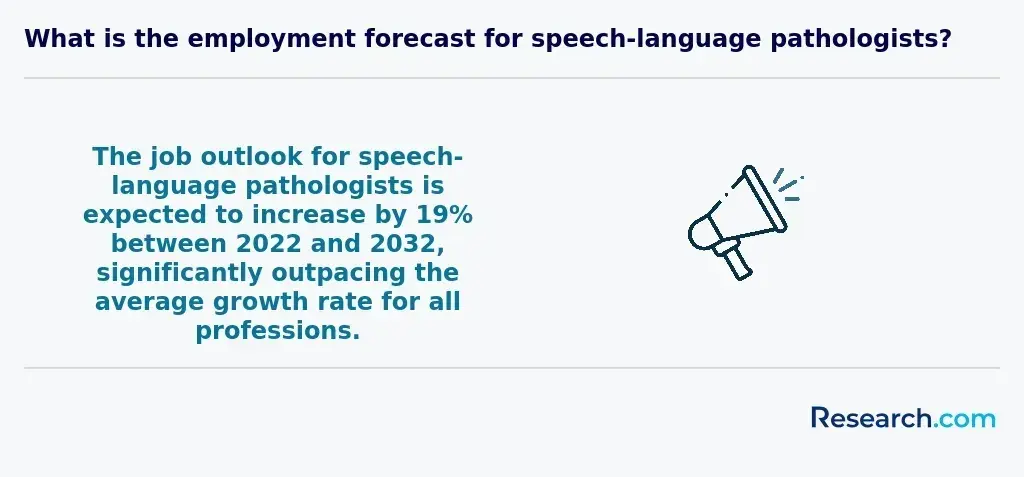
Job growth for speech-language pathologists is projected at 21% from 2022 to 2032, driven by an aging population and more speech disorder diagnoses in children.
Programs must be accredited by the Council on Academic Accreditation (CAA) to qualify for certification by the American Speech-Language-Hearing Association (ASHA).
State licensure typically requires graduating from a CAA-accredited program, completing a clinical fellowship year, and passing the Praxis exam for speech-language pathology.
The chart above shows the distribution of the total cost of Online Speech Pathology in America in 2024. Each bar denotes the number of institutions with total cost of study falling into given interval.
How long does it take to complete Online speech pathology degree in America?
Most online speech pathology master’s programs in America take about two years of full-time study. This timeline is common among programs such as those at the University of Wisconsin or Nova Southeastern University, where students complete remote coursework while meeting clinical requirements through approved placements.
Students preparing for speech-language pathology licensure should plan for supervised clinical training. Many programs are structured around the 400 supervised clinical hours set by the American Speech-Language-Hearing Association (ASHA), so the timeline depends not only on coursework but also on placement availability and clinical scheduling.
Accelerated students may complete a master’s in 18 months by studying year-round or taking heavier course loads. This can shorten the path to employment, but it is demanding and may be difficult for students working full time or managing family responsibilities.
Part-time study can extend the timeline beyond two years. Undergraduate programs usually take about four years, while doctorate programs add another three to four years after that. The right pace is the one that allows you to complete clinical requirements successfully without compromising academic performance or licensure readiness.
Licensure and Certification Requirements
After earning your degree, you must satisfy both state and national standards to practice as a speech-language pathologist. The details differ by jurisdiction, but the core pathway usually includes accredited graduate education, supervised clinical training, examination, fellowship, and ongoing continuing education.
Complete 400+ supervised clinical hours in a CAA-accredited program
Pass the Praxis® exam in Speech-Language Pathology (most states require a 162+ score)
Finish a one-year Clinical Fellowship under an ASHA-certified SLP mentor
Apply for state licensure, meeting any additional requirements (e.g., background checks, jurisprudence exams)
Obtain the ASHA Certificate of Clinical Competence (CCC-SLP) for national recognition and license portability
Before enrolling, ask each school how it supports Praxis® preparation, clinical documentation, fellowship planning, and state-specific licensure questions. For lower-cost accredited master’s options that align with these requirements, see Research.com’s guide to the cheapest slp grad schools in florida.
What's the difference between online and on-campus speech pathology degree?
The main difference between online and on-campus speech pathology programs is delivery format, not necessarily the professional outcome. Both formats can prepare students for licensure if the program is properly accredited and includes required supervised clinical experience.
Online programs: Students usually complete lectures, discussions, assignments, and some simulations remotely. Graduates from schools such as the University of Illinois or Boston University often value the ability to study around work or family obligations.
On-campus programs: Students attend classes in person and may have more immediate access to campus clinics, faculty offices, labs, and peer groups.
Clinical training: Clinical hours are required in both formats. Online students at institutions such as Northwestern often arrange local placements, while on-campus students may complete clinical work on or near campus.
Cost differences: Tuition can be similar, but online students may save on commuting, relocation, and housing. On-campus students may benefit from easier access to campus-based resources.
Online programs are often best for disciplined students who need flexibility and can manage independent learning. On-campus programs may fit students who prefer face-to-face instruction, structured daily routines, and direct campus engagement.
Licensure and Certification Requirements
To practice as a speech-language pathologist in the U.S., graduates generally need both state licensure and national certification through ASHA. Requirements can vary by state, so students should check their licensing board before enrolling and again before graduation.
Earn a master’s degree from a CAA-accredited program and complete 400 supervised clinical hours.
Pass the Praxis Examination in Speech-Language Pathology at the score required by your state.
Apply for the Certificate of Clinical Competence in Speech-Language Pathology (CCC-SLP) through ASHA.
Submit a state licensure application, fulfilling any additional requirements like background checks or a clinical fellowship year.
Maintain both CCC-SLP and state licensure by completing required continuing education units (CEUs).
When comparing programs, make sure the curriculum, clinical sequence, and graduate outcomes align with these steps. Budget-conscious students can also review cheapest online slp programs that are designed around accreditation and licensure requirements.
What is the average cost of Online speech pathology degree in America?
The average cost of an online speech pathology degree in America usually sits around $63,347, based on recent data. In-state students at public universities may pay closer to $21,956, while out-of-state students may face costs around $64,504. Residency status, institution type, program length, fees, and clinical placement expenses can all affect the final price.
Graduates from programs at universities such as the University of Texas and University of Florida often report that in-state tuition, scholarships, or financial aid made the degree more manageable. Public universities may offer the strongest value for residents, especially when the program is accredited and provides reliable clinical support.
Private universities often fall on the higher end, with tuition that can push the total well above $60,000. Students may still choose them for specialized coursework, cohort support, faculty access, or practicum coordination. The key is to compare total program cost rather than tuition alone.
Before enrolling, ask for a complete cost estimate that includes tuition, technology fees, clinical fees, background checks, exam preparation, travel for any required campus visits, and licensure-related expenses. Students comparing faster education-to-career routes may also want to review fast track career programs.
Pursuing an Affordable Education in Speech Pathology
Affordability should be part of every speech pathology program search, but it should not be evaluated in isolation. A lower tuition price is only valuable if the program is accredited, supports required clinical training, prepares students for licensure, and fits the student’s timeline.
Start by comparing total cost of attendance, not just tuition. Include university fees, technology costs, clinical placement expenses, background checks, Praxis® preparation, travel for any required campus sessions, and state licensure fees. Then compare financial aid, scholarships, employer reimbursement, and whether you qualify for in-state tuition.
Students should also weigh time-to-completion against cost. A faster program may reduce opportunity cost and help you enter the workforce sooner, but accelerated study can be intense. A slower part-time option may be more manageable for working adults but could extend expenses over more terms.
For students who want to reduce debt while preparing for a communication sciences career, Research.com’s list of most affordable speech pathology colleges is a practical starting point. Use it alongside accreditation checks, licensure requirements, and direct conversations with admissions and clinical placement staff.
What financial aid is available to Online speech pathology degree students in America?
Online speech pathology students may qualify for several forms of financial aid, but eligibility depends on the institution, program level, enrollment status, accreditation, and individual financial circumstances. Start by completing the FAFSA, because it determines eligibility for many federal, state, and institutional aid options.
Federal aid: Students may qualify for federal Pell Grants that do not need to be repaid, subsidized and unsubsidized loans, or Graduate PLUS Loans. Graduate students commonly rely on federal loan options to cover remaining costs.
State grants and scholarships: Residents in states such as California or New York may have access to state-specific need-based aid, scholarships, or workforce-related funding.
Institutional grants: Universities may offer school-based scholarships or tuition discounts. Availability varies widely, so ask each program directly.
Professional scholarships: Organizations such as the American Speech-Language-Hearing Foundation may offer scholarships for students preparing for careers in communication sciences and disorders.
Employer tuition reimbursement: Healthcare, education, or rehabilitation employers may help pay tuition for employees pursuing relevant credentials.
Work-study: Some hybrid programs may offer work-study opportunities, though availability is not universal for online students.
Compare aid packages carefully. A program with higher tuition may become more affordable if it offers stronger scholarships, while a lower-tuition program may still require out-of-pocket spending for fees, travel, or clinical requirements.
Accreditation and Licensure Requirements for Speech Pathology Degrees
Accreditation is one of the most important checks when comparing online speech pathology programs. For students planning to become speech-language pathologists, the key accreditor is the Council on Academic Accreditation (CAA) in Audiology and Speech-Language Pathology. CAA accreditation helps ensure that a program meets professional preparation standards and supports eligibility for certification through the American Speech-Language-Hearing Association (ASHA).
Before applying, confirm that the program’s accreditation status matches your career goal. This matters because state licensure, the Praxis® Examination in Speech-Language Pathology, and the Certificate of Clinical Competence in Speech-Language Pathology (CCC-SLP) are tied closely to approved graduate preparation. Accreditation may also affect financial aid eligibility, employer recognition, and whether credits or completed training are accepted later.
State licensure requirements vary, but most states require completion of an eligible graduate program, supervised clinical experience, a clinical fellowship year (CFY), and a passing Praxis® score. Some states also require background checks, state-specific applications, jurisprudence exams, or continuing education units (CEUs). Review your state licensing board’s requirements before enrolling, especially if you live in one state but plan to work in another.
Strong online programs typically provide licensure guidance, Praxis® preparation resources, and support for clinical placement or CFY planning. Cost-conscious students should still prioritize accreditation over price alone. Research.com’s Inexpensive Speech Pathology Degree Programs Ranking in Evanston, IL can be useful for comparing lower-cost options while keeping licensure preparation in focus.
What are the prerequisites for enrolling in Online speech pathology degree program in America?
Admission requirements vary by school, but most online speech pathology programs expect applicants to show academic readiness for graduate-level work in communication sciences and disorders. A bachelor’s degree is typically required, and some students apply with backgrounds in psychology, education, linguistics, biology, or communication sciences.
Bachelor’s degree: Most programs require a completed bachelor’s degree from an accredited institution, such as pathways commonly seen among applicants from schools like the University of Florida or Boston University.
Prerequisite coursework: Common requirements may include anatomy, statistics, phonetics, language development, audiology, or related communication sciences courses.
Minimum GPA: Many schools expect at least a 3.0 GPA, though competitive programs may look closely at grades in prerequisite courses.
GRE policy: Some programs require GRE scores, while others have removed the requirement.
Relevant experience: Volunteering, shadowing, clinic exposure, school-based experience, or work with children or adults with communication needs can strengthen an application.
Application materials: Programs may ask for transcripts, recommendation letters, a statement of purpose, a resume, and an interview.
If you lack prerequisites, ask whether the program offers leveling courses or conditional admission. Completing missing coursework before applying can improve readiness and may prevent delays after admission.
Essential Tips for Success in Online Speech Pathology Programs
Succeeding in an online speech pathology program requires more than logging into lectures on time. These programs combine demanding science coursework, applied clinical training, documentation, collaboration, and preparation for licensure, so students need a plan that supports both academic performance and clinical readiness.
Confirm clinical expectations early. Online does not mean clinical-free. Ask how placements are arranged, whether the school helps secure local sites, and how supervision is documented.
Build a weekly schedule around fixed deadlines. Treat live sessions, assessments, practicum preparation, and study blocks like work shifts. Accelerated programs leave little room for catch-up.
Use faculty feedback quickly. Speech pathology depends on precise observation, transcription, diagnosis, and treatment planning. Early corrections can prevent repeated mistakes in later clinical work.
Practice professional communication online. Discussion boards, telepractice simulations, video assignments, and virtual group projects help develop the communication habits expected in clinical settings.
Stay connected with peers and mentors. Virtual study groups, program forums, and professional communities can help with exam preparation, clinical problem-solving, and motivation.
Students who want a shorter path should compare program length, clinical placement support, and accreditation carefully. Research.com’s guide to the best accelerated slp degree programs online can help you identify faster options while still focusing on program quality and licensure preparation.
What courses are typically in Online speech pathology degree programs in America?
Online speech pathology degree programs in America usually blend foundational science, communication theory, assessment methods, intervention strategies, ethics, and clinical practice. The curriculum is designed to prepare students to understand how speech, language, hearing, cognition, voice, fluency, and swallowing affect communication across the lifespan.
Anatomy and Physiology of the Speech and Hearing Mechanism: Covers the physical systems involved in speech production, hearing, resonance, breathing, and swallowing.
Introduction to Communication Sciences and Disorders: Provides an overview of speech, language, hearing, and related disorders.
Phonetics: Teaches students to identify and transcribe speech sounds accurately, a key skill for assessment and treatment planning.
Speech and Language Development: Examines how communication develops from infancy through adulthood.
Assessment and Diagnosis: Focuses on evaluating communication disorders using formal and informal tools.
Intervention Methods: Covers evidence-based treatment planning for different client populations.
Practicum or Clinical Experience: Gives students supervised opportunities to apply classroom learning in approved clinical settings, often arranged near where they live.
Students should review each program’s clinical sequence carefully. A strong curriculum is not only about course titles; it should also prepare students for supervised practice, documentation, ethical decision-making, and licensure requirements.
What types of specializations are available in Online speech pathology degree programs in America?
Specializations help online speech pathology students focus their training around the populations or disorders they most want to serve. Availability differs by school, and some programs offer formal concentrations while others provide electives, practicum experiences, or faculty mentorship in specific areas.
Child Language and Literacy: Focuses on children with language delays, literacy challenges, and school-based communication needs.
Adult Neurogenic Communication Disorders: Prepares students to support adults affected by stroke, traumatic brain injury, dementia, or other neurological conditions.
Voice and Swallowing Disorders: Emphasizes assessment and intervention for voice conditions and swallowing difficulties.
Augmentative and Alternative Communication (AAC): Trains students to support people who use communication devices, symbols, or alternative communication systems.
Telepractice: May prepare students to deliver services through video-based platforms when clinically appropriate and permitted by state rules.
When comparing specializations, ask whether the program offers relevant practicum placements, faculty expertise, and coursework in your area of interest. If you are still exploring options or need flexible admission pathways, reviewing college open enrollment resources may help you identify schools with accessible entry points.
How do you choose the best Online speech pathology degree in America?
The best online speech pathology degree is the one that can move you toward licensure, clinical competence, and employment without creating unnecessary delays or debt. Start with accreditation, then compare clinical support, cost, timeline, outcomes, and fit.
Verify CAA accreditation. For students seeking speech-language pathologist licensure, accreditation is the first checkpoint because it affects certification, Praxis exam eligibility, and state licensure pathways.
Examine clinical placement support. Ask whether the school finds placements, approves student-found sites, supports telepractice opportunities, and tracks the 400 clinical hour minimum expected by the American Speech-Language-Hearing Association.
Compare total cost. Public schools may offer lower in-state tuition, while private programs may provide scholarships or payment flexibility. Include fees, travel, exams, and licensure costs in your comparison.
Review outcomes. Graduation rates, Praxis pass rates, licensure outcomes, and employment support can reveal how well the program prepares students.
Consider pace and workload. Accelerated programs can save time but may be difficult for students with full-time jobs or caregiving responsibilities.
Check state authorization. Make sure the program can enroll students in your state and that its curriculum aligns with where you plan to seek licensure.
If you are not ready for a full graduate pathway, you may want to compare shorter education options first, such as a quickest associates degree, before committing to a longer speech pathology route.
What career paths are available for Online speech pathology degree students in America?
Online speech pathology degree students can prepare for careers in clinical practice, education, healthcare, community services, research, or administration, depending on degree level and licensure. Students who complete accredited graduate preparation and state requirements may pursue speech-language pathologist roles, while others may enter related support, coordination, or research positions.
Speech-language pathologist: Licensed SLPs work with clients who have speech, language, fluency, voice, cognitive-communication, or swallowing disorders.
School-based clinician: Professionals support children with communication needs in K-12 settings and collaborate with teachers, families, and special education teams.
Healthcare clinician: Hospitals and rehabilitation centers employ SLPs to help patients recovering from illness, injury, stroke, or neurological conditions.
Private practice provider: Some graduates join or open clinics serving children, adults, or specialized populations.
Research or academic roles: Graduates with advanced training may contribute to studies, teach, or develop evidence-based interventions.
Community and outreach roles: Some professionals work in prevention, education, care coordination, or public health programs.
Students comparing programs should consider both career goals and cost. If affordability is a major concern, Research.com’s guide to universities with low tuition programs that accept financial aid can help you find institutions where federal aid may be available.
What is the job market for Online speech pathology degree in America?
The job market for speech pathology graduates in America is strong, especially for those who complete an accredited program, satisfy clinical requirements, and earn the credentials required in their state. Demand comes from schools, hospitals, rehabilitation centers, private practices, home health agencies, and telepractice providers.
Growth is supported by an aging population and more children being diagnosed with speech and language disorders. Graduates from well-known online programs who complete coursework and clinical hours successfully can compete for many of the same roles as campus-based graduates, because employers focus primarily on licensure, clinical skills, and readiness to serve clients.
Salary varies by location and setting. The median is around $83,000, with higher pay possible in certain states, specialized healthcare roles, and high-demand markets such as California. School-based roles may offer different benefits, schedules, and compensation structures than hospitals or private clinics.
Students should also plan for the cost of entering the profession, including exams, licensure fees, and supervised experience. Those exploring lower-cost educational routes or adjacent career training can review the best online trades school options for comparison.
Frequently Asked Questions About speech pathology
What are the fastest online speech pathology degree programs in the USA in 2026?
In 2026, universities like Emerson College, New York University, and the University of Northern Colorado offer some of the fastest online speech pathology degree programs in the USA. These programs are designed to be completed in as little as 20 to 24 months, providing swift pathways to enter the profession.
What universities offer the quickest online speech pathology degree programs in 2026?
In 2026, universities like Emerson College, New York University, and the University of South Carolina offer some of the fastest online speech pathology programs. These programs usually range from 20 to 24 months for full completion, balancing speed with comprehensive education.
What are the top skills employers look for in speech pathology degree graduates in America?
Employers in America seek several key skills in graduates of online speech pathology degree programs. Strong communication abilities are essential, as speech pathologists must effectively interact with clients, families, and healthcare teams. Critical thinking and problem-solving skills help tailor therapy to individual needs. According to the American Speech-Language-Hearing Association (ASHA), knowledge of evidence-based practices is crucial for clinical success. Additionally, proficiency in technology is increasingly important due to telepractice growth, with remote services rising by over 60% since 2020. Time management and cultural competence also rank highly, ensuring graduates meet diverse client needs efficiently and respectfully.
How to find internships in America relevant to a speech pathology degree?
Finding internships relevant to a speech pathology degree in America involves several strategic steps. Start by checking if your online program has partnerships with clinical sites, as many accredited programs provide placement assistance. The American Speech-Language-Hearing Association (ASHA) is a valuable resource, offering listings of certified clinical fellowship opportunities nationwide. According to ASHA, clinical experience is mandatory-typically 400 clock hours-for certification eligibility. Networking with local hospitals, schools, and rehabilitation centers can also uncover internships. Platforms like Handshake and university career services often feature relevant listings. Early application is crucial since internship spots in speech pathology are highly competitive due to growing demand in the field.
How does a Online speech pathology degree influence career mobility and advancement in America?
Obtaining an online speech pathology degree in America significantly enhances career mobility by offering flexible access to accredited programs from various states. The American Speech-Language-Hearing Association (ASHA) reports steady growth in job opportunities, projecting a 21% increase from 2020 to 2030. Graduates can pursue licensure and certification more conveniently, facilitating employment across multiple states.
Online programs often provide updated curricula aligned with current clinical requirements, preparing students for roles in schools, hospitals, and private practices. Additionally, the convenience of distance learning allows working professionals to advance their qualifications without interrupting their careers, increasing promotion potential and salary prospects.
How to choose between a thesis and a non-thesis speech pathology degree program in America?
Choosing between a thesis and non-thesis online speech pathology degree in America largely depends on your career goals and interests. A thesis program requires conducting original research and writing a detailed academic paper, which is ideal for students aiming to pursue doctoral studies or research-focused careers. Non-thesis programs typically emphasize clinical practice and coursework, allowing faster completion and better preparation for hands-on work.
The American Speech-Language-Hearing Association (ASHA) notes that clinical experience is essential for certification, which both paths provide. However, thesis options may offer deeper insight into evidence-based practices, benefiting future academic roles.
What are the networking opportunities for Online speech pathology students in America?
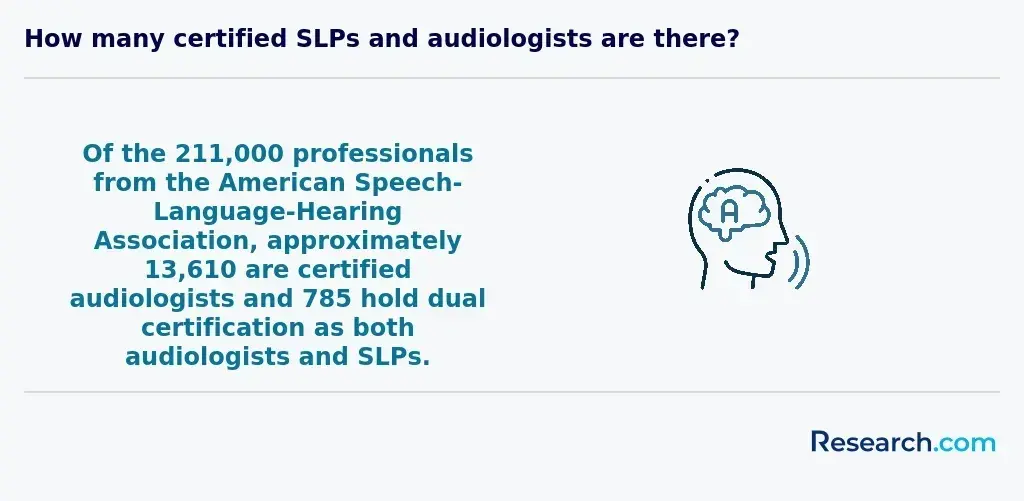
Online speech pathology programs in America provide diverse networking opportunities for students despite the virtual format. Many universities collaborate with the American Speech-Language-Hearing Association (ASHA), allowing students to connect through webinars, online forums, and national conferences. ASHA membership offers access to over 208,000 professionals, facilitating mentorship and job placement connections.
Students often gain access to virtual career fairs and alumni networks tied to their institutions. Clinical practicum sites are arranged locally, enabling face-to-face interaction with practicing clinicians. Additionally, social media groups and specialized online communities create further engagement channels.
These connections are vital, as networking can significantly influence employment outcomes in the competitive field of speech-language pathology.
How do alumni networks benefit Online speech pathology degree students in America?
Alumni networks play a crucial role for students of online speech pathology degrees in America. These networks provide valuable connections to experienced professionals working across various healthcare and educational settings. According to the American Speech-Language-Hearing Association (ASHA), strong professional networks support career advancement and job placement for nearly 70% of recent graduates.
Students benefit from mentorship opportunities, where alumni share insights about clinical hours requirements, licensure, and certification processes. Networking events and digital platforms foster collaboration and keep students informed about industry trends. Additionally, alumni connections increase access to job openings, internships, and continuing education resources, which are vital in a competitive market.
How can I customize my Online speech pathology degree program in America to fit my career goals?
Customizing an online speech pathology degree program in America allows students to align their education with specific career goals. Many accredited programs offer elective courses focusing on pediatric, adult, or medical speech-language pathology, enabling targeted learning. Students can often select practicum placements that match their desired work settings, such as schools, hospitals, or private clinics.
Additionally, some programs provide optional certifications in areas like fluency disorders or augmentative communication. According to the American Speech-Language-Hearing Association (ASHA), tailored clinical experiences improve job readiness and licensure success.
Students should review program curricula and ensure coursework meets state licensure requirements, as these vary across the U.S. Customization ensures relevant skills and maximizes career opportunities.
What are the typical challenges that Online speech pathology students in America are facing?
Online speech pathology students in America often face challenges related to practical experience requirements. The American Speech-Language-Hearing Association (ASHA) mandates a significant number of supervised clinical hours, which can be difficult to arrange remotely. Students also encounter issues with balancing rigorous coursework and personal responsibilities, as these programs demand intensive study and time management. Access to reliable technology and stable internet is another common obstacle, especially in rural areas. Furthermore, the lack of in-person interaction can hinder communication skills development, a key component in speech pathology training. These factors contribute to the complexity of completing an online speech pathology degree successfully.
What professional certifications can I pursue with a Online speech pathology degree?
With an online speech pathology degree in the United States, you can pursue key professional certifications essential for career advancement. The most important certification is the Certificate of Clinical Competence in Speech-Language Pathology (CCC-SLP), awarded by the American Speech-Language-Hearing Association (ASHA). This credential is widely recognized and often required for clinical practice and state licensure.
Additionally, state licensure is mandatory to practice legally across different states. Each state has its own licensing board, but most require the CCC-SLP plus supervised clinical experience. Some states also require passing the Praxis Examination in Speech-Language Pathology.
According to ASHA, over 150,000 certified professionals are practicing in the U.S., underscoring the importance of recognized credentials. These certifications ensure adherence to professional standards and open doors to employment in schools, healthcare, and private practice.
How to write a winning application for a Online speech pathology program in America?
Writing a winning application for an online speech pathology program in America begins with understanding key admission requirements. Most accredited programs, certified by the American Speech-Language-Hearing Association (ASHA), expect applicants to have a bachelor's degree, preferably in communication sciences or a related field.
Highlight your academic achievements, clinical experiences, and volunteer work in your application. The average acceptance rate to speech pathology graduate programs ranges from 30% to 40%, making strong letters of recommendation and a well-crafted personal statement essential.
Focus on your commitment to the field, emphasizing relevant skills such as communication and critical thinking. Be sure to meet prerequisites like the GRE if required, and include your ASHA certification goals.
How can I gain practical experience while studying for a Online speech pathology degree in America?
Gaining practical experience is essential while studying for an online speech pathology degree in America. Most accredited programs require clinical practicum hours, which students complete at approved sites such as hospitals, schools, or rehabilitation centers. These placements allow students to apply theoretical knowledge under the supervision of licensed speech-language pathologists.
The American Speech-Language-Hearing Association (ASHA) mandates at least 400 hours of supervised clinical experience for certification eligibility. Online programs typically assist students in securing local practicum sites to meet this requirement effectively.
Additionally, some programs offer virtual simulations and telepractice experiences to complement hands-on training and develop telehealth skills increasingly in demand across the U.S. healthcare system.
How do I choose the right concentration within a Online speech pathology degree program in America?
Choosing the right concentration within an online speech pathology degree program in America depends on your career goals and interests. Common areas include pediatric, adult rehabilitation, voice disorders, and cognitive-communication. The American Speech-Language-Hearing Association (ASHA) stresses that different concentrations prepare students for specialized roles in schools, hospitals, or private clinics.
Consider the settings where you wish to work, since 63% of speech pathologists are employed in healthcare and education sectors, according to the U.S. Bureau of Labor Statistics (BLS, 2023). Accreditation by the Council on Academic Accreditation (CAA) ensures the program meets professional standards, which is crucial for certification and licensure.
Reviewing curriculum details and practicum opportunities can help you identify concentrations offering hands-on experience relevant to your interests. Aligning your concentration with ASHA's certification requirements also supports long-term career advancement.