Choosing a speech pathology degree in Denton means weighing licensure eligibility, clinical training, cost, and access to the North Texas job market. This guide is for future speech-language pathologists and career changers comparing local master's-level options. It will feature the 2027 Most Valuable Speech Pathology Degree Programs Ranking in Denton, created by the Research.com team of data scientist to help students make an informed choice about which programs are worth considering. Use it to compare fit, affordability, timelines, and career-return factors before applying.
Key findings about speech pathology degrees in Denton
A Denton-based path to Texas SLP licensure generally requires a qualifying graduate degree, supervised clinical preparation, examination, and post-graduate fellowship steps; a bachelor's degree alone does not qualify someone to practice independently.
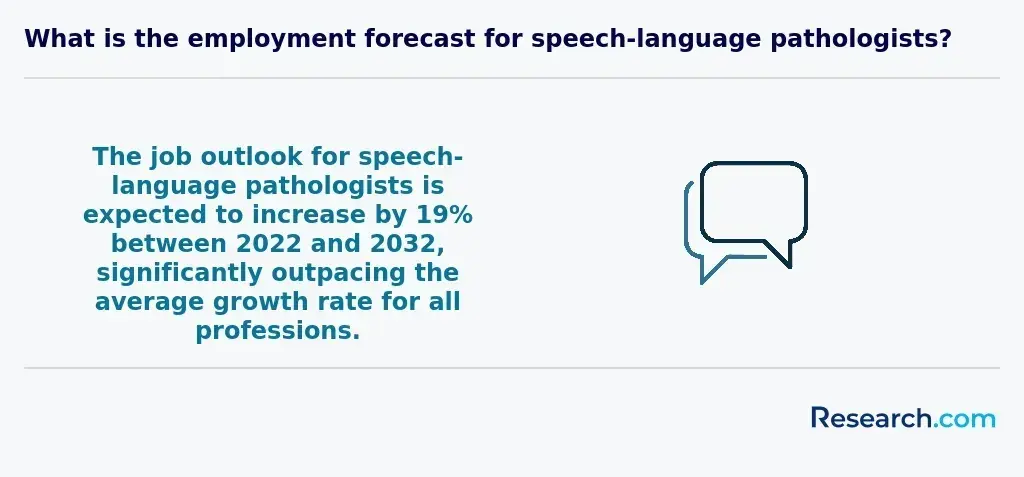
The national median annual wage for speech-language pathologists was $97,870 in May 2025, while BLS projects 17% employment growth from 2025 to 2035; strong demand improves opportunity but does not remove the need to manage graduate-school cost and clinical-placement requirements.
For most applicants, the decision is between accredited, clinic-intensive campus study at UNT or TWU and an online option with local placements; compare total cost, placement support, and Texas licensure eligibility before prioritizing convenience.
What can I expect from a speech pathology degree in Denton?
A speech pathology degree usually refers to the academic route into speech-language pathology (SLP), a regulated clinical profession serving people with communication, swallowing, voice, cognitive-communication, and feeding needs. In Denton, the career-qualifying credential is typically a master's degree in speech-language pathology or communication sciences and disorders with an SLP emphasis.
The University of North Texas and Texas Woman's University are the two principal local university options to investigate. A master's program is most suitable for students who want to become licensed SLPs in schools, medical settings, early-intervention programs, or private practice. It is not the fastest route for someone who only wants a support role; speech-language pathology assistants and related rehabilitation roles may have different education and Texas credential requirements.
Students entering from another major should plan for prerequisite coursework in communication sciences and disorders. Applicants who need leveling courses should compare the additional semesters, tuition, and admission sequence rather than focusing only on the listed graduate-program length. Applicants looking for less selective pathways can also review speech language pathology programs that are easy to get into, but should still confirm accreditation and Texas eligibility.
Where can I work with a speech pathology degree in Denton?
Denton's location in the Dallas-Fort Worth area matters because it gives students access to a broad mix of school districts, hospitals, rehabilitation providers, pediatric clinics, and skilled-nursing or home-health employers. Clinical placements and first jobs may be outside Denton proper, so commute capacity can be as important as campus location.
Common employment settings include public and private schools, acute-care hospitals, outpatient rehabilitation, pediatric therapy clinics, early-childhood intervention, long-term care, and private practice. School-based work often follows the academic calendar and serves children through special education systems; medical SLP roles may involve dysphagia, neurological rehabilitation, and more variable schedules.
Students interested in compensation differences across settings should compare duties, productivity expectations, benefits, and supervision - not only headline pay. The guide to highest paying speech pathology jobs can help readers identify roles that may require specialized clinical experience beyond initial licensure.
How much can I make with a speech pathology degree in Denton?
The U.S. Bureau of Labor Statistics reports a national median annual wage of $97,870, or $47.05 per hour, for speech-language pathologists in May 2025 occupational wage data. This is a national occupation-wide median, not a starting-salary estimate for Denton graduates; pay varies by setting, experience, workload, employer, and whether a role is school-calendar or year-round.
For a realistic return-on-investment estimate, use a conservative local starting-pay assumption obtained from employers or program career offices, then compare it with tuition, fees, travel to placements, forgone income during full-time study, and borrowing costs. A higher wage setting may require hospital experience, specialized swallowing training, or a schedule that does not fit every student.
2027 Most Valuable Speech Pathology Degree Programs Ranking in Denton
How do we rank schools?
Investing in a graduate clinical degree can affect a student's debt, earning timeline, and eligibility for professional licensure. Research.com's team developed this ranking to make that decision more transparent, using standardized education datasets and program-level evaluation rather than relying on reputation alone.
Research.com rankings assess academic and research strength, cost, graduate outcomes, student profile, and institutional quality, then rank programs according to the dimension identified in the ranking title. On-campus rankings use data-driven, entropy-based weights tailored to the available data. Online rankings use an adapted distance-learning methodology that excludes campus-specific indicators and emphasizes program structure and student support, with fixed weights for graduation rate (30%), research (25%), institutional profile (15%), and students, cost, and course factors (10% each).
The ranking draws on the following data sources:
IPEDS database, for institution-level enrollment, completion, pricing, and student-aid reporting.
Readers can use the ranking as a starting point for identifying programs that may offer a stronger value proposition, then verify accreditation, clinical-placement processes, tuition by residency, and licensure fit directly with each school. More detail on the approach is available in Research.com's methodology.
Council on Academic Accreditation in Audiology and Speech-Language Pathology (CAA) of ASHA
Status Accredited - With MonitoringID c462a93b-ef84-4295-a146-5b6f581ecd22Valid 2021-2029
Last known review scheduled for 2028
Verify accreditation
University of North Texas earned a Research.com Value Score of 69.07/100, supported by $32,235 total tuition + mandatory fees and 100% Praxis pass rate. Its Master of Science (M.S.) in Speech-Language Pathology is listed by ASHA EdFind as CAA-accredited through 2029, with the most recently listed accreditation review scheduled for 2028.
Admissions data from
ASHA EdFind
(updated 10/25/2025)
Fall admission: On-Campus - January 6th Spring admission: On-Campus - January 6th Summer admission: January 6th
Class size
125
Degrees granted
120
Application process
CSDCAS University online application
Prerequisites
Undergraduate prerequisites required: Yes; prerequisite courses offered; available online
Additional requirements
Comprehensive exam
Accreditation
Council on Academic Accreditation in Audiology and Speech-Language Pathology (CAA) of ASHA
Status AccreditedID 0ba86720-af14-44b5-af90-2287c078c11aValid 2020-2028
Last known review scheduled for August 2027
Verify accreditation
Texas Woman's University earned a Research.com Value Score of 67.45/100, supported by $31,670 total tuition + mandatory fees and 90% Praxis pass rate. Its Master of Science in Speech-Language Pathology is listed by ASHA EdFind as CAA-accredited through 2028, with the most recently listed accreditation review scheduled for 2027.
Admissions data from
ASHA EdFind
(updated 10/30/2025)
What sets the top speech pathology programs apart?
The strongest Denton programs are not interchangeable simply because both can prepare students for the same profession. The most useful comparison is how each program structures clinical education, supports a particular student population, and aligns its curriculum with the applicant's prior preparation and professional goals.
University of North Texas: UNT's audiology and speech-language pathology unit places speech-language pathology within a department that also includes audiology, creating an environment where students can study communication disorders alongside hearing science. Its master's pathway is especially relevant for students who want access to university clinical services and an interdisciplinary communication-disorders setting rather than a program framed only around classroom instruction.
Texas Woman's University: TWU's MS in Speech-Language Pathology is housed in Communication Sciences and Oral Health, a structure that connects speech-language pathology with oral-health and related clinical perspectives. This may appeal to students seeking a health-sciences-oriented setting and a program specifically organized around graduate SLP preparation, but applicants should ask how clinical assignments, cohort sequencing, and placement locations work in their admission year.
Both schools should be verified through the Council on Academic Accreditation in Audiology and Speech-Language Pathology (CAA) directory before enrollment. For a broader statewide value comparison, see valuable speech pathology programs in Texas; statewide comparisons can reveal meaningful differences in residency tuition and travel requirements.
How long does it take to complete a speech pathology degree in Denton?
For students who already hold the required communication-sciences prerequisites, a full-time SLP master's degree is commonly structured as about two academic years, including clinical practica. The exact timeline can lengthen when a student needs leveling coursework, enters part time, repeats a required clinical competency, or must wait for a sequenced course offered once per year.
After graduation, Texas licensure planning generally includes a supervised clinical fellowship and required examination steps. The Texas Department of Licensing and Regulation distinguishes the graduate degree, examination, and professional experience components; students should confirm the current rules before selecting a program, especially if they expect to relocate.
An accelerated format is worth considering only when it preserves sufficient clinical support and fits the student's work and caregiving constraints. Compare course sequencing carefully with SLP accelerated programs, because a shorter academic calendar can increase weekly workload and reduce flexibility for paid employment.
What's the difference between an online and on-campus speech pathology degree?
An online SLP degree delivers much of the academic curriculum remotely, but it is not fully remote in the practical sense. Students still need supervised clinical experiences, and those experiences must meet program standards and support the educational requirements relevant to Texas licensure.
On-campus Denton study generally makes faculty access, campus clinics, peer practice, and local coordination easier. An online program can make sense for working adults or students who cannot relocate, but only if it confirms in writing that it accepts Texas residents, can arrange or approve Texas placements, and meets the requirements of the state where the graduate plans to become licensed.
The central trade-off is convenience versus placement certainty. Before enrolling online, ask who secures placements, whether students may need to travel, what happens if a site withdraws, and whether additional fees apply. Students comparing formats can explore SLP grad school online options alongside local campus programs.
What is the average cost of a speech pathology degree in Denton?
There is no single reliable average cost for a speech pathology degree in Denton because billed tuition changes by institution, residency status, credit load, fee structure, and academic year. The more decision-useful measure is each student's estimated total cost of attendance: tuition and mandatory fees plus books, health insurance if required, transportation to clinical sites, housing, and lost earnings during required daytime placements.
Public-university resident pricing can be materially lower than nonresident pricing, but an in-state tuition advantage should not outweigh an unfavorable clinical-placement model or delayed completion. Request a written estimate for the full program sequence rather than multiplying one semester's tuition by an assumed number of terms.
When comparing affordability, include the cost of relocating or commuting across the Dallas-Fort Worth area. Students also weighing Texas against another lower-cost market can use the Low Cost Speech Pathology Degree Programs Ranking in Valdosta, GA as a separate geographic comparison, not as evidence that a Georgia program will meet Texas licensing needs.
What financial aid is available for speech pathology students in Denton?
Most graduate SLP students combine several funding sources because clinical schedules can limit the number of hours available for outside work. Start with each university's graduate assistantships, department scholarships, tuition-payment plans, and federal aid office; assistantship availability, workload, and tuition benefits vary by unit and year.
Eligible U.S. citizens and eligible noncitizens may pursue federal Direct Unsubsidized Loans after filing the FAFSA. Graduate PLUS loans are also available to eligible graduate or professional students who meet federal aid requirements and do not have an adverse credit history, according to Federal Student Aid; students should borrow only after estimating the full repayment burden.
Texas residents should also check state-administered aid and university-specific scholarships early, because many awards have deadlines before graduate admission decisions are final. A prudent borrowing plan prioritizes grants and scholarships, then evaluates federal loans against expected completion time and a conservative earnings outlook.
View the chart data as a table
Annual wage by percentile for Speech-Language Pathologists (national) (Source: U.S. Bureau of Labor Statistics (OEWS May 2025))
Category
Value
10th
62,900
25th
77,730
50th (median)
97,870
75th
114,570
90th
134,160
What are the prerequisites for enrolling in a speech pathology degree in Denton?
Admission requirements differ between UNT and TWU and can change by cycle, but applicants commonly need a bachelor's degree, transcripts, prerequisite communication-sciences coursework, recommendation letters, a statement of purpose, and evidence of academic readiness. Some programs evaluate observation experience, relevant work, research exposure, or interviews as part of holistic review.
Applicants without a communication sciences and disorders major should obtain a transcript evaluation before applying. Typical prerequisite areas include phonetics, speech and hearing science, language development, anatomy and physiology related to speech and hearing, audiology, and speech or language disorders. Courses in biology, behavioral science, statistics, and physical science may also be needed for ASHA certification standards.
A common mistake is treating admission to a graduate program as proof that all licensing requirements are complete. Ask whether a leveling course counts toward the graduate degree, whether it affects financial-aid eligibility, and whether the program has confirmed that its curriculum supports Texas requirements administered by the Texas Department of Licensing and Regulation.
What courses are typically in a speech pathology degree in Denton?
A qualifying master's curriculum combines academic study with supervised clinical practice. Course titles vary, but the content should build the assessment, intervention, documentation, counseling, and professional-ethics skills needed for entry-level clinical work.
Students should expect coursework in areas such as language disorders across the lifespan, speech sound disorders, fluency, voice, motor speech disorders, dysphagia, neurogenic communication disorders, audiology foundations, research methods, and clinical decision-making. Practicum typically progresses from closely supervised experiences toward more independent clinical responsibilities, while still requiring faculty or qualified supervisor oversight.
Ask each program how it handles pediatric versus adult clinical exposure, bilingual or multilingual service preparation, telepractice, and swallowing education. These details matter because a transcript may list the same broad course categories while the clinical mix and case complexity differ significantly.
What types of specializations are available in a speech pathology degree in Denton?
Speech-language pathology master's degrees usually prepare graduates as generalists because licensure requires competence across communication and swallowing disorders. Instead of formal concentrations, many programs offer differentiated experiences through electives, clinic assignments, faculty research, or specialty seminars.
Possible focus areas include pediatric language and literacy, autism and neurodiversity-affirming practice, bilingual or multilingual assessment, augmentative and alternative communication, voice, fluency, dysphagia, adult neurogenic disorders, traumatic brain injury, and telepractice. A focus is valuable when it matches a career direction, but it should not replace broad preparation for state licensure and clinical fellowship employment.
Students should distinguish an official transcripted concentration from an elective cluster or a single practicum assignment. If specialization is a priority, ask whether the school can reliably provide the relevant faculty, cases, clinical site, and supervision - not merely whether the topic appears in the catalog.
How do you choose the best speech pathology degree in Denton?
The best program is the one that supports the student's intended license, budget, completion plan, and preferred clinical population. A ranking can narrow choices, but it cannot determine whether a particular program will accept your prerequisites, provide manageable placements, or fit your financial circumstances.
Use these questions during program comparison:
Is the program currently accredited by the Council on Academic Accreditation, and does it state that its curriculum meets Texas educational requirements?
What are the full-program tuition, mandatory fees, estimated clinical travel costs, and realistic funding opportunities for my residency status?
Who identifies and approves practicum sites, and how far have recent students traveled for placements?
How are pediatric, adult medical, school, bilingual, and swallowing experiences incorporated into the clinical sequence?
What is the usual full-time and part-time completion pattern, and what happens if a required clinic or course is delayed?
What licensure-exam preparation, clinical-fellowship support, and career advising are available after graduation?
Do not choose solely on tuition, ranking position, or an assumed salary. Compare accredited Texas options and the broader list of speech pathology programs in texas to determine whether a lower-cost alternative genuinely improves your total cost without adding relocation or completion risk.
View the chart data as a table
CAA accreditation status (Source: ASHA CAA)
Category
Value
Accredited
1
Accredited - With Monitoring
1
What career paths are available for a speech pathology degree in Denton?
The primary career path after a qualifying graduate degree, examination, and required supervised transition steps is licensed speech-language pathologist. Early-career clinicians commonly complete a clinical fellowship before moving into independent professional practice under the applicable Texas rules.
Career direction often develops through setting choice rather than through a separate degree. School SLPs may focus on educational access and individualized education programs; medical SLPs may work with swallowing and neurological conditions; early-intervention clinicians partner with families; and private-practice clinicians may eventually combine direct care with business responsibilities.
Related paths include clinical supervision, program management, university teaching with appropriate qualifications, research coordination, and specialized practice after experience and continuing education. Students who want an adjacent rather than licensed-clinician role should compare the required credential first, because a graduate SLP degree can be more intensive than necessary for some education, healthcare-administration, or support-service careers.
View the chart data as a table
GRE requirement (Source: Program admissions pages)
Category
Value
Not required
2
What is the job market for a speech pathology degree in Denton?
The job market outlook is favorable nationally, but students should translate national projections into a local job-search strategy. The Bureau of Labor Statistics projects employment of speech-language pathologists to grow 17% from 2025 to 2035, with about 12,500 openings annually on average over the decade. Growth reflects ongoing need across healthcare and educational services, but openings include replacement needs and are not a guarantee of employment in a specific Denton setting.
Denton graduates can broaden their opportunity set by considering the wider Dallas-Fort Worth labor market and building clinical experience that matches desired employers. Students seeking schools should ask whether recent placements expose them to the settings they intend to enter, since clinical contacts and demonstrated competence can matter in a competitive specialty or hospital search.
Technology is also changing practice. Telepractice, electronic documentation, and augmentative communication tools are increasingly relevant skills, but they complement rather than replace clinical judgment, in-person assessment capabilities, ethical practice, and supervised training.
Frequently asked questions about speech pathology degree in Denton
Do I need a master's degree to become an SLP in Texas?
Yes. Independent SLP practice requires a qualifying graduate degree and additional Texas licensing steps. A bachelor's degree may support graduate admission or related roles, but it is not sufficient for independent SLP licensure.
Are UNT and TWU speech pathology programs accredited?
Accreditation status should be verified directly through the Council on Academic Accreditation directory and each university before applying. Accreditation is essential because it affects certification and licensure planning.
Can I enter an SLP master's program with a non-SLP bachelor's degree?
Often, yes, but you may need prerequisite or leveling courses first. Obtain a program-specific transcript review because required courses and sequencing vary.
Can I complete a speech pathology degree fully online in Denton?
Academic courses may be online, but clinical practicum cannot be treated as fully remote. You will need approved supervised clinical placements and should confirm Texas licensure alignment before enrolling.
How much do speech-language pathologists make?
The national median annual wage was $97,870 in May 2025, according to the U.S. Bureau of Labor Statistics. Local pay depends on setting, experience, credentials, and employer.
What is the biggest mistake when choosing an SLP program?
Enrolling before confirming accreditation, total cost, and clinical-placement responsibility is a major risk. Ask for written answers on Texas licensure alignment and placement procedures before accepting an offer.
See What Experts Have To Say About Studying Speech Pathology
ASHA EdFind - Accredited Speech-Language Pathology Programs Used to verify CAA accreditation or candidacy status for graduate SLP programs. https://find.asha.org/ed/
Audiology and Speech-Language Pathology Interstate Compact Used to verify interstate practice privileges and participating states for speech-language pathologists. https://aslpcompact.com/compact-map/