2027 Software Engineering Degree Job Posting Analysis: Skills, Credentials, and Experience Employers Request Most Often

Co-Founder and Chief Data Scientist
Choosing a software engineering degree is easier when you know what employers actually ask for. The U. S. Bureau of Labor Statistics projects employment for software developers, quality assurance analysts, and testers to grow 17% from 2023 to 2033, much faster than average. This guide is for students, career changers, and recent graduates comparing coursework, internships, certifications, and career paths. You will learn which skills, credentials, and experience signals appear most often in software engineering job postings so you can prioritize the qualifications that improve job-market readiness.
Key Things You Should Know
- Employers most consistently request programming ability, software development fundamentals, Git, databases, testing, cloud exposure, APIs, communication, and problem-solving; AI-related skills are increasingly useful but rarely replace core engineering fundamentals.
- A bachelor's degree in software engineering, computer science, computer engineering, or a closely related field remains the most common educational baseline, while portfolios, internships, and project evidence often help candidates prove practical readiness.
- The BLS reported a May 2024 median annual wage of $133,080 for software developers, but entry-level competitiveness depends heavily on experience signals such as internships, capstone projects, open-source work, and role-specific tools.
- Key Things You Should Know
- Which Industries Have the Highest Demand for Software Engineering Graduates?
- Which Job Titles Appear Most Frequently in Software Engineering Degree Job Postings?
- What Skills Do Employers Request Most Often in Software Engineering Degree Job Postings?
- How Much Experience Do Employers Expect From Software Engineering Degree Candidates?
- Which Certifications Increase Competitiveness in Software Engineering Job Postings?
- How Do Employer Expectations Differ Across Software Engineering Degree Job Postings?
- What Emerging Skills Are Becoming More Common in Software Engineering Degree Job Postings?
- How Can Software Engineering Students Match Their Qualifications to Employer Expectations?
- How Should Students Use Software Engineering Job Posting Trends to Choose a Career Path?
- Top Trending Software Engineering Rankings
Which Industries Have the Highest Demand for Software Engineering Graduates?
Software engineering graduates are hired across nearly every sector, but job postings tend to cluster around industries that build, operate, secure, or modernize digital systems. The most promising industry is not always the one with the highest salary; it is the one where your technical interests, domain knowledge, and experience level match the employer's needs.
The table below summarizes industries where software engineering degree holders commonly find relevant job postings and how employer expectations differ by setting.
| Industry | Common hiring need | Typical software engineering roles | Skills often emphasized |
| Technology and software products | Building scalable applications, platforms, developer tools, and SaaS products | Software engineer, backend developer, frontend developer, full-stack engineer | Programming, APIs, cloud platforms, distributed systems, testing, Agile development |
| Finance and insurance | Modernizing transaction systems, fraud tools, analytics platforms, and secure applications | Application developer, platform engineer, data engineer, cybersecurity software engineer | Java, Python, SQL, security, reliability, compliance awareness, data pipelines |
| Healthcare and health technology | Supporting electronic health records, patient platforms, medical data exchange, and secure systems | Software developer, integration engineer, QA automation engineer | APIs, interoperability, privacy-aware development, testing, documentation |
| Government and defense contractors | Developing mission systems, cybersecurity tools, data systems, and modernization projects | Software engineer, systems engineer, DevSecOps engineer | Secure coding, documentation, testing, Linux, cloud, clearance eligibility for some roles |
| Retail, logistics, and manufacturing | Improving ecommerce platforms, supply-chain software, automation, and internal systems | Full-stack developer, software engineer, automation engineer, data platform engineer | Web development, databases, cloud, integrations, analytics, reliability |
For students, the key decision is whether to build general-purpose software skills first or specialize early. General software engineering, databases, testing, and cloud fundamentals transfer across industries, while domain knowledge such as finance, healthcare privacy, manufacturing systems, or government security rules can make you more competitive for specific employers.
A common mistake is assuming all software engineering jobs look like big-tech product roles. Many high-quality postings are in banks, hospitals, insurers, manufacturers, universities, government contractors, and consulting firms where communication, documentation, security, and reliability may matter as much as algorithmic speed.
Which Job Titles Appear Most Frequently in Software Engineering Degree Job Postings?
Job titles vary widely, and two companies may use different titles for similar work. A "software engineer" posting may focus on backend services, while another may require frontend frameworks, QA automation, embedded systems, or cloud infrastructure.
The table below groups common software engineering job titles by the type of work they usually signal. Use this to search broadly rather than relying on one title.
| Job title or title family | What the role usually does | Best fit for students who enjoy | Typical degree relevance |
| Software Engineer / Software Developer | Designs, builds, tests, and maintains applications or services | General programming, problem-solving, teamwork, system design basics | Strong fit for software engineering, computer science, or computer engineering degrees |
| Full-Stack Developer | Works across frontend interfaces, backend APIs, and databases | Web applications, user-facing features, APIs, rapid iteration | Strong fit if coursework includes web development, databases, and software architecture |
| Backend Engineer | Builds server-side systems, APIs, databases, and service logic | Scalability, data modeling, algorithms, distributed systems | Strong fit for students with Java, Python, Go, SQL, cloud, and API experience |
| Frontend Engineer | Builds web interfaces and client-side application logic | User experience, JavaScript or TypeScript, accessibility, visual problem-solving | Strong fit when paired with projects in React, Angular, Vue, testing, and design systems |
| QA Automation Engineer / Software Development Engineer in Test | Creates automated tests, test frameworks, and quality processes | Debugging, reliability, test design, scripting | Good fit for students who combine programming with careful analysis and documentation |
| DevOps / DevSecOps Engineer | Automates deployment, infrastructure, monitoring, and security practices | Cloud systems, Linux, automation, pipelines, security | Best fit when the degree is supplemented with cloud, networking, and security projects |
| Embedded Software Engineer | Develops software for hardware, devices, sensors, vehicles, or industrial systems | C/C++, hardware interaction, operating systems, performance constraints | Strong fit for software engineering or computer engineering students with systems coursework |
When comparing postings, pay attention to the verbs: build, maintain, automate, test, integrate, deploy, debug, document, secure, or optimize. These verbs reveal the actual work more reliably than the job title alone.
What Skills Do Employers Request Most Often in Software Engineering Degree Job Postings?
Most software engineering postings combine core technical skills with collaboration skills. Employers usually want evidence that a candidate can write code, work with existing systems, test changes, communicate trade-offs, and learn new tools without constant supervision.
The table below separates frequently requested skills into categories so students can prioritize what to learn first. The "why it matters" column explains how each skill shows up in real engineering work.
| Skill category | Common examples in postings | Why employers ask for it | Priority for students |
| Programming languages | Python, Java, JavaScript, TypeScript, C#, C++, Go | Shows ability to implement features, fix defects, and contribute to production code | Very high; master one language deeply and become competent in a second |
| Data and databases | SQL, relational databases, NoSQL, data modeling | Most applications store, retrieve, transform, or protect data | Very high; SQL is useful across nearly every software path |
| Software development tools | Git, GitHub, GitLab, issue trackers, code review workflows | Modern engineering is collaborative and version-controlled | Very high; employers expect practical familiarity |
| Web and API development | REST APIs, JSON, HTTP, frontend frameworks, backend frameworks | Many business systems are connected through web services and interfaces | High for application, full-stack, frontend, and backend roles |
| Testing and quality | Unit testing, integration testing, test automation, debugging | Reduces defects and shows disciplined engineering habits | High; especially valuable for entry-level candidates with project portfolios |
| Cloud and deployment | AWS, Azure, Google Cloud, Docker, CI/CD, containers | Employers increasingly deploy software through cloud-based infrastructure | High, but role-dependent; start with deployment basics before advanced architecture |
| Security awareness | Secure coding, authentication, authorization, vulnerability prevention | Security is now part of everyday software development, not only cybersecurity teams | Moderate to high; essential for finance, healthcare, government, and SaaS roles |
| Soft skills | Communication, teamwork, problem-solving, adaptability, documentation | Software engineers coordinate requirements, explain trade-offs, and maintain shared systems | Very high; weak communication can limit otherwise strong technical candidates |
The most valuable skill combination for many students is not the longest list of tools. It is a coherent stack: one primary language, Git, SQL, testing, API development, a deployable project, and the ability to explain design decisions clearly.
Students often overinvest in trendy frameworks before mastering fundamentals. Frameworks change, but data structures, debugging, version control, testing, security basics, and readable code remain valuable across employers.
What Educational Credentials Do Employers Expect From Software Engineering Graduates?
A software engineering degree is a strong signal because it usually covers programming, algorithms, software design, databases, operating systems, testing, and team-based projects. However, job postings often accept related majors, especially computer science, computer engineering, information systems, or applied computing.
The table below shows how employers commonly frame education requirements and what each credential usually signals.
| Credential | How it appears in postings | What it signals to employers | Best use case |
| Bachelor's degree in software engineering | Often listed as required or preferred for software engineer roles | Structured preparation in coding, design, requirements, testing, and engineering process | Best for students seeking broad software engineering roles and long-term advancement |
| Bachelor's degree in computer science | Frequently accepted as an equivalent related degree | Strong foundation in algorithms, systems, programming, theory, and computing principles | Best for students considering software development, AI, systems, or graduate study |
| Bachelor's degree in computer engineering | Commonly accepted for embedded, systems, hardware-adjacent, or defense roles | Combination of software, hardware, architecture, and systems knowledge | Best for embedded software, robotics, IoT, automotive, and device-focused work |
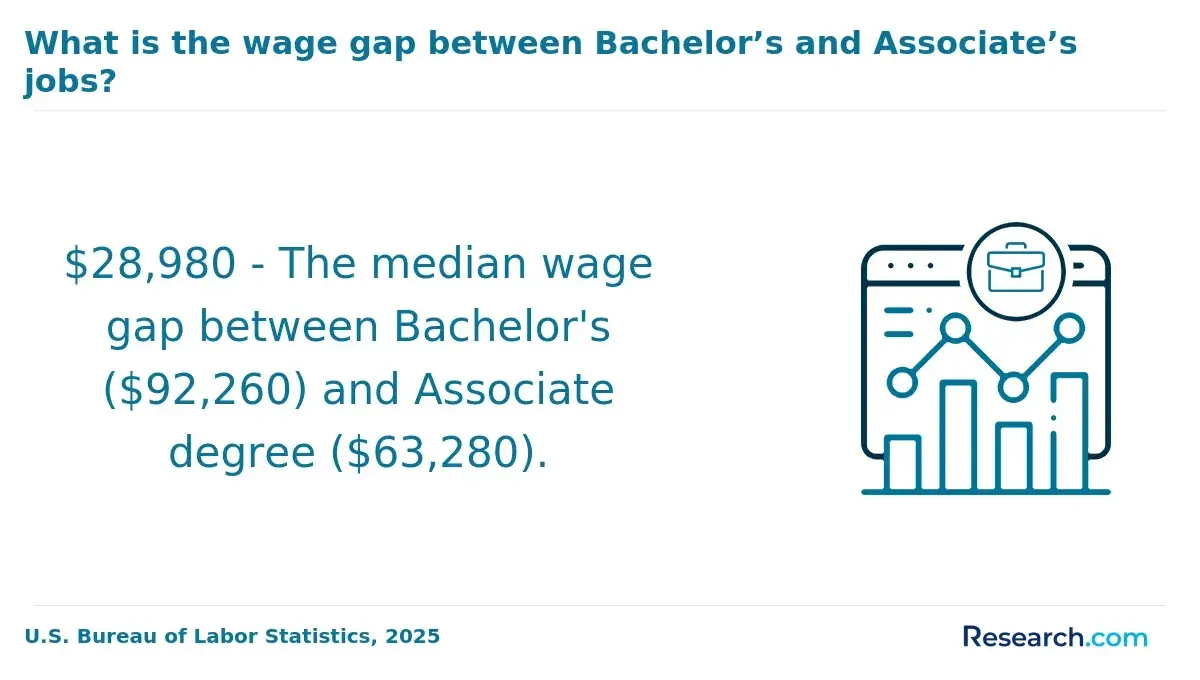
| Associate degree or certificate plus experience | Accepted in some junior developer, QA, support engineering, or web roles | Practical preparation, especially when paired with portfolio evidence | Best when cost, time, or transfer planning is a major constraint |
| Master's degree | Usually preferred rather than required, except for specialized AI, research, or advanced systems roles | Deeper expertise in advanced computing, specialization, or research methods | Best for AI, machine learning, advanced systems, leadership, or specialized technical paths |
Cost is a practical part of credential planning. The College Board's 2024 pricing data reported average published tuition and fees of $11,610 for in-state students at public four-year colleges and $43,350 at private nonprofit four-year colleges for 2024-2025. That gap means students should compare not only the degree name, but also transfer options, scholarships, internship access, career services, accreditation, and graduation timeline.
For program selection, accreditation can matter. ABET accreditation is not required for every software job, but it can be a quality signal for engineering-oriented programs and may be relevant for students considering government, defense, graduate school, or roles where formal engineering standards are valued.
How Much Experience Do Employers Expect From Software Engineering Degree Candidates?
Experience requirements are one of the biggest sources of confusion in software engineering postings. "Entry-level" does not always mean "no experience"; many employers still prefer internships, project work, research, coding competitions, open-source contributions, or prior technical employment.
The table below summarizes common experience expectations by career level. Treat the ranges as posting patterns, not universal rules, because employers define levels differently.
| Career level | Common experience signal | What employers want to see | How students can compete |
| Intern | Coursework and early projects | Basic programming, curiosity, communication, willingness to learn | Apply with class projects, GitHub repositories, hackathons, and a clear résumé |
| New graduate / entry-level | Degree plus internships, capstone, or portfolio projects | Ability to contribute to a team, write maintainable code, test work, and learn tools | Complete at least one deployed or demo-ready project and one practical team experience |
| Junior software engineer | Often early professional experience or equivalent project depth | Familiarity with production code, debugging, code reviews, and ticket-based workflows | Show practical experience through internships, contract work, campus jobs, or open-source work |
| Mid-level software engineer | Several years of role-relevant experience | Independent feature ownership, design judgment, mentoring, and production reliability | Build depth in a stack, document impact, and demonstrate ownership of shipped systems |
| Senior software engineer | Substantial experience with complex systems | Architecture decisions, cross-team leadership, scalability, security, and technical direction | Develop system design, leadership, incident response, and measurable delivery experience |
For students, internships are usually the highest-value experience investment because they combine professional references, team workflows, real codebases, and domain exposure. If an internship is not available, a strong substitute is a project that has users, documentation, tests, version control, and a deployed environment.
A common red flag is waiting until the final semester to create a portfolio. Employers are more likely to trust project evidence when it shows steady development, readable commits, clear documentation, and a realistic explanation of trade-offs.
Which Certifications Increase Competitiveness in Software Engineering Job Postings?
Certifications are usually not a substitute for a software engineering degree, internship, or portfolio. They are most useful when they support a specific role target, such as cloud engineering, DevOps, cybersecurity-aware development, or enterprise platforms.
The table below identifies certifications that can strengthen a candidate's profile when they align with job postings and projects.
| Certification area | Common examples | When it helps | When it may not be worth prioritizing |
| Cloud platforms | AWS Certified Cloud Practitioner, AWS Certified Developer, Microsoft Azure Fundamentals, Azure Developer Associate, Google Associate Cloud Engineer | Helpful for backend, full-stack, DevOps, platform, and cloud-focused postings | Less useful if you have no deployed cloud project to discuss |
| Security fundamentals | CompTIA Security+, GIAC entry-level security credentials | Helpful for government, defense, finance, healthcare, and DevSecOps-adjacent roles | Less useful for general developer roles if it replaces coding practice |
| DevOps and containers | Kubernetes, Docker, Linux, CI/CD-related credentials | Helpful for infrastructure, reliability, and deployment-heavy software roles | Less useful before you understand basic deployment, networking, and scripting |
| Agile and project delivery | Scrum-related credentials | Can support roles where postings emphasize Agile teams and product workflows | Rarely decisive for entry-level engineers without technical evidence |
| Vendor or enterprise platforms | Salesforce, ServiceNow, Oracle, SAP, or similar platform credentials | Helpful when targeting employers that build on those ecosystems | Too narrow if you are still exploring general software engineering paths |
The best certification strategy is selective: choose one credential that matches the roles you are applying for and pair it with a project that proves you can use the tool. For example, a cloud certification is more convincing when your résumé also includes a deployed API, database, monitoring setup, and basic security controls.
How Do Employer Expectations Differ Across Software Engineering Degree Job Postings?
Employer expectations vary by industry, company size, role level, technology stack, region, and risk environment. A startup may prioritize full-stack speed and product judgment, while a bank may emphasize security, testing, documentation, and reliability.
The table below compares hiring expectations across common employer types so students can tailor applications more accurately.
| Employer type | What postings tend to emphasize | Candidate differentiators | Risk of misalignment |
| Large technology companies | Algorithms, system design, scalable services, code quality, product impact | Strong computer science fundamentals, internships, technical interview practice | Relying only on coursework without interview preparation or project depth |
| Startups | Full-stack ability, speed, ownership, ambiguity tolerance, product awareness | Deployed projects, broad stack familiarity, ability to learn independently | Expecting narrow task assignments or highly structured onboarding |
| Enterprise employers | Maintainability, integrations, testing, documentation, security, business systems | SQL, APIs, cloud basics, communication, legacy-system patience | Overemphasizing trendy tools while ignoring reliability and stakeholder needs |
| Government and defense | Secure development, documentation, compliance, systems thinking, possible clearance requirements | Security coursework, U.S. work authorization fit where required, disciplined documentation | Ignoring eligibility requirements or underestimating process-heavy environments |
| Consulting and professional services | Client communication, adaptability, multiple technology stacks, delivery deadlines | Presentation skills, teamwork, broad technical exposure, professionalism | Focusing only on coding while neglecting client-facing communication |
Students should treat each posting as a requirements map. The "required" section usually defines screening criteria, while the "preferred" section often reveals differentiators that can move a candidate higher in the applicant pool.
One mistake is using the same résumé for every application. A stronger approach is to mirror the employer's language honestly: if the posting emphasizes APIs, testing, and AWS, make sure relevant projects and skills are visible near the top of the résumé.
What Emerging Skills Are Becoming More Common in Software Engineering Degree Job Postings?
AI and automation are changing software engineering expectations, but they are not eliminating the need for fundamentals. Employers increasingly value candidates who can use AI-assisted tools responsibly, verify generated code, secure applications, and understand how software systems behave in production.
The table below highlights emerging skills that are becoming more visible in software engineering postings and project expectations.
| Emerging skill | How it appears in postings | Why it matters | How students can demonstrate it |
| AI-assisted development | Use of coding assistants, productivity tools, or AI-enabled workflows | Employers want faster development without sacrificing quality or security | Explain how you used AI tools, what you verified, and what you changed manually |
| Machine learning and AI integration | APIs, model integration, data pipelines, recommendation features, chatbot functionality | Many products are adding AI features even outside dedicated machine learning teams | Build a small application that integrates an AI API with logging, testing, and guardrails |
| Secure software development | Authentication, authorization, threat awareness, vulnerability prevention, DevSecOps | Security expectations are moving earlier into the development process | Include secure login, role-based access, input validation, and dependency scanning in projects |
| Cloud-native engineering | Containers, serverless tools, CI/CD, infrastructure as code, observability | Employers need software that can be deployed, monitored, and updated reliably | Deploy a project with automated tests, environment variables, logging, and a simple pipeline |
| Data engineering basics | ETL, analytics workflows, SQL optimization, event streams, dashboards | Software teams increasingly build data-informed products and internal tools | Create a project that collects, stores, transforms, and visualizes data responsibly |
The practical takeaway is to add emerging skills after core readiness, not before it. A candidate who can write clean code, test it, deploy it, and explain it will usually be more credible than one who lists AI tools without showing engineering judgment.
How Can Software Engineering Students Match Their Qualifications to Employer Expectations?
The best way to prepare is to reverse-engineer job postings before choosing electives, certifications, or projects. This helps you avoid building a random skill list and instead create a profile that fits the roles you actually want.
Use the steps below to turn job posting trends into a practical preparation plan.
- Collect 20 to 30 postings for your target roles, such as backend engineer, full-stack developer, QA automation engineer, embedded software engineer, or DevOps engineer.
- Separate requirements into three groups: must-have skills, preferred skills, and differentiators that appear only in some postings.
- Choose one primary programming language and one role-aligned stack, then build a project that uses Git, tests, a database, documentation, and deployment.
- Prioritize internships, co-ops, research assistant work, campus IT jobs, open-source contributions, or freelance projects before adding extra certifications.
- Tailor each résumé by placing the employer's most relevant skills in your project descriptions, experience bullets, and skills section only when you can discuss them honestly.
- Practice explaining trade-offs, bugs, tests, architecture choices, and teamwork because interviews often evaluate how you think, not only whether the code runs.
Students should also watch for avoidable mistakes. Do not assume the degree alone will carry the application, do not list tools you cannot explain, do not ignore communication skills, and do not pursue certifications that do not match your target postings.
A strong student résumé usually connects three forms of evidence: education, experience, and proof of work. The proof of work can be an internship, capstone, deployed application, research project, open-source contribution, or a detailed technical portfolio.
How Should Students Use Software Engineering Job Posting Trends to Choose a Career Path?
Software engineering is not one career path; it is a family of roles. Job posting trends help students choose electives, projects, internships, and certifications that match a realistic target instead of preparing vaguely for "a tech job."
The table below compares common software engineering paths and the qualifications that tend to matter most for each.
| Career path | Best-fit skills | Helpful experience | Good next move |
| Backend engineering | Java, Python, Go, SQL, APIs, cloud, system design basics | API projects, database-backed applications, internships, distributed systems coursework | Build and deploy a tested API with authentication, database design, and documentation |
| Frontend engineering | JavaScript, TypeScript, React or similar frameworks, accessibility, testing | Portfolio sites, UI projects, design system work, frontend internships | Create a responsive application with automated tests and clear user experience decisions |
| Full-stack development | Frontend, backend, databases, APIs, Git, deployment | Capstone projects, startup internships, web applications with real users | Build a complete application from database to interface and deploy it publicly |
| QA automation and SDET | Testing frameworks, scripting, debugging, CI/CD, quality processes | Test automation projects, bug tracking, internship experience in quality teams | Create automated tests for an existing application and document defects clearly |
| DevOps or platform engineering | Linux, cloud, Docker, CI/CD, scripting, monitoring, security basics | Deployment projects, cloud labs, infrastructure automation, operations experience | Deploy a containerized project with a pipeline, logs, and basic monitoring |
| AI-enabled software engineering | Python, APIs, data handling, model integration, testing, responsible AI awareness | AI feature projects, data projects, internships on product or analytics teams | Build an AI-integrated application and show how you evaluated accuracy, privacy, and reliability |
Salary and growth data can help frame the decision, but they should not be the only factor. The BLS May 2024 median annual wage for software developers was $133,080, yet actual pay varies by role, location, employer, experience, and specialization. Students should weigh earnings potential alongside cost, debt, job-market competition, internship access, and whether they enjoy the daily work.
A practical career-path decision starts with fit. If you like visual problem-solving, frontend may be a better entry point. If you enjoy data, logic, and service architecture, backend or data engineering may fit. If you like reliability, automation, and systems, DevOps or platform engineering may be stronger. If you want to work near hardware, embedded software may be more satisfying than web development.
Other Things You Should Know About Software Engineering
A degree can help you pass education screens and build core knowledge, but it is rarely enough by itself. Employers usually look for practical evidence such as internships, team projects, GitHub work, deployed applications, testing experience, and the ability to explain technical decisions.
Python, Java, JavaScript, and TypeScript are all practical choices. The best first language is one you can use deeply in projects, data structures, debugging, testing, and real applications. After that, learning a second language becomes easier.
Certifications are worth it when they match your target role and are paired with hands-on work. Cloud, security, and DevOps certifications can strengthen a résumé, but they should not replace internships, projects, coding practice, or degree requirements.
New graduates stand out by showing role-specific proof: a clean résumé, a focused skill set, one or two substantial projects, Git-based collaboration, tests, documentation, deployment experience, and clear communication about what they built and why.
Top Trending Software Engineering Rankings
References
- Software Engineering Levels https://dev.to/shiveenp/software-engineering-levels-35p0
- 5 Essential Soft Skills Every Software Engineer Needs https://itdsportugal.com/en/news/soft-skills-it-engineers/
- Hard and Soft Skills for the Ideal Software Developer 2026 Guide https://www.coderio.com/blog/talent/the-ideal-software-developer-soft-and-hard-skills/
- Skills Required for Software Engineers (2026 Guide) https://amquesteducation.com/blog/skills-required-for-software-engineers/
- Soft Skills Every Software Engineer Should Have https://www.mcsgroup.jobs/resources/blog/soft-skills-every-software-engineer-should-have/
- Why Soft Skills Are The Hidden Skills Employers Look For in Tech [2025 Guide] https://ntinow.edu/soft-skills-employers-look-for-in-it-careers/
- What’s the Difference between a Junior, Mid, and Senior Developer? https://www.wearedevelopers.com/magazine/238/difference-between-a-junior-mid-and-senior-developer
- MasterBorn | How to Tell if You’re a Middle or Senior Developer? https://www.masterborn.com/blog/how-to-tell-if-youre-a-middle-or-senior-developer
- What Is a Software Developer? | Skills and Career Paths https://www.computerscience.org/careers/software-developer/
- State of the software engineering job market in 2025: what the data says https://newsletter.pragmaticengineer.com/p/state-of-the-tech-market-in-2025