2027 Best Public Health Degree Programs Ranking in Savannah

Co-Founder and Chief Data Scientist
Choosing the right public health degree program in Savannah can shape your future career and impact your community. This article presents the 2027 Best Public Health Degree Programs Ranking in Savannah, carefully developed by the Research.com team of data scientists to guide you through your options.
By exploring these rankings, you'll gain clear insights into programs worth considering, helping you make an informed decision aligned with your goals.
Investing in a public health degree opens doors to meaningful work that improves lives and fosters personal growth. Dive in and discover the opportunities awaiting you.
Key benefits of getting public health degree in Savannah
- Graduates in Savannah enjoy competitive salaries with roles such as Environmental Health Specialists earning about $86,710 annually and Health Educators making around $69,790, reflecting strong financial rewards in public health careers.
- Public health degrees open doors to diverse careers including community health work, safety specialization, and medical assistance, offering a variety of paths to make a real difference locally and beyond.
- Online public health programs provide flexibility to balance work and study, as shown by graduates from Savannah-based universities, allowing you to advance your career without pausing your life.
- 2027 Best Public Health Degree Programs Ranking in Savannah
- What can I expect from public health degree in Savannah?
- Where can I work with public health degree in Savannah?
What can I expect from public health degree in Savannah?
Determining the average cost of a public health degree in Savannah can be complex, as tuition varies between institutions such as Georgia Southern University and Savannah State University. Graduates often note that undergraduate programs typically cost between $8,000 and $15,000 per year for in-state students, though this estimate depends on factors like enrollment status and access to financial aid.
Some students find that additional expenses-including materials, internships, and transportation to local partners like the Coastal Health District-add to the overall cost but also enrich their practical learning experience. These hands-on opportunities often justify the investment by offering real-world skills and networking advantages.
While the upfront costs can seem daunting, many graduates express satisfaction with the value they received, particularly when internships lead to job offers in Savannah's growing health sector. It is important, however, for prospective students to investigate scholarship options and institutional support, as these can significantly reduce their financial burden.
Where can I work with public health degree in Savannah?
Graduates with a public health degree in Savannah frequently find employment in diverse local sectors tailored to the city's specific health landscape. Many secure roles at the Chatham County Health Department, engaged in critical public health programs such as disease prevention and emergency preparedness. These positions reflect a practical demand for epidemiologists and health educators who directly impact community well-being.
Hospitals like Memorial Health University Medical Center also attract graduates seeking careers in health administration and data analysis, aiming to improve patient outcomes and support population health metrics. Graduates often describe fulfilling experiences working alongside clinical teams, applying their skills in real-world health challenges.
Nonprofit organizations addressing issues like substance abuse or homelessness provide another meaningful avenue. Here, graduates from institutions such as Savannah State University report deep satisfaction coordinating community programs and advocating for vulnerable populations. Meanwhile, educational institutions continue to offer opportunities in research and teaching, blending academic knowledge with community outreach.
While these paths highlight positive prospects, some graduates note competitive job landscapes requiring continuous skill development and networking within Savannah's evolving public health sector.
Graduates with a public health degree in Savannah typically find salaries varying widely depending on their role and experience. For instance, community health workers earn an average of around $52,610 annually, while health educators earn closer to $69,790 according to recent BLS data. Graduates from local universities often share how starting as a community health worker in Savannah's growing health initiatives provides practical experience, with salaries that support comfortable living given the city's moderate cost of living.
Those advancing into specialized roles like environmental health specialists or occupational health and safety specialists see higher wage averages-about $86,710 and $85,570 respectively-reflecting the added responsibilities and technical skills required. Graduates pursuing Master of Public Health degrees from Savannah colleges often secure positions in these higher-paying roles, feeling optimistic about their career trajectory.
Early career positions such as medical assistants have annual wages near $43,350, which can serve as entry points before progressing to more specialized roles. Considering Savannah's community-focused environment and institutions, many graduates find the balance of salary and lifestyle rewarding as they build meaningful public health careers locally.
- Public universities in Savannah charge between $8,000 and $15,000 per year for in-state public health students, while private schools range from $20,000 to $30,000 annually.
- Entry-level public health jobs in Savannah offer salaries typically between $45,000 and $55,000 per year.
- Experienced public health professionals, such as epidemiologists and health services managers, can earn between $70,000 and $90,000 annually.
- Key employers in Savannah include hospitals, government health departments, non-profits, and private healthcare providers.
- The job market is growing due to increased focus on community health and disease prevention in the region.
Completing a public health degree in Savannah generally aligns with national norms, but several factors influence the exact timeframe. At institutions like Armstrong State University and Savannah State University, a Bachelor of Science in Public Health typically takes four years of full-time study. Graduates often reflect positively on the structured curriculum, which balances coursework and practical experience, allowing them to build confidence as they progress.
Master's degrees, such as the MPH, usually require about two years full-time, though many Savannah students opt for part-time or hybrid formats due to work or personal commitments. This flexibility can extend the timeline to three or four years, but students appreciate how it enables them to apply new knowledge directly to their careers. Some have described this as both challenging and rewarding, emphasizing the balance between academic growth and real-life responsibilities.
Doctoral programs vary significantly, lasting approximately four to six years. This depends on research demands and individual pacing, with some graduates valuing the opportunity to deeply explore specialized public health issues impacting the Savannah community. Such varied timelines demonstrate that while standard durations exist, personal circumstances and educational choices greatly shape the completion process.
Choosing between online and on-campus public health degrees in Savannah involves weighing format, cost, and community engagement. On-campus programs at popular institutions like Armstrong State University immerse students in vibrant classroom settings where direct faculty interaction and hands-on experiences-such as lab work and local internships-fuel both learning and professional growth. Graduates often describe a strong sense of belonging and invaluable mentorship from Savannah's active public health network.
Online degrees, increasingly offered by these same colleges, shine in flexibility. They appeal to working learners balancing jobs or family, providing asynchronous classes and remote practicums accessible from anywhere. Many online students appreciate the cost savings, which can be around 15% less than on-campus tuition. However, some graduates note missing out on spontaneous networking moments that on-campus life naturally fosters, which are important for careers in Savannah's community-focused health sector.
Both paths cover core topics like epidemiology and health policy, but on-campus students often benefit from experiential learning in Savannah's unique environmental health projects, while online students rely on virtual simulations. The best choice depends on individual priorities for interaction, schedule, and career goals.
When budget constraints are top of mind, pursuing a Master’s in Public Health online can be a game-changer. Many accredited Savannah institutions and reputable Southern universities now offer cost-effective online MPH degrees that combine flexibility with rigorous coursework. To explore the most budget-friendly options beyond Savannah, consult our Affordable Online Master's in Public Health Degree Programs Ranking in the South. Key advantages of choosing an online MPH: • Reduced Tuition Costs: Online programs often charge lower per-credit fees and eliminate campus fees, with total program costs ranging from $12,000 to $20,000. • Flexible Scheduling: Asynchronous lectures and virtual labs allow working professionals to balance career, family, and study. • Accelerated Paths: Some institutions offer accelerated tracks, enabling completion in as few as 12 months. • Access to Southern Institutions: Online students gain entry to highly ranked Southern schools without relocating, benefiting from regional public health networks and practicum placements in Georgia and neighboring states. Cost comparison snapshot: • In-State Public University (Online MPH): $350–$450 per credit • Private University (Online MPH): $600–$750 per credit • Southern Consortium Programs: Shared online platforms can reduce fees by up to 15%. Tips for maximizing affordability: 1. Investigate assistantships, waiver programs, and employer tuition reimbursement. 2. Compare fee structures-some schools charge flat online tuition, regardless of credit load. 3. Leverage federal aid: FAFSA results apply to online degrees at accredited institutions. By selecting an affordable online MPH, Savannah students and working professionals can secure a high-quality public health education that aligns with both career ambitions and financial goals.
The average cost of a public health degree in Savannah varies notably depending on residency and institution type, with median total expenses around $18,145 for in-state students and approximately $28,124 for out-of-state students. Graduates from public universities near Savannah consistently report manageable tuition fees when compared to national averages, which makes pursuing such degrees locally an appealing option for many. For these students, the financial investment often feels justified by the rewarding sense of community impact they gain during their studies.
Public health degree tuition and fees Savannah students encounter at public institutions typically range from moderate to higher amounts depending on whether they qualify as in-state or out-of-state. While private colleges in the region often have related health sciences programs, their tuition is significantly higher, sometimes deterring prospective students seeking focused public health training. Former graduates commonly highlight how understanding and navigating the average cost of public health degree in Savannah allowed them to balance financial realities with personal goals, ultimately feeling supported in their educational journey.
Beyond tuition, additional living expenses in Savannah are considered reasonable, which helps alleviate some financial pressures. Many students engage in scholarships, assistantships, or financial aid, strengthening their ability to afford both tuition and daily costs. Those weighing specialized options may find value in exploring online msn to dnp programs accreditation as an alternative path, demonstrating flexibility in cost-saving educational decisions.
Financial aid options for public health students in Savannah are diverse but require careful consideration. Graduates from institutions like Georgia Southern University, which includes Armstrong State University, often highlight how federal Pell Grants provided essential support, covering up to $7,395 annually without the burden of repayment. However, such aid depends heavily on demonstrated financial need, which not all students meet. Some found merit-based scholarships offered by their universities a crucial boost, though these can be competitive and vary year to year.
Graduate students pursuing a Master of Public Health in Savannah frequently benefit from assistantships and fellowships that reduce tuition by 20% to 50%, sometimes accompanied by stipends. While this is a significant relief, the roles demand research or teaching commitments, which may challenge those balancing work or family.
Employers in the local healthcare sector often offer tuition reimbursement, allowing students to gain practical experience while advancing their education. Meanwhile, state aid like the HOPE Scholarship and HOPE Grant also play a vital role, yet eligibility restrictions mean careful planning is necessary to maximize benefits.
Enrolling in a public health degree program in Savannah typically requires a combination of academic readiness and application preparedness aligned with local expectations. For undergraduate programs at institutions like Armstrong State or Savannah State University, a high school diploma or GED with a competitive GPA around 3.0 is standard. Graduates from these programs often recall how their strong foundation in biology and chemistry helped them grasp core public health concepts early on.
For graduate degrees such as an MPH, candidates usually need a bachelor's from an accredited college. Though many Savannah programs are open to various academic backgrounds, those with prior experience in health sciences or social sciences often feel more confident tackling advanced topics. Some alumni mention that while GRE scores used to be common, several universities near Savannah have made them optional, a move that eases application stress and broadens access.
Application materials beyond transcripts-including letters of recommendation, a purposeful statement, and relevant volunteer or work experience-are essential. Graduates describe how articulating their passion for improving community health in Savannah's unique environment made their applications stand out. This blend of academic and practical preparation helps students enter public health studies ready to contribute meaningfully.
Investing in a Public Health degree in Savannah, GA, requires careful consideration of both costs and long-term earnings potential. On average, students graduate with a debt load of approximately $24,000, while entry-level public health roles in Savannah start near $50,000 annually. To understand potential earnings after graduation, explore our detailed analysis of the master of public health mph degree salary, which highlights how advanced credentials translate into higher wages. Key ROI Metrics for Savannah Public Health Graduates: • Average Total Program Cost: $40,000–$100,000 (tuition, fees, living expenses) • Median First-Year Salary: $49,900–$83,820 depending on role (Community Health Worker to Environmental Health Specialist) • Estimated Payback Period: 3–5 years based on salary growth and loan repayment plans • Five-Year ROI: Approximately 20%–30% net gain when factoring salary increases and career advancement Calculating these figures helps prospective students compare program value, anticipate loan repayment timelines, and make informed decisions that align financial investment with career goals in public health.
Public health degree programs in Savannah typically include core courses such as Introduction to Public Health, Epidemiology, Biostatistics, Environmental Health, Health Policy and Management, and Social and Behavioral Sciences. These subjects provide a solid foundation, helping students from institutions like Georgia Southern University and Armstrong State School of Public Health connect theory with local practice. Graduates often recall how Epidemiology classes vividly illustrated disease patterns in Chatham County, grounding abstract concepts in real community health challenges.
Students also appreciate environmental health modules focused on regional concerns like hurricane preparedness and vector control, reflecting Savannah's coastal realities. A graduate described how learning about health disparities through Social and Behavioral Sciences made the impacts on vulnerable populations deeply personal and motivating.
While these foundational courses are common, some argue that programs could expand curriculum flexibility to address the evolving landscape of public health threats, allowing students to tailor their expertise. Nonetheless, practical components such as internships at local health departments make coursework come alive, offering tangible skills alongside academic knowledge.
Students pursuing a public health degree in Savannah often explore specializations that align with both local challenges and broader health trends. Popular options include Epidemiology, focusing on disease tracking and control, and Health Policy and Management, which prepares graduates to improve healthcare systems. Many find Environmental Health especially relevant given Savannah's coastal environment, where issues like water quality and pollution impact community wellness. Graduates from local universities often share how these specializations vividly connected classroom theories to real community settings, deepening their engagement and career readiness in public health degree specializations Savannah.
Another key area is Global Health, which equips students to address health concerns beyond local borders, such as infectious diseases and health inequities. Community Health and Health Education remain foundational, empowering students to design and promote tailored wellness programs for Savannah's diverse neighborhoods. Behavioral Health also gains importance, responding to rising mental health challenges reported by the Georgia Department of Public Health. Some graduates even noted how their training in this field enabled them to better understand complex patient experiences, echoing broader public health career options in Savannah.
Students aiming for careers that require specific credentials might also consider intersections with other fields; for example, certain roles benefit from understanding aspects of Radiology licensing. This breadth reflects how Savannah's public health programs intentionally prepare students for a multifaceted workforce, balancing theoretical knowledge with practical application.
Choosing the best public health degree in Savannah means weighing several crucial factors carefully. Graduates from Armstrong State University often share how CEPH accreditation made a tangible difference in their job prospects, affirming the program's quality and rigor. Yet, accreditation alone isn't enough; understanding program focus areas, such as epidemiology or community health, can shape your education and align with career goals. Reflect on whether a program's strengths match your interests and consider how affordable public health degrees Savannah offer real value without sacrificing quality, especially for local students balancing tuition and living costs.
Many students appreciate programs that provide strong ties to local agencies, enabling meaningful internships with organizations like the Savannah-Chatham Public Health Department. These experiences boost confidence and help bridge classroom theory with real-world impact. Some graduates mention that exploring financial aid and part-time study options was essential to managing expenses while progressing steadily.
Prospective students should also evaluate faculty expertise and research opportunities carefully. Those interested in academic careers reflect positively on Savannah programs emphasizing community-based research addressing local health disparities. For practical insight into balancing nursing and public health interests, consider resources like BSN degree opportunities Kansas, which illustrate how interdisciplinary approaches can enrich public health education.
Graduates with a public health degree in Savannah find a variety of career paths reflecting the city's unique health landscape. For instance, many pursue roles as epidemiologists who analyze disease patterns-an especially relevant role given Savannah's vulnerability to outbreaks facilitated by its busy port. Some local alumni recall how their education prepared them for real-world challenges in tracking health trends, underscoring the practical value of Savannah's health sector opportunities.
Others are drawn to health education and promotion, engaging in community initiatives to tackle chronic diseases prevalent in the area. Public health graduates from Savannah universities find fulfillment designing programs that address nutrition and vaccination, demonstrating a tangible impact on local wellness. Such roles highlight the growing job opportunities for public health graduates Savannah offers.
Environmental health specialists also play a critical role here. Managing risks like water pollution and workplace safety requires close collaboration with local agencies, making this a meaningful path for those passionate about sustainable urban health.
Public health administration careers appeal to graduates interested in leadership within healthcare institutions. With salaries in Georgia averaging around $102,000, the field promises both challenge and reward. Others move into policy analysis or research, often pursuing advanced degrees to contribute to shaping relevant health laws.
Many Savannah students appreciate how studying at local colleges prepares them for these diverse public health careers, often sharing that their hands-on experiences within the community enhance their confidence and job readiness. These real-world connections are essential to navigating the complex health demands of Savannah.
Given these diverse paths, those weighing a public health degree in Savannah might also explore the demand for nursing as a complementary or alternative option within the regional healthcare landscape.
The public health degree job outlook Savannah offers appears promising, driven by growing local demand in community health, disease prevention, and health promotion. Graduates from institutions like Georgia Southern University often find roles in local government agencies, healthcare facilities, or non-profits focused on regional health initiatives. Many express satisfaction with how practical their education feels when applied to real-world public health challenges in Savannah. However, while the median wage near $52,000 for health educators aligns with national averages, specialized roles like epidemiologists may yield higher pay, indicating a varied job market.
Career opportunities with public health degree Savannah include positions such as health educators, community health workers, and program coordinators within organizations like the Coastal Health District. Students frequently share that hands-on internships in these settings build confidence for post-graduation employment. Cost considerations also influence decisions-tuition can range from $15,000 to $35,000 annually, depending on the school. Prospective students are encouraged to explore an affordable public health school in georgia to balance education quality with financial feasibility.
2027 Best Public Health Degree Programs Ranking in Savannah
Investing in your education is a significant decision that can shape your future, and the Research.com team understands the importance of making informed choices. To assist prospective students in Savannah, we have meticulously crafted the "2027 Best Public Health Degree Programs Ranking in Savannah." Our commitment to quality, credibility, and accuracy is reflected in the extensive research and analysis conducted to compile this ranking.
We utilized the following reputable data sources to ensure a comprehensive evaluation of public health programs:
By exploring this ranking, readers will gain valuable insights into the best public health degree programs available in Savannah, helping them make well-informed decisions about their educational journeys. For more details on our methodology, please visit our Research.com methodology page.
# 1 position
South University-Savannah Online
Bachelor of Science in Public Health

# 2 position
South University-Savannah Online
Master of Public Health
Frequently Asked Questions About public health
Public health degree students in Savannah can maximize their learning by actively engaging with local health organizations and community projects. Savannah's public health landscape is influenced by its diverse population and regional health challenges, such as higher rates of diabetes and heart disease compared to national averages, according to the Georgia Department of Public Health.
Students should seek internships or volunteer opportunities with agencies like the Savannah-Chatham County Health Department. These experiences provide practical skills and networking essential for future careers.
Additionally, participating in multidisciplinary research initiatives at Savannah State University or Armstrong State University enhances understanding of public health issues specific to Savannah's coastal environment.
Staying informed on state health policies and attending local seminars or workshops fosters a deeper connection to the field. Collaboration with professionals addressing health disparities in Savannah equips students with valuable insights that complement academic learning.
The public health field is evolving to meet new challenges, creating emerging niches that are especially relevant in Savannah. One growing area is epidemiology with a focus on infectious diseases, essential due to the city's role as a transportation hub. Specialists track disease patterns to inform local health policies.
Another niche gaining importance is environmental health, as Savannah faces issues related to climate change and coastal flooding. Experts in this area work on mitigating risks from pollution and natural hazards, directly impacting community health.
Health informatics is also expanding rapidly. Professionals combine data analysis and technology to improve healthcare delivery, a crucial skill given increasing digital health records across Georgia's public institutions.
These niches offer promising career pathways for students pursuing public health degrees in Savannah, reflecting national trends highlighted by the Association of Schools and Programs of Public Health.
Preparing for the job market after earning a public health degree in Savannah involves strategic steps. Networking is critical; connect with local health organizations such as the Savannah-Chatham County Health Department to learn about internships and job openings. Gaining practical experience through internships or volunteering strengthens your resume and provides valuable skills. According to the U.S. Bureau of Labor Statistics, employment in public health fields is expected to grow by 17% nationally through 2030, reflecting increasing demand in community health roles, including in Georgia.
Consider obtaining certifications like Certified Health Education Specialist (CHES) to enhance your qualifications. Tailoring your resume to highlight Savannah-specific public health challenges, such as chronic disease prevention and disaster preparedness, will make you stand out to employers regional to coastal Georgia. Staying updated with local public health trends by following reports from the Georgia Department of Public Health can guide your career focus effectively.
Employers hiring public health degree graduates in Savannah prioritize skills that ensure effective community health management. Strong communication abilities are essential, as professionals often engage with diverse populations to promote health initiatives. Analytical skills also rank highly, enabling graduates to interpret health data and develop evidence-based solutions. Knowledge of epidemiology and biostatistics is crucial, given Savannah's focus on managing infectious diseases and chronic health conditions, according to the Georgia Department of Public Health.
Project management and teamwork skills are valued because public health efforts typically involve collaboration across agencies and organizations. Additionally, cultural competence is important, reflecting Savannah's diverse demographic and the need for inclusive health strategies. Employers look for graduates who can adapt to evolving public health challenges with professionalism and innovation.
Finding internships in Savannah relevant to a public health degree involves targeting local health departments, nonprofit organizations, and healthcare facilities. The Chatham County Health Department offers internship opportunities that provide hands-on experience in epidemiology, health education, and community outreach.
Students should also explore partnerships through area universities, as these often connect interns with agencies focused on healthcare disparities and environmental health.
LinkedIn and Handshake platforms frequently list public health internships specific to Savannah.
According to Georgia's Department of Public Health, Savannah's initiatives to combat chronic diseases create varied opportunities for practical experience.
Engaging early with faculty and career advisors is essential in uncovering tailored internships that align with academic and professional goals.
A public health degree in Savannah significantly enhances career mobility and advancement opportunities. According to the Georgia Department of Public Health, the Savannah metropolitan area has seen a steady growth in health-related jobs, with a projected 12% increase through 2030. This growth creates demand for professionals with specialized knowledge in epidemiology, health education, and community health management.
Graduates with a public health degree can access diverse roles in hospitals, government agencies, and nonprofit organizations across Savannah. Employers often prioritize candidates holding at least a bachelor's or master's degree, recognizing the advanced skills these programs provide. Additionally, a degree facilitates credentialing and eligibility for leadership positions, which typically offer higher salaries and expanded responsibilities.
Studying for a public health degree in Savannah equips students with skills essential for interdisciplinary roles across healthcare, policy, and community services. Local programs emphasize collaboration between fields such as epidemiology, environmental health, and social sciences, reflecting the complex nature of health challenges in the region.
Savannah's public health curriculum often integrates practical experiences through partnerships with local health departments and nonprofit organizations. These connections provide exposure to real-world issues like managing chronic diseases and addressing health disparities, fostering teamwork among diverse professionals.
According to the Georgia Department of Public Health, Savannah faces unique public health priorities including rising diabetes rates and environmental health concerns, requiring graduates to work effectively in multidisciplinary teams to develop comprehensive solutions.
When choosing between a thesis and a non-thesis public health degree program in Savannah, consider your career goals and learning preferences. A thesis option typically involves original research and is ideal for students aiming for academic careers or doctoral programs. It requires strong research skills and significant time commitment.
Non-thesis programs focus more on practical skills and coursework, suited for those pursuing professional roles in public health agencies or healthcare organizations. Savannah's public health job market values both research and applied skills, with roles in city health departments and nonprofits increasing by 8% from 2020 to 2023, according to the Georgia Department of Public Health.
Cost, program length, and faculty expertise in Savannah institutions also influence the choice. Visiting campuses and discussing with current students can clarify which path aligns with your aspirations.
Students based in Savannah who wish to study public health abroad have several options through U.S. higher education partnerships and exchange programs. Many universities with public health programs, including those in Georgia, participate in study abroad initiatives in countries such as the United Kingdom, Canada, and Australia. These programs often focus on global health, epidemiology, and health policy, providing practical experience in diverse healthcare settings.
According to the Institute of International Education, around 13% of U.S. students studying public health engage in international education, highlighting growing interest in global perspectives. Savannah students can access such opportunities by enrolling in universities with robust study abroad support.
Local institutions like Georgia Southern University offer advising for international internships and collaborations, helping to bridge Savannah's public health studies with global experience.
Part-time job opportunities in Savannah that complement public health degrees often involve healthcare and community service roles. Positions such as health educator assistants, community outreach workers, or research assistants are common and provide practical experience alongside academic study. The Georgia Department of Public Health reports steady demand for public health workers in the area, emphasizing community health promotion.
Local hospitals and clinics, including Memorial Health University Medical Center, occasionally hire part-time workers for patient navigation or health screening support. Additionally, nonprofit organizations focused on health equity offer roles that help develop essential skills in data collection and program implementation.
Internships or roles with the Chatham County Public Health Department also allow students to engage with local public health initiatives, enhancing their understanding of epidemiology and public health policy specific to Savannah's population demographics.
Public health students in Savannah benefit from several local networking opportunities that enhance their education and career prospects. Institutions like Armstrong State University and Savannah State University often host seminars, workshops, and guest lectures focused on public health topics. These events provide direct connections to professionals working in healthcare, government agencies, and nonprofit organizations.
Additionally, Savannah's public health landscape includes partnerships with the Georgia Department of Public Health and local hospitals, offering internships and volunteer opportunities. These collaborations allow students to engage with practitioners addressing community health challenges. According to the Georgia Department of Public Health, Savannah's metro area has a growing demand for public health professionals, making active networking essential for career growth.
Alumni networks offer significant benefits to public health degree students in Savannah by creating connections within the local and regional health communities. Graduates often gain access to job opportunities, internships, and mentorships through these established networks, which are particularly valuable in a competitive field like public health.
Many Savannah-area public health programs have active alumni groups that collaborate with organizations such as the Georgia Department of Public Health. These connections can improve students' chances of employment in vital sectors like epidemiology, health education, and community health.
According to the University of Georgia's Institute of Higher Education, alumni networks increase job placement rates by up to 15%, a crucial advantage in Savannah's growing healthcare environment.
Customizing a public health degree in Savannah allows students to align their education with specific career goals. Many local universities offer concentrations such as epidemiology, health policy, or community health, enabling students to focus on areas that match their professional interests.
Elective courses and practicum experiences are key components for tailoring the curriculum. For example, Savannah State University provides opportunities for internships within local health departments and agencies, which helps in gaining practical experience relevant to Savannah's public health needs.
Students can also engage in research projects addressing regional health issues, such as chronic diseases common in Georgia. This customization strengthens resumes and prepares graduates for targeted roles in public health careers within Savannah and beyond.
Public health students in Savannah face several typical challenges that affect their academic experience and career preparation. One major hurdle is balancing rigorous coursework with practical fieldwork, which includes community health assessments and internships, often in underserved neighborhoods. Time management becomes crucial as students juggle classes, projects, and sometimes employment.
Access to local public health resources can also be limited, which impacts research opportunities and hands-on experience. According to the Georgia Department of Public Health, Chatham County has struggled with higher rates of chronic diseases and health disparities, requiring students to navigate complex socio-economic factors in their studies.
Additionally, financial strain is a common concern for students, with tuition and living costs steadily rising in the region, often prompting reliance on loans or part-time work.
A public health degree opens the door to several respected professional certifications that can enhance your career in Savannah and beyond. Common certifications include the Certified in Public Health (CPH) credential offered by the National Board of Public Health Examiners. This certification demonstrates mastery of core public health knowledge and is valued nationwide.
Many graduates also pursue specialized certifications like the Certified Health Education Specialist (CHES), which focuses on health promotion and education. For those interested in epidemiology or biostatistics, the Certified Epidemiologist credential may be relevant.
These certifications often require a combination of education, experience, and passing an exam. Holding such credentials can improve job prospects in Savannah's growing public health sector, supported by local institutions like the Georgia Department of Public Health and area hospitals.
Writing a winning application for a public health program in Savannah requires clear focus and relevant preparation. Begin by researching the specific program's requirements and aligning your personal statement with its goals. Highlight any local experience or interest in Savannah's public health issues, such as community health initiatives or local epidemiology trends.
Strong applications often include measurable achievements, like volunteer work or internships with organizations such as the Chatham County Health Department. According to Georgia's Department of Public Health, Savannah faces challenges in chronic disease management and infectious disease control, so demonstrating awareness here can be beneficial.
Additionally, letters of recommendation from professionals familiar with your dedication to public health strengthen your application. Finally, ensure all academic records and test scores reflect your ability to succeed in rigorous graduate study.
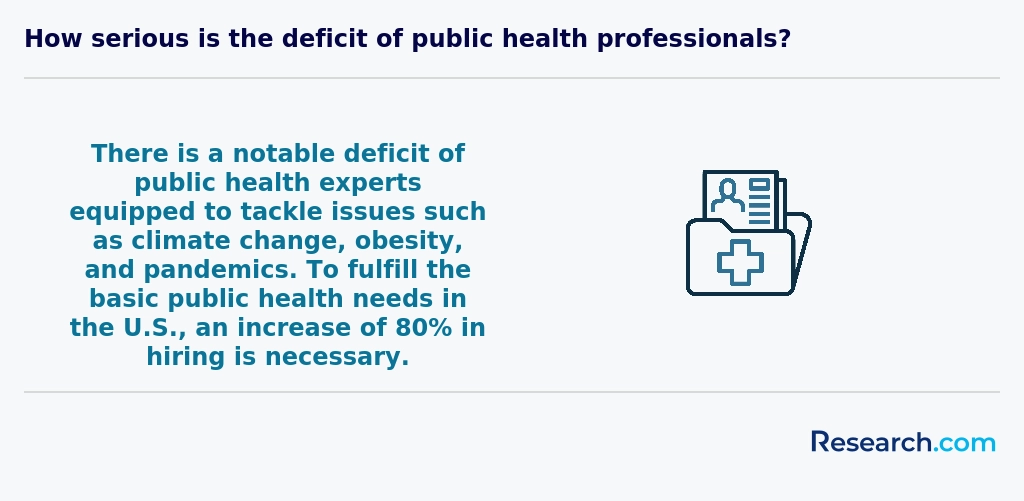
Public health careers increasingly require understanding global health challenges, including pandemics, climate change, and health inequities. A public health degree prepares graduates to collaborate internationally, addressing issues such as infectious disease control and health systems strengthening.
In the U.S., including Savannah, professionals with global public health expertise are in demand. The U.S. Bureau of Labor Statistics projects 16% job growth for health educators and community health workers from 2021 to 2031, partly driven by global health concerns.
Savannah's growing healthcare sector benefits from degrees that incorporate global health perspectives, helping meet local needs influenced by international trends.
According to the Georgia Department of Public Health, Savannah faces unique challenges such as disparities in access to care, underscoring the value of a globally informed workforce.
Students pursuing public health degrees in Savannah can gain practical experience through local internships and community partnerships. Many programs collaborate with organizations like the Georgia Department of Public Health and Memorial Health University Medical Center to offer hands-on opportunities. These internships allow students to work on real-world projects involving epidemiology, health promotion, and disease prevention efforts specific to coastal Georgia.
Additionally, Savannah's public health students often participate in service-learning initiatives addressing local health disparities, supported by institutions such as the Savannah-Chatham County Health Department. Practical experience is also enhanced through research assistant roles in university-affiliated public health studies, reflecting Savannah's focus on reducing chronic diseases and improving community wellness.
Choosing the right concentration within a public health degree in Savannah involves considering local health priorities and personal interests. Savannah faces significant public health challenges, including high rates of chronic diseases such as diabetes and heart conditions, according to the Georgia Department of Public Health. Concentrations like epidemiology, community health, or health policy can address these issues directly.
Students should also evaluate program offerings at local institutions, ensuring the concentration aligns with career goals. For example, a focus on environmental health may suit those interested in Savannah's coastal ecosystem risks.
Aligning your concentration with both local needs and your professional aspirations enhances job prospects in the region's growing public health sector.
- 2027 Best Public Health Degree Programs Ranking in Statesboro
- 2027 Best Public Health Degree Programs Ranking in Columbia
- 2027 Best Public Health Degree Programs Ranking in Gainesville
- 2027 Best Public Health Degree Programs Ranking in Athens
- 2027 Best Public Health Degree Programs Ranking in Tallahassee
- 2027 Best Public Health Degree Programs Ranking in Atlanta
- 2027 Best Public Health Degree Programs Ranking in Tampa
- 2027 Best Public Health Degree Programs Ranking in Birmingham
- 2027 Best Public Health Degree Programs Ranking in Fort Lauderdale
- 2027 Best Public Health Degree Programs Ranking in Washington
- Online Degrees https://www.publichealthdegrees.org/online/
- Letter of Intent for Admissions to Masters of Public Health https://essayforum.com/graduate/intent-admissions-masters-public-health-64817/
- Employment/Internship Opportunities - Georgia ... https://coastalhealthdistrict.org/about/employment_opportunities/
- Why Public Health is the Ideal Career Path for Gen Z - Reach Out https://we-reachout.org/why-public-health-is-the-ideal-career-path-for-gen-z/
- For Academic Public Health https://globalnetworkpublichealth.org/
- Choosing an MPH Specialization - MPH Online https://www.mphonline.org/choosing-an-mph-specialization/
- 2025’s Best Online MPH Programs in Georgia https://www.onlinemastersdegrees.org/best-programs/public-health-mph/georgia-ga/
- Public Health - SUM Admission https://admission.sum.edu.pl/public-health/
- Areas in Public Health https://www.publichealthcareers.org/areas-in-public-health.html
- Global Health Perspectives https://globalhealthperspectives.com/