2027 Best Public Health Degree Programs Ranking in Bronx

Co-Founder and Chief Data Scientist
Choosing the right public health degree in Bronx can shape your future and open doors to meaningful careers. This article presents the 2027 Best Public Health Degree Programs Ranking in Bronx, crafted by the Research.com team of data scientists.
It's designed to help you make well-informed decisions about which programs truly stand out for quality and outcomes. Getting a public health degree offers rewarding opportunities to improve community health and wellness.
Explore this guide to find a program that fits your goals and passion for making a positive impact.
Key benefits of getting public health degree in Bronx
- Salary for graduates: Public health degree holders in Bronx can look forward to competitive salaries such as $52,610 annually for Community Health Workers and up to $86,710 for Environmental Health Specialists, offering financial stability and growth.
- Career paths: Graduates from Bronx community colleges often pursue rewarding roles in health education, safety, and environmental health, providing diverse opportunities to make a real impact in the community.
- Online degree benefits: Earning a public health degree online from a Bronx university offers flexible scheduling and the same quality education, helping students balance work, life, and study successfully.
- 2027 Best Public Health Degree Programs Ranking in Bronx
- What can I expect from public health degree in Bronx?
- Where can I work with public health degree in Bronx?
What can I expect from public health degree in Bronx?
The average cost of pursuing a public health degree in Bronx ranges between $15,000 and $35,000 annually, depending on whether students attend public institutions such as Lehman College or private colleges with specialized programs. Graduates often reflect positively on their investment, emphasizing the value gained through hands-on internships with Bronx health departments and nonprofits, which directly address local challenges like asthma and diabetes.
Students appreciate how tuition offsets by practical experience prepare them for careers in community health advocacy and epidemiology. For example, graduates from Lehman College report that while the tuition is affordable, the opportunity to engage with Bronx's diverse communities deepens their understanding of urban health disparities, making the cost worthwhile.
Financial aid and scholarships from local agencies also help reduce costs. Compared to national averages, Bronx public health programs offer cost-effective paths while immersing students in a borough with some of the highest prevalence rates of chronic conditions, making their education highly relevant.
Where can I work with public health degree in Bronx?
Public health graduates in Bronx find diverse career paths, particularly in government agencies like the New York City Department of Health and Mental Hygiene, which leads numerous community health programs. These roles often involve epidemiology, health education, and program coordination, reflecting the borough's significant demand for skilled public health professionals as highlighted in the 2023 workforce report.
Hospitals such as Jacobi Medical Center and BronxCare Health System actively hire graduates for infection control, patient education, and chronic disease management roles, addressing prevalent health issues in the community. Graduates from institutions like the City University of New York (CUNY) describe engaging hands-on experiences that prepare them for these dynamic environments.
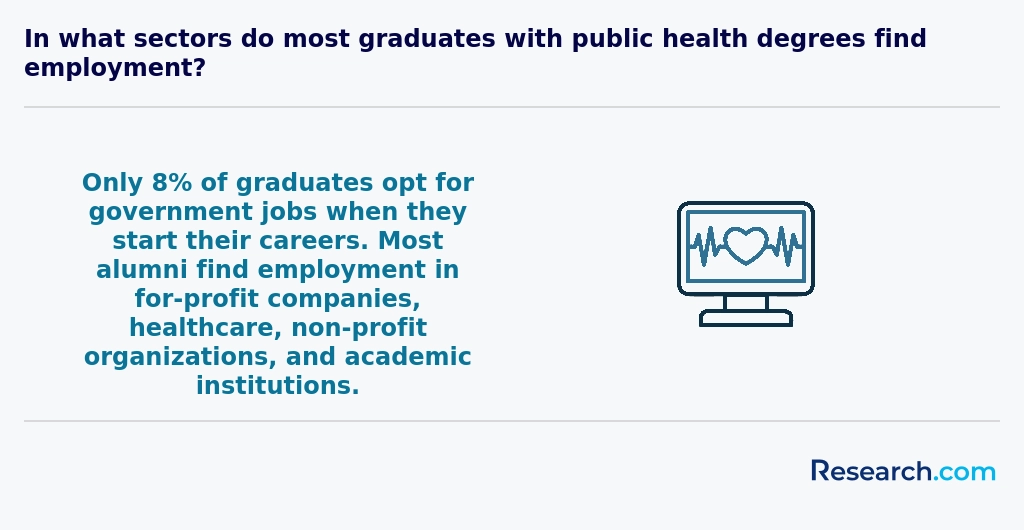
Non-profits focused on substance abuse prevention, maternal health, and HIV/AIDS also employ public health specialists, with over 25 local organizations reported by the Bronx Community Research Review (BCRR) as major employers in 2022. Academic research opportunities linked to CUNY further deepen graduates' expertise on urban health disparities.
Private sector jobs in health technology and insurance are growing, allowing graduates to apply skills in data analysis and policy development. This range offers rewarding, impactful careers directly serving Bronx communities.
Graduates with a public health degree in the Bronx can anticipate varied earnings depending on their chosen role and education level. For instance, community health workers, a common early-career position for local graduates, earn a mean annual wage of around $52,610, reflecting entry-level earning potential. Health educators, many of whom start their careers at institutions such as Lehman College or Bronx Community College, typically earn higher wages, with an average salary near $69,790.
More specialized positions require advanced degrees and offer increased compensation. Environmental health specialists and occupational health and safety specialists, occupations that appeal to alumni seeking impactful, hands-on work in urban health environments, report mean annual wages of $86,710 and $85,570 respectively. These roles often involve protecting community health through environmental assessments or workplace safety protocols.
Such salary outcomes align well with the needs and opportunities in the Bronx, where graduates engage in meaningful work at hospitals, nonprofits, and local government. Their earnings demonstrate promising financial rewards tied to improving public health in vibrant urban communities.
- Public health degrees in the Bronx cost between $10,000 per year at community colleges and $25,000-$35,000 annually at four-year schools.
- Entry-level public health jobs in the Bronx pay about $45,000 to $55,000 per year, with experienced workers earning $70,000 to $85,000.
- Education programs offer practical internships and fieldwork focused on urban health challenges, increasing job readiness.
- Most Bronx public health programs meet national accreditation standards, important for certification and licensure.
- Public health careers in the Bronx are supported by strong local demand from government, nonprofits, hospitals, and research institutions.
Completing a public health degree in Bronx depends significantly on the level pursued and the program format. For example, graduates from Bronx-based community colleges typically finish associate degrees in about two years of full-time study, enabling swift entry into public or community health roles. Those enrolled at institutions like Lehman College find that a bachelor's degree often spans four years, aligning with national averages and providing solid foundational knowledge.
Master's degree candidates, particularly within local universities offering MPH programs, usually complete their studies in around two years. Some report that part-time or accelerated options help balance work and study commitments, reflecting flexible academic pathways in Bronx.
Doctoral candidates experience wider variation, with many finishing between three to six years. These extended timelines account for research and dissertation components essential to advanced expertise. Graduates consistently express satisfaction with the thorough preparation gained despite the longer duration, valuing the blend of coursework and practical fieldwork available locally.
This range of timelines captures Bronx's diverse educational landscape, where practical internships and CEPH-accredited programs foster both academic depth and career readiness.
Online and on-campus public health degrees in the Bronx differ mainly in delivery and experience. On-campus students at institutions like Lehman College or New York University benefit from direct interaction with faculty and peers, enabling rich networking opportunities. Graduates often recall hands-on experiences such as lab work or community projects coordinated through the New York City Department of Health and Mental Hygiene, which enhances practical learning through local internships.
In contrast, online programs offer flexibility crucial for students balancing work or family commitments. Enrollment in these programs has surged by over 40%, highlighting their growing accessibility. Online courses rely on digital platforms for lectures and discussions but generally lack in-person networking and local practicum options.
Cost-wise, in-state tuition ranges from $7,000 to $12,000 annually for on-campus studies, while online students save on commuting and housing, though they might incur technology fees. Both formats require CEPH accreditation, ensuring program quality and career value for Bronx residents.
Students pursuing a Public Health degree in Bronx, NY, not only benefit from rigorous academic training but also enjoy a vibrant campus environment that fosters personal growth and community connections. Beyond classrooms and labs, these institutions offer a range of extracurricular opportunities including student clubs, public health seminars, and networking events that help students develop leadership skills and professional relationships. Campuses are dedicated to creating supportive spaces through career counseling centers, health and wellness services, and cultural organizations that celebrate the Bronx’s diverse community. Students are encouraged to take advantage of mentorship programs and peer-to-peer study groups which enhance collaborative learning and assist newcomers in adjusting to academic demands. Those interested in balancing quality education with cost considerations can also explore affordable public health schools in new york, ensuring they make the most informed decision about their educational environment and long-term career success.
The average cost of a public health degree in the Bronx varies significantly based on residency status and institution type. For in-state students pursuing a public health degree tuition and fees Bronx tend to be notably more affordable, with median in-state total costs around $12,937. Graduates from community colleges or public universities in Bronx neighborhoods frequently mention how this affordability helped ease financial stress, allowing them to focus more confidently on their studies and hands-on public health projects.
Out-of-state students face a higher median total cost of about $32,492, reflecting the premium charged by local universities such as those in the City University of New York system and nearby private institutions. While challenging, many out-of-state students have found rewarding experiences balancing rigorous coursework with supportive campus resources that justify these expenses. Part-time study and financial aid opportunities often provide additional relief.
Many Bronx students considering public health degrees look to institutions like Bronx Community College and Hunter College as accessible options. Those graduates often describe feeling motivated by the dynamic urban environment around them, applying classroom knowledge to community health issues firsthand. To explore more affordable paths, prospective students might consider looking at affordable public health schools in new york which provide valuable options within this cost framework.
Students pursuing a public health degree in the Bronx benefit from various financial aid options that ease the cost burden, which typically ranges from $10,000 to over $30,000 annually depending on the institution. Federal aid, accessed through FAFSA, is a primary source; for example, Pell Grants provide essential non-repayable support to low-income undergraduates. Graduate students often rely on federal loans such as the Direct Unsubsidized Loan and Grad PLUS Loan, offering flexible repayment terms tailored to public health graduates' career paths.
State initiatives, notably the Excelsior Scholarship, allow Bronx residents attending CUNY and SUNY public health programs to attend tuition-free if they meet income and academic criteria. Institutional scholarships and assistantships further aid students; many graduates from the CUNY School of Public Health highlight merit-based scholarships and funded research assistant roles as vital to their success, enabling them to focus on community health projects without financial stress.
Work-study opportunities embedded in university health departments and partnerships with local organizations also provide income while gaining relevant experience. Outside scholarships from associations like the American Public Health Association offer additional avenues, often awarded to students active in public health advocacy, making financial support both accessible and multifaceted for Bronx public health students.
Planning ahead is vital for securing a spot in one of the Bronx’s top public health programs. Most institutions follow a fall-entry cycle, with common deadlines as follows:
- Early Decision/Priority: October 15 – Ideal for guaranteed consideration and early scholarship review.
- Regular Admission: January 15 – Final deadline for fall-semester applications; late submissions may be considered on a space-available basis.
- Spring Term: November 1 – Limited spots open for January start; check individual program pages for availability.
- FAFSA and Financial Aid: March 1 – Federal aid deadline; earlier submission increases chances for grants and work-study.
- Verify CEPH accreditation on each program’s website to ensure eligibility for federal aid.
- Prepare for optional graduate entrance exams (GRE/MCAT waivers may apply).
- Double-check residency requirements if seeking in-state tuition rates. For undergraduates seeking more accessible entry points, explore our curated list of easy bachelors in public health programs to find degrees that balance rigorous curricula with flexible admission criteria.
To enroll in public health degree programs in the Bronx, candidates must meet clear academic prerequisites tailored to ensure preparedness. Undergraduate applicants typically need a high school diploma or equivalent, with coursework in biology, chemistry, mathematics, and English. This foundation, recommended by institutions like Bronx Community College and Lehman College, is crucial for handling public health studies effectively.
For those pursuing graduate degrees such as an MPH, a bachelor's degree from an accredited institution is mandatory. Many programs in Bronx colleges prefer candidates with backgrounds in biology, statistics, or social sciences. Some graduates recall that prior volunteer work in community health settings significantly strengthened their applications, reflecting the value of practical experience.
While the GRE is still required by a few schools, many Bronx-based programs have relaxed this rule post-pandemic, easing the admission process. Students often emphasize the importance of submitting transcripts, recommendation letters, and personal statements on time, as these components critically impact acceptance chances.
Financially, Bronx public institutions offer competitive tuition, making the pursuit of public health degrees both feasible and rewarding for local students.
Public health degree programs in Bronx colleges typically include core courses that build a strong foundation in addressing urban health challenges. Graduates from institutions such as Lehman College often highlight courses in epidemiology and disease prevention, where they learn to analyze outbreaks of conditions like asthma, which disproportionately affect Bronx communities.
Biostatistics and data analysis courses provide essential quantitative skills, enabling students to interpret health data accurately-vital for developing effective interventions in densely populated settings. Environmental health sciences focus on the impact of pollution and substandard housing on public health, topics deeply relevant to Bronx neighborhoods facing environmental justice issues.
Health policy, planning, and management classes prepare students for leadership roles by teaching regulatory frameworks and healthcare system operations. Additionally, social and behavioral health sciences examine how cultural behaviors influence disease spread, informing community-based interventions.
Many Bronx public health students report a rewarding experience in practical internships with local health departments, enabling them to apply classroom concepts and witness the direct impact of their work on community wellness.
Public health degree specializations in Bronx focus on meeting the unique health needs of the borough's diverse communities. Students commonly choose Epidemiology to study disease trends critical to areas like the Bronx, where asthma and diabetes rates are historically high. Community Health emphasizes local engagement, training graduates to work directly with Bronx populations and address health disparities through education and outreach.
Environmental Health is another prominent concentration, reflecting the borough's challenges with pollution and housing conditions. Health Policy and Management prepares students to navigate Bronx's complex healthcare infrastructure, equipping them to improve service delivery through effective policy-making. Additionally, Global Health attracts students interested in how global issues such as infectious diseases impact the local community, offering a broader perspective.
Graduates from institutions like Lehman College appreciate the practical internships in Bronx hospitals and community centers, which enhance their readiness for real-world public health roles. For those exploring options, finding easy bachelors in public health programs in Bronx can streamline access to these specialized tracks.
When choosing the best public health degree in Bronx, accreditation is crucial. Graduates from CEPH-accredited programs at Bronx-based colleges emphasize how this validation ensured they received education aligned with nationwide standards, ultimately improving their employability in local health agencies. Cost is also a major consideration; Bronx offers some of the most affordable public health programs Bronx NY, with annual tuition generally ranging below New York City averages, allowing students to balance education expenses with living costs.
Programmatic focus matters as well. Many Bronx public health students highlight how urban health and community outreach specializations match the borough's diverse health challenges, including asthma and diabetes prevalence. Partnering with local hospitals and community centers offers valuable internships, blending theory with hands-on experience. Flexible scheduling options-like evening and online courses-help working professionals pursue degrees without sacrificing income.
This practical approach resonates deeply with students aiming for rewarding careers. For those seeking to maximize return on investment, explore top paying certifications related to public health fields.

Graduates with a public health degree in Bronx have varied career paths reflecting the borough's diverse health challenges. Many find roles as community health educators or outreach coordinators, designing programs that address local needs in neighborhoods served by institutions like Lehman College. These positions involve improving health literacy and promoting wellness in Bronx's distinct communities, illustrating practical impacts of a public health degree. Epidemiology professionals analyze disease trends and inform public health strategies, often collaborating with entities such as the New York City Department of Health and Mental Hygiene, essential for controlling outbreaks in dense urban settings.
Job prospects for public health graduates Bronx also span healthcare administration, where graduates manage operations in facilities like Montefiore Medical Center, balancing patient care quality with regulatory compliance. Policy analysis and advocacy careers enable graduates to influence health equity and address social determinants of health through non-profits and government agencies.
Graduates from Bronx colleges consistently report fulfilling experiences combining local impact with promising career opportunities. To explore educational options further, students consider factors like program demands and may seek advice on which bachelor degree is easiest to match their goals.
The job market for public health degree holders in the Bronx is strong, driven by the borough's significant health challenges like high asthma and diabetes rates. Employment opportunities for public health graduates Bronx are expanding, especially in community health organizations, government agencies, and hospitals. Graduates from Bronx-based institutions often secure roles as epidemiologists, health educators, and public health analysts, benefiting from local internship programs that connect them directly with public health agencies and hospitals.
Bronx graduates report positive experiences gaining hands-on skills crucial for job readiness. The median annual wage for health educators and community health workers in the New York City metropolitan area was approximately $58,500 in 2023, reflecting competitive compensation relative to living costs. Preventive care and health equity initiatives in the Bronx further sustain demand for qualified professionals.
Students should also explore affordable education options like cheap associate programs online, which help manage tuition costs while preparing for this evolving job market. The tangible impact of public health work in local communities makes this career path both rewarding and promising.
2027 Best Public Health Degree Programs Ranking in Bronx
Investing in your education is a significant decision that can shape your future, and the Research.com team understands the importance of making informed choices. To assist prospective students in the Bronx, we have meticulously crafted the "2027 Best Public Health Degree Programs Ranking in Bronx." Our commitment to quality, credibility, and accuracy is reflected in the extensive research and analysis conducted to compile this ranking.
We utilized the following reputable data sources to ensure a comprehensive evaluation of public health programs:
By exploring this ranking, readers will gain valuable insights into the best public health degree programs available in the Bronx, helping them make informed decisions about their educational paths. For more details on our methodology, please visit our Research.com methodology page.

Frequently Asked Questions About public health
Public health degree students in Bronx can maximize their learning experience by engaging deeply with local community health initiatives. The Bronx faces unique public health challenges, such as higher rates of asthma and diabetes, according to the New York City Department of Health. Participating in internships or volunteer work with local clinics or nonprofit organizations provides practical experience that complements academic study.
Additionally, students should take advantage of Bronx's proximity to leading research institutions in New York City. Networking with professionals through seminars and workshops can open doors to mentorship and career opportunities.
Using data from sources like the CDC and NYC Health, students can develop research skills focused on urban health disparities, strengthening their understanding of real-world issues.
Emerging niches within the public health field reflect growing societal and technological challenges. In the Bronx, there is rising demand for expertise in health equity and social determinants of health, addressing disparities faced by underserved communities. Data science and informatics are also expanding rapidly; public health professionals skilled in analyzing large datasets help improve local health outcomes through informed decision-making. Environmental health, focusing on urban pollution and its impact on respiratory diseases, is a critical area due to the Bronx's industrial legacy. Mental health promotion and substance abuse prevention remain priority niches, given the borough's higher rates compared to state averages, as reported by the New York State Department of Health.
Graduates with a public health degree in Bronx should focus on building practical skills to enhance employability. Participating in internships or volunteer opportunities with local health agencies like the NYC Department of Health provides valuable experience and networking. Employers in Bronx often seek candidates familiar with addressing urban health challenges, including infectious diseases and environmental health issues.
Understanding data analysis tools such as SPSS or SAS is important, given the data-driven nature of public health jobs. According to the New York State Department of Labor, health-related occupations are expected to grow 13% by 2030, highlighting job availability.
Joining professional organizations and attending Bronx-based public health events can further expand connections. Licensing or certification, like the Certified in Public Health (CPH) credential, also improves prospects.
Employers in Bronx seeking public health graduates prioritize a combination of analytical and communication skills. Proficiency in data analysis, including familiarity with statistical software like SPSS or SAS, is critical. This is due to the borough's diverse population and the need for targeted health interventions, as highlighted in the 2022 Bronx Community Health Profile.
Strong communication abilities are also highly valued. Graduates must effectively convey complex health information to varied audiences, including underserved communities. Cultural competency and multilingual skills enhance employability, reflecting Bronx's multilingual demographic.
Project management and collaboration skills rank prominently too, as public health work often involves coordinating with multiple agencies. Employers also appreciate graduates who demonstrate critical thinking and problem-solving to address local health disparities.
Finding internships in Bronx relevant to a public health degree involves leveraging local institutions and community organizations. Many Bronx public health programs partner with nearby hospitals, health departments, and non-profits for hands-on experience. For example, the New York City Department of Health and Mental Hygiene offers internship opportunities focusing on urban health challenges. Additionally, BronxCare Health System and Jacobi Medical Center frequently host interns in public health roles. Connecting with academic advisors or career centers at Bronx-based colleges can uncover exclusive placements. Networking at local public health events and using platforms like the NYC Service internship portal also improves chances of securing relevant internships.
A public health degree in Bronx significantly enhances career mobility and advancement opportunities within the local healthcare and community sectors. The Bronx, known for its diverse and underserved populations, has a strong demand for qualified public health professionals to address chronic diseases, environmental health, and health disparities, according to the New York State Department of Health.
Graduates holding a public health degree often find employment in government agencies, hospitals, non-profits, and research organizations focused on urban health challenges. The Bureau of Labor Statistics projects a growth rate of approximately 17% for health education specialists and community health workers nationwide through 2031, a trend reflected in Bronx's expanding public health workforce.
Furthermore, earning advanced public health degrees, such as a Master of Public Health (MPH), can lead to leadership roles, higher salaries, and expanded responsibilities. The Bronx Health Department regularly collaborates with local universities promoting internships and career pathways that accelerate promotions for degree holders.
Studying for a public health degree in Bronx equips students with skills that span multiple disciplines such as epidemiology, healthcare policy, social work, and environmental health. Programs often emphasize collaboration among these fields to address complex community health issues.
The Bronx faces unique public health challenges, including high rates of asthma and diabetes, which require integrated approaches. According to the New York City Department of Health, interdisciplinary training prepares graduates to work effectively with diverse teams in hospitals, government agencies, and nonprofits.
This broad-based education helps students develop communication, data analysis, and problem-solving skills, essential for roles that intersect medicine, education, and social services.
Such preparation allows graduates to adapt to various roles, from community outreach to health program management, vital in Bronx's multifaceted health landscape.
When choosing between thesis and non-thesis public health degree programs in Bronx, consider your career goals carefully. Thesis programs emphasize research and require a formal project, ideal for students aiming at doctoral studies or research careers. Non-thesis options focus more on practical skills and applied knowledge, suitable for professionals pursuing public health practice or policy roles.
In Bronx, institutions like Lehman College offer both pathways, reflecting the diverse public health needs of the area. The Bronx faces higher rates of asthma and diabetes than national averages, which means graduates with hands-on skills may find many opportunities in local health agencies, such as the New York City Department of Health.
Look into program length and workload, as thesis tracks can take longer due to extensive research demands. Also, inquire about faculty expertise and available research topics if considering a thesis option. According to the Association of Schools and Programs of Public Health, thesis programs often require 6-12 months for completion.
Students based in Bronx who wish to study public health abroad have several pathways connected to their local institutions. Many Bronx colleges, including the City University of New York (CUNY) system, offer study abroad programs tailored to public health majors. These programs often partner with universities in Europe, Asia, and Latin America, allowing students to gain practical international experience while earning credit toward their degrees.
Additionally, students can pursue global public health internships or research projects through affiliations with organizations like the Global Health Corps. According to the CUNY Office of Global and International Affairs, around 15% of public health students participate in study abroad annually, reflecting growing interest in global health perspectives.
Financial aid and scholarships specifically for study abroad experiences in public health are available through Bronx-based universities, helping to offset costs. For students aiming to deepen their understanding of global health challenges, these options provide accessible avenues without needing to leave the US education system.
Part-time job opportunities in Bronx that complement a public health degree often involve hands-on experience in community health settings. Students frequently find roles as health educators or outreach workers, supporting local organizations like the Bronx Health REACH coalition, which addresses health disparities in the area. These positions provide practical skills in communication and program implementation.
Additionally, internships or part-time roles at Bronx's numerous hospitals and clinics, such as Montefiore Medical Center, offer exposure to public health research and patient engagement. Roles in data collection and analysis also align well with public health coursework.
The New York State Department of Health lists increasing job openings in community health roles in Bronx, reflecting ongoing public health needs amid its diverse population of over 1.4 million residents.
Public health students in Bronx benefit from a variety of networking opportunities through local universities and community organizations. Institutions such as Lehman College offer access to professional events, guest lectures, and career fairs focused on public health careers. These events connect students with alumni and local health professionals working in government agencies and nonprofit sectors.
The Bronx also hosts the Bronx Health Link, a network of healthcare providers and organizations aiming to improve community health. This platform allows students to engage with practitioners and policymakers directly involved in public health initiatives.
According to the New York State Department of Health, the Bronx has one of the highest concentrations of public health programs, increasing chances for meaningful internships and fieldwork collaborations.
Alumni networks provide valuable support for public health degree students in Bronx by connecting them with experienced professionals in the field. These networks often offer mentorship programs, career advice, and internship opportunities that can improve students' job prospects. According to the Association of Schools and Programs of Public Health, graduates with strong alumni contacts are 30% more likely to secure employment within six months of graduation.
In the Bronx, where public health challenges like asthma and diabetes are significant, alumni connections can also help students gain insights into local health initiatives and organizations. This localized professional network enhances practical learning and community engagement.
Moreover, alumni events and networking sessions encourage collaboration, leading to partnerships that benefit public health programs across the area. Students can leverage these relationships to stay updated on emerging public health trends and grant opportunities.
Public health degree programs in Bronx offer several options to tailor your education according to your career goals. Many local institutions allow students to select specializations such as epidemiology, health policy, or community health to focus on areas of interest. Customizing your coursework can include choosing electives aligned with Bronx's public health challenges, like urban health disparities or infectious disease control.
Internships and fieldwork opportunities are often available through Bronx-based health departments and hospitals, providing practical experience relevant to your intended career path. According to the New York City Department of Health, Bronx residents face distinct health issues, making local projects valuable for applied learning.
Some programs also offer flexible schedules or part-time options, enabling working professionals to balance studies and employment. Additionally, seeking advising from faculty can help design a curriculum that matches job market demands in the Bronx area, where public health roles are projected to grow 14% by 2030, per the Bureau of Labor Statistics.
Public health students in Bronx face several challenges during their academic journey. One major difficulty is the high cost of living and tuition, which can strain students financially, especially as Bronx has one of the highest poverty rates in New York City according to the U.S. Census Bureau. Balancing work and studies is a common struggle, as many students need part-time jobs to support themselves.
Additionally, access to quality internships and practical fieldwork opportunities can be limited due to competition and resource constraints in local health agencies. Students also encounter challenges in addressing complex health disparities prevalent in the borough, requiring strong community engagement skills.
Individuals with a public health degree in the Bronx can pursue several professional certifications to enhance their career opportunities. One of the most recognized is the Certified in Public Health (CPH) credential, offered by the National Board of Public Health Examiners. This certification validates expertise in core public health areas and is valued by employers nationwide.
Other options include certifications in health education, such as the Certified Health Education Specialist (CHES) credential. For those interested in epidemiology, the Certification in Infection Control (CIC) is a respected choice.
These certifications help graduates meet the workforce demands in Bronx public health sectors, which face ongoing challenges in disease prevention and community health promotion, according to recent NYC Department of Health reports.
Writing a winning application for a public health program in Bronx requires careful preparation and understanding of what admissions committees seek. Start by clearly articulating your motivation for studying public health, particularly how your goals align with addressing health challenges in urban areas like Bronx, where community health issues such as asthma and diabetes are notably prevalent according to the NYC Department of Health. Highlight relevant experiences, including volunteer work or internships in public health settings.
Focus on demonstrating strong academic performance, especially in subjects such as biology, statistics, and social sciences. Many Bronx institutions value applicants who showcase both quantitative skills and cultural competency.
Be sure to provide compelling personal statements and secure recommendation letters from professionals familiar with your work ethic and dedication to public health. Finally, tailor your application to reflect knowledge of local health concerns and program offerings to stand out effectively.
The global perspective on a public health career highlights its growing importance in addressing health challenges that transcend borders. Professionals trained in the US, including Bronx-based programs, often engage in international efforts to combat epidemics, improve sanitation, and promote health equity.
Public health careers offer opportunities in organizations like the World Health Organization and the Centers for Disease Control and Prevention, which collaborate on global initiatives. According to the New York City Department of Health, Bronx residents face diverse health issues such as high rates of asthma and diabetes, reflecting worldwide urban health concerns.
US public health degrees provide skills to analyze data, manage health programs, and influence policy, preparing graduates to work both locally and globally.
Gaining practical experience while studying for a public health degree in the Bronx is essential for career readiness. Many local universities incorporate internships into their curricula, allowing students to work with community health organizations or local government agencies. For example, the Bronx has multiple public health initiatives focused on reducing health disparities, providing ample opportunities for hands-on experience.
Students often engage with partnerships involving the New York City Department of Health and Mental Hygiene, which offers internships addressing urban health challenges. Volunteering at Bronx hospitals and non-profits also helps students understand real-world public health issues. These experiences enrich academic learning with practical insights needed for effective public health careers.
Choosing the right concentration within a public health degree program in Bronx requires understanding local health priorities and your career goals. The Bronx faces unique public health challenges, including high rates of asthma, diabetes, and obesity, according to the New York City Department of Health and Mental Hygiene. Concentrations like epidemiology, community health, or health policy can help address these issues.
It is important to review the curriculum offered by Bronx colleges, such as Lehman College or Fordham University, focusing on practical experiences and partnerships with local health organizations. Consider also your interests in research, program planning, or policy advocacy to match the concentration.
- 2027 Best Public Health Degree Programs Ranking in New York
- 2027 Best Public Health Degree Programs Ranking in New Brunswick
- 2027 Best Public Health Degree Programs Ranking in New Haven
- 2027 Best Public Health Degree Programs Ranking in Philadelphia
- 2027 Best Public Health Degree Programs Ranking in Albany
- 2027 Best Public Health Degree Programs Ranking in Ithaca
- 2027 Best Public Health Degree Programs Ranking in Boston
- 2027 Best Public Health Degree Programs Ranking in Baltimore
- 2027 Best Public Health Degree Programs Ranking in Lowell
- 2027 Best Public Health Degree Programs Ranking in College Park
- How to Become a Public Health Professional | West Coast University https://westcoastuniversity.edu/about/career-guides/how-to-become-a-public-health-professional
- Budget-Friendly Public Health Bachelor’s Programs - CW https://www.cw.edu/blog/affordable-public-health-bachelor-degree-options-for-budget-conscious-students/
- Master of Public Health Specializations: What are they and how should you navigate the decision? https://masterspublichealth.com/master-of-public-health-specializations/
- Effective Networking Strategies for Public Health Professionals | PH SPOT https://phspot.org/effective-networking-strategies-for-public-health-professionals/
- Master of Science (M.S.) Major in Public Health Education and Promotion (Non-thesis Option) https://mycatalog.txstate.edu/graduate/education/health-human-performance/public-healthed-promo-nonthesis-ms/
- How to Get Your First Public Health Job - PHERN https://phern.communitycommons.org/early-career-professional-learning-series/how-to-get-your-first-public-health-job/
- Public Health Challenges – IPA SDG Dashboard https://sdg.internationalpublishers.org/sdgaction/public-health-challenges/
- Careers https://www.publichealthdegrees.org/careers/
- For Academic Public Health https://globalnetworkpublichealth.org/
- What do you learn in a bachelor's in public health? | edX https://www.edx.org/resources/what-do-you-learn-in-a-bachelors-in-public-health