2027 Political Science Degree Transfer Efficiency Report: Which Programs Reduce Time to Graduation the Most

Co-Founder and Chief Data Scientist
Transfer credits can decide whether a political science bachelor's degree takes one year or four. College Board's 2024 pricing report lists average 2024-25 tuition and fees at $11,610 for in-state public four-year colleges and $4,050 for public two-year colleges, making efficient transfer planning a major affordability strategy. This guide is for community college students, stopped-out learners, military students, and career changers comparing political science programs. You will learn which transfer policies save the most time, which credits usually apply, and how to avoid enrolling before you know your real graduation timeline.
Key Things You Should Know
- The most transfer-efficient political science bachelor's programs usually combine a 90-credit transfer maximum, a 30-credit residency requirement, associate-degree block transfer, and clear course equivalency rules.
- A typical bachelor's degree requires about 120 credits, so entering with 60 applicable credits can often cut the remaining coursework roughly in half, while 90 applicable credits can leave about one academic year.
- Cost savings depend on credits that apply to degree requirements, not just credits accepted; the 2024-25 tuition gap between public two-year colleges and in-state public four-year colleges makes early transfer planning especially valuable.
- Which Political Science Degree Programs Accept the Most Transfer Credits?
- How Much Can Transfer Credits Reduce the Time Needed to Complete a Political Science Degree?
Which Political Science Degree Programs Accept the Most Transfer Credits?
The political science programs that accept the most transfer credits are usually bachelor's completion programs, online adult-learner programs, and public universities participating in statewide articulation systems. The key distinction is between accepted credits and applied credits: accepted credits may appear on your transcript, but applied credits actually reduce the courses you still need for the major, general education, electives, or upper-division requirements.
Political science is often more transfer-flexible than highly sequenced or licensure-driven majors because many required courses fit common categories such as American government, comparative politics, international relations, statistics, research methods, public policy, and electives. By contrast, programs with clinical or licensure requirements, such as online SLP programs, tend to have stricter course sequencing and supervised practice rules.
The table below summarizes the program models most likely to maximize usable transfer credit. Use it to compare policy structure, not to assume every school in a category will treat your transcript the same way.
| Program model | Typical transfer-credit ceiling | Why it can reduce time to graduation | Best fit |
| Online bachelor's completion program | Often up to 90 credits | Designed for students who already completed substantial college coursework | Adult learners, returning students, military students, and students with an associate degree |
| Public university with statewide articulation | Often 60 credits from an approved associate pathway | General education and lower-division major courses may transfer as a block | Community college students planning early |
| Political science BA with broad electives | Varies, often generous elective acceptance | Prior social science, humanities, statistics, and writing courses may fill open requirements | Students with mixed credits from multiple institutions |
| Highly structured campus-based major | Often lower usable credit, even if many credits are accepted | Upper-division sequencing, residency rules, or specific departmental requirements may limit application | Traditional students prioritizing campus experience over speed |
The strongest transfer candidates are usually programs that publish transfer guides, accept associate degrees as a completed lower-division package, and provide a written degree audit before enrollment. A high maximum transfer-credit number is helpful only if the school also maps those credits into the political science curriculum.
How Much Can Transfer Credits Reduce the Time Needed to Complete a Political Science Degree?
Transfer credits reduce time to graduation by replacing courses you would otherwise need to take after admission. Since most bachelor's degrees require about 120 credits, the fastest path usually comes from transferring a completed associate degree or a large block of credits that applies directly to general education, electives, and lower-division major requirements.
The table below shows common transfer-entry scenarios. These are planning estimates, not guarantees, because full-time status, course availability, upper-division requirements, and residency rules can change the final timeline.
| Applicable transfer credits at entry | Approximate credits remaining in a 120-credit degree | Estimated full-time time remaining | Efficiency note |
| 0 credits | 120 credits | About 4 academic years | Traditional first-year entry |
| 30 credits | 90 credits | About 3 academic years | Useful if credits meet general education requirements |
| 60 credits | 60 credits | About 2 academic years | Common pathway after an associate degree |
| 75 credits | 45 credits | About 1.5 academic years | Efficient when upper-division access is not delayed |
| 90 credits | 30 credits | About 1 academic year | Often the fastest bachelor's completion model, subject to residency rules |
The biggest limitation is that transfer credits do not always satisfy the right category. For example, 70 accepted credits may still leave you with two years of study if the program requires 36 upper-division credits in residence, a senior seminar, research methods, statistics, and specific political theory courses that were not included in your prior coursework.
To estimate your real timeline before applying, follow a practical sequence rather than relying on a school's transfer-credit maximum.
- Collect unofficial transcripts from every college you attended, including dual-enrollment and summer coursework.
- Compare each course to the political science degree plan, separating general education, major core, major electives, free electives, and nonapplicable credits.
- Ask the school for a preliminary or official transfer credit evaluation that shows how each course applies, not only how many credits are accepted.
- Check residency rules, upper-division minimums, capstone requirements, and whether key courses are offered every term.
- Build a term-by-term completion plan before paying an enrollment deposit.
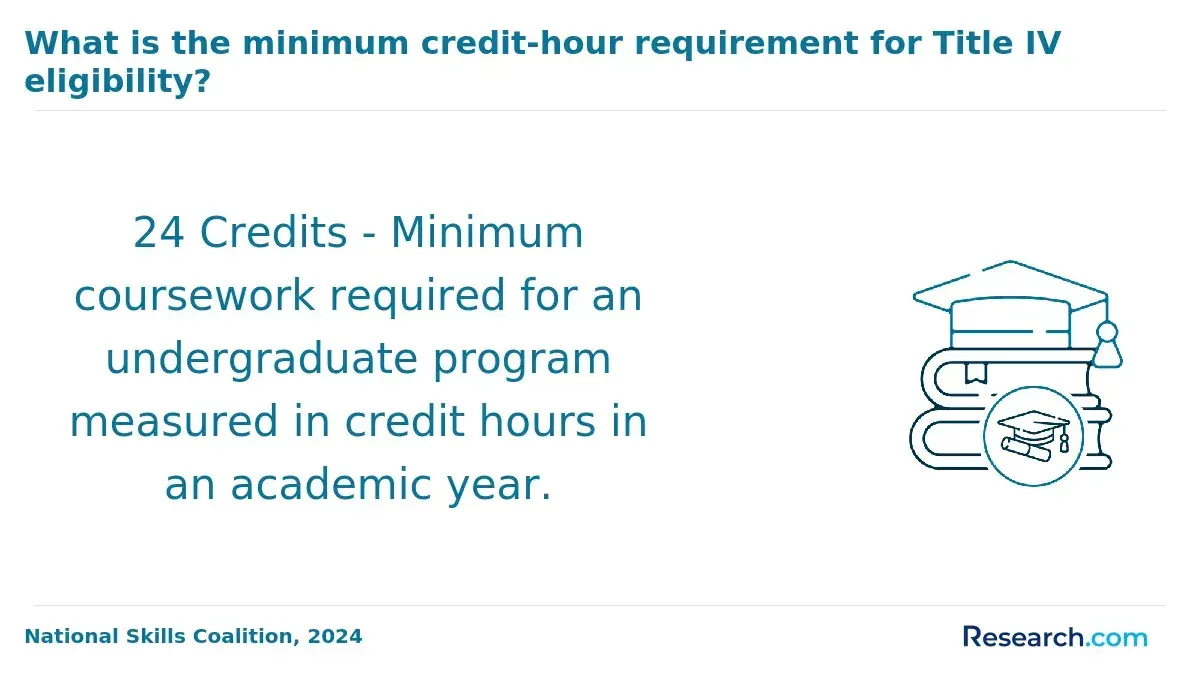
The easiest credits to transfer into a political science degree are usually lower-division general education courses and broadly recognized social science courses. Political science programs often need students to complete writing, quantitative reasoning, history, economics, statistics, and social science requirements, so prior courses in those areas can be highly useful.
The table below explains which credit sources are commonly accepted and what can limit their usefulness. The most important question is whether the credits apply to a specific requirement or merely count as extra elective credit.
| Credit type | Transfer likelihood | How it may apply to political science | Common limitation |
| Introductory college courses | High when regionally accredited and grade requirements are met | General education, social science, history, writing, statistics, or electives | Courses may not match a required major course exactly |
| Associate degree coursework | High in articulation pathways | May satisfy lower-division general education as a block | Major prerequisites may still be reviewed individually |
| AP or IB credit | Moderate to high, depending on score policies | General education or introductory political science credit | Score cutoffs and credit categories vary by institution |
| CLEP or DSST exams | Moderate, stronger at adult-focused institutions | General education or electives | Some selective schools restrict exam credit |
| Military training | Moderate, based on ACE recommendations and school policy | Electives, leadership-related coursework, or general education in some cases | May not meet major-specific political science requirements |
| Work or civic experience | Variable | Prior learning assessment, portfolio credit, or electives | Usually requires documentation and may be capped |
Courses that most often help political science transfers include American government, state and local government, comparative politics, international relations, macroeconomics, microeconomics, statistics, public speaking, composition, ethics, history, sociology, and research methods. Credits are harder to use when they are developmental, vocational, too old for the school's policy, ungraded, duplicated, or taken at an institution the receiving school does not recognize.
The policies that reduce transfer credit loss are the ones that convert prior learning into specific degree progress. For political science students, the highest-value policies usually combine transparent equivalencies, associate-degree recognition, generous elective space, and predictable upper-division requirements.
Look for these policies when comparing programs, because they directly affect whether you graduate faster or simply carry unused credits on your transcript.
- Associate-degree block transfer: The school treats an approved AA or AS degree as completion of lower-division general education, reducing course-by-course uncertainty.
- Published articulation agreements: The university and community college have a formal pathway showing which courses to take before transfer.
- Course equivalency database: Students can check how previous courses have transferred before applying.
- Low residency requirement: A 30-credit institutional residency requirement is often more transfer-friendly than a higher requirement, especially for students with 75 to 90 credits.
- Flexible political science electives: Programs with broad upper-division elective categories may absorb prior coursework more effectively than narrow tracks.
- Credit for standardized exams or prior learning: Adult-focused programs may allow CLEP, DSST, military credit, or portfolio assessment within stated limits.
Public universities with statewide transfer systems often offer strong value for students who plan early, because the lower-division pathway is clearer. Private nonprofit and online programs can also be efficient, especially for adult learners, but students should compare the written degree audit and total remaining tuition rather than judging by institution type alone.
Prior learning, military training, and work experience can count toward some political science degrees, but they are rarely automatic. Schools typically require official documentation and may award the credit as electives rather than as a substitute for core political science requirements.
Military students should request official military transcripts and ask whether the school follows American Council on Education credit recommendations. Students with public service, campaign, legislative, nonprofit, law enforcement, or policy experience may be able to pursue prior learning assessment if the school offers it, but portfolio credit usually requires evidence of college-level learning rather than a job title alone.
Before relying on nontraditional credit, ask the school these questions so you know whether the credit will shorten the degree or only add transcript hours.
- Is there a cap on CLEP, DSST, military, portfolio, or other nontraditional credits?
- Can prior learning credit satisfy general education, major electives, or only free electives?
- Does portfolio assessment require a fee, faculty review, essay, interview, or supporting documents?
- Will prior learning credit count toward residency, upper-division, or graduation requirements?
- Can the school provide a written estimate before enrollment?
Transfer credits affect ROI by reducing the number of credits you must pay for after transfer. The strongest savings usually come from completing lower-division coursework at a lower-cost community college and then transferring into a bachelor's program where those credits apply cleanly.
College Board's 2024 report lists average 2024-25 tuition and fees at $4,050 for public two-year in-district colleges and $11,610 for in-state public four-year institutions. That gap explains why a well-planned 2+2 pathway can be financially powerful, but the savings shrink quickly if credits are lost, the student changes majors late, or the receiving school requires extra semesters.
The table below shows how transfer efficiency changes the cost logic. It focuses on tuition exposure, not living expenses, books, fees, grants, or lost wages.
| Scenario | Transfer result | Cost and ROI effect | Risk level |
| Associate degree transfers as planned | About 60 credits apply | Student may pay four-year tuition for only the upper half of the degree | Lower, if articulation is confirmed |
| Many credits accepted as electives only | Credit total looks high, but major requirements remain | Student may need extra terms despite a strong transfer total | Moderate to high |
| 90-credit bachelor's completion entry | Only about 30 credits remain | Potentially fastest route if residency and upper-division rules align | Moderate, because course fit matters |
| Late major change into political science | Prior credits may not match the new plan | Time and tuition savings may be reduced | High if no degree audit is completed |
Salary context also matters. The Bureau of Labor Statistics Occupational Outlook Handbook updated in 2024 reports a median annual wage of $139,380 for political scientists, but that occupation typically requires a master's degree or higher and represents a narrower career path than a bachelor's alone. Political science bachelor's graduates often pursue public administration, policy support, law-related roles, campaigns, nonprofit work, business, communications, or graduate school, so ROI should be measured against the specific career path you intend to pursue.
Students considering leadership or management graduate study after political science may compare the undergraduate transfer savings with later credential costs, including options such as the cheapest executive MBA. The practical question is not whether political science is automatically worth it, but whether the total degree cost, completion time, and next credential match your target career.
The most common transfer mistakes happen before enrollment, when students assume that "accepted" means "applied" or choose a program based on advertised flexibility rather than a written degree audit. These mistakes can add semesters, increase debt, and delay entry into graduate school or the workforce.
Watch for the following red flags when reviewing political science programs. Each one can reduce the value of your prior credits even if the school appears transfer-friendly.
- No written transfer evaluation before commitment: Do not rely only on verbal estimates from admissions staff.
- High transfer maximum but strict residency rules: A school may advertise up to 90 transfer credits while still requiring many upper-division credits in residence.
- Unclear major mapping: Credits that transfer as general electives may not reduce political science requirements.
- Missing syllabi for older or specialized courses: Without documentation, a department may deny equivalency for research methods, statistics, policy, or theory courses.
- Ignoring course rotation: A required capstone or methods course offered once per year can delay graduation even when credit transfer is strong.
- Changing majors after transfer: A late switch can turn useful credits into excess electives.
- Assuming exam, military, or portfolio credit is automatic: These credits are policy-dependent and may be capped.
The best prevention is to obtain a degree audit that lists remaining courses by term. If the school cannot show how you can finish efficiently, compare another program before enrolling.
The most efficient political science transfer pathways are not always the programs with the lowest tuition or the highest advertised transfer limit. They are the programs that turn the largest number of prior credits into required degree progress while keeping remaining courses predictable and available.
Use the comparison below to identify the pathway most likely to fit your situation. The right choice depends on how many credits you already have, whether you completed an associate degree, and how much flexibility you need.
| Pathway | Most efficient when | Less efficient when | What to verify |
| Community college AA to public university BA | You follow an approved transfer guide from the start | You take courses outside the articulation plan | Block transfer, major prerequisites, and upper-division requirements |
| Online political science bachelor's completion | You already have 60 to 90 usable credits | The program accepts credits but applies many as free electives | Residency minimum, course availability, and degree audit accuracy |
| Military-friendly adult learner program | You have JST credits, CLEP or DSST exams, or prior college coursework | Military credits do not apply to degree categories | ACE policy, nontraditional credit caps, and elective space |
| Traditional campus transfer | You want internships, faculty mentoring, student government, or pre-law advising on campus | Course sequencing forces extra terms | Departmental equivalencies and annual course rotation |
| Interdisciplinary public policy or public administration track | Your credits include economics, statistics, sociology, criminal justice, or public speaking | The track has a rigid required sequence | Whether non-political-science courses count toward the major |
Online and adult-focused programs often provide the fastest route for students with many existing credits, but campus programs may offer stronger internship networks, faculty research opportunities, pre-law advising, and political organizations. Students comparing adult-friendly graduate options later, including human resources master's programs online, should think about how undergraduate transfer efficiency affects the total timeline to their broader career goal.
A practical rule is simple: choose the program that shows the fewest remaining required credits in writing, not the one with the most generous marketing language.
To compare political science programs based on transfer efficiency, evaluate the whole completion plan: usable transfer credits, remaining courses, tuition per credit, aid eligibility, course scheduling, and career fit. A cheaper school can cost more if it adds an extra semester, while a higher-tuition program can be worth considering if it accepts more applicable credits and allows faster completion.
Use this checklist when speaking with admissions, transfer advisors, or department chairs. It turns a broad transfer conversation into a decision you can compare across schools.
- Ask for the maximum number of credits the program accepts and the minimum number of credits you must complete in residence.
- Request a written degree audit showing how each prior course applies to general education, the political science major, upper-division credits, and electives.
- Confirm whether an associate degree satisfies lower-division general education as a block.
- Check whether required courses are offered online, on campus, every term, or only once per year.
- Ask whether statistics, research methods, political theory, and capstone courses must be completed at the receiving institution.
- Calculate the cost of remaining credits after grants, employer tuition assistance, military benefits, and fees.
- Compare graduation dates, not just credit totals, because course sequencing can override transfer generosity.
- Review career support, internship access, pre-law advising, public service connections, and graduate school preparation.
Online programs can be especially efficient for working adults because asynchronous courses and multiple start dates may reduce scheduling delays. The same flexibility questions students ask when comparing an easiest online MBA can also help political science transfers: Can you study part time, are courses predictable, and does the program publish a realistic completion map?
The best program is the one that aligns transfer credit, cost, timeline, and career direction. For a student planning law school, internships and writing-intensive coursework may matter as much as speed. For a working adult finishing a bachelor's for advancement, maximum applicable transfer credit and flexible scheduling may matter more.
Political science schools evaluate transfer credits through a registrar, admissions office, transfer center, academic department, or a combination of these offices. The registrar usually decides whether credits are transferable at the institutional level, while the political science department may decide whether a course satisfies a major requirement.
Most evaluations consider several factors at once. Understanding them helps you predict which credits will survive the process and which may need additional documentation.
- Institutional accreditation: Credits from regionally accredited institutions are generally easier to evaluate than credits from unaccredited or nationally accredited institutions, although school policies vary.
- Course level: College-level courses transfer more easily than remedial, developmental, continuing education, or noncredit courses.
- Grade earned: Many schools require at least a C for transfer, and some major requirements may require higher grades.
- Course equivalency: A receiving school may need a syllabus, catalog description, reading list, or learning outcomes to determine whether a course matches its own requirement.
- Credit duplication: If you took similar government or history courses at multiple institutions, only one may apply.
- Residency requirement: Even generous programs usually require a minimum number of credits to be completed at the degree-granting institution.
A strong transfer evaluation should show more than a credit total. It should identify which courses meet general education requirements, which count toward the political science major, which are free electives, and which do not apply. If the evaluation is vague, ask for a degree audit before committing. You could also explore related degrees that have similar prerequisite requirements, like an online bachelors in sociology.
Other Things You Should Know About Political Science
It is often better to transfer after earning an associate degree if your target university has a block-transfer or articulation agreement. However, transferring earlier may make sense if the political science major has prerequisites that are not available at your community college.
No. A school may accept 90 credits but apply fewer credits to the actual political science degree plan. Always request a degree audit that shows which credits meet major, general education, upper-division, residency, and elective requirements.
It may be possible if you enter with about 90 applicable credits and the remaining 30 credits are available in the right sequence. It is less likely if you still need upper-division major courses, a capstone, statistics, research methods, or residency credits.
Many online bachelor's completion programs are built for transfer students, so they may offer generous credit acceptance and flexible scheduling. Campus programs can still be efficient, especially in statewide articulation systems, but course rotation and residency rules should be reviewed carefully.
- Articulation Agreements & Consortia Relationships https://www.uaeacc.edu/upages.php
- Transferring Colleges: Top 30 Schools With High Transfer Acceptance Rates https://en.uhomes.com/blog/transferring-colleges
- Community college transfer processes discourage degree completion https://journalistsresource.org/education/community-college-transfer-bachelors-degree-barriers-research/
- Articulation Agreements: What are they and how do they work? - UBridge https://www.ubridge.org/blog/articulation-agreements-what-are-they-and-how-do-they-work/
- OTHER FORMS OF MOBILITY - Vistula University https://vistula.edu.pl/en/student/global-vistula-2/other-forms-of-mobility
- The Best Schools for Transferring - Top Tier Admissions https://toptieradmissions.com/the-best-schools-for-transferring/
- Accelerated Pathway (B.A., M.A., M.S.) in Political Science https://www.esu.edu/academics/undergraduate-programs/ba-ma-ms-political-science.php
- Transfer Admission Rates for Top Schools | Command Education https://www.commandeducation.com/resource/college-transfer-admission-rates/
- Community college students don’t always benefit from transferring to a 4-year college | Brookings https://www.brookings.edu/articles/community-college-students-dont-always-benefit-from-transferring-to-a-4-year-college/
- 3 ways community colleges should be communicating credit articulation agreements | EAB https://eab.com/resources/tool/3-ways-community-colleges-should-be-communicating-credit-articulation-agreements/