2027 Political Science Degree Time-to-Completion Report: How Long Students Actually Take to Finish

Co-Founder and Chief Data Scientist
Finishing a political science degree on schedule is not automatic. NCES Digest 2024 reports that 64% of first-time, full-time bachelor's students who began at four-year institutions completed a degree at the same school within six years, which means timeline planning matters as much as choosing a major.
This guide is for prospective and returning students comparing full-time, part-time, online, transfer, and accelerated pathways. You'll learn what realistically affects completion time and how to choose a program that supports your academic, financial, and career goals.
Key Things You Should Know
- A bachelor's degree in political science is usually designed around 120 credits, but the realistic completion window is often four to six years depending on course load, transfer credits, sequencing, and stop-outs.
- Enrollment intensity is the biggest controllable factor: 15 credits per term generally supports a four-year bachelor's timeline, while 9 to 12 credits often stretches completion to five or more years.
- Time-to-degree affects cost and opportunity cost. College Board's 2024 data put average published tuition and fees at $11,610 for in-state public four-year colleges and $43,350 for private nonprofit four-year colleges, before living costs and aid.
- What Is the Actual Time to Complete a Political Science Degree?
- Which Factors Have the Greatest Impact on Political Science Degree Completion Time?
What Is the Actual Time to Complete a Political Science Degree?
Most political science bachelor's programs are built to take four years of full-time study, but many students complete them in about four to six years because they change enrollment pace, transfer, work while studying, or pause school. Associate, master's, and doctoral pathways vary more widely because they serve different academic and career goals.
A political science degree focuses on government, law, policy, political behavior, international relations, public administration, and research methods. The timeline depends on the credential level, required credits, and whether the student follows a continuous full-time plan. Unlike some science or health majors, political science usually has fewer lab bottlenecks, but delays can still happen because of writing-intensive seminars, statistics requirements, senior capstones, internships, honors theses, or limited upper-division course availability.
The table below summarizes realistic time-to-completion ranges by degree level. Use it as a planning benchmark, not as a promise, because individual schools set their own credit requirements and course schedules.
| Political science pathway | Typical credit range | Common full-time timeline | Common part-time timeline | Best fit |
| Associate degree with political science concentration | About 60 credits | 2 years | 3 to 4 years | Students planning transfer or exploring public affairs careers |
| Bachelor's degree in political science | About 120 credits | 4 years | 5 to 7 years | Students seeking entry-level roles, law school preparation, or graduate study |
| Master's degree in political science, public policy, or related field | About 30 to 42 credits | 1 to 2 years | 2 to 4 years | Students pursuing policy, research, nonprofit, government, or doctoral pathways |
| PhD in political science | Coursework plus exams, research, and dissertation | 5 to 7 years or more | Varies significantly | Students aiming for academic, advanced research, or high-level policy roles |
For bachelor's students, the most important number is not only the published four-year plan. It is the number of credits you can complete successfully each year. A student who completes 30 credits annually can stay close to a four-year path, while a student completing 18 to 24 credits annually should expect a longer timeline unless transfer, summer, or winter credits close the gap.
Which Factors Have the Greatest Impact on Political Science Degree Completion Time?
The biggest timeline drivers are usually practical rather than academic ability alone. Political science is reading- and writing-heavy, so students who underestimate the workload may pass courses but reduce their course load later, which quietly extends graduation.
The following factors most often determine whether a student finishes near the published timeline or needs extra terms:
- Credit load: Taking 15 credits per fall and spring term supports a four-year bachelor's pace, while 12 credits keeps a student full-time for financial aid purposes at many schools but may not be enough to finish 120 credits in four years.
- Course sequencing: Methods, statistics, senior seminars, and capstones may be offered only in certain terms, so missing one prerequisite can delay upper-division progress.
- Transfer evaluation timing: Students who enroll before confirming how credits apply may discover that some completed courses count as electives rather than major, general education, or upper-division requirements.
- Major changes and double majors: Adding pre-law, international relations, economics, history, data analytics, or public administration coursework can be valuable but may increase required credits.
- Work and family obligations: Students balancing employment or caregiving may need lighter terms, evening classes, asynchronous courses, or planned breaks to avoid burnout.
- Academic advising quality: Regular degree audits reduce the risk of taking attractive electives that do not satisfy remaining requirements.
A common mistake is assuming that "full-time" automatically means "on-time." At many institutions, 12 credits is full-time for aid eligibility, but a 12-credit fall and spring schedule produces only 24 credits per year. Without summer courses or prior credits, that pace can turn a four-year degree into a five-year plan.
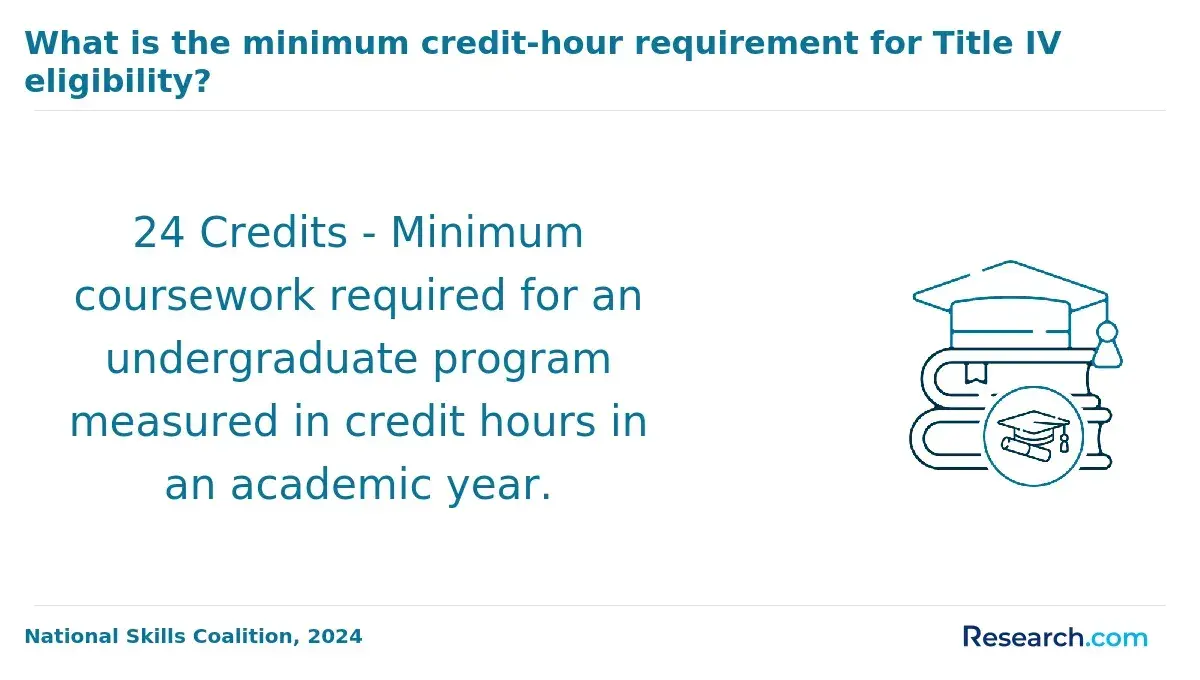
Enrollment status affects completion more directly than whether the program is online or campus-based. Online programs may make scheduling easier, but they do not shorten the degree unless they offer more frequent start dates, accelerated terms, generous transfer policies, or year-round course availability.
This comparison shows how enrollment intensity and format typically shape the timeline for a 120-credit political science bachelor's degree. The key is to compare how many credits you can complete per year, not just whether classes are online.
| Pathway | Typical annual credit pace | Estimated bachelor's timeline | Main advantage | Main risk |
| Full-time campus | 24 to 30 credits | 4 to 5 years | Structured schedule and in-person advising | Limited flexibility for work schedules |
| Full-time online | 24 to 36 credits if year-round options are available | 3.5 to 5 years | Flexible location and possible accelerated terms | Requires strong self-management |
| Part-time campus | 12 to 21 credits | 6 to 8 years | Manageable pace for working students | Course conflicts may slow progress |
| Part-time online | 12 to 24 credits | 5 to 8 years | Best flexibility for adults and caregivers | Longer timeline can increase total cost exposure |
| Hybrid | 18 to 30 credits | 4 to 6 years | Balances in-person support and online flexibility | Campus requirements may complicate scheduling |
Students comparing online formats should look beyond political science and examine how online professional programs structure clinicals, fieldwork, and advising. For example, guides to online SLP programs can help illustrate why flexible delivery does not always remove field experience or sequencing requirements.
To decide which format fits your timeline, ask whether the school offers required upper-division political science courses every term, whether online students receive the same advising access, and whether internships or capstones can be completed near your location. Online is often faster for students with transfer credits and disciplined study habits, but campus may be faster for students who benefit from structured schedules and face-to-face accountability.
Accelerated political science programs can shorten graduation timelines, but the time savings usually come from course design rather than a reduced academic standard. Common models include eight-week terms, year-round enrollment, heavier credit loads, prior learning assessment, combined bachelor's-to-master's pathways, and generous transfer policies.
An accelerated format can be a strong option for students who have stable schedules, strong reading and writing skills, and few outside interruptions. It can be a poor fit for students working long hours, managing caregiving responsibilities, or returning to school after a long academic break without support.
The comparison below highlights when accelerated political science pathways may provide real value and when a traditional plan may be safer.
| Program model | Potential time advantage | Best for | Watch for |
| Traditional semester plan | Predictable four-year structure | First-time students who want steady pacing | May require summer courses to recover from dropped classes |
| Eight-week online terms | More start dates and faster course rotation | Adults who can focus on fewer courses at a time | Compressed reading and writing deadlines |
| Year-round enrollment | Can reduce idle time between terms | Students trying to finish 30 or more credits per year | Less recovery time and higher burnout risk |
| Transfer-friendly completion program | Can cut one to two years for eligible students | Students with substantial prior college credit | Major and residency requirements may limit savings |
| Combined bachelor's-to-master's pathway | May reduce total time across both degrees | Students planning graduate study in policy, law-adjacent fields, or research | Graduate courses may raise workload and tuition complexity |
Students often compare accelerated political science options with flexible business programs because both can serve working adults. If you are also evaluating management-focused routes, resources on the easiest online MBA can help you think about workload, pacing, and whether "easier" really means better aligned with your schedule.
Before choosing an accelerated political science degree, ask the school for a term-by-term plan that shows required courses, not just total credits. A program that advertises fast completion but offers a required research methods course only once per year may not be fast for students who enter at the wrong point in the sequence.
Work and family responsibilities often affect political science students because the major requires sustained reading, writing, discussion, and research outside class. A student may technically have time to attend lectures but still struggle to complete policy memos, data assignments, literature reviews, or capstone drafts on deadline.
The goal is not always to take the maximum number of credits. The better strategy is to choose a pace you can sustain without repeated withdrawals, failed courses, or emergency stop-outs. Repeating a class can cost more time than starting with a slightly lighter, realistic schedule.
Use this planning sequence to estimate a realistic schedule before committing to a program:
- List fixed weekly obligations first, including work hours, commute time, caregiving, medical appointments, and required sleep.
- Estimate study time for reading- and writing-heavy courses, especially upper-division seminars and research methods classes.
- Choose a credit load that leaves a buffer for exams, papers, family emergencies, and work schedule changes.
- Map every required course through graduation, including prerequisites, capstone, internship, and foreign language or statistics requirements if applicable.
- Meet with an academic advisor before each registration period and confirm that every course advances a documented degree requirement.
Taking longer can be the better decision when it protects your GPA, allows you to keep employer tuition benefits, reduces borrowing, or prevents burnout. This is especially true for students planning law school or graduate school, where academic performance may matter more than finishing one term sooner.
Completion time affects cost in three ways: direct tuition, living expenses while enrolled, and delayed earnings from entering the workforce later. College Board's 2024 Trends in College Pricing reported average published tuition and fees of $11,610 for in-state students at public four-year institutions and $43,350 at private nonprofit four-year institutions for the 2024-25 academic year. Even one extra year can matter, especially before grants, scholarships, and institutional aid are applied.
ROI for a political science degree should be evaluated broadly. Graduates may pursue government, policy analysis, legislative work, campaign operations, nonprofit administration, journalism, public relations, law school, public administration, business, or graduate research. Because outcomes vary widely, the safest approach is to compare total expected cost against the career pathway you are actually targeting.
The table below shows how timeline choices can change financial exposure. It is not a school-specific cost calculator, but it helps identify where longer enrollment can create extra cost pressure.
| Timeline scenario | Cost effect | ROI consideration | When it may make sense |
| Four-year full-time plan | Shortest standard tuition window | Earlier workforce or graduate school entry | Best for students who can sustain 30 credits per year |
| Five-year plan | One additional year of tuition and living costs | May still be reasonable if it protects GPA or allows work | Best for students balancing employment or changing majors |
| Part-time six-year or longer plan | Longer exposure to tuition increases and fees | Can reduce annual borrowing if the student works while enrolled | Best for adults with income, benefits, or family obligations |
| Accelerated three-year or completion plan | Potentially lower living-cost exposure | May increase short-term workload and term-by-term tuition intensity | Best for transfer students or highly prepared full-time students |
Cost comparison is useful across degree types, not only within political science. Students weighing public affairs against business leadership routes may also compare tuition structures for the cheapest executive MBA programs to understand how format, employer support, and opportunity cost affect graduate-level ROI.
A practical rule is to calculate cost per completed requirement, not just cost per credit. A low tuition rate is less valuable if poor advising, limited course availability, or rejected transfer credits add extra terms.
Graduating sooner can help students enter the workforce, apply to graduate school, or begin law-related preparation earlier, but timing is only one factor. Employers and graduate programs also evaluate writing ability, research experience, internships, quantitative skills, references, and evidence that the student can analyze complex public problems.
The Bureau of Labor Statistics reported a May 2024 median annual wage of $132,350 for political scientists, a role that often requires at least a master's degree. That figure should not be read as a typical salary for all political science bachelor's graduates; instead, it shows why advanced research, policy, and analytical credentials can matter for students targeting specialized roles.
For bachelor's graduates, realistic early-career options may include legislative aide, campaign staffer, policy assistant, nonprofit program coordinator, public relations associate, legal assistant, government affairs assistant, or research assistant. Students who finish later but graduate with internship experience, strong writing samples, statistical literacy, and professional references may be more competitive than students who rush through without career preparation.
Political science students who want people-focused organizational roles sometimes compare the major with management and workforce-related graduate routes. For example, human resources master's programs online may appeal to students who prefer employment policy, labor relations, organizational behavior, and compliance-oriented careers.
To align graduation timing with career outcomes, build a timeline that includes career milestones, not only academic credits. Plan for at least one internship or substantial applied project, develop writing samples, take research methods seriously, and use electives to build a coherent profile in areas such as public policy, data analysis, international affairs, law and courts, or public administration.
Political science timelines are being shaped by broader shifts in higher education: more adult learners, more online and hybrid options, rising price sensitivity, increased transfer mobility, and stronger demand for demonstrable skills. Students are asking not only "Can I get in?" but "How quickly can I finish without wasting credits or taking on unnecessary debt?"
One current trend is the growth of structured degree maps and proactive advising. Schools increasingly use degree audit systems to flag missing requirements, off-sequence courses, and students who may be at risk of delayed graduation. For political science students, this can reduce common problems such as taking upper-division electives before completing methods prerequisites or waiting too long to schedule the senior seminar.
AI and data tools are also changing expectations. Political science students are increasingly expected to understand data interpretation, misinformation, public opinion, and policy evidence. These changes may not always add credits, but they can influence course choices. A student who adds statistics, geographic information systems, economics, or data analytics may improve career flexibility while potentially extending the timeline if those courses are not planned early.
Another trend is greater acceptance of online and hybrid learning, especially for adult students and degree completers. However, the fastest programs are usually not simply online; they are well-sequenced, transfer-friendly, year-round, and transparent about which courses are available each term.
The best political science program is not always the shortest advertised program. It is the program that lets you finish in the shortest realistic timeframe while meeting your financial limits, learning needs, transfer situation, and career goals.
Use the following questions when comparing programs. They focus on actual completion conditions rather than marketing claims:
- What is the average time to completion for political science students, transfer students, online students, and part-time students?
- How many credits are required for the major, general education, electives, and graduation residency?
- Are research methods, statistics, capstone, internship, and senior seminar courses offered every term or only once per year?
- Will the school provide a written transfer credit evaluation before you commit?
- Can you complete the degree fully online, or are there campus, internship, or synchronous meeting requirements?
- Are summer, winter, or accelerated terms available for required political science courses, not just electives?
- How often will you meet with an advisor, and will the advisor create a term-by-term graduation plan?
- What career services, internship support, writing support, and research opportunities are available to online and transfer students?
If you are comparing political science with other flexible professional degrees, look at how each field handles time-to-completion, applied requirements, and career payoff. Resources on fields such as online SLP programs can be useful examples of why fieldwork, sequencing, and accreditation-related requirements can affect timelines differently across disciplines.
A strong final decision should combine three documents: a written transfer evaluation, a term-by-term degree plan, and a realistic personal schedule. If any school cannot show how you will move from your current credit status to graduation, treat that as a red flag.
Transfer credits can be the fastest legitimate way to shorten a political science degree, but only when they apply to the right requirements. Credits that transfer as free electives may help total-credit count but still leave major, upper-division, writing, or general education requirements unfinished.
The table below shows how transfer credits can affect a 120-credit bachelor's plan if the credits are accepted and applied efficiently. Actual savings depend on institutional policy, residency requirements, course equivalencies, and grade minimums.
| Accepted and applicable transfer credits | Remaining credits | Estimated full-time timeline | Estimated part-time timeline | Planning note |
| 0 credits | 120 credits | 4 years | 5 to 7 years | Follow the complete degree map from the start |
| 15 credits | 105 credits | 3.5 to 4 years | 5 to 6 years | May save one semester if courses match requirements |
| 30 credits | 90 credits | 3 years | 4 to 5 years | Often equivalent to one academic year |
| 60 credits | 60 credits | 2 years | 3 to 4 years | Most effective when transferring from an aligned associate program |
| 75 to 90 credits | 30 to 45 credits | 1 to 2 years | 2 to 3 years | Residency and upper-division rules become especially important |
Before enrolling, request a written transfer credit evaluation and a degree audit showing exactly where each course applies. This is especially important for students with community college credits, military training, Advanced Placement, International Baccalaureate, dual enrollment, prior bachelor's coursework, or credits from multiple institutions.
Avoid these transfer-related mistakes if your goal is to graduate faster:
- Waiting until after enrollment to ask how many credits count toward the major.
- Assuming an associate degree automatically completes all lower-division requirements at every university.
- Ignoring residency rules that require a minimum number of credits to be completed at the degree-granting institution.
- Taking new electives before confirming whether they satisfy remaining general education, major, or upper-division requirements.
- Choosing a school based only on the number of credits accepted rather than the number of credits applied to graduation.
Other Things You Should Know About Political Science
Yes, but usually only if you enter with transfer credits, take summer or winter courses, enroll year-round, or choose an accelerated format. Without prior credits, finishing 120 credits in under four years requires a heavy and consistent course load.
Not automatically. Online programs can be faster when they offer year-round terms, frequent course availability, and strong transfer policies. If required courses are limited or advising is weak, an online program can take just as long as a campus program.
One of the biggest mistakes is taking courses without confirming that they satisfy degree requirements. Students should use a degree audit and meet with an advisor before every registration period.
Not necessarily. A longer timeline may be reasonable if it allows you to work, reduce borrowing, complete internships, maintain a stronger GPA, or manage family responsibilities. Employers usually care more about skills, experience, and fit than the exact number of years enrolled.
- Federal Policy Status Index for Higher Ed | EAB https://eab.com/resources/tool/policy-status-index/
- Why College Students Take More than Four Years to Finish https://www.onlineu.com/resources/going-to-college/why-students-take-longer-to-graduate
- Students taking more than 4 years to graduate - where can I find info on school stats? https://talk.collegeconfidential.com/t/students-taking-more-than-4-years-to-graduate-where-can-i-find-info-on-school-stats/3616054
- Advancing Integrated Student Support Systems in Higher Education https://www.renniecenter.org/blog/advancing-integrated-student-support-systems-higher-education
- Closing Persistence Gaps for Part-time Students https://www.higheredtoday.org/2023/02/16/closing-persistence-gaps-for-part-time-students/
- Strengthening California’s Transfer Pathway - Public Policy Institute of California https://www.ppic.org/publication/strengthening-californias-transfer-pathway/
- Getting Through and Getting Out https://www.amacad.org/publication/primer-college-student-journey/section/10