2027 Library Science Degree Industry Demand Report: Which Sectors Are Expanding Hiring the Fastest

Co-Founder and Chief Data Scientist
Library Science students face a practical question: where is the degree most likely to lead to stable work and upward mobility? The U.S. Bureau of Labor Statistics projects about 13,300 annual openings for librarians and library media specialists from 2024 to 2034, mostly from replacement demand rather than rapid expansion.
This report explains which sectors are hiring fastest, where compensation is strongest, how remote and technology-driven roles are changing the field, and how students can choose coursework, credentials, and experience that improve their odds in competitive hiring markets.
Key Things You Should Know
- BLS projects 2% employment growth for librarians and library media specialists from 2024 to 2034, so demand is real but modest; the strongest opportunities usually come from replacement openings, retirements, and specialized digital roles.
- Archivists, curators, and museum workers are projected to grow 9% from 2024 to 2034, making archives, cultural heritage, digital preservation, and records-focused roles among the faster-expanding options for Library Science graduates.
- The May 2024 median pay for librarians and library media specialists was $64,370, but entry-level outcomes vary widely by sector, region, union or public salary schedules, technical specialization, and whether the role requires an ALA-accredited MLIS.
- Will pursuing a Library Science degree lead directly to a job?
- What is the projected job growth rate for Library Science roles over the next decade?
Will pursuing a Library Science degree lead directly to a job?
A Library Science degree can lead to a job, but it usually does not work like a licensure-to-employment pipeline. The degree is strongest when paired with a clear target sector, supervised experience, technical skills, and evidence that you can manage information systems, support users, organize digital collections, or teach information literacy.
For most professional librarian roles, the standard credential is a Master of Library and Information Science or equivalent degree from an American Library Association-accredited program. School library roles may also require state educator certification, while archives, data curation, law library, medical library, and records management positions often prefer specialized coursework or additional credentials.
The directness of the path depends on the type of role you want. Public and academic library jobs may have transparent requirements but competitive applicant pools. School library jobs depend heavily on state certification and district budgets. Corporate, legal, healthcare, and technology-adjacent information roles may not always use the word "librarian" in the title, but they can value the same research, taxonomy, metadata, and knowledge-management skills.
Use the degree strategically by choosing one primary employment lane before graduation. A student who wants a public youth services role should build programming and community outreach experience. A future data services librarian should learn research data management, copyright basics, repository platforms, and data documentation. A records or archives candidate should build a digital preservation portfolio, not just complete general coursework.
If your main goal is a more direct clinical or licensed healthcare pathway, compare Library Science with programs where employment is tied more closely to licensure, such as a best online pharmacy school. Library Science can be a strong choice for people who like research, education, access, technology, and public service, but it is less ideal for students who want a guaranteed credential-to-job sequence.
What is the projected job growth rate for Library Science roles over the next decade?
The overall job growth rate for core librarian roles is modest. BLS projects 2% growth for librarians and library media specialists from 2024 to 2034, which is slower than many technology and healthcare occupations but still supported by about 13,300 annual openings. For students, the key interpretation is that demand is not disappearing, but the market rewards specialization more than a generalist resume.
The table below compares several Library Science-related occupational paths. It helps separate "traditional librarian" demand from adjacent information, archives, and cultural heritage roles that may hire MLIS graduates with the right specialization.
| Occupation or role family | Projected U.S. growth | What the number means for students |
| Librarians and library media specialists | 2% from 2024 to 2034 | Stable but competitive; replacement openings matter more than rapid expansion. |
| Archivists, curators, and museum workers | 9% from 2024 to 2034 | Faster growth for students who build archives, preservation, collections, and digital asset skills. |
| Library technicians and assistants | Projected decline from 2024 to 2034 | Useful entry experience, but not the strongest long-term target if you are investing in a graduate degree. |
The growth rate also has a geographic limitation. Library employment is tied to school districts, city and county budgets, university hiring cycles, federal funding, and local population needs. A strong applicant may find many openings in one state and very few in another, so regional salary schedules and job boards should be reviewed before choosing a program or relocation plan.
The fastest-expanding path is not always the best fit. Archives and digital preservation may grow faster, but they can also require project-based experience and a portfolio. Public librarianship may grow slowly, but it can offer mission-driven work, unionized roles in some systems, and clearer promotion ladders in larger metropolitan library networks.
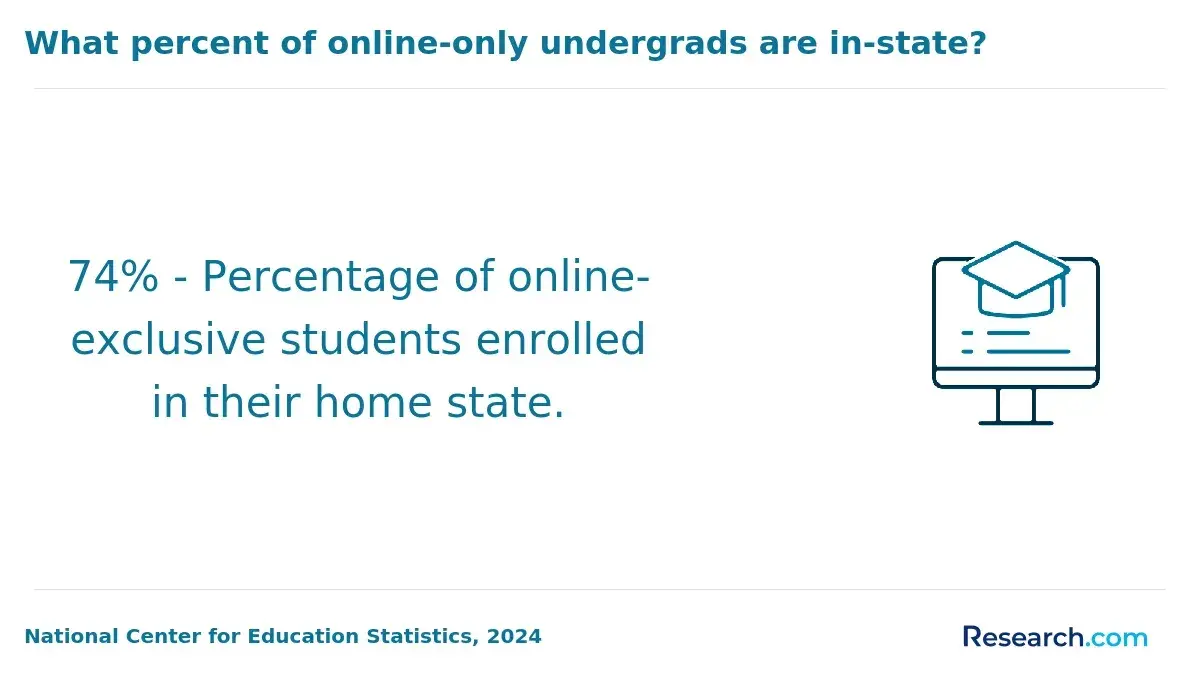
There is no single authoritative U.S. retention rate for the Library Science industry. Federal labor datasets track occupations, industries, openings, and wages, but they do not publish one clean "average retention rate" for Library Science degree holders across public libraries, schools, universities, archives, corporate employers, and government agencies.
That limitation matters because retention can look very different by sector. Public and academic libraries may have lower voluntary turnover when roles include benefits, pensions, union protections, tenure-like systems, or predictable schedules. However, those same characteristics can limit the number of openings in desirable locations. Corporate knowledge-management and legal information roles may pay more, but they can be more sensitive to restructuring, contract cycles, or shifting technology needs.
Students should evaluate retention indirectly rather than searching for one industry-wide number. Useful signals include vacancy frequency, average time roles remain posted, internal promotion rates, the age profile of the workforce, budget stability, and whether the employer uses temporary, grant-funded, or permanent positions.
Before accepting a role, ask practical retention questions during interviews. The goal is not to sound skeptical; it is to understand whether the role is a stable career step or a short-term bridge.
- Is the position permanent, temporary, grant-funded, or dependent on annual budget renewal?
- What promotion paths exist for librarians, archivists, information specialists, or department leads?
- How many people have held the role in the past five years, and why did they leave?
- Does the employer support conference travel, continuing education, certification fees, or technology training?
- Are evening, weekend, instructional, or public-service duties distributed fairly across staff?
The most in-demand roles for Library Science degree holders combine information organization with user support, digital systems, teaching, or compliance. Traditional librarian roles still matter, but the fastest-rising opportunities often sit at the intersection of metadata, digital access, institutional knowledge, and data stewardship.
The table below connects common job titles with responsibilities and entry-level preparation. It is especially useful if you are choosing electives, internships, or portfolio projects.
| Role | Typical responsibilities | Entry-level preparation that helps |
| Public services librarian | Reference support, community programming, digital literacy, collection support | Customer service, programming experience, database searching, inclusive outreach |
| School library media specialist | Information literacy instruction, reading support, technology integration, curriculum collaboration | State educator requirements, teaching experience, youth services coursework |
| Academic librarian | Research consultations, classroom instruction, subject liaison work, scholarly communication | Instruction portfolio, citation tools, research databases, subject-area familiarity |
| Archivist or digital preservation specialist | Arrangement, description, preservation planning, digitization, special collections access | Archives internship, metadata standards, digital preservation tools, finding aid samples |
| Metadata or cataloging librarian | Resource description, authority control, discovery optimization, metadata cleanup | RDA, MARC, Dublin Core, linked data basics, cataloging projects |
| Research data services librarian | Data management planning, repository support, data documentation, researcher training | Data literacy, FAIR principles, institutional repositories, basic scripting or data tools |
| Knowledge management specialist | Internal information systems, taxonomies, enterprise search, documentation workflows | Taxonomy design, stakeholder interviews, intranet or CMS experience, process mapping |
Students who want broader options should build a resume that proves both service and systems ability. Employers increasingly want candidates who can work with patrons or users, interpret information needs, improve discovery systems, and document processes clearly.
If you are drawn to information systems, data organization, and research support but want a more computational path, compare Library Science roles with careers with a bioinformatics degree. Both pathways involve data and knowledge organization, but bioinformatics is usually more coding- and science-intensive, while Library Science emphasizes access, metadata, users, collections, and information ethics.
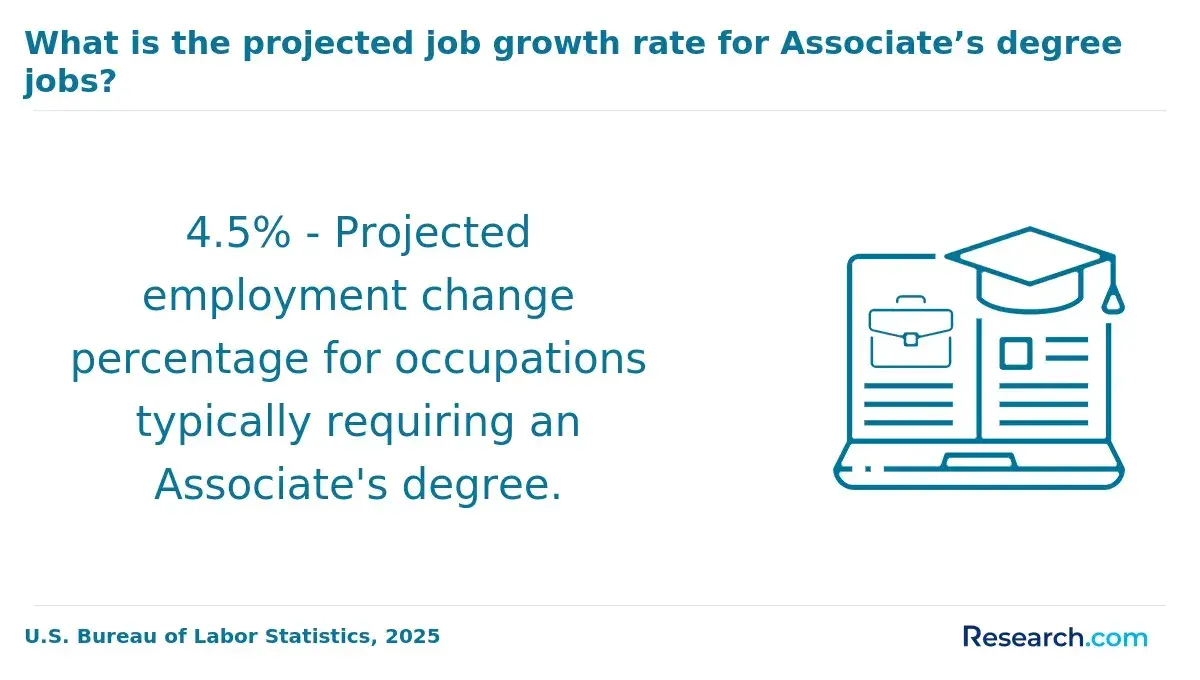
Remote work exists for Library Science degree holders, but it is uneven. Fully remote options are more common in metadata, taxonomy, digital asset management, vendor support, research services, records management, knowledge management, and repository work than in public-facing branch library or school library roles.
BLS work-at-home data published for the broader U.S. labor market show that remote work remains much more common in professional and information-heavy occupations than in front-line service roles. For Library Science students, the practical takeaway is clear: the more your role depends on digital systems, documentation, metadata, or research workflows, the more location flexibility you may find.
Remote-friendly Library Science roles usually require evidence that you can work independently and communicate asynchronously. A degree alone is rarely enough; employers want to see organized documentation, project tracking, platform familiarity, and strong writing.
Use the following approach if remote or hybrid work is a priority. These steps help you avoid applying only to traditional library jobs that require fixed on-site hours.
- Search by skill-based titles such as metadata analyst, taxonomy specialist, digital asset manager, research analyst, records analyst, content operations specialist, and knowledge management associate.
- Build portfolio samples, such as a metadata crosswalk, digital collection description, research guide, taxonomy map, or data management plan.
- Learn collaboration tools used outside libraries, including project management systems, shared documentation platforms, ticketing workflows, and content management systems.
- Prioritize employers with distributed teams, digital collections, SaaS knowledge bases, legal research operations, healthcare information teams, or research support units.
- Read postings carefully for location language; "remote eligible," "hybrid," "telework," and "distributed team" often mean different things.
Remote work is not the right goal for every Library Science graduate. If you value daily community contact, children's services, instruction, makerspaces, circulation leadership, or school collaboration, an on-site or hybrid role may offer better experience and advancement.
The most important credential for professional librarian roles is usually an ALA-accredited MLIS or equivalent degree, but the "must-have" credential depends on the sector. School library jobs may require state certification, archives roles may value archival training and internships, and corporate roles may prioritize taxonomy, records, or systems experience over the librarian title.
High-demand roles increasingly reward a combined skill set: service orientation, information organization, digital tools, teaching, research, and ethical judgment. AI has not removed the need for Library Science professionals; it has increased the importance of metadata quality, source evaluation, copyright awareness, bias detection, and human-centered information access.
The credentials and skills below are worth considering because they map directly to common hiring filters. Students should choose selectively rather than collecting credentials that do not match a target role.
- ALA-accredited MLIS or MLS: often required for professional public, academic, and many leadership librarian roles.
- State school library certification: important for K-12 library media specialist roles and varies by state education agency.
- Archives or digital preservation coursework: useful for archives, special collections, museum, and cultural heritage positions.
- Metadata standards: RDA, MARC, Dublin Core, EAD, linked data concepts, controlled vocabularies, and authority control.
- Research and instruction skills: database searching, source evaluation, citation management, lesson design, and assessment.
- Technology skills: integrated library systems, discovery layers, institutional repositories, digital asset systems, spreadsheets, basic data cleaning, and accessibility practices.
- Compliance and ethics knowledge: privacy, copyright, records retention, licensing, open access, and information governance.
Avoid the mistake of choosing only broad electives. A stronger strategy is to combine a general MLIS core with a visible specialization: school librarianship, academic instruction, youth services, archives, data services, law librarianship, medical librarianship, metadata, or knowledge management.
If you are comparing graduate study with shorter workforce training, review how credential-driven pathways work in other fields, such as an online exercise physiology degree. The comparison can help you decide whether you want an information-centered career path or a health and performance-focused pathway with different prerequisites and labor markets.
Entry-level Library Science earnings vary more than the national median suggests. BLS reported a May 2024 median annual wage of $64,370 for librarians and library media specialists, but new graduates often start below the median, especially in smaller public systems, rural districts, grant-funded archives roles, or assistant-level positions.
The table below gives a practical salary context without implying a guaranteed starting salary. Use it as a planning tool, then verify local salary schedules, union contracts, state job classifications, and current postings in your target region.
| Career entry point | Salary context | What affects pay most |
| Professional librarian or library media specialist | National median was $64,370 in May 2024 | MLIS requirement, school certification, employer type, region, union schedule, experience |
| Archives, museum, or cultural heritage role | Often competitive and experience-sensitive | Internships, project portfolio, grant funding, institution size, digital preservation skills |
| Library technician or assistant | Typically below professional librarian pay | Whether the role is paraprofessional, part-time, unionized, or used as pre-MLIS experience |
| Corporate research, records, or knowledge management role | Can exceed traditional entry library pay in some markets | Business domain knowledge, legal or healthcare context, taxonomy skills, systems experience |
The best way to estimate your likely entry salary is to identify five to ten real postings in your target location and compare minimum qualifications, salary ranges, contract length, and promotion potential. Public employers often publish transparent ranges, while private employers may use broader bands tied to experience.
Students should also evaluate return on investment. A lower-cost MLIS program can make sense if it is ALA-accredited and offers internships, assistantships, or strong placement support. A higher-cost program may be worth considering if it provides specialized tracks, employer networks, practicum access, or flexible scheduling that lets you keep working.
If fast workforce entry is more important than graduate professional preparation, compare Library Science with shorter licensed pathways such as an LPN fast-track program. That comparison is useful because Library Science typically rewards graduate specialization and experience, while practical nursing follows a more direct licensure model.
The highest compensation for Library Science professionals is usually found in sectors that attach information work to risk, revenue, research productivity, compliance, or specialized expertise. Traditional public-service roles can be stable and meaningful, but the highest pay ceilings often appear in federal agencies, academic research environments, law firms, healthcare systems, vendors, consulting, and corporate knowledge-management teams.
The table below compares compensation potential by industry. It focuses on why pay differs, because industry labels alone do not tell you whether a specific posting is a strong financial choice.
| Industry or employer type | Compensation potential | Why pay may be higher |
| Federal government and public agencies | Often strong for experienced specialists | Records, compliance, security, public information, and structured pay grades |
| Law firms and legal information services | Often above traditional public library roles | High-value research, competitive intelligence, legal databases, client-facing deadlines |
| Healthcare systems and medical libraries | Moderate to strong, especially with evidence-based practice skills | Clinical research support, systematic reviews, patient education, database expertise |
| Colleges, universities, and research institutions | Strongest in specialized or senior roles | Research data services, scholarly communication, grants, repositories, subject liaison expertise |
| Corporate knowledge management and information governance | Potentially high but less standardized | Enterprise search, taxonomies, records risk, internal documentation, AI-ready content systems |
| Public libraries and school districts | Varies widely by location and salary schedule | Benefits and stability may be strong, but wages depend on local funding and certification rules |
Students who want the strongest compensation should avoid framing themselves only as "library people." Instead, translate Library Science skills into employer language: research operations, data stewardship, taxonomy, content strategy, digital asset management, compliance, records retention, discovery, and user training.
However, higher compensation can come with trade-offs. Legal and corporate roles may involve faster deadlines, less public-service identity, and more performance pressure. Academic roles may require scholarship or committee work. Federal roles may involve longer hiring timelines and strict qualification reviews. The best sector is the one where pay, mission, work style, and advancement all fit your goals.
Recruitment in the Library Science industry is becoming more skills-based, more technology-aware, and less limited to traditional librarian titles. Employers still care about accredited degrees for many professional roles, but they increasingly look for proof that candidates can use systems, manage digital information, teach users, and adapt to AI-supported search and discovery tools.
BLS projected about 13,300 annual openings for librarians and library media specialists from 2024 to 2034, which means applicants should expect ongoing hiring but not an easy market. Many openings will come from replacement needs, so timing, geography, and specialization can matter as much as degree completion.
Several recruitment trends should shape how graduates apply. These trends are practical because they affect resumes, portfolios, interviews, and the types of employers worth targeting.
- Employers want digital evidence: include projects such as research guides, metadata samples, finding aids, collection audits, data management plans, instructional materials, or taxonomy maps.
- AI is changing job descriptions: candidates should be ready to discuss source evaluation, metadata quality, privacy, bias, copyright, and responsible use of AI tools.
- Hybrid skills are valued: public service plus systems knowledge is stronger than either one alone.
- Sector-specific language matters: corporate employers may search for knowledge management, information governance, content operations, or taxonomy rather than librarian.
- Internships and assistantships remain powerful: they reduce the "degree but no experience" problem that blocks many entry-level applicants.
- Regional salary transparency varies: public institutions often publish ranges, while private employers may require more careful negotiation and market research.
Common mistakes include applying only through general job boards, using the same resume for every sector, ignoring state certification rules for school roles, failing to build a portfolio, and assuming the MLIS alone will outweigh lack of experience. A better approach is to create separate resume versions for public libraries, academic libraries, archives, and corporate information roles.
Graduates should also track recruitment channels by sector. Public libraries often post through city, county, and state systems. Academic libraries use university HR portals and library association boards. Archives and museums use cultural heritage networks. Corporate and legal roles may appear on LinkedIn, company career pages, vendor sites, and knowledge-management communities.
The highest hiring volume for Library Science degree holders is still concentrated in education and public-sector settings. BLS occupational patterns consistently show large employment bases in schools, local government libraries, and colleges or universities, which means these sectors generate many openings even when growth is modest.
The table below summarizes where hiring volume tends to be strongest and how each sector fits different career goals. Use it to decide whether you want a broad applicant market, a specialized niche, or a higher-risk pathway with stronger compensation potential.
| Sector | Typical hiring volume | Best fit for | Trade-off to consider |
| Public libraries and local government | High | Community services, adult services, youth services, outreach, digital inclusion | Budget cycles and location-specific salary schedules can limit mobility. |
| K-12 schools | High in states and districts that fund school librarians | Teaching, information literacy, curriculum support, student technology use | State certification requirements vary and some districts reduce library staffing during budget pressure. |
| Colleges and universities | Moderate to high | Research support, instruction, scholarly communication, data services | Entry-level academic roles can be competitive and may prefer subject expertise. |
| Archives, museums, and cultural heritage institutions | Moderate but faster-growing | Digital preservation, special collections, metadata, exhibits, records | Many applicants compete for mission-driven roles, and internships are important. |
| Corporate, legal, healthcare, and consulting employers | Lower volume but specialized | Competitive intelligence, knowledge management, taxonomy, research, records compliance | Job titles may not say "librarian," so candidates must search by skills and business function. |
A common mistake is targeting only public librarian postings while ignoring adjacent titles. Library Science graduates should also search for metadata analyst, digital asset manager, records analyst, taxonomy specialist, knowledge management associate, research analyst, information governance coordinator, and repository services roles.
High-volume sectors are usually better for students who need more openings and clearer entry-level requirements. Specialized sectors are better for students willing to build a portfolio, learn domain language, and apply outside traditional library job boards.
Other Things You Should Know About Library Science
It can be worth it if you want professional library, archives, school library, academic research support, metadata, or knowledge-management work and you choose an accredited program with practical experience. It may be less suitable if you need a high-growth field with a direct job guarantee.
Many professional librarian roles require an ALA-accredited MLIS or equivalent degree. Some assistant, technician, archives, records, or corporate information roles may accept related experience or another graduate degree, but requirements vary by employer.
Archives, museums, digital preservation, research data services, metadata, and corporate knowledge-management roles show some of the strongest expansion signals. Traditional public and school libraries still provide many openings, but growth is usually slower and more budget-dependent.
Choose a target sector early, complete internships or assistantships, build a portfolio, learn relevant systems, and tailor your resume to sector-specific job titles. Do not rely only on the degree or only on general job boards.
See What Experts Have To Say About Studying Library Science
Read our interview with Library Science experts

Edward Benoit III
Library Science Expert
Associate Director, School of Information Studies
Louisiana State University

Beatrice C. Baaden
Library Science Expert
Associate Professor
Long Island University

Maura Madigan
Library Science Expert
School Librarian
Book Author
Book Author

- Impact of Digital Transformation on the Future of Library Work https://www.institutefordigitaltransformation.org/impact-of-digital-transformation-on-the-future-of-library-work/
- Challenges, Opportunities | Placements and Salaries Survey 2024 https://www.libraryjournal.com/story/challenges-opportunities-placements-and-salaries-2024
- Types of Library & Information Science Degree Programs https://www.librariancertification.com/types-of-library-information-science-degree-programs/
- Role of Librarians in the Era of Digital Transformation https://ijarmt.com/index.php/j/article/view/577