2027 Fastest Online Bachelor's in History Degree Programs Ranking in Missouri

Co-Founder and Chief Data Scientist
Choosing the right online history degree program can feel overwhelming, especially in Missouri's growing educational landscape. Our 2027 Fastest Online Bachelor's in History Degree Programs Ranking in Missouri, created by the Research.com team of data scientists, aims to simplify this process for you.
This article highlights the quickest programs to help you save time and start your career sooner. Pursuing a history degree opens doors to exciting fields like education, research, and public service.
Explore the ranking to find quality options that fit your goals and lifestyle with confidence.
Key benefits of getting online history degree in Missouri
- History degree graduates often pursue roles such as museum curators or archivists, where median salaries in the U.S. typically range from $45,000 to $60,000 annually, offering a rewarding and stable income.
- Graduates from Missouri universities, like the University of Missouri, find diverse career paths including education, research, and public history, providing flexible opportunities that match varied interests and skills.
- Completing a history degree online from Missouri institutions allows for a flexible schedule and the ability to balance work and family while earning the same respected qualification as on-campus students.
- 2027 Fastest Online Bachelor's in History Degree Programs Ranking in Missouri
- What can I expect from online history degree in Missouri?
- Where can I work with online history degree in Missouri?
What can I expect from online history degree in Missouri?
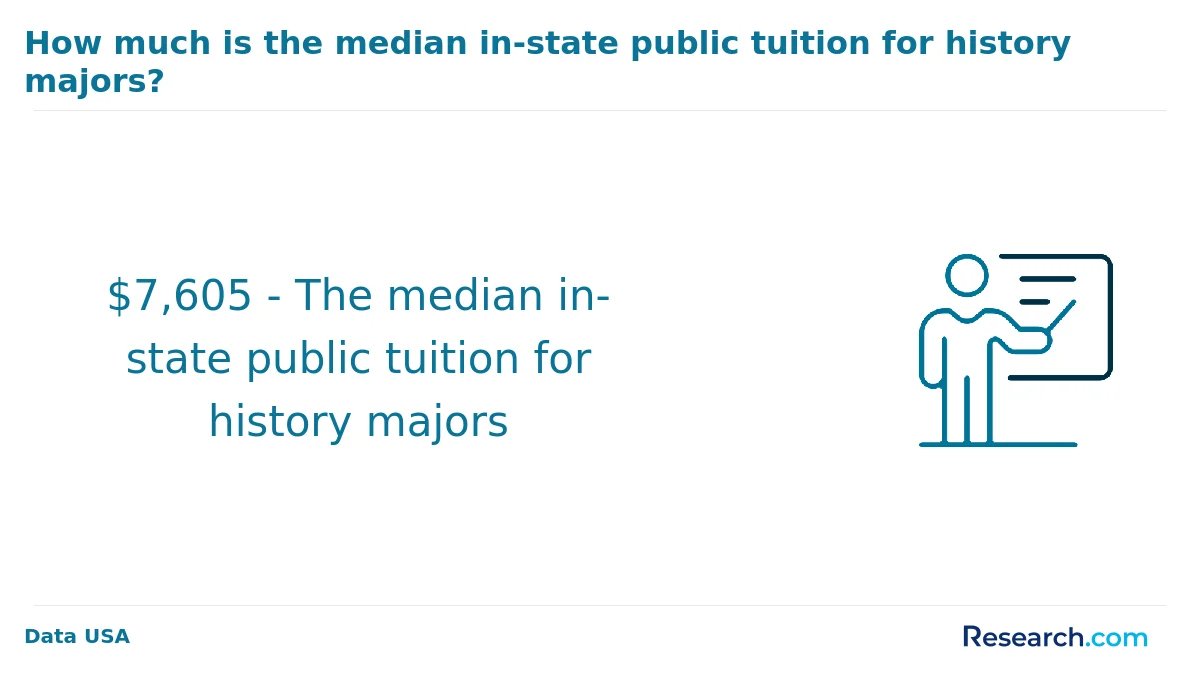
The average cost for an online history degree in Missouri typically falls between $7,000 and $10,000 per year at public universities, closely matching in-state tuition rates. Graduates from institutions like Missouri State University and the University of Missouri often reflect on how this investment felt manageable, especially paired with federal financial aid or specialized scholarships geared toward history majors. One graduate recounted balancing their budget while exploring rich historical content through asynchronous courses, appreciating how the affordability allowed them to stay focused on learning rather than finances.
These costs bring the often abstract value of a history degree into clear focus-affordable access to rigorous programs is not just a number but shapes everyday experiences. Attending live sessions or engaging with primary source materials from home, students at Missouri colleges regularly point to the financial feasibility as a key factor enabling their academic and personal growth without overwhelming debt.
Such realistic pricing encourages curious minds across Missouri to pursue history with passion, proving that quality doesn't have to come with prohibitive costs, especially when supported by local grants and institutional aid.
Where can I work with online history degree in Missouri?
Graduates with an online history degree in Missouri often discover that their career paths are more diverse than the typical teaching route. Many alumni from well-regarded institutions like the University of Missouri speak of landing roles in schools after earning certification, but others have found rewarding positions in the state's cultural heart-museums and historical societies around St. Louis and Kansas City, for example. Imagine yourself curating exhibits at the Missouri Historical Society or developing educational programs that bring history to life for local communities. These opportunities not only utilize strong research and communication skills but also spark a genuine passion for preserving Missouri's past.
Others have embraced roles in government agencies, contributing to urban planning or cultural resource management, where critical thinking and a deep understanding of history guide decisions affecting local heritage. With Missouri's booming tourism sector, some graduates craft engaging tours at Gateway Arch National Park, blending storytelling with historical facts to create memorable visitor experiences.
These career paths show that an online history degree in Missouri opens doors to dynamic fields where you can actively shape how history is understood and valued.
Graduates with an online history degree in Missouri often find that salary expectations vary widely depending on the career path chosen. Postsecondary history teachers at well-regarded institutions in Missouri frequently report annual earnings around $68,000, reflecting the value of teaching roles allied with history degrees. Many graduates who studied at universities like the University of Missouri or Missouri State University share that this salary aligns well with the demands and fulfillment of educating future generations.
Entry-level positions in museums or smaller community archives, common starting points for many graduates, may offer salaries in the $40,000 to $50,000 range. This provides a tangible stepping stone while gaining valuable experience. Those who pivot towards government archives or cultural resource management often find salaries between $45,000 and $65,000-a reflection of Missouri's investment in preserving local heritage and culture.
History degree holders describe the rewarding nature of their work, balanced with practical income that supports a comfortable life in Missouri. The blend of flexibility from online learning and the degrees' respected status means graduates often feel both intellectually and financially empowered to contribute meaningfully to their communities.
- Online history degrees in Missouri can be completed remotely through various public and private institutions.
- In-state tuition for public universities typically ranges from $8,000 to $10,000 per year, while private schools may charge $15,000 to $25,000 annually.
- Entry-level history jobs in Missouri generally offer salaries between $35,000 and $40,000 per year, increasing to $55,000-$65,000 with experience.
- Job opportunities for history graduates exist in education, museums, government agencies, and cultural institutions statewide.
- Accreditation by bodies like the Higher Learning Commission is important for ensuring program quality and credit transferability.
Completing an online history degree in Missouri usually fits within a four-year timeline when studying full-time, mirroring the experience of graduates from institutions like the University of Missouri-Columbia. Many find this pacing manageable, allowing them to balance coursework with other life commitments while staying motivated by a clear finish line. However, the journey often takes on personal dimensions beyond the simple calendar count.
Some graduates share that transferring credits from community colleges-common in Missouri's education pathways-can shave months or even a year off their degree plans, making the path feel more personalized and rewarding. For others juggling work or family, taking five or six years isn't a setback but a deliberate pacing choice that respects their broader lives.
Rare but thrilling are the accounts of students who opt for accelerated programs, often available through flexible scheduling or summer classes. Though demanding, these intense semesters can transform ambition into a reality within three years, energizing students with a sense of accomplishment faster than most expect. Missouri's online history degrees invite you to consider not just a timeline but how that timeline aligns with your unique story.
The key difference between online and on-campus history degrees in Missouri lies in how students experience their education. Graduates from the University of Missouri's on-campus program often recall the energizing atmosphere of walking through libraries filled with primary sources, or attending lively discussions in classrooms where professors challenge their perspectives face-to-face. These immersive experiences, paired with access to Missouri's rich historical archives and museums, create a hands-on connection to the past that many find deeply rewarding.
Conversely, those who pursued an online history degree in Missouri describe a more flexible but self-driven journey. Balancing work and family responsibilities while studying through digital platforms brought a sense of empowerment and independence. Some Missouri online graduates grateful for this format highlight how it allowed them to engage deeply with the course material at their own pace without sacrificing their personal commitments.
While on-campus students benefit from real-time collaboration and networking within Missouri's local historical community, online learners often cultivate creative ways to connect virtually or attend regional meetups to build their professional networks. Both paths demand dedication but offer distinct rewards shaped by different modes of engagement.
The average cost of an online history degree in Missouri typically centers around $45,000 in total, a figure that reflects a balance between accessibility and quality. Many graduates from popular institutions like the University of Missouri and Missouri State University recall feeling a mix of relief and accomplishment after managing tuition and fees that align closely with this median cost. Unlike traditional on-campus programs, these online options often reduce living expenses, making the investment feel more manageable for Missouri residents.
When considering tuition and fees for Missouri online history programs, it's crucial to factor in the number of credits-usually between 120 and 130-and the varying per-credit rates that schools apply. Some find themselves pleasantly surprised by scholarships or financial aid that private universities offer, which narrows the gap between private and public school costs. Students often emphasize how understanding these subtle financial details changed their perspective, turning what initially seemed daunting into an achievable goal.
Reflecting on the real cost of earning a history degree online in Missouri invites deeper thought about value beyond price tags. From alumni stories, the drive to pursue history studies online is fueled not just by affordability, but by flexibility and access. For those ready to explore further, resources on history related degrees can shine a light on additional pathways and financial strategies that make this academic journey less intimidating and more inspiring.
Many Missouri students pursuing online history degrees find federal aid indispensable, tapping into Pell Grants that offer up to $7,500 annually without the weight of repayment. Imagine a graduate from the University of Missouri who managed to balance a full course load while cutting costs significantly thanks to these grants. Federal student loans, with their low-interest rates and flexible terms, also support those who carefully borrow what's necessary to complete their education without falling into debt traps.
State programs like the Access Missouri Financial Assistance (AMFA) further lighten the financial burden for qualifying undergraduates attending public universities such as Missouri State University. These grants often bridge critical gaps, making a dream degree attainable. Additionally, merit scholarships, available through many Missouri institutions, reward students' academic achievements and leadership-transforming ambition into tangible aid for both traditional and transfer online learners.
Working students often discover employer tuition reimbursement programs that transform their jobs into stepping stones for education, echoing stories from graduates who maximized support from Missouri companies. Private scholarships from local historical societies add another layer of opportunity, proving that persistence and community engagement can open unexpected doors.
Enrolling in an online history degree program in Missouri often starts with the straightforward requirement of a high school diploma or GED, yet the process demands more than just paperwork. Many graduates from popular institutions like the University of Missouri or Missouri State University recall how submitting transcripts showing a 2.0 to 2.5 GPA opened doors, reflecting a baseline, not a barrier. These students found that their passion for history and humanities made their applications stand out, demonstrating readiness beyond grades alone.
Test scores such as the SAT or ACT have become less pivotal thanks to test-optional policies, allowing applicants who struggled in these exams to shine through their personal statements. Imagine a graduate who turned their genuine love for historical stories into a compelling essay, convincing admissions committees at a college in St. Louis to take a chance.
Financially, the contrast between in-state and out-of-state tuition at Missouri public universities weighs on many minds, but scholarships tailored to history majors can ease this burden. A further, often overlooked prerequisite is technological readiness-a reliable internet connection and basic computer skills, which past students emphasize as essential for thriving in the online environment.
Online history degrees in Missouri challenge students to engage deeply with the complex layers of the past. Graduates from popular institutions like the University of Missouri often praise courses such as Historical Research and Writing, which push them beyond memorizing facts to critically analyzing primary documents. Imagine unraveling the stories behind Missouri's Civil War legacy or interpreting original letters from settlers in the Midwest-these courses make history tangible and vivid.
Core classes also include Historiography, encouraging students to question how history's narrative shifts over time. This is especially relevant in Missouri, where perspectives range from Native American histories to frontier expansion, demanding a nuanced understanding of whose stories are told.
Regional courses like Missouri and Midwest History or U.S. History since 1877 ground students in their own backyard, deepening their connection to local heritage and current societal issues. Electives in Women's History or History of Science and Technology often inspire excitement by revealing overlooked narratives, as many graduates note how these classes transformed their view of history from static to dynamic and relevant.
Exploring the typical specializations in an online history degree in Missouri reveals a rich tapestry that goes beyond broad narratives. Graduates from well-known Missouri institutions often reflect on how focusing on American History has deepened their appreciation for pivotal moments like the Civil War and Reconstruction, especially given Missouri's unique position as a border state. Others have found fulfillment diving into World History, where global patterns illuminate the interconnectedness of cultures, an approach that encourages questioning the traditional nation-centric perspectives common in many programs.
Missouri online bachelor's history focus areas frequently include Public History, where students feel energized by practical experiences with museums and archives, and Military History, which appeals to those fascinated by strategy and the ramifications of conflict on society. Historical Research and Methods specialization stands out for graduates aiming at academic careers, honing critical skills that reshape how history is studied and understood.
What makes studying history in Missouri truly compelling is the opportunity to engage with regional narratives, including Native American and Westward Expansion histories, grounding theory in real-world relevance. For a clearer grasp of what to expect in terms of curriculum, prospective students can consult the history degree requirements and tailor their educational path accordingly.
Choosing the best online history degree in Missouri means looking beyond just the program's name or reputation. Graduates from well-known universities in Missouri often highlight how accreditation by the Higher Learning Commission gave their degree real value in the job market and graduate schools. Imagine yourself diving into courses that not only cover broad historical themes but also bring Missouri's local heritage alive, as many programs here do-this can transform your learning experience from abstract to personal and meaningful. For prospective students hunting affordable online bachelor's history Missouri options, comparing tuition costs is essential, but so is understanding the quality of support services like tutoring and academic advising that helped others balance work, family, and study successfully.
Think about how asynchronous classes allowed students from diverse backgrounds to manage their schedules without sacrificing engagement. Programs with strong graduation rates signal a supportive environment, encouraging success. If you want to explore career paths after graduation, check out jobs for masters in history to see how your degree can translate into fulfilling work.
Graduates holding an online history degree in Missouri often defy the misconception that their options are limited to teaching. Those who study at institutions like the University of Missouri or Missouri State University find their skills in critical thinking and analysis opening doors in education, cultural preservation, and government roles. For example, many graduates embrace fulfilling careers as social studies teachers, supported by state certification pathways integrated into their online programs, or they step into museums and archives managing collections and engaging communities.
Interestingly, history graduates also thrive as research analysts for local government offices, where their ability to interpret societal trends shapes policies. Reflecting on stories from alumni of various Missouri colleges, these careers bring both intellectual satisfaction and practical impact, illustrating that an online history degree careers Missouri can lead to diverse, rewarding fields.
The connection isn't just theoretical- Missouri students report feeling excited about entering journalism, publishing, and library sciences, where their research skills shine. For those exploring affordability, numerous options exist among affordable online undergraduate history degrees, enhancing access for motivated learners statewide.
The job market for graduates with an online history degree in Missouri presents a dynamic, though nuanced, landscape. Many graduates from Missouri's well-regarded institutions find opportunities in education, especially within public schools and community colleges, where demand for history teachers remains steady. Those who complement their degree with teaching credentials tend to secure more promising roles, reflecting the importance of professional certification alongside academic achievement. Exploring the fastest online history degree jobs in Missouri, museum and archival work in cities like St. Louis and Kansas City offer fulfilling careers anchored in preserving cultural heritage, often requiring additional specialization but rewarding graduates with meaningful community engagement.
Graduates often describe their Missouri-based experiences as both exciting and grounding, benefiting from local institutions that value historical insight in cultural resource management and historic preservation projects. With salaries ranging between $40,000 and $60,000, these roles can provide financial stability combined with personal satisfaction. For those considering advanced education, programs such as those at the University of Missouri allow students to pursue an online history masters leading to expanded career possibilities.
The Missouri online history degree career outlook encourages students to think beyond traditional paths, showing that a history degree here connects with vibrant sectors requiring research, grant writing, and educational outreach. This multifaceted demand challenges graduates to adapt and innovate, making the degree more valuable than conventional wisdom might suggest.
2027 Fastest Online Bachelor's in History Degree Programs Ranking in Missouri
Investing in your education is a significant decision that can shape your future, and the Research.com team understands the importance of making informed choices. To assist prospective students in Missouri, we have meticulously crafted the "2027 Fastest Online Bachelor's in History Degree Programs Ranking in Missouri." Our commitment to quality, credibility, and accuracy is reflected in the extensive research and analysis conducted to compile this ranking.
We utilized the following reputable data sources to ensure a comprehensive evaluation of history degree programs:
By exploring this ranking, readers will gain valuable insights into the fastest online bachelor's programs in history offered in Missouri, helping them make informed decisions about their educational paths. For more details on our methodology, please visit our Research.com methodology page.


Frequently Asked Questions About history
Online history degree students in Missouri can maximize their learning experience by engaging actively with course materials and utilizing available academic resources. Many Missouri institutions offer digital libraries and archives tailored to history studies, providing access to primary documents and scholarly publications. For instance, the Missouri Digital Heritage initiative offers extensive historical records beneficial for research.
Participation in discussion boards and virtual study groups enhances understanding through peer interaction. Setting a consistent study schedule helps balance coursework with other responsibilities, especially for working adults. Additionally, connecting with Missouri-based historical societies can provide valuable local context and networking opportunities.
Students should also seek internships or volunteer roles at museums or historical sites in Missouri to gain practical experience. According to the Missouri Department of Higher Education, such experiential learning improves retention and employability in history-related fields.
The field of history is rapidly diversifying, with several emerging niches gaining prominence. One growing area is public history, where professionals work in museums, archives, and cultural organizations to make history accessible to the public. Digital history is also expanding, involving the use of technology to analyze and present historical data online.
In Missouri, institutions like the University of Missouri highlight trends in environmental and indigenous histories, reflecting regional interests. According to the Missouri Historical Society, these areas are attracting more students due to increased funding for research and public programs.
Additionally, history degrees increasingly emphasize interdisciplinary approaches, combining history with sociology, anthropology, or digital sciences.
After earning an online history degree in Missouri, preparing for the job market requires strategic steps. First, students should focus on building strong research and writing skills, as these are highly valued in fields like education, archiving, and public history.
Networking plays a crucial role; joining organizations such as the Missouri Historical Society can provide valuable connections and job leads. Internships or volunteer positions at local museums or historical sites often enhance practical experience.
Missouri's job market for history graduates includes roles in education, government, and cultural institutions. According to the U.S. Bureau of Labor Statistics, employment for historians is projected to grow by 5% from 2021 to 2031 nationwide, indicating steady opportunities locally as well.
Additionally, consider supplementing your degree with certifications in archival management or digital humanities to increase employability. Missouri's online degree offerings often encourage these add-ons, which align with current job trends.
Employers in Missouri highly value history degree graduates with strong analytical skills. Graduates must effectively evaluate historical data and interpret complex information to support decision-making. According to the Missouri Department of Higher Education, critical thinking and research proficiency rank among the top abilities sought in graduates.
Communication skills are also essential. History graduates need to present ideas clearly in writing and speech, which is crucial for roles in education, museums, and public history sectors prevalent in Missouri. Additionally, attention to detail ensures accuracy in historical interpretation and record-keeping.
Technical skills, including digital literacy and familiarity with archival software, are increasingly important due to the digitization of historical records in institutions such as the Missouri State Archives.
Finding internships in Missouri relevant to a history degree involves targeting organizations that value historical knowledge and research skills. Key places include local museums such as the Missouri History Museum in St. Louis and the State Historical Society of Missouri in Columbia. These institutions often offer internships for students to gain practical experience.
Universities also provide resources; many Missouri colleges maintain internship databases or partnerships with local historical sites, government archives, and cultural organizations. The Missouri Department of Education and the Missouri Humanities Council can offer guidance or listings.
Networking through history professors and attending local history events can expand opportunities. According to the Bureau of Labor Statistics, internships improve job prospects significantly, especially in education and research fields, which are common for history graduates.
Obtaining an online history degree in Missouri can positively impact career mobility and advancement, especially in education, public history, and government roles. According to the Missouri Department of Higher Education, graduates with a bachelor's degree in history have access to a variety of career paths including teaching, museum curation, research, and archival work.
Online programs provide flexibility for working professionals, allowing them to gain qualifications without relocating or interrupting their careers. This flexibility supports upward mobility for those already employed in related fields.
Missouri's expanding cultural institutions and historical societies often seek employees with specialized knowledge, providing opportunities for advancement. The U.S. Bureau of Labor Statistics reports that the median wage for historians in Missouri aligns closely with the national average, offering competitive earning potential for degree holders.
Studying for an online history degree in Missouri equips students with critical thinking, research, and communication skills that are highly valued across multiple disciplines. Missouri universities emphasize interdisciplinary coursework, combining history with political science, economics, and cultural studies. This approach prepares graduates for diverse roles in fields like education, public policy, museum curation, and archival management.
According to the Missouri Department of Higher Education & Workforce Development, history majors often complement their degrees with minors or certificates in related areas, enhancing career flexibility. Programs focus on understanding historical context alongside contemporary issues, fostering adaptable expertise sought by employers nationwide.
When choosing between a thesis and a non-thesis online history degree program in Missouri, consider your career goals and learning preferences. A thesis option typically involves advanced research and writing, ideal for students aiming for graduate school or careers in academia. Non-thesis programs focus more on coursework and may include internships or capstone projects, better suited for immediate entry into teaching, public history, or government roles.
Missouri's public universities, like the University of Missouri system, often offer both formats, with thesis programs requiring a written dissertation and oral defense. According to the Missouri Department of Higher Education, approximately 30% of history graduates pursue graduate studies, making a thesis valuable for such aims.
Evaluate your time commitment too; thesis programs usually take longer due to research demands. If flexibility and faster completion are priorities, the non-thesis route might be preferable.
Students in Missouri seeking to study history abroad through online degree programs have several pathways. Many Missouri universities with history online degrees offer international study components or virtual exchange programs, enabling students to experience global perspectives without leaving home. For physical abroad study, Missouri State University and University of Missouri affiliates promote semester-long or summer study abroad options in Europe and Latin America, focusing on historical sites and archives.
Moreover, programs accredited by the Higher Learning Commission ensure transferability of credits earned abroad. According to the Institute of International Education, about 3% of Missouri undergraduates participate in study abroad annually, with history being a popular discipline. Students should consult their academic advisors to align abroad options with degree requirements and financial aid considerations.
In Missouri, part-time jobs that complement online history degrees often focus on research, education, and public engagement. Positions such as archival assistants, museum docents, or library aides provide practical experience relevant to historical study. For example, the Missouri Historical Society frequently offers part-time roles that help students gain skills in preservation and historical interpretation.
Additionally, working as a tutor or teaching assistant for history courses at local colleges can deepen understanding while building communication skills. According to the U.S. Bureau of Labor Statistics, demand for archivists and museum technicians in Missouri is expected to grow by 9% through 2032, highlighting opportunities.
Internships at historical sites or cultural organizations also provide hands-on learning, enhancing a resume for careers in education or public history.
Online history students in Missouri have several effective networking opportunities despite the virtual format of their programs. Many universities, such as the University of Missouri and Missouri State University, offer virtual events, guest lectures, and alumni panels that allow students to connect with professionals and academics in history fields.
Students can also join statewide organizations like the Missouri Historical Society, which frequently hosts webinars and conferences, providing a platform to meet historians and researchers. According to the Missouri Department of Higher Education, these networking activities help build valuable professional relationships crucial for career advancement.
Additionally, online students often benefit from digital forums and social media groups focused on Missouri history, creating informal yet powerful networks for idea exchange and mentorship.
Alumni networks play a crucial role for students pursuing online history degrees in Missouri. These networks connect current students with graduates who have experience in the job market and academia. In Missouri, where history graduates often work in education, archives, or museums, alumni can provide valuable advice on career paths and local job opportunities.
According to the Missouri Department of Higher Education, alumni connections help enhance internships and full-time positions by offering mentorship and referrals. Many universities in the state also organize virtual events that allow online students to engage with alumni, fostering professional relationships despite geographic distances.
Active alumni networks contribute to lifelong learning and networking, which are essential for history graduates entering competitive fields. They often share updates on industry trends and access to research resources, which supports ongoing career development for students and graduates alike.
Customizing an online history degree in Missouri allows students to align their studies with specific career goals. Many Missouri universities offer elective courses or concentration options such as public history, archival management, or American history, enabling tailored academic focus.
Students can select internships, independent research projects, or capstone experiences that complement their career interests. For example, partnering with local historical societies or museums enhances practical skills valued in education, preservation, or government roles.
According to the Missouri Department of Higher Education, flexible credit transfer policies help adult learners apply prior coursework or professional training, accelerating degree completion. This flexibility supports working professionals aiming for promotion or career shifts within the historical sector.
Advisors at Missouri institutions guide students in choosing coursework and activities that meet both academic requirements and professional ambitions.
Online history students in Missouri commonly face challenges related to time management. Balancing coursework with work and family obligations can be difficult, especially since history degrees demand extensive reading and critical thinking. According to the National Center for Education Statistics, around 35% of Missouri's online undergraduates juggle part-time or full-time jobs, intensifying this pressure.
Another challenge involves limited access to local archives or libraries for primary source materials. While many resources are digitized, students pursuing Missouri-specific history may find less localized support remotely.
Finally, some students report difficulties in participating actively in discussions or collaborative projects due to the remote format. Developing a strong connection with professors and peers can require extra effort.
With an online history degree in Missouri, you can pursue several professional certifications that enhance your career prospects. Common certifications include the Certified Archivist credential by the Academy of Certified Archivists, which is valuable for work in local historical societies or state archives. Missouri State University and the Missouri State Archives offer resources for archivists and historians.
Additionally, teaching certification in Missouri can be obtained if you complete the necessary education requirements and pass the Missouri Educator Gateway Assessments. This opens opportunities for history educators in secondary schools.
Other certifications involve museum studies or public history, supported by organizations like the American Alliance of Museums. These credentials are useful for careers in Missouri's cultural heritage institutions.
To write a winning application for an online history program in Missouri, begin by thoroughly researching the specific schools and their admission criteria. Many Missouri universities emphasize a strong academic record, particularly in history and related subjects. Highlight your passion for history by including a well-crafted personal statement that details your interest in Missouri history or a specific historical period.
Include relevant experience such as volunteer work, internships, or previous research projects to strengthen your application. Missouri institutions value clear communication skills, so ensure your essays are clear, concise, and free from errors.
Additionally, mention any connections to Missouri history or culture when possible, as programs appreciate applicants with a regional interest; the Missouri Department of Higher Education may offer useful resources on local history educational standards.
The career outlook for history graduates in Missouri reflects broader global trends valuing analytical and research skills. Around the U.S., including Missouri, history degree holders often find roles in education, public history, and cultural preservation. According to the U.S. Bureau of Labor Statistics, employment for historians is projected to grow by 7% from 2022 to 2032, which is about as fast as the average for all occupations.
Internationally, history professionals contribute to diplomacy, heritage management, and global education. Online history degrees in Missouri prepare students with a global mindset by emphasizing cross-cultural understanding and critical thinking.
Missouri's online programs frequently incorporate internships with local museums and archives, linking studies to practical experience. This regional foundation supports careers that connect Missouri with international historical research and collaboration.
Gaining practical experience while studying for an online history degree in Missouri is essential to deepen your understanding and enhance your resume. Many programs encourage internships with local museums, historical societies, and archives. For example, institutions like the Missouri History Museum in St. Louis and the State Historical Society of Missouri offer valuable opportunities.
Students can also participate in virtual projects such as digital archiving or online exhibitions. Missouri's growing emphasis on preserving regional history means that students often find roles assisting in research or curation.
Additionally, joining Missouri-based historical associations provides networking and volunteering chances that strengthen practical skills.
Choosing the right concentration within an online history degree program in Missouri involves examining your career goals and interests. Missouri universities often offer concentrations such as American History, Public History, or Missouri and Midwestern History. Focusing on regional history can provide unique insights valuable in local museums or archives.
Consider the job market in Missouri, where history-related roles in education, cultural resource management, and government agencies are growing. According to the Missouri Department of Higher Education, historic preservation and education sectors have seen steady employment increases, making practical concentrations attractive.
Research faculty expertise and course availability in your chosen concentration to ensure a strong learning experience aligned with your goals.
- History, BS https://www.ucmo.edu/academics/programs/majors/cahss/history/history-bs/
- Study History Abroad | Go Overseas https://www.gooverseas.com/study-abroad/history
- What Can You Do With a History Degree? https://willamette.edu/academics/college/history/career-options
- Drury GO Bachelor of Science in History https://www.drury.edu/go/bachelor-history/
- Online Bachelor of Arts in History https://online.maryville.edu/online-bachelors-degrees/history/
- THE list of internships for history majors https://employedhistorian.com/history-major/internships-for-history-majors/
- The Impact of History Degrees: Opportunities and Trends Among History Degree Jobs https://www.ucumberlands.edu/blog/the-impact-of-history-degrees
- How to Become a History Researcher: Steps and Career Outlook https://online.norwich.edu/online/about/resource-library/how-become-history-researcher-steps-and-career-outlook
- Online Degree vs. Traditional | University of Arkansas Grantham https://www.uagrantham.edu/blog/pros-cons-online-degree-vs-traditional-university/
- 2023 Most Popular Online History Bachelor's Degree Schools in Missouri - Course Advisor https://courseadvisor.com/majors/history/rankings/most-popular-online/bachelors-degrees/the-plains-states/missouri/