
2027 Most Affordable Fine Arts Degree Programs Ranking in Indiana

Co-Founder and Chief Data Scientist
Choosing the right fine arts degree program in Indiana can feel overwhelming, but this article is here to help. The 2027 Most Affordable Fine Arts Degree Programs Ranking in Indiana, created by the Research.com team of data scientists, offers clear insight to guide your decision.
By exploring this ranking, you'll discover affordable options that match your creative goals without breaking the bank. Earning a fine arts degree opens doors to rewarding careers and personal growth, making it a worthwhile investment in your future.
Take a step closer to your artistic dreams with confidence and clarity.
Key benefits of getting fine arts degree in Indiana
- Fine arts graduates in Indiana can pursue well-paying roles such as Animator, earning an average of $109,630 annually, or Illustrator, with a mean annual wage of $71,420, showcasing strong salary potential.
- Career paths include diverse opportunities from graphic design to art therapy, as seen with graduates from Indiana University, offering creative and fulfilling work in multiple industries.
- Online fine arts degrees from schools like Ball State University provide flexibility, allowing students to balance life and studies while gaining skills that employers value just as highly as traditional degrees.
- 2027 Most Affordable Fine Arts Degree Programs Ranking in Indiana
- What can I expect from fine arts degree in Indiana?
- Where can I work with fine arts degree in Indiana?
What can I expect from fine arts degree in Indiana?
The cost of pursuing a fine arts degree in Indiana is often surprisingly accessible, especially when compared to many other states. Public universities like Indiana University Bloomington offer quality programs with tuition rates that many graduates found manageable, allowing them to immerse themselves fully in their creative passions without overwhelming financial stress. These students recall how moderate tuition fees combined with scholarships and financial aid created a pathway for them to explore diverse art forms-from painting to digital media-within vibrant campus studios and galleries.
Many fine arts students at institutions such as the Herron School of Art and Design at IUPUI share that the balance between affordability and exceptional educational resources empowered them to build strong portfolios and gain hands-on experience through internships and exhibitions. This practical training, paired with personalized mentorship, often was mentioned as a key factor in their artistic growth and career readiness, making the investment in their education feel both valuable and rewarding.
Choosing to study fine arts in Indiana opens doors to creative exploration, nurturing environments, and a community that values artistic expression-all within a cost framework that supports your aspirations without excessive debt.
Where can I work with fine arts degree in Indiana?
Graduates from Indiana's top fine arts programs, such as those at Indiana University Bloomington and Herron School of Art and Design, find themselves stepping into vibrant career paths filled with creativity and growth. Many begin as artists or designers, contributing their talents to local galleries, theaters, and museums like the Indianapolis Museum of Art, where they bring stories to life through curation and restoration.
Others take inspiring roles in education, becoming dedicated art teachers in Indiana's K-12 schools, where they nurture the next generation's creativity. This path offers rewarding stability and a direct impact on communities passionate about arts education.
Digital media jobs also beckon, with graduates designing for marketing agencies or entertainment studios in Indianapolis and beyond. The state's growing creative economy means opportunities for innovation and entrepreneurship abound-many alumni thrive by selling their work at local fairs or online, supported by resources from entities like the Indiana Arts Commission.
Through these pathways, fine arts graduates in Indiana embrace fulfilling careers, fueled by passion and supported by a dynamic, artistic environment.
Graduates with fine arts degrees from Indiana's renowned institutions, such as the Herron School of Art and Design at IUPUI or the Department of Art, Architecture, and Design at Purdue University, often find rewarding career paths with promising earnings. For example, graphic designers in Indiana can expect mean annual wages around $64,700, offering a stable and creative profession close to home.
Many graduates pursue dynamic roles as illustrators, earning a mean yearly wage of approximately $71,420, allowing them to bring vivid stories and concepts to life while enjoying a competitive salary. Those with a passion for movement and visual storytelling might thrive as animators, with median incomes soaring to $109,630-a lucrative opportunity that blends artistry and technology.
Fine arts alumni who channel their skills into art therapy can also expect solid earnings near $75,660 annually, combining creativity with a meaningful impact on others' lives. These figures highlight how Indiana's fine arts graduates can turn their talents into fulfilling, well-compensated careers.
Graduates often share inspiring success stories of building portfolios and client networks during their studies, giving them a head start in the vibrant Indiana arts community. With dedication and vision, a fine arts degree in Indiana opens doors to both artistic expression and financial stability.
- Fine arts programs in Indiana include painting, sculpture, graphic design, photography, and digital arts at both public and private schools.
- The average total cost for a bachelor's degree in fine arts at a public Indiana university is about $30,000 for in-state students over four years.
- Private colleges usually charge over $50,000 per year for tuition, but financial aid is often available to help reduce costs.
- Entry-level salaries for fine arts graduates in Indiana average around $35,000 annually, increasing to about $50,000 after 10 years.
- Job opportunities are mainly in Indianapolis and Fort Wayne, where arts-related employment is expected to grow by 5% in the next decade.
- Internships with local arts organizations are common and can significantly improve job prospects after graduation.
Completing a fine arts degree in Indiana typically takes four years for full-time students passionate about their creative journey. Graduates from institutions like Indiana University Bloomington and Ball State University often describe these years as a vibrant blend of exploration and skill-building, balancing general studies with hands-on artistic practice. Imagine immersing yourself in painting studios or collaborating on dynamic performance projects, all while progressing steadily toward your degree.
For students balancing work or other commitments, the timeline can extend up to six years or more, offering valuable flexibility. Many part-time students find fulfillment in this personalized pace, taking advantage of summer sessions or cooperative programs to enrich their learning experience.
Those eager to deepen their expertise can pursue master's degrees, usually adding two more years of focused study. Indiana's graduate fine arts programs support this advanced growth, inspiring students to reach new creative heights with dedication and passion.
Ensuring that your chosen affordable Fine Arts degree program in Indiana meets rigorous accreditation standards is crucial for academic quality, credit transferability, and financial aid eligibility. Most reputable Indiana institutions-such as Indiana University Bloomington, Purdue University, and Ball State University-hold regional accreditation from the Higher Learning Commission (HLC), which is recognized by the U.S. Department of Education. Additionally, specialized accrediting bodies like the National Association of Schools of Art and Design (NASAD) evaluate fine arts curricula, faculty qualifications, and facilities to guarantee industry-relevant training and adherence to best practices. When a program is NASAD-accredited, graduates benefit from enhanced credibility with employers and graduate schools. Accredited programs must demonstrate continuous improvement through periodic reviews, ensuring that courses in painting, sculpture, digital media, and illustration remain up-to-date with emerging trends and technologies. This commitment to quality also influences eligibility for federal and state financial aid, as well as merit-based scholarships specific to fine arts disciplines. For students planning to advance beyond a bachelor’s degree, choosing an accredited institution simplifies the path to a Master of Fine Arts (MFA). Accredited MFA programs not only bolster your portfolio but also open doors to teaching positions and professional networks. Prospective graduate students may explore low cost mfa creative writing programs online to compare accreditation status, affordability, and curriculum depth. Before enrolling, verify each program’s accreditation by visiting the institution’s official website or consulting the Council for Higher Education Accreditation (CHEA) database. Confirming accreditation safeguards your investment in education, maximizes transfer credits, and ensures that your Indiana Fine Arts degree holds value in both academic and professional arenas.
Choosing between online and on-campus fine arts degrees in Indiana opens doors to inspiring educational journeys tailored to your lifestyle and creativity. On-campus programs at schools like Indiana University Bloomington immerse students in vibrant studio environments where they collaborate closely with passionate faculty and peers. Imagine attending live critique sessions or experimenting with sculpture materials in state-of-the-art workshops-these hands-on experiences bring your artistic vision to life.
Meanwhile, online degrees offer incredible flexibility for those balancing careers or family, allowing you to engage with coursework on your schedule. Graduates from Ball State University's online programs often describe how virtual critiques and video tutorials sparked their creative growth while maintaining personal commitments. Though some tactile elements are less accessible remotely, innovative digital platforms foster a supportive, connected learning community.
Both pathways in Indiana blend quality education with opportunities for growth. Whether through the palpable energy of campus studios or the adaptable pace of online learning, you can confidently pursue the fine arts with enthusiasm and purpose.
Fine Arts students in Indiana enjoy rich campus life experiences that extend well beyond the classroom. From vibrant on-campus art galleries and dynamic student-run exhibitions to interactive workshops and collaborative projects, the environment is designed to nurture creativity and personal growth. Many institutions host cultural events, open studios, and networking evenings, all of which help students build lasting connections with peers, faculty, and local art communities. For example, students have access to community art centers, student clubs focused on diverse artistic mediums, and even partnerships with local museums. These extracurricular opportunities not only enhance your educational journey but also prepare you for a smooth transition into professional art careers. If you’re interested in exploring the institutions that offer such enriching experiences, check out our detailed review of top fine arts programs in indiana for more insights into campus facilities, student organizations, and the overall cultural vibe. This holistic approach to education ensures that while you master your craft, you’re also immersed in a supportive and dynamic artistic community.
The average cost of a fine arts degree in Indiana typically centers around $32,352 for in-state students, reflecting an accessible investment in one's creative future. Graduates from public universities like Indiana University Bloomington often share how this balance of quality education and manageable expenses fuels their passion for the arts without overwhelming financial stress. With private colleges such as the Herron School of Art and Design, the cost may rise, yet many students find that scholarships and financial aid opportunities often ease this burden, making these vibrant communities within reach.
When exploring the average fine arts degree cost Indiana students face, it's essential to look beyond tuition alone. Practical experiences-working with diverse art supplies, equipment rentals, and studio fees-are part of the rewarding journey, shaping hands-on skills essential for success. Graduates frequently recall how this immersive environment at campuses like Purdue University Indianapolis turns challenges into exciting creative breakthroughs, offering both growth and inspiration.
For those curious about precise figures and opportunities, the total cost of fine arts degree in Indiana provides a clear yet hopeful roadmap. Opportunities to pursue scholarships and in-state tuition advantages create a supportive atmosphere where many students thrive. Students aiming to connect with the top fine arts programs in indiana find themselves in richly creative spaces that foster both artistic and financial confidence.
Indiana’s Fine Arts programs offer more than just exceptional academic curricula-they provide an immersive campus culture that enriches the overall student experience. Beyond the classroom, students engage in a vibrant community through hands-on exhibitions, collaborative studio projects, and extracurricular art clubs. Campus events, from gallery openings to live demonstrations by visiting artists, foster an environment where passion for creativity thrives alongside professional networking opportunities. This dynamic campus life helps students cultivate not only their artistic skills but also lifelong relationships with like-minded peers and industry professionals. Universities frequently partner with local art organizations and cultural centers, providing students with real-world exposure and opportunities to display their work in public venues. These interactions create a bridge between academic studies and professional practice, preparing graduates for the competitive creative marketplace. Furthermore, prospective students who wish to compare campus cultures and explore academic strengths can learn more by visiting our guide to top fine arts programs in indiana. By highlighting campus amenities such as state-of-the-art studios, modern exhibition halls, and active student organizations, Indiana’s Fine Arts communities not only nurture exceptional talent but also provide a supportive network essential for both personal and professional growth.
Fine arts students in Indiana have a variety of financial aid options that make pursuing their passion both achievable and inspiring. Many graduates from Indiana University Bloomington recall how federal Pell Grants and Direct Subsidized Loans eased their financial burden, allowing them to focus on refining their creative skills rather than worrying about tuition. The Frank O'Bannon Grant empowers Indiana residents attending schools like the Herron School of Art and Design by providing need-based support, giving students the confidence to pursue ambitious projects and exhibitions without the weight of financial stress.
Institutional scholarships specifically tailored for fine arts majors celebrate artistic talent and academic grit, often requiring portfolio reviews that encourage students to showcase their unique voices. These awards, combined with private scholarships from organizations like the College Art Association, fuel dreams by making college more affordable and access more equitable.
Many Indiana art students also find joy in work-study programs, blending hands-on experience with financial support, which helps build a professional foundation while earning. Early FAFSA application and proactive planning unlock these opportunities, turning creative visions into vibrant realities.
When comparing tuition and overall cost of attendance, Indiana’s Fine Arts programs hold their own against neighboring states, but Iowa’s community-focused institutions often boast even lower fees and robust scholarship packages. For example, while Indiana University Bloomington’s in-state tuition averages $22,600 per year, institutions highlighted in the Affordable Fine Arts Degree Programs Ranking in Iowa feature average annual costs closer to $16,000, thanks in part to state grants and lower campus fees. Beyond sticker price, living expenses in Iowa’s smaller college towns-such as Cedar Falls and Fairfield-tend to run 10–15% below those in Bloomington or Indianapolis, offering further savings on housing and daily necessities. Indiana students balancing tight budgets may consider summer internships or assistantships in Iowa, where the lower cost of living can stretch financial aid further and let them focus more on building portfolios than on part-time work. Finally, both states emphasize professional development: Indiana’s large universities provide extensive alumni networks, while Iowa’s institutions often deliver personalized mentorship and small-class environments. Prospective students weighing their options should review both rankings side by side to identify which combination of tuition, living costs, and support services best aligns with their creative ambitions and financial goals.
To begin your journey in fine arts at an Indiana college or university, the essential first step is earning your high school diploma or its equivalent. Graduates from institutions like Indiana University Bloomington often recall how this foundation was crucial in opening doors to their creative futures.
Alongside academic readiness, submitting a thoughtfully crafted art portfolio is a key milestone. Imagine walking into your application process with a collection showcasing your unique style, from vibrant paintings to intricate sculptures. This portfolio speaks volumes about your creativity and dedication, just as many successful students at Ball State University have shared.
Official transcripts demonstrating steady academic performance, usually a GPA around 2.5 or higher, assure schools of your commitment to learning. Some programs may also invite letters of recommendation from art teachers who celebrate your growth and passion, providing a personal touch to your application.
While test scores like the SAT or ACT are often optional in Indiana's test-optional landscape, confirming each college's requirements will keep you confident and prepared. Every step taken reflects your determination to bring your artistic dreams to life right here in Indiana.

When choosing a Fine Arts program in Indiana, it’s important to consider not only the academic curriculum but also the vibrant campus life and community engagement opportunities. Many institutions foster a creative environment by hosting art exhibitions, interactive workshops, student-led clubs, and networking events that help build lasting professional connections. These experiences can be just as influential as the classroom education, providing you with hands-on opportunities to collaborate with peers, participate in local art festivals, and gain real-world exposure to current industry trends. For example, several universities offer studio spaces, gallery events, and guest lectures by renowned artists, which nurture both your artistic and professional growth. As you explore your options, be sure to review the top fine arts programs in indiana to see how they emphasize student life initiatives and community involvement. These aspects can significantly enrich your educational experience and better prepare you for a thriving career in the arts.
Fine arts degree programs in Indiana provide an inspiring blend of courses that nurture creativity and technical skills, perfectly suited for passionate students eager to express their artistic voice. At well-regarded schools like Indiana University Bloomington or Herron School of Art and Design, students dive into core courses such as Drawing and Painting, where they transform blank canvases into vibrant works infused with emotion and technique.
Graduates often reflect on their Art History classes as moments of revelation-understanding how cultural movements shape artistic expression and their own creative journeys. Hands-on courses in Sculpture and Ceramics turn ideas into tangible forms, while Printmaking and Digital Media classes introduce innovative tools balancing tradition and technology.
Photography courses encourage capturing compelling stories through the lens, inviting students to see the world through a new perspective. Visual Design and Composition teach crucial aesthetic principles that refine each project's impact. Critique sessions foster supportive communities where peers and instructors help polish artistic vision with constructive feedback.
Additionally, portfolio development provides a powerful launchpad for career opportunities or graduate study, giving students from Indiana's vibrant fine arts programs confidence and clarity to pursue their dreams.
Indiana's fine arts degrees embrace a vibrant spectrum of specializations that ignite creativity and sharpen skills. Graduates from well-known Indiana colleges often describe their journeys through Painting and Drawing programs as transformative, where mastering both studio practice and art history enriches their artistic voice. Others find joy in Sculpture, working hands-on with clay, metal, or wood, bringing their imaginative ideas into tangible forms.
Exploring Indiana fine arts degree concentration options reveals exciting paths like Graphic Design and Photography, where students merge technology with artistic flair to craft compelling visual stories. Graduates often mention how learning these skills positioned them to thrive in dynamic creative industries. Educational tracks like Art Education inspire many to share their passion by teaching, blending art and pedagogy in meaningful ways.
The journey also includes unique options such as Ceramics and Printmaking, where students develop craftsmanship and innovative techniques. For those seeking to blend art with emerging fields, Indiana's programs sometimes integrate digital media or art therapy approaches. Prospective students can also explore supported choices like low cost mfa creative writing programs online to complement their artistic ambitions.
Choosing the best fine arts degree in Indiana means focusing on programs that ignite your passion and build your skills through hands-on experiences. Graduates from institutions like Indiana University Bloomington and the Herron School of Art and Design at IUPUI often share how immersive studio work and vibrant campus galleries shaped their artistic voice. These schools offer a rich blend of traditional and digital media, providing a foundation to explore your creative potential fully.
Consider the balance between affordability and excellence. Many students find that Indiana's competitive tuition rates make pursuing the most affordable fine arts degrees in Indiana a practical choice without compromising quality. Additional fees for materials are worth investigating early so you can plan your budget confidently.
Networking opportunities and career support are vital. Graduates frequently highlight the value of internships and exhibitions facilitated by their programs, which open doors to local communities and beyond. To explore low-cost options that still deliver outstanding education, check out the Affordable Fine Arts Degree Programs Ranking in Iowa.

Graduates with a fine arts degree in Indiana find themselves stepping into vibrant and rewarding career paths that celebrate creativity and innovation. Whether pursuing visual arts as painters or sculptors showcasing their work in Indiana galleries, or applying artistic skills as graphic designers for local businesses, opportunities abound. Art educators from renowned Indiana colleges inspire the next generation in schools and community centers, while curators bring life to exhibits in cultural institutions like the Indianapolis Museum of Art. Many graduates thrive as photographers or art therapists, blending passion with purpose across diverse creative fields.
Exploring fine arts career opportunities in Indiana means joining a supportive network where students benefit from internships and cooperative education in museums, theaters, and media companies. This hands-on experience enhances employability and nurtures confidence. Graduates from prominent Indiana universities share stories of turning their artistic talents into fulfilling professions, motivated by the dynamic local arts scene. For those eager to advance swiftly, exploring a fastest online bachelor degree can be a practical route to success.
The job market for fine arts degree holders in Indiana reflects a vibrant blend of tradition and innovation, especially in urban hubs like Indianapolis and Bloomington. Graduates from well-known institutions often find rewarding opportunities in local galleries, museums, and design studios, thriving within a community that values creativity and cultural growth. This steady demand ensures that the Indiana fine arts career opportunities can offer roles not only in classic visual arts but also in expanding sectors such as digital media and arts education.
Many fine arts graduates share inspiring stories of building portfolios through internships with nonprofit arts organizations or tech companies, gaining skills that set them apart in this competitive field. Balancing affordability and career prospects remains key, and those exploring the easiest way to get a master's degree in Indiana often leverage local networks to accelerate their success. The overall fine arts degree job outlook Indiana holds promise for students willing to adapt and embrace diverse creative pathways, turning passion into a fulfilling profession.
2027 Most Affordable Fine Arts Degree Programs Ranking in Indiana
Investing in your education is a significant decision that can shape your future, and the Research.com team understands the importance of making informed choices. To assist prospective students interested in fine arts, we have meticulously crafted the "2027 Most Affordable Fine Arts Degree Programs Ranking in Indiana." Our commitment to quality, credibility, and accuracy is reflected in the extensive research and analysis conducted to compile this ranking.
We utilized the following reputable data sources to ensure a comprehensive evaluation of fine arts programs:
By exploring this ranking, readers will gain valuable insights into the most affordable fine arts degree programs in Indiana, helping them make informed decisions about their educational investments. For more details on our methodology, please visit our Research.com methodology page.


Frequently Asked Questions About fine arts
Fine arts degree students in Indiana can maximize their learning experience by engaging deeply with both academic and practical opportunities. Many Indiana colleges offer access to well-equipped studios and galleries, which allow hands-on practice crucial to artistic development. Participating in internships at local museums or art organizations can provide valuable real-world experience and networking opportunities.
Students should also take advantage of collaborative projects and workshops often held at institutions such as Indiana University and Herron School of Art and Design. According to the National Center for Education Statistics, Indiana awards over 400 fine arts bachelor's degrees annually, highlighting a competitive and vibrant community.
Additionally, attending state arts events or exhibitions supports cultural immersion and inspiration, while also expanding professional contacts within Indiana's arts scene.
Emerging niches within the fine arts field in Indiana reflect broader trends seen across the United States. One growing area is digital media arts, which combines traditional artistic skills with technology such as animation, virtual reality, and interactive design. This niche is gaining popularity as local universities update curricula to include digital techniques.
Another expanding field is arts administration, where graduates learn to manage galleries, museums, and community art programs. Given Indiana's rich cultural institutions, jobs in this sector are projected to grow by 12% through 2030, according to the Indiana Department of Workforce Development.
Additionally, sustainable arts and socially engaged practices are emerging, emphasizing environmental themes and community involvement. These niches offer new creative and career opportunities for fine arts graduates in Indiana.
After earning a fine arts degree in Indiana, preparing for the job market involves building a strong professional network and gaining practical experience. Internships and volunteer work with local galleries, theaters, or museums can provide valuable industry connections. According to the Indiana Arts Commission, Indiana's creative economy supports over 100,000 jobs, with a growing demand for artists and designers especially in urban centers like Indianapolis and Bloomington.
Graduates should develop an online portfolio showcasing their work and utilize platforms such as LinkedIn to connect with employers. Additionally, participating in regional art shows and competitions can enhance visibility and lead to employment opportunities.
Employers in Indiana highly value fine arts graduates who combine creativity with technical expertise. Key skills include proficiency in various artistic mediums such as painting, sculpture, and digital design, reflecting the diverse demands of Indiana's creative industries. According to the Indiana Arts Commission, strong communication and collaboration skills are essential, enabling graduates to work effectively in team projects and client settings.
Additionally, knowledge of art history and theory aids graduates in conceptualizing meaningful works. Familiarity with digital tools like Adobe Creative Suite is increasingly sought after, especially in commercial art sectors. Critical thinking and adaptability also rank among top skills, as Indiana's arts market demands flexible problem solvers ready to engage with evolving trends.
Finding internships in Indiana for fine arts students involves leveraging both academic resources and local arts communities. Many Indiana universities, such as Indiana University Bloomington and Herron School of Art and Design at IUPUI, offer internship placement assistance through their career centers.
Students should also explore opportunities with local galleries, theaters, and museums, including the Indianapolis Museum of Art and the Richmond Art Museum, which frequently host internships. Networking events and art festivals across Indiana are valuable for meeting professionals who can provide internship leads.
Online platforms like Handshake and the Indiana Arts Commission website list fine arts internships statewide. According to the Indiana Arts Commission, engaging in internships boosts artistic skills and employment prospects in the region's expanding creative sector.
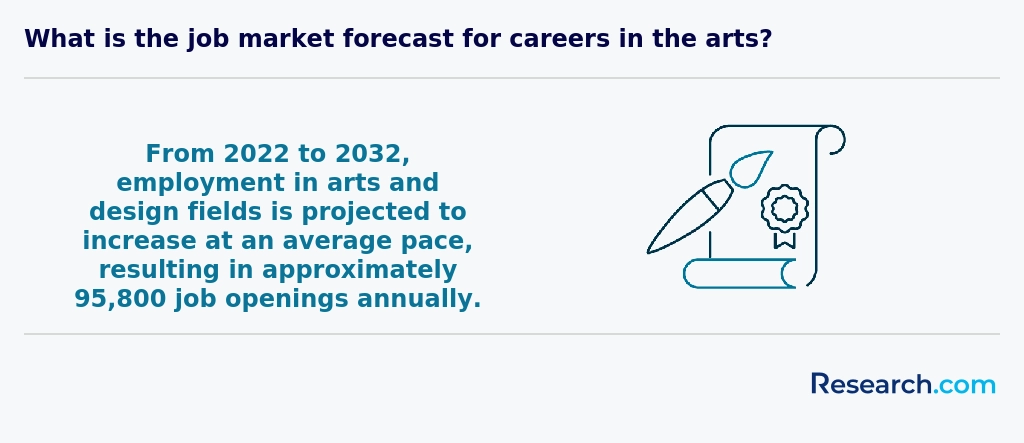
A fine arts degree in Indiana can significantly enhance career mobility and advancement, particularly in creative industries. According to the Indiana Department of Workforce Development, arts-related occupations in the state are expected to grow by 4.5% between 2022 and 2032, faster than the average for all professions.
This degree equips graduates with skills in creativity, critical thinking, and communication, which are highly valued in diverse fields such as design, education, and media. Indiana's growing arts scene, including cities like Indianapolis and Bloomington, offers opportunities for portfolio development and networking essential for career growth.
Additionally, data from the National Endowment for the Arts highlights that Indiana arts graduates employed full-time earn a median annual wage comparable to other professional degrees, supporting upward mobility. Access to internships and collaborations with local galleries or theaters also fosters practical experience that improves job prospects within the state.
Studying for a fine arts degree in Indiana equips students with skills that extend beyond traditional artistic techniques. Indiana's fine arts programs often emphasize collaboration across disciplines such as digital media, theater, and design, preparing graduates for versatile careers. According to the Indiana Commission for Higher Education, many institutions incorporate project-based learning that integrates technology and cultural studies, fostering adaptability in interdisciplinary roles.
Students develop critical thinking and communication skills valuable in fields like education, marketing, and entertainment. Indiana's growing creative economy, reported by the Arts Council of Indianapolis, supports a demand for professionals able to navigate multiple fields, highlighting the practical benefits of an interdisciplinary fine arts education.
When choosing between a thesis and a non-thesis fine arts degree program in Indiana, consider your career goals and interests. Thesis programs typically require a substantial research project or creative work, ideal for students aiming for advanced study or academia. Non-thesis options focus more on coursework and practical skills, suitable for those seeking direct entry into the art industry or teaching at the secondary level.
According to the National Center for Education Statistics, Indiana institutions offering fine arts degrees often provide both tracks, so check specific requirements carefully. Also, funding and time commitment differ: thesis programs may take longer but offer deeper specialization.
Students in Indiana pursuing fine arts degrees have several opportunities to study abroad through programs affiliated with their home institutions. Many public and private universities in Indiana partner with international schools, allowing students to spend a semester or year honing their artistic skills overseas. For example, Indiana University Bloomington's School of Fine Arts offers exchange programs in Europe and Asia focusing on studio art, music, and theater.
Such programs often include destinations renowned for their art heritage, like Italy and France, complementing Indiana's strong fine arts curriculum. According to the Institute of International Education, nearly 30% of art students from U.S. institutions participate in study abroad experiences, enriching their global perspective and discipline.
Financial aid and scholarships are commonly available to Indiana students engaging in these exchanges, easing the cost burden. Additionally, students can access resources and advisors through their university's study abroad office to tailor programs that meet both academic and creative goals.
Part-time job opportunities in Indiana that complement fine arts degrees often involve applying creative skills in real-world settings. Many students find roles as art gallery assistants or museum attendants, particularly in cities like Indianapolis and Bloomington, where cultural institutions actively seek staff with artistic backgrounds.
Additionally, freelance work such as graphic design, illustration, and photography offers flexibility while building a professional portfolio. According to the Indiana Arts Commission, the creative sector employs over 70,000 workers statewide, highlighting a growing market for artistic talents.
Teaching art in community centers or after-school programs is another valuable opportunity, providing experience in education alongside artistic development. These roles support both skill growth and networking within Indiana's vibrant arts community.
Fine arts students in Indiana benefit from a variety of networking opportunities that support their academic and professional growth. Universities like Indiana University and Purdue offer access to galleries, workshops, and guest lectures featuring prominent artists. These events foster direct connections between students and industry professionals. According to the Indiana Arts Commission, over 70% of fine arts graduates in the state find initial career opportunities through networking during their studies.
Additionally, local arts organizations, such as the Indianapolis Art Center, provide internships and exhibitions where students can showcase work and engage with the established arts community. Participation in state-wide art festivals and competitions further enhances these connections.
Alumni networks play a vital role in supporting fine arts degree students in Indiana by connecting them with professionals who understand the local arts scene. Many Indiana universities, such as Indiana University Bloomington and Ball State University, maintain active alumni groups that provide mentorship, internship opportunities, and career advice.
These networks also help students build valuable contacts for exhibitions, grants, and commissions, which are essential in the competitive arts industry. According to the Indiana Arts Commission, 85% of fine arts graduates find job leads through alumni connections within two years of graduation.
Moreover, alumni networks often organize workshops and portfolio reviews, fostering ongoing skill development relevant to Indiana's cultural institutions and galleries.
In Indiana, customizing a fine arts degree to match your career goals is increasingly accessible. Many universities offer flexible curricula allowing students to choose concentrations such as graphic design, painting, sculpture, or digital media. For example, institutions like Indiana University Bloomington provide elective courses and studio options tailored to diverse artistic paths.
Additionally, students can often engage in internships, study abroad, or independent projects to gain practical experience. According to the Indiana Commission for Higher Education, experiential learning opportunities significantly enhance graduate employment outcomes in creative fields.
Advising services at Indiana colleges help students align their course selections with specific career objectives, ensuring a personalized education plan that fits individual ambitions in fine arts.
Fine arts students in Indiana often face challenges related to funding and resources. Many programs have limited budgets, which can restrict access to materials, studio space, and technology. According to the National Endowment for the Arts, Indiana's public support for arts education is below the national average, impacting student opportunities.
Another common challenge is balancing practical skill development with academic requirements. Students must manage time between studio work and general education courses, which can be demanding.
Additionally, graduates frequently encounter a competitive job market. The U.S. Bureau of Labor Statistics forecasts modest growth in fine arts careers, requiring students to build strong portfolios and networks early on.
Graduates with a fine arts degree in Indiana can pursue several professional certifications to enhance their career opportunities. One common path is obtaining a teaching license through the Indiana Department of Education, which allows graduates to become licensed art educators in K-12 schools. This requires completing an approved teacher preparation program and passing the Praxis Art: Content and Analysis exam.
Additionally, certifications in museum studies or art conservation can be valuable for careers in galleries and cultural institutions. Indiana offers opportunities through partnerships with local museums and organizations.
Some artists also seek certification as commercial artists or graphic designers by earning credentials such as the Certified Graphic Designer (CGD) through national bodies, which complements their fine arts background.
Writing a winning application for a fine arts program in Indiana requires careful preparation and attention to detail. Start by researching each school's specific requirements, as many Indiana institutions, like Indiana University Bloomington and Purdue University Fort Wayne, emphasize a strong portfolio alongside academic records. Your portfolio should highlight diverse skills and creativity rather than quantity. According to the National Association of Colleges and Employers, about 87% of arts programs consider recommendations important, so choose recommenders familiar with your artistic abilities.
Additionally, Indiana's fine arts programs often require personal statements that clearly explain your artistic goals and motivation. Proofread carefully to ensure clarity and professionalism. Meeting all deadlines and submitting all materials on time is essential to strengthen your chances.
Globally, a career in fine arts is valued for its cultural and economic contributions. In the United States, and specifically Indiana, fine arts graduates benefit from a diverse job market including education, design, and digital media. According to the Bureau of Labor Statistics, employment for artists and related workers is expected to grow 5% from 2021 to 2031, reflecting steady demand.
Indiana supports fine arts education through numerous universities offering accredited programs, preparing students for both traditional and emerging global art roles. The state's emphasis on integrating technology with art aligns with worldwide trends emphasizing multimedia and interactive design.
Moreover, Indiana artists often engage in international exhibitions and cultural exchanges, showcasing American art on the global stage, enhancing career prospects.
Students pursuing a fine arts degree in Indiana can gain practical experience through internships offered by local art galleries, theaters, and museums. These opportunities allow hands-on work with exhibitions, performances, and community art projects.
Many Indiana universities encourage participation in student art shows and collaborative projects that build portfolios and professional skills. For example, Indiana University Bloomington regularly hosts gallery exhibitions featuring student work.
Additionally, engaging with regional arts organizations like the Indianapolis Art Center provides real-world exposure. Students may also benefit from service-learning programs combining classroom study with community involvement in the arts.
According to the National Endowment for the Arts, Indiana's arts sector employs over 35,000 people, indicating a vibrant local arts ecosystem supportive of emerging artists.
When choosing a concentration within a fine arts degree program in Indiana, consider your personal interests and career goals. Common concentrations include painting, sculpture, digital arts, and photography. Research schools like Indiana University and Ball State University, which offer diverse fine arts tracks tailored to different skills.
Look at each program's faculty expertise and available facilities, such as studios or technology labs. According to the National Center for Education Statistics, Indiana awarded over 300 fine arts degrees in 2021, showing a vibrant educational community. Understanding local job markets can also guide your choice, as some concentrations may lead to more employment opportunities in Indiana's arts and cultural sectors.
- 2027 Most Affordable Fine Arts Degree Programs Ranking in Ohio
- 2027 Most Affordable Fine Arts Degree Programs Ranking in Illinois
- 2027 Most Affordable Fine Arts Degree Programs Ranking in Kentucky
- 2027 Most Affordable Fine Arts Degree Programs Ranking in Tennessee
- 2027 Most Affordable Fine Arts Degree Programs Ranking in Iowa
- 2027 Most Affordable Fine Arts Degree Programs Ranking in Pennsylvania
- 2027 Most Affordable Fine Arts Degree Programs Ranking in Arkansas
- 2027 Most Affordable Fine Arts Degree Programs Ranking in Georgia
- 2027 Most Affordable Fine Arts Degree Programs Ranking in Mississippi
- 2027 Most Affordable Fine Arts Degree Programs Ranking in North Carolina
- Opportunities - Indy Arts Council https://indyarts.org/opportunities/
- Fine Art and Design in Education, part-time – all about the programme https://www.hku.nl/en/study-at-hku/fine-art/fine-art-and-design-in-education-part-time
- How to Network as an Artist - AGI Fine Art Blog https://agifineart.com/advice/the-art-of-reputation-how-to-network-if-youre-an-emerging-artist/
- Careers in Fine Art https://www.artcenter.edu/academics/undergraduate-degrees/fine-art/careers-in-fine-art.html
- Arts, History and Humanities in Global Perspective https://u-paris.fr/language/en/arts-history-and-humanities-in-global-perspective-en/
- Bachelor of Fine Arts in Art & Design (BFA) https://www.ualberta.ca/en/art-design/undergraduate-programs/bfa-art-and-design.html
- What is an art niche? And how to recognize yours - Arts To Hearts Project https://artstoheartsproject.com/how-to-define-your-niche-as-an-artist/
- How to Use Art Challenges to Push Your Creative Boundaries - OCAD https://artcoursework.com/how-to-use-art-challenges-to-push-your-creative-boundaries/
- Complete guide to studying Fine Arts - TAI Arts https://taiarts.com/en/blog/guide-to-studying-fine-arts/
- ArtsConnection Alumni Network - ArtsConnection https://artsconnection.org/artsconnection-alumni-network/


