2027 Most Affordable Fine Arts Degree Programs Ranking in the USA

Co-Founder and Chief Data Scientist
Choosing the right fine arts degree program can shape your creative future while keeping costs manageable. This article introduces the 2027 Most Affordable Fine Arts Degree Programs Ranking in the USA, developed by the Research.com team of data scientists.
Our goal is to help you make an informed decision by highlighting programs that balance quality education with affordability. Pursuing a fine arts degree opens doors to fulfilling careers and personal growth, making your investment truly worthwhile.
Explore this ranking to find opportunities that align with your passion and budget.
Key benefits of getting fine arts degree in America
- Fine arts graduates can enjoy rewarding salaries, with roles like Animator earning an average of $109,630 annually and Illustrators making about $71,420, reflecting strong earning potential in creative careers.
- Graduates from universities such as the Rhode Island School of Design often find diverse career paths, including graphic artistry, animation, and art therapy, offering exciting opportunities to apply creative skills.
- Obtaining a fine arts degree online, like through Savannah College of Art and Design's program, offers flexibility and convenience, allowing students to balance work and study while still gaining valuable industry knowledge.
- 2027 Most Affordable Fine Arts Degree Programs Ranking in the USA
- What can I expect from fine arts degree in America?
- Where can I work with fine arts degree in America?
What can I expect from fine arts degree in America?
The average cost of pursuing a fine arts degree in America varies significantly depending on the type of institution. Public universities, especially for in-state residents, tend to be more affordable, with annual undergraduate tuition typically ranging from $10,000 to $15,000. Students attending private colleges known for robust fine arts programs, such as those in New York or California, often face tuition fees exceeding $40,000 per year. Graduates from these institutions frequently recall balancing studio time with budgeting for materials and tuition, describing a rewarding yet financially demanding journey.
Many fine arts students at notable universities benefit from scholarships and grants tailored specifically for creative disciplines, which lighten the financial burden and make artistic education more accessible. This support allows students to focus on developing portfolios and experimenting creatively, key elements emphasized in programs at renowned schools. The investment reflects the intensive hands-on learning and critical theoretical studies that characterize fine arts education, preparing graduates for competitive, rewarding careers in the art world.
Where can I work with fine arts degree in America?
Graduates with fine arts degrees from renowned institutions such as the Rhode Island School of Design or the School of the Art Institute of Chicago often find diverse employment opportunities across multiple sectors in America. Many secure positions in traditional art environments like galleries, museums, or studios, where they apply their skills as curators, fine artists, or museum technicians. For example, alumni working at local museums enjoy the fulfillment of preserving and presenting art to the public, embodying both creativity and community engagement.
Others transition into design-driven careers, including graphic design or multimedia art, leveraging digital platforms thriving in cities like New York or San Francisco. Graduates in these roles experience dynamic work settings and steady demand, owing to growing industries such as advertising, publishing, and digital media.
Teaching art at K-12 schools or community colleges also provides stable career paths. Many graduates from programs like the University of California, Los Angeles obtain teaching credentials enabling them to inspire new students. Some find joy managing art studios or directing educational workshops, fostering creativity in future generations.
In entertainment hubs, graduates contribute to animation, theater production, and visual effects, roles that blend artistic talent with cutting-edge technology. Freelance entrepreneurship remains a popular avenue, as many artists cultivate personalized careers, selling original works online or running independent studios to maintain creative freedom.
Graduates with a fine arts degree in America can expect varied earnings depending on their chosen career path. For instance, graphic artists earn a mean annual wage of around $64,700, reflecting strong demand for creative professionals in digital media. Illustrators, often working freelance or for publishing companies, have a mean wage of approximately $71,420, showcasing the potential for well-paying roles in visual storytelling.
Animators, especially those with advanced skills from institutions like the Rhode Island School of Design or California Institute of the Arts, can earn significantly higher salaries, with a mean annual wage of $109,630. This reflects the growing importance of animation in industries such as film, television, and video game design.
Art therapists, a niche yet rewarding field that blends creativity with psychology, earn around $75,660 annually, offering an appealing option for those integrating fine arts with health and wellness. Graduates from colleges with strong interdisciplinary programs often find success here.
Art teachers, including those from prestigious education-focused universities, report a mean wage of $70,740, illustrating stable career opportunities for those combining artistic talent with pedagogy. Many graduates appreciate the balance between creative expression and financial reliability in such roles, especially when working in dynamic urban centers renowned for their arts communities.
- Tuition for fine arts degrees varies widely: public universities charge $10,000 to $15,000 per year for in-state students, while private schools can cost over $40,000 annually.
- About 40,000 students graduate with fine arts degrees in the U.S. each year.
- Job growth for arts-related careers like graphic design is expected to be about 6% from 2022 to 2032, similar to average job growth.
- Entry-level salaries for fine arts graduates typically range from $40,000 to $45,000 per year.
- Mid-career artists and designers can earn between $50,000 and $65,000, depending on experience and portfolio strength.
Completing a fine arts degree in America typically takes about four years of full-time study, culminating in a Bachelor of Fine Arts (BFA) or a Bachelor of Arts (BA) with a fine arts major. This is the standard duration at many renowned institutions such as the Rhode Island School of Design or the Savannah College of Art and Design, where students balance rigorous studio work, art theory, and general education courses.
Some graduates reflect on the rewarding challenge of maintaining a full course load alongside intensive portfolio development, which often extends the process slightly. For part-time students or those exploring minors, finishing within four years might be ambitious, but programs at schools like the School of the Art Institute of Chicago offer flexible options to accommodate diverse needs. Conversely, transfer credits or accelerated pathways can shorten the timeframe.
Graduate degrees, such as the Master of Fine Arts (MFA), require an additional two to three years and focus more deeply on professional artistic practice and instruction.
Fine arts degrees are increasingly connected to technology, entrepreneurship, and cross-industry collaboration. Students still need a foundation in visual thinking and studio discipline, but the strongest career preparation often includes digital tools, audience development, and the ability to translate creative ideas into professional projects.
Technology is expanding creative roles
Digital art, virtual reality (VR) installations, non-fungible tokens (NFTs), and AI-assisted design are changing how artists create, distribute, and monetize work. These tools are not replacements for artistic judgment; they are additional methods for building immersive, interactive, and marketable projects. Students interested in motion, character design, or digital production may also compare related pathways such as the best online animation degrees.
Interdisciplinary skills are becoming more valuable
Many institutions are adding hybrid courses that combine fine arts with computer science, business, marketing, or media production. This matters because graduates may work in creative startups, design agencies, cultural institutions, nonprofit programs, or independent studios where they must understand both artistic development and audience strategy.
Entrepreneurship is part of career readiness
As project-based work and freelance careers expand, fine arts students benefit from learning grant writing, crowdfunding, pricing, contracts, brand building, and client communication. These skills are especially important for artists who plan to sell work, run a studio, launch a creative venture, or manage commissions.
Sustainability and social impact are also influencing curriculum development. Programs that include eco-friendly materials, community engagement projects, and public art initiatives can help students connect creative practice with civic and environmental concerns. The most future-ready graduates are not limited to one medium; they know how to adapt their visual voice to changing tools, platforms, and audiences.
Online and on-campus fine arts degrees in the U.S. differ primarily in their learning environments and practical experiences. On-campus programs, such as those at the Rhode Island School of Design or the School of the Art Institute of Chicago, provide direct access to studios, workshops, and galleries, allowing students to engage hands-on with materials like clay, paint, or digital tools. Graduates often recall the immediate feedback and collaborative atmosphere as vital to refining their creative skills and building confidence.
Conversely, online fine arts programs offer flexibility for students juggling commitments but may limit tactile interaction with art materials. Institutions like the Academy of Art University integrate video tutorials and virtual critiques, crafting digital portfolios to simulate studio work. Some students appreciate this adaptability but note that occasional on-site residencies are critical to grasping physical techniques fully. Financially, online courses might reduce housing and travel expenses but vary widely in tuition, so prospective students should compare offerings carefully.
Internships and networking can make a fine arts degree more valuable because creative careers often depend on relationships, visibility, and practical experience. A strong program should help students move beyond classroom assignments into galleries, museums, design studios, community arts organizations, creative agencies, production teams, or campus-based exhibition opportunities.
What useful internship support looks like
- Partnerships with local arts organizations. Schools with gallery, museum, nonprofit, or studio relationships can help students find supervised roles that build both skills and references.
- Career services that understand creative fields. Fine arts students often need help with portfolios, artist resumes, grant materials, exhibition applications, and freelance contracts-not just standard job applications.
- Critiques from professionals. Portfolio reviews, visiting artist talks, and workshops can help students understand how their work is perceived outside the classroom.
- Alumni access. Graduates working in art, design, education, animation, curation, or entrepreneurship can provide practical advice and referrals.
- Opportunities to exhibit or publish work. Student shows, online exhibitions, collaborative projects, and local events can strengthen a resume before graduation.
When comparing schools, ask where recent students have interned, how competitive placements are, whether internships carry credit, and whether unpaid experiences are common. Also ask how the program supports students who cannot afford unpaid work or who study online.
Programs listed among affordable fine arts programs can be worth reviewing for career-support features as well as tuition. Affordability matters, but a low-cost program is stronger when it also helps students build professional contacts, complete real projects, and receive feedback from people active in the field.
Students who benefit most from these opportunities usually start early. Attend artist talks, introduce yourself after critiques, document your work carefully, and keep an updated portfolio before you need it for an internship or job application.
The average cost of a fine arts degree in America varies, with the median total cost estimated at $46,651. In-state students typically face a significantly lower median total cost of $20,360, while out-of-state students often encounter the full median expense. Graduates from renowned institutions such as those in New York or California often share stories of balancing the financial investment with the deeply rewarding experience of intensive studio work, workshops, and exhibitions. The expenses go beyond tuition, encompassing essential materials like high-quality paints, sculpture tools, and digital licenses that are crucial for creative development.
Students pursuing fine arts degrees commonly consider affordable fine arts degree programs 2027 options at community colleges or public universities to manage costs effectively. Many find that enrolling initially in these institutions before transferring to prestigious four-year schools offers both quality training and financial relief. These pathways allow students to cultivate their talents while minimizing debt.
Room and board are another essential financial factor, reflecting the lifestyle and location of fine arts programs. For example, housing in urban centers with thriving art scenes may cost more but enriches the educational experience through closer proximity to galleries, artist collectives, and cultural events. Many students feel energized by these vibrant environments, helping justify the investment.
Prospective fine arts students are encouraged to explore scholarship opportunities and financial aid packages, which can dramatically offset costs. To further assist, consult resources like affordable fine arts programs that offer comprehensive guidance on balancing expenses with educational quality.

Fine arts education is moving toward a broader definition of creative work. Students may still study drawing, painting, sculpture, photography, and art history, but many programs now expect them to understand digital production, public engagement, collaboration, and professional presentation.
Digital fluency is no longer optional
Courses in 3D modeling, virtual reality (VR) exhibitions, blockchain-enabled art sales via non-fungible tokens (NFTs), digital fabrication, interactive media, and art-tech collaboration can help students prepare for galleries, game studios, media companies, cultural institutions, and tech startups. Even students focused on traditional media benefit from learning how to document, archive, and present their work online.
Sustainability and social practice are gaining importance
Workshops on eco-friendly materials, community-based art projects, and public art advocacy help students connect creative practice to real social and environmental questions. Some programs emphasize interdisciplinary research by combining Fine Arts with environmental science, social justice, or healthcare. Students comparing regional affordability can also review the Affordable Fine Arts Degree Programs Ranking in Kentucky.
Career paths are becoming more varied
Fine arts graduates may work as user-experience (UX) designers, creative coders, art data analysts, immersive-media producers, educators, curators, studio artists, or community arts organizers. These roles require more than technical talent. Employers and collaborators often look for communication skills, project management, critique experience, and the ability to work across disciplines.
Students can improve their long-term prospects by building an online portfolio early, participating in virtual critique sessions, documenting projects professionally, and learning how to explain the purpose, process, and audience for their work.
Fine arts students in America typically access diverse financial aid options to manage their education costs at institutions like the Rhode Island School of Design or the School of the Art Institute of Chicago. Federal student aid, including Pell Grants and loans through FAFSA, forms a critical foundation. For instance, many graduates recall how Pell Grants, which can provide up to $7,395 annually without the burden of repayment, significantly eased their tuition at public universities where fees average $10,940 for in-state residents.
Scholarships play an essential role, often awarded by art departments or organizations such as the National YoungArts Foundation, rewarding artistic talent with meaningful financial support. Graduates frequently highlight how these awards empowered them to focus more deeply on their creative work without constant financial stress.
- State grants frequently assist in-state students attending public colleges, directly lowering their cost of attendance
- Work-study programs allow students to gain valuable experience while earning income, helping cover day-to-day expenses
- Private loans remain an option but require careful consideration due to higher interest rates and repayment obligations
Additional help can come from artist residencies and fellowships that not only provide funding but also foster professional growth, offering many fine arts graduates a vital stepping stone into their careers.
Fine arts education is changing as creative work becomes more digital, interdisciplinary, public-facing, and entrepreneurial. Traditional studio skills still matter, but many programs now pair drawing, painting, sculpture, photography, and critique with digital media, virtual reality, interactive tools, and cross-disciplinary projects.
Major shifts shaping fine arts programs
- Digital and hybrid studio practice. Students increasingly combine physical materials with video, animation, digital fabrication, online exhibitions, and multimedia storytelling.
- Flexible learning formats. Online and hybrid courses can make art education more accessible, especially for students balancing work, family, or location constraints. Some affordable fine arts programs use digital critique platforms and remote portfolio development to support this model.
- Interdisciplinary collaboration. Fine arts students may work with design, business, computer science, film, education, or community organizations to create projects with broader applications.
- Sustainability and social practice. Coursework may address eco-conscious materials, public art, community engagement, and art as a response to environmental or social issues.
- Professional self-promotion. Online portfolios, virtual exhibitions, social media presentation, and digital documentation are increasingly important for emerging artists.
The future outlook for fine arts graduates depends heavily on adaptability. Students who can combine artistic voice with digital fluency, collaboration, communication, and project management may have more ways to apply their degree across advertising, film, interactive design, education, museums, community arts, and independent creative work.
When evaluating a program, look beyond the course catalog. Ask whether students graduate with a public portfolio, exhibition experience, professional documentation, and practical knowledge of how artists apply for opportunities, price work, manage projects, and build sustainable creative careers.
Enrolling in a fine arts degree program in America requires applicants to meet several essential prerequisites that blend academic competence with demonstrated artistic ability. Graduates from prominent institutions like the Rhode Island School of Design or the School of the Art Institute of Chicago often recall how submitting a portfolio-comprising sketches, paintings, or digital art-was a critical step in showcasing their creativity and technical skills. This portfolio serves as a tangible expression of an applicant's potential and passion, which admissions committees prioritize highly.
Applicants must also have completed a high school diploma or its equivalent, ensuring a foundational academic readiness. Many students find that including letters of recommendation from art instructors or professionals provides valuable insight into their dedication and work ethic, further strengthening their application.
While some schools may require SAT or ACT scores, numerous fine arts programs in the U.S. have adopted test-optional policies, focusing instead on portfolios and academic transcripts. Additionally, familiarity with foundational art or art history courses often helps in gaining admission or preparing for the rigorous curriculum ahead.

A strong portfolio is often the most important part of a fine arts application. Admissions teams use it to evaluate your technical ability, originality, curiosity, discipline, and readiness for studio-based study. The goal is not to show every piece you have made; it is to present a carefully selected body of work that shows how you think, experiment, revise, and communicate visually.
What to include in a competitive fine arts portfolio
- Follow each school’s instructions first. Portfolio requirements vary by program, medium, image count, file type, and prompt. A polished portfolio can still be weakened if it ignores basic submission rules.
- Show range without losing focus. Include work across relevant mediums when appropriate, but make sure the collection still feels intentional. Reviewers should understand what ideas, materials, or visual problems you are exploring.
- Balance finished work with process. Highly resolved pieces matter, but sketches, studies, drafts, and experiments can show how you develop ideas and respond to critique.
- Demonstrate observation and fundamentals. Drawing, composition, color, form, scale, and material control remain important even for students interested in digital media or interdisciplinary work.
- Use sequencing strategically. Lead with one of your strongest pieces, group related works together, and end with a memorable project that reinforces your voice.
Common portfolio mistakes to avoid
- Submitting too many similar pieces that repeat the same skill.
- Relying only on class assignments without showing independent creative direction.
- Using poor lighting, distracting backgrounds, or low-resolution images.
- Writing vague descriptions instead of concise notes about medium, size, concept, and process.
- Waiting until the deadline to ask for feedback.
Before submitting, ask teachers, mentors, peers, or working artists to review your work. Their feedback can help you remove weaker pieces, clarify your sequence, and strengthen your artist statement. If you are comparing flexible options, explore affordable fine arts programs that may also provide portfolio guidance, virtual critiques, or online review opportunities.
The best portfolio does more than look polished. It shows evidence of growth, risk-taking, and a clear commitment to making art at a higher level.
Fine arts degree programs in America typically encompass a diverse range of courses designed to cultivate both technical proficiency and creative vision. Students at leading institutions, such as the Rhode Island School of Design and the California College of the Arts, undertake foundational classes including drawing, painting, and sculpture that serve as the bedrock of their artistic skill set.
Graduates often recall intensively working in studios on advanced projects involving digital media, printmaking, and mixed media, where instructors emphasize experimentation and personal expression. Complementing studio practice, coursework in art history-from Renaissance masterpieces to contemporary movements-provides essential cultural context, enabling students to situate their work within broader artistic traditions.
Many also value interdisciplinary electives like creative writing or arts management, which expand career possibilities and enrich their academic journey. Critique sessions and theory classes challenge them to articulate their ideas critically, fostering confidence and professional growth highly praised by alumni. This comprehensive curriculum reflects the standards upheld by accredited American programs, preparing students effectively for diverse creative careers.
Fine arts degree specializations in the USA encompass diverse fields that allow students to pursue their unique creative passions. Graduates from renowned institutions often reflect on their immersive experiences in visual arts, developing expertise in painting, drawing, and sculpture through rigorous studio practice. Such hands-on learning cultivates both technical skill and artistic expression.
Popular fine arts majors in America extend into digital media and design disciplines, reflecting the integration of technology in modern art. Students at cutting-edge colleges embrace areas like graphic design, animation, and photography, often sharing how these programs prepare them for competitive creative industries. Those interested in dynamic storytelling and motion are frequently drawn to the best online animation degrees, which combine innovation with accessibility.
Performing arts also represent a key specialization, including theatre, dance, and music performance. Many students value the balance between onstage presence and creative composition offered by programs at respected universities. Additionally, art education tracks prepare future educators to inspire the next generation, blending artistic development with pedagogical skills.
These varied pathways emphasize the richness of fine arts degree specializations in the USA and the rewarding professional and personal growth students experience in these vibrant academic communities.
Choosing the best fine arts degree in America involves assessing several crucial factors tailored to your ambitions and resources. Graduates from prestigious institutions often cite the importance of faculty mentorship and curriculum quality, emphasizing how experienced professors in schools such as those in New York or Los Angeles provide invaluable guidance and opportunities. For students prioritizing finances, exploring affordable fine arts degree programs in the USA can reveal options balancing cost and quality without sacrificing educational rigor.
Accreditation remains vital; attending NASAD-accredited schools ensures a recognized standard and access to federal aid. Additionally, evaluate tuition fees alongside additional costs unique to fine arts, like studio supplies and equipment. Graduates frequently share that location matters greatly, with urban art centers offering vibrant industry connections despite higher living expenses.
Analyzing alumni outcomes helps gauge a program's effectiveness in real-world arts careers. When considering budget-conscious options, consider the Affordable Fine Arts Degree Programs Ranking in Kentucky as an example of balancing cost and quality. For those seeking the best fine arts colleges in America for cost, such rankings provide essential guidance.
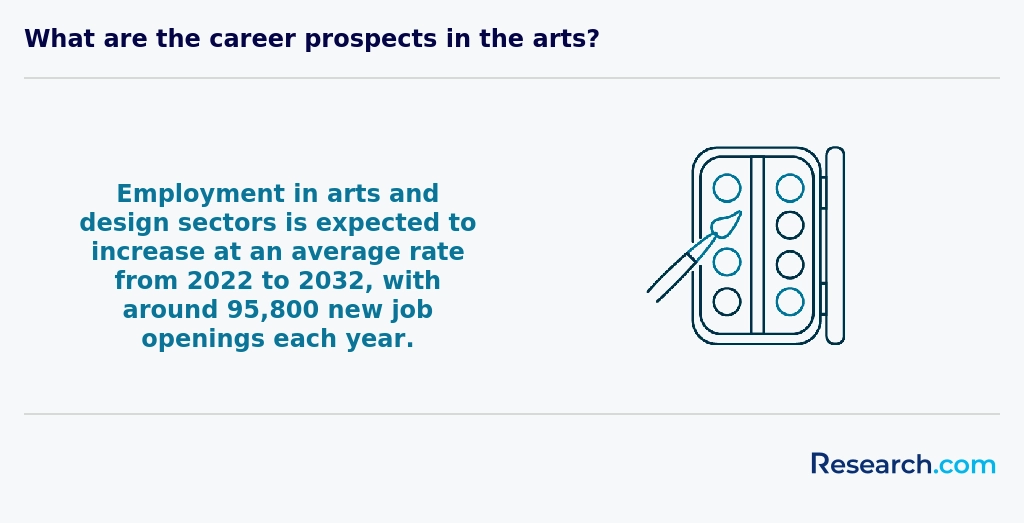
Fine arts graduates in America have diverse career paths reflecting the adaptability of their education. Many find fulfilling roles as professional artists, illustrators, or sculptors, drawing on technical and creative skills honed at institutions like the Rhode Island School of Design or Savannah College of Art and Design. Graduates often experience rewarding work producing original art or participating in exhibitions, supported by a stable job market as indicated by the BLS. Others enter graphic design, animation, and digital media, where artistic talent combines with technology-fields thriving on digital platforms and offering substantial opportunities to those with a fine arts degree. Graduates from schools such as the California Institute of the Arts excel here, blending creativity and innovation in commercial industries.
Job prospects for fine arts graduates America also include education, where many choose to become art educators in K-12 or community colleges, nurturing creativity in younger generations. These roles, especially at larger universities or public schools, may require certification but provide meaningful careers with competitive salaries. In addition, graduates often pursue arts administration and curation, managing galleries and cultural institutions, which requires both artistic insight and organizational aptitude.
Students seeking varied timelines and flexible study options might explore accelerated bachelor's degree programs to enter the workforce sooner or pivot careers effectively.
The job market for fine arts degree employment opportunities in the USA exhibits modest growth, with a projected increase of about 4% from 2022 to 2032. Graduates from well-regarded institutions such as the Rhode Island School of Design or the School of the Art Institute of Chicago often find that success depends heavily on portfolio quality and networking. Many graduates describe the challenge of securing stable positions, as roles like graphic designers, art directors, and animators can be competitive but rewarding, especially in metropolitan areas where salaries tend to be higher.
Experiences of fine arts graduates from universities like UCLA indicate that developing strong digital skills enhances employability in evolving sectors like video game design and digital content creation. The financial investment is considerable, so potential students frequently assess cost against job outlook for fine arts graduates in America. Some pursue further education to increase opportunities, while others explore freelance careers that demand adaptability and perseverance. For those weighing paths in academia or creative management, considering easy phds may be a strategic choice.
2027 Most Affordable Fine Arts Degree Programs Ranking in the USA
Investing in your education is a significant decision that can profoundly impact your future, and the Research.com team is fully aware of the responsibility involved in providing trustworthy guidance. To support prospective students seeking fine arts degrees, we have carefully developed the "2027 Most Affordable Fine Arts Degree Programs Ranking in the USA." Our dedication to quality, credibility, and accuracy is shown through extensive research and rigorous analysis.
We utilized the following reputable data sources to ensure a comprehensive evaluation of fine arts programs:
By exploring this ranking, readers will gain valuable insights into affordable and quality fine arts education options, enabling well-informed decisions about their academic journeys. For more information on how this ranking was created, please visit our Research.com methodology page.


# 9 position
Pontifical Catholic University of Puerto Rico-Ponce
Bachelor of Fine Arts



Frequently Asked Questions About fine arts
Fine arts degree students in America can maximize their learning by actively engaging in both academic and practical experiences. According to the National Endowment for the Arts, participation in internships and workshops significantly enhances skill development and professional networks. Students should seek opportunities at local galleries, theaters, and studios to apply classroom theories in real-world settings.
Collaborating with peers and faculty on projects fosters creativity and critical feedback. Utilizing campus resources, such as art labs and digital media centers, broadens technical expertise. Additionally, attending exhibitions and lectures helps students stay informed about current trends in the art industry.
Careful selection of elective courses that align with career goals can also deepen knowledge and versatility.
The fine arts field in the United States is evolving with several emerging niches attracting student interest. One rapidly growing area is digital art, which combines traditional skills with technology and software tools. According to the National Endowment for the Arts, institutions have reported a 20% increase in digital arts programs over the past five years.
Another niche gaining prominence is environmental and ecological art. These programs focus on sustainability and often integrate art with activism and scientific research, reflecting a broader cultural shift.
Additionally, art therapy combines creative practice with psychological principles, appealing to students interested in mental health. The American Art Therapy Association notes strong growth in this field as part of fine arts education.
Preparing for the job market after completing a fine arts degree in America involves strategic planning and skill development. Many graduates enter a competitive field where portfolio quality matters significantly. According to the National Endowment for the Arts, building a strong, diverse portfolio showcasing various techniques increases employment chances.
Internships and networking also play essential roles. Many art-related jobs require connections made through exhibitions, art fairs, or internships. The U.S. Bureau of Labor Statistics projects a 2% growth in fine arts employment through 2031, highlighting the importance of proactive job search strategies.
Additionally, gaining digital skills such as graphic design and social media marketing improves job prospects in gallery management, advertising, or freelance art careers.
Employers in America seek specific skills from fine arts degree graduates, focusing on both creative and professional abilities. Critical thinking and originality top the list, as these skills drive innovation in artistic projects. According to the National Endowment for the Arts, 75% of employers prioritize adaptability, highlighting the importance of adjusting to changing artistic trends and client needs.
Technical proficiency with digital tools such as Adobe Creative Suite is also essential, given the increasing use of technology in fine arts careers. Communication skills rank highly, enabling graduates to present ideas clearly and collaborate effectively. Time management and portfolio development are frequently cited as vital skills for success in the US art market.
Finding internships in America as a fine arts student involves a mix of research, networking, and leveraging university resources. Many colleges, including those with National Association of Schools of Art and Design (NASAD) accreditation, offer career centers that list internship opportunities specifically tailored to fine arts majors.
Students should also explore local museums, galleries, arts organizations, and cultural institutions, as these often provide internships designed to build practical skills. According to the National Endowment for the Arts, internships at such sites improve employment prospects for approximately 60% of fine arts students.
Online platforms like Handshake and LinkedIn can also be useful, along with art-specific job boards such as ArtJobs. Connecting with faculty and attending industry events may open doors to valuable internships.
A fine arts degree in America can significantly influence career mobility and advancement by providing essential creative and technical skills that are valued across various industries. According to the National Endowment for the Arts, fine arts graduates often find opportunities not only in traditional art fields but also in design, advertising, and media industries.
Data from the U.S. Bureau of Labor Statistics indicates that employment for arts and design occupations is projected to grow 4% from 2021 to 2031, offering steady prospects for advancement. Furthermore, many fine arts graduates leverage their degree to move into leadership roles such as creative directors or art managers.
Institutions typically emphasize portfolio development, internships, and networking, which enhance employability and career progression. Overall, a fine arts degree fosters versatility, allowing graduates to adapt to evolving career pathways in America's creative economy.
Studying for a fine arts degree in America equips students with skills highly valued across multiple disciplines. Many programs emphasize collaboration between departments such as design, technology, and liberal arts, fostering creativity and critical thinking.
According to the National Endowment for the Arts, interdisciplinary approaches in fine arts education increase students' adaptability in diverse fields like advertising, multimedia, and education.
Students often engage in projects that combine visual arts with digital media, music, or performance, reflecting industry trends towards integrated skill sets.
This breadth of experience prepares graduates to innovate and navigate careers beyond traditional art roles, meeting the evolving demands of today's job market.
When choosing between a thesis and a non-thesis fine arts degree program in America, it's important to consider your career goals and learning preferences. Thesis programs typically require a substantial research project or creative work accompanied by a written component, ideal for students aiming at academia, research, or advanced study.
Non-thesis programs focus more on practical skills and coursework, suitable for those seeking direct entry into art professions or industry roles.
According to the National Center for Education Statistics, about 35% of fine arts master's graduates choose thesis options, reflecting the emphasis on academic pursuits within the field.
Cost, time commitment, and mentorship availability also vary between options, influencing your decision.
American students seeking to study fine arts abroad have several avenues available through U.S. universities and study abroad programs. Many American institutions partner with international art schools and universities, allowing students to earn credits overseas. Popular destinations include Italy, France, and the United Kingdom, known for their rich art history and strong fine arts programs.
According to the Institute of International Education (IIE), over 3,000 U.S. students study fine arts abroad each year, gaining exposure to diverse cultural perspectives and artistic techniques. Students are encouraged to explore exchange programs or direct enrollment in foreign universities accredited by U.S. institutions to maintain degree progress.
Financial aid and scholarships may be available to help offset costs, but students should carefully review transfer policies and accreditation standards to ensure their credits will count toward their American fine arts degree.
Part-time jobs can effectively supplement a fine arts degree education in America by providing practical experience and financial support. Common positions include art gallery assistants, where students engage with the art market and curation processes. Another option is working as teaching assistants or tutors, helping to develop communication skills while reinforcing artistic concepts.
Freelance graphic design is also popular, allowing students to build portfolios and gain client interaction experience. According to the National Endowment for the Arts (NEA), approximately 25% of fine arts graduates pursue employment in arts-related fields during studies, highlighting the importance of relevant work experience.
Additionally, roles in museums or community art centers can deepen understanding of art history and public engagement.
Networking opportunities for fine arts students in America are diverse and integral to their professional growth. Many universities host annual art exhibitions, workshops, and guest lectures that connect students with established artists and industry professionals.
Student organizations and art clubs within colleges often facilitate peer networking and collaborative projects, fostering creative exchanges and partnerships. National organizations, like the College Art Association, offer memberships providing access to conferences and online forums tailored specifically for fine arts students and professionals.
According to the National Endowment for the Arts, participation in arts networks has increased by 12% in recent years, highlighting their growing importance for career development in the U.S. art community.
Internships and residency programs at museums and galleries also serve as vital platforms for networking, often leading to job opportunities after graduation.
Alumni networks play a crucial role in supporting fine arts degree students across American universities. These networks provide access to mentorship, internships, and job opportunities, which are especially valuable in the competitive arts sector.
According to the National Endowment for the Arts, more than 2 million people are employed in arts-related fields in the U.S., many relying on connections made through alumni relationships. Alumni often share insights about the industry, helping recent graduates navigate career challenges.
Furthermore, alumni gatherings and online platforms foster a community where students can showcase their work and collaborate. This ongoing engagement enhances professional growth and broadens exposure in the fine arts arena.
Customizing a fine arts degree program in America allows students to align their education with specific career goals. Many universities offer flexible curricula where students can choose concentrations such as painting, sculpture, digital media, or art history. According to the National Center for Education Statistics (NCES), over 70% of fine arts programs provide elective courses and interdisciplinary opportunities.
Students may also engage in internships, independent studies, or study abroad programs to gain real-world experience. Collaborating with faculty advisors helps tailor course selection and projects to individual ambitions, whether aiming for gallery work, teaching, or multimedia design.
Using these options strategically ensures the degree supports diverse professional paths in the fine arts field.
Fine arts students in America often face significant financial challenges. According to the National Endowment for the Arts, many students struggle with the high costs of materials like canvases, instruments, and software, which can strain budgets beyond tuition fees. Additionally, job prospects after graduation may be limited; the Bureau of Labor Statistics projects only a 4% growth for fine artists through 2031, below the average for all occupations. Time management is another issue, as balancing studio work, academic coursework, and part-time jobs can be demanding. Students also report stress related to subjective grading and intense competition within programs.
Graduates with a fine arts degree in the United States can pursue several professional certifications to enhance their career prospects. One common certification is the teaching credential for those interested in art education, allowing work in public and private schools. The National Board for Professional Teaching Standards offers certification in art education, which can lead to higher salaries and job security.
In addition, certifications in graphic design software, such as Adobe Certified Expert (ACE), are valuable for fine artists entering commercial or digital art fields. Some artists also pursue certifications in art therapy, becoming Registered Art Therapists (ATR) through the Art Therapy Credentials Board.
These certifications provide specialized professional recognition and improve employment opportunities in diverse areas of the art industry.
Writing a compelling application for a fine arts program in America begins with a strong portfolio. Most accredited institutions, including those recognized by the National Association of Schools of Art and Design (NASAD), expect to see a diverse range of your creative work. This portfolio should highlight your technical skills, creativity, and uniqueness.
Accompany your portfolio with a well-crafted personal statement that explains your artistic vision and career goals. Studies show that clarity in your motivation improves admission chances (National Center for Education Statistics, 2023).
Letters of recommendation from instructors or professional artists who can attest to your discipline and talent are highly valued. Additionally, meeting program-specific requirements such as auditions or interviews is crucial.
Finally, research tuition costs and scholarship opportunities, as the average annual tuition for fine arts degrees can range widely, often between $10,000 and $40,000 for private schools according to College Board data.
Careers in fine arts hold a unique position within the global landscape, influenced strongly by cultural, economic, and educational differences. In the United States, fine arts graduates benefit from a robust network of galleries, museums, and arts organizations that support creative professionals. According to the National Endowment for the Arts, about 5 million Americans are employed in arts-related fields, reflecting a growing cultural economy.
Globally, countries vary in the emphasis they place on fine arts education and career support. While the U.S. market offers diverse opportunities, competition remains high, encouraging students to pursue internships and residencies to build portfolios. International perspectives often highlight interdisciplinary skills as essential for success, blending technology and traditional art forms.
Despite challenges, many U.S. institutions incorporate global trends into curricula, preparing students for varied career paths in a connected world.
Gaining practical experience while studying for a fine arts degree in America is vital to building a professional portfolio. Many institutions encourage students to participate in internships at galleries, museums, or design studios. These opportunities provide hands-on involvement that complements classroom learning.
Another common approach is engaging in campus exhibitions or community art projects, which help develop public exposure and collaborative skills. According to the National Endowment for the Arts, approximately 60% of fine arts students complete internships during their studies. Additionally, student-run studios and workshops offer practical training in various media and techniques under faculty supervision.
Some universities also support study-abroad programs or summer residencies focused on applied arts, enhancing real-world experience. These options collectively prepare students for post-graduate careers in the competitive arts sector.
Choosing the right concentration within a fine arts degree program in America depends on your personal interests and career goals. Common concentrations include painting, sculpture, graphic design, and digital media. According to the National Center for Education Statistics, over 40% of fine arts students focus on studio arts, while others choose emerging fields like multimedia arts.
Consider the balance between traditional techniques and technology-driven methods offered by the program. Research faculty expertise and available facilities, as these affect the quality of education. Additionally, review alumni outcomes to see which concentrations lead to successful careers in art, design, or education.
- Experiences and Studies - cedfa https://www.cedfa.org/experiences-and-studies
- Is a thesis always mandatory in a master's degree program? - EFMU: The Euler-Franeker Memorial University and Institute https://euler.euclid.int/is-a-thesis-always-mandatory-in-masters-degree-program/
- Types of Financial Aid | PAFA - Pennsylvania Academy of the Fine Arts https://www.pafa.org/types-financial-aid
- 14 art niche ideas and how to determine yours https://www.gelato.com/blog/art-niche-ideas
- BA Hons Fine Art Enrolment Form https://www.oca.ac.uk/courses/ba-fine-art/
- How to Pursue a BFA in the US: Admissions & Career Insights https://theredpen.in/blog/pursuing-a-bachelor-of-fine-arts-in-the-us-everything-you-need-to-know/
- Networking for Artists https://artquest.org.uk/how-to-articles/networking-for-artists/
- Educating Ourselves about Childhood Arts Experiences-and Why They Matter https://www.arts.gov/stories/blog/2025/educating-ourselves-about-childhood-arts-experiences-and-why-they-matter
- Create a Niche Market for Your Art in a Sea of Artists https://lorimcnee.com/create-a-niche-market-for-your-art-in-a-sea-of-artists/
- Study Fine Arts Abroad – Top Universities & Careers https://thearchinternational.com/fine-arts/