2027 Fine Arts Degree Licensure Outcomes Report: Pass Rates, Barriers, and Career Impact

Co-Founder and Chief Data Scientist
A fine arts degree can lead to licensed work in teaching, art therapy, and some specialized public-facing roles, but the degree alone rarely grants a license. That distinction matters because the U. S. Bureau of Labor Statistics reports a median annual wage of $51,660 for arts and design occupations, while many licensed education and therapy roles use different eligibility rules. This report helps students, career changers, parents, and advisors interpret pass rates, barriers, costs, and career value before committing to a program.
Key Things You Should Know
- Fine arts has no universal national license; licensure usually applies to specific careers such as K-12 art teacher, art therapist in some states, or related regulated education and counseling roles.
- First-time pass rates show how well a program prepares candidates before remediation, while overall pass rates can look stronger because they may include repeat attempts.
- Licensure can expand access to school, clinical, and public-sector jobs, but the return depends on state eligibility, accreditation, exam performance, supervised experience, fees, and the local labor market.
- Is Professional Licensure Required for Fine Arts Degree Careers?
- How Do Fine Arts Degree Graduates Qualify for Professional Licensure?
Is Professional Licensure Required for Fine Arts Degree Careers?
Professional licensure is not required for most fine arts careers. Studio artists, illustrators, gallery workers, museum assistants, designers, photographers, animators, art directors, and creative entrepreneurs are typically hired based on portfolio quality, experience, software skills, exhibitions, client work, and professional references rather than a state license.
Licensure becomes important when the fine arts degree is being used as a pathway into a regulated occupation. The most common examples are public school art teaching, school-based visual arts education, art therapy where state law requires a mental health or creative arts therapy license, and certain roles that involve protected titles or independent clinical practice.
This table clarifies where licensure usually matters and where it usually does not. Use it to decide whether you should be comparing licensing outcomes or portfolio and employment outcomes when evaluating a fine arts program.
| Career goal | Is licensure commonly required? | What employers usually check | Why it matters for degree choice |
| K-12 art teacher in public schools | Yes, in most states | State-approved educator preparation, exams, background check, student teaching | You need a program aligned with teacher certification requirements, not just a studio art curriculum |
| Art therapist or creative arts therapist | Sometimes, depending on state and job setting | Graduate education, supervised clinical hours, board or state requirements | A bachelor's in fine arts may be preparation, but it is usually not enough for independent clinical practice |
| Museum, gallery, or arts administration role | Usually no | Experience, internships, writing, curation skills, collections knowledge | Licensure pass rates are less relevant than internships, placement support, and portfolio development |
| Freelance artist, illustrator, photographer, or designer | No | Portfolio, clients, technical tools, business skills | ROI depends more on marketable skills, networking, and business readiness than state approval |
For students, the practical takeaway is simple: do not ask only whether a school offers a fine arts degree. Ask whether the degree is approved for the exact licensed career and state where you want to work.
How Do Fine Arts Degree Graduates Qualify for Professional Licensure?
Fine arts graduates qualify for licensure only when their coursework, field experience, exams, and state applications match the rules for a specific licensed occupation. A bachelor's degree may be sufficient for some teacher certification routes, while art therapy and counseling-related roles commonly require graduate-level clinical education and supervised experience.
The basic pathway differs by state and occupation, but most candidates move through a sequence like this. Following the sequence helps avoid the common mistake of graduating first and discovering later that the program was not approved for the intended license.
- Identify the exact licensed role, such as public school art teacher, art therapist, or another state-regulated credential.
- Check the state licensing board or education agency for required degree level, approved program status, exams, supervised hours, background checks, and application steps.
- Confirm in writing that the fine arts program meets licensure eligibility in your target state, including online, transfer, and out-of-state enrollment rules.
- Complete required coursework, studio or pedagogy requirements, student teaching, practicum, internship, or supervised clinical experience.
- Register for required exams and distinguish first-time testing from retakes when planning your timeline.
- Submit transcripts, test scores, background check materials, fees, and any supervised-experience documentation to the licensing authority.
Transfer credits need extra attention. A program may accept art history, drawing, or design credits toward graduation but still require specific pedagogy, assessment, special education, or clinical courses for licensure. Online students should also confirm whether student teaching, practicum, or clinical placement can be completed in their home state.
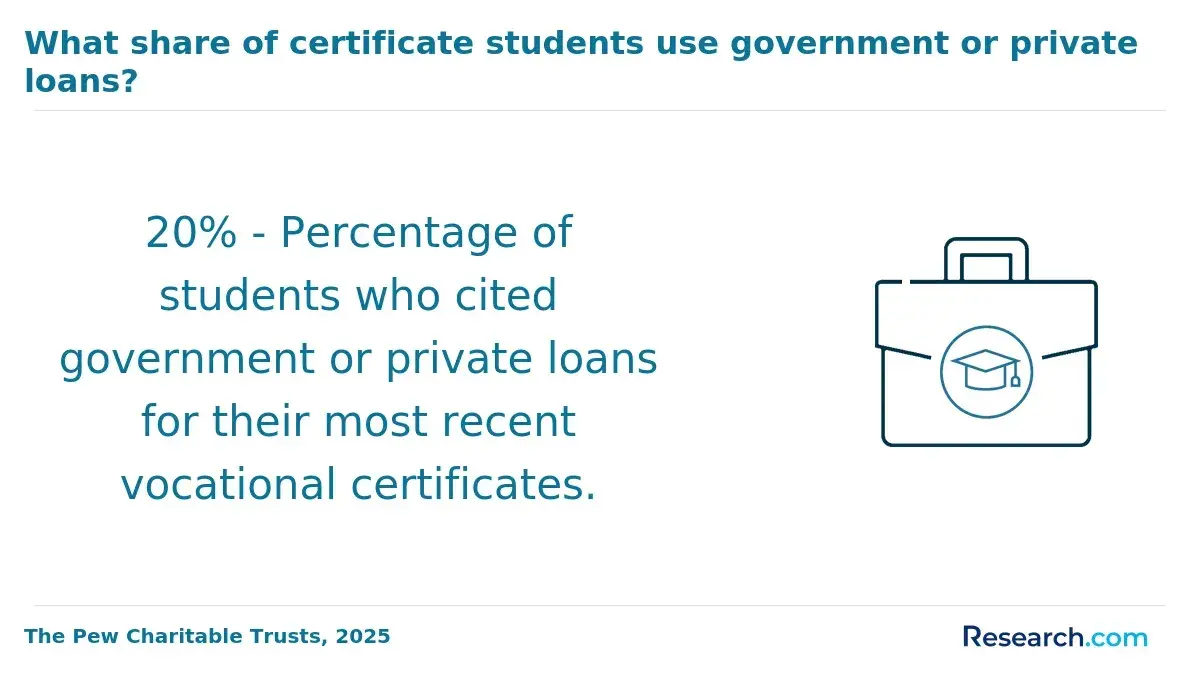
Fine arts licensure exam pass rates are useful only when you know what is being measured. A high overall pass rate may indicate strong preparation, but it can also reflect multiple retakes, selective candidate reporting, or a small cohort. A lower first-time pass rate may signal gaps in curriculum alignment, advising, test preparation, or student readiness.
The most important distinction is first-time versus overall pass rate. This table explains how to read common outcome terms before comparing programs.
| Outcome measure | What it means | How to interpret it | Red flag |
| First-time pass rate | Share of candidates who pass on the first exam attempt | Best indicator of initial program preparation and advising quality | Program reports only overall results and avoids first-attempt data |
| Overall pass rate | Share who eventually pass after one or more attempts | Useful for long-term completion, but less precise for measuring readiness | Rate looks high but does not disclose retakes or time to pass |
| Program-level pass rate | Results for candidates from one institution or licensure track | Most helpful when cohort size and reporting year are disclosed | Very small cohort makes the rate unstable from year to year |
| State or national comparison | Benchmark for candidates taking the same or similar exam | Shows whether a program is above, near, or below a broader reference point | Comparison mixes different exams, years, or candidate types |
For fine arts, there may be no single national pass-rate dataset because licensure depends on the career path. Teacher preparation programs may publish state assessment results, while art therapy and counseling-related pathways may report different credentialing outcomes or may not publish pass rates at all. If pass-rate data is unavailable, ask for the number of completers, number of candidates who sought licensure, number who passed on the first attempt, and median time from graduation to license.
One current trend is increased scrutiny of outcome transparency. Students are more likely to compare programs based on completion, licensure eligibility, and employment results, not just curriculum descriptions. That is especially important in fine arts because many graduates pursue portfolio careers where licensure is optional, while others need a state credential before they can enter their intended occupation.
The most common barriers to fine arts licensure are not artistic ability. They are administrative, financial, regulatory, and timing problems that interrupt the path between earning the degree and receiving the credential.
These barriers are especially important for students comparing an art education, art therapy, or counseling-adjacent route with other regulated fields. For example, someone whose long-term goal is mental health practice should compare art therapy rules with options such as an LMFT online program, because each path has different clinical-hour, exam, and state-board requirements.
The table below summarizes the barriers most likely to increase time, cost, or risk. It is designed to help you ask better admissions and licensing questions before enrolling.
| Barrier | How it affects licensure | What to check early |
| Program not approved for the target state | Graduate may need extra coursework or a second pathway | State approval status for the exact license and enrollment location |
| Exam failure or low first-time readiness | Retakes can delay employment and add fees | First-time pass rate, test preparation support, and remediation policy |
| Missing field placement | Student teaching, practicum, or internship may be delayed | Who arranges placements and whether local sites are available |
| Background check or conduct issue | May delay or prevent certification depending on state rules | Board disclosure requirements before completing the degree |
| Out-of-state enrollment mismatch | Online students may complete a degree that does not meet home-state rules | Written licensure disclosure for your state |
| Incomplete documentation | Application can stall even after passing exams | Transcript, score report, supervision, and identity-verification requirements |
A major red flag is a school that says graduates "can pursue licensure" without identifying the license, state, exam, field experience, and approval status. That phrase may be accurate but too vague to protect your investment.
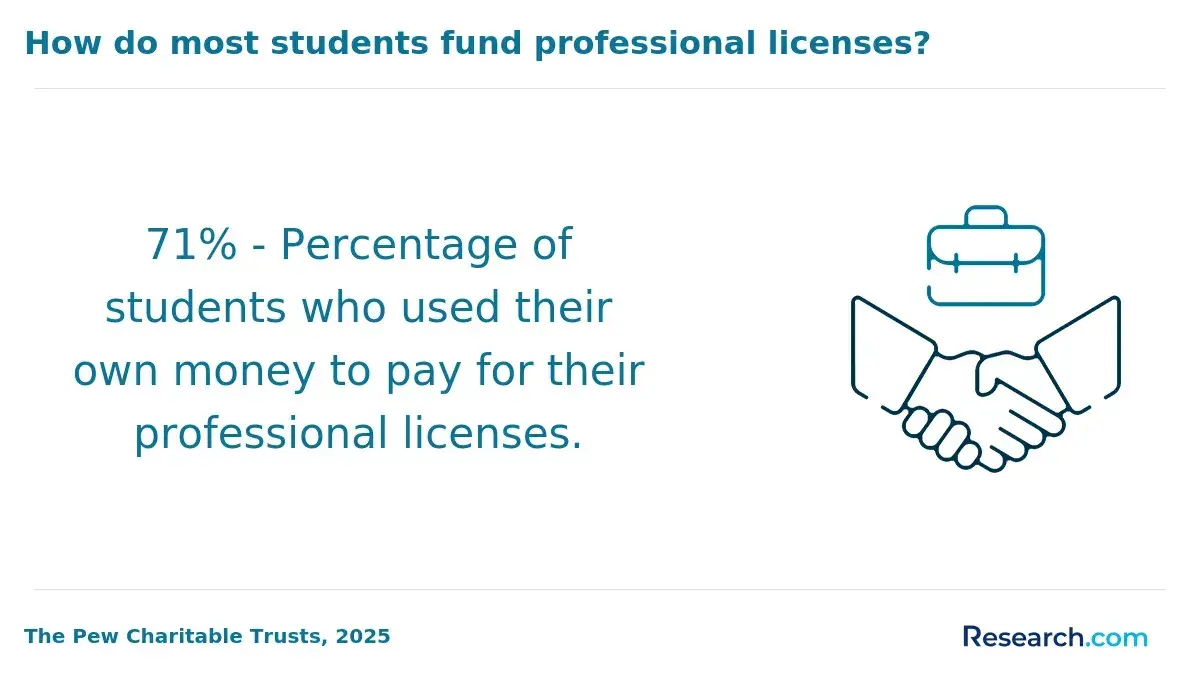
Licensure preparation should start before the final semester. Students who wait until graduation often discover that exam registration, score reporting, background checks, or placement documentation takes longer than expected.
The steps below are practical ways to reduce retake risk and shorten the path from degree completion to licensure. They are especially useful when a program's published pass-rate data is limited or difficult to compare.
- Request the most recent first-time and overall pass rates for your specific licensure track, not the entire school or department.
- Ask how many candidates were included in the reported pass rate, because small groups can make outcomes look unusually high or low.
- Map each required course to the exam content outline so you can identify weak areas before registering.
- Use practice exams or diagnostic tools early enough to adjust study time, tutoring, or coursework.
- Confirm the retake waiting period and score-reporting timeline before choosing an exam date.
- Keep copies of syllabi, field-placement evaluations, supervision logs, test scores, and official transcripts.
If you do not pass on the first attempt, treat the retake as a remediation process rather than simply paying another fee. Review the score breakdown, identify the content domain with the largest gap, ask faculty for targeted resources, and schedule the next attempt only after practice performance improves.
Students should also avoid the mistake of comparing pass rates without checking attrition. A program may appear strong if only the best-prepared students reach the exam stage, while other students leave the pathway earlier because of cost, placement issues, or academic barriers.
State requirements can make or break a fine arts licensure plan. A degree that supports certification in one state may not automatically qualify a graduate in another state, especially when the pathway includes teacher preparation, clinical supervision, or protected professional titles.
Reciprocity usually means a state may recognize a license from another state under certain conditions; it does not always mean automatic transfer. Regulated education and legal fields show why approval details matter, which is why students comparing compliance-heavy paths sometimes review resources such as ABA-approved online paralegal programs to understand how program recognition can affect professional mobility.
This table explains the state-rule issues that most often affect fine arts graduates. Use it before choosing an online program, moving after graduation, or applying across state lines.
| State-rule issue | Why it matters | Question to ask |
| Approved-program requirement | Some states require completion of an approved educator preparation program | Is this exact program approved for my target license in my state? |
| Exam differences | States may use different exams or passing standards | Which test and score does my state require? |
| Student teaching or practicum location | Out-of-state placements may need prior approval | Can I complete fieldwork where I live? |
| Reciprocity conditions | Additional exams, coursework, or experience may still be required | What will I need if I move after licensure? |
| Protected title rules | Some titles may be restricted even if related jobs are available | Can I use the title I want in this state? |
The safest approach is to save written disclosures from the school and confirm them with the licensing board. If the school and the board give different answers, rely on the board because it controls the license.
Fine arts licensure costs vary because there is no single fine arts license. The total cost depends on the degree level, state fees, exam requirements, background checks, supervision, placement logistics, retakes, and whether additional coursework is needed after graduation.
Instead of relying on a national average, build a personalized licensure budget using your school's tuition page and your state board's published fee schedule. The main cost categories typically include the following:
- Tuition and required fees for the fine arts, art education, or graduate clinical program
- Course materials, studio supplies, software, equipment, portfolio preparation, and exhibition expenses
- Exam registration fees, score reports, and possible retake fees
- Background check, fingerprinting, transcript, and application fees
- Student teaching, practicum, internship, or supervised-experience costs, including travel or unpaid placement time
- Additional coursework or remediation if the original program does not meet state requirements
Time to licensure also varies. A bachelor's route to art teacher certification often follows the length of the degree plus student teaching and application processing. Art therapy or counseling-related licensure may require graduate education and supervised post-degree experience before independent practice is available.
The key ROI question is not simply "How much is tuition?" It is "How much will I spend before I am eligible for the job I actually want?" A lower-tuition program may become more expensive if it lacks state approval, placement support, or strong exam preparation.
Licensure can improve career access when the target job legally requires a credential. For fine arts graduates, the biggest career impact is usually in public education, school systems, clinical or therapeutic settings, and government-funded roles where employers must verify certification before hiring.
Pay impact is more nuanced. The U.S. Bureau of Labor Statistics reports a median annual wage of $51,660 for arts and design occupations, but that broad category includes many unlicensed creative roles. Licensed education and therapy roles may follow different pay scales, bargaining agreements, reimbursement rules, or agency salary structures, so students should compare the specific occupation rather than assume licensure automatically raises earnings.
This table summarizes how licensure can affect employment outcomes. It is not a salary guarantee; it is a way to identify where a license changes access, mobility, and advancement.
| Outcome area | Licensed pathway | Unlicensed pathway | Decision point |
| Job eligibility | Required for many public school teaching and regulated clinical roles | Available in studios, galleries, museums, design firms, and freelance markets | Choose licensure if the role legally requires it |
| Earnings structure | May follow public pay scales, agency bands, or credential-based steps | May depend on clients, contracts, portfolio strength, and market demand | Compare local job postings and salary schedules |
| Advancement | Can support department chair, lead teacher, supervisor, or clinical advancement | Can support creative director, curator, entrepreneur, or senior designer roles | Match credentials to your preferred advancement path |
| Mobility | May require reciprocity review when moving states | Portfolio careers can be more geographically flexible | Consider whether you expect to relocate |
Some fine arts graduates later add business training to move into arts administration, entrepreneurship, or management. If that is the goal, comparing an easiest MBA program may be more relevant than pursuing a license that does not match the intended role.
AI and automation are also changing the market. Generative tools can speed up image ideation, layout, and production, which raises employer expectations for technical fluency. Licensure may protect access to regulated teaching or therapy roles, but it does not replace the need for a strong portfolio, digital skills, ethical judgment, and adaptability.
Many fine arts graduates build successful careers without a professional license. In these paths, employers and clients usually evaluate creative output, project experience, collaboration, communication, technical tools, and the ability to complete work on deadline.
Unlicensed options can be a better fit for students who want creative flexibility, freelance work, entrepreneurship, museum or gallery work, or design-oriented roles. The trade-off is that income and advancement may be less standardized than in licensed school or clinical roles.
The following options do not usually require a state professional license, although some employers may prefer a degree, internships, software credentials, or a graduate credential.
- Studio artist, illustrator, painter, sculptor, printmaker, or photographer
- Graphic designer, motion designer, animator, UX visual designer, or digital content creator
- Museum assistant, gallery coordinator, curator assistant, registrar assistant, or collections support specialist
- Arts administrator, nonprofit program coordinator, community arts organizer, or grant support specialist
- Art director, creative lead, brand designer, or production manager after sufficient experience
- Freelance creative entrepreneur, teaching artist, workshop leader, or small-business owner
Students who choose a non-licensed path should evaluate programs differently. Instead of centering pass rates, compare portfolio outcomes, internship access, faculty industry connections, exhibition opportunities, software training, alumni networks, business preparation, and career services.
A common mistake is assuming a license is always the more secure option. A license is valuable when it opens the specific job you want, but it can be unnecessary cost and time if your goal is a portfolio-driven creative career.
Accreditation and state approval can directly affect licensure outcomes. Institutional accreditation matters for financial aid, credit transfer, and graduate admission, but professional or state approval is often what determines whether a graduate can sit for a licensing exam or apply for certification.
For public school art teaching, the key question is whether the educator preparation program is approved by the state where you plan to become licensed. For art therapy or counseling-related paths, the key question is whether the degree level, coursework, practicum, and supervision meet the rules of the relevant board or employer. Students considering teaching, research, leadership, or higher education may later compare PhD online programs, but doctoral convenience should not replace checking the licensure fit of the earlier degree.
This table shows how different quality signals affect licensing risk. It helps separate useful indicators from factors that may look impressive but do not necessarily prove licensure eligibility.
| Quality factor | Why it matters | What to verify before enrolling |
| Regional or institutional accreditation | Supports aid eligibility, transfer, and graduate school recognition | Whether the institution is accredited by a recognized accreditor |
| State-approved educator preparation | Often required for teacher certification | Whether the specific art education track is approved for the target state |
| Professional alignment | May affect clinical, therapy, or specialized credentials | Whether coursework, supervision, and practicum meet board expectations |
| Field placement support | Student teaching or practicum delays can delay licensure | Whether the school secures placements or requires students to find their own |
| Outcome reporting | Shows how candidates perform after graduation | First-time pass rates, overall pass rates, cohort size, and licensure completion |
Online and campus formats can both support licensure when the program is properly approved and field placements are available. The risk is not the delivery format itself; the risk is enrolling in a program that is academically valid but not aligned with the state licensing pathway you need.
Other Things You Should Know About Fine Arts
Usually no. Most fine arts careers are portfolio-based and do not require state licensure. Licensure is mainly relevant for specific regulated roles, such as public school art teaching or certain therapy-related positions.
Earning the degree means completing the school's academic requirements. Becoming licensed means meeting a state or board's additional requirements, which may include approved coursework, exams, background checks, supervised experience, and an application.
Use it carefully. Ask whether the rate is first-time or overall, which exam it covers, how many students were included, what year was reported, and whether candidates who left the pathway are excluded.
It can be worth it if the license is required for your target job and the program has clear state approval, strong placement support, and transparent outcomes. It may not be worth it if your goal is a studio, design, museum, or freelance career where a license is not required.
- Licensure Pass Rates https://data.utsystem.edu/licensurepassrates_defns
- Benefits of Fine Arts Education: Creativity & Confidence Boost https://palcs.org/advantage-fine-arts-education-creativity-confidence/
- Fine arts: An unworthy struggle | HS Insider https://highschool.latimes.com/opinion/fine-arts-an-unworthy-struggle/
- Licensure Exam Pass Rates | Naropa University https://www.naropa.edu/student-right-to-know/licensure-exam-pass-rates/
- New evidence of the benefits of arts education | Brookings https://www.brookings.edu/articles/new-evidence-of-the-benefits-of-arts-education/
- The Decline of the Visual Education of Artists and the Remedy by Mark D. Gottsegen https://www.artrenewal.org/Article/Title/the-decline-of-the-visual-education-of-artists
- The Fine Art of School Engagement https://www.educationnext.org/fine-art-of-school-engagement-how-expanding-arts-education-affects-learning-behavior-social-emotional-growth/
- Socioeconomic & Racial/Ethnic Exclusion in the Arts https://snaaparts.org/findings/databriefs/socioeconomic-racial-ethnic-exclusion-in-the-arts
- Arts Integration Research Through the Lens of the ESSA https://wallacefoundation.org/report/arts-integration-research-through-lens-essa