2027 Fine Arts Degree Recruiter Preference Report: What Employers Value Most in New Graduates

Co-Founder and Chief Data Scientist
Portfolio-first hiring is reshaping Fine Arts recruitment as employers compare creative judgment, software fluency, and production readiness before offering interviews. The U.S. Bureau of Labor Statistics projects craft and fine artist employment to grow about 3% from 2024 to 2034, which means openings exist but competition remains portfolio-driven.
This guide is for Fine Arts graduates, career switchers, and early-career artists who want to understand recruiter preferences, technical expectations, screening standards, and interview benchmarks so they can tailor resumes, prepare assessments, and compete for entry-level offers.
Key Things to Know About Recruiter Preferences in the Fine Arts Industry
- Recruiters rarely hire on degree title alone; they look for a focused portfolio, evidence of finished work, and role-specific production skills that match the employer's medium, audience, and workflow.
- BLS May 2024 wage data shows why specialization matters: graphic design roles reported median pay around $61,000, while special effects artist and animator roles were near $99,000, making digital tool depth a stronger hiring signal than general artistic interest.
- Specialized certifications are optional for most Fine Arts roles, but low-cost, tool-specific credentials such as Adobe or Autodesk exams can help when paired with portfolio proof; they do not replace internships, exhibitions, client work, or production-ready samples.
- Do Fine Arts jobs require a degree?
- What are the top qualities employers look for in Fine Arts graduates today?
Do Fine Arts jobs require a degree?
A Fine Arts degree is helpful, but it is not always a strict gatekeeping requirement. Recruiters usually care most about whether a candidate can produce, revise, document, present, and deliver work at the standard required by the job.
A degree can signal training in critique, art history, visual thinking, and studio discipline, but a strong portfolio can sometimes outweigh the credential for studio assistant, production artist, illustrator, gallery assistant, mural, fabrication, and freelance-oriented roles.
Fine Arts hiring differs from more credential-driven education paths. For example, someone comparing creative work with business school options such as an easiest MBA program should understand that Fine Arts employers usually evaluate visible work samples more directly than admissions-style academic metrics.
The table below shows how recruiters commonly interpret degrees, certificates, and alternative experience for entry-level Fine Arts pathways. Use it to decide whether your next investment should be more school, more portfolio work, or more practical exposure:
| Entry path | How recruiters usually view it | Best fit | Main limitation |
| BFA or BA in Fine Arts | Strong signal of structured training, critique experience, and sustained studio practice | Museum, gallery, education, studio, design-adjacent, and graduate-school-bound applicants | Does not compensate for a weak or unfocused portfolio |
| Associate degree or certificate | Useful when paired with job-ready tool skills and practical samples | Production art, print, fabrication, digital content, and assistant roles | May be less competitive for roles asking for a bachelor's degree |
| Self-taught portfolio | Can work when samples prove discipline, originality, and client-ready execution | Freelance, commission-based, independent studio, and digital creator roles | Recruiters may need more proof of reliability and collaboration |
| Internships, exhibitions, or client work | Highly persuasive because it shows real deadlines, feedback, and delivery | Most entry-level Fine Arts and creative production roles | Must be presented clearly, not buried under coursework |
If you are deciding whether to apply now or keep studying, use this rule: pursue more education when the job description repeatedly asks for a degree, museum knowledge, teaching eligibility, or advanced critique; apply now when you can show polished samples, tool fluency, and evidence that you can complete work for real audiences.
What are the top qualities employers look for in Fine Arts graduates today?
Recruiters hiring Fine Arts graduates look for a combination of creative taste and workplace reliability. The National Association of Colleges and Employers' recent employer surveys continue to rank communication, teamwork, problem-solving, and professionalism among the attributes employers want in new graduates, which matters because entry-level art roles often involve feedback cycles, client revisions, installation constraints, and cross-functional production.
The table below summarizes the qualities that carry the most weight in Fine Arts screening and how recruiters typically recognize them. This helps you convert vague strengths into evidence a hiring manager can verify:
| Employer-valued quality | What it means in Fine Arts hiring | Evidence recruiters trust |
| Portfolio judgment | The ability to select, sequence, and explain work for a specific audience | A curated portfolio with captions, process notes, and role-relevant projects |
| Revision discipline | Comfort improving work after critique instead of defending every choice | Before-and-after examples, critique-based projects, or client revisions |
| Production reliability | Meeting deadlines, preparing files, handling materials, and following specifications | Internships, exhibitions, print-ready files, installation records, or event support |
| Visual problem-solving | Using composition, color, form, and medium to solve communication or spatial problems | Case-study style portfolio entries that explain the challenge and constraints |
| Collaboration | Working with designers, curators, educators, fabricators, photographers, or clients | Team projects with a clear description of your exact contribution |
To demonstrate these qualities, avoid saying only that you are "creative" or "detail-oriented." Instead, prepare a short proof statement for each major project: what the assignment required, what constraints you faced, what tools or materials you used, what changed after feedback, and what the final result achieved.
The most requested technical skills depend on whether the employer is hiring for studio work, digital production, museum operations, education, illustration, animation, or design-adjacent roles. Across these paths, recruiters prefer graduates who can combine artistic judgment with execution skills that reduce training time.
The table below groups common entry-level Fine Arts roles by technical skill expectations. It is not a universal checklist, but it shows where candidates should concentrate portfolio evidence before applying:
| Role target | Technical skills recruiters often request | Portfolio proof that helps |
| Studio assistant | Material preparation, documentation, fabrication support, safe equipment use, archiving | Installation photos, process images, studio logs, fabrication samples |
| Gallery or museum assistant | Art handling basics, condition reporting, label preparation, exhibition support, database entry | Exhibition work, curatorial projects, object documentation, visitor-facing materials |
| Production artist | File preparation, layout cleanup, color management, print specifications, version control | Print-ready files, packaging mockups, production sheets, brand-consistent layouts |
| Illustrator or visual content artist | Concept development, drawing fundamentals, digital rendering, visual storytelling | Series-based illustrations, sketches, final renders, client-style briefs |
| Animation or motion assistant | Storyboarding, timing, asset preparation, compositing basics, 2D or 3D workflow awareness | Reels, animatics, breakdowns, shot notes, short motion studies |
AI tools are also changing recruiter expectations. Employers may not expect a graduate to be an AI expert, but they increasingly value candidates who can use generative tools ethically for ideation, reference organization, mockups, and workflow acceleration without misrepresenting authorship or using copyrighted work carelessly.
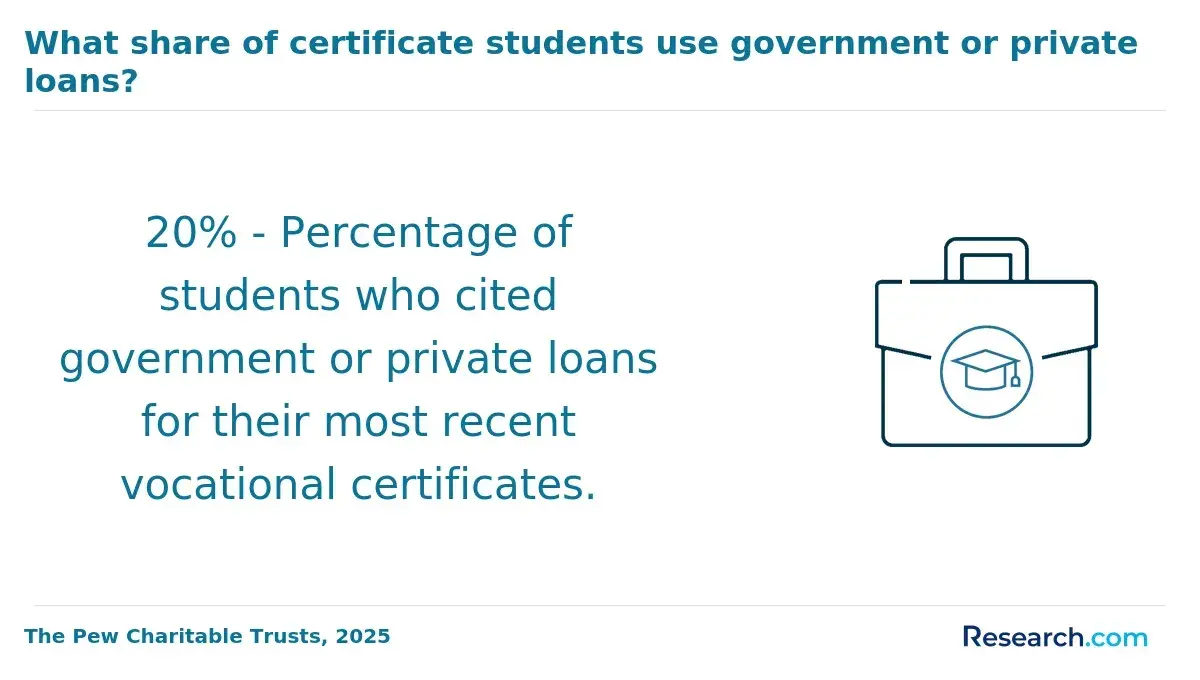
Specialized Fine Arts certifications are usually not mandatory for entry-level roles, but they can help when they verify a tool the employer already uses. They are most valuable for candidates whose portfolio is strong but whose resume lacks internships, client work, or recognizable production experience. They are less valuable when they replace actual samples or when the credential is unrelated to the job description.
This is different from fields with more formal credential or licensure expectations, such as an LMFT online program, where supervised clinical requirements and state rules strongly shape employment eligibility. Fine Arts certificates are usually preference signals, not legal requirements.
Use the following cost-and-value lens before paying for a certification. These ranges can vary by provider, testing center, software vendor, and student discount availability:
- Adobe Certified Professional exams often cost roughly $125 to $150 per exam in U.S. testing channels, making them reasonable only if the target job mentions Adobe tools or production design.
- Autodesk or 3D software credentials can be worthwhile for fabrication, modeling, exhibit design, or animation-adjacent roles when the credential is supported by modeled work.
- Museum studies, art handling, or collections-care workshops may offer stronger practical value for gallery and museum applicants than broad creative software certificates.
- Short AI, copyright, accessibility, or digital asset management courses can improve screening strength when the employer manages digital collections, online exhibitions, or content production.
A smart certification strategy is simple: first build a role-specific portfolio, then add one credential that removes a recruiter's doubt. If the certificate does not help explain why you are ready for the job, skip it and invest in stronger samples, better documentation, or a supervised project.
GPA and academic honors matter less in Fine Arts hiring than portfolio quality, internships, exhibitions, and professional presentation. Recruiters may notice a high GPA, dean's list, thesis award, or juried exhibition, but those signals usually support the main evidence rather than replace it.
A lower GPA is rarely the reason a strong Fine Arts applicant is rejected unless the employer requires a transcript or the resume shows no stronger proof of readiness.
Academic metrics can carry more weight in research-heavy or graduate-academic pathways, including comparisons with PhD online programs, where transcripts, research fit, and faculty alignment may influence selection. In entry-level Fine Arts recruiting, the review usually shifts quickly to the work itself.
The table below shows how recruiters commonly weigh academic and practical signals during first-round screening. Use it to decide what belongs near the top of your resume:
| Candidate signal | Typical recruiter weight | Best use on resume or profile |
| Portfolio | Very high | Place the link near your name and tailor the first projects to the role |
| Internship or assistantship | High | Describe duties, tools, materials, exhibitions, clients, or deliverables |
| Capstone or thesis project | Moderate to high | Use when it shows depth, research, process, or public presentation |
| GPA | Low to moderate | Include if strong, requested, or needed for early-career context |
| Academic honors | Moderate | Include juried shows, awards, scholarships, and thesis recognition when relevant |
| Course list | Low unless specialized | Use only for role-specific skills such as printmaking, 3D modeling, conservation basics, or digital fabrication |
If your GPA is strong, list it briefly. If it is not, do not overexplain it in the resume. Redirect attention to portfolio projects, internships, exhibitions, commissions, software proficiency, and evidence that you can complete work under deadlines.
Top employers recruit Fine Arts graduates through a mix of public postings, campus networks, portfolio platforms, local arts ecosystems, and direct referrals. The strongest candidates do not rely on one job board; they create multiple discovery points so recruiters, studio managers, curators, and creative directors can find consistent evidence of their work.
Fine Arts recruiting is more decentralized than many corporate professions. If you are comparing different education-to-career pipelines, remember that programs such as ABA-approved online paralegal programs often lead into more standardized credential language, while Fine Arts applicants must translate creative experience into employer-specific proof.
The table below outlines where entry-level Fine Arts candidates are commonly sourced and what each channel is best for. This can help you prioritize outreach instead of sending the same application everywhere:
| Recruitment channel | Employers commonly found there | Best-fit Fine Arts candidates |
| College career centers and faculty referrals | Museums, galleries, local studios, arts nonprofits, education programs | Recent graduates with academic projects, exhibitions, or internship interest |
| Portfolio platforms | Creative agencies, studios, game companies, animation teams, independent clients | Illustrators, animators, concept artists, designers, and digital artists |
| Museum and gallery job boards | Cultural institutions, archives, exhibition teams, visitor education departments | Candidates with art history, collections, installation, or public programming exposure |
| Local arts councils and nonprofit networks | Community arts organizations, public art programs, teaching studios | Applicants interested in outreach, workshops, murals, and arts administration |
| Direct outreach and studio networking | Artists, fabricators, photographers, print shops, set builders, production teams | Candidates with hands-on materials experience and flexible assistant availability |
| General job boards | Retail creative teams, marketing departments, print vendors, schools, agencies | Applicants targeting production, content, design-support, or administrative art roles |
For better response rates, create a weekly application mix: apply to posted roles, message alumni or faculty contacts, attend local openings or portfolio reviews, and update your portfolio based on the job descriptions you are seeing repeatedly. In competitive markets, referrals and visible community participation can be as important as the application itself.
Fine Arts interviews often combine portfolio review with practical assessment. Recruiters want to know not only whether you can make compelling work, but also whether you can explain choices, follow constraints, accept feedback, and deliver files or physical work in a usable format.
The table below summarizes common assessment formats and what employers are usually testing. Use it to prepare without overproducing unpaid work beyond a reasonable scope:
| Assessment or interview format | What it evaluates | Common entry-level context |
| Portfolio walkthrough | Concept development, self-editing, communication, and relevance to the role | Most Fine Arts, illustration, design-adjacent, and studio roles |
| Timed creative exercise | Problem-solving under constraints and ability to produce a workable draft | Production art, visual content, animation, and design-support roles |
| File or process review | Organization, naming conventions, layers, exports, and production readiness | Print, digital production, motion, and collaborative studio environments |
| Critique conversation | Openness to feedback, reasoning, and revision behavior | Studio assistant, gallery, education, and creative team roles |
| Technical demonstration | Tool fluency, equipment familiarity, material handling, or documentation skills | Fabrication, printmaking, art handling, media lab, and installation support |
| Behavioral interview | Reliability, teamwork, deadline management, and client or public interaction | All entry-level roles, especially museums, nonprofits, and agencies |
Prepare for these formats with a focused routine before each interview. The goal is to show judgment and process, not just taste:
- Select five portfolio pieces that match the job description and prepare a 60-second explanation for each one.
- Practice explaining one project from concept to final delivery, including a problem you solved and a revision you made.
- Check that portfolio links, videos, PDFs, and image files open quickly on a recruiter's device.
- Prepare a short answer about how you use AI, references, or borrowed material ethically and transparently.
- Ask what the employer expects from any take-home assignment, including time limit, usage rights, and whether the work will be used commercially.
Be cautious with unpaid tests that require fully finished campaign work, original commercial illustration, or extensive production beyond a normal skills check. A reasonable assessment should evaluate capability without extracting free labor.
Recruiters reject Fine Arts applicants when the application creates doubt about relevance, professionalism, reliability, or authenticity. Many rejections happen before a human deeply reviews the art because the resume, portfolio link, or online profile does not clearly match the role.
The table below identifies common screening red flags and stronger alternatives. Use it as a pre-application audit before submitting materials:
| Red flag | Why it hurts screening | Better alternative |
| Generic portfolio with unrelated work first | Recruiters may not see the role-relevant evidence quickly | Lead with projects that match the job's medium, tools, and audience |
| Broken, slow, or password-blocked portfolio link | Creates friction and may end the review immediately | Test the link on mobile and desktop before applying |
| Resume lists tools but no proof | Software claims are weak without examples | Connect tools to projects, deliverables, exhibitions, or files |
| Unclear contribution on team projects | Recruiters cannot tell what you actually did | State your role, tasks, tools, and final contribution |
| Overly broad "fine artist seeking any creative role" positioning | Signals lack of focus | Customize your summary for the role type and employer need |
| Sloppy captions, typos, or inconsistent formatting | Raises concerns about attention to detail | Proofread all project titles, dates, media, dimensions, and descriptions |
| No evidence of deadlines or external feedback | Makes the work look purely academic or personal | Add internships, commissions, exhibitions, critique outcomes, or client-style briefs |
The biggest mistake is treating the portfolio as an archive instead of a hiring tool. Recruiters do not need to see everything you have ever made; they need to see the clearest evidence that you can do the job they are trying to fill.
Fine Arts resumes and online profiles should be built for both human recruiters and automated screening systems. Applicant Tracking Systems may scan for job-title language, tools, degree terms, and role-specific keywords, while human reviewers quickly check whether the portfolio confirms those claims.
A strong entry-level Fine Arts application connects four elements: target role, portfolio proof, technical skills, and work behavior. Use the steps below to make that connection obvious:
- Put your portfolio link in the resume header, LinkedIn profile, email signature, and application form exactly where recruiters expect to find it.
- Customize your headline for the role, such as "Entry-Level Production Artist," "Gallery and Collections Assistant," "Illustrator," or "Studio Assistant," instead of using only "Fine Arts Graduate."
- Mirror important terms from the job description when accurate, including tools, media, materials, exhibition support, file preparation, art handling, animation, print production, or documentation.
- Rewrite academic projects as experience by naming the problem, medium, tools, deadline, critique process, and final output.
- Separate technical skills from general interests so ATS systems and recruiters can quickly find software, equipment, and production competencies.
- Add measurable context where possible, such as number of works installed, exhibition dates, class size assisted, files prepared, commissions completed, or social content delivered.
- Keep the resume to one page if you are entry-level, unless you have substantial exhibitions, publications, teaching, or production credits that require a CV format.
For online profiles, the first screen matters. Use a clean banner or featured project, a concise role-focused summary, and a portfolio sequence that reflects the jobs you are pursuing now, not every medium you explored in school.
Before applying, run a final screening check: does the resume name the role, does the portfolio prove it, does the profile support it, and can a recruiter understand your strongest fit in under one minute? If the answer is no, revise before sending another application.
Fine Arts graduates do not need to master every creative tool, but they should be fluent in the software used by the roles they are targeting. Recruiters are most impressed when software skills appear inside finished work, not as a long list of tools with no context.
The table below connects common tools to hiring use cases so applicants can prioritize learning based on their target role rather than chasing every platform:
| Tool or software category | Common examples | Why recruiters value it |
| Image editing and compositing | Adobe Photoshop, Affinity Photo, Procreate | Supports digital painting, retouching, portfolio preparation, and production cleanup |
| Vector and layout | Adobe Illustrator, Adobe InDesign, Affinity Designer | Useful for print, typography, labels, posters, publication layouts, and production files |
| 3D and fabrication | Blender, Rhino, SketchUp, ZBrush | Shows spatial thinking, modeling ability, installation planning, and digital fabrication readiness |
| Motion and animation | After Effects, Premiere Pro, Toon Boom, Maya, Cinema 4D | Supports reels, motion graphics, animation tests, and multimedia storytelling |
| Documentation and portfolio platforms | Adobe Portfolio, Squarespace, WordPress, ArtStation, Behance | Makes work easy to review quickly and professionally during screening |
| Project and asset organization | Google Drive, Dropbox, Notion, Airtable, Trello | Signals workflow discipline, version control, and collaboration readiness |
To impress employers, choose three to five tools that match your target role and build proof around them. A production artist should show organized layered files and export settings; a gallery assistant should show clean documentation and object records; an animator should show a short reel with breakdowns rather than only a final video.
Other Things You Should Know About Fine Arts
Yes. Recruiters often value freelance work when it shows a real brief, client communication, deadlines, revisions, and final delivery. Present it professionally with the project goal, your role, medium, tools, and outcome.
Most applicants are better served by 8 to 12 strong, relevant pieces than by a large archive. Quality, sequencing, captions, and role fit matter more than volume.
Use a one-page resume for most entry-level jobs in studios, galleries, nonprofits, production, and creative teams. Use a CV when applying for academic, exhibition-heavy, grant, residency, or research-oriented opportunities.
Yes. Larger metro areas may offer more museums, galleries, agencies, studios, and production employers, while smaller markets may offer community arts, teaching, local commissions, and nonprofit roles. Remote work exists, but many entry-level art roles still require on-site collaboration, installation, equipment access, or event support.
- Portfolio Perfection: How to Showcase Your Best Work to Recruiters - Creative Staffing & Recruiting Agency https://www.icreatives.com/iblog/portfolio-perfection-how-to-showcase-your-best-work-to-recruiters/
- Hiring for Soft Skills vs Technical Skills https://www.solomon.eu/2343/why-hiring-for-soft-skills-can-be-more-difficult-than-hiring-for-technical-skills/
- Graphic Artist vs. Graphic Designer: What's the difference? https://ixdf.org/literature/article/graphic-artist-vs-graphic-designer-what-s-the-difference
- Assessment of priority skills to 2030 https://www.gov.uk/government/publications/assessment-of-priority-skills-to-2030/assessment-of-priority-skills-to-2030
- What employers are looking for in new graduates | University Canada West (UCW) https://www.ucanwest.ca/blog/education-careers-tips/what-employers-are-looking-for-in-new-graduates
- Why Soft Skills are just as important as technical skills in IT https://industryconnect.org/soft-skills-important-technical-skills/
- Technical Skills vs. Soft Skills: What Should Students Focus on for Career Success? - Fund for Education https://www.fundforeducation.at/en/technical-skills-vs-soft-skills-what-should-students-focus-on-for-career-success
- Study Art, Design & Media: Which subject should you choose? https://www.study.eu/article/study-art-design-media-which-subject-should-you-choose
- How to make an art portfolio in 6 steps https://www.cca.edu/newsroom/six-things-your-art-portfolio-must-have/
- What Employers Actually Want From Graduates https://bodyswaps.co/resources/blog/what-employers-actually-want-from-graduates