2027 Fine Arts Degree Time-to-Completion Report: How Long Students Actually Take to Finish

Co-Founder and Chief Data Scientist
Choosing a fine arts degree is partly a creative decision and partly a timing decision. A published four-year bachelor's plan does not always match real student timelines, especially when studio sequences, portfolio reviews, transfer credits, jobs, and family responsibilities enter the picture. NCES reported in 2024 that only about two-thirds of first-time bachelor's students complete within six years, showing why planning matters. This guide helps prospective art students, transfer students, and working adults estimate a realistic completion timeline and compare formats, costs, and career trade-offs before enrolling.
Key Things You Should Know
- A full-time fine arts bachelor's degree is usually planned for four years, but a realistic completion window is often four to six years depending on studio sequencing, enrollment intensity, transfer credits, and required exhibitions or capstones.
- Transfer credits can save one semester to two years, but only if general education, art history, foundation studio, and portfolio requirements are accepted into the degree rather than counted as free electives.
- College Board's 2024 pricing data shows average published tuition and fees of $11,610 for in-state public four-year colleges and $43,350 for private nonprofit four-year colleges, so each extra term can materially change total cost.
- What Is the Actual Time to Complete a Fine Arts Degree?
- Which Factors Have the Greatest Impact on Fine Arts Degree Completion Time?
What Is the Actual Time to Complete a Fine Arts Degree?
The actual time to complete a fine arts degree depends on the credential. An associate degree in fine arts is commonly designed for two years of full-time study, a bachelor's degree for four years, and a master of fine arts for two to three years. In practice, many students take longer because art programs often require sequential studio courses, critique participation, portfolio checkpoints, and senior exhibitions that cannot always be completed out of order.
For planning purposes, students should distinguish between "catalog time" and "student time." Catalog time assumes uninterrupted full-time enrollment, correct course selection, and no failed or repeated studio requirements. Student time reflects real constraints such as part-time enrollment, changing concentrations, limited course availability, financial pauses, and transfer-credit loss.
The table below summarizes realistic completion ranges by degree pathway. These are planning ranges rather than guarantees because institutional requirements and student schedules vary widely.
| Fine arts pathway | Published full-time length | Common realistic completion range | Why timing varies |
| Associate of Fine Arts or Associate of Arts in Art | 2 years | 2 to 3 years | Developmental coursework, part-time attendance, studio availability, and transfer planning |
| Bachelor of Fine Arts | 4 years | 4 to 6 years | High credit load, sequential studio courses, portfolio reviews, exhibitions, and concentration changes |
| Bachelor of Arts in Art or Studio Art | 4 years | 4 to 5.5 years | Often more flexible than a BFA but still affected by general education and studio prerequisites |
| Master of Fine Arts | 2 to 3 years | 2 to 4 years | Thesis work, residency expectations, assistantships, critiques, and final exhibitions |
| Degree completion program for transfer students | 1 to 3 years after transfer | 1.5 to 4 years | Depends heavily on accepted credits, portfolio placement, and remaining upper-division studio requirements |
The most important takeaway is that fine arts programs are not always as modular as lecture-based majors. A student who misses a required spring-only studio course may wait a full year to take it, while a student in a more flexible BA program may substitute approved electives and stay closer to schedule.
Which Factors Have the Greatest Impact on Fine Arts Degree Completion Time?
The biggest drivers of fine arts degree completion time are course sequencing, enrollment load, transfer-credit fit, and access to required facilities or critiques. Fine arts students also face a unique timing issue: creative work often has to be produced, revised, reviewed, and exhibited, which can make compressed schedules harder than they appear on paper.
Students should pay special attention to requirements that create bottlenecks. The following factors commonly add terms to a fine arts degree when they are not planned early:
- Studio prerequisites that must be taken in a fixed order, such as drawing, design foundations, intermediate studio, advanced studio, and senior capstone.
- Portfolio reviews that determine whether a student can continue into the major or enter a specific concentration such as painting, photography, animation, illustration, sculpture, or graphic design.
- Courses offered only once per year, which can delay graduation if a student withdraws, fails, or cannot fit the course into a work schedule.
- Credit-heavy BFA requirements that may require more total credits than a typical BA, leaving less room for mistakes or exploratory electives.
- Transfer credits that apply to total credits but not to major requirements, causing students to repeat foundation or upper-division studio courses.
- Required exhibitions, internships, practicums, thesis projects, or capstones that must be completed during specific terms.
A useful comparison is that some degree fields are delayed by external approval rules, while fine arts delays are often caused by sequencing and portfolio fit. For example, students researching ABA-approved online paralegal programs must pay attention to program approval standards, whereas fine arts students should focus more on studio access, critique structure, and how credits apply to the major.
The table below shows how common delay factors affect a student's likely timeline. Use it as a checklist when reviewing a degree audit or speaking with an academic advisor.
| Factor | Typical effect on completion time | What to verify before enrolling |
| Sequential studio curriculum | Can add one or more terms if a prerequisite is missed | Whether core studio courses are offered every term |
| Portfolio review | Can delay entry into upper-level work | Review timing, acceptance criteria, and resubmission options |
| Changing concentration | Can add a semester or year | How many prior courses will count toward the new concentration |
| Part-time enrollment | Usually extends a bachelor's timeline beyond four years | Minimum course load needed to stay on sequence |
| Transfer-credit mismatch | Can reduce expected credit savings | Which credits satisfy major, foundation, and general education requirements |
| Capstone or exhibition requirement | Can delay graduation if offered in limited terms | When the capstone is available and what prerequisites must be finished first |
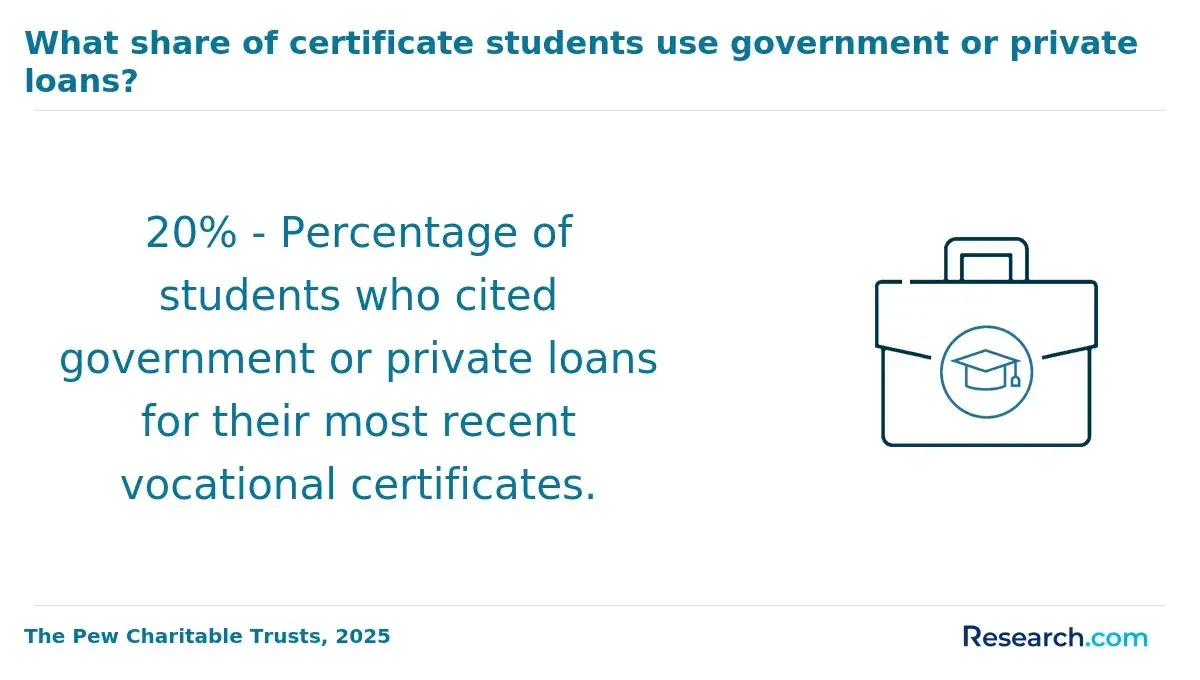
Enrollment status is one of the clearest predictors of fine arts completion time. Full-time students can usually follow the intended sequence, while part-time students may need more careful planning because some studio courses require long blocks of time, specific facilities, or in-person critiques.
Learning format also matters, but online does not automatically mean faster. Online and hybrid fine arts programs can help students avoid commuting and fit coursework around work, but programs involving ceramics, sculpture, printmaking, photography labs, or installation work may still require campus residencies, equipment access, or scheduled critiques.
The table below compares common enrollment and format choices. It is designed to help students match a pathway to their weekly availability instead of assuming the shortest advertised path is realistic.
| Pathway | Best fit | Likely timeline effect | Main risk |
| Full-time campus BFA | Students who can prioritize school and studio time | Best chance of finishing near four years | Heavy weekly workload and limited flexibility |
| Full-time online or hybrid BA | Students needing flexibility in a less equipment-intensive concentration | Can stay close to four years if courses are consistently available | May not offer every studio concentration online |
| Part-time campus program | Working students who need access to studios, labs, or equipment | Often extends completion to five or more years | Course sequencing conflicts with work schedules |
| Part-time online or hybrid program | Adults balancing work, caregiving, or military obligations | Flexible but usually slower unless summer or accelerated terms are used | Self-paced delays and limited peer critique time |
| Low-residency MFA | Practicing artists who need mentorship without relocating | Can be efficient for independent artists | Residency travel and thesis deadlines must be planned early |
A good rule is to evaluate the weekly workload before choosing a pace. A studio-heavy term can require substantial time outside class for production, revision, critique preparation, materials sourcing, and documentation. Students who work full time may graduate more reliably by taking fewer courses consistently than by overloading and withdrawing later.
Accelerated fine arts programs can shorten graduation timelines, but they are most effective for students with strong time availability, clear concentration goals, and few outside obligations. Acceleration usually happens through year-round enrollment, shorter terms, heavier course loads, prior learning credit, or accepting substantial transfer credits.
The trade-off is intensity. Studio courses are not just reading and exams; they require making work, receiving critique, revising projects, documenting portfolios, and sometimes using specialized equipment. A compressed format may work well for art history, design theory, entrepreneurship, or digital portfolio courses, but it may be less suitable for students who need longer creative development cycles.
Students comparing accelerated arts pathways should apply the same caution they would use when comparing other fast or accessible graduate and professional options, such as an easiest MBA program: admissions accessibility and speed matter, but fit, quality, advising, and outcomes matter more.
The table below compares traditional and accelerated formats from a completion-time perspective. It highlights when faster pacing helps and when it can backfire.
| Program format | How it may shorten time | Best for | When it may not be ideal |
| Traditional semester program | Predictable four-year bachelor's sequence | Students who want steady critique cycles and campus studio access | Students who need frequent start dates or year-round progress |
| Year-round program | Uses summer or winter terms to reduce gaps | Students who can maintain momentum during breaks | Students who need summers for work, internships, or caregiving |
| Short-term online courses | Compresses general education or theory courses | Students with strong self-management skills | Students taking demanding studio courses at the same time |
| Transfer-heavy completion program | Reduces remaining credits | Students with aligned prior coursework and portfolio readiness | Students whose credits do not meet major requirements |
| Low-residency graduate program | Allows working artists to continue professional practice | Independent artists with mature portfolios | Students who need daily studio supervision or campus community |
A shorter timeline provides value when it reduces tuition exposure, living costs, and time away from the workforce without harming portfolio quality. It is less valuable if the pace causes withdrawals, repeated courses, weak work samples, or burnout.
Work, family, health, military service, and caregiving responsibilities can extend fine arts completion time even when students are academically prepared. The issue is not simply fewer study hours; it is the difficulty of protecting long, uninterrupted creative work periods that studio courses often require.
Students with major outside responsibilities should build a timeline around sustainable progress. A realistic plan is usually better than an aggressive plan that depends on ideal weeks. The following strategies can help students stay on track without overloading:
- Choose course combinations carefully by pairing one demanding studio course with lighter general education or art history courses when possible.
- Use summer or winter terms for non-studio requirements if the program offers them and financial aid rules allow it.
- Ask whether critiques are synchronous, asynchronous, or recorded so you can judge whether they fit your work schedule.
- Meet with an advisor before reducing your course load to understand how the change affects prerequisite sequences.
- Keep a personal production calendar for studio projects, including material ordering, lab access, critique dates, and documentation deadlines.
- Confirm whether internships, exhibitions, student teaching, or capstones require daytime availability.
One common mistake is assuming that part-time enrollment is always cheaper. It may reduce each term's bill, but it can increase total time in school, delay earnings growth, and extend fees, commuting, software, equipment, or childcare costs. Students should compare total program cost, not just the next semester's bill.
If your schedule already feels full before studio production time is added, choose a slower but consistent pace and protect your sequence. Consistency often beats overloading in fine arts programs.
Completion time affects the cost and ROI of a fine arts degree in three ways: direct tuition, indirect school-related costs, and opportunity cost. Direct tuition is the easiest to see, but the less obvious costs can include studio materials, software subscriptions, transportation, housing, childcare, and delayed full-time employment.
College Board's 2024 pricing data reported average published tuition and fees of $11,610 for in-state students at public four-year colleges and $43,350 at private nonprofit four-year colleges. For a fine arts student, that means an extra semester can be financially significant even before materials, housing, and lost work hours are considered.
The table below shows how timeline choices can influence cost exposure. It does not estimate every student's bill; instead, it identifies the cost categories most likely to change when a degree takes longer.
| Timeline scenario | Cost effect | ROI consideration |
| Finish on the standard full-time plan | Shortest exposure to tuition and required fees | Works best when the course load is manageable and portfolio quality remains strong |
| Add one semester | Additional tuition, fees, materials, and possible housing costs | May be worthwhile if it prevents burnout or allows stronger portfolio development |
| Attend part time for several years | Lower term-by-term cost but longer fee and materials exposure | Can be practical for working adults if income continues during enrollment |
| Use transfer credits efficiently | Can reduce total credits needed at the receiving school | Often one of the strongest ROI moves when credits apply to requirements |
| Choose a higher-priced accelerated option | May increase cost per term but reduce time in school | Best evaluated by comparing total cost, completion likelihood, and portfolio outcomes |
Fine arts ROI should not be measured only by the first job after graduation. Students should also consider the quality of their portfolio, access to internships or exhibitions, faculty mentorship, alumni networks, teaching preparation, digital skills, and whether the program supports the roles they want, such as studio artist, designer, illustrator, art educator, museum professional, animator, photographer, or creative director.
A smart financial comparison asks three questions: how much will I pay in total, how likely am I to finish on this timeline, and what career assets will I have at graduation? A cheaper or faster program is not automatically better if it weakens the portfolio or lacks the facilities needed for the student's medium.
Graduation timing can influence career outcomes because many fine arts opportunities depend on portfolio readiness, internships, exhibitions, networking, and technical skill development. Finishing sooner may help a student enter the workforce earlier, but finishing with a stronger body of work may matter more in competitive creative fields.
BLS employment projections released in 2024 projected modest growth for several arts-related occupations from 2023 to 2033, including craft and fine artists, graphic designers, art directors, and special effects artists and animators. For students, this means timing should be paired with skill strategy: graduating faster is most valuable when the student also leaves with marketable creative, digital, communication, and project-management skills.
Different career goals reward different timelines. A student aiming for freelance illustration may benefit from graduating as soon as a strong portfolio and client pipeline are ready. A student seeking museum, academic, or teaching roles may need additional credentials, assistantships, licensure steps, or graduate study, which can make a longer education pathway reasonable.
The table below connects common fine arts career directions with timing considerations. It can help students decide whether speed, portfolio depth, or credential planning should carry the most weight.
| Career direction | Timing priority | What matters besides graduating quickly |
| Studio artist or freelance artist | Portfolio and professional network | Exhibition record, grant readiness, pricing, client development, and documentation |
| Graphic designer or illustrator | Portfolio plus software fluency | Internships, digital tools, typography, branding, and production experience |
| Animator or digital media artist | Technical sequence completion | Demo reel quality, software pipeline, collaboration, and specialization |
| Art educator | Licensure or teacher preparation requirements | State rules, supervised teaching, background checks, and pedagogy coursework |
| Museum or gallery professional | Experience and networking | Internships, art history background, collections work, writing, and public programming |
| MFA or academic pathway | Portfolio maturity | Artist statement, references, thesis readiness, and teaching assistantship preparation |
The main mistake to avoid is treating the degree date as the only outcome. A fine arts student who graduates one term later with a stronger portfolio, internship experience, and a clearer career direction may be better positioned than a student who finishes quickly but lacks professional-ready work.
Fine arts completion timelines are changing because students increasingly expect flexible formats, clearer transfer pathways, and career-connected curricula. Online learning has expanded in theory-based, digital media, art history, and design courses, while hands-on studio fields continue to require careful planning around facilities, materials, and critique.
Another trend is the rise of adult and returning students who bring prior credits, work experience, and nontraditional schedules. This makes degree completion programs more important, but it also raises the stakes for accurate transfer evaluation and advising. A student with credits from several institutions may be close to finishing on paper but still need major-specific studio requirements.
Flexible online pathways have also grown in fields outside the arts, from an LMFT online program to business and legal studies programs. Fine arts is following the flexibility trend more selectively because some artistic disciplines require physical space, specialized equipment, or in-person critique culture.
Artificial intelligence is another current factor. AI image tools, generative design software, and digital production workflows are changing what employers and clients expect from creative graduates. This does not eliminate the need for fine arts training; it increases the importance of programs that teach concept development, ethics, visual judgment, authorship, critique, and adaptable technical skills.
Students should expect more hybrid options, more portfolio-centered assessment, and more pressure to show career-ready work at graduation. The programs most likely to support timely completion are those that combine flexible scheduling with strong advising, predictable course rotation, transparent portfolio reviews, and clear capstone planning.
Students should choose a fine arts degree program by estimating the shortest realistic completion timeline, not the shortest advertised one. The right program is the one you can complete with a strong portfolio, manageable cost, and credible preparation for your intended creative or professional path.
Use the following process to compare programs before enrolling. It focuses on the questions most likely to reveal whether a school can help you graduate on time:
- Ask for the most recent average time-to-degree for students in your specific fine arts major or concentration, not only the institution-wide graduation rate.
- Request a sample four-year or transfer graduation plan showing when each required studio, art history, elective, and capstone course is offered.
- Confirm whether courses in your concentration are offered every term, once per year, or only when enrollment is high enough.
- Ask how portfolio reviews work, when they occur, and what happens if a student is not approved on the first attempt.
- Get a written transfer-credit evaluation that separates general education, major, concentration, elective, and residency credits.
- Compare total estimated cost under at least two timelines, such as four years versus five years or full time versus part time.
- Ask what advising, tutoring, studio access, equipment checkout, mental health support, and career services are available to help students persist.
- Review graduate portfolios, exhibition opportunities, internship options, alumni outcomes, and faculty mentorship rather than judging the program by speed alone.
Students planning long academic pathways should also think beyond the bachelor's degree. For example, someone considering teaching at the college level may eventually compare MFA options with PhD online programs in related fields, but the best first step is still choosing an undergraduate pathway that preserves portfolio quality and keeps debt manageable.
Several red flags suggest a program may take longer than expected. Be cautious if the school cannot explain course rotation, delays transfer-credit evaluation until after enrollment, has limited access to required studios, offers few sections of gateway courses, or relies heavily on generic degree plans that do not reflect your concentration.
The best decision is rarely "fastest at any cost." For some students, an accelerated or transfer-friendly program is the smartest choice. For others, a traditional campus BFA with strong facilities, critiques, and faculty mentorship may justify a longer or less flexible timeline. Choose the path that gives you the highest probability of finishing with the work, skills, and credentials you actually need.
Transfer credits can shorten a fine arts degree substantially, but only when they apply to the right requirements. A student transferring 60 credits from a community college may expect to finish a bachelor's degree in two years, but that timeline may stretch if foundation studio, art history, digital media, or upper-level studio requirements remain incomplete.
The key is not the total number of credits transferred; it is how those credits map to the degree. Before committing to a program, students should request a written transfer evaluation that shows which courses satisfy general education, major core, concentration, elective, and residency requirements.
The table below shows how transfer credit can affect completion time when credits apply efficiently. Actual results depend on institutional policy and portfolio placement.
| Transfer situation | Potential time saved | Completion planning concern |
| 15 accepted credits that meet general education requirements | About one semester | Major sequence may still begin at the foundation level |
| 30 accepted credits with art history and foundation studio alignment | About one year | Student should confirm sophomore-level studio placement |
| 45 accepted credits with strong major fit | About 1 to 1.5 years | Upper-division prerequisites may still control pace |
| 60 accepted credits from an aligned associate pathway | Up to two years | Two-year completion is most realistic when the receiving school has an articulation agreement |
| Prior credits accepted mostly as electives | Limited time savings | Student may still need most major requirements |
To maximize transfer value, students should take a proactive approach before enrolling. These steps reduce the chance of losing time after credits have already been earned:
- Ask for a course-by-course transfer evaluation before paying an enrollment deposit.
- Confirm whether studio courses transfer by transcript alone or require portfolio review.
- Check whether the school has an articulation agreement with your community college or prior institution.
- Ask how many credits must be completed at the new school to meet residency requirements.
- Request a semester-by-semester graduation plan based on accepted credits, not just total credits earned.
The main red flag is a school that gives only a general estimate before enrollment. For a fine arts student, vague transfer promises can lead to repeated foundation courses and an unexpectedly long path to graduation.
Other Things You Should Know About Fine Arts
A full-time fine arts bachelor's degree is usually designed for four years. Many students take four to six years depending on enrollment status, studio sequencing, transfer credits, portfolio reviews, and capstone or exhibition requirements.
Not usually. A BFA often has more studio credits and a tighter sequence, so it can be less flexible than a BA. A BA may be easier to schedule around transfer credits or part-time enrollment, but the best choice depends on career goals.
Sometimes, especially if the program offers frequent start dates, online general education courses, and digital studio options. However, online does not automatically mean faster because some fine arts concentrations still require equipment, residencies, critiques, or sequential courses.
Get a written degree plan early, confirm course rotation, complete portfolio reviews on schedule, meet with an advisor each term, and verify how transfer credits apply before enrolling. Avoid taking electives that do not satisfy degree requirements.
- Degree in Fine Arts - Updated 2026 https://uniscopio.com/en/bachelors-degrees/arts-and-humanities/fine-arts/
- Fine Arts Department Missions and Outcomes https://www.mcad.edu/assessment/fine-arts-outcomes
- Issues that College Students in the Arts Face When Transferring - ArtsBridge https://artsbridge.com/issues-that-college-students-in-the-arts-face-when-transferring/
- How Arts Programs Profit Students and Schools - Gray DI https://www.graydi.us/blog/gray-insights/the-artists-are-not-starving-how-arts-programs-profit-students-and-schools
- Complete guide to studying Fine Arts - TAI Arts https://taiarts.com/en/blog/guide-to-studying-fine-arts/
- Studying Art: Your Options- Academy of Fine Art https://academy-of-fine-art.com/en/blog/studying-art-free-fine-or-applied-arts-what-art-degree-suits-you/
- Academic Policies Part–Time Study https://catalog.calarts.edu/academic-policies/part-time-study
- Art Classes in College: What You Need to Know https://www.superprof.ca/blog/duration-to-become-a-painter/
- Differences between illustration, fine art, modern art, and contemporary art https://artofericwayne.com/2020/01/13/difference-between-illustration-fine-art-modern-art-and-contemporary-art/
- Closing Persistence Gaps for Part-time Students https://www.higheredtoday.org/2023/02/16/closing-persistence-gaps-for-part-time-students/