2027 Most Affordable Finance Degree Programs Ranking in Nebraska

Co-Founder and Chief Data Scientist
For students in Nebraska exploring their educational options, choosing the right finance degree program is a crucial step toward a successful career. This article presents the 2027 Most Affordable Finance Degree Programs Ranking in Nebraska, created by the Research.com team of data scientists to guide you with reliable, data-driven insights.
By reading this ranking, you'll discover finance programs that balance quality and affordability, helping you make a confident decision. A finance degree opens doors to many exciting opportunities, and this guide is here to support your journey.
Your future in finance starts with the right information.
Key benefits of getting finance degree in Nebraska
- Finance degree graduates in Nebraska can expect strong earning potential, with roles like Financial Advisor averaging $150,670 annually and Financial Analyst earning about $112,950 per year.
- Career options for finance graduates include positions such as Credit Analyst, Insurance Underwriter, or Investment Banking Analyst, offering diverse paths to match your interests and strengths.
- Online finance degrees from Nebraska universities provide flexibility and convenience, allowing you to balance work or family while accessing the same opportunities and strong career prospects as traditional graduates.
- 2027 Most Affordable Finance Degree Programs Ranking in Nebraska
- What can I expect from finance degree in Nebraska?
- Where can I work with finance degree in Nebraska?
What can I expect from finance degree in Nebraska?
The average cost of earning a finance degree in Nebraska is very affordable compared to many other states. Residents attending public universities such as the University of Nebraska-Lincoln typically pay in-state tuition between $8,000 and $12,000 per year. Graduates often describe this as a great financial value, enabling them to focus on learning without overwhelming debt. This affordability makes pursuing a finance degree more accessible, especially when combined with internships offered by local businesses and banks.
Many finance students at schools like Creighton University share how manageable tuition costs allowed them to take advantage of practical experiences-such as internships with firms like Mutual of Omaha or First National Bank Nebraska-without financial stress. The affordable tuition paired with access to strong regional financial industries creates a supportive environment where students can build career-ready skills while keeping expenses in check. For those planning ahead, Nebraska's commitment to reasonable tuition helps make financing education realistic and motivating.
Where can I work with finance degree in Nebraska?
Graduates with a finance degree from Nebraska schools like the University of Nebraska-Lincoln often find rewarding roles in banking and financial services. These graduates typically secure jobs with regional banks such as Union Bank & Trust or First National Bank of Omaha, working in areas like loan underwriting and risk management. The steady growth in Nebraska's financial services sector means a variety of entry points for new professionals.
Many graduates also pursue careers in investment firms headquartered in Omaha, including places like TD Ameritrade, where they can work as financial advisors or portfolio managers. This path offers a dynamic environment with chances to build long-term client relationships and grow wealth strategies.
Insurance companies like Mutual of Omaha frequently hire finance majors for underwriting and actuarial analysis roles, leveraging the strong analytical skills developed during their studies. Those interested in public service find positions in state agencies or municipal governments, managing budgeting and auditing-a practical way to apply finance knowledge for community benefit.
Finance alumni from Nebraska colleges also thrive in corporate finance roles within local agriculture and technology companies, contributing to strategic planning and financial reporting. These opportunities provide diverse, fulfilling career paths where graduates feel confident and valued.
Graduates holding finance degrees from Nebraska institutions like the University of Nebraska-Lincoln often find competitive salary prospects within the state's financial sector. For instance, financial analysts typically earn a mean annual wage of about $112,950 according to recent U.S. Bureau of Labor Statistics data, reflecting strong local demand aligned with national levels.
Entry-level graduates can expect starting salaries near $55,000 to $80,000, especially in metropolitan areas such as Omaha or Lincoln where many financial firms and corporate headquarters are located. With experience and specialized qualifications like CFA or CPA certifications, salaries can increase significantly, often reaching or surpassing the average $150,670 annual wage seen in personal financial advisor roles.
Others find great opportunities as credit analysts or investment banking analysts, earning close to $94,750 and $112,950 respectively, highlighting the diverse career avenues available. Graduates who network actively and leverage internship experiences during their studies typically report feeling confident and optimistic about their earning potential immediately after graduation.
- In-state tuition for undergraduate finance programs at public institutions in Nebraska ranges from $9,000 to $11,000 per year, while private colleges often charge over $25,000 annually.
- Entry-level finance professionals in Nebraska typically earn between $50,000 and $60,000 per year, with mid-career salaries averaging $85,000 to $100,000 annually.
- Omaha and Lincoln are major cities providing employment opportunities in finance, supported by sectors like banking, insurance, agriculture, and manufacturing.
- The unemployment rate for finance-related jobs in Nebraska is usually below the national average, indicating steady demand.
- Finance programs in Nebraska focus on practical skills such as financial analysis, investment strategies, and risk management, often including internships and networking opportunities.
- Certain finance careers may require additional licensing or certifications beyond a degree, such as financial advising or accounting.
Completing a finance degree in Nebraska typically takes about four years for full-time students, as experienced by many graduates from the University of Nebraska-Lincoln. These students usually finish around 120 to 130 credit hours, balancing core business and specialized finance courses. For example, a student might plan their schedule to include investments, corporate finance, and financial planning classes each semester, allowing steady progress toward graduation.
Part-time students, often juggling work or family commitments, may find themselves taking five or six years to complete the same degree. Several community colleges and private institutions in Nebraska offer flexible schedules to accommodate these needs, which enables students to continue their education without sacrificing other responsibilities.
Some ambitious students leverage accelerated programs provided by Nebraska colleges, using summer and year-round courses to graduate in as little as three years. Though challenging, this route appeals to motivated individuals eager to enter the workforce sooner.
Pursuing a career as a financial analyst requires a strategic combination of education, practical experience, and professional credentials. Start by earning a Bachelor’s degree in Finance or a related field from an accredited Nebraska institution, focusing on core courses such as investment analysis, corporate finance, and financial modeling. While studying, secure internships with local banks, credit unions, or investment firms to apply classroom theories to real‐world scenarios and build a professional network. Upon graduation, consider enrolling in specialized training programs or workshops to refine technical skills like Excel, SQL, and data visualization. Many employers look for candidates with certifications; the Chartered Financial Analyst (CFA) designation is highly regarded and provides rigorous training in ethics, portfolio management, and quantitative methods. Prepare for the CFA exams by leveraging study groups and online resources tailored to Nebraska candidates. Develop soft skills-communication, critical thinking, and client‐relationship management-through participation in finance clubs, case competitions, and community workshops. Networking with alumni and attending industry events in Omaha and Lincoln can lead to mentorship opportunities and job referrals. For a comprehensive roadmap on becoming a financial analyst, explore our in‐depth guide that covers exam prep, career trajectories, and best practices for launching your finance career. Finally, keep abreast of market trends and regulatory changes by subscribing to finance journals and joining professional associations such as the CFA Society Nebraska. Continuous learning and active engagement in the finance community will position you for growth and long‐term success as a financial analyst in Nebraska.
Online finance degrees in Nebraska offer the flexibility to study around work and family commitments, making them ideal for busy adults. Graduates from online programs at universities like Bellevue University appreciate being able to access lectures and assignments anytime without commuting. This remote format fits well for those living outside Omaha or Lincoln, where on-campus options such as the University of Nebraska at Omaha provide a vibrant college atmosphere.
On-campus programs, however, deliver direct interaction with faculty and peers, key for developing strong networks in the local finance industry. Students often gain hands-on experience through internships facilitated by campus career centers connected to Nebraska's financial hubs. Graduates recall how face-to-face collaboration helped boost confidence and professional relationships.
Tuition costs can be similar, but online students save on housing and transport, enhancing affordability. However, online learners must proactively seek networking and internships, while on-campus students benefit from in-person career fairs and employer events. Choosing between these depends on your schedule, learning style, and career goals within Nebraska's finance sector.
Evaluating the return on investment (ROI) for a finance degree in Nebraska involves comparing total program costs against projected post‐graduation earnings and career advancement opportunities. On average, in‐state tuition for a bachelor’s program ranges from $10,000 to $30,000 per year, and graduates report mean starting salaries between $60,000 and $80,000. By calculating a simple payback period-dividing total tuition and living expenses by annual salary increases-students can estimate how long it will take to recoup their educational investment. For instance, a four‐year degree costing $120,000 total with an entry‐level salary of $70,000 suggests a payback period of under two years when accounting for salary growth and employer‐sponsored benefits. To maximize ROI, consider schools with strong internship pipelines and high job‐placement rates, as hands‐on experience often accelerates career progression. Seek programs with built‐in career services that offer resume workshops, networking events, and alumni mentorship. Additionally, leveraging scholarships and work‐study options can reduce out‐of‐pocket costs, further shortening the payback timeline. When comparing affordability and outcomes across states, prospective students may also explore the Inexpensive Finance Degree Programs Ranking in Maine, which highlights institutions offering competitive tuition alongside robust support services. By conducting a detailed ROI analysis, students can make data‐driven decisions that align educational expenses with long‐term financial and career goals.
The average cost of a finance degree in Nebraska typically centers around a median total of approximately $43,800. For residents studying at well-regarded institutions like the University of Nebraska-Lincoln, the median in-state total cost is much lower, about $10,434, making these programs accessible and appealing. Graduates often reflect positively on their investment, appreciating how affordable finance programs Nebraska tuition can be compared to national averages.
Many students pursuing finance degrees have shared that attending public universities in Nebraska provides significant savings, especially for in-state students, while still delivering strong academic value and career support. Out-of-state students, however, should anticipate paying amounts closer to the median total cost, as tuition and fees are higher for non-residents.
Beyond tuition, budgeting for books, supplies, and living expenses is essential. Practical students have found success by planning for these costs early and seeking scholarships and financial aid offered by Nebraska schools. Those considering a finance degree should explore options for becoming a financial analyst, which many programs prepare students for effectively. This strategy can improve return on investment and open rewarding career paths.

Finance students in Nebraska can access a range of financial aid options to ease their education costs. Many rely on federal Pell Grants, which require completing the FAFSA and do not need repayment. Graduates from the University of Nebraska-Lincoln often share how Pell Grants helped cover tuition, reducing financial stress while focusing on studies.
State aid like the Nebraska Opportunity Grant targets residents with demonstrated financial need attending eligible colleges. This grant can significantly lower the typical $9,000 annual tuition for in-state finance students at public universities, making degrees more affordable.
Merit scholarships from institutions such as Creighton University reward academic excellence and leadership, motivating students to perform well. Work-study programs also allow students to earn money while gaining valuable finance-related experience on campus, strengthening resumes and bank accounts alike.
Additionally, scholarships from private organizations like the Nebraska Society of CPAs provide extra support, enabling students to pursue finance without overwhelming debt.
To enroll in a finance degree in Nebraska, you need a high school diploma or its equivalent, along with a solid foundation in core subjects like math, English, and social studies. Many successful graduates from the University of Nebraska-Lincoln recall how strong math skills prepared them for the challenging finance curriculum, especially courses involving algebra, statistics, and calculus.
Submitting ACT or SAT scores can improve your chances, even though many schools have adopted test-optional policies. Some students from Creighton University mentioned that sharing test scores strengthened their applications for competitive programs.
Transfer students or those with prior college credits should complete prerequisite courses such as introductory accounting, economics, and quantitative methods. These requirements are common and help ensure a smoother transition into upper-division finance courses.
The application process typically includes submitting transcripts, writing personal statements outlining career goals, and providing letters of recommendation. Proof of Nebraska residency can also affect tuition costs, a crucial factor for many local students budgeting their education.
Students pursuing finance degrees in Nebraska usually engage in core courses such as financial accounting, managerial finance, and micro- and macroeconomics, which form the backbone of their understanding. Graduates from popular institutions like the University of Nebraska often share how mastering financial statements and analyzing market trends directly helped them succeed during internships at local financial firms.
Typical coursework also includes specialized classes in investment analysis and portfolio management, corporate finance, and financial institutions and markets, all designed to prepare students for real-world financial decision-making. For example, graduates recall projects where they evaluated actual securities and devised asset management strategies, making classroom learning feel highly relevant.
Additional courses in international finance, risk management, and quantitative finance teach students to navigate global markets, identify financial risks, and apply statistical models. Many students at Nebraska colleges appreciate how these topics prepare them for diverse careers in the state's growing financial services sector, boosting their confidence and career readiness.
Students pursuing a finance degree specializations Nebraska typically choose from options such as Corporate Finance, Financial Planning, Investment Banking and Securities, Risk Management and Insurance, and Real Estate Finance. At universities like the University of Nebraska-Lincoln and Creighton University, graduates often highlight how these focused tracks allowed them to develop practical skills directly applicable to real-world finance roles. For example, those concentrating on Financial Planning frequently become certified financial planners, helping clients manage retirement and estate planning effectively.
Business finance concentration options Nebraska also include niche paths influenced by the state's economy, such as agribusiness finance and supply chain financial management. These specializations let students engage with Nebraska's agricultural and manufacturing sectors, preparing them for careers aligned with local industry demands. Many graduates report feeling confident entering the workforce because of this practical alignment.
To manage tuition costs while gaining these valuable skills, students should review rankings like the Inexpensive Finance Degree Programs Ranking in Maine. Careful selection of programs with strong specializations ensures both affordability and relevant expertise, empowering future finance professionals in Nebraska's competitive job market.
Choosing the best affordable finance degree Nebraska means starting with accreditation. Graduates from AACSB-accredited programs at universities in Omaha or Lincoln often share how this recognition opened doors in competitive local financial sectors. Seeking programs with comprehensive courses in investment analysis and risk management ensures you gain practical skills directly relevant to Nebraska's job market.
Cost plays a big role; while public institutions average $9,500 per year for in-state students, private colleges can exceed $30,000. Many graduates recommend exploring financial aid and scholarships targeted for finance students to ease expenses. Some also highlight programs offering evening or online classes, which help balance work and study effectively.
Internships in Nebraska's strong financial hubs provide invaluable experience. Graduates frequently mention how partnerships between colleges and local businesses boosted their confidence and employability. Those wanting a quicker path sometimes consider fast bachelor degrees for a flexible and efficient route.
Finally, look at graduation and employment rates. Nebraska colleges typically outperform national averages, with many graduates securing local finance roles within six months, creating a rewarding and motivating transition from study to career.

Graduates with a finance degree from Nebraska universities often find diverse job opportunities for finance graduates Nebraska that range from financial analysis to investment management. Many begin by working as financial analysts or advisors in cities like Omaha or Lincoln, where regional banks and insurance companies, including First National Bank of Omaha, offer roles that involve evaluating investments and helping clients achieve their financial goals. These practical experiences build confidence and open doors to more specialized careers.
Others explore the state's unique agricultural finance sector, securing positions in farm credit associations and agricultural lending, combining finance expertise with Nebraska's strong local economy. Graduates also frequently enter corporate finance roles within Nebraska's manufacturing industry or take up positions in insurance underwriting backed by the state's large insurance market.
In addition, public sector finance roles such as budget analysts or auditors offer stable, fulfilling careers supporting government operations. Many Nebraska students appreciate affordable tuition at institutions like the University of Nebraska system, which enhances access to these opportunities. For those considering the career outlook, exploring the most profitable major can provide further guidance.
The finance degree job opportunities in Nebraska remain strong, particularly for graduates from well-known institutions such as the University of Nebraska-Lincoln and Creighton University. Graduates often share experiences of securing roles in Omaha's financial sector, where companies like Mutual of Omaha and TD Ameritrade provide ample entry points. These positions range from financial analysts to compliance officers, reflecting the state's diverse corporate finance and insurance industries.
Nebraska finance graduate employment outlook benefits from steady growth, with a forecasted 7% increase matching the national average. This stability encourages students to pursue finance degrees here, knowing demand for skills like financial planning and investment advice is rising. Salaries are competitive when balanced against Nebraska's cost of living, often exceeding expectations for new graduates starting in mid-sized markets.
For those concerned about education costs, Nebraska's public universities charge approximately $9,500 per year for in-state tuition, making it financially accessible. Many students enhance their prospects by researching options at top accredited non-profit online colleges, combining flexible learning with career readiness.
2027 Most Affordable Finance Degree Programs Ranking in Nebraska
Investing in your education is a significant decision that can shape your future, and the Research.com team is fully aware of the importance of making informed choices. To support prospective students in Nebraska, we have carefully developed the "2027 Most Affordable Finance Degree Programs Ranking in Nebraska." Our dedication to quality, credibility, and accuracy is demonstrated through thorough research and analysis conducted to produce this ranking.
We utilized the following reputable data sources to ensure a comprehensive evaluation of finance degree programs:
By reviewing this ranking, readers will obtain valuable insights into the most affordable and credible finance degree programs in Nebraska, empowering them to make well-informed decisions regarding their educational investments. For additional details on our methodology, please visit our Research.com methodology page.


Frequently Asked Questions About finance
Finance degree students in Nebraska can maximize their learning by engaging with local economic resources and internship opportunities. Nebraska's strong agricultural and banking sectors create unique chances for real-world experience, particularly in cities like Omaha and Lincoln. According to the Nebraska Department of Labor, internships in finance-related fields have grown by 12% since 2020. Participating in internships or cooperative education programs helps students apply theoretical knowledge practically while building professional networks.
Additionally, joining campus finance clubs or organizations fosters peer learning and provides access to workshops and guest speakers from major Nebraska employers. Utilizing university career services to prepare for certifications such as the CFA can also enhance a graduate's marketability within the competitive financial job landscape.
Emerging niches within the finance field reflect evolving market demands and technological advances. In Nebraska, students pursuing finance degrees increasingly focus on areas such as financial technology (fintech), sustainable finance, and data analytics. Fintech combines finance and technology to improve financial services, a sector growing nationwide with investment expected to reach $305 billion by 2030, according to PwC. Sustainable finance, which incorporates environmental, social, and governance (ESG) criteria, is gaining traction as Nebraska businesses emphasize responsible investing. Additionally, data analytics skills are vital as firms require professionals who can interpret complex financial data to guide decision-making processes.
After completing a finance degree in Nebraska, preparing for the job market involves several key steps. Graduates should focus on building strong practical skills, such as financial analysis and proficiency in software like Excel and QuickBooks. Nebraska's economy, with strong sectors in agriculture, banking, and insurance, offers diverse job opportunities. Networking through local organizations like the Nebraska Society of CPAs or campus career fairs significantly improves job prospects.
Internships or part-time roles with Nebraska-based companies can provide valuable experience. According to the Nebraska Department of Labor, finance-related employment is growing steadily, with a 5% increase projected through 2030. Additionally, obtaining certifications like CFA or CFP enhances credentials in this competitive market.
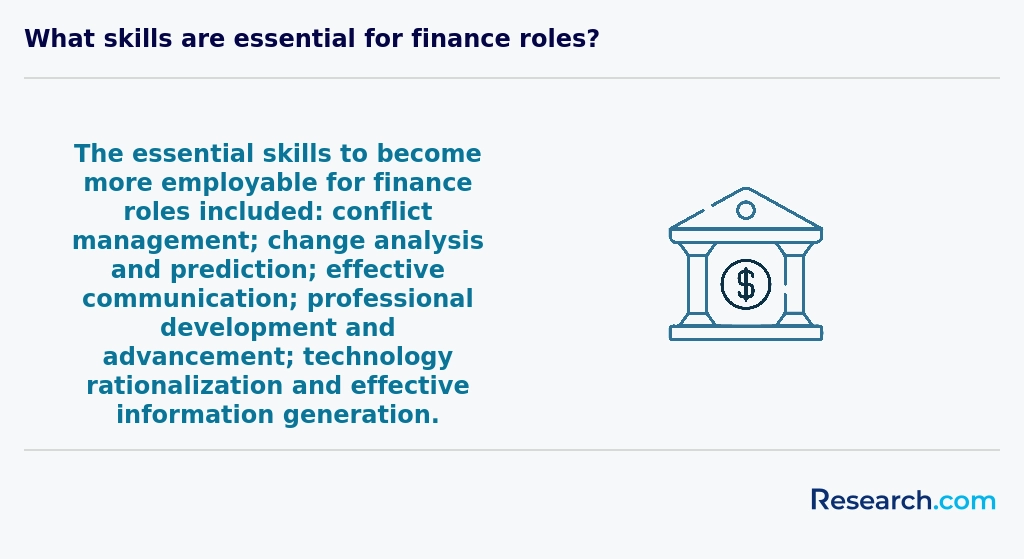
Employers in Nebraska prioritize a mix of technical and interpersonal skills when hiring finance degree graduates. Strong analytical abilities are essential, as finance roles often involve interpreting complex data and financial reports. According to the Nebraska Department of Labor, proficiency in financial modeling and familiarity with software such as Excel and QuickBooks are highly valued.
Communication skills also rank highly; graduates must effectively present financial information to non-experts. Additionally, problem-solving and critical thinking abilities are crucial for navigating Nebraska's diverse economic sectors, including agriculture and manufacturing.
Knowledge of regulatory frameworks and ethical standards is important to ensure compliance and trustworthiness in finance roles.
Finding internships in Nebraska related to a finance degree involves leveraging local resources and industry connections. Start by exploring university career centers at schools like the University of Nebraska-Lincoln, which often partner with regional banks and financial firms. Nebraska's finance job market is concentrated in Omaha and Lincoln, where top employers include Berkshire Hathaway and Union Bank & Trust, providing strong internship opportunities.
Utilize online platforms such as Handshake and Nebraska Workforce Development for updated internship listings. Networking through local chapters of finance organizations like the Nebraska Society of CPAs can also be valuable. Internships typically pay between $12 and $20 per hour, offering practical experience and strengthening future job prospects.
A finance degree significantly boosts career mobility and advancement opportunities in Nebraska's competitive job market. Graduates often gain essential skills in financial analysis, investment strategies, and risk management, which local employers highly value. According to the U.S. Bureau of Labor Statistics (2023), Nebraska's finance sector shows steady growth, particularly in Omaha and Lincoln, where demand for financial analysts and planners is expected to increase by 8% over the next decade.
Holding a finance degree enables entry into various roles such as corporate finance, banking, and insurance. It also provides a foundation for certifications like CFA or CPA, which further enhance career advancement. Employers in Nebraska often prefer candidates with relevant education for management and leadership positions.
Studying for a finance degree in Nebraska equips students with skills that extend beyond traditional finance roles. Many Nebraska universities incorporate interdisciplinary coursework, combining finance with economics, data analytics, and business management. This approach prepares graduates to work in diverse fields such as risk management, consulting, and financial technology.
Nebraska's growing economy demands professionals capable of integrating financial expertise with technology and regulatory knowledge. According to the Nebraska Department of Labor, sectors like manufacturing and insurance actively seek candidates with cross-functional capabilities. Finance programs emphasize real-world applications, including case studies and internships, helping students understand the connections between finance and other industries.
Such interdisciplinary training enhances adaptability and problem-solving, key traits for careers in the evolving financial landscape.
Choosing between a thesis and a non-thesis finance degree program in Nebraska depends largely on your career goals. Thesis options usually involve conducting original research and writing a detailed academic paper, which can prepare you for roles in research, analysis, or eventual doctoral study. Non-thesis programs focus more on coursework and practical skills, often appealing to students aiming for immediate entry into the finance industry.
Nebraska's universities, such as the University of Nebraska-Lincoln, offer both options. According to the National Center for Education Statistics, about 60% of finance master's students nationwide opt for non-thesis tracks due to their flexibility.
Consider job market conditions in Nebraska, where industries like banking and investment show substantial hiring, and practical experience is highly valued. Choosing non-thesis might offer internships and applied projects, while thesis routes emphasize research skills. Your decision should match your professional aspirations and preferred learning style.
Students based in Nebraska who wish to study finance abroad have several pathways to consider. Many Nebraska universities, including the University of Nebraska system, offer study abroad programs that allow finance majors to spend a semester or year at partner institutions worldwide. These programs typically provide opportunities to take finance and business courses that count toward degree requirements back home.
Additionally, students can explore exchange programs or direct enrollment at foreign universities with strong finance programs. Popular destinations include the United Kingdom, Canada, and Australia, where finance education aligns well with U.S. standards.
The U.S. Department of Education reports that approximately 6% of Nebraska students participate in study abroad, and this includes finance majors seeking global perspectives.
Financial aid and scholarships specifically for study abroad may be available through Nebraska-based institutions, making these options more accessible for many students.
Part-time job opportunities that complement a finance degree in Nebraska often include positions in banking, accounting, and financial advising. Many students work as bank tellers or customer service representatives at local banks such as First National Bank of Omaha or Union Bank & Trust. These roles provide practical experience with financial products and client interaction.
Internships or part-time roles with accounting firms or tax preparation services also enhance understanding of financial regulations and reporting. According to the Nebraska Department of Labor, financial occupations are projected to grow by 5% through 2030, indicating solid demand for relevant experience.
Additionally, campus jobs like research assistants in economics or finance departments offer analytical skill development valuable to future careers.
Finance students in Nebraska benefit from various networking opportunities offered through universities and local organizations. Schools like the University of Nebraska-Lincoln provide access to finance clubs, guest lectures, and alumni events where students can connect with industry professionals. The Nebraska Society of Certified Public Accountants and the Nebraska Bankers Association host events and workshops that are valuable for finance majors seeking real-world contacts.
Moreover, Nebraska's growing finance sector, particularly in Omaha, offers internships and job fairs that support student networking. According to the Nebraska Department of Labor, Omaha's financial services employ over 30,000 people, creating a strong professional community for graduates to join.
Alumni networks play a crucial role for finance degree students in Nebraska by providing valuable professional connections. These networks help students access internships and job opportunities in Omaha, Lincoln, and other financial hubs across the state. According to the Nebraska Department of Labor, over 3,700 finance-related jobs were added between 2019 and 2023, highlighting growth in the sector.
Through alumni events and mentorship programs, students gain insights into workplace expectations and industry trends from graduates already working in Nebraska's finance industry. This localized support is especially important given the state's evolving economy.
Furthermore, many Nebraska universities offer exclusive career services to alumni network members, increasing students' chances of securing competitive positions after graduation.
In Nebraska, students pursuing a finance degree can tailor their education to align with specific career ambitions by selecting relevant electives and concentrations. Many universities offer tracks in areas like corporate finance, investment analysis, or financial planning, allowing students to develop specialized skills.
Internships and cooperative education opportunities with Nebraska-based financial firms provide practical experience and networking advantages. According to the Nebraska Department of Labor, the state's finance and insurance sector employs over 30,000 people, highlighting strong regional opportunities. Additionally, some programs allow integration of related fields such as data analytics or economics to broaden career prospects.
Advisors at Nebraska institutions also assist in customizing course loads to meet certification requirements like CFA or CFP, aligning academic work with professional goals.
Finance students in Nebraska face several common challenges during their studies. One key difficulty is managing tuition and living costs, as the average annual tuition for in-state students at public universities like the University of Nebraska is around $9,800, which may still be a significant financial burden for many.
Another challenge is balancing rigorous coursework with internship opportunities, which are crucial for practical experience but can be competitive to secure in Nebraska's smaller financial markets compared to larger cities.
Students also encounter the complexity of mastering quantitative skills, including advanced mathematics and data analysis, essential for finance careers but often perceived as demanding.
Limited local networking opportunities can affect access to mentors and job placements, although organizations like the Nebraska Society of CPAs offer some support. According to Nebraska Department of Labor data, finance-related job growth is steady but requires proactive career planning.
A finance degree from a Nebraska institution opens doors to several respected professional certifications. Common choices include the Chartered Financial Analyst (CFA), ideal for those interested in investment management. The CFA credential requires passing three exams and relevant work experience. Another popular certification is the Certified Financial Planner (CFP), which focuses on personal financial planning and requires coursework, an exam, and practical experience.
Graduates may also pursue the Certified Public Accountant (CPA) if they have a strong accounting foundation within their finance studies. Nebraska's Department of Labor notes that finance roles with certifications often see higher salaries and better job stability.
Additionally, the Financial Risk Manager (FRM) certification is growing in demand in Nebraska's banking and insurance sectors, recognizing expertise in risk control and assessment.
To write a winning application for a finance program in Nebraska, start by carefully researching each school's specific admission requirements. Many Nebraska institutions, such as the University of Nebraska system, value strong academic records, especially in math and economics-related courses. Highlight your quantitative skills and any relevant work or internship experience in finance or business.
Include a well-crafted personal statement that clearly explains your interest in finance and how the program aligns with your career goals. According to Nebraska Department of Labor, finance roles in the state are expected to grow by 5% through 2030, making clear motivation important.
Request recommendation letters from professionals familiar with your analytical abilities. Finally, ensure all application materials are error-free and submitted before deadlines, typically between November and January for fall entry.
Finance careers in Nebraska align closely with global trends emphasizing adaptability and understanding of international markets. Graduates with finance degrees often engage in roles that require knowledge of global trade, investment, and regulatory environments. According to the U.S. Bureau of Labor Statistics, financial analyst roles are expected to grow by 6% nationally through 2032, driven by increasing globalization.
Nebraska, with its growing banking and insurance industries, reflects this demand. Local financial firms often seek professionals able to analyze global economic indicators and currency fluctuations. This global perspective is vital as Nebraska's finance sector is influenced by both domestic and international investments, making cultural and economic literacy essential.
Programs in Nebraska emphasize hands-on experience with global financial software and cross-border regulations, preparing students for competitive international roles. The integration of global finance courses in Nebraska universities highlights the state's commitment to equipping students for careers that transcend local and national markets.
Students pursuing a finance degree in Nebraska can gain practical experience through internships, cooperative education programs, and campus organizations. Many Nebraska universities, including the University of Nebraska system, offer internship placement assistance with local banks, investment firms, and financial services companies.
According to the Nebraska Department of Labor, finance and insurance jobs in the state are projected to grow by 6% from 2022 to 2032, creating numerous opportunities for hands-on learning. Participating in internships not only builds real-world skills but also often leads to job offers after graduation.
Additionally, students can join finance clubs, participate in case competitions, or pursue part-time roles in university investment funds. These activities help develop critical financial analysis and management skills essential for future careers.
Choosing the right concentration within a finance degree program in Nebraska depends on your career goals and interests. Common concentrations include corporate finance, investment analysis, and financial planning. Corporate finance focuses on managing company finances and capital, while investment analysis deals with markets and asset management.
Research Nebraska's economy, which heavily features agriculture, manufacturing, and insurance sectors, as these industries often influence local job opportunities. For example, financial analysts in Nebraska earn a median salary of approximately $75,000 annually, according to the U.S. Bureau of Labor Statistics.
Consider programs that offer internships or connections with Nebraska firms to gain practical experience.
- 2027 Most Affordable Finance Degree Programs Ranking in Colorado
- 2027 Most Affordable Finance Degree Programs Ranking in Missouri
- 2027 Most Affordable Finance Degree Programs Ranking in Minnesota
- 2027 Most Affordable Finance Degree Programs Ranking in Oklahoma
- 2027 Most Affordable Finance Degree Programs Ranking in Arkansas
- 2027 Most Affordable Finance Degree Programs Ranking in Louisiana
- 2027 Most Affordable Finance Degree Programs Ranking in Kentucky
- 2027 Most Affordable Finance Degree Programs Ranking in Michigan
- 2027 Most Affordable Finance Degree Programs Ranking in Alabama
- 2027 Most Affordable Finance Degree Programs Ranking in Florida
See What Experts Have To Say About Studying Finance
Read our interview with Finance experts

H. Kent Baker
Finance Expert
Professor at Department of Finance and Real Estate
American University

Andrew Karolyi
Finance Expert
Dean of the Cornell SC Johnson College of Business
Cornell University

Ekaterina Potemkina
Finance Expert
Assistant Professor of Finance
Indiana University

- International Finance (English) Master Programme (Thesis and Non-Thesis) - GRADUATE SCHOOL OF TRADE AND FINANCE https://ticaret.edu.tr/ticaret-ve-finans-enstitusu/en/ma-in-international-finance/
- 2026 Finance Career Outlook: Top 7 Global Roles, Salaries & Skill Requirements | Saraf Academy https://saraf.academy/top-7-global-finance-careers-in-2025-skills-salaries-and-the-best-courses-to-get-you-there/
- Types of Finance Degrees | Accounting.com https://www.accounting.com/degrees/finance/
- What studies are needed to work in finance? https://www.monaco.edu/en/everything-you-need-to-know-about-the-role-of-an-hse-manager-duties-studies-and-salary-2-2-3-2/
- How to write a cover letter for a finance job | Standard Chartered https://www.sc.com/en/news/careers-about-standard-chartered/cover-letter-for-a-finance-job/
- Finance Minor | NWU https://www.nebrwesleyan.edu/academics/majors-and-minors/business/business-degrees/finance
- Global Finance https://www.scotiabank.com/careers/en/careers/global-finance-careers.html
- How to Get a Finance Internship with No Experience – 365 Financial Analyst https://365financialanalyst.com/career-advice/how-to-get-a-finance-internship-with-no-experience/
- What Major is Best for Finance? Top 10 Picks https://zoetalentsolutions.com/what-major-is-best-for-finance/
- 10 Challenges of Financial Management & How to Overcome Them https://itservices.saglobal.com/blogs/10-challenges-finance-teams-face/