2027 Educational Technology Degree Recession Resilience Report: Which Career Paths Hold Up Best During Economic Downturns

Co-Founder and Chief Data Scientist
Choosing an educational technology career during economic uncertainty means weighing creativity and innovation against job security. The U. S. unemployment rate averaged 4.0% in 2024, according to the Bureau of Labor Statistics, reminding workers that even skilled roles can be affected when budgets tighten. This guide is for students, career changers, and edtech professionals who want to compare paths by layoff risk, salary stability, employer resilience, and transferable skills. You will learn which roles tend to hold up better, which industries are more vulnerable, and how to build a practical recession-resilient career plan.
Key Things You Should Know
- Instructional design for essential training, accessibility, compliance, higher education, and healthcare learning tends to be more resilient than roles tied mainly to experimental products, discretionary corporate learning, or venture-funded education startups.
- BLS projections published in 2024 show training and development specialists with 12% projected employment growth from 2023 to 2033, while instructional coordinators are projected at 2%, making sector choice and transferable skills especially important.
- No educational technology career is recession-proof; the strongest protection usually comes from combining learning design, LMS administration, data analysis, AI-aware content development, accessibility, and experience in stable employer settings.
- Key Things You Should Know
- What Makes a Educational Technology Degree Career Recession-Resistant?
- Which Educational Technology Career Paths Offer the Strongest Job Stability During Downturns?
- Which Industries Provide the Most Recession-Resistant Careers for Educational Technology Graduates?
- Which Educational Technology Careers Face the Lowest Layoff and Unemployment Risk?
- Which Educational Technology Career Paths Offer the Best Mix of Salary Stability and Job Security?
- What Are the Most Recession-Resistant Entry-Level Jobs for Educational Technology Graduates?
- How Do Location and Remote Work Affect Educational Technology Career Resilience?
- Which Transferable Skills Help Educational Technology Degree Holders Pivot During a Recession?
- How Can Educational Technology Degree Holders Build a Recession-Resilient Career Plan?
- Top Trending Educational Technology Rankings
What Makes a Educational Technology Degree Career Recession-Resistant?
Recession resilience means a career is less likely to face layoffs, severe hiring freezes, or major pay cuts when the economy slows. It does not mean guaranteed employment. Educational technology sits between education, software, workforce training, accessibility, and media production, so stability depends heavily on who pays for the work and whether the learning function is essential.
An educational technology degree may be offered as a bachelor's, master's, graduate certificate, instructional design certificate, learning technologies program, or education-focused technology concentration. Typical admissions requirements vary by level, but often include transcripts, a resume, a statement of purpose, and sometimes teaching, training, or technology experience. Accreditation matters because regionally accredited institutions are more likely to support transfer credit, federal financial aid eligibility, and employer recognition.
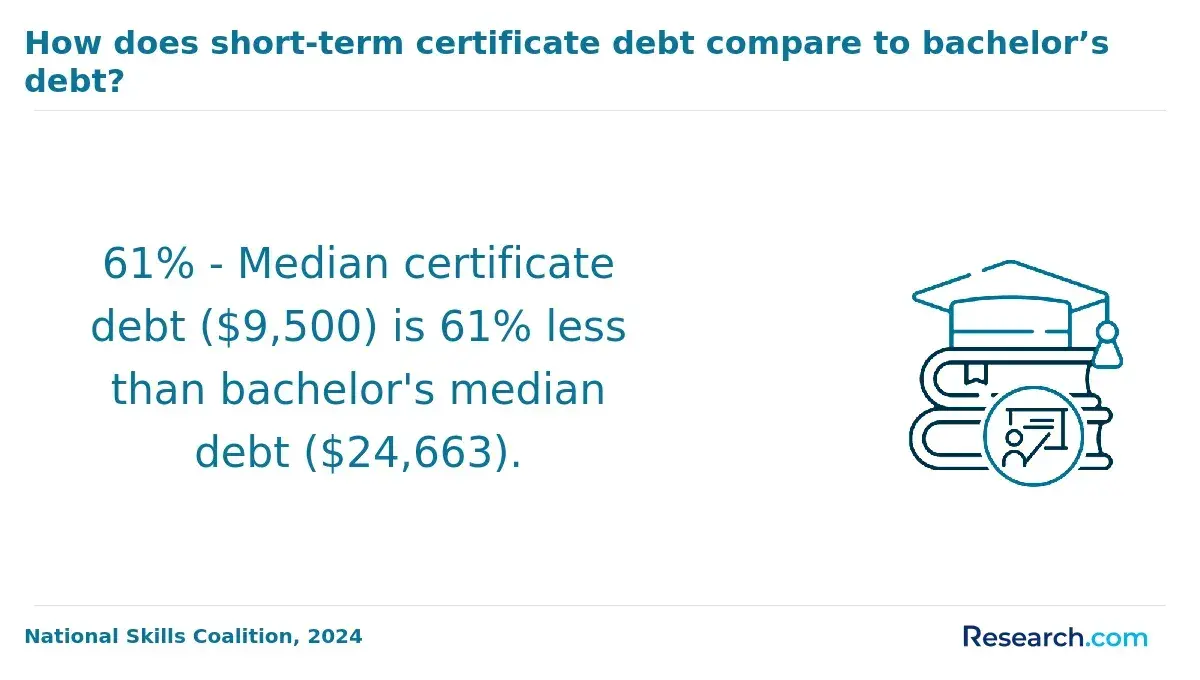
Cost is also part of recession planning. College Board data for 2024-25 lists average published tuition and fees at $11,610 for in-state students at public four-year institutions and $43,350 at private nonprofit four-year institutions. That gap matters because a lower-debt pathway can reduce pressure to take a higher-risk job simply to cover loan payments.
The least resilient roles tend to depend on discretionary spending. These may include innovation labs without clear revenue impact, optional professional-development content, early-stage edtech product teams, or media-heavy roles that are easy to pause when budgets shrink.
Use the following criteria when judging whether a role is likely to hold up during a downturn. These factors are more useful than job title alone because the same title can be stable in one organization and vulnerable in another.
- Essentiality: Does the role support required learning, compliance, student success, onboarding, credentialing, or regulated training?
- Funding source: Is the job funded by stable tuition, public budgets, healthcare demand, long-term contracts, or recurring subscriptions?
- Measurable value: Can the employee show evidence of cost savings, learner outcomes, retention gains, or productivity improvements?
- Transferability: Can the skills apply across education, government, healthcare, corporate training, and software environments?
- Automation exposure: Does the role require judgment, needs analysis, stakeholder management, evaluation, and accessibility expertise beyond basic content generation?
Which Educational Technology Career Paths Offer the Strongest Job Stability During Downturns?
The strongest educational technology career paths during downturns are usually those connected to essential learning operations rather than optional innovation. Historical recession data rarely isolates "educational technology" as a standalone labor category, so the most reliable approach is to compare related occupations, employer demand, and budget exposure.
The table below compares common edtech career paths by practical recession-resilience factors. Treat these as decision signals, not guarantees, because outcomes vary by employer, funding model, region, and seniority.
| Career path | Typical responsibilities | Recession-resilience profile | Best fit for |
| Instructional designer in healthcare, government, or higher education | Design courses, assessments, simulations, job aids, and online learning experiences | Strong when tied to compliance, onboarding, licensure, clinical training, student retention, or required programs | People who want a balance of creativity, stability, and cross-sector mobility |
| LMS administrator or learning systems specialist | Manage learning platforms, integrations, user access, reporting, troubleshooting, and vendor coordination | Strong when the LMS is mission-critical for instruction, workforce training, or compliance documentation | People who like systems, operations, analytics, and user support |
| Accessibility and universal design specialist | Improve digital course accessibility, captions, documents, assessments, and compliance processes | Strong because accessibility obligations do not disappear during recessions, although hiring may still slow | People interested in equity, compliance, quality assurance, and digital learning standards |
| Training and development specialist | Create and deliver employee training, onboarding, leadership development, and performance support | Moderate to strong; BLS projections published in 2024 show 12% growth from 2023 to 2033, but corporate budgets can vary | People who want corporate mobility and are comfortable proving business impact |
| Educational product manager | Guide edtech product strategy, user research, roadmaps, testing, and feature prioritization | Moderate; more stable in profitable firms with recurring revenue, weaker in startups dependent on new funding | People who want higher upside and can tolerate more market risk |
| Multimedia learning developer | Produce videos, interactive modules, graphics, podcasts, simulations, and microlearning assets | Variable; stable when paired with instructional design or systems skills, vulnerable when treated as optional media production | Creative technologists who also build evaluation, accessibility, and platform skills |
For most degree holders, the safest path is not one single title. It is a skill stack: instructional design plus LMS administration, accessibility, assessment, data reporting, and AI-aware workflow design. That combination lets a graduate move between schools, universities, healthcare organizations, government agencies, nonprofits, and corporate training teams.
Which Industries Provide the Most Recession-Resistant Careers for Educational Technology Graduates?
Industries matter because recessions do not hit every sector equally. Educational technology graduates are often more secure when their work supports legally required, publicly funded, credential-based, or operationally essential learning.
The table below ranks common industries for edtech graduates by relative recession resilience. The ranking is qualitative because available labor data usually tracks broader occupations and industries rather than edtech-specific job security.
| Industry | Relative resilience | Why it may hold up | Main risk |
| Healthcare and health systems education | High | Ongoing clinical training, compliance education, patient safety, onboarding, and credential support | Budget pressure can delay new learning initiatives or vendor purchases |
| Government and public-sector training | High | Required workforce development, public services, compliance, cybersecurity, and safety training | Hiring can be slow and dependent on appropriations |
| Higher education | Moderate to high | Online programs, student success, course quality, accessibility, and faculty support remain important | Enrollment pressure can affect institutions unevenly |
| K-12 education and districts | Moderate | Instructional technology support and curriculum systems are needed, especially for digital learning infrastructure | Local funding, grants, and district budgets can fluctuate |
| Large corporate learning and development | Moderate | Onboarding, compliance, sales enablement, and performance training continue when tied to revenue or risk reduction | Leadership development and optional training are often cut first |
| Venture-backed edtech startups | Lower | Recurring subscription revenue can help if the product is essential | Funding slowdowns, customer churn, and growth targets can increase layoff risk |
Healthcare is one of the clearest examples of an essential-sector comparison. A student weighing edtech against more regulated healthcare education pathways might also research an online PharmD, not because it is the same career, but because it illustrates how licensure-driven fields can create different recession-risk profiles.
The practical takeaway is simple: choose industries where learning is tied to compliance, credentialing, safety, retention, or revenue. Avoid assuming that "education" automatically means stability; a district technology role, a university online-learning role, and a startup content role can have very different risk levels.
Which Employer Types Offer Better Job Security for Educational Technology Degree Holders?
Employer type can be as important as occupation. An instructional designer at a public university, an LMS specialist at a hospital network, and a learning experience designer at a small startup may all use similar tools, but their layoff exposure can differ sharply.
The table below compares employer types by job-security signals. Use it to evaluate job postings, interviews, and career moves during uncertain economic periods.
| Employer type | Job-security strengths | Trade-offs to consider | Best recession-fit roles |
| Public colleges and universities | Stable academic calendars, online learning infrastructure, accessibility needs, faculty support | Pay growth may be slower, and hiring processes can take longer | Instructional designer, LMS administrator, faculty development specialist |
| Community colleges | Workforce training, adult education, certificate programs, affordability during downturns | Funding may depend on state budgets and enrollment patterns | Online learning coordinator, instructional technologist, student success technology specialist |
| Healthcare systems | Compliance, clinical education, credentialing, onboarding, and quality improvement | Fast-paced environments may require rapid content updates and stakeholder coordination | Clinical learning designer, LMS specialist, compliance training developer |
| Government agencies | Required training, cybersecurity awareness, safety, public service continuity | Hiring can be bureaucratic, and advancement may follow structured pay scales | Training specialist, e-learning developer, systems trainer |
| Large corporations | Recurring training needs, scale, better technology budgets, internal mobility | Layoffs can target departments viewed as nonessential | Sales enablement designer, compliance training specialist, learning data analyst |
| Small edtech companies | Broad responsibilities, fast growth potential, product exposure | Higher layoff risk if funding, sales, or renewals weaken | Learning product specialist, implementation specialist, customer education designer |
A strong job-security question to ask in interviews is: "Which business, compliance, or student-success outcomes does this role directly support?" If the answer is vague, the role may be harder to defend when budgets are reviewed.
Which Educational Technology Careers Face the Lowest Layoff and Unemployment Risk?
The lowest-risk edtech careers usually combine essential operations with specialized knowledge that is not easy to replace quickly. Layoff risk is also lower when the role protects the organization from compliance failures, supports core instructional delivery, or reduces costs at scale.
BLS projections published in 2024 estimate about 42,200 openings per year for training and development specialists from 2023 to 2033. That figure includes openings from growth and replacement needs, which means demand can exist even when some employers pause hiring.
Among educational technology degree holders, these roles often face lower relative unemployment and layoff risk when placed in stable sectors:
- LMS administrator: Learning platforms remain central to online courses, employee training records, compliance tracking, and reporting.
- Accessibility specialist: Digital accessibility, captioning, document remediation, and universal design support legal, ethical, and quality requirements.
- Compliance training designer: Organizations still need required training in areas such as safety, privacy, cybersecurity, harassment prevention, and clinical standards.
- Instructional designer for core programs: Roles tied to degree programs, workforce credentials, onboarding, or revenue-generating courses are stronger than roles tied to optional enrichment.
- Learning analytics specialist: Data skills can help institutions and employers decide which learning investments improve retention, completion, productivity, or risk reduction.
Higher-risk roles are not necessarily bad choices. Product management, immersive learning, game-based learning, and AI learning-tool roles may offer stronger upside. They become riskier when they depend on speculative funding, experimental budgets, or rapid user growth rather than recurring need.
The common mistake is using national job growth as a substitute for employer analysis. A role in a growing occupation can still be vulnerable if the employer is losing revenue, facing enrollment declines, or cutting nonessential projects.
Which Educational Technology Career Paths Offer the Best Mix of Salary Stability and Job Security?
The best career choice is rarely the highest-paying option alone. During a downturn, a slightly lower salary in a stable institution may be more valuable than a higher salary in a volatile company, especially for graduates with loans, dependents, or limited emergency savings.
The table below compares salary stability and job security rather than focusing only on income. Salary levels vary by region, experience, employer size, and whether the position is classified as education, training, technology, or management.
| Career path | Salary stability | Job security | Overall recession-resilience judgment |
| LMS administrator | Moderate to strong | Strong when the platform supports required learning or records | One of the best options for stability-focused graduates |
| Accessibility specialist | Moderate | Strong when the employer has legal, public-service, or institutional accessibility obligations | Highly resilient for graduates who build technical and policy expertise |
| Instructional designer in higher education or healthcare | Moderate | Moderate to strong | Strong balance of mission fit, transferability, and steady demand |
| Training and development specialist | Moderate to strong | Moderate; stronger in compliance, onboarding, sales enablement, or essential operations | Good option for graduates who can document business impact |
| Learning product manager | Potentially high | Variable | Best for risk-tolerant professionals seeking growth and product leadership |
| Learning experience designer in a startup | Potentially high | Lower to variable | Better after gaining portable skills and maintaining a financial safety cushion |
BLS occupational data published in 2024 shows training and development managers with a median annual wage above many nonmanagerial education roles, but management positions can also be exposed when organizations flatten teams. For recession planning, management is strongest when the leader owns critical compliance, workforce capability, or revenue enablement functions.
A useful rule is to compare the total risk package: salary, debt, employer stability, industry volatility, remote-work access, and how quickly you could move to an adjacent role if laid off.
What Are the Most Recession-Resistant Entry-Level Jobs for Educational Technology Graduates?
Entry-level graduates face a different kind of recession risk. They often have less bargaining power, smaller professional networks, and fewer completed projects to prove value. The most resilient first jobs are those that build portable experience while connecting to essential learning operations.
The table below highlights entry-level roles that can create a stable foundation. These jobs may not always have "educational technology" in the title, so graduates should search related terms such as learning systems, e-learning, training coordinator, digital learning, and instructional support.
| Entry-level role | Why it can be resilient | Skills to build quickly | Good next step |
| Instructional design assistant | Supports course development, assessments, templates, and faculty or trainer workflows | Storyboarding, learning objectives, accessibility, authoring tools | Instructional designer |
| LMS support specialist | Helps maintain a system that learners, instructors, and employees depend on | LMS configuration, reporting, troubleshooting, integrations | LMS administrator |
| Training coordinator | Coordinates required sessions, records, communications, and onboarding logistics | Project management, learner communications, compliance tracking | Training specialist |
| Digital accessibility assistant | Improves documents, captions, course pages, and usability for learners with disabilities | WCAG basics, captioning workflows, document remediation, QA | Accessibility specialist |
| Customer education specialist | Creates tutorials and onboarding resources for software or platform users | Product documentation, webinars, user research, analytics | Customer education manager or learning product specialist |
Students who want the most stable entry route should prioritize internships, assistantships, campus learning-technology jobs, and portfolio projects that solve real problems. A strong portfolio should include a course module, a needs analysis, an accessibility improvement sample, an LMS report, and evidence of evaluation.
Some career changers compare edtech with faster healthcare entry routes, such as fasttrack medical programs, because healthcare roles may offer clearer licensure pathways. That comparison can be useful, but edtech may fit better for people who want to combine teaching, design, systems, and technology without entering direct patient care.
How Do Location and Remote Work Affect Educational Technology Career Resilience?
Location affects recession resilience because education budgets, employer concentration, remote-work policies, and regional industry mix vary across the U.S. A graduate in a region with universities, hospitals, state agencies, military bases, and corporate headquarters may have more fallback options than a graduate in a market dominated by one employer type.
Remote work can improve resilience by expanding the number of employers a candidate can reach. It can also increase competition because remote roles attract applicants from many states. Hybrid roles may offer a practical middle ground: more openings than fully remote jobs, with less relocation pressure than fully on-site work.
When evaluating location and remote-work resilience, focus on a few concrete signals rather than broad city rankings. These signals help you identify whether a market has multiple paths if one employer freezes hiring.
- Employer diversity: Look for regions with higher education, healthcare, government, nonprofits, and corporate training employers rather than a single dominant industry.
- Remote-role competitiveness: If a posting is fully remote, assume the applicant pool is larger and tailor your portfolio closely to the employer's sector.
- State and local budgets: Public education and government training roles may depend on funding cycles, even when the work is essential.
- Cost of living: A stable salary stretches further in lower-cost regions, which can improve financial resilience during a downturn.
- Licensure or compliance clusters: Healthcare, aviation, energy, and public safety employers often need ongoing training support tied to regulations.
A common mistake is moving for a single attractive edtech job without checking the local backup market. Before relocating, identify at least five other employers in the region that hire similar learning, training, systems, or accessibility roles.
Which Transferable Skills Help Educational Technology Degree Holders Pivot During a Recession?
Transferable skills are the strongest career insurance for educational technology graduates. They make it easier to pivot from higher education to healthcare, from corporate training to government, or from content development to learning systems administration.
AI is changing this skill mix. Generative tools can speed up drafts, quiz creation, outlines, and media workflows, but employers still need professionals who can define performance problems, validate content accuracy, protect learner privacy, design assessments, evaluate outcomes, and ensure accessibility. The safest professionals learn to use AI while developing judgment that AI cannot replace.
These transferable skills are especially valuable during a downturn because they apply across many employer types and reduce dependence on one narrow job title.
- Needs analysis: Diagnosing whether a performance problem requires training, documentation, coaching, system changes, or policy updates.
- Learning measurement: Connecting learning experiences to completion, retention, compliance, productivity, or learner performance.
- LMS and learning-data skills: Managing enrollments, reports, dashboards, integrations, permissions, and audit-ready records.
- Accessibility and universal design: Designing materials that support more learners and reduce legal or operational risk.
- Project management: Keeping course builds, stakeholder reviews, media production, and launches on schedule.
- Technical communication: Turning complex tools, policies, or procedures into clear instructions, job aids, and tutorials.
- AI workflow literacy: Using AI tools responsibly for drafting, prototyping, translation support, feedback, and quality checks without relying on unverified outputs.
Transferability also works across subject areas. For example, someone interested in wellness learning, coaching platforms, or human performance education may compare edtech training roles with a sports science degree online to understand how domain expertise can pair with digital learning design.
How Can Educational Technology Degree Holders Build a Recession-Resilient Career Plan?
A recession-resilient career plan should reduce dependence on one employer, one tool, or one industry. The goal is to build evidence that you can improve learning outcomes, operate essential systems, and adapt to changing budgets.
Start by choosing a primary stability lane. For most educational technology graduates, the strongest lanes are learning systems, accessibility, compliance training, higher education online learning, healthcare education, government training, or workforce development. Then add a secondary lane that creates mobility, such as analytics, AI-supported design, project management, or technical communication.
Use this step-by-step plan to strengthen your position before a downturn affects hiring. The sequence is designed to help students, new graduates, and working professionals make practical moves without assuming any job is fully safe.
- Map your target roles into low, moderate, and high volatility based on employer type, funding source, and whether the work is required or optional.
- Build a portfolio with at least three evidence-based samples: one instructional design project, one LMS or learning-data artifact, and one accessibility or evaluation example.
- Track job postings monthly to identify which titles appear across multiple industries, not just in schools or edtech companies.
- Ask interviewers how the role is funded, which outcomes it supports, and whether the team is tied to compliance, revenue, retention, or required instruction.
- Keep a six-month skill-refresh plan that includes one platform skill, one data skill, one accessibility skill, and one AI workflow skill.
- Maintain a recession-ready network of former instructors, managers, vendors, professional associations, and peers in adjacent industries.
Watch for red flags before accepting a role. These include vague success metrics, dependence on short-term grants, repeated reorganizations, unclear reporting lines, product-market uncertainty, or a job description that combines several full-time roles without realistic staffing.
Finally, compare adjacent fields honestly. A data-oriented edtech graduate who enjoys scientific learning platforms, workforce analytics, or technical training may also review jobs for bioinformatics degree holders to see how specialized data skills can open different labor-market options. The broader lesson is not to abandon edtech, but to understand where your skills can travel if one sector weakens.
Other Things You Should Know About Educational Technology
It can be worth it if you choose a program that builds marketable skills in instructional design, LMS administration, accessibility, analytics, and evaluation. Job security depends less on the degree name and more on whether your skills support essential learning functions across multiple industries.
Many edtech jobs do not require a teaching license, especially in corporate training, higher education support, healthcare training, government, and software companies. Some K-12 district roles may prefer or require teaching credentials, depending on the state, district, and job responsibilities.
Look for regional accreditation, strong portfolio requirements, courses in instructional design and learning systems, accessibility training, applied projects, internship options, and faculty with current industry experience. If you plan to work in schools, check whether the program aligns with state or district requirements.
Certifications can help when they validate practical skills employers need, such as project management, accessibility, learning platforms, analytics, or specific authoring tools. They are most useful when paired with a portfolio that shows how you solved real learning or performance problems.
Top Trending Educational Technology Rankings
References
- Demand for College Labor in the 21st Century https://www.clevelandfed.org/publications/economic-commentary/2025/ec-202504-college-labor-demand-21st-century
- Recession-Proof Jobs That Thrive During Downturns https://create.fit/recession-proof-jobs/
- How does a college degree improve graduates’ employment and earnings potential? - APLU https://www.aplu.org/our-work/4-policy-and-advocacy/publicuvalues/employment-earnings/
- Human Capital and Unemployment Dynamics: Why More Educated Workers Enjoy Greater Employment Stability https://www.federalreserve.gov/pubs/feds/2014/201409/index.html
- Higher Education Graduates’s Decreasing Returns to Experience https://www.sciencespo.fr/research/cogito/home/higher-education-graduatess-decreasing-returns-to-experience/
- Rethinking the Race Between Education & Technology https://issues.org/rethinking-the-race-between-education-technology/
- Career earnings by college major - The Hamilton Project https://www.hamiltonproject.org/data/career-earnings-by-college-major/
- The Work Ahead | Findings https://www.cfr.org/task-force-report/work-ahead/findings
- Digital Resilience in the American Workforce (DRAW) https://www.jff.org/idea/digital-resilience-american-workforce/
- Economic Advantages of Higher Education Include Job Stability | Edcor https://www.edcor.com/blog/the-economic-advantages-of-higher-education-include-increased-employment/